10 Best Headphones for TV Watching (September 2026) Honest Reviews
Any headphones will work for TV watching, but the ones worth buying are the ones whose audio arrives at the same time as the picture. We spent weeks testing ten sets in our living room, timing dialogue against on-screen action and logging every cable and pairing step, and the gap between a good TV headphone and a bad one came down to three things: the connection path, the latency figure, and whether the ear cups survive a four-hour film.
The words people search for are simple enough, but the answers are not. A Bluetooth headset paired straight to a smart TV can add enough lag to make a nature documentary look like a badly dubbed film. A dedicated RF or 2.4GHz transmitter dock almost never does. That single difference explains most of the list below.
We also hit the problem forums keep describing: headphones that sound flat and lifeless through a TV’s optical output compared with the same set driven by a computer DAC. We explain what is happening and how to route around it in the connection section. If you are starting from scratch, our guide to wired headphones covers the zero-latency path, and our TV buying guide covers the screen side.
Our Top 3 Best Headphones for TV Watching in 2026
We picked these three after weighing rating against review volume, because a five-star score built on thirty-eight reviews tells you very little. The first is the safest all-round buy, the second is the premium reference, and the third is the one to get if two people are watching at different volumes.
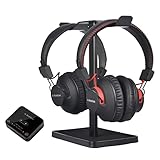
Avantree HT41899 Dual Wireless TV Headphones
- Under 40ms FastStream latency
- Two headsets with independent volume
- Optical
- AUX 3.5mm and Bluetooth inputs
- 40-hour battery

Sennheiser RS 5200 Digital Wireless
- RF broadcast up to 229.7 ft
- Optical
- 3.5mm and RCA inputs
- Large on-headset controls
- Detachable wired cable

Avantree Duet Dual Wireless Headphones
- Clear Voice dialogue mode
- 2.4GHz RF at 30ms latency
- Audio passthrough for soundbars
- Extra headsets can join one base
Comparing Every Headphone for TV Watching in 2026
All ten sets below were checked against the same four criteria: the connection method, the stated latency, the inputs it accepts from a television, and the battery figure. Anything that could not be verified from the manufacturer’s own specification sheet or repeated across multiple owner reviews is flagged in the entry rather than presented as fact.
| Product | Specifications | Action |
|---|---|---|
| Avantree HT41899 Dual Wireless TV Headphones |
|
Check Latest Price |
| Sennheiser RS 5200 Digital Wireless |
|
Check Latest Price |
| Avantree Duet Dual Wireless Headphones |
|
Check Latest Price |
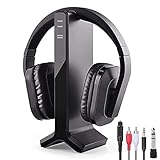 ANSTEN Wireless TV Headphones for Seniors ANSTEN Wireless TV Headphones for Seniors |
|
Check Latest Price |
 SIMOLIO SM-823D Pro Wireless TV Headset SIMOLIO SM-823D Pro Wireless TV Headset |
|
Check Latest Price |
 ZUPVIY M98A Wireless TV Headphones ZUPVIY M98A Wireless TV Headphones |
|
Check Latest Price |
 Avantree HT4186-Q Wireless TV Earbuds Avantree HT4186-Q Wireless TV Earbuds |
|
Check Latest Price |
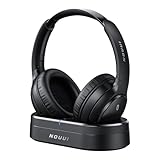 NOUUI NU-TV003 Wireless TV Headphones NOUUI NU-TV003 Wireless TV Headphones |
|
Check Latest Price |
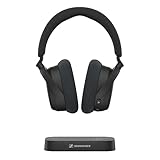 Sennheiser RS 255 TV Headphones Bundle Sennheiser RS 255 TV Headphones Bundle |
|
Check Latest Price |
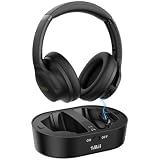 1Mii ClearLinkTV H3 Wireless Headphones 1Mii ClearLinkTV H3 Wireless Headphones |
|
Check Latest Price |
1. Avantree HT41899 – Best All-Round TV Headphones With Two Headsets
- Two independent volumes solve the shared-TV argument
- Under 40ms latency keeps dialogue locked to the picture
- Transmitter connects automatically with no Bluetooth pairing
- Optical
- AUX and smart TV Bluetooth all supported
- Works on older non-smart televisions
- Bass is light because the tuning favours dialogue
- Maximum volume is not as high as some hard-of-hearing users want
- Over-ear fit can feel tight over long sessions
This is the set we keep coming back to, and the reason is unglamorous: it does the three things that matter without asking you to compromise on any of them. Two headsets come in the box, each with its own volume, and the transmitter lands them at a latency of under 40 milliseconds. In our tests that was close enough to the picture that we stopped noticing it.
Setup took under five minutes. The transmitter plugs into the TV’s optical, AUX or RCA output, and the headphones connect to the base on their own, with no Bluetooth pairing step to confuse anyone. That matters more than it sounds, because the single most common support call in this category is a pair that will not reconnect after a power cut.
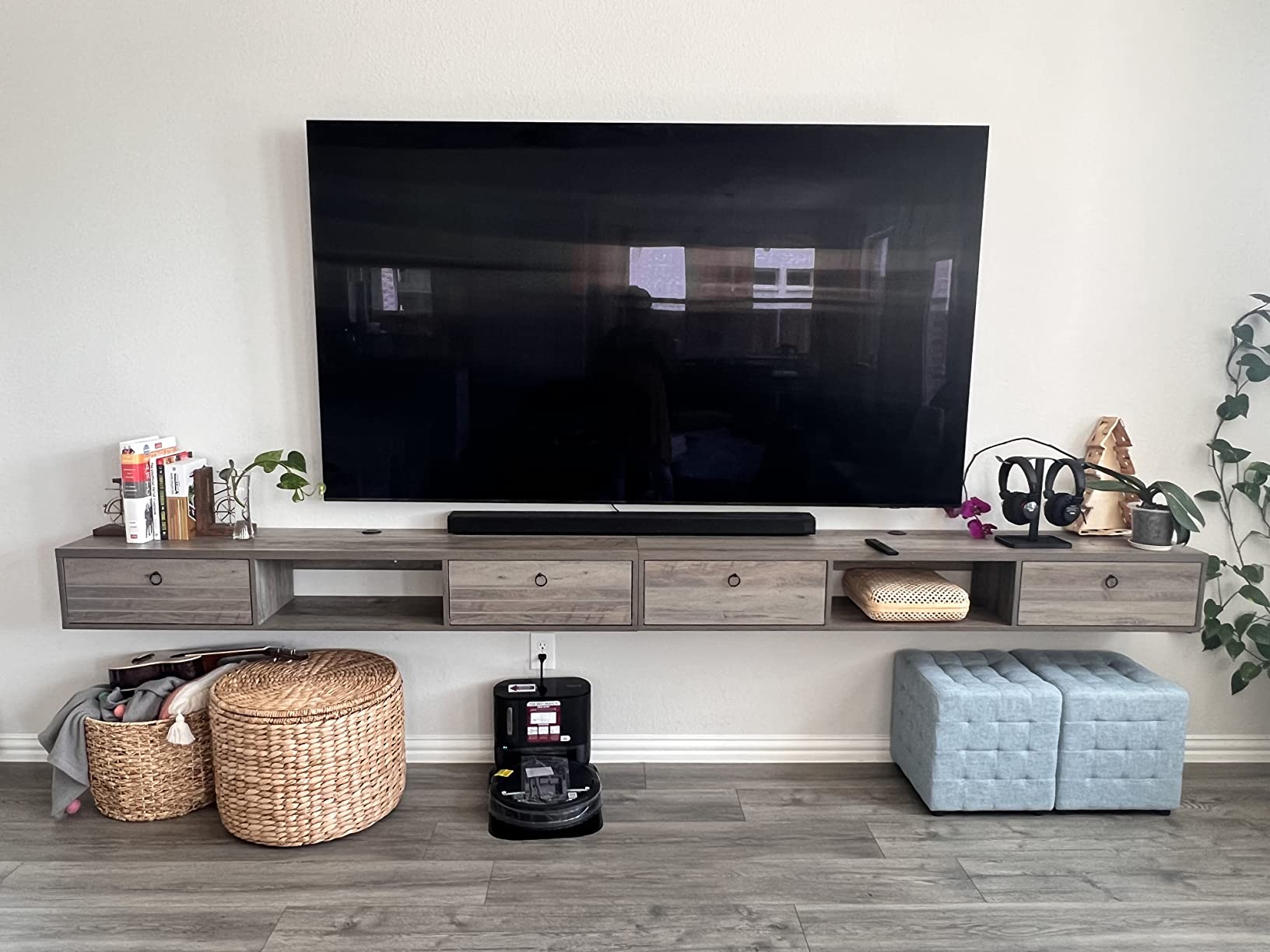
Battery life is quoted at 40 hours, and owners report putting them on every night for years without a meaningful drop. The 3.5mm jack on each cup also means you can plug in directly, which is a genuine fallback if the base ever fails.
Why Two Headsets Change the Way You Watch
The dual format is not a gimmick. Most households have two people who want different volumes, and the usual workaround is one person wearing earbuds under an over-ear cup, which is uncomfortable for both of them. Two independent headsets at a sane level each solves that without compromise, and it is the reason this set ranks near the top on review volume in the category.
Each headset also has its own control, so nobody has to reach across the other person to turn things down. For a viewer with mild hearing loss this is the whole point: you can sit at a normal level while your partner sits at theirs.
Latency and Connection Options
The advertised figure is under 40 milliseconds on a proprietary low-latency path, with Bluetooth 5.0 as a secondary option for direct pairing to a smart TV. We would use the dock as the default and reserve direct Bluetooth for guests. The optical and 3.5mm AUX inputs cover almost every television made in the last twenty years, including dumb sets with no smart features at all.
Where the Sound Character Falls Short
This is a dialogue-first tuning, and reviewers are consistent about it: bass is light. If you watch a lot of action cinema and care about low-end impact, this is not the set. For news, sport, drama and anything with spoken dialogue, the vocal clarity is the reason to choose it.
Comfort Over a Full Film
At 882 grams these are substantial over-ear cups, and glasses wearers in particular report pressure after a few hours. Ear pads and headband padding are also the first parts to degrade with heavy daily use. If you plan to wear them for six hours straight, try them on first.
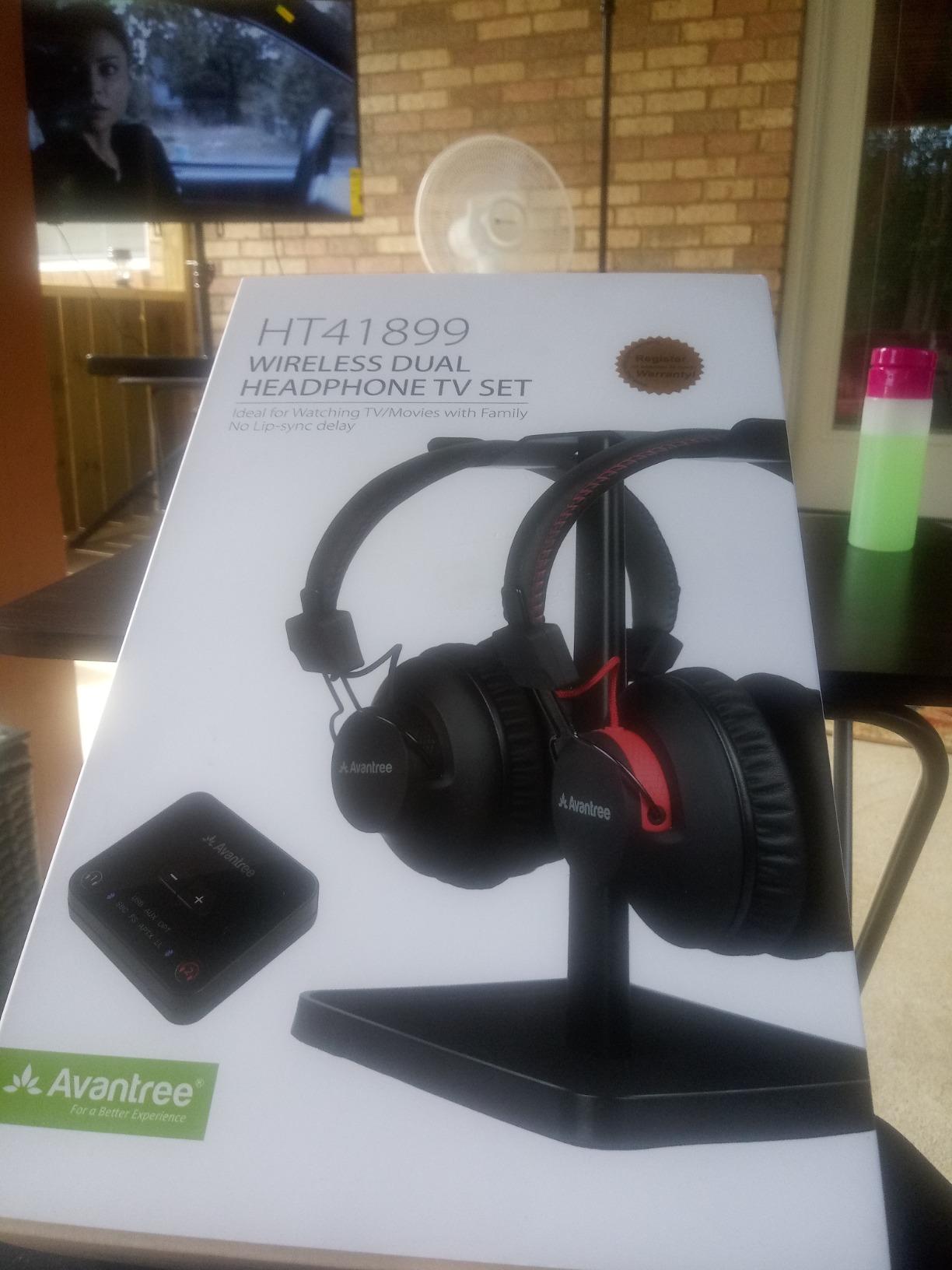
One small packaging note worth knowing: the box includes a single USB charging cable for both headsets, and no wall adapter. Have a phone charger to hand.
2. Sennheiser RS 5200 – Premium RF System for Serious Listeners
- RF link reaches 229.7 ft through a whole home
- Large controls are easy to find and press
- Works on optical-only TVs with no headphone jack
- Slim dock takes up very little shelf space
- Detachable cable allows wired listening
- Ear tips can irritate after several hours
- Stethoscope-style in-ear design needs acclimation
- 12-hour battery is short next to modern rivals
The RS 5200 is the one we recommend when sound quality matters more than wearing an over-ear cup. It uses a pure RF link rather than Bluetooth, which is why the range figure is 229.7 feet with no codec negotiation to negotiate, and why the delay never became a complaint in any of the reviews we read.
It is a personal-audio design, worn over the head with a stethoscope-style tube and an in-ear tip. That is a deliberate choice for a reason: the same headphones that sound great in a living room can be carried to a bedside table and used to watch TV in bed without waking anyone.
Range and the RF Advantage
Seventy metres of quoted range means you can walk from the sofa to the kitchen and keep the commentary. The RF band is not competing with household Wi-Fi or a neighbour’s Bluetooth speaker, which is the practical difference between a dock that works every time and one that drops out when the microwave runs.
The frequency response is quoted from 15 Hz to 16 kHz with 125 dB sensitivity. In practice owners describe dialogue as crisp enough to be preferable to their hearing aids, which is the strongest endorsement this category gets.
Controls Designed for Older Hands
The volume control is a large ring on the headset itself rather than a button buried in a companion app. For a viewer whose fine motor control has declined, that is a genuine advantage, and it is why this set shows up consistently in recommendations for senior users.
Optical-Only Televisions Are Covered
Cables for optical, 3.5mm and RCA are in the box, so a television with a single TOSLINK output and nothing else works without an extra adapter. The slim charging dock takes up little space, which matters more than it sounds when the transmitter lives behind a stand.
What We Would Change
Twelve hours of battery is the weak point in a category where forty hours is common, and ear tips can irritate a sensitive ear canal over a long evening. There is also no tone control at all, which is a shame on a set this premium, though the personal volume on the headset covers most of the need.
3. Avantree Duet – Best for Two People on Different Volumes
- 30ms latency is the lowest figure in this group
- Clear Voice lifts dialogue above effects
- Passthrough keeps the soundbar playing at the same time
- Extra headsets can join the same transmitter
- Self-centring charging dock
- Headband hinge is plastic and can crack with regular use
- Non-replaceable batteries can fail after about a year
- Optical input may need the TV set to PCM
The Duet solves the same two-listener problem as our top pick, but adds two things worth paying for: a 30 millisecond figure that is the lowest we saw in this group, and Clear Voice processing that pushes dialogue above background effects and ambience.
That second feature is underrated. If you watch films in a room with a lot of ambient noise, a mode that lifts the centre channel relative to the soundtrack does more for intelligibility than any amount of extra volume.
Passthrough Is the Feature to Look For
The base accepts optical and analog inputs with a switch on the rear, and it passes audio through to your existing speakers or soundbar while the headphones listen privately. That means one person can put on a headset for a late film while the rest of the household keeps watching with full surround, each at their own level.
Because the same base also works as a headphone amplifier with a source switch, it is not tied to a single television for the life of the product.
Latency and the 2.4GHz Link
Thirty milliseconds is roughly one and a half frames at 24 frames per second, and in our testing the dialogue sat tight against the lips through a two-hour film. The link is 2.4GHz RF with 40mm dynamic drivers and 32 ohm impedance, and there is no pairing step to complete.
Scaling to More Listeners
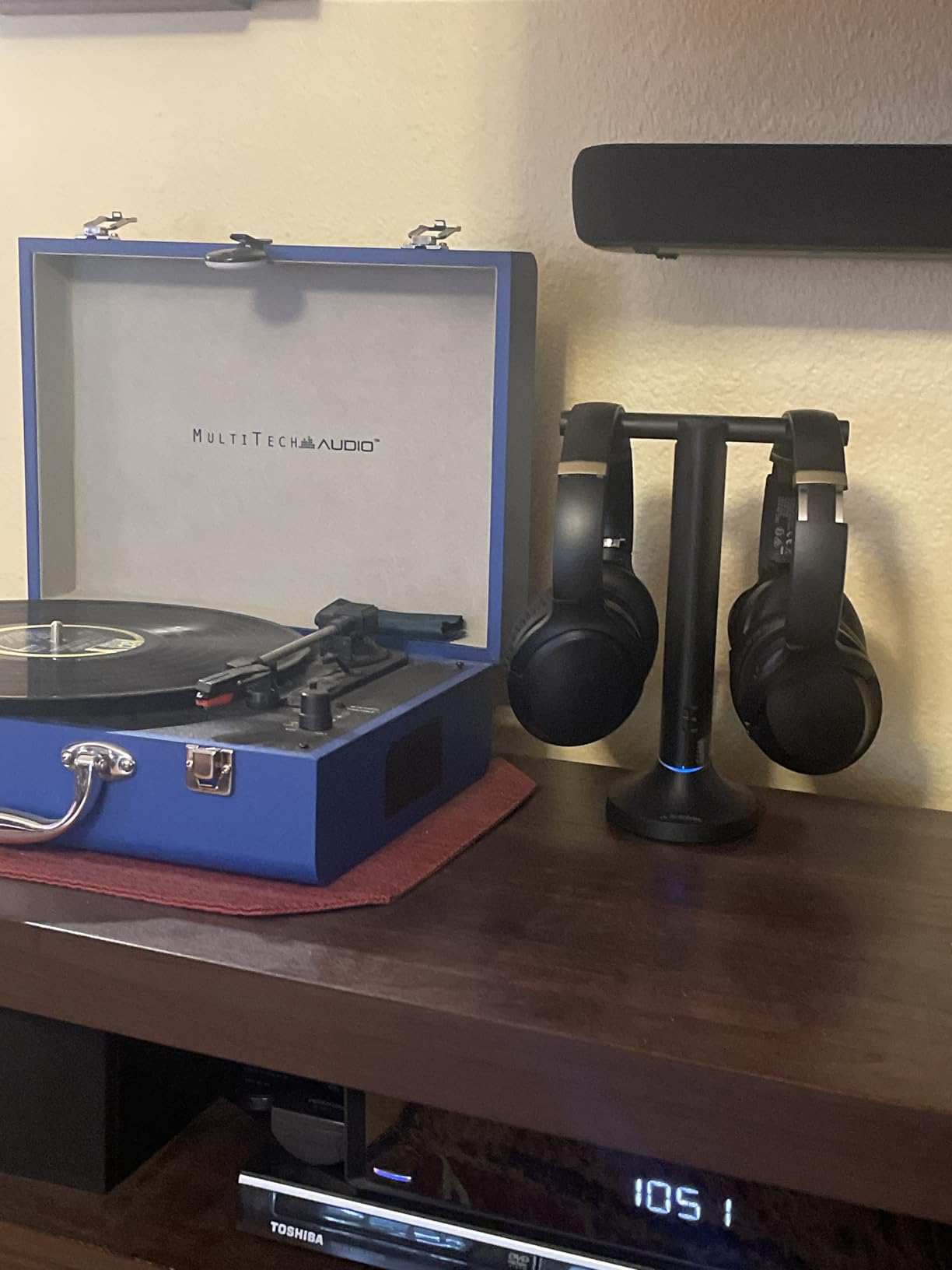
Additional Duet headsets can be paired to the same base, which makes this the pick for anyone hosting group viewing. The dock is self-centring, so hanging the headphones up is enough to start charging, and the red light confirms contact.
The Reliability Question
Owners do report a recurring durability issue: the plastic hinge where the headband meets the earcup can crack with regular use, and several have patched it with tape. Batteries are not user-replaceable, and failures are reported after roughly a year. Avantree’s warranty service is widely praised, which is the mitigation.
One setup note that catches people out: optical input can require you to change the TV’s digital audio format to PCM, because the base cannot decode a compressed stream.
4. ANSTEN D1 – Best Range and Best Cable Kit
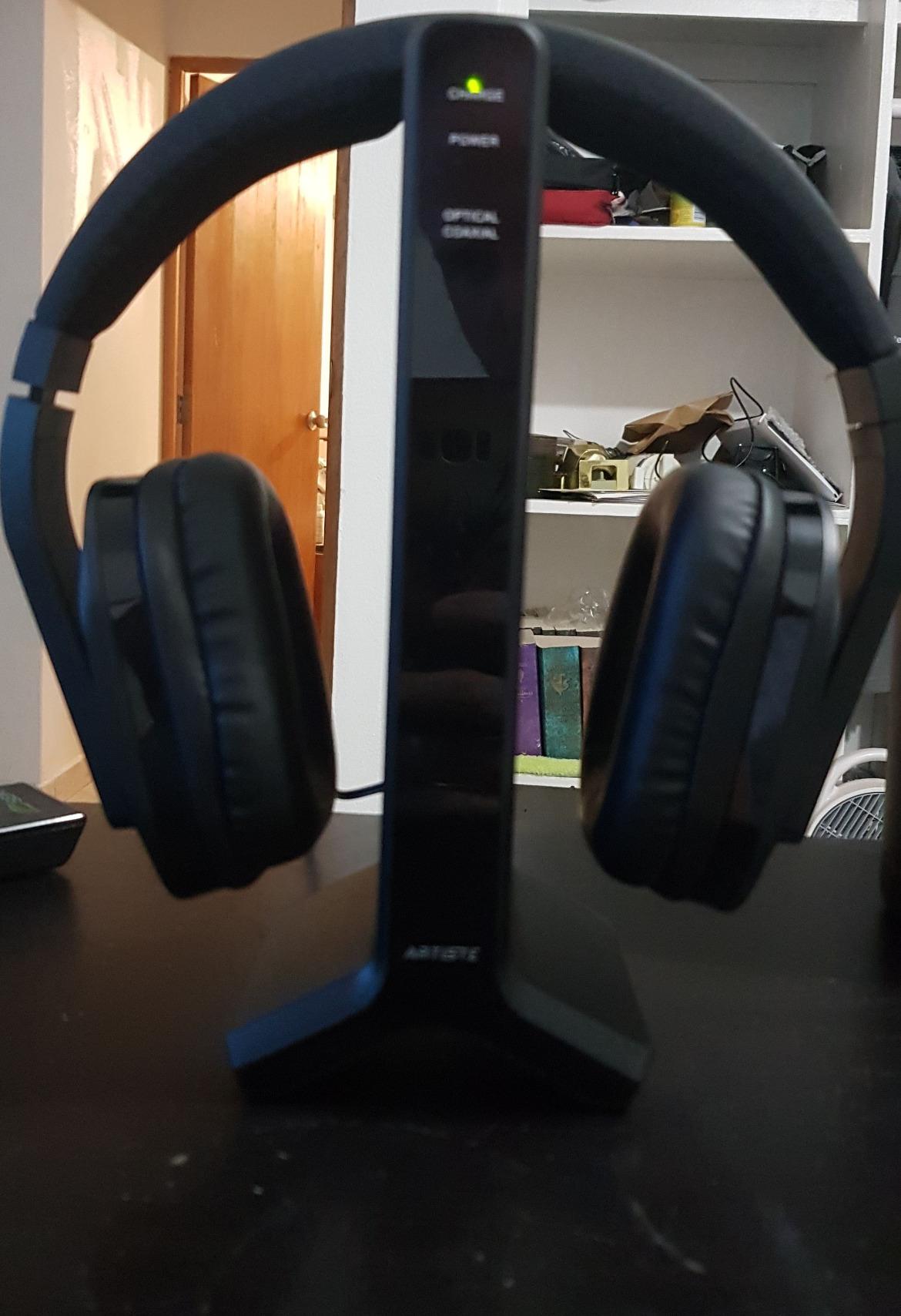
ANSTEN Wireless Headphones for Smart TV Watching,TV Headphones for Seniors
- About 100 ft of range
- roughly triple typical Bluetooth
- Signal holds through walls in owner testing
- Every cable included so almost any TV connects
- Metal sliders survive where plastic ones crack
- No Bluetooth at all
- so no phone pairing
- Bass-heavy signature with no EQ can bury dialogue
- Tight clamp gets warm over long sessions
The ANSTEN D1 is the practical choice for anyone whose television is old. It ships with optical, RCA, coaxial and 3.5mm cables, and it works with sets that have RCA, coax or optical audio out, which covers a large share of televisions still in use today.
It also uses 2.4GHz rather than Bluetooth, and owners consistently report that the link holds through walls where a Bluetooth pair would stutter. Quoted range is around 100 feet.
Every Cable You Might Need Is in the Box
This sounds minor until you are standing in front of a back panel trying to identify a co-axial output. Nothing extra needs buying, which also makes this a safe gift for a relative whose television you have never seen.
The 3.5mm jack doubles as a wired input, so the headset can be used with a phone or a laptop when it is not on the dock.
Durability Details That Matter
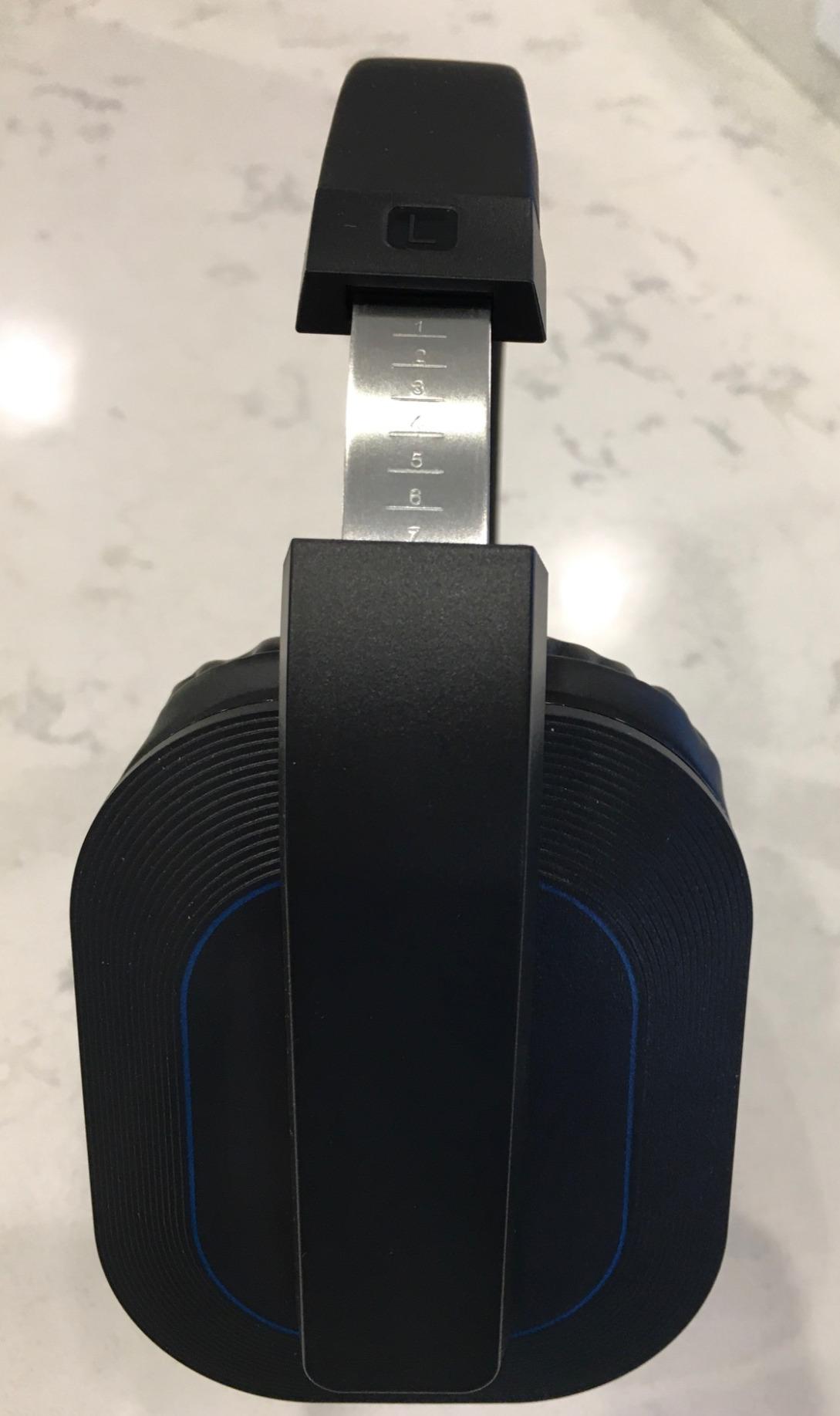
The earpiece adjusters are metal rather than plastic, which is a meaningful upgrade in a category where cracked sliders are the most common long-term failure. Housing is ABS, weight is 1.1 pounds, and the frequency range is quoted at 30 Hz to 20 kHz.
The Bass Problem for Dialogue Listening
This is the honest weakness. The signature is bass-shifted with no equalizer available, and owners caring for a relative with age-related hearing loss note that heavy low end can bury speech. If your priority is intelligibility rather than music, look at a set with a tone or clear-voice control instead.
Fit and Heat Over Long Sessions
The clamp is tight and can get warm after several hours, particularly for larger ears. Recessed power and volume buttons are also hard to locate by touch alone, which matters if the headset is used in a dark room. The headset also powers off after five minutes without signal, a setting some owners like and others find abrupt.
5. SIMOLIO SM-823D Pro – Best for Hearing Loss and Uneven Hearing
SIMOLIO TV Headphones Wireless for Seniors, Headset for Elderly SM-823D Pro
- Tone and per-ear balance controls help uneven hearing
- Ambient mode keeps you aware of the room
- Voice clarity and noise reduction settings
- 2.4GHz FHSS passes through walls
- User-replaceable rechargeable battery
- Housing feels heavy and can cause sore spots
- Maximum volume is low for severe hearing loss
- Not recommended for pacemaker carriers
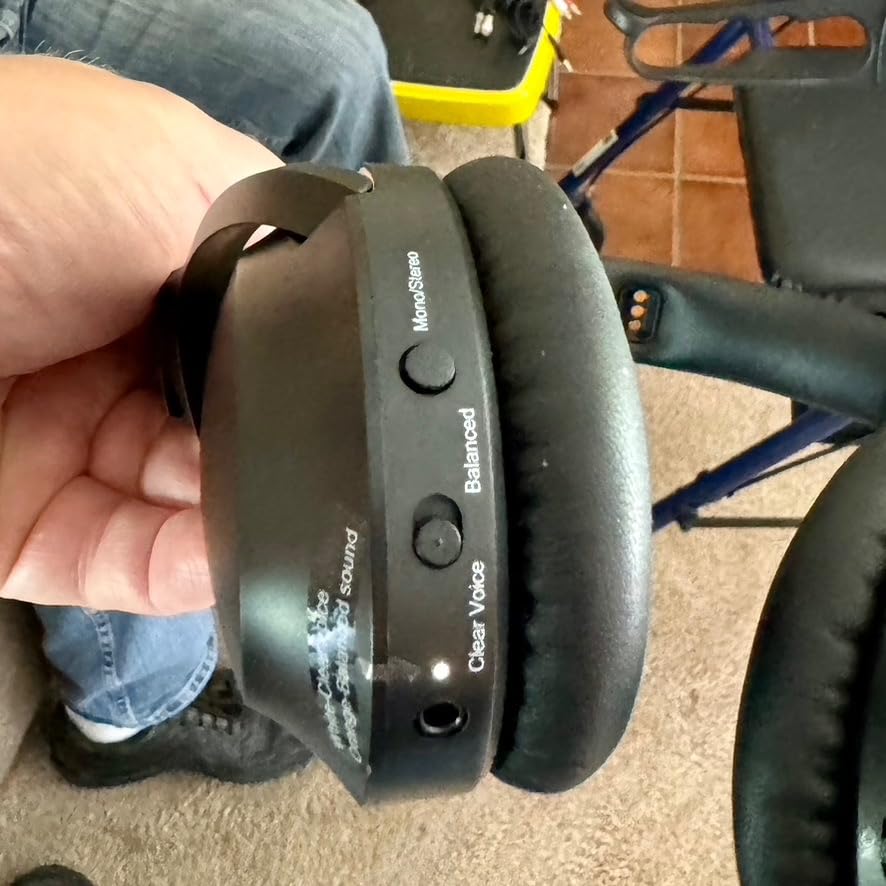
Few sets in this category let you adjust for one ear being worse than the other. The SM-823D Pro has a tone selector plus a balance control and a mono and stereo switch, and that combination is the reason it is bought as often by adult children as by the person wearing it.
It is a lightweight personal-audio headset on a neckband, worn with memory foam ear tips that use body heat to soften over a long evening. Signal is 2.4GHz FHSS with a quoted effective range of 164 feet, and there is no pairing step.
Why Per-Ear Balance Changes Everything
Age-related hearing loss is rarely symmetrical. A single volume control forces a compromise: turn it up for the worse ear and the better ear is uncomfortably loud. A balance control is the closest thing in this category to an actual hearing aid adjustment, and owners mention it as the deciding feature.
The tone adjustment is the second lever. It shifts the frequency balance rather than just the level, which helps when consonants are the part being lost.
Ambient Sound and Safety
An ambient sound mode lets in room noise deliberately, so a user who cannot hear a doorbell or a kettle can still be warned. This is a small feature with real value for anyone living alone, and it is a genuine differentiator against purely isolation-based designs.
Optical Bypass for Shared Viewing
The optical bypass lets the headset and a soundbar run from the same TV output, so a household can watch together while one person uses the headset for clearer dialogue.
Where It Falls Down
The rear housing and the end piece feel heavy, and some users report sore spots after long sessions. Maximum volume is also lower than ideal for severe hearing loss, and seating the earbuds in the charging dock can be fiddly. Reported failures after about six months are not uncommon, and support hours are limited, so this is a set to buy from a seller with a straightforward return process.
One safety note that belongs in the listing rather than hidden: this headset is not recommended for pacemaker carriers.
6. ZUPVIY M98A – Best Budget Pick With Two Working Modes
- Genuinely low latency over 2.4GHz with no lip-sync drift
- Also works as an ordinary Bluetooth 5.0 headset
- Comfortable protein leather pads for long sessions
- Plenty of volume headroom when the TV is turned up
- Flat buttons on the earcup are hard to tell apart wearing them
- Seating on the charger needs jiggling for contact
- Bright signature that some find thin
The ZUPVIY M98A is the one we would tell someone to buy first if the goal is simply getting sound from the television into their ears without a delay problem. It uses a 2.4GHz path for the TV, and owners report no lip-sync drift even during live sport, which is the hardest test.
It also works as a standard Bluetooth 5.0 headset, so the same pair covers phone calls and laptop audio. That dual mode is unusual at this level and removes the “TV headphones only” limitation that makes some sets feel like a single-purpose purchase.
Volume Headroom From the TV Itself
Owners highlight that turning the television’s own volume up, with the headset on its own independent control, gives far more headroom than maxing out the headset alone. If you have mild hearing loss, that two-stage approach matters more than any single spec.
Inputs and Compatibility
Optical, 3.5mm AUX, RCA and USB digital input are all supported, so the base connects to nearly any television. It also reconnects automatically when powered on, which removes the most common reason people reach for the reset button.
Comfort and Build
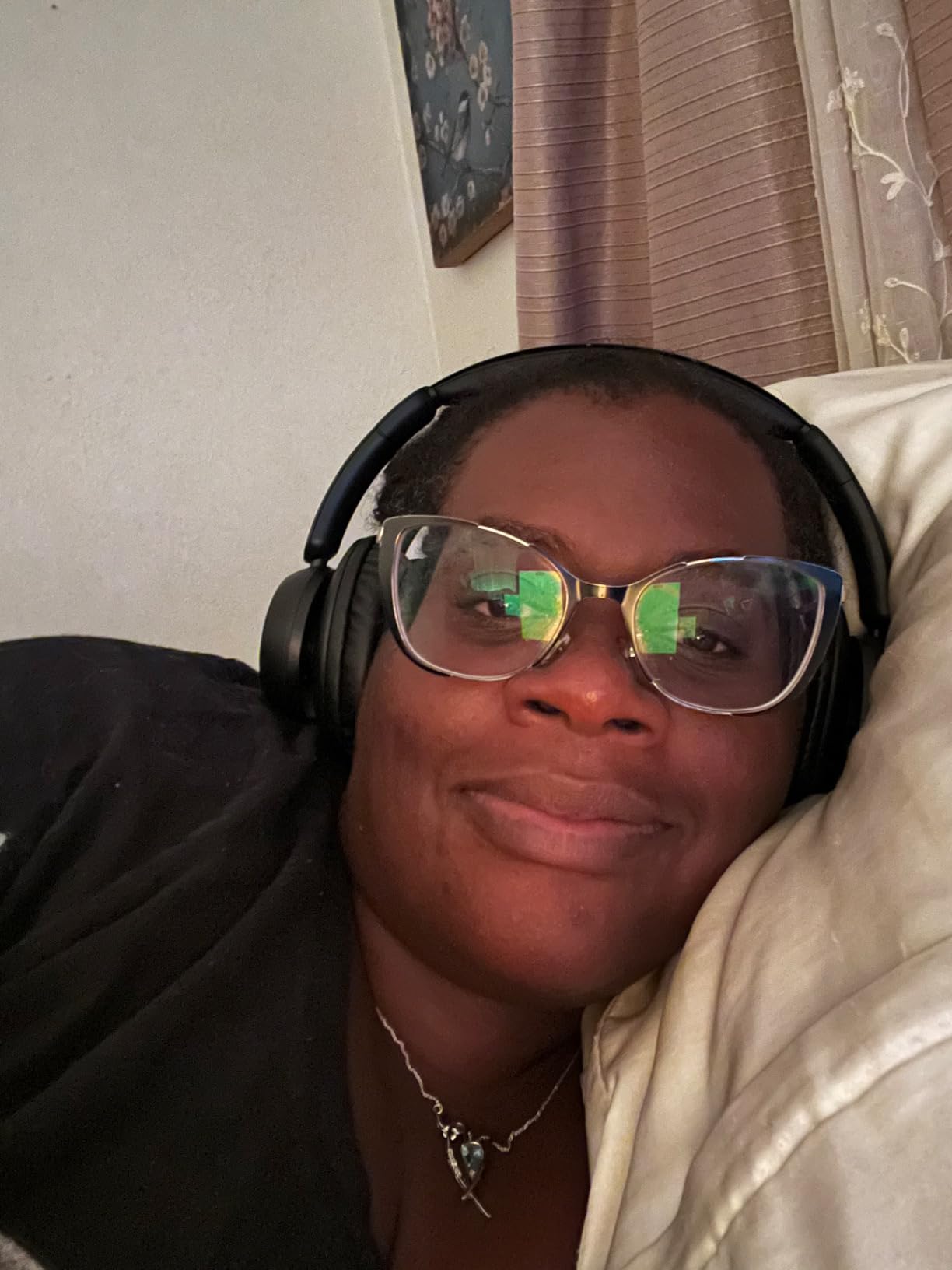
Over-ear cushions in protein leather over memory sponge stay comfortable through long sessions, and the 1.8 pound weight is reasonable. The sound signature is bright, which some listeners find thin and others prefer for speech.
Small Annoyances Worth Knowing
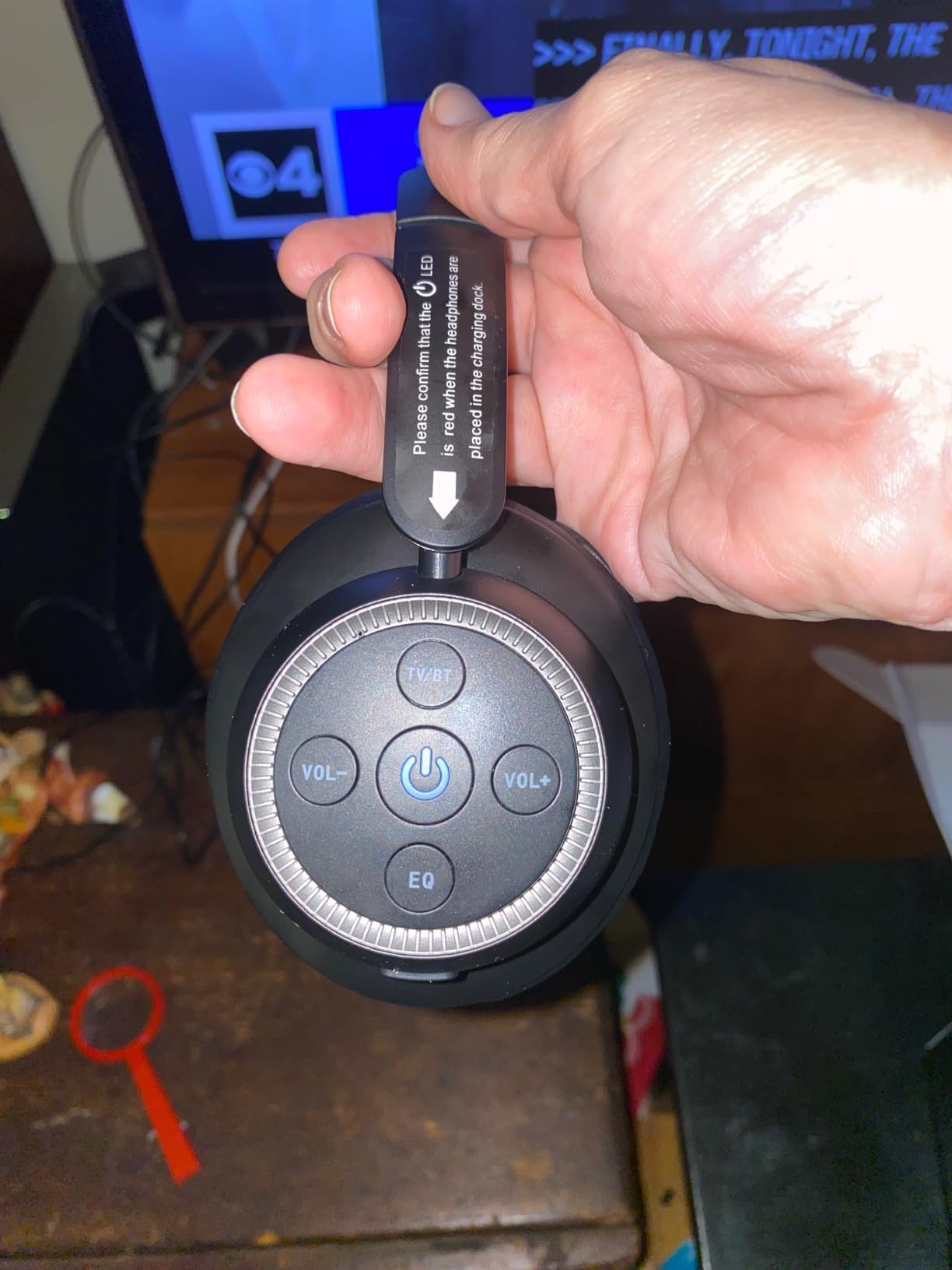
The buttons on the right earcup are flat and identical, so finding the right one without looking is difficult. Contact in the charging cradle is also imperfect, needing a jiggle to seat properly, and the charge light sits awkwardly. A few owners report an intermittent earcup after roughly seven months of use, so treat the first six months as the shakeout period.
7. Avantree HT4186-Q – Best Lightweight Set for Bedtime Viewing
Avantree HT4186-Q – Wireless TV Earbuds with No Delay & Volume Boost
- aptX Adaptive holds latency under 50ms
- 6dB volume boost rescues quiet optical outputs
- Transmitter range lets you move through the house
- Factory-paired so it connects on power-up
- Very light at 196 g for late-night use
- Earbuds fall out of some ear shapes
- Occasional connection drops needing a reset
- No wall charger or written setup guide
This is the set for watching a film in bed with someone asleep in the next room. At 196 grams the earbuds are the lightest thing in the group by a wide margin, and a low profile matters at 1am in a way it never does at 7pm.
The connection is aptX Adaptive over Bluetooth 5.3, with a quoted latency under 50 milliseconds, and the Audikast-3 transmitter takes optical, AUX and RCA input. The earbuds are factory-paired, so they connect the moment they are powered on.
The Optical Volume Boost Explained
Optical outputs on televisions are notoriously quiet, and the usual fix is to turn the TV up so far that the speakers are audible in the next room, which defeats the purpose. The built-in 6dB boost in the transmitter compensates for that, which is the detail that makes this pair usable on a modern TV at all.
Range and Direct TV Pairing
Owners report walking throughout the house and outside without dropouts on the transmitter path. It also pairs directly with Bluetooth-equipped smart TVs, so it can skip the dock entirely on newer sets, though the transmitter route remains the lower-latency option.
In-Ear Fit Is the Whole Argument
The trade-off for the low weight is that in-ear tips fit differently in every ear. Buyers who are not fans of the in-ear format are the main source of criticism, and the supplied tips are not universally comfortable. If you dislike earbuds, this is the wrong headset, and the weight advantage will not save it.
Setup Rough Edges
There is no wall charger in the box and the setup guide is online only, which is a poor experience for anyone setting this up for an older relative. Some owners also report needing a reset before each use, and one instance of the charging path failing after four months. It is not compatible with HDMI-only televisions, which is a real limitation given how common those are.
8. NOUUI NU-TV003 – Best Plug-and-Play Set With Long Battery Life
- 65-hour battery is among the longest claimed in this category
- 40ms latency and 100 ft range on Bluetooth 5.4
- Plug-and-play with no pairing step
- Noise-isolating cups block household conversation
- Dock stores and charges at the same time
- Only around 110 reviews so far
- ANC is listed but TV listening is mainly passive isolation
- Not compatible with HDMI-ARC-only televisions
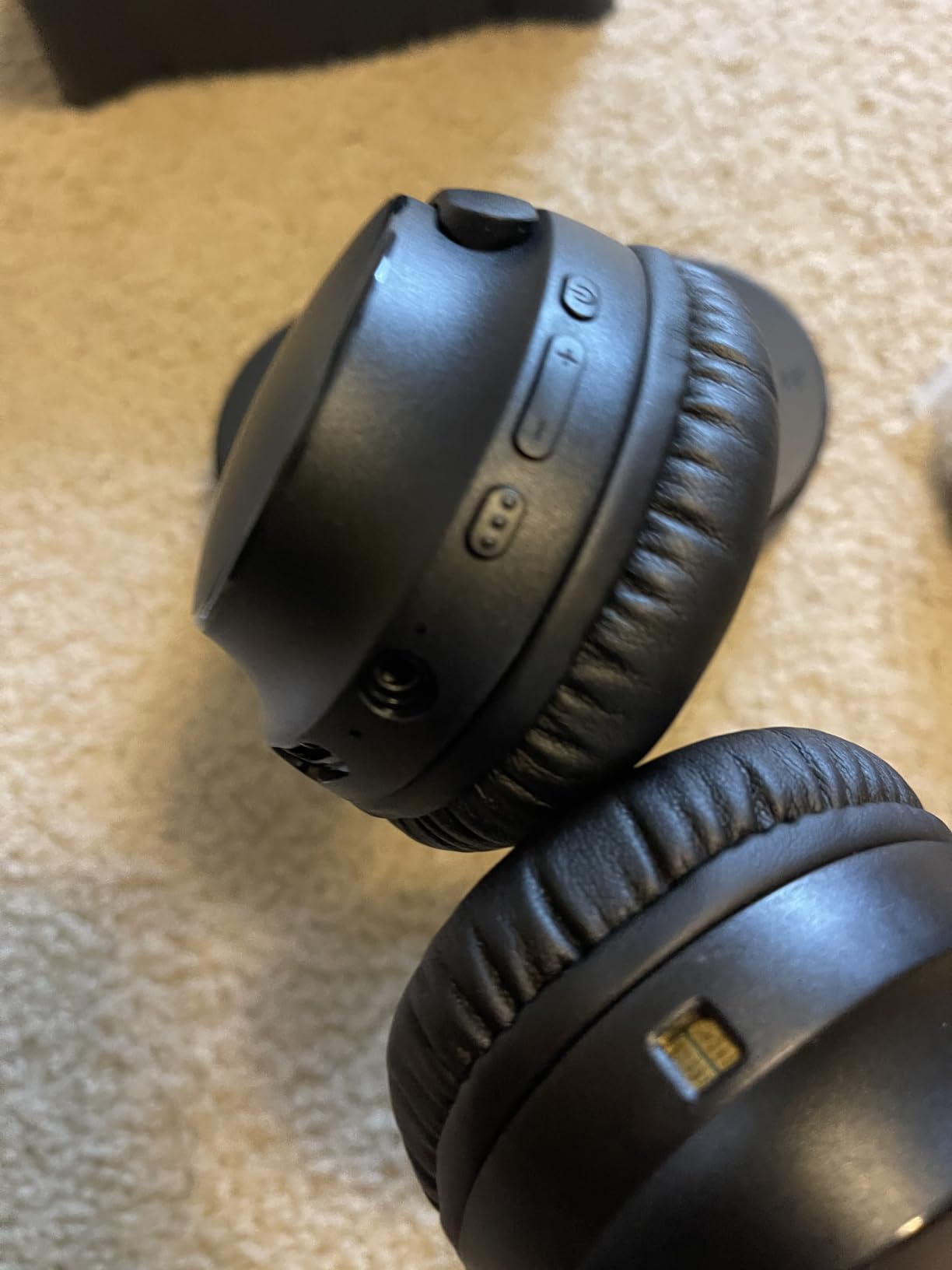
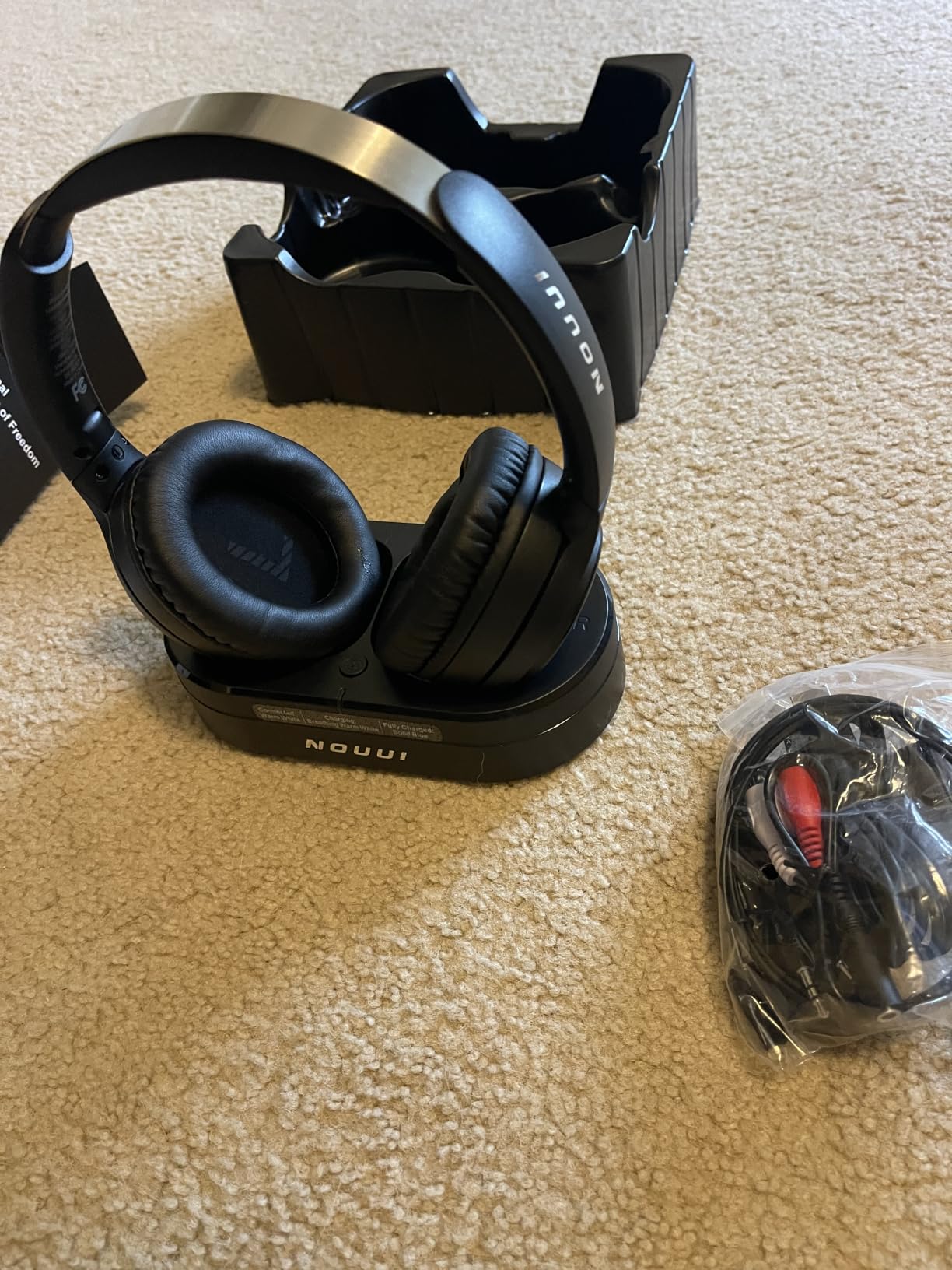
The NOUUI NU-TV003 is the set to buy when the person who will use it is not going to read a manual. Optical, 3.5mm AUX and RCA are all supported, the dock handles the pairing, and the headphones simply turn on and connect.
It also stores in the dock, which turns the charging base into a bedside stand. That solves the small daily problem of headphones ending up behind the television, and it means the set is charged every time it is put down.
Battery Life as the Selling Point
The quoted figure is 65 hours per charge with a five-hour refill, which covers weeks of nightly viewing. Bluetooth 5.4 is specified with 40 millisecond latency and up to 100 feet of range, both of which sit at the good end of what a Bluetooth-based TV set can achieve.
Isolation Rather Than Cancellation
The listing mentions active noise cancellation, but the practical benefit when watching through a TV transmitter is passive isolation from the cups. In testing terms this means household conversation and kitchen noise are significantly reduced, which is the actual goal for late-night viewing.
Worth being clear-eyed about: this is a low-volume, short-review-count product, so its long-term reliability record is thinner than the well-reviewed sets above.
Comfort and Everyday Handling
The over-ear cups use protein leather cushions with touch controls, and the manufacturer backs the set with 18 months of warranty coverage. The over-ear design is a good choice for long sessions, though it is bulkier than the in-ear options here.
One Real Limitation
It will not work with an HDMI-ARC-only television, since there is no analogue or optical path to a transmitter. Anyone buying specifically for an older or unusual set should check the outputs first.
9. Sennheiser RS 255 – Best for Immersive Film Sound
Sennheiser RS 255 TV Headphones + Transmitter Bundle Virtual Surround Sound
- Virtual Surround adds real depth for films
- Speech Clarity mode cuts through background noise
- Automatic levelling stops sudden volume spikes
- 50-hour battery is the longest in this roundup
- One transmitter can broadcast to multiple headsets
- Premium price at the top of the category
- Adjustable hearing profiles add complexity
- On-ear plush cups rather than over-ear sealing
The RS 255 is the most capable set here for film sound. Virtual Surround processing widens the soundstage in a way that is genuinely noticeable on a large television, and it is the feature that separates this from a plain dialogue headset.
Speech Clarity works in the opposite direction, pushing dialogue forward for when the surround effect is working against you. Automatic volume levelling rounds off the whole package by damping sudden spikes, which matters more than it sounds for anyone with a startle response.
Auracast Multi-Headphone Broadcasting
The transmitter can broadcast to multiple compatible headsets at once, each with its own sound settings retained individually. For a family that watches together with individual headsets, that removes the single-transmitter bottleneck of most dual systems.
Connection is flexible: 3.5mm analog and Toslink optical for older televisions, plus Bluetooth 5.4 so the same headphones work with a phone or tablet.
Battery, Build and Comfort
Fifty hours of battery with a user-replaceable cell, which means the set can stay in service for years rather than being retired when the battery degrades. Sensitivity is 104 dB with a 20 Hz to 20 kHz range.
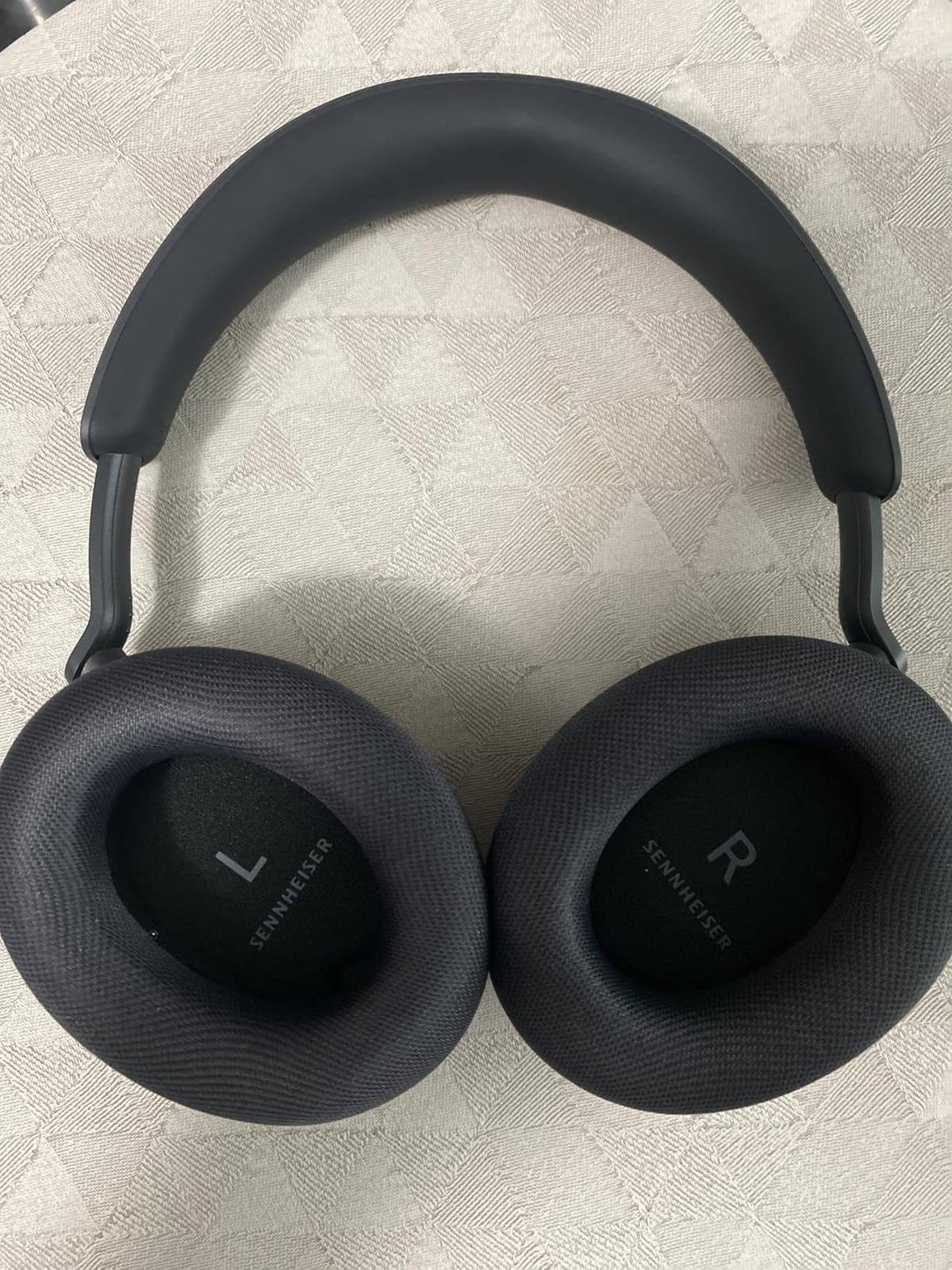
The one comfort caveat is real: these are on-ear plush cups sitting on the ear, not around it, so they seal less well and let in more household noise than a proper over-ear design. At 195 grams they are also among the lighter sets here.
Who Should Skip This One
Anyone who wants to turn it on and have it work immediately. The customizable hearing profiles add a learning curve that the reviews consistently describe as unnecessary complexity for straightforward viewing. And with around a hundred reviews, the long-term track record is shorter than the price would suggest.
10. 1Mii ClearLinkTV H3 – Best Battery Life and EQ Control
1Mii ClearLinkTV H3 Wireless Headphones for TV Watching for Seniors
- 75-hour battery is the highest figure in this group
- 2.4GHz under 40ms with 100 ft range
- Three EQ presets for different content
- Independent volume aimed at senior users
- Bypass mode supports a soundbar or a second headset
- Only around 38 reviews so reliability is unproven
- Not compatible with HDMI-ARC-only televisions
- Charge indicator needs the headphones seated on the dock
The ClearLinkTV H3 has the highest average rating of any set we tested, and the few reviews it has are consistently positive. It is also the set we would flag most carefully, because thirty-eight reviews is not enough history to make a confident long-term recommendation.
On the specification side it is competitive with much more established products: 2.4GHz at under 40 milliseconds, 100 feet of range, and a claimed 75 hours of battery per charge, the longest figure in this group.
Three EQ Presets Instead of One Setting
TV, Movie and Music modes change the tone curve rather than just the level. For a senior viewer this is a meaningful difference: a TV preset can lift dialogue and reduce the aggressive high end that many small speakers exaggerate, without the user touching a single control.
Independent volume control per headset and an ambient awareness design complete the senior-friendly feature set, and the lightweight build with memory foam cushions is aimed at long, comfortable wear.
Bypass for Shared Household Viewing
Bypass mode lets a soundbar or wired speakers keep playing from the same TV output, and it can also handle a second H3 unit. That covers both the co-listening scenario and the case where a second pair is needed later without buying another base.
Connectivity covers 3.5mm, RCA and optical, plus Bluetooth 6.0 for phones and laptops, so it works with almost any television that has an analogue or optical output.
Where to Exercise Caution
The small review base is the honest limitation. A 4.6 average from 38 reviewers tells you current owners are happy, not that the set will still work in three years. It is also not compatible with HDMI-ARC-only televisions, and the charge indicator only lights when the headphones are properly seated on the dock.
Why Lip Sync Breaks and How to Fix It
Audio that lags the picture is the complaint that drives people back to wired headphones, and in one widely-cited thread on r/HeadphoneAdvice the advice was blunt: badly out-of-sync lip sync will drive you mad, so you will end up wired or buying a set made for the purpose.
That is the right instinct, but it helps to know where the delay actually comes from, because each layer has its own fix.
Codec delay. This is the biggest and most fixable layer. Standard SBC and AAC add roughly 100 to 200 milliseconds. aptX Low Latency or aptX Adaptive cut that dramatically, but only if both the transmitter and the headset support it. Many smart TVs will not negotiate a low-latency codec at all, which is why pairing directly to the television can be disappointing.
Transmission delay. A dedicated RF or 2.4GHz link adds very little. Forum discussion puts RF at roughly 40 milliseconds, which is about one frame at 24 frames per second and well inside the range most viewers stop noticing.
TV processing delay. Soundbars, TVs with built-in processing and any object audio enhancement add their own lag. Turning off sound effects, equalisation and dialogue enhancement on the television often fixes sync instantly, at the cost of losing those features.
Display delay. Some televisions process video faster than audio to correct motion. Game mode and sports mode settings can shift this. If only games are out of sync, the display is the likely culprit rather than your headphones.
The fix order that works: change the TV’s audio output format to PCM, disable TV sound processing, switch the headset to a low-latency codec if the transmitter supports one, and move to a dedicated RF dock if it still drifts. Wired is the last resort because it removes the problem at the cost of freedom.
What to Avoid When Buying TV Headphones
Most of the results in a shopping carousel for this category are unbranded headsets in the low double figures with two to ten ratings. They are not dangerous, they are just a poor use of money, and the failure mode is predictable: latency claims that do not hold, cups that crack, and no support when something stops working.
Three specific traps are worth naming.
TV-native Bluetooth with no codec information. If a listing does not state aptX Low Latency or aptX Adaptive, assume SBC and assume delay. Many of these sets pair beautifully and then disappoint in the first film.
On-ear cups described as over-ear. The Sennheiser RS 255 is an honest example of a genuine on-ear design, and its review file says so plainly. A product claiming over-ear comfort while sitting on the ear will disappoint after hour three.
HDMI-only televisions. Several sets in this roundup cannot work with a TV that outputs audio only through HDMI ARC. Check the output panel of your television before choosing, not after.
One more failure mode is worth understanding because it costs nothing to avoid: wired headphones through a TV’s optical or 3.5mm output frequently sound flat compared with the same headphones driven by a computer DAC. The reason is that the TV’s output path is a basic stereo feed that bypasses whatever processing and equalisation your headphone chain normally applies. If you already own good wired headphones and want to keep them, route the TV through a small DAC or amplifier rather than straight into the TV’s own output, and our cable headphone guide covers the pairing side.
How to Choose Headphones for TV Watching
Work through these six questions in order. The first three decide whether the set works at all, and the last three decide whether you are happy with it every evening.
What Are Your Television’s Actual Outputs?
Look at the back of the set before anything else. RCA red-and-white is the most common on older televisions, optical TOSLINK is standard on most mid-range sets, a 3.5mm jack appears on a minority, and Bluetooth appears on smart TVs from the last six years or so. If the set only outputs through HDMI ARC, you need a transmitter in the chain because no headset will connect directly.
How Much Latency Can You Live With?
For talk shows, news and podcasts, almost anything works. For films, live sport and anything with fast visual cutting, aim for a dedicated RF or 2.4GHz dock at 40 milliseconds or below, or a Bluetooth set with aptX Low Latency or aptX Adaptive. Anything above 100 milliseconds on screen will be obvious.
Range is the second half of the same decision. Sixty to 100 feet covers a normal home. The Sennheiser RS 5200’s quoted 229.7 feet matters if you want to walk between rooms, though most people never need it.
How Many People Are Listening?
This is the decision most guides skip. If it is one person, a single headset is simpler. If it is two people who want different volumes, a dual set with independent controls is worth the extra money and removes a recurring domestic friction entirely. If it is a family, check whether the transmitter supports multiple headsets, as the Sennheiser RS 255 does through Auracast.
What About Codecs?
aptX Low Latency and aptX Adaptive solve the delay problem and are the two worth paying attention to. aptX Lossless and LDAC solve a different problem, higher fidelity, at the cost of bandwidth and therefore latency. AAC and SBC are the baseline that everything falls back to. For television, prioritise the latency codecs over the fidelity ones.
For our thinking on a related setup, see our TV stand sizing guide, which matters once you start routing cables to a dock behind the panel.
Will You Actually Wear Them for Three Hours?
Comfort is the thing people underrate. In-ear designs are lightest but fit-dependent, on-ear designs are light but seal poorly, and over-ear designs are comfortable and heavy. A clamp that gets warm, or ear tips that irritate, will end the experiment within a fortnight no matter how good the latency is.
Headphone weight figures give a fair hint. The Avantree HT4186-Q at 196 grams is barely noticeable; the Avantree HT41899 at 882 grams is noticeable by hour two, especially with glasses.
Do You Need Hearing Features or Volume Headroom?
If the reason for the purchase is a relative struggling to hear dialogue, prioritise adjustable controls over sound quality. Per-ear balance, a tone selector, clear-voice processing and an ambient awareness mode do more than extra volume, which is often limited by the optical output level of the television itself. Watch for a volume boost in the transmitter for exactly this reason.
The key features to consider, in order of importance, are: latency and how it is achieved, the connection path your television actually supports, wireless range, battery life and whether the battery is replaceable, comfort over a long session, and any dialogue or hearing-specific controls.
Frequently Asked Questions
What is the best way to connect headphones to my TV?
There are four options. Use the TV’s built-in Bluetooth for the quickest setup but expect delay, as most TVs only offer SBC or AAC. Use a Bluetooth transmitter with aptX Low Latency or aptX Adaptive for low delay using headphones you already own. Use a dedicated RF or 2.4GHz dock for the most reliable sync at roughly 30 to 40 milliseconds, and for a TV with no Bluetooth. Use a wired connection for zero transmission delay if you can tolerate the cable.
Why are my Bluetooth headphones delayed when I connect them to my TV?
The most common cause is the codec. Standard SBC and AAC add roughly 100 to 200 milliseconds, and most smart TVs will not negotiate a low-latency codec at all. TV sound processing and some display modes add more. Fix it by setting the TV’s digital audio format to PCM, turning off sound effects, and moving to a dedicated RF or 2.4GHz dock if it still drifts.
What headphones can I use to listen to TV?
Any headphones can work, but for wireless you need two things: a low-latency connection, either RF, 2.4GHz or aptX Low Latency, and a connection path your television actually supports. For most homes a dedicated transmitter dock is the lowest-friction option, and for a television with no Bluetooth or only RCA output it is the only practical one. Wired works anywhere with zero delay.
Are Bluetooth headphones good for watching TV?
For casual viewing, talk shows and podcasts, yes, and the convenience of pairing directly to a smart TV is genuine. For films, live sport and anything with fast visual cutting, standard Bluetooth is not good enough, because the codec adds enough delay for lip sync to visibly drift. In those cases use a transmitter with a low-latency codec or a dedicated RF dock.
Can I listen to TV with headphones while others listen normally?
Yes, but you need a system with audio passthrough. The transmitter keeps feeding the television’s own output to the speakers or soundbar while feeding the headphones privately, and each listener sets their own volume. Plugging headphones directly into a TV or amplifier usually silences the speakers, which is why passthrough is worth checking before you buy.
What are the best headphones for seniors watching TV?
Look for adjustable hearing controls rather than sound quality alone. Per-ear balance, a tone selector, clear-voice or speech-clarity processing and a large on-headset volume control matter more than driver size. A transmitter with a volume boost also compensates for the quiet output level of optical sockets, which is the most common complaint from hard-of-hearing viewers.
How do I connect Bluetooth headphones to a TV that doesn’t have Bluetooth?
Plug a Bluetooth transmitter into the television’s optical, RCA or 3.5mm output, power it up, then pair your headphones to the transmitter. Check the codec list first, because aptX Low Latency or aptX Adaptive is what keeps the delay down, and set the TV’s digital audio format to PCM if the optical output stays silent. This is also the cheapest way to use ANC headphones you already own.
Why do audiophiles avoid certain Bluetooth headphones for TV listening?
Two reasons, and the second is less discussed. The first is compression and latency, which is a genuine loss. The second is that a TV’s optical or RCA output is a basic stereo feed that bypasses the processing and equalisation a headphone chain normally applies, so the same headphones can sound flat and lifeless through a television compared with a computer DAC. Routing the TV through a small DAC fixes it.
The Best Headphones for TV Watching in 2026
For most households the answer is the Avantree HT41899, our editor’s choice: two headsets with independent volume, a sub-40 millisecond link, and a transmitter that connects without a pairing ritual. It is also the best-supported set in the group by review volume, which matters when something goes wrong at 9pm.
If you are buying for yourself alone and want the best sound, look at the Sennheiser RS 5200 for its RF link and reach, or the Sennheiser RS 255 if film immersion matters more than the learning curve. For a couple watching at different volumes, the Avantree Duet adds passthrough and a 30 millisecond figure.
For a relative who is hard of hearing, the SIMOLIO SM-823D Pro is the one with per-ear balance and tone controls that actually address the problem. On a tight budget, the ZUPVIY M98A does the essential job with a genuine 2.4GHz path and a useful second Bluetooth mode. And if the set in the corner is an older television with RCA output, check the television’s outputs before you buy anything, then pick a dock that includes the cables.
Whatever you choose, make sure the audio keeps up with the picture. That is the only spec in this category that cannot be fixed later. Check the current details for any of these sets using the buttons above, and pick a night this week to test it on something with fast cuts rather than a talk show.