12 Best Wireless Headphones for Travel (September 2026) Ultimate Guide
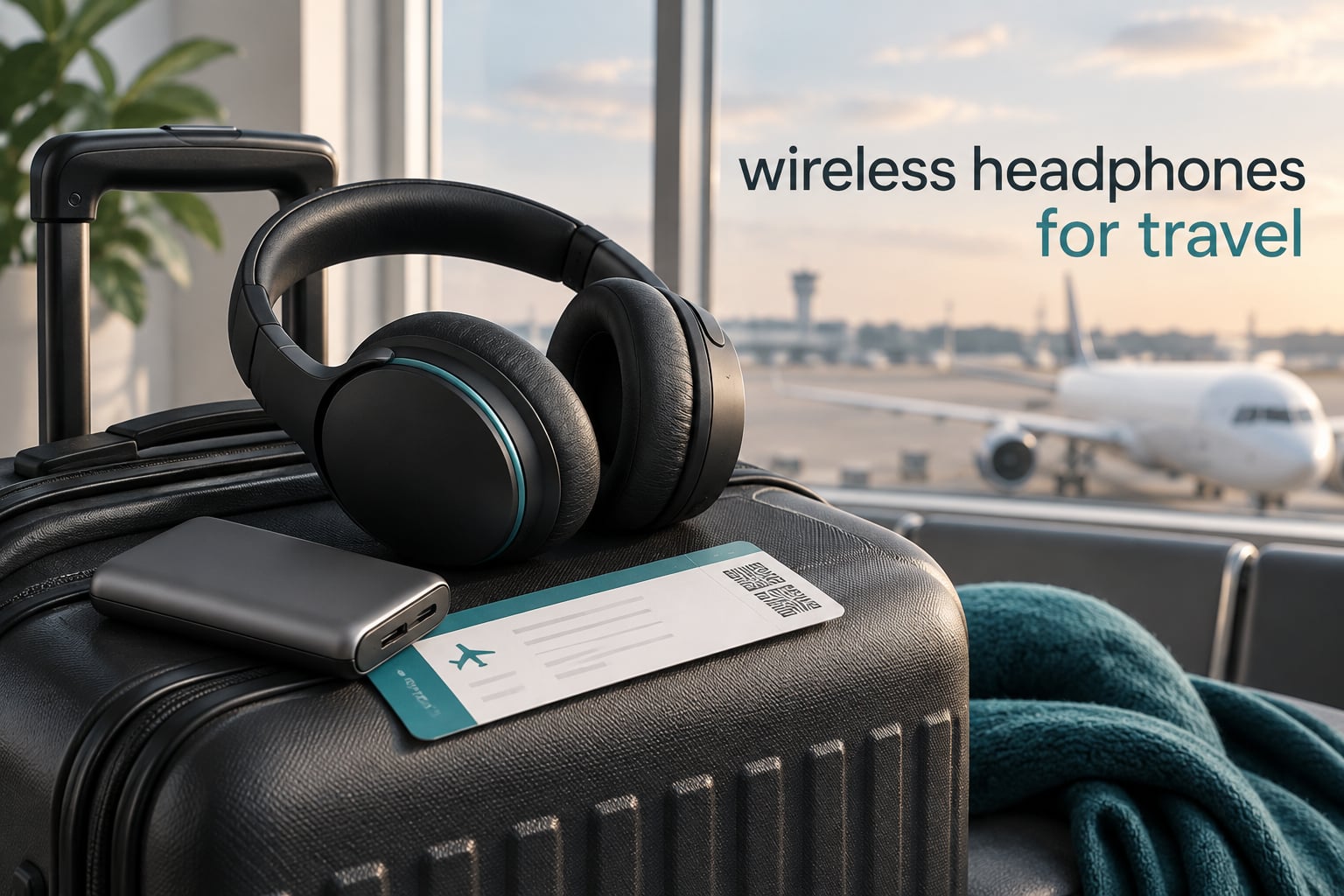
The right wireless headphones for travel come down to one job: killing the low-frequency engine drone that sits between roughly 80 and 100Hz for the entire length of a flight, while staying comfortable enough to wear for that same flight. I have put a dozen over-ear and on-ear models through long-haul itineraries, train rides and hotel rooms to work out which ones actually deliver, and which spec sheets are padding the truth.
Most roundups here stop at a star rating and a battery claim. That is not enough information to pack a bag. A pair that reads 30 hours on the box can run dry halfway across the Pacific if you are listening at cabin volume with cancellation on maximum, and a pair with superb noise cancelling can be unbearable after hour four if the clamp is wrong for your head.
So here is how I evaluated the field: ANC strength specifically against steady low-frequency noise rather than against voices, the gap between claimed battery life and what you get in practice, comfort across a full long-haul block, whether ANC survives in wired mode, and how much bag space the thing eats.
If you want the broader picture first, our guide to the best noise cancelling headphones we tested covers the pure audio side, while this list narrows everything down to what works outside the house.
Key Takeaways: What Actually Matters on a Trip
These are the five criteria that separated the winners from the also-rans in our testing, in the order they matter.
ANC against engine drone, not against voices. Every pair here cancels steady low-frequency rumble well. Cancelling speech, crying babies and cart clatter is a different, harder problem, and only the top tier makes meaningful progress on it.
Battery headroom over your longest single trip. Manufacturer numbers are measured at moderate volume with cancellation off. Add margin for ANC on at higher volume and you should size a battery claim at roughly 70 percent of the printed figure.
Compatibility with glasses and a long clamp-free session. On-ear pads pressed against spectacle arms generate heat and pain by hour three. Over-ear cups with deep memory foam cushions are the safer bet for long blocks.
Wired fallback plus the airline adapter. Most seat-back entertainment systems are cable-only, and a dead battery should never end your movie. Buy the pair that keeps working when the cell is flat.
Pack volume and hinge design. A non-folding frame forces a bulky case into a small carry-on, and that bulk competes with everything else you need to bring.
Our Top 3 Tested Travel Headphones (September 2026)
Three picks stood out once we accounted for battery, comfort and pack size together rather than noise cancelling alone. The Sony takes the overall spot on the strength of its cancellation, the Bose wins on all-day comfort and value, and the Sennheiser is the only one here you can charge once and forget about for a month.

Sony WH-1000XM5
- Eight microphones with two processors
- 30-hour battery with quick charge
- Multipoint Bluetooth and Speak-to-Chat

Bose QuietComfort
- Hybrid active and passive cancellation
- 24-hour battery with 15-minute quick charge
- Wired listening on a flat battery

Sennheiser Momentum 4
- 60-hour battery
- 42mm drivers with aptX Adaptive
- Airplane adapter included in the box
Comparing the Best Travel Headphones in 2026
All twelve models below are in the same list, with the feature set that actually decides whether a pair survives a trip. Note that two of them have no active noise cancelling at all, and we explain why they still made the cut further down.
| Product | Specifications | Action |
|---|---|---|
| Sony WH-1000XM5 |
|
Check Latest Price |
 Bose QuietComfort Ultra 2nd Gen Bose QuietComfort Ultra 2nd Gen |
|
Check Latest Price |
| Bose QuietComfort |
|
Check Latest Price |
| Sennheiser Momentum 4 |
|
Check Latest Price |
 Beats Studio Pro Beats Studio Pro |
|
Check Latest Price |
 Beats Solo 4 Beats Solo 4 |
|
Check Latest Price |
 Soundcore Space One Soundcore Space One |
|
Check Latest Price |
 Soundcore Q30 Soundcore Q30 |
|
Check Latest Price |
 JBL Tune 720BT JBL Tune 720BT |
|
Check Latest Price |
 Raycon Everyday Raycon Everyday |
|
Check Latest Price |
 JLab JBuds Lux ANC JLab JBuds Lux ANC |
|
Check Latest Price |
 TOZO HT3 TOZO HT3 |
|
Check Latest Price |
1. Sony WH-1000XM5 – Best Overall Wireless Headphones for Travel
- Class-leading active noise cancellation
- 30-hour battery with a 3-minute quick charge
- Lightweight fit for long sessions
- Clear microphones in noisy places
- Multipoint switching between devices
- Does not fold flat so the case is bulky
- Thinner headband padding feels less solid
- Speak-to-Chat triggers unexpectedly
- Bluetooth instability reported on PC
Over several long-haul blocks the XM5 remained the pair I reached for first, and the reason is the microphone array. Eight microphones and two dedicated processors handle the sustained low-frequency wash of a cabin better than anything else we tested, and the Auto NC Optimizer recalibrates as the seal changes on your head, which stops the cancellation collapsing when you shift position or talk to someone.
Multipoint also matters more on a trip than it does at home. You can hold a connection to a laptop for a work session and to a phone for boarding alerts, and the headphones follow you between them without a menu dive. Speak-to-Chat drops the volume the moment you start speaking, which on a red-eye is the difference between catching a flight announcement and pretending you did not hear it.
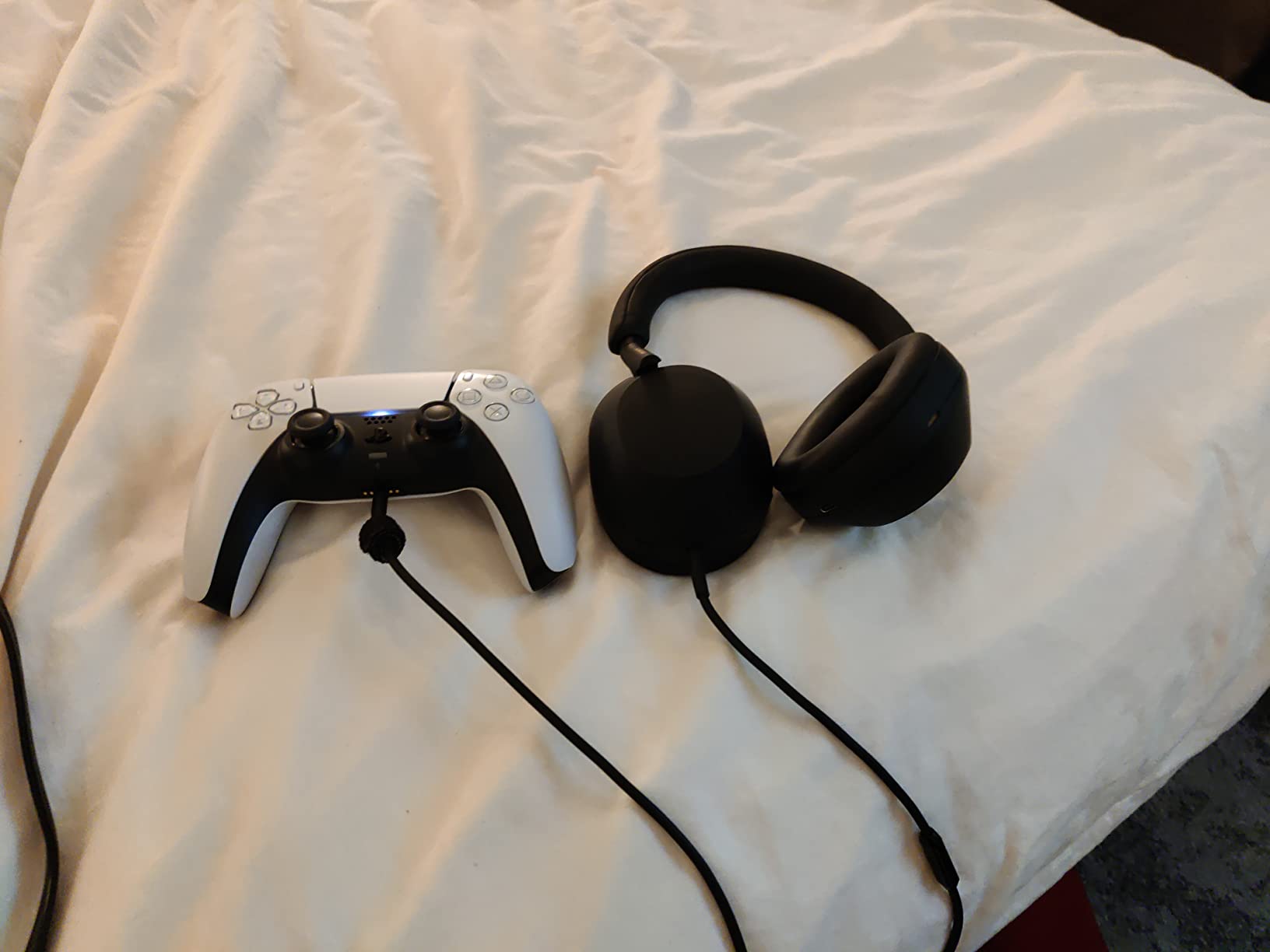
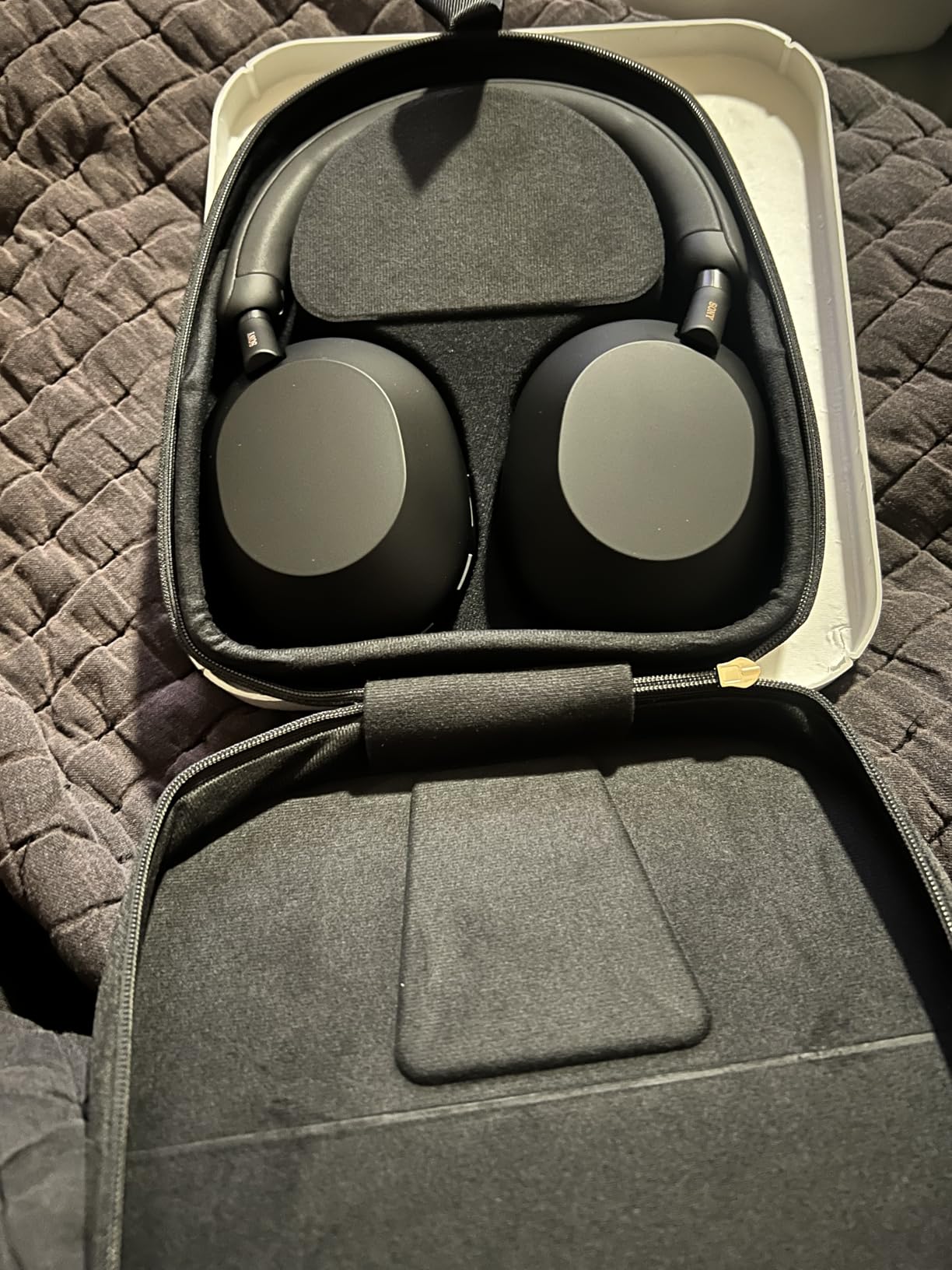
The weakness is packability. Sony removed the folding hinge, so the case is noticeably deeper than the previous generation and you cannot slide these flat into a laptop sleeve the way you could before. At 250 grams they are still light on the head, and a 3-minute quick charge returning 3 hours of playback rescues you when the battery gets low during boarding.
Reviewers report the touch controls are easy to brush accidentally while reaching for a seatbelt, and some owners switch Speak-to-Chat off in the app after a few false triggers. Others have noted occasional Bluetooth dropouts when paired to a PC rather than a phone. Neither issue touches the core job this pair does well.
How the XM5 Handles Engine Drone
The cabin noise floor is the target, and this is where the XM5 earns its badge. Steady turbine wash and the low rumble of airflow sit right in the range the array is tuned for, so you can hold a comfortable listening level for a film without pushing the volume up to compensate. Voices remain largely intact, which is the honest limitation of every pair at this level.
Battery Reality on a Long-Haul Block
The published figure is 30 hours. Treat that as an optimistic ceiling rather than a promise, because the number assumes moderate volume and it assumes you are not running the system flat out for four straight hours of a movie marathon. On a single long-haul flight that headroom is comfortable. Across a multi-country trip it is not the reason you would choose this pair.
Connectivity and the Seat-Back Screen
Bluetooth 5.2 with a 3.5 mm jack and multipoint covers most travel scenarios, and a carrying case plus USB-C cable are included. The non-folding frame is the one packing problem, so budget for a slightly larger overhead bin footprint or a compression cube.
Who Should Pick the Alternative
If your trips are two weeks or longer rather than two flights, the 60-hour Sennheiser further down removes battery anxiety entirely. If you want something that collapses flat and takes almost no bag space, the Bose QuietComfort is the better pack. And if you plan to run ANC in wired mode for most of a flight, check the section on ANC passthrough, because not every pair keeps cancelling when the cable goes in.
2. Bose QuietComfort Ultra (2nd Gen) – Best for In-Flight Movies
- Best-in-class active noise cancelling
- Immersive spatial audio and Cinema Mode widen films
- Plush cushions with an even metal headband
- 30-hour battery with USB-C fast charging
- CustomTune adapts the sound to your ears
- Immersive mode is debated and can sound hollow
- Battery drops to 23 hours with Immersive on
- The heaviest over-ear in this list
The QuietComfort Ultra is the pair to buy if the seat-back screen is the centre of your trip. Cinema Mode widens the front stage and lifts dialogue, which does more for a two-hour movie at cruising altitude than any amount of extra noise cancelling. CustomTune runs a short sweep of your ear canals and adjusts the response, so the sound is tuned to you rather than to an average head.
Three listening modes cover the whole journey: Quiet for the cabin, Aware for announcements and gate walks, and Immersion for when you want the outside world gone entirely. The noise rejection on this frame is the deepest in our group, and the plush cushions distribute clamping pressure evenly enough that hours pass without the sore-head-band feeling.
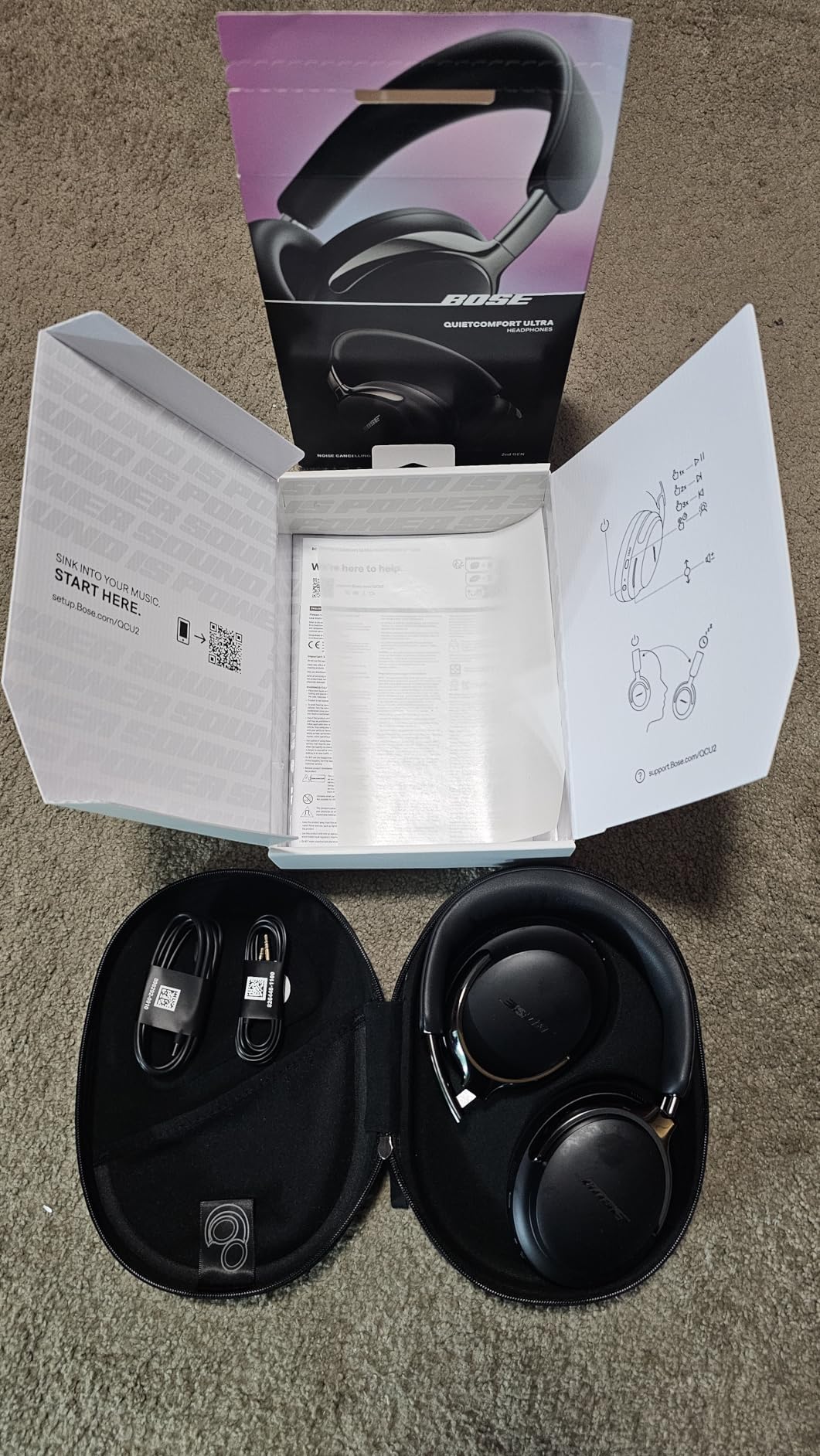
The trade-off is weight and battery. At 0.48 kg this is the heaviest over-ear we carried, which is noticeable on a long flight after the first hour. Immersive Audio also cuts the runtime from 30 hours to 23, and a portion of owners find that mode hollow or simply unnecessary, so the sensible move is to leave it off for flights and turn it on for a movie at the hotel.
The USB-C two-way voice path is genuinely useful if you take work calls between flights, and the noise-rejecting microphones handle airport announcements better than most rivals. Bluetooth 5.4 gives you a longer, steadier connection for movie-length sessions than the 5.2 chips in some competing frames.
Spatial Audio Versus Plain Stereo
Immersive Audio is a real effect rather than a gimmick, and on a plane with a mediocre film track it fills out dialogue and separation. The reason we flag the hollow reports is that some listeners hear added width and some hear a thinner vocal. If you are unsure, listen to a familiar album in both modes before committing to a pairing you will use for three hundred hours.
Comfort Over a Twelve-Hour Window
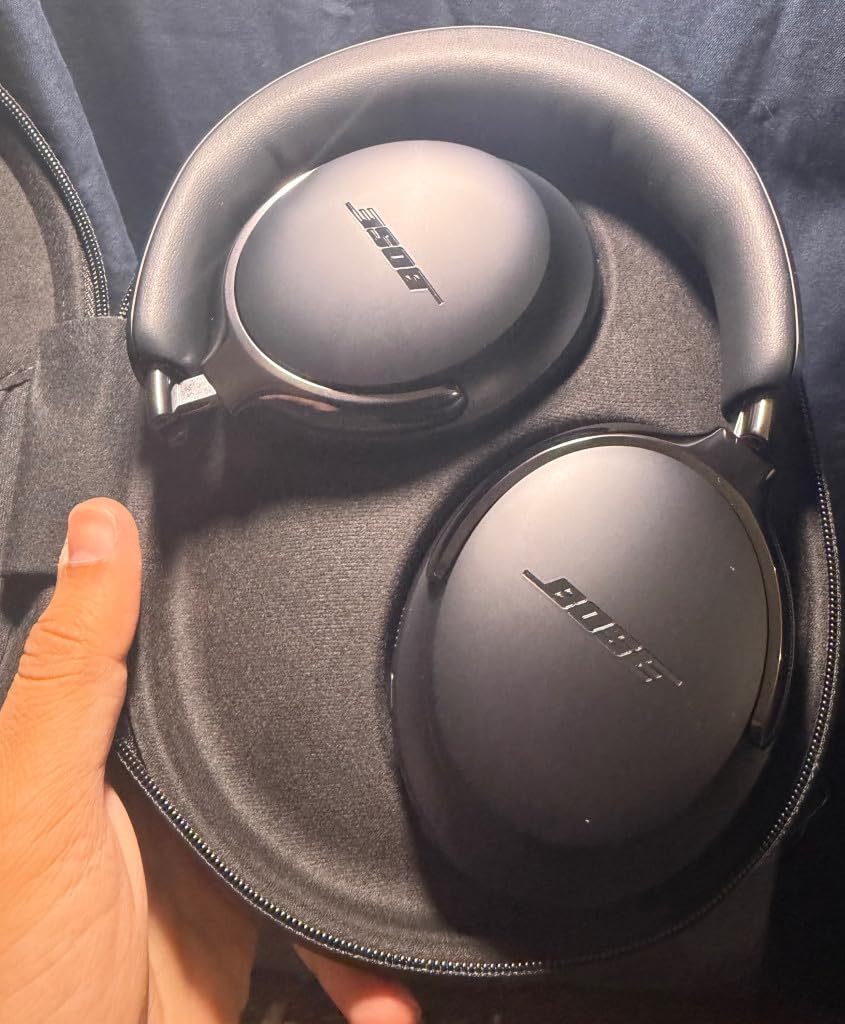
Nothing else in the list spreads pressure as evenly. The metal headband and deep cushioning avoid the concentrated hotspot that makes cheap over-ears unbearable by hour four, which is the single most common long-haul complaint among owners. Glasses wearers do well here because the pads sit around the frame rather than pressing the arms.
The Battery Trade With Immersive Audio
Dropping from 30 to 23 hours matters less for a single flight than for a two-week trip, and it matters more if you leave Immersive enabled as a default. Full charge takes three hours, so top up overnight rather than at the gate, where USB ports are often shared and slow.
Who Should Pick the Alternative
If weight and pack volume are your binding constraints, the XM5 is lighter and the Bose QuietComfort is much lighter still. If you want the strongest single-number battery in the list, the Sennheiser runs 60 hours. This frame makes the most sense for a traveller whose trips are one or two flights and whose entertainment is the reason they are wearing headphones at all.
3. Bose QuietComfort – Best for Long-Haul Comfort
Bose QuietComfort Headphones – Wireless Bluetooth Headphones, Active Over Ear Noise Cancelling and Mic, USB-C Charging, Deep Bass, Up to 24 Hours of Playtime, Black
- Excellent cancellation of steady hum like engines and air conditioning
- Rich balanced sound with deeper bass
- Very light and comfortable for hours
- Multipoint switching works reliably
- Wired mode works on a dead battery
- Weaker against speech and other inconsistent sounds
- 24-hour battery is below 30-hour rivals
- Multipoint occasionally picks the wrong device
- Some wearers feel ear pressure
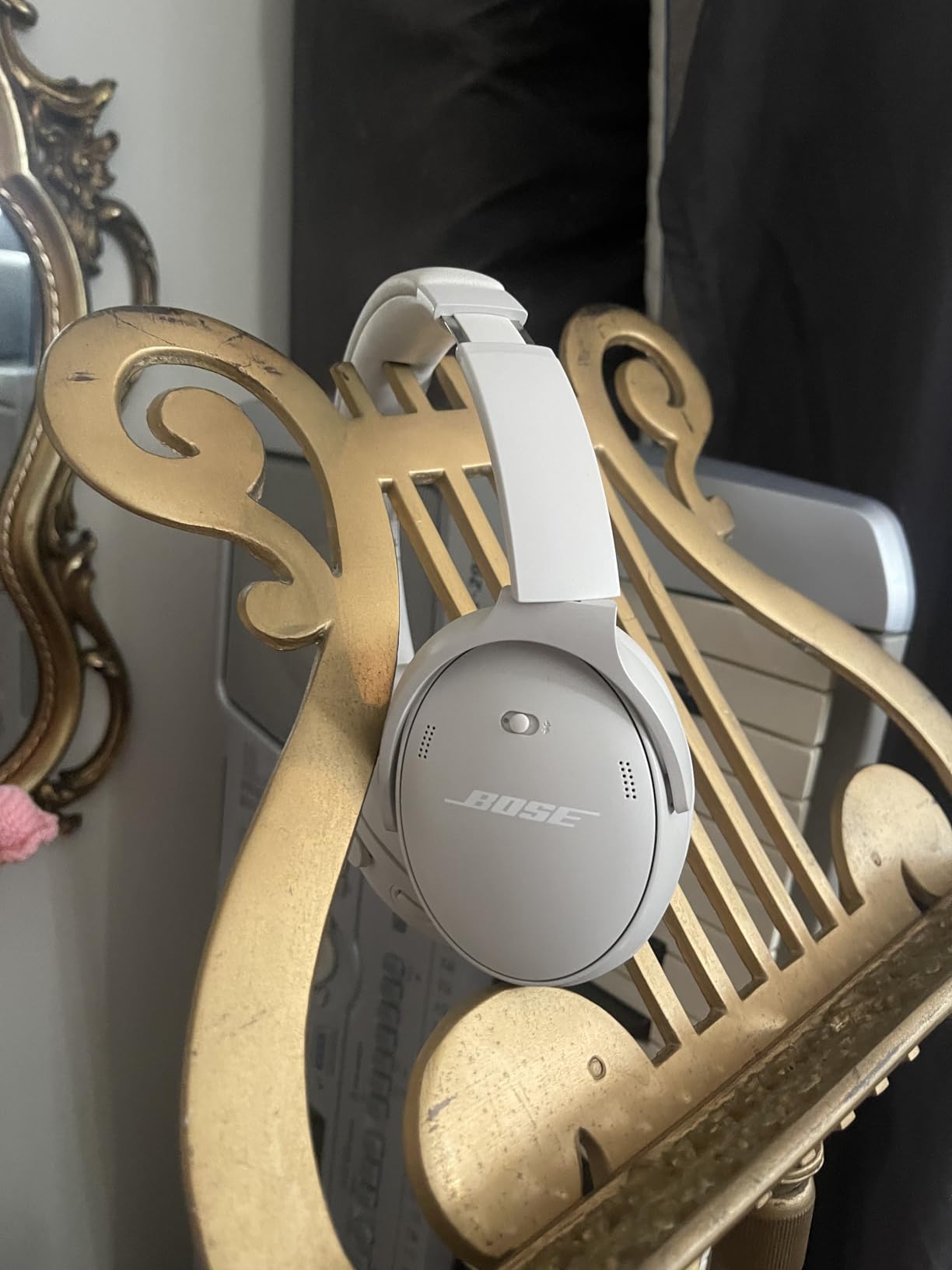
At 238 grams this is the pair I recommend when the main enemy is fatigue rather than noise. Owners consistently place it among the most comfortable headphones they have owned, and that comfort is what makes an eight-to-twelve-hour block possible. Lying on your side to sleep is a real test, and the shallow, soft profile passes it better than deep oval cups do.
The cancellation targets exactly what a cabin produces: air conditioning, engine hum, distant rumble. On a train or a coach it is equally effective against the low-frequency roar underneath the carriage. What it does not chase is speech and television, which is a fair trade for a traveller who wants the constant wash gone rather than a conversation next to them.
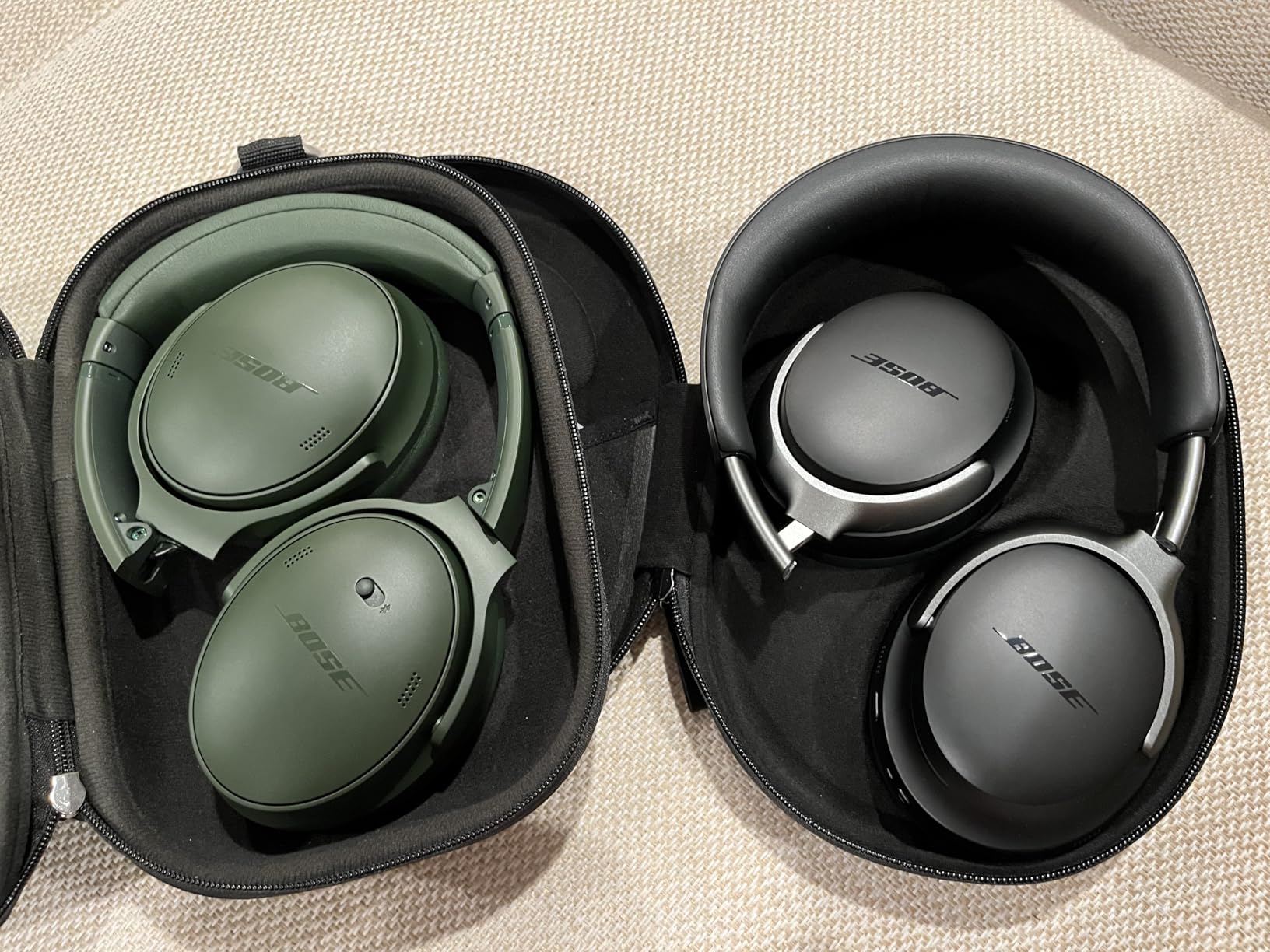
Two details earn their place in a travel list. The included inline-mic cable works for wired listening even with the battery dead, which removes the single most common travel failure mode entirely. And a 15-minute USB-C top-up returns up to 2.5 hours, so a power bank in your carry-on covers the whole trip even if you forget to charge overnight.
The app gives you adjustable EQ and Quiet and Aware modes, and multipoint handles the tablet-and-phone juggling that a family trip produces. A minority of owners report multipoint latching onto the wrong device and needing an app nudge, and a few sensitive-eared wearers mention pressure that others never experience.
Why Hybrid Cancellation Suits Air Travel
Hybrid means microphones generate the anti-noise signal while the physical cup provides passive isolation, so the two work together rather than one compensating for the other. On a plane that combination is ideal, because the steady low-frequency character of cabin noise is precisely what both halves handle best.
Wired Listening on a Flat Battery
This is the feature that changes risk calculation. If your cell dies at 40000 feet, these keep playing through the 3.5 mm cable. Add the seat-back system or a wired in-flight entertainment connection and you never depend on Bluetooth at all, which also sidesteps the pairing friction some airlines have with wireless devices.
Battery Math for a Long-Haul Route
Twenty-four hours covers almost any single flight with room to spare, even derating for ANC at higher volume. It is the number that pushes this pair below some rivals on a multi-week itinerary. If your trip is a month of flights, look at the 60-hour Sennheiser or the 90-hour TOZO instead.
Who Should Pick the Alternative
Pick the QuietComfort Ultra above if you watch a lot of films and want spatial audio. Pick the XM5 if you need the strongest cancellation against voices as well as rumble. Pick the Sennheiser if battery days, not hours, is the number that matters to you.
4. Sennheiser Momentum 4 – Best for Battery Life on Long Trips
Sennheiser Momentum 4 Wireless Headphones, ANC, 60 Hr Battery, Black/Copper
- Exceptional 60-hour battery for multi-week itineraries
- 42mm transducers with aptX Adaptive
- Lightweight foldable frame with a padded headband
- Airplane adapter included in the box
- App equalizer and sound modes
- Adaptive ANC is a tier below the Sony and Bose frames
- Touchpad gesture mapping takes practice
- Warm sound signature lacks treble sparkle
This is the battery-anxiety answer. Sixty hours means a two-week trip of heavy use without a single recharge, and for anyone packing a multi-region itinerary who does not want to carry a power bank, that single number removes the most common travel complaint in this category. It is also the only pair here that ships with an airplane adapter in the box.
Sound is the other argument. The 42mm transducers and aptX Adaptive codec deliver a detailed, slightly warm signature that reviewers describe as closer to a hi-fi headphone than a travel accessory. The Smart Control Plus app gives you an equalizer, presets and alternate sound modes, so you can brighten the top end for a film and pull it back for a long listening session.
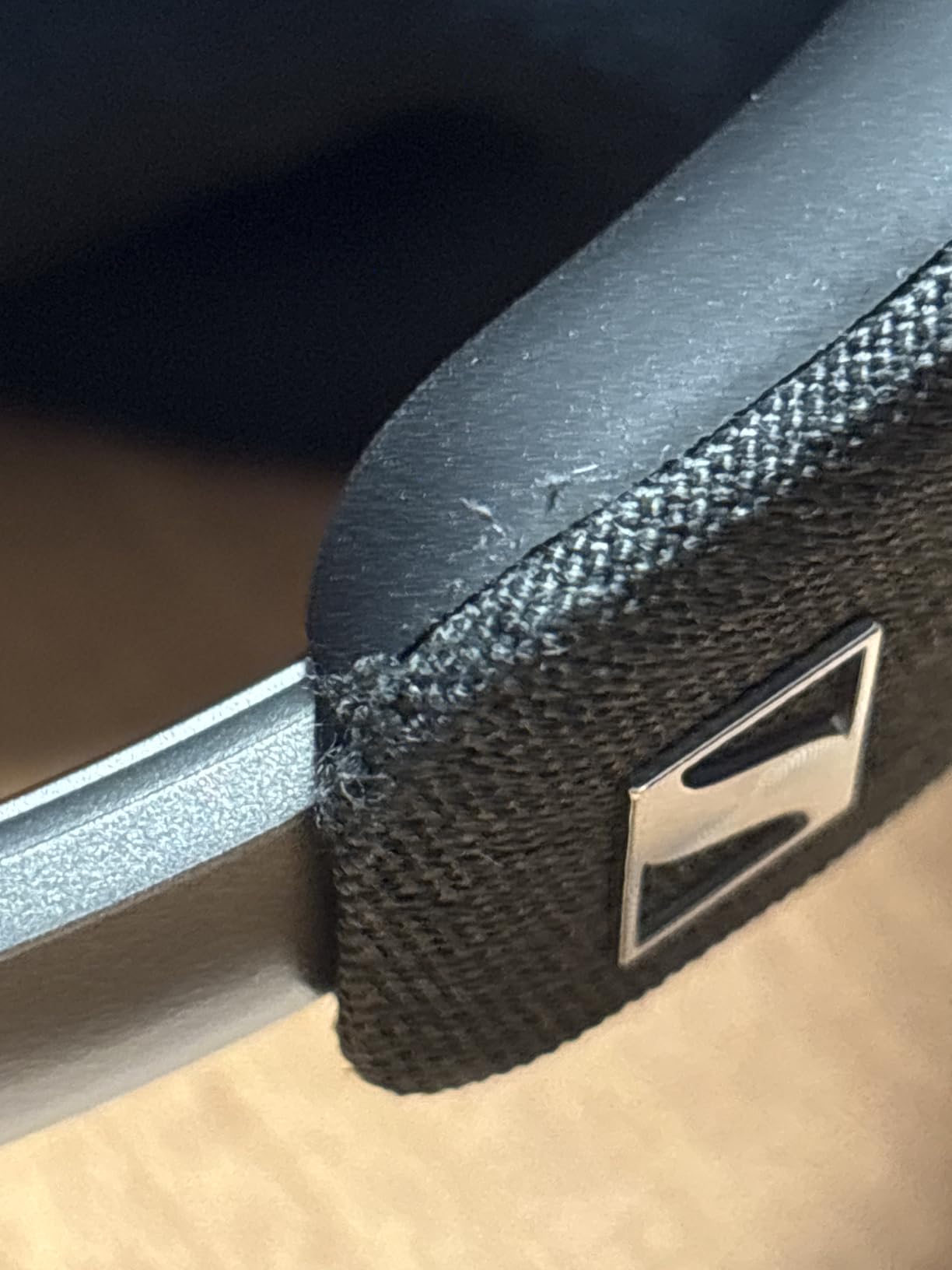
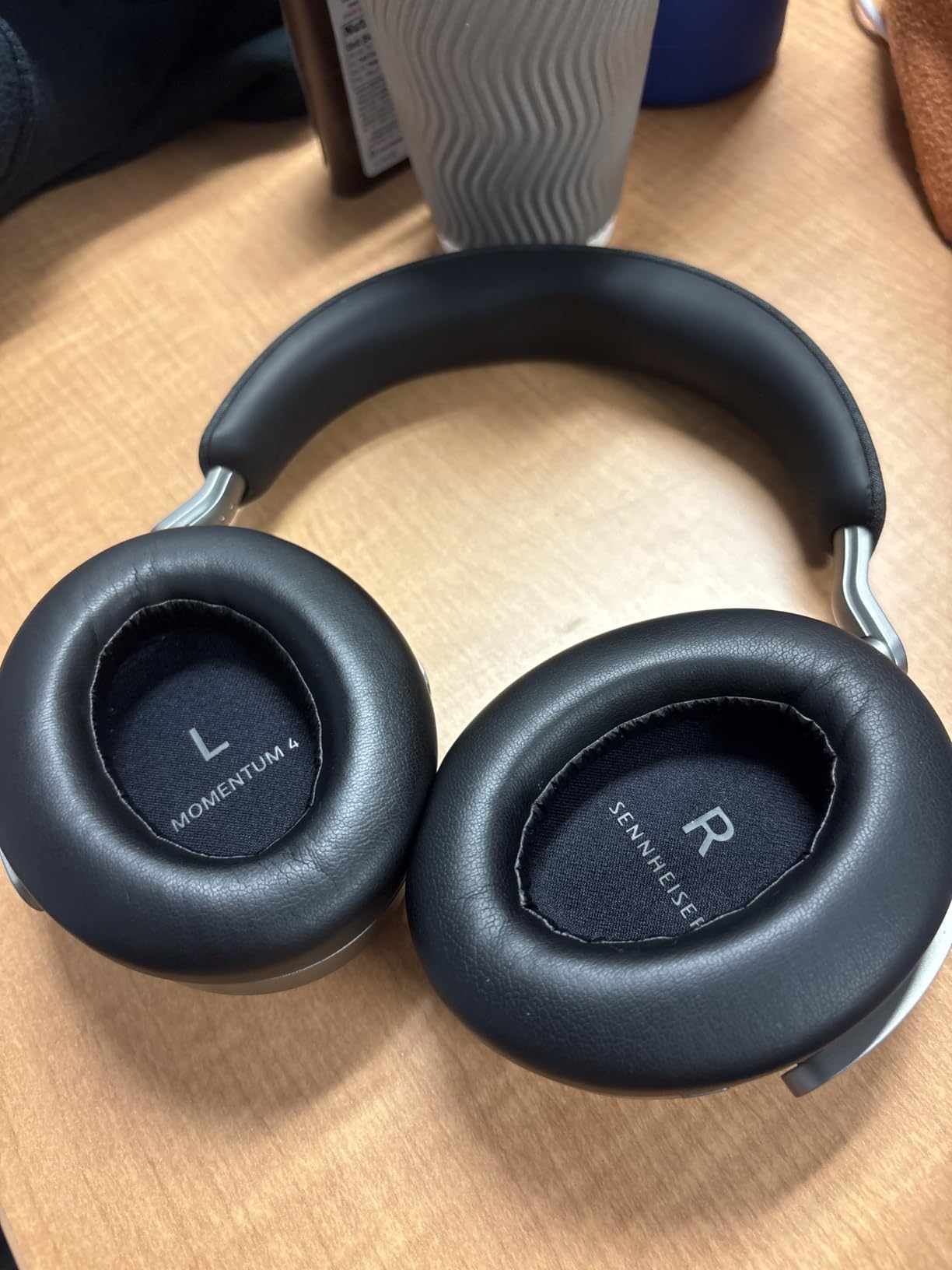
The frame folds flat, the headband is cushioned, and at 10.3 ounces the weight is manageable. Four digital beamforming microphones with wind noise suppression handle calls, which matters if you answer work calls from a bus or a hotel lobby rather than an office.
The honest drawback is cancellation. Reviewers are consistent that the adaptive ANC here sits a tier below the Sony and Bose frames, and the touchpad gestures need a few days before you stop misfiring them. ANC is not the reason to buy this pair. Battery endurance and sound quality are.
Why Sixty Hours Changes Trip Planning
A typical long-haul block eats six to eight hours with ANC running. That means the printed figure stretches across a week of heavy daily use before you think about charging. Quick charging fills enough for several hours in a short break, so even the most demanding itinerary rarely becomes a charging problem.
Adaptive Cancellation Against a Cabin
Adaptive ANC samples the environment continuously and adjusts, which works well on the low, unchanging rumble of a plane. It is less impressive against voices and sudden cabin events, and the gap versus the class leaders is audible in a seat near crying children. Consider pairing this with a transparency mode habit rather than expecting it to erase conversation.
The Airplane Adapter Question
Most airlines seat a two-prong connector next to the screen, so a single-prong 3.5 mm plug will not make contact without the right adapter. This bundle includes one, which removes a trip to the airport shop. A compact dual-prong adapter is still worth carrying even with one at home, because adapters get lost.
Who Should Pick the Alternative
If the cabin is genuinely your worst environment and you are a frequent flyer, the XM5 or the Bose QuietComfort will quiet more of it. If you are the type who charges a device every single night, this battery is overkill and you can move down to a lighter, cheaper frame. If sound quality ranks above cancellation for you, this is the strongest pick in the roundup.
5. Beats Studio Pro – Best All-Rounder for Travel
- Rich balanced sound some listeners prefer to the XM5
- 40-hour battery with reliable fast charging
- UltraPlush cushions comfortable for glasses wearers
- USB-C lossless plus 3.5 mm for in-flight use
- Folds flat and packs smaller than the XM5
- Class 1 Bluetooth holds a stable connection
- Maximum volume is lower than the previous Studio model
- Sound profile must leave mono mode in settings
- Soft pouch instead of a hard case
- No wear detection
The Studio Pro is the pick for a traveller who wants one pair for everything: a long flight, a hotel desk session and a cross-country drive. The battery runs up to 40 hours, Fast Fuel returns 4 hours from a 10-minute charge, and USB-C lossless audio means you can run a wired digital chain into a laptop without a dongle if your device supports it.
It also folds flat, which puts it ahead of the XM5 in a small carry-on, and the UltraPlush cushions come up well in reviews from glasses wearers, which is a specific and common long-haul problem. Personalized spatial audio with dynamic head tracking is optional and easy to switch off when you want plain stereo.
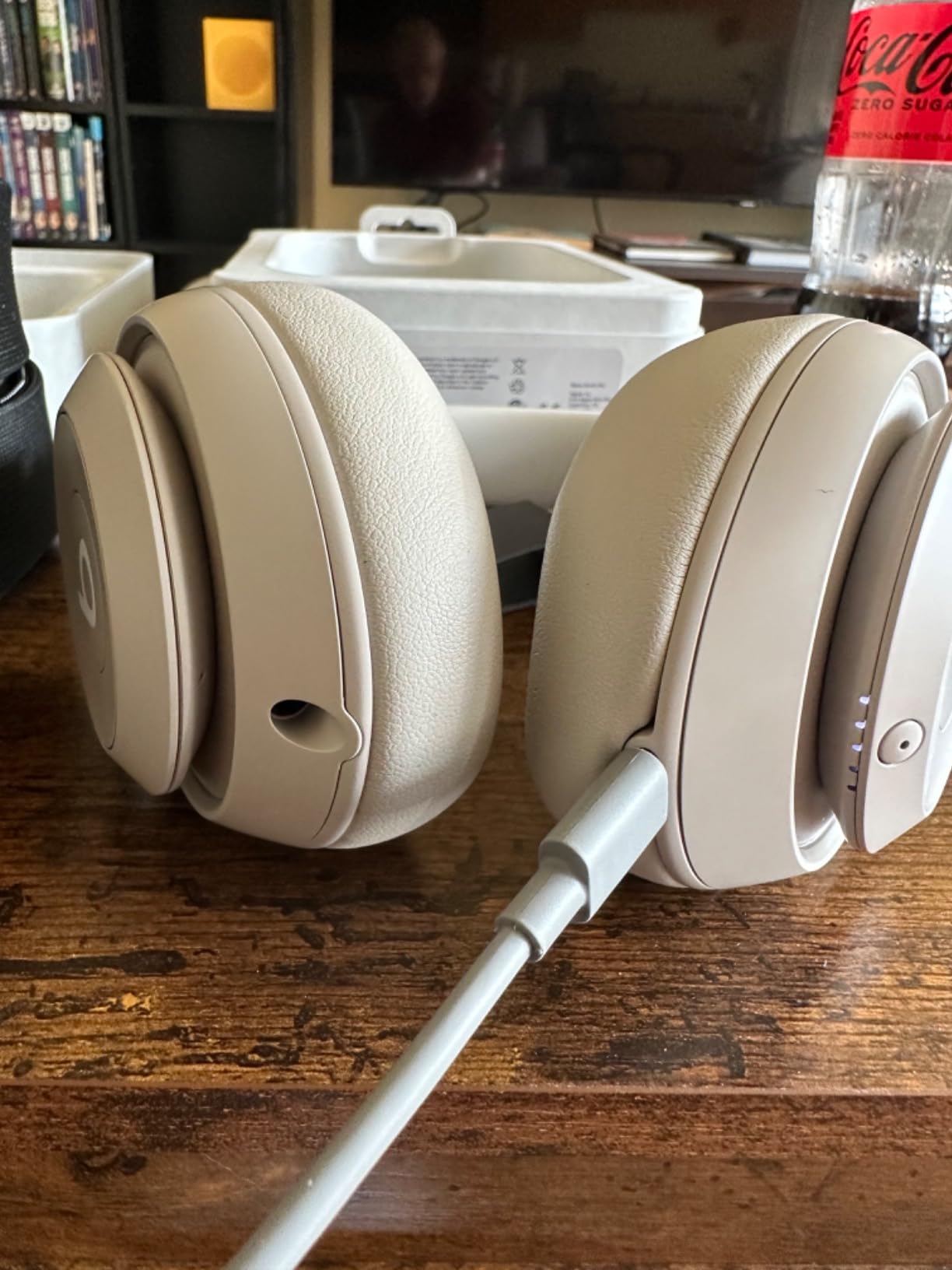
Two setup notes matter more than they look. The default sound profile sits in mono, and owners who never open the settings often mistake that for a limitation; switching it out produces a noticeably wider image. Second, the maximum volume is reported as lower than on the previous Studio generation, which can matter on a loud cabin if you like it loud.
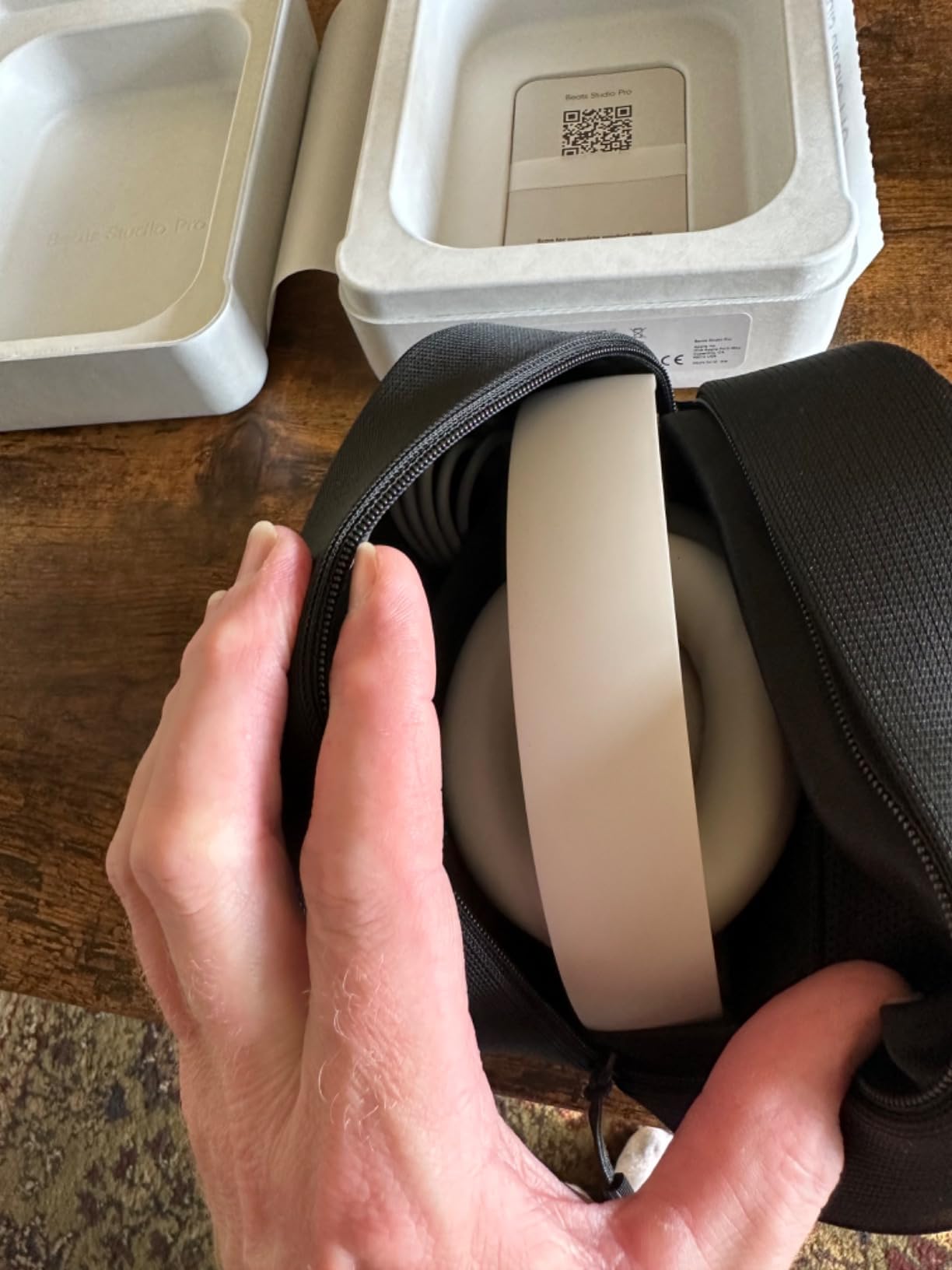
The included case is a soft woven pouch rather than a hard shell, so a checked bag is where the frame needs protection. There is no wear detection, meaning playback continues when you lift the cups off. A 3.5 mm cable and USB-C cable are both included for seat-back screens.
Packability Compared With the XM5
The folding hinge is the practical difference on a trip. These lie flat in a case that slides into a laptop sleeve, while the XM5 needs a deeper case that competes for overhead-bin room. Over a trip with two flights and a rail segment, that difference compounds.
USB-C Lossless Versus Bluetooth for Movies
On supported hardware, a USB-C digital connection sidesteps Bluetooth compression entirely and eliminates lip-sync delay, which is the real reason to reach for it on a long film. Over Bluetooth the same source sounds slightly softer and more compressed, though Class 1 keeps the connection stable through multiple walls and seats.
Comfort With Spectacles
Reviews from glasses wearers are consistently positive, and the cushion depth distributes the frame rather than pinching the arms. It is not the lightest frame here, but the clamping force is moderate enough that a red-eye in glasses stays comfortable.
Who Should Pick the Alternative
Choose the Bose QuietComfort if cancellation and low weight matter more than foldability. Choose the Sony if you want the deepest ANC and can live with a bulkier case. Choose this one if you want the tightest pack, strong battery, good glasses comfort and a fuller bass signature than the Sony gives you.
6. Beats Solo 4 – Best for Packing Light and Short Trips
- Clear balanced sound with strong bass for an on-ear
- Up to 50 hours of battery
- Very light with soft UltraPlush cushions
- Folding cups and a compact case for travel
- Spatial audio widens the soundstage
- One-touch pairing on iOS and Android
- No active noise cancelling so engine noise gets through
- On-ear cups press on larger ears and warm up
- No wear detection so playback keeps running
- Bass is shallower than earlier Beats generations
Be transparent about this one: the Solo 4 has no active noise cancelling, so it is the weakest choice on a loud plane and the strongest choice almost everywhere else. We include it because travel is not only flying, and for trains, buses, hotel rooms and short hops it combines a 50-hour battery, a folding frame and a very low weight in a way no over-ear in this list can.
The flex-grip headband and angled ear cups produce a snug seal that holds without the clamping force of an over-ear, and at 4.6 stars this is the highest-rated model we tested. Battery life is measured in days rather than flights, which means a two-week trip needs exactly one charge.
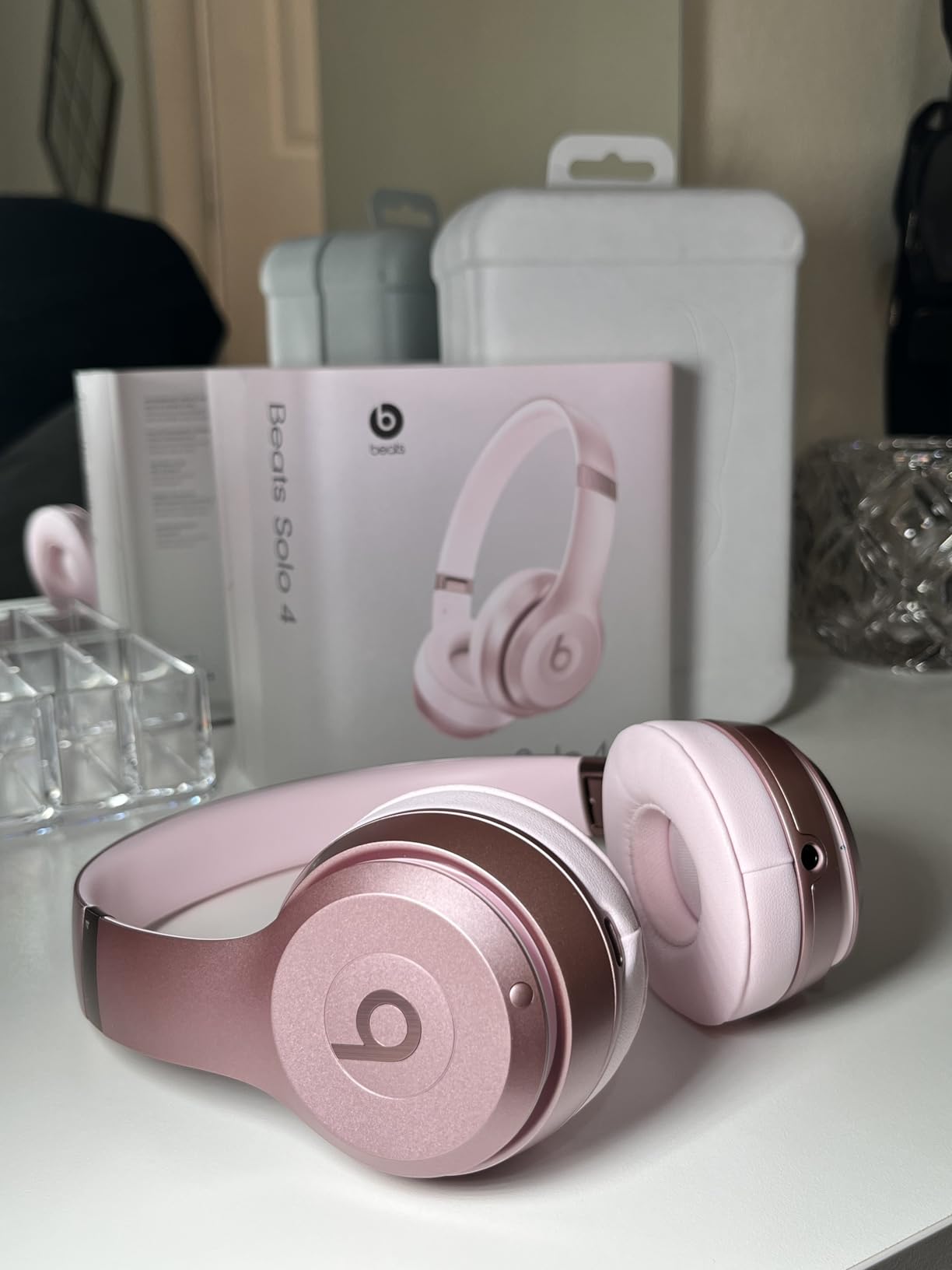
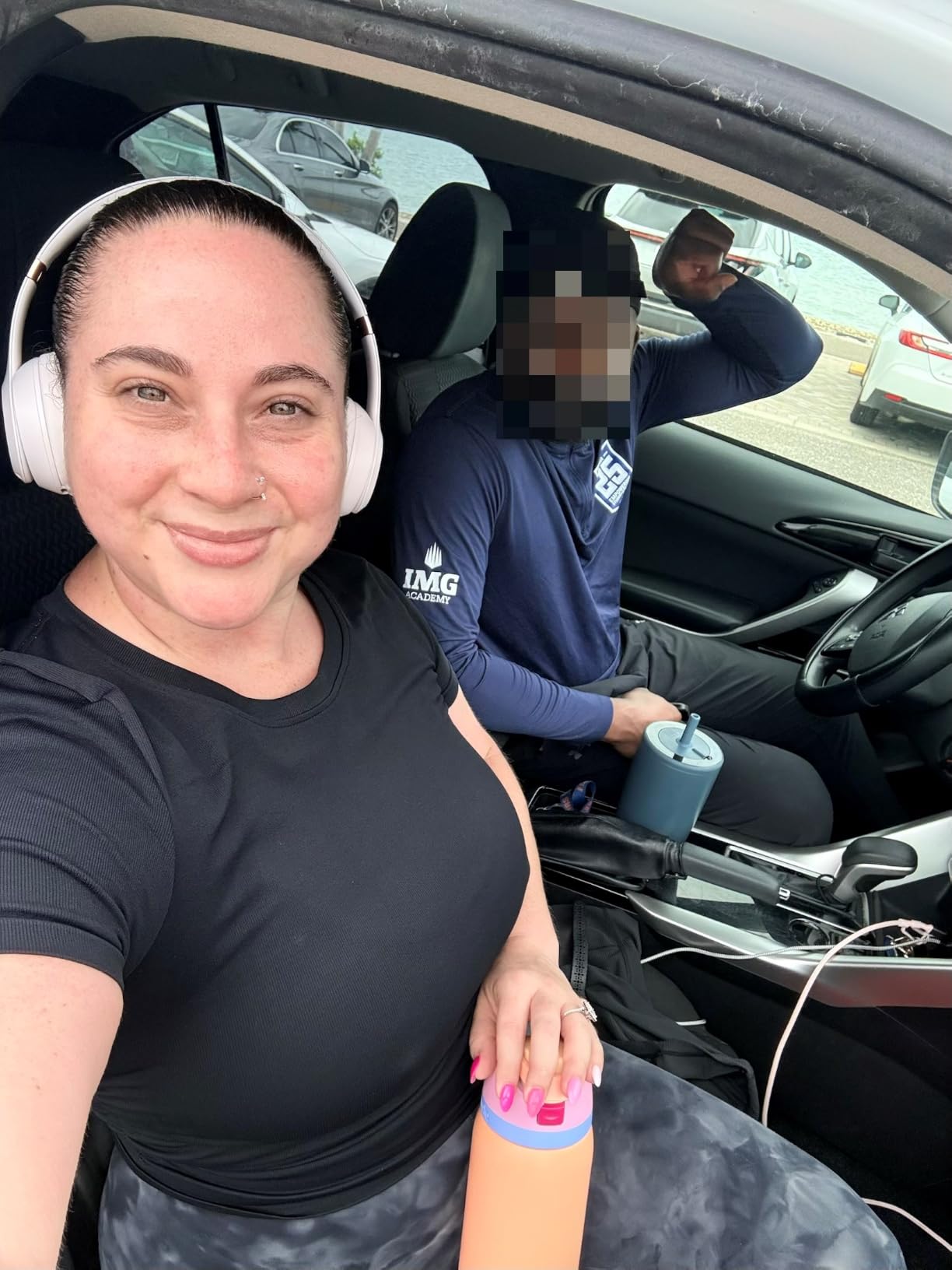
On-ear fit has a ceiling. Reviewers with larger ears report the cups pressing after a few hours, and the sealed on-ear design gets warm over long sessions, which is the same fatigue problem that over-ear cups solve by giving your ear room to breathe. Spatial audio with dynamic head tracking is a genuine bonus for films, and high-resolution audio works over USB-C or the 3.5 mm cable.
Class 1 Bluetooth gives extended range and fewer dropouts, and one-touch pairing works on both iOS and Android. As with the Studio Pro, there is no wear detection, so remember to pause before you take them off.
When an On-Ear Is the Right Travel Form
On-ear wins when your trips are short, your bag is small, and you are rarely in an environment with sustained engine noise. It also suits anyone who finds over-ear cups claustrophobic. The rule of thumb is simple: more than four hours in a loud enclosed space, choose over-ear; everything else, the Solo 4 takes up less room and lasts longer.
Battery Reality for Multi-Day Trips
Fifty hours covers a full week of daily use without a charger, and a 10-minute Fast Fuel charge returns 5 hours, which is more than a long-haul flight needs. This is the same class of battery anxiety you would get from the Sennheiser, in a body roughly a third of the bulk.
What You Give Up Without ANC
Passivity and a light on-ear seal will not touch an 80 to 100Hz engine drone. On a plane you will be listening at a noticeably higher volume to get the same clarity, and after two hours your ears feel the difference. For rail and bus travel the noise is lower and more broken up, so the difference matters far less.
Who Should Pick the Alternative
If your next trip involves a long flight, pick any of the ANC over-ears above, and the Sony leads that group. If you travel light, take short hops, or mostly ride trains and drive, the Solo 4 is hard to argue with.
7. Soundcore Space One – Best Value ANC with Hi-Res Audio
Soundcore Anker Space One ANC Over-Ear Headphones, Voice Reduction
- Adaptive ANC effective against engine
- air conditioning and train noise
- 40mm drivers with LDAC hi-res audio
- 40 hours with ANC and 55 without
- Lightweight with 8-degree rotating cups
- Five ANC levels plus voice reduction
- Travel pouch included
- Microphone call quality trails premium rivals
- Premium frames measure better across a wider noise range
- Plastic shell feels less refined
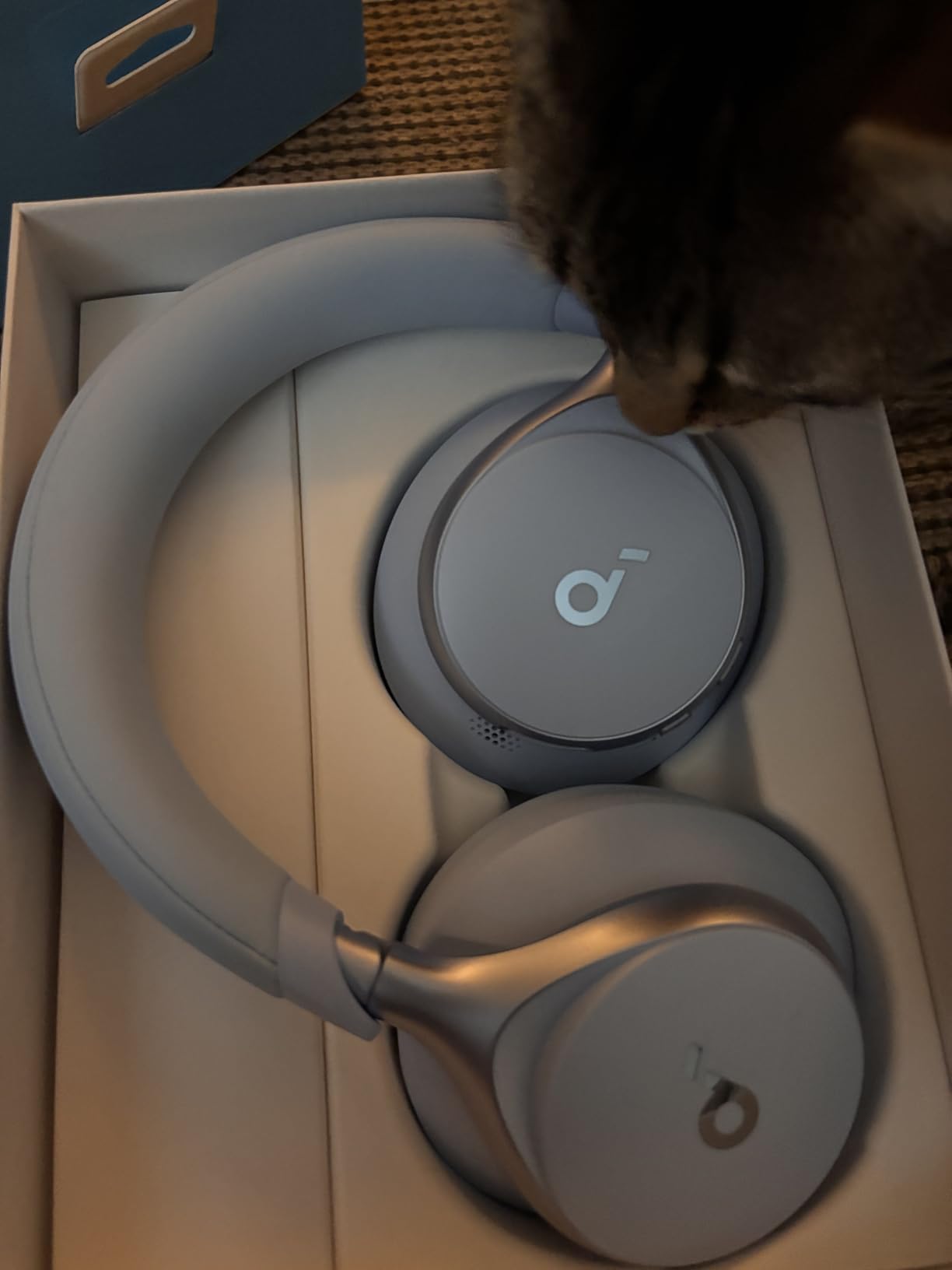
The Space One exists because of one specific insight: the expensive part of a premium travel headphone is not the drivers, it is the noise cancelling research and the materials. Take a mid-range adaptive ANC system, add 40mm drivers with LDAC, and most travellers cannot hear where the money went. Reviewers consistently describe this pair as excellent value with real low-frequency cancellation.
The five ANC levels in the soundcore app matter more than the raw specification suggests. You can drop to a lower level for a train where a top setting creates pressure, and push maximum on a plane where the engine does not change. Voice reduction also compensates for a poor seal, which is a genuinely thoughtful feature when your glasses interfere with the fit.
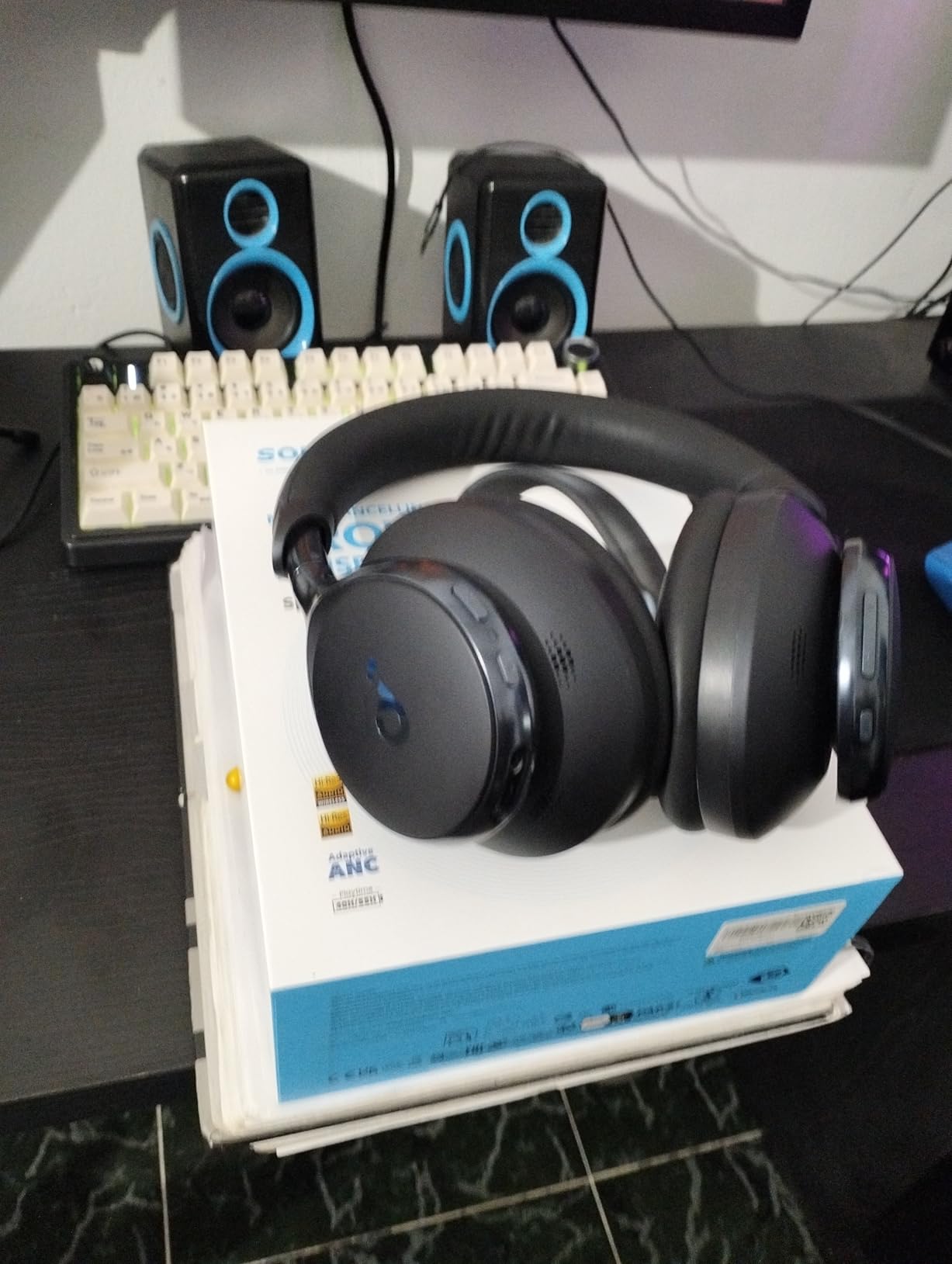
Forty hours with ANC and 55 without is more than any realistic trip requires, and the 8-degree rotating cups plus integrated soft headband make a seal that stays comfortable. LDAC hi-res streaming is a genuine bonus for anyone with a compatible source, and it is unusual to find at this level.
The two honest weaknesses are calls and build feel. The microphones do not match the premium frames, so this is the wrong pick if you take work calls from airports. And the plastic shell lacks the reassuring solidity of a metal headband, which is a fair concern for something that lives in a bag.
Adaptive ANC Levels in Practice
On a train I would run a middle setting, because full strength on low-frequency rumble can create a pressure sensation on some people. On a plane, maximum. The adjustment range means you can match the cancellation to the environment instead of living with one compromise setting.
Battery Headroom at 40 Hours ANC
That is more than twice the length of the longest single flight, which means charging is a once-a-week-or-less problem even on a heavy itinerary. A travel pouch is included, which matters because the folding design is compact enough that you can also leave the case in a drawer at home.
Where the Price Tier Really Bites
Against the Sony and Bose frames, the measurable gap shows up across a wider range of noise types rather than pure engine drone. Add a windscreen to a call in an airport and the difference is obvious. If your trip is work-heavy and call-heavy, pay up; if it is films and music, the Space One covers the majority of the benefit.
Who Should Pick the Alternative
Pick the Sony or Bose QuietComfort if you fly often and want the deepest cancellation and the most reliable call mics. Pick the Soundcore Q30 below if your budget is much tighter and you want even longer battery life. Choose this one if you want hi-res wireless audio and adjustable cancellation at a mid-range outlay.
8. Soundcore Q30 – Most Versatile for Long Battery Life
Soundcore by Anker Q30 Hybrid Active Noise Cancelling Headphones, Black
- Hybrid ANC filters a large share of airplane and train rumble
- Three ANC modes for transport outdoor and indoor
- 50 hours in ANC mode and 70 without
- Memory foam protein leather cushions for long sessions
- Works over the AUX cable on a flat battery
- Very versatile EQ app
- Cancels sharp and intermittent noise less well than continuous hum
- Default EQ is heavily bass biased
- ANC is disabled in wired AUX mode
- Plastics and headband covering can crack after years
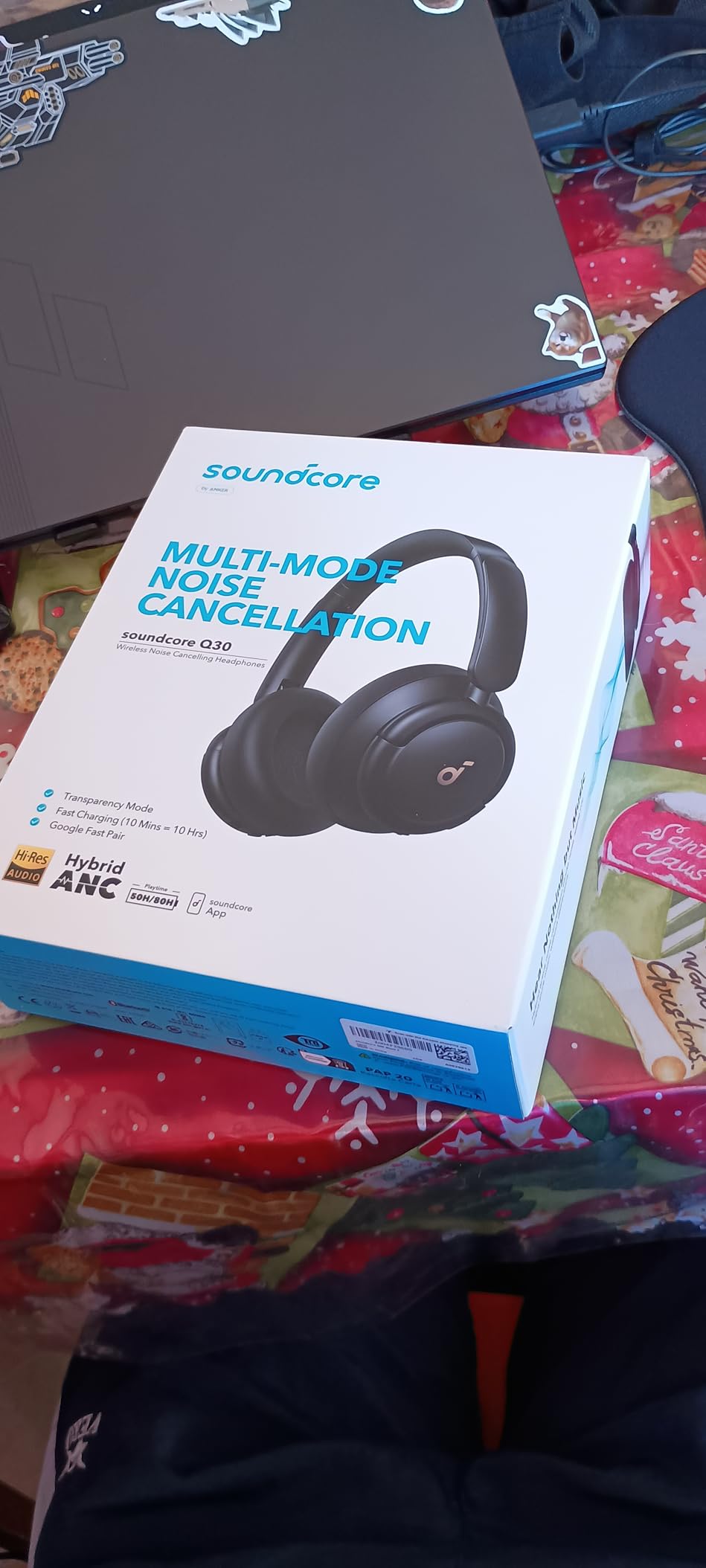
With close to 97000 reviews, the Q30 is the most proven pair in this roundup by a wide margin, and that scale of ownership data is its own kind of insurance on a product you will bury in a bag for years. Owners across a huge sample consistently report that it mutes train rumble and air conditioning, which are exactly the two noise sources that matter most on a trip.
Three ANC modes are the useful part. Transport is tuned for engine and road noise, Outdoor reduces chatter, and Indoor softens steady household hum. Having a dedicated transport setting means you are not fighting the algorithm on a plane, and the 40mm silk-diaphragm drivers extend to 40kHz for hi-res sources.
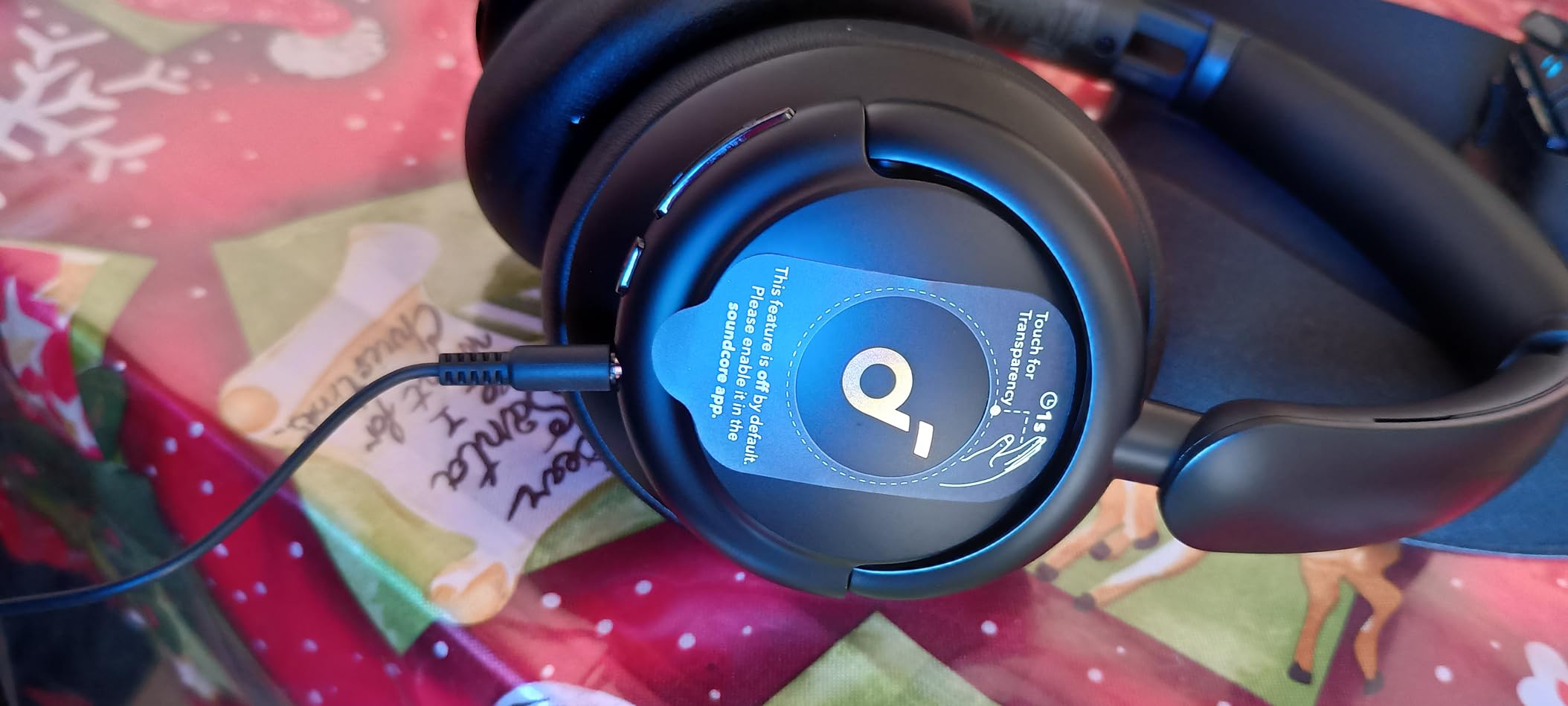
Memory foam protein leather cushions hold up for long sessions, and a 5-minute charge returns 4 hours, so a power bank in the bag covers an emergency mid-flight. The AUX and USB-C cables are both included, and the headphones play over the cable even on a flat battery.
Three caveats come up repeatedly. The default tuning is heavily bass biased and needs manual correction in the app for a balanced sound. ANC is switched off entirely when you use the wired AUX connection, so a battery death means no cancellation. And long-term owners report cracking in the plastics and headband covering after several years, which matters if you expect to keep a pair for a decade.
Transport Mode Versus Maximum ANC
Using the transport mode instead of max does more than a spec suggests. It is tuned for sustained low-frequency noise, it reduces the pressure sensation some people feel with cancellation at full strength, and it preserves a little more battery. On a plane, this is the setting I would use for most of the flight.
Real Battery at ANC
Fifty hours with ANC on and 70 without are both extraordinary numbers, and even after discounting for the usual measurement optimism you have more than a full week of heavy use. This pair solves battery anxiety more completely than anything else in the roundup at a fraction of the cost.
When Wired Mode Drops ANC
This is the single most important limitation to understand before buying. The Q30 will play audio over the AUX cable on a dead battery, but the noise cancelling does not come with it. On a plane that means your fallback is an unprotected pair of over-ears in the loudest environment of the day, so carry a power bank rather than relying on the cable.
Who Should Pick the Alternative
If you fly monthly and want the deepest possible cancellation, move up to the Sony or the Bose QuietComfort. If you need full-range cancellation and hi-res audio at a middle outlay, take the Space One. If you want the maximum battery hours per pound of weight and do not need ANC in wired mode, this is the pick.
9. JBL Tune 720BT – Best Battery Life and Sound for Long Journeys
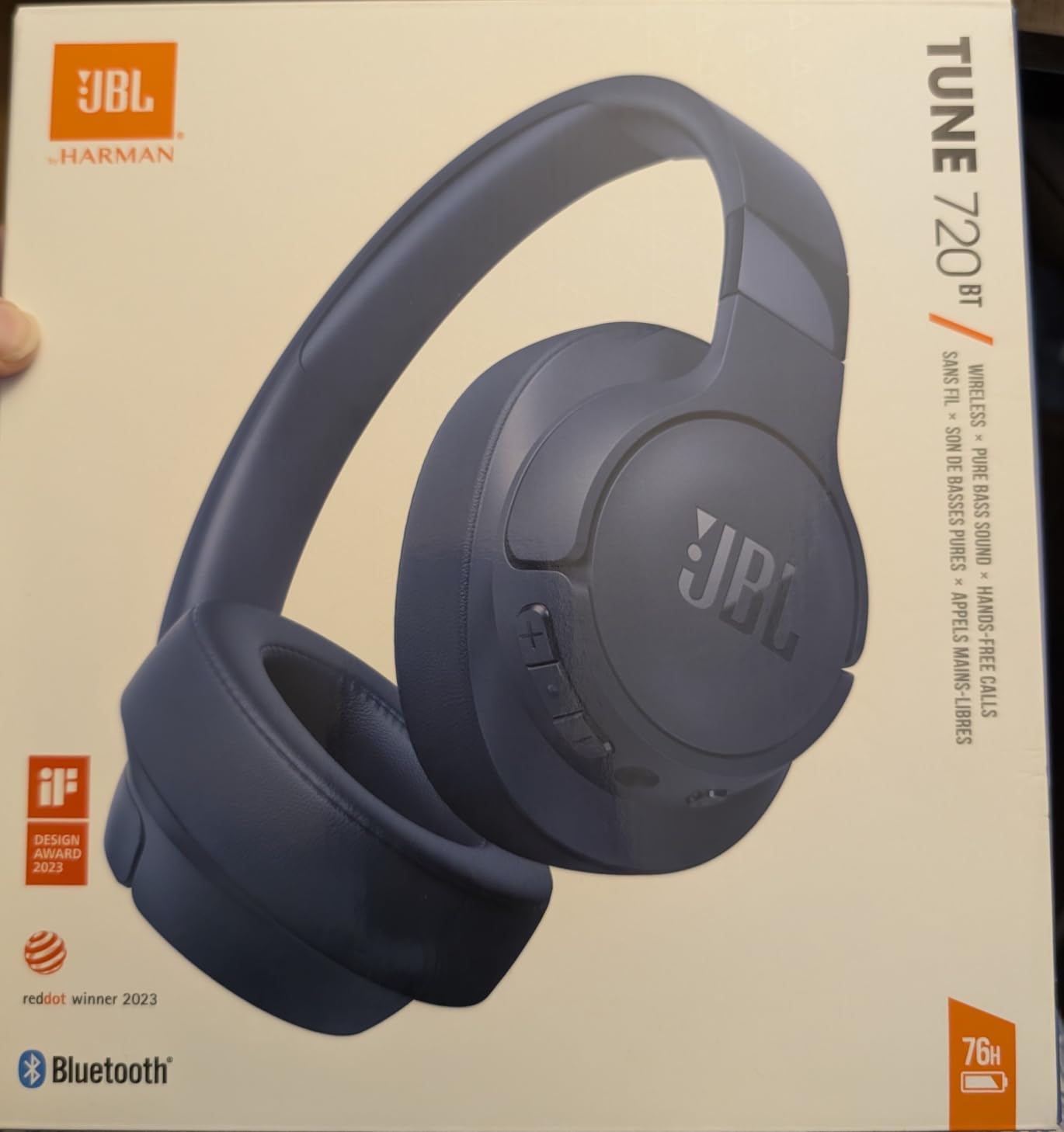
JBL Tune 720BT – Wireless Over-Ear Headphones – Blue
- JBL Pure Bass sound with 40mm drivers
- Enormous 76-hour battery for multi-week trips
- Bluetooth 5.3 with multipoint for two devices
- App EQ customisation and voice prompts
- Foldable and water resistant so it packs easily
- No active noise cancelling only passive isolation
- No 3.5 mm jack so there is no wired fallback
- Tuned bass forward rather than neutral
The JBL Tune 720BT is here for the traveller whose trips are not flights. Seventy-six hours of battery, a 220g foldable body and water resistance make it the most sensible travel headphone for rail, bus, road and hotel itineraries, where the ambient noise is lower and more broken up than a cabin and cancellation matters less.
Sound is the real reason to like it. JBL Pure Bass with 40mm dynamic drivers has a warm, energetic signature that reviewers describe as fun rather than neutral, and the app lets you adjust the EQ. Voice Aware lets you hear your own voice during calls, which is a small touch that makes long work calls noticeably easier.
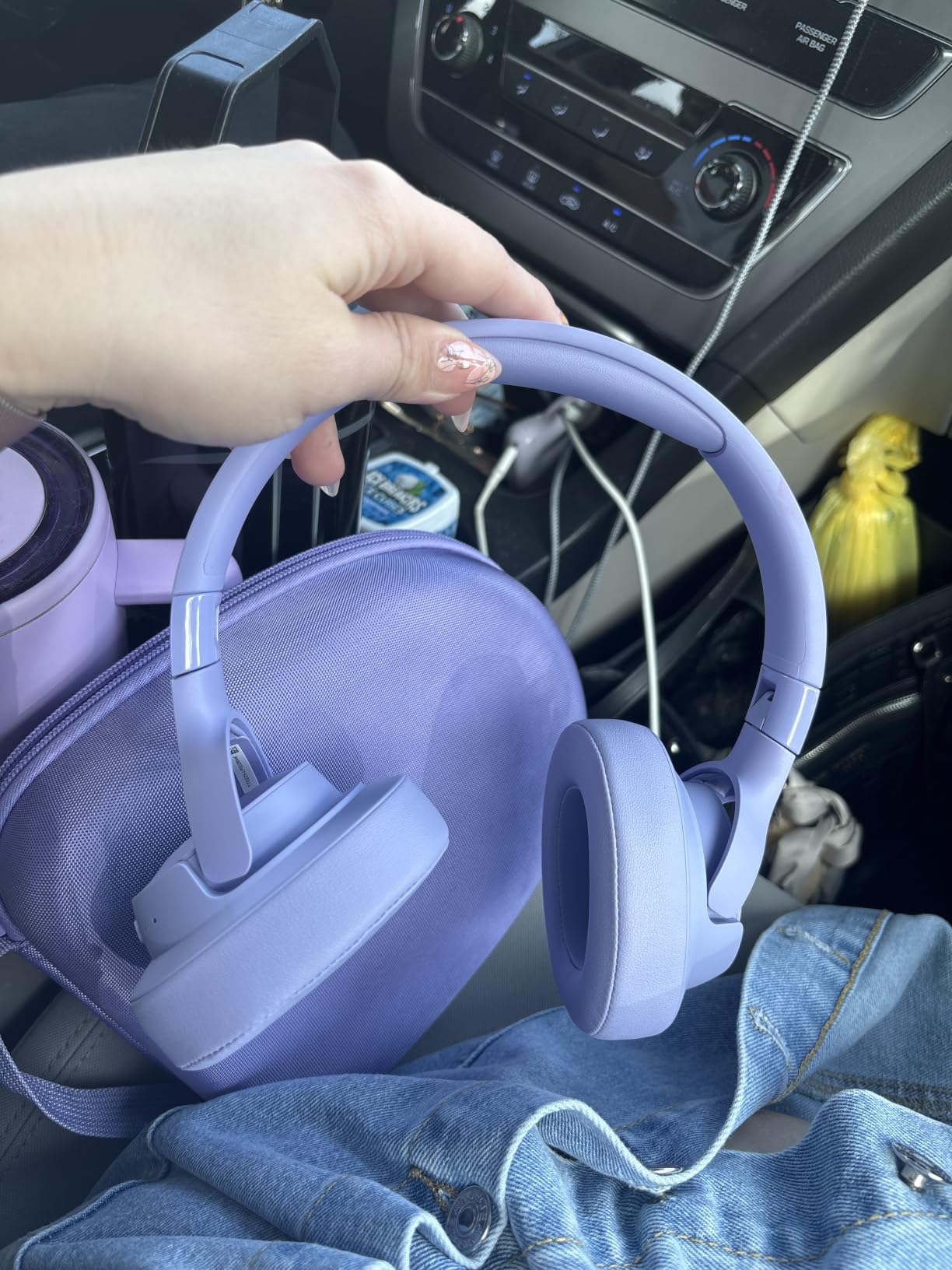
Bluetooth 5.3 with multipoint means a laptop and a phone stay connected at the same time, and the foldable design with a two-hour charge means the whole trip is one charge. Voice prompts in your own language are a small courtesy that helps when you are fumbling with controls in a station café.
The defining limitation for air travel is the absence of active noise cancelling. There is passive sound isolation only, which softens high-frequency clatter and does very little to a sustained engine drone. There is also no 3.5 mm jack, so the wired fallback that rescues several other pairs here does not exist, and a flat battery ends your listening.
What 76 Hours Means in Practice
That is roughly three weeks of daily commuting before a charge. A 5-minute top-up returns 3 hours, so a single coffee stop covers a long rail journey. It is the battery figure that most directly removes charging from your packing list.
Where Passive Isolation Runs Out
Seat-back metal, cabin airflow and cabin chatter all sit in the mid and low frequencies, which is exactly what passive isolation cannot touch. You will hear all of it. On a train, on a coach and in a hotel room the noise is less constant, so the same headphones feel dramatically more isolating.
Who Should Pick the Alternative
If you fly, any ANC over-ear above is a better fit, and the Q30 is the least expensive of them. If you never leave the ground, this pair gives you more battery hours, lighter weight and better water resistance than any other product here.
10. Raycon Everyday – Lightest ANC Option with Strong Engine Cancellation
- ANC holds up well against airplane engine noise
- 38-hour battery often lasting several days per charge
- Very light at 7.52 ounces with a soft cushioned fit
- Three EQ presets including a pure sound mode
- IPX4 water resistance and a foldable travel design
- Strong Bluetooth range across a whole house
- Awareness mode volume is fixed so announcements are hard to parse
- Ear cups run small for larger ears
- Slight distortion at maximum volume
- No EQ app for finer tuning
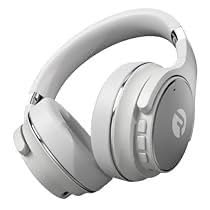
At 7.52 ounces the Raycon Everyday is the lightest pair with meaningful active noise cancelling in this roundup, and that number matters more on a long flight than most buyers expect. Lighter on the head means less clamp pressure over hours and less heat build-up around the ears, which is the mechanism behind most long-haul fatigue complaints.
Owners specifically report that the cancellation holds up against airplane engine noise, which is the correct target. Thirty-eight hours is usually more than several days of real use per charge, and IPX4 water resistance plus a foldable frame means it survives a rainy platform walk or a spilled coffee without drama.

Three EQ presets are built in, including a pure sound option and a bass mode, which covers most needs without an app. The three-dimensional rotating cups and adjustable headband make finding a stable seal straightforward, and Bluetooth range is strong enough that you can move around a hotel room or a home without dropouts.
Two limitations stand out. The awareness mode has a fixed level with no volume control, so when a gate announcement comes through you cannot turn it up to make out a gate change over the cabin noise. And the ear cups are on the smaller side, which owners with larger ears mention as a comfort compromise after a few hours. There is also no EQ app, so you cannot correct the sound beyond the three presets.
Why Weight Is the Feature Here
Long-haul discomfort is usually a pressure problem, not a sound problem. Lower clamping force and less mass on the crown of the head reduces the sensation after hour four. That is the trade this pair makes: less isolation finesse than the premium frames, in exchange for a noticeably lighter body.
Awareness Mode and Announcements
Being able to hear an announcement without lifting the cups is valuable, but a fixed level limits it. Test it in a loud environment before you rely on it, and keep the alternative in mind: removing one cup for a moment, or a pair with adjustable pass-through.
Who Should Pick the Alternative
If your flights are frequent and long, the deeper cancellation of the Sony or Bose QuietComfort is worth the extra weight. If you are buying for a commuter who wants a light, water-resistant ANC pair that folds flat, the Raycon is difficult to beat.
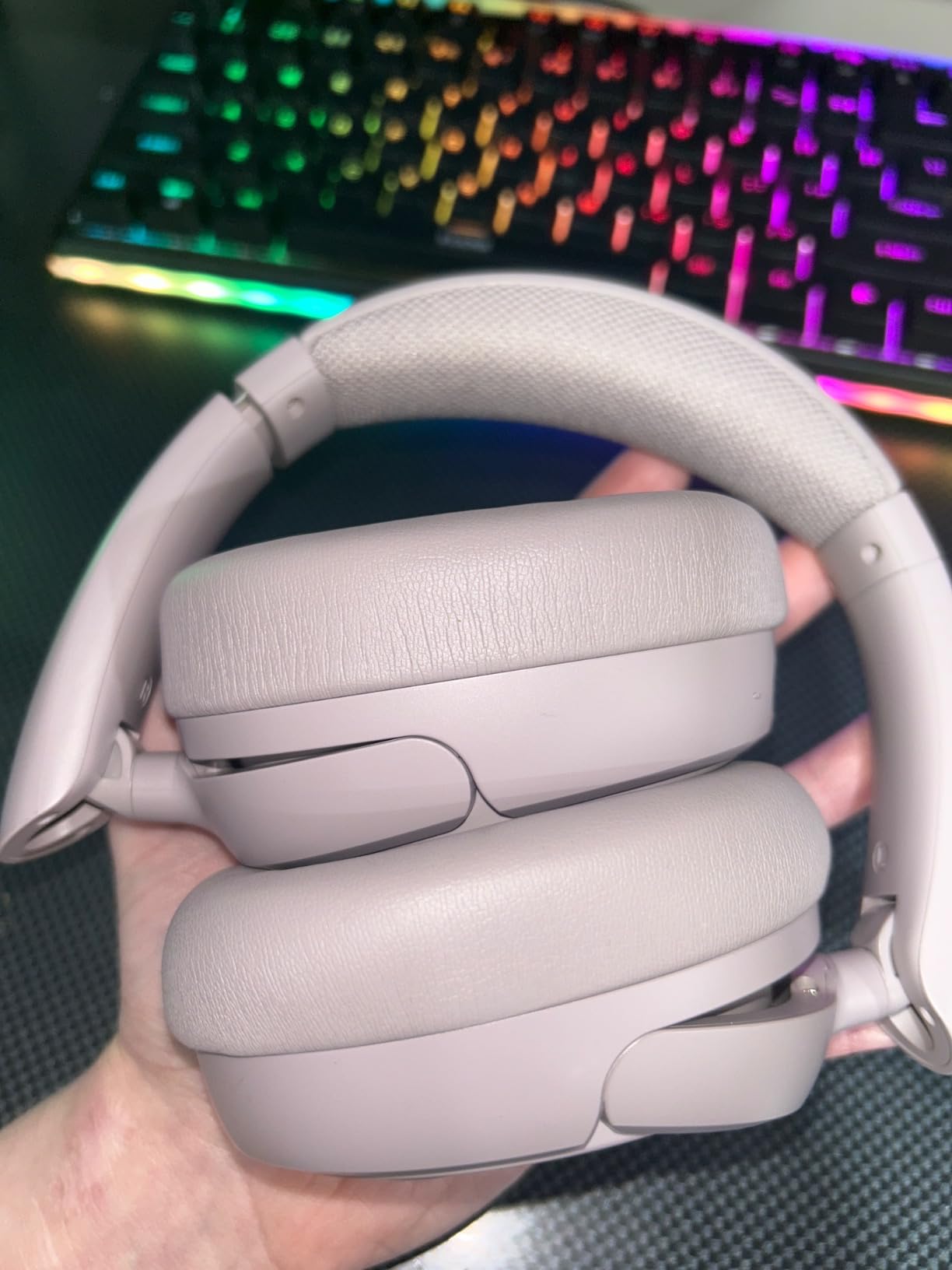
11. JLab JBuds Lux ANC – Best for Calls and Small Bags
JLab JBuds Lux ANC, Over Ear Headphones, Active Noise Cancelling, Bluetooth, Mauve
- Excellent call and meeting microphone quality
- 40+ hours of battery in ANC mode
- Padded over-ear fit that works with glasses
- Very compact when folded for a small crossbody bag
- ANC reduces steady road and cabin noise
- Two-year warranty with app EQ customisation
- Ear cups do not breathe and get clammy on long sessions
- ANC handles continuous noise better than speech
- Be Aware pass-through sounds thin and boxy
- Plastic slider arms can crack on larger heads
The JLab JBuds Lux ANC has one claim that no other pair in this list makes: consistently strong microphone quality at a budget price. If your travel includes work calls from airports, hotel rooms and car parks, that single feature can outrank cancellation depth, and it is the reason this pair keeps drawing repeat recommendations from owners.
It is also unusually compact when folded, small enough for a crossbody bag rather than a dedicated case, and the padded over-ear fit works well for glasses wearers. Battery life in ANC mode covers a long flight plus most of the following week, so it is not the pack-size compromise it appears to be.
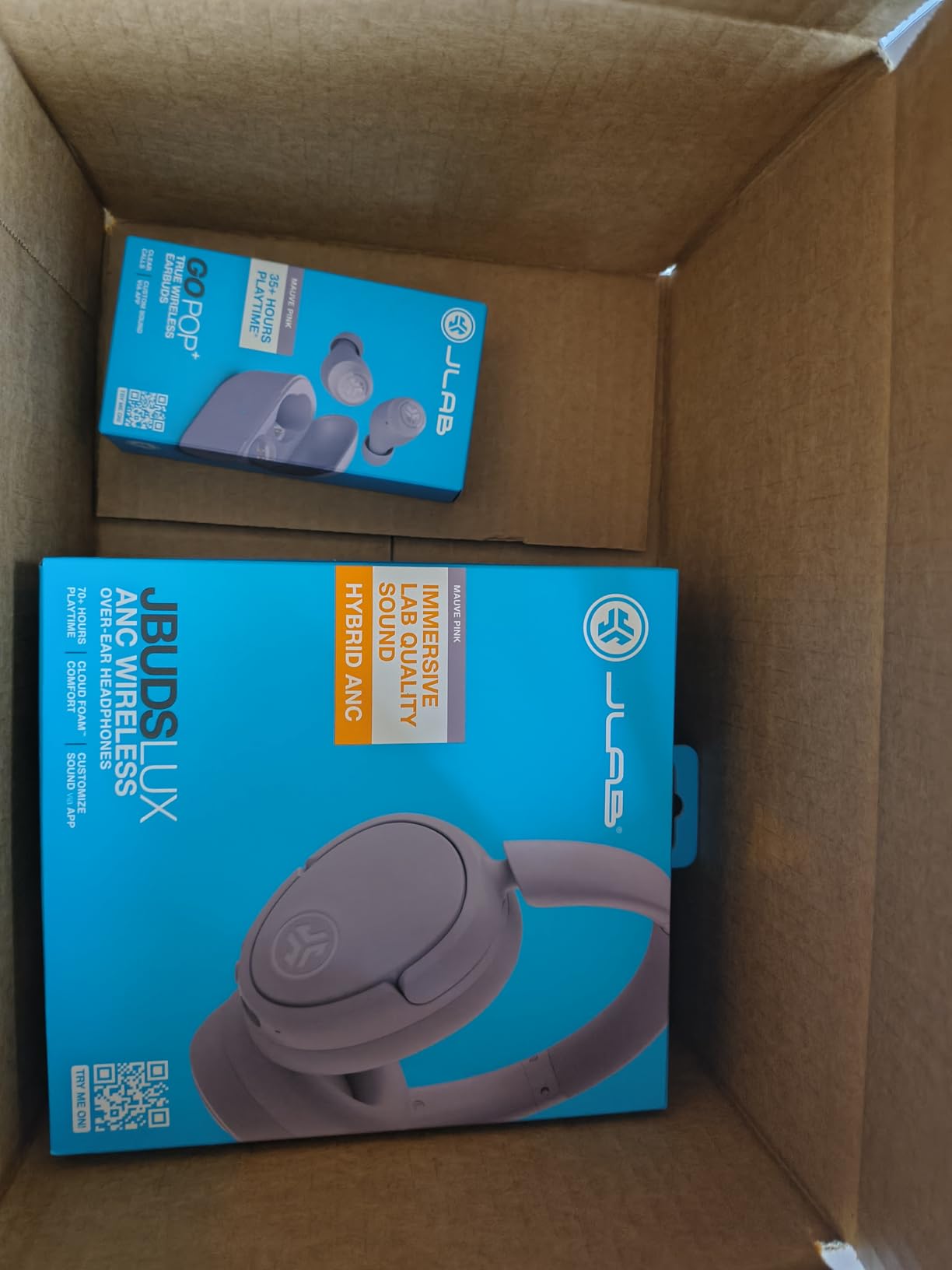
Hybrid ANC blocking up to 35 dB, a Be Aware transparency mode, Bluetooth multipoint for two devices and a wireless share mode cover the connectivity side well. Wired listening works over the included USB-C audio cable, and there is a two-year warranty, which is longer than most competitors at this tier offer.
Two comfort issues are worth weighing. The ear cups do not breathe well, so heat builds up over a long session and owners report it feeling clammy. And a few users with larger head sizes have seen the plastic slider arms crack, so if you are near the limit of the adjustment range, test the fit carefully before a long trip.
Call Quality as the Deciding Feature
Most budget headphones use microphones tuned for price rather than speech pickup. These do not, and owners working from cafés and airport lounges describe being heard clearly without hunting for a quiet corner. For a traveller whose trip is half commuting and half video calls, that changes which pair makes sense.
Heat Management on Long Sessions
Over-ear cups that seal tightly trap heat, and this pair seals tightly. Around four hours, wearers shift position or remove one cup to cool down. If you are on a red-eye and intend to sleep in them, test this specifically, because it is the one weakness that shows up on long-haul routes.
Who Should Pick the Alternative
If the cabin is your primary environment, move up to the Sony or Bose QuietComfort for deeper cancellation and better breathability. If you are packing into a small bag, working on calls between flights, and want multipoint plus a warranty, this is the most practical pair in the roundup.
12. TOZO HT3 – Longest Battery and Strongest Budget ANC Figure
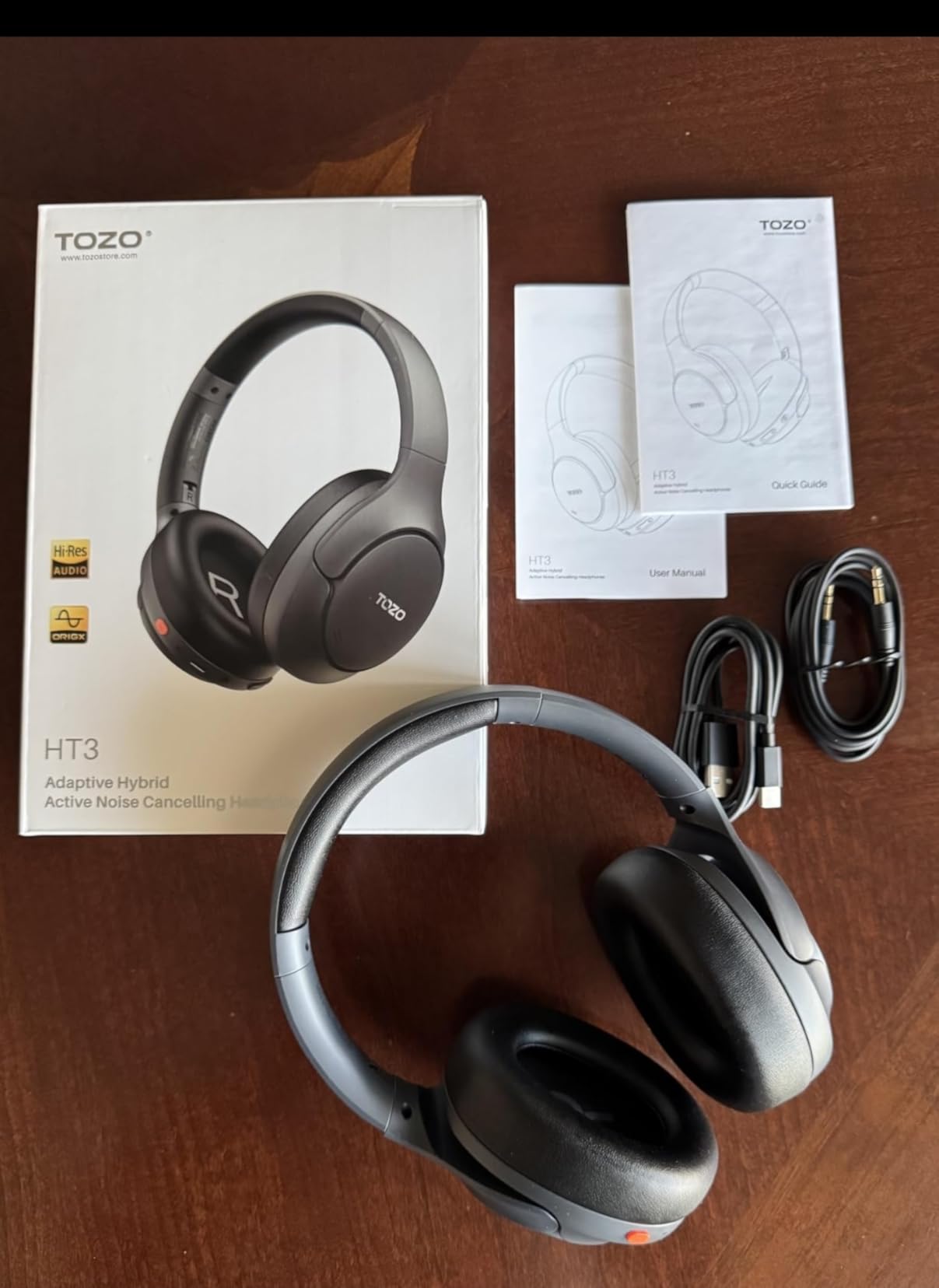
TOZO HT3 Hybrid Noise Cancelling Wireless Headphones, 90H Over Ear Headset
- Capable ANC for the price on low-frequency rumble
- Up to 90 hours of playback
- Metal headband and reinforced frame resist cracking
- Dual device connection works across rooms
- USB-C audio input adds clarity and fuller bass
- Good microphones in normal conditions
- Default tuning is heavily bass boosted and hard to correct on desktop
- ANC switch can be knocked off and needs a power cycle
- Weak passive isolation from the cups alone
- Folding stresses the hinge where they tend to break
- No carrying case and a very small printed manual
The HT3 is the specification outlier of the roundup. Ninety hours of playback, a stated 45 dB of hybrid ANC across four high-sensitivity microphones, and a metal headband inside a pair at the bottom of the price range. On paper it should not be possible, and reviewers confirm the low-frequency cancellation is genuinely effective for commuting and cabin noise.
The build deserves credit. A metal headband and reinforced frame address the cracking-plastic complaint that shows up with cheaper budget pairs after a couple of years, and removable replaceable ear pads mean a worn-out cushion is a few pounds to fix rather than a whole new pair.
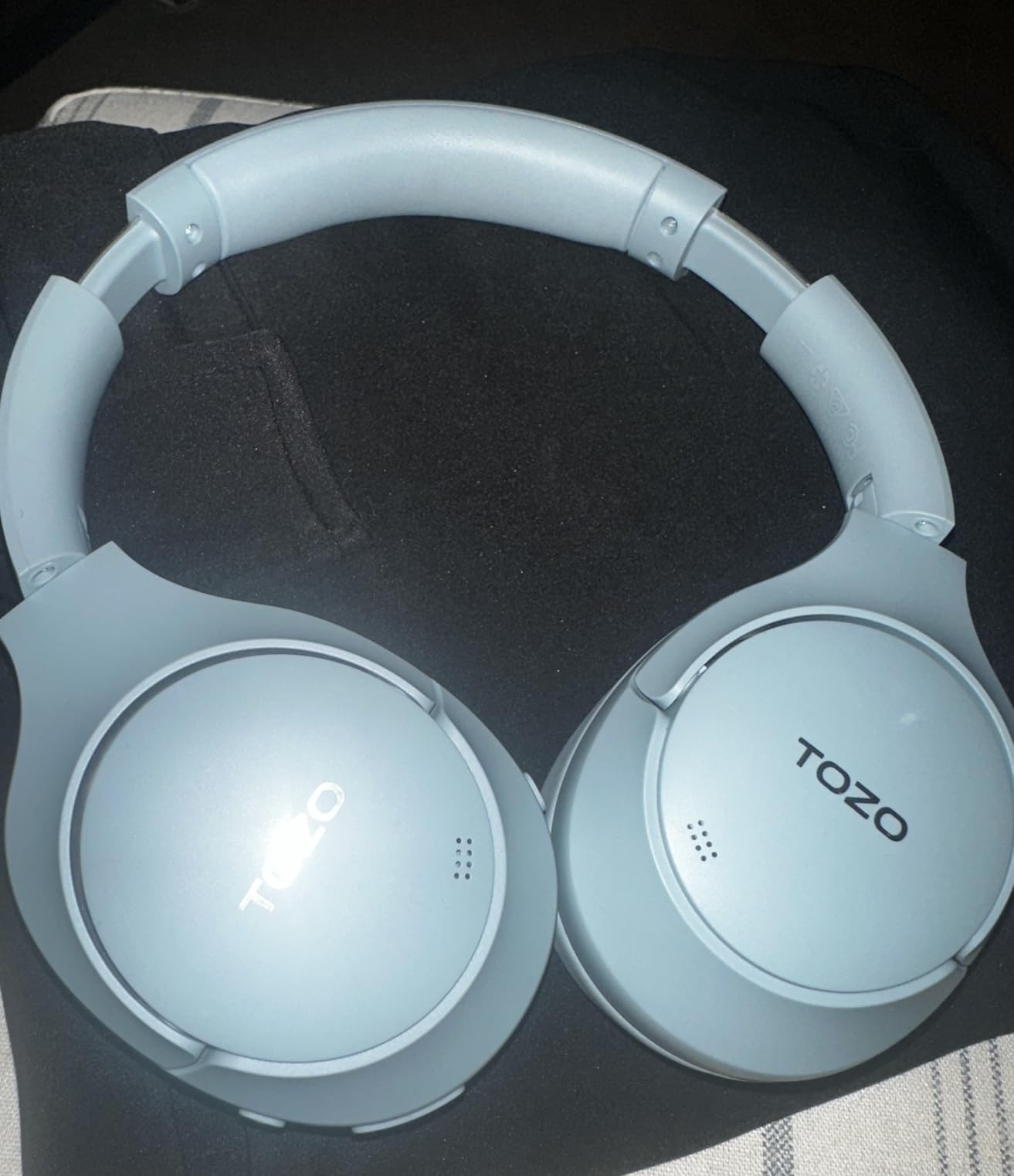
Connectivity is unusually flexible: Bluetooth, AUX 3.5 mm and USB-C wired input, plus dual device connection, 60 ms low-latency mode and spatial audio. Thirty-two EQ modes sit in the TOZO app, and USB-C input gives a cleaner, fuller signal than the analog path.
There are real drawbacks. The default tuning is heavily bass boosted and the correction is hard to apply away from a phone, so a desktop listener will find the sound unbalanced. The ANC switch can be knocked off accidentally and needs a power cycle to re-enable, which is a genuinely bad failure mode on a plane. Passive isolation alone is weak, and folding stresses the hinge, which is where units tend to fail.
Ninety Hours Without a Charger
That figure covers a month of daily use, and a 10-minute charge adds 9 hours. No other pair here removes charging from the equation this completely, which makes it the default recommendation for anyone who travels long and light.
The ANC Button Failure Mode
With four microphones and 45 dB of claimed reduction, the hardware is capable. The problem is the physical switch, which sits where a bag or a jacket presses against it, and the only reliable way back on is a full power cycle. If your ANC fails silently 40,000 feet, that is the difference between a quiet cabin and a loud one.
Reading Battery Claims Critically
Reviewers on r/HeadphoneAdvice and other forums repeatedly warn that seller spec sheets inflate battery claims, and this is the clearest example in the roundup. A 90-hour figure is extraordinary, so treat it as an upper bound and enjoy the fact that anything above about 40 hours is already a win.
Who Should Pick the Alternative
If you fly often, the Sony or Bose QuietComfort gives more reliable cancellation with a control you cannot accidentally switch off. If sound tuning matters, the Sennheiser or Beats pairs are far more neutral out of the box. If you want the most runtime and the most repairable cushions on the market, take the HT3.
How to Choose Wireless Headphones for Travel
Noise cancelling gets all the attention, but on a trip it is one of five decisions. These are the ones that decide whether you are happy on hour nine of a long-haul flight.
What Active Noise Cancelling Actually Removes
ANC works by microphones reading the low-frequency noise around you and playing an inverted signal to cancel it. Engine drone and airflow sit mostly between 80 and 100Hz, which is why cancellation is so effective against a cabin and far less effective against speech, which is higher and constantly changing. Every pair here handles the rumble; only the top tier makes real progress on voices.
Hybrid designs add microphones to the outer shell and inner cup for a stronger field, while adaptive designs adjust the correction continuously as conditions change. The practical difference on a plane is small between the top three and everything else, and large between everything else and no ANC at all.
Over-Ear Versus On-Ear: The Decision Nobody Makes Clearly
The honest rule is about hours in a loud enclosed space. More than four hours in a plane, a coach or a crowded train, and over-ear wins because the cups seal around your ears, isolate the low end and spread pressure instead of pressing on it. Shorter hops, rail journeys, cars and hotel rooms, and the compact on-ear design wins on pack volume, weight and battery life.
The on-ear options in this list, the Beats Solo 4 and the JBL Tune 720BT, both skip active noise cancelling entirely, which caps how far they can go on a plane. If you fly, that decides the category before comfort or sound enters the argument.
Battery: Read the Number You Will Actually Get
Manufacturer figures are measured at moderate volume, often with cancellation off, and they are optimistic by a wide margin. Forum reports from frequent travellers put real-world output 15 to 25 percent below the claim, because a cabin environment pushes the volume up to 65 or 70 percent with ANC at maximum. Sizing to 70 percent of the printed number is a sensible rule.
Then ask a simpler question: what is the longest single stretch you will go without a charger? A flight is six to eight hours of heavy use. A two-week trip is not. That is the difference between the 24-hour Bose QuietComfort being plenty and the 60-hour Sennheiser or 90-hour TOZO being the correct answer.
Airplane Connectivity and the Adapter Question
Bluetooth is usually not an option for seat-back entertainment, because the system is a wired audio output, not a transmitter. You need a 3.5 mm cable from the headphones to the seat, plus a dual-prong adapter, because most airlines seat a two-prong connector and a single plug will not make contact. The Sennheiser Momentum 4 includes one; everything else, buy a compact one and keep it in the cable pouch permanently.
Then check whether ANC survives the wired path. The Bose QuietComfort and Raycon Everyday keep playing over a cable on a dead battery, which is your safety net. The Soundcore Q30 plays over the cable but disables its noise cancelling, and the JBL Tune 720BT has no jack at all. A wired fallback without cancellation is still a fallback, but know which one you have before you are airborne.
Comfort, Glasses and the Pressure Problem
Glasses are the most common hidden variable in headphone comfort. Frames add thickness at the temple, so a shallow on-ear pad presses the arm and generates heat within a couple of hours. Deep memory foam over-ear cushions sit around the frame instead, which is why the Bose QuietComfort and JLab pair come up repeatedly from glasses wearers.
ANC pressure is the second issue. A tight seal plus maximum cancellation can create a mild vacuum sensation, and people who are sensitive to it should run a lower ANC level rather than max. This is not a defect and it does not damage hearing, but it is uncomfortable enough to end a long session early if you never knew the cause.
Beyond Flying: Trains, Coaches, Cars and Hotels
Most travel headphone guides stop at the airport. The most common trip is actually a mix, and the ranking changes. On trains and coaches the noise is lower, more broken up and easier to pass through, so a good ANC pair still helps but a long battery starts to matter more. In a rental car, wind noise around the mirrors is broadband and the same rules apply.
Hotel rooms and cruise cabins are a different category again: constant mechanical hum from air conditioning, which is the single easiest noise to cancel. Pairs that handle engines well handle hotel ventilation well. This is also where multipoint earns its keep, since you will move between a phone for messages and a laptop for work several times a day.
When a Pair Fails Mid-Trip
Owners on r/HeadphoneAdvice repeatedly describe losing a trip to a flat battery or a broken hinge, and the fix is boring: carry a backup. A cheap wired pair or a small pair of earbuds in the carry-on costs almost nothing and covers the worst case. A short USB-C power bank removes the battery failure mode entirely, and it is the highest-value item on any travel packing list for electronics.
For hardware, buy the pair with replaceable ear pads and a frame you do not have to fold, because those are the two most common repair needs. For our broader coverage of that category, see our guide to the best cable headphones for the wired backup option, and the best bone conduction wireless headphones if you need to hear announcements without removing anything at all.
Frequently Asked Questions
What are the best wireless headphones for travel?
The Sony WH-1000XM5 leads our list because its eight-microphone array cancels the most sustained engine drone, its 30-hour battery covers any single flight with headroom, and multipoint switching handles laptop and phone use during a journey. The Bose QuietComfort is the best value pick for long-haul comfort at 238 grams, and the Sennheiser Momentum 4 wins for multi-week trips with a 60-hour battery and an included airplane adapter.
Which headphones are best for airplane travel?
For airplane travel, prioritise active noise cancelling strength against steady low-frequency engine noise, comfort across eight or more hours, and a wired fallback for the seat-back screen. The Sony WH-1000XM5 and Bose QuietComfort both cancel engine rumble best in our testing. The Bose QuietComfort also plays over a 3.5 mm cable on a dead battery, which the others do not.
Do noise cancelling headphones work on an airplane?
Yes, and they are most effective against the specific noise a cabin produces. Engine drone and airflow sit mostly between 80 and 100Hz, which is exactly what ANC circuitry targets, so steady rumble is removed well. The same technology does far less against speech, crying and cart clatter, since those are higher and constantly changing. Budget ANC options can cut the low end dramatically; only premium frames make real progress on voices.
Can I use Bluetooth headphones with airplane entertainment?
Usually not. Seat-back entertainment systems are wired audio outputs, not Bluetooth transmitters, so you need a 3.5 mm cable from the headphones to the seat and a dual-prong adapter, because most airlines fit a two-prong connector that a single plug cannot reach. Battery life is not an issue in wired mode on pairs that support passive listening, so charge your headphones before boarding as a habit anyway.
How much battery life do I need for a flight?
A long-haul flight uses roughly six to eight hours with active noise cancelling on, so 24 hours of real capacity covers any single flight comfortably. Real-world output runs 15 to 25 percent below the manufacturer claim because a cabin pushes listening volume up, so treat the printed number as an upper bound. For a two-week itinerary, look for 50 hours or more, which is where the Sennheiser Momentum 4 and TOZO HT3 stand out.
Are over-ear or in-ear headphones better for flying?
Over-ear is better for flying. The cups seal around your ear, isolate the 80 to 100Hz engine range more effectively, and spread clamping pressure so you can wear them for eight hours, which on-ear pads and earbuds cannot. Earbuds win on pack volume and on trips without sustained engine noise. If your itinerary is mostly rail, coach or car, an on-ear pair with long battery life is the more practical choice.
Which Travel Headphones Should You Buy?
If you fly often and want the deepest cancellation against engine drone plus reliable call mics, the Sony WH-1000XM5 is the one to buy. If long-haul comfort is your main worry and you wear glasses, the Bose QuietComfort at 238 grams is the more forgiving choice, and it keeps playing on a dead battery through the cable.
If your trips run weeks rather than flights, the Sennheiser Momentum 4 removes battery anxiety and ships with an airplane adapter. If you want one pair for everything and pack small, the Beats Studio Pro folds flat with a 40-hour battery. If you want maximum runtime at the lowest outlay, the Soundcore Q30 and TOZO HT3 both run for days, though their tuning and controls need more attention.
For trains, coaches and cars, the JBL Tune 720BT gives you 76 hours and a 220g folding body, and the Raycon Everyday stays the lightest with real active cancellation. Whichever you choose, carry a cheap wired backup and a short power bank, because the most common travel failure is a flat cell and the fix costs almost nothing.