10 Best Torque Wrenches for Lug Nuts (October 2026) Tested
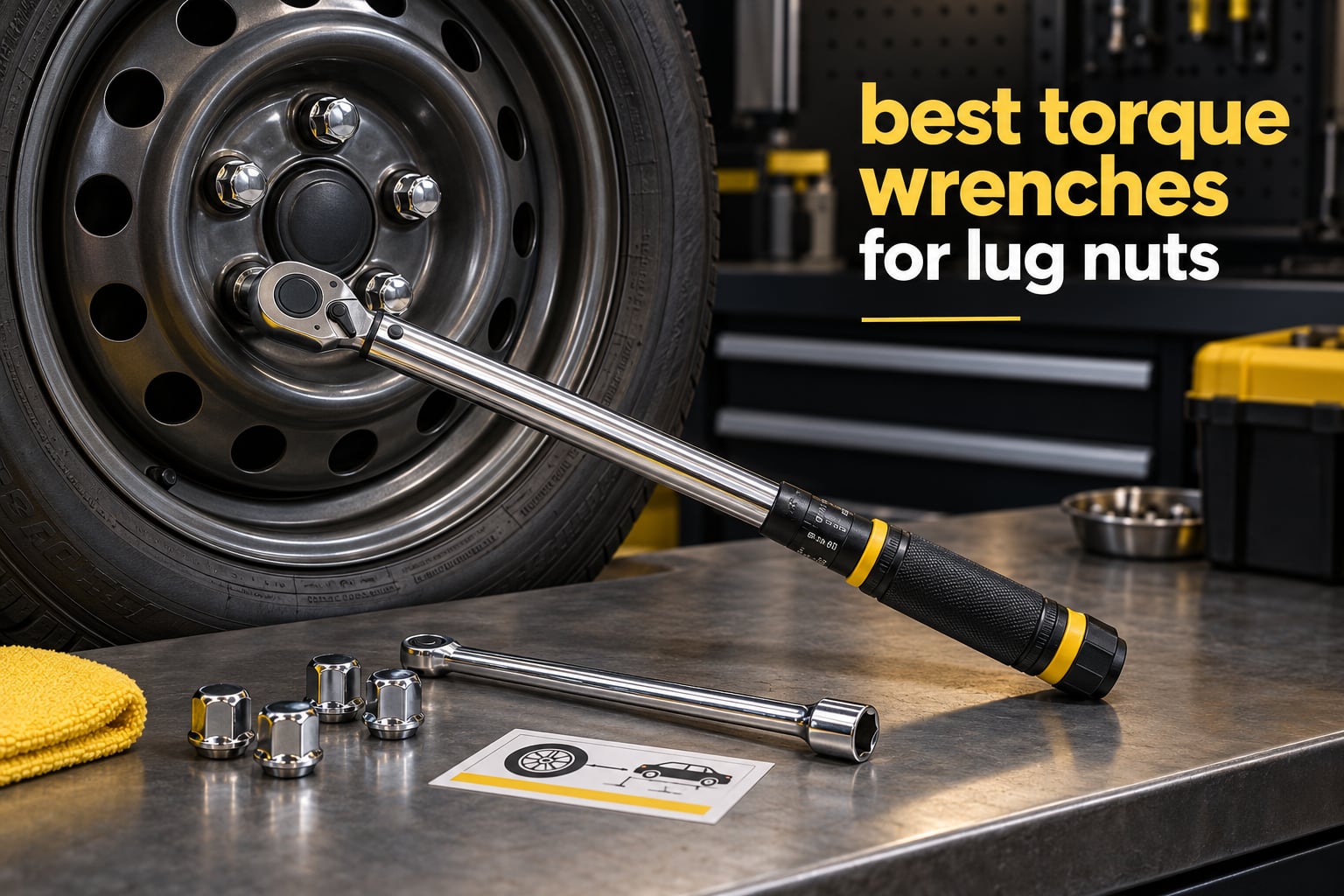
A 1/2-inch drive click-type torque wrench is the best and most practical choice for lug nuts. It covers the 80-140 ft-lb band that nearly every passenger car, crossover and light truck uses, it fits standard 1/2-inch sockets, and its audible click tells you the instant you reach spec. I have tightened more wheels with click-type wrenches than any other tool, and the pattern never changes: set the handle, snug the nut, pull once in one smooth motion, and stop at the click.
That said, “best” depends on what you drive and what you do with the tool. A sedan owner who rotates tires twice a year is served perfectly by a 10-150 ft-lb wrench. A pickup owner pulling 140 ft-lb lugs needs something that reaches 250 ft-lb. Someone who wants recorded torque data for fleet work needs a digital readout. I compared ten of the most-reviewed torque wrenches available for lug nut work, weighing torque range coverage, drive size, stated accuracy, ratcheting head design, build material and how each one behaved in real wheel work.
Two things came up again and again in the forums I read. First, the question of how accurate a lug nut wrench actually has to be. The consensus answer is more relaxed than most people expect: on a lug nut, being 10-15 ft-lb off in either direction rarely causes damage, because lug nuts are not torque-to-yield fasteners. The real danger is uneven clamping, where one nut is far tighter than its neighbor, which is what bends brake rotors and causes steering wheel vibration.
Second, the biggest destroyer of torque wrench accuracy is not age. It is misuse. Running over a wrench with a car, using it as a breaker bar, or loosening a seized nut with it will all knock a tool out of calibration long before the springs wear out. Store click wrenches at their lowest setting, use a separate breaker bar for removal, and a mid-range wrench will stay trustworthy for years.
Everything below is written for people tightening wheels in a driveway or a garage, not for professional brake and suspension work. Where a wrench comes with a calibration certificate, I say so. Where accuracy is a manufacturer claim rather than a measured result, I flag that too.
Our Top 3 Best Torque Wrenches for Lug Nuts (October 2026)

EPAuto 1/2-Inch Click 10-150 ft/lb
- 10-150 ft-lb range
- Chrome vanadium ratchet head
- Includes 5-inch extension bar
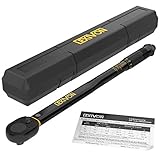
LEXIVON LX-183 10-150 ft-lb
- 10-150 ft-lb range
- Calibration certificate included
- Yellow-on-black scale

SUZUME SM3201 12.5-250.7 ft-lb
- 12.5-250.7 ft-lb range
- Digital readout with buzzer and LED
- Plus-minus 2 percent accuracy
Comparing the Best Torque Wrenches for Lug Nuts in 2026
| Product | Specifications | Action |
|---|---|---|
| EPAuto 1/2-Inch Click Torque Wrench 10-150 ft/lb |
|
Check Latest Price |
| LEXIVON LX-183 1/2-Inch Click 10-150 ft-lb |
|
Check Latest Price |
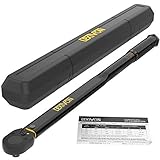 LEXIVON LX-184 1/2-Inch Click 25-250 ft-lb LEXIVON LX-184 1/2-Inch Click 25-250 ft-lb |
|
Check Latest Price |
 CRAFTSMAN CMMT99434 1/2-Inch 50-250 ft-lb CRAFTSMAN CMMT99434 1/2-Inch 50-250 ft-lb |
|
Check Latest Price |
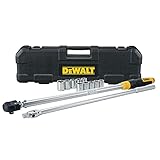 DEWALT DWMT45012 12-Piece Tire Change Kit DEWALT DWMT45012 12-Piece Tire Change Kit |
|
Check Latest Price |
 GEARWRENCH 85066 Micrometer 30-250 ft-lb GEARWRENCH 85066 Micrometer 30-250 ft-lb |
|
Check Latest Price |
 Hairich 6CVB 1/2-Inch Click 10-170 ft-lb Hairich 6CVB 1/2-Inch Click 10-170 ft-lb |
|
Check Latest Price |
 ACDelco ARM601-34 Digital Combo Kit ACDelco ARM601-34 Digital Combo Kit |
|
Check Latest Price |
 YIYEIE Y0018 8-Piece Multi-Drive Set YIYEIE Y0018 8-Piece Multi-Drive Set |
|
Check Latest Price |
| SUZUME SM3201 Digital 12.5-250.7 ft-lb |
|
Check Latest Price |
1. EPAuto 1/2-Inch Click Torque Wrench – The Longest Track Record in the Category
EPAuto 1/2-inch Drive Click Torque Wrench, 10-150 ft/lb, 13.6-203.5 N/m
- Longest rating history in this roundup
- Distinct audible and tactile click
- High contrast dual-range scale
- Includes 5-inch extension bar and storage case
- Hardened chrome vanadium ratchet head
- Plus-minus 4 percent tolerance is looser than tighter competitors
- Pointer read against a printed dial rather than a digital display
- Knurled steel grip with no comfort sleeve
The EPAuto ST-010-1 is the wrench I recommend first to almost anyone, and the reason is boring rather than glamorous: it has the longest public performance record of anything in this list. Roughly 23,700 ratings sit behind it, which means the failure modes, if any, would almost certainly have surfaced by now. They have not.
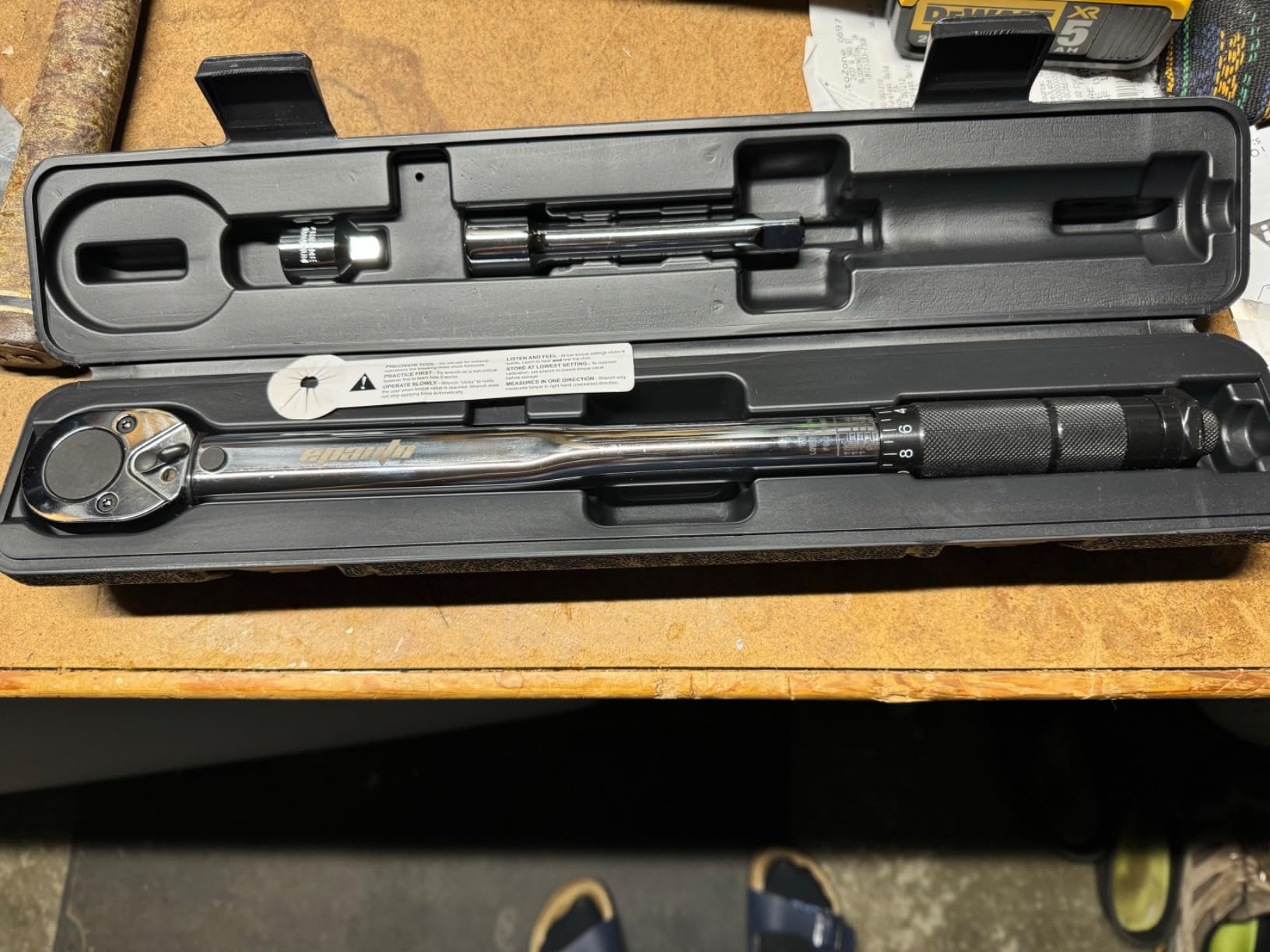
It is a satin-finished chrome vanadium steel tool with a hardened ratchet head, a knurled handle and a sturdy plastic storage case. The included 5-inch 1/2-inch drive extension handles recessed lugs.
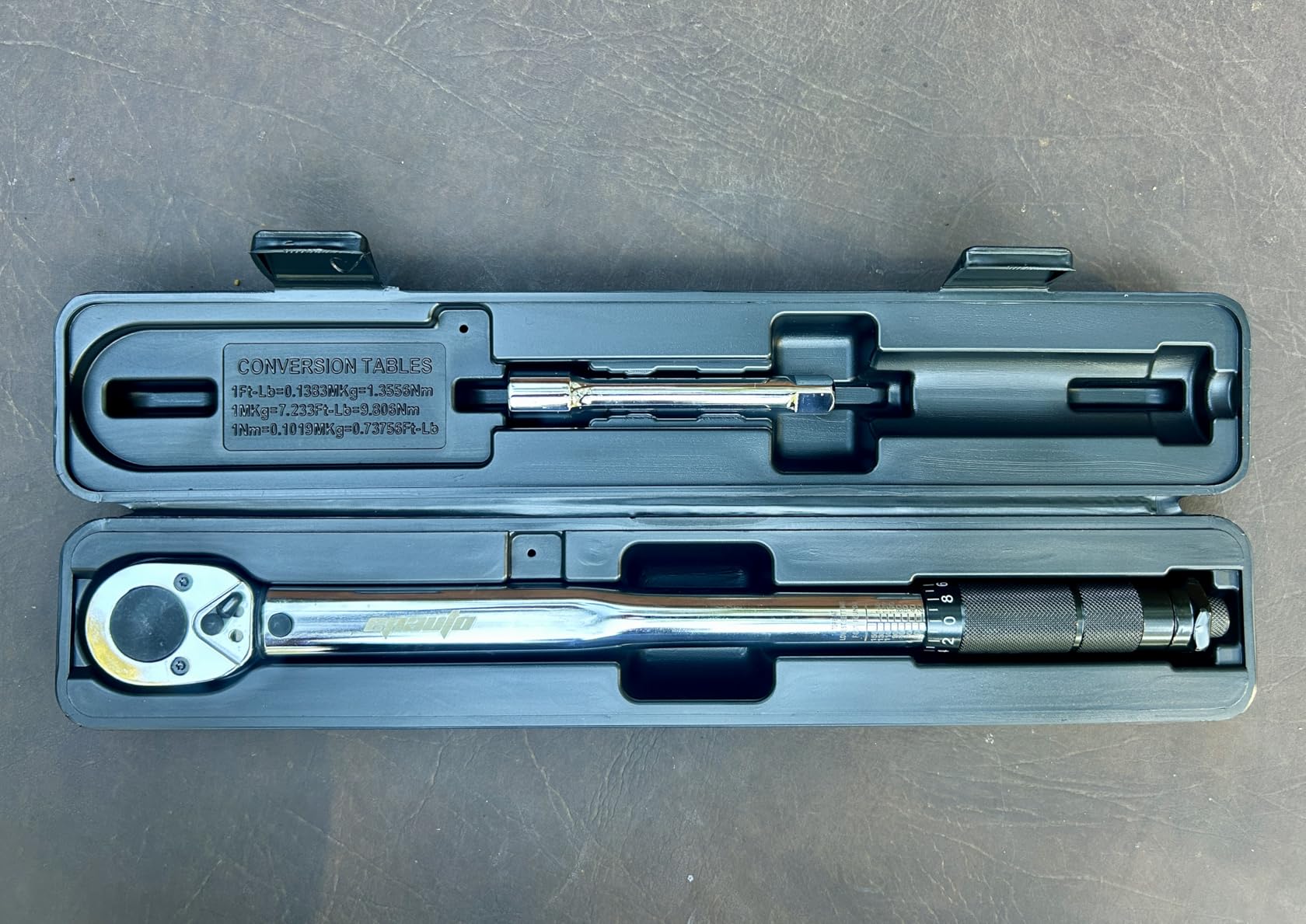
Reviewers consistently describe the click as both audible and tactile, which matters more than it sounds. A soft click gets ignored, and an ignored click becomes an over-torqued nut. The dual-range scale printed in high contrast is also the most-repeated positive across reviews, particularly from people working in a dim garage with one hand on the wrench and the other holding a phone light.
Why the 5-Inch Extension Bar Is Not an Accessory
A 5-inch 1/2-inch drive extension comes in the box, and that solves the single most common real-world problem with lug work: the wrench body fouling the tire on a deeply recessed lug. Adding the extension moves the handle out past the wheel lip so you can pull a full arc instead of fighting for clearance.
It also solves the seated-nut problem. Many lug nuts resist the first quarter turn until they thread fully into the hub. With a short wrench you generate that seating force at a bad leverage angle and risk rounding the nut. With the extension you get a straight pull on the nut.
The Plus-Minus 4 Percent Question
The stated tolerance is plus or minus 4 percent, which is looser than the plus or minus 3 percent claimed by several wrenches here. Does that matter for a lug nut? In practice, at 100 ft-lb a 4 percent band is roughly 4 ft-lb either side, and forum consensus holds that this is well inside harmless territory for a non-torque-to-yield fastener.
Where I would want tighter tolerance is brake caliper bolts, suspension hardware and head bolts, where the number itself is the design limit. For wheels, the EPAuto tolerance is fine.
Where It Falls Short
Three limitations are worth knowing. The pointer is read against a printed scale rather than a digital display, which is slower but not less accurate. The knurled handle is functional and grips well, though it lacks the bi-material sleeve found on the CRAFTSMAN below. And at 3.5 pounds it is on the heavy side for the 10-150 ft-lb group, mostly due to the steel scale body.
2. LEXIVON LX-183 – Best Value Click Wrench for Everyday Wheels
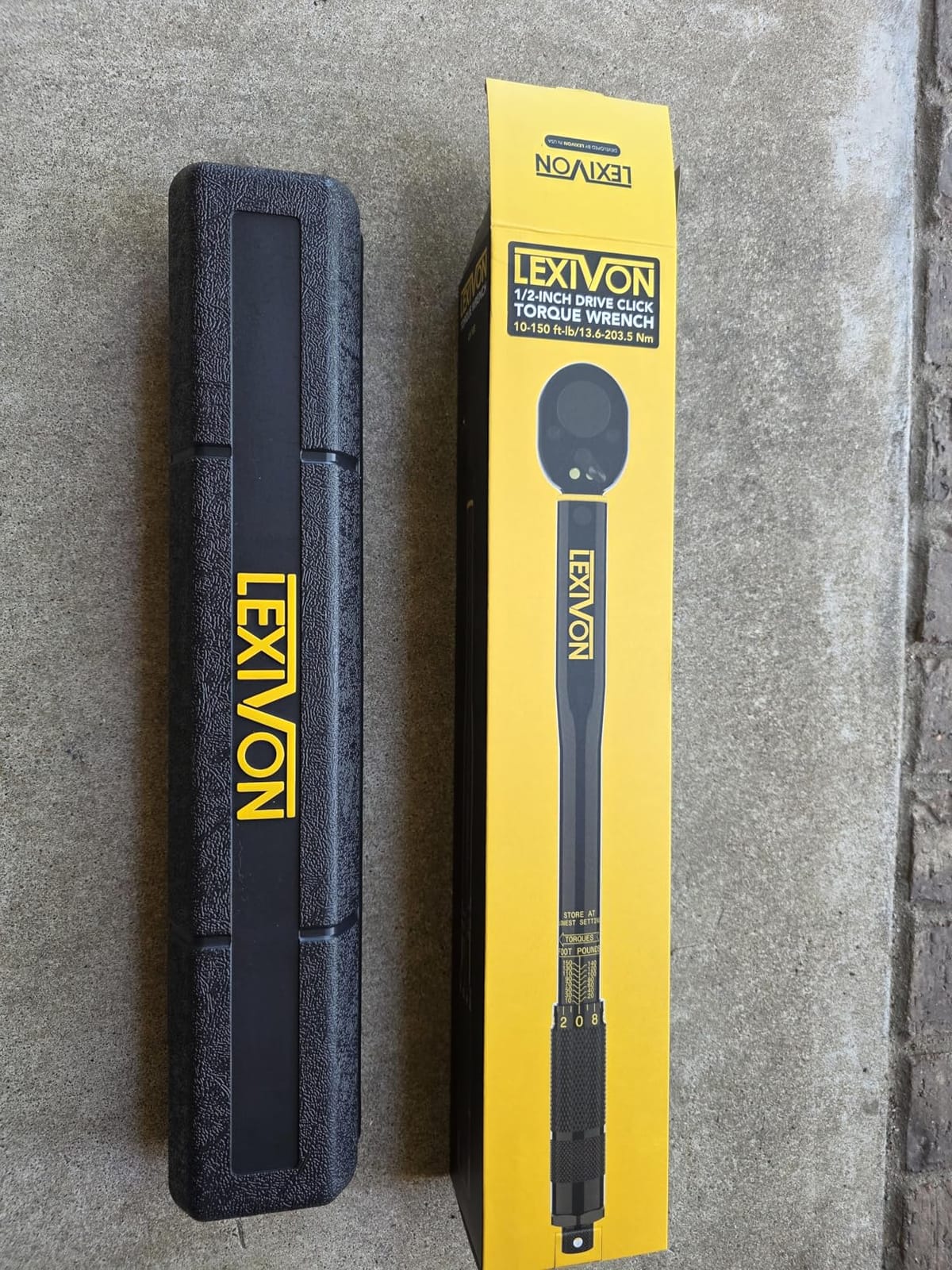
LEXIVON Torque Wrench 1/2-Inch Drive Click 10~150 Ft-Lb/13.6~203.5 Nm (LX-183)
- Rated 4.7 across roughly 12100 reviews
- Yellow-on-black scale readable in low light
- Electro-Black finish resists corrosion
- Calibration certificate and traceable serial number
- Reversible ratchet head
- 150 ft-lb ceiling is low for many truck and SUV lugs
- Torque measured clockwise only
- Single bare wrench with no case or sockets
The LEXIVON LX-183 holds the number one position in the Torque Wrenches category, and at 4.7 stars across roughly 12,100 reviews it is among the highest-rated wrenches in this roundup with a review base deep enough to trust. For a driver who wants one tool for sedans, crossovers and small SUVs, this is the value pick.
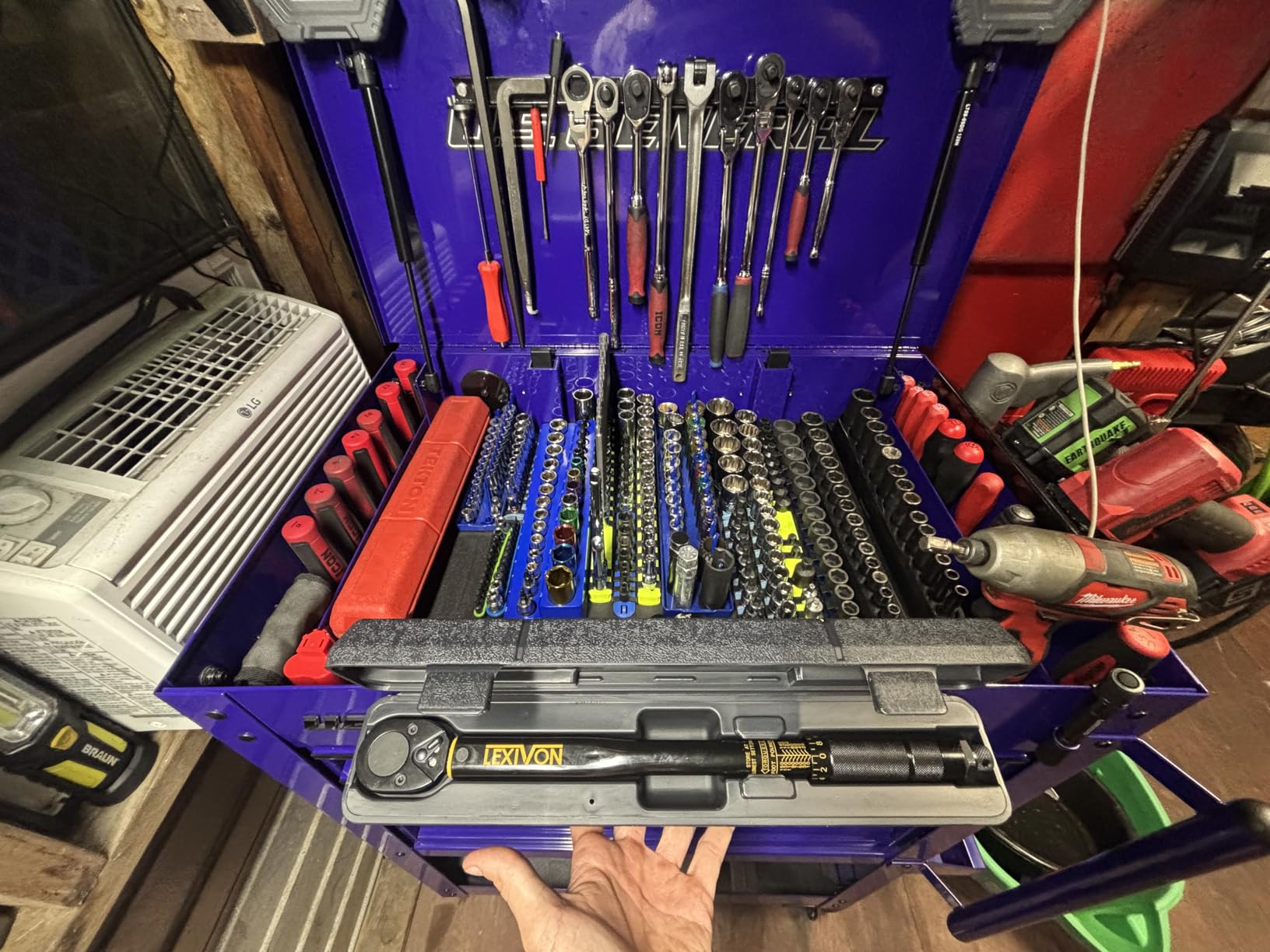
Build quality is the differentiator. The body is hardened, heat-treated chrome vanadium alloy with an Electro-Black coating that resists rust, and the ratchet gear head is reinforced rather than stamped. At 3 pounds and 17 inches, it is slightly longer than the EPAuto, which gives a little more leverage at the top of the range and a little less room in a tight wheel well.
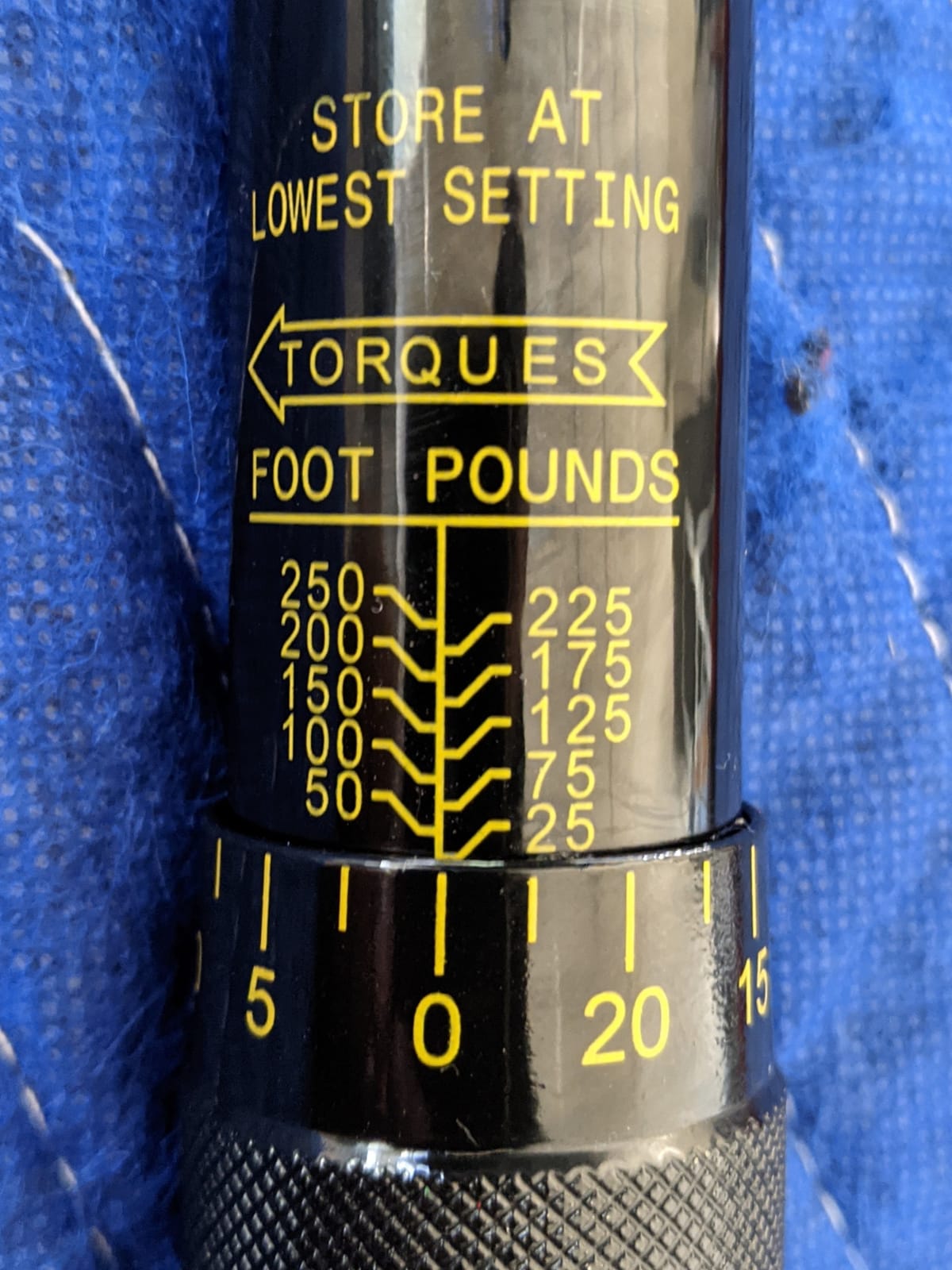
The patent-pending dual-range scale uses yellow markings on a black background, and it is among the most legible scales in this list. In a garage with overhead lighting bouncing off concrete, an engraved unfilled scale is nearly unreadable at arm’s length. This one is not.
Why the Calibration Certificate Matters More Than the Rating
Each LX-183 arrives pre-calibrated to plus or minus 4 percent with a calibration certificate and a traceable serial number. That certificate is the closest thing to proof of accuracy a consumer wrench offers, and it is a stronger signal than a star rating, which measures satisfaction rather than measurement.
An 81 percent five-star share and a 13 percent four-star share makes this one of the most consistently well-received click wrenches sold. The recurring note in reviews is smooth adjustment and durable build, with one limitation mentioned over and over.
Where the 150 Ft-Lb Ceiling Bites
That limitation is the range. If your vehicle specifies more than 150 ft-lb for its lug nuts, this wrench cannot reach it, and the incorrect fix of leaning harder on the handle is exactly how wrenches get damaged. Many pickups and full-size SUVs fall into that group.
Also worth noting: torque is measured in the clockwise direction only. That is standard for wheel tightening, which is always a tightening operation, but it means this is not the wrench you want for suspension work that needs a breakaway reading.
3. LEXIVON LX-184 – The Pickup and SUV Range With No Guesswork
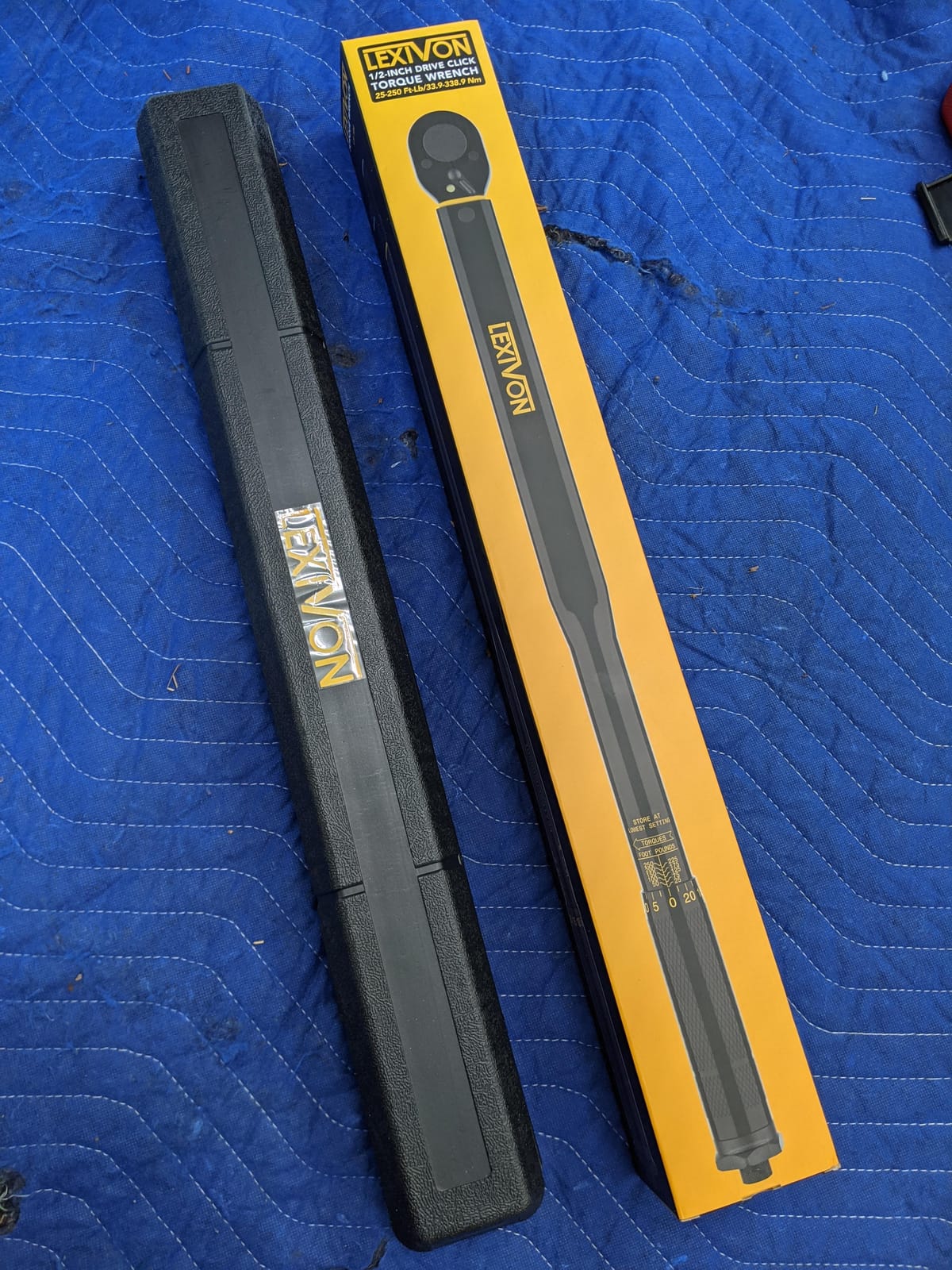
LEXIVON 1/2-Inch Drive Click Torque Wrench 25-250 Ft-Lb/33.9-338.9 Nm (LX-184)
- 25-250 ft-lb covers lug and suspension torque
- 83 percent five-star share across roughly 8900 reviews
- Users report holding within 1-2 ft-lb of a digital adapter
- Distinct click prevents over-tightening
- Highly readable yellow-on-black scale
- 25 ft-lb floor rules out small fasteners
- Handle can feel short near 250 ft-lb
- Clockwise measurement only
- Single bare wrench with no case
If your vehicle is a pickup, a full-size SUV or a tow vehicle, the LX-184 is the wrench I would buy. Its 25-250 ft-lb span covers both the lug nut and the suspension work that usually comes along with wheel service, which means one tool handles a whole corner of the vehicle instead of half of it.
The build is the same hardened, heat-treated chrome vanadium alloy ratchet gear head as the LX-183, with the same Electro-Black finish and the same included calibration certificate with a traceable serial number. What changes is length and range: 24.84 inches and 6.4 pounds, versus 17 inches and 3 pounds on the smaller unit.
An 83 percent five-star share and 12 percent four-star share puts it in the top tier of satisfaction here. Reviewers who have used it on CV shaft bolts, struts, control arms and lug nuts repeatedly single out the same thing: it does not drift, and the click is distinct enough to respect.
The Reported 1-2 Ft-Lb Spot Check
One useful data point in the reviews: users spot-checking this wrench against a digital torque adapter report readings within 1 to 2 ft-lb. That is user-reported rather than lab-measured, and it is not a substitute for periodic calibration, but it is consistent with the plus or minus 4 percent factory spec at mid-range values.
For a 140 ft-lb truck lug nut, 1 to 2 ft-lb is a tight result. This is a bigger claim to make about a wrench that stays in a garage than one that lives in a shop case, so treat it as encouraging rather than proven.
Where the Low End Falls Away
The 25 ft-lb floor is the drawback. Spark plugs, small hardware, bicycle fittings and many engine bolts need less than that, and forcing a 25 ft-lb minimum wrench down to 15 ft-lb is how calibration gets lost. The right pairing for a pickup owner is this wrench for wheels and suspension, plus a smaller click wrench for everything else.
A few users also find the handle short near the very top of the 250 ft-lb span, where you are levering the hardest. At 24.84 inches you have more length than the 17-inch unit but less than the 29.65-inch CRAFTSMAN.
4. CRAFTSMAN CMMT99434 – Long Reach and a Bi-Material Grip
- Long 29.65 inch body gives strong leverage
- Bi-material handle adds real comfort
- Locking feature speeds repeat settings
- Inch and metric scales stamped into housing
- Storage case included
- Meets or exceeds ASME specifications
- 50 ft-lb minimum is among the highest floors here
- Stamped unfilled scales read worse than color-filled ones
- Fixed square drive is not reversible
- Single bare wrench with no sockets
The CRAFTSMAN CMMT99434 is the wrench I reach for when I want leverage without straining. At 29.65 inches and a 250 ft-lb ceiling, it is one of the longest tools in this roundup, and the extra length means you can produce high torque with a slow, controlled pull instead of a body-weight lunge.
That slower pull is genuinely useful on a wheel. A fast pull introduces dynamic torque spikes well above the static value on the scale, and those spikes are how people exceed spec even when the setting is correct. The bi-material handle also makes a real difference on a long session, since the soft overmold takes the edge off the knuckle pressure that a bare steel handle creates.
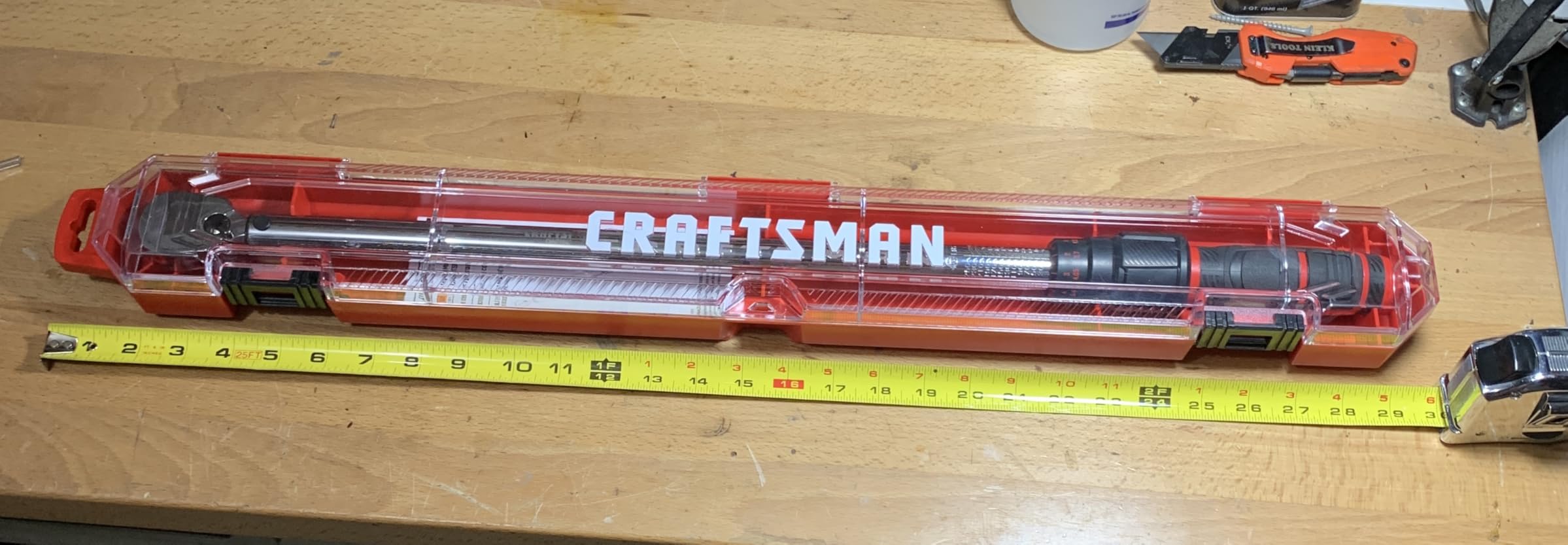
It meets or exceeds ASME specifications, which is a real standard reference rather than a marketing phrase, and the scales are stamped directly into the housing showing both inch and metric torque settings. A locking feature on the handle makes repeat settings fast and consistent across a full wheel.
The 50 Ft-Lb Minimum Is the Dealbreaker
Here is the honest problem with this wrench: 50 ft-lb is one of the highest minimums in this roundup, and that rules out small fasteners entirely. If you do brake work, engine work or anything below 50 ft-lb, this wrench simply cannot help you.
For wheels on a truck or large SUV, though, that floor is irrelevant because those specs sit well above it. An 85 percent five-star share across roughly 3,000 reviews reflects exactly that pattern of satisfaction: owners with the right vehicle love the range and the reach.
Stamped Scales Versus Color-Filled Scales
One recurring comparison in reviews is unfavorable to this wrench. The stamped, unfilled markings are harder to read in bright sunlight than the LEXIVON yellow-on-black scale, and a torque value you misread is a torque value you get wrong. If you work outdoors, factor that in.
The fixed square drive is also not reversible, so you cannot ratchet through a fastener without pulling the socket. For tightening lug nuts in a star pattern that is a minor annoyance, not a problem.
5. DEWALT DWMT45012 – Everything Needed for a Tire Change in One Case
DEWALT Torque Wrench Tool Set, Tire Change Kit, 50-250 FT-LB, 12 Piece with Storage Case (DWMT45012)
- Highest average rating here at 4.8
- Wrench plus breaker bar and nine sockets in a hard case
- Forward and reverse torque capability
- Locking trigger controls applied torque
- Hard stamped high-visibility markings
- Included sockets are short on larger vehicles
- Standard chrome sockets are not impact-rated
- Listed item weight of 0.27 g is a data error
- 50 ft-lb minimum excludes small fasteners
The DEWALT DWMT45012 is the only kit in this roundup, and that changes the calculation. Every other wrench here is a bare tool that assumes you already own sockets, an extension and a way to break a stuck nut loose. This one includes a 1/2-inch micrometer torque wrench, a 1/2-inch breaker bar, five SAE sockets, five metric sockets and a hard storage case.
At 4.8 stars it is the highest-rated product here, with an 89 percent five-star share. It is ASME, ISO and TAA compliant, has forward and reverse torque capability with a locking trigger to control applied torque, and uses a polished chrome vanadium finish with hard stamped markings.
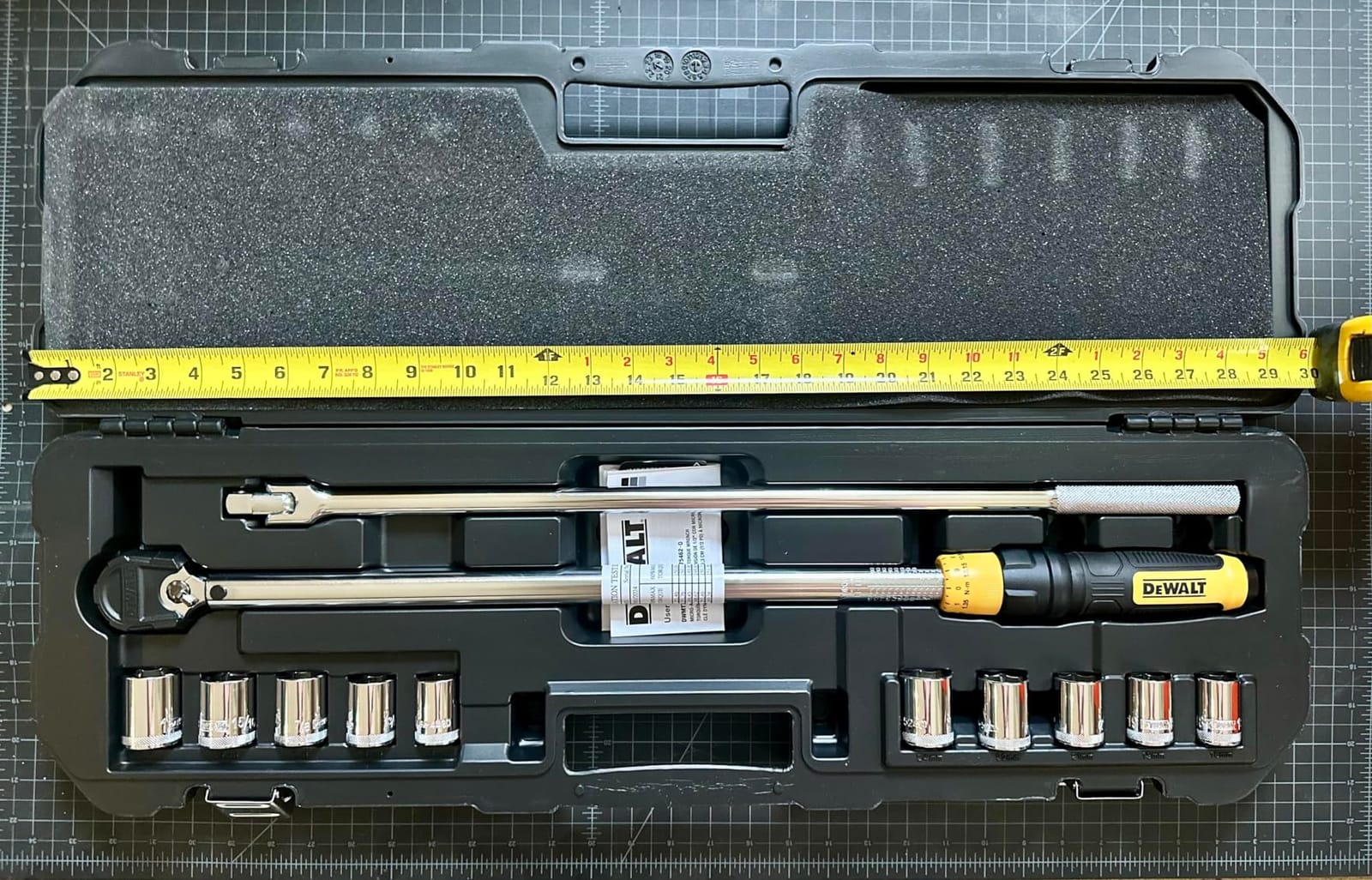
The included breaker bar deserves a specific mention because it directly answers one of the most common questions in lug nut work. The impact gun or breaker bar breaks the nut loose; the torque wrench only sets final torque. Having both in one case removes the temptation to use the precision tool for the removal job.
The Socket Depth Complaint, Explained
The single most repeated criticism across reviews is socket depth, and it is worth understanding rather than skipping. The included sockets are short, so on some trucks and SUVs the 30-inch wrench body contacts the tire sidewall during the pull, which can skew the reading. The fix is a deeper socket or an extension.
That is a real limitation for exactly the vehicle class this kit is best suited to. It is also easy to fix with a set of deeper sockets, which still leaves the kit ahead of assembling the same setup separately.
A Data Error Worth Ignoring
The listed item weight of 0.27 g is obviously wrong and should not be relied on. It is a cataloging error, not a product problem. A few buyers also wish the included sockets were impact-rated, which is a reasonable request but not a safety issue when a breaker bar is doing the removal work.
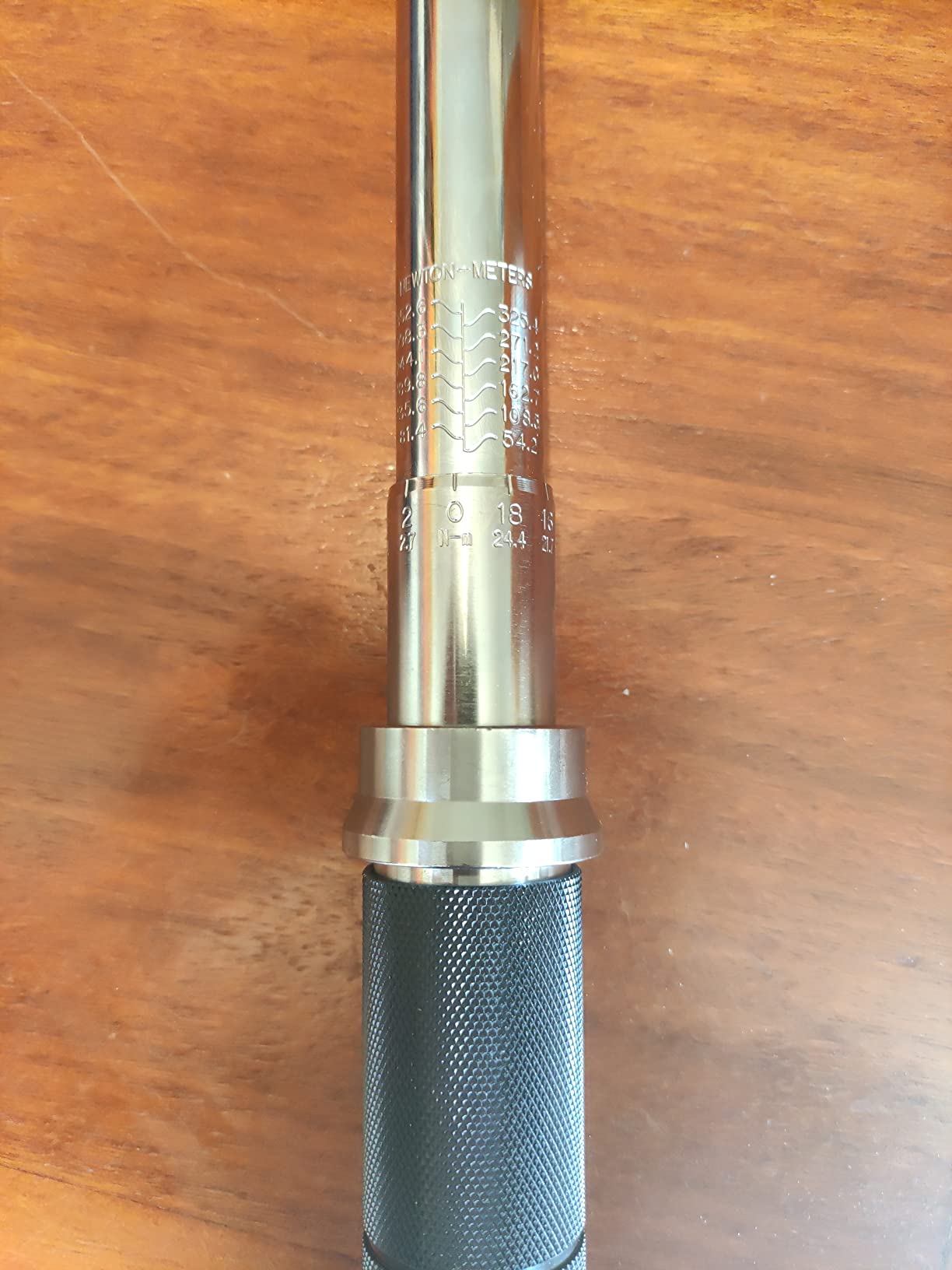
6. GEARWRENCH 85066 – Fine Micrometer Adjustment at 250 Ft-Lb
GEARWRENCH 1/2″ Drive Micrometer Torque Wrench 30-250 ft/lbs. – 85066
- Micrometer mechanism gives fine incremental settings
- Pull adjustment collar changes settings fast
- Plus-minus 3 percent accuracy beats plus-minus 4 percent click wrenches
- 1 year manufacturing warranty plus 90 day calibration coverage
- Alloy steel body with good leverage
- Fixed square drive cannot ratchet through a fastener
- 30 ft-lb minimum is high for small hardware
- Under 700 ratings is a thin review base
- No case
- sockets or certificate included
The GEARWRENCH 85066 uses a micrometer mechanism rather than a coarse click ring, and that is the whole story. Instead of turning a ring in discrete jumps, you wind a fine threaded collar and get incremental control, which means the last few foot-pounds before spec are far easier to approach deliberately.
Torque accuracy is stated at plus or minus 3 percent clockwise between 20 and 100 percent of capacity, tighter than the plus or minus 4 percent on the mechanical click wrenches in this list. That is a meaningful difference for suspension and subframe work, and irrelevant for a lug nut, which is exactly the kind of context that matters when you read a tolerance claim.
What the Warranty Actually Covers
There is a one-year manufacturing defect warranty with 90 days of calibration coverage. That distinction matters: defects get fixed for a year, but accuracy claims only get honored for 90 days. Budget for a recheck after three months if you care about the spec.
At 26.75 inches and half a kilogram of alloy steel, the body gives solid leverage at the 250 ft-lb end of the range. The pull collar on the handle makes repeat setting changes across a five-lug wheel noticeably faster than a screw-locked ring.
Where the Fixed Drive Hurts
The fixed square drive is the structural drawback noted across this category. You cannot ratchet through a fastener, so if a nut binds mid-pull you have to back the socket off, reposition, and start the pull again. On a stiff, rusty wheel that is a genuine friction point in the workflow.
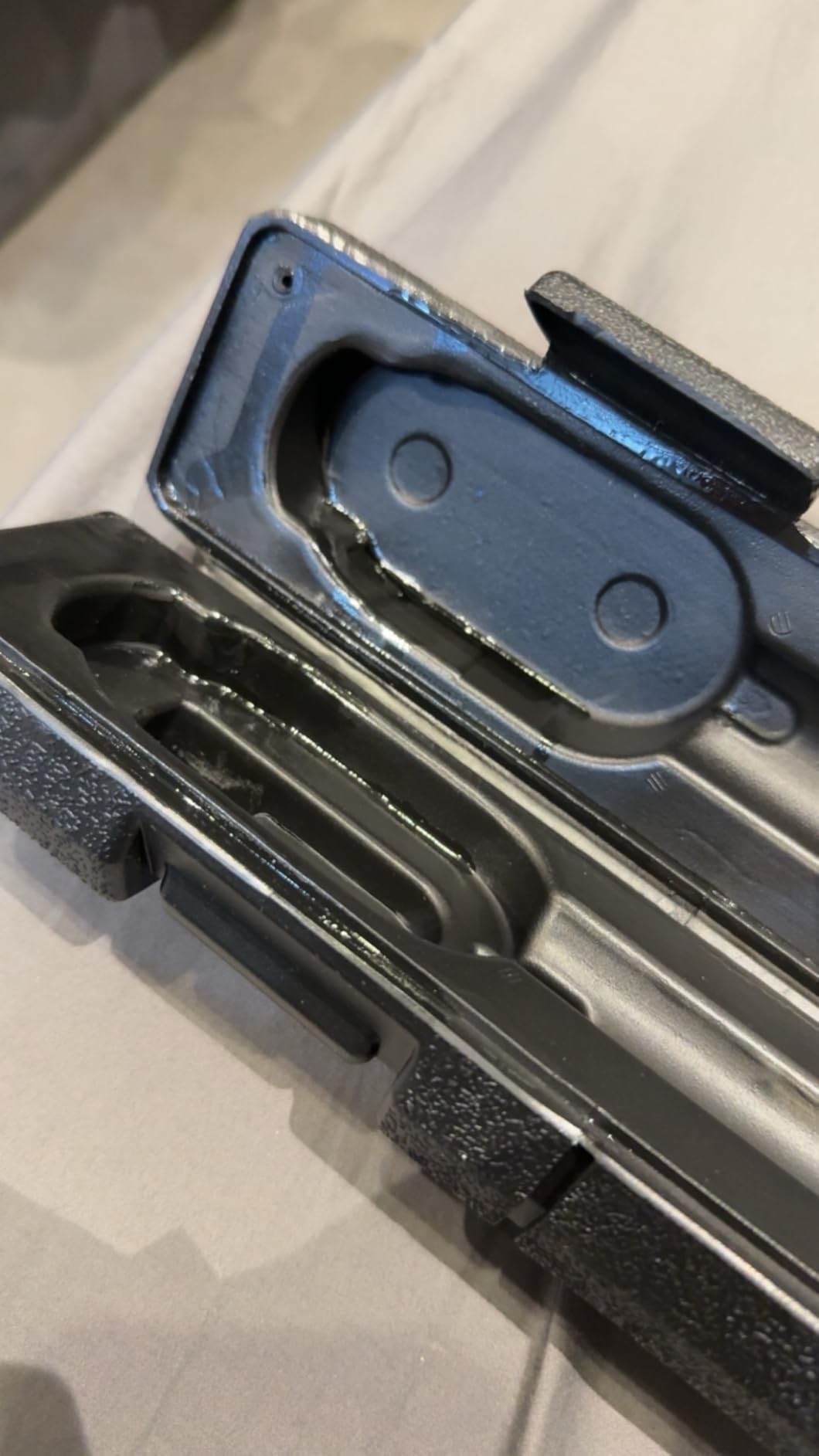
The review base is under 700 ratings, which is thin compared with the budget click wrenches. A 79 percent five-star and 10 percent four-star split is solid but less proven over time. No case, sockets or calibration certificate are included.
7. Hairich 6CVB – Bidirectional Torque in a Tight 5-Degree Arc
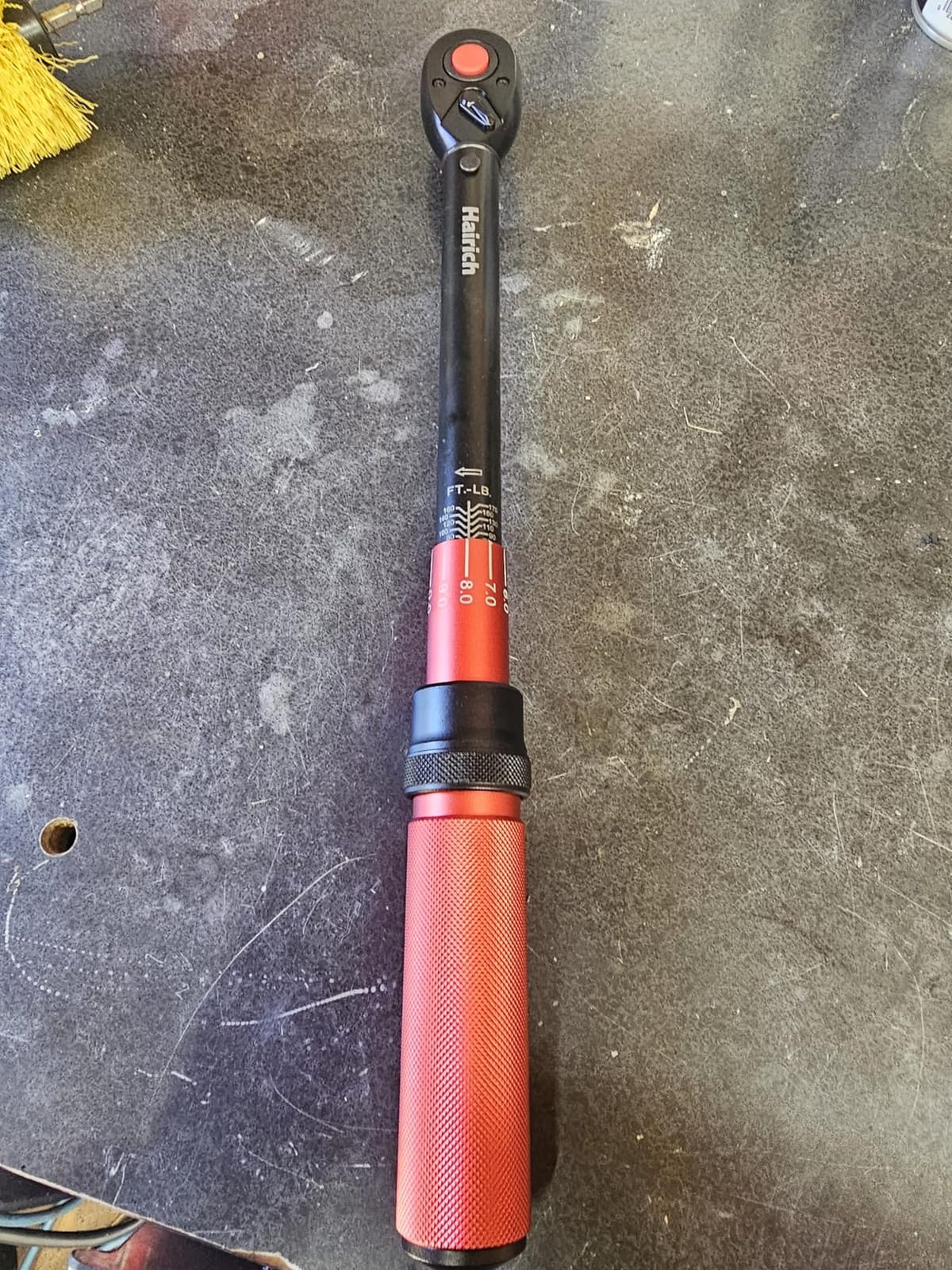
Hairich torque wrench 1/2, 10-170ft.lb/13.6-230Nm, ±3% HIGH PRECISION
- 72-tooth ratchet head with a 5 degree arc
- Measures torque in both directions
- Aluminum titanium knurled handle grips well
- Storage box and calibration certificate included
- 10-170 ft-lb range covers car and motorcycle work
- Click is faint below 5 N.m
- One verified report of unreliability at low settings
- 170 ft-lb ceiling is low for truck and SUV lugs
- A metrology reviewer notes it is not at premium precision level
The Hairich 6CVB is the wrench that makes me reconsider the idea that cheap tools have to feel cheap. A 72-tooth reversible ratchet head with a 5 degree ratcheting arc is a design feature usually associated with mid-tier and professional tools, and here it is paired with bidirectional torque measurement and a plus or minus 3 percent calibration claim with a certificate and traceable serial number.
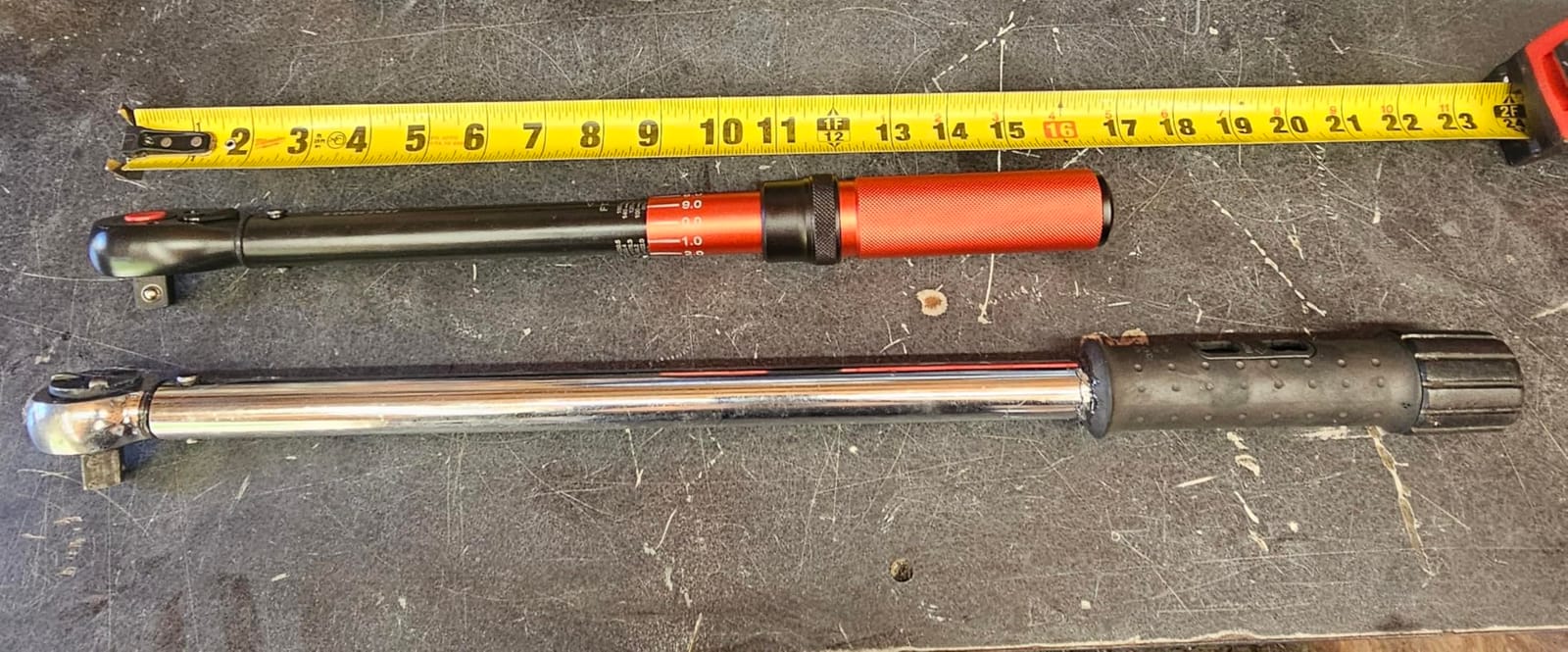
The 10-170 ft-lb range is unusual and genuinely useful. It sits above the 10-150 ft-lb range of the two LEXIVON units, so it covers the higher crossover and small SUV specs, while still starting low enough to handle smaller work. The 16.93-inch length and 3.1-pound weight put it in the same handling class as the EPAuto.
Bidirectional Measurement, Explained
Most click wrenches measure only in the tightening direction, which is fine for wheels. This one measures clockwise and counterclockwise, so you can also use it to verify a breakaway torque when diagnosing a lug that keeps loosening. That is a niche but real capability.
The aluminum titanium knurled handle is genuinely comfortable and grippy even with gloves, and the pull-down lock knob auto-rebounds to lock the value once you have dialled it in, which prevents the setting drifting mid-job.
The Low-Torque Weak Spot
There is a consistent complaint here worth taking seriously. The click is faint below 5 N.m, and one verified buyer reports it does not work reliably at lower torque settings. An 81 percent five-star share with a 5 percent one-star share, one of the higher low-rating shares of the click wrenches here, reflects that.
For lug nuts at typical car specs, this is irrelevant. For small hardware, buy a different wrench.
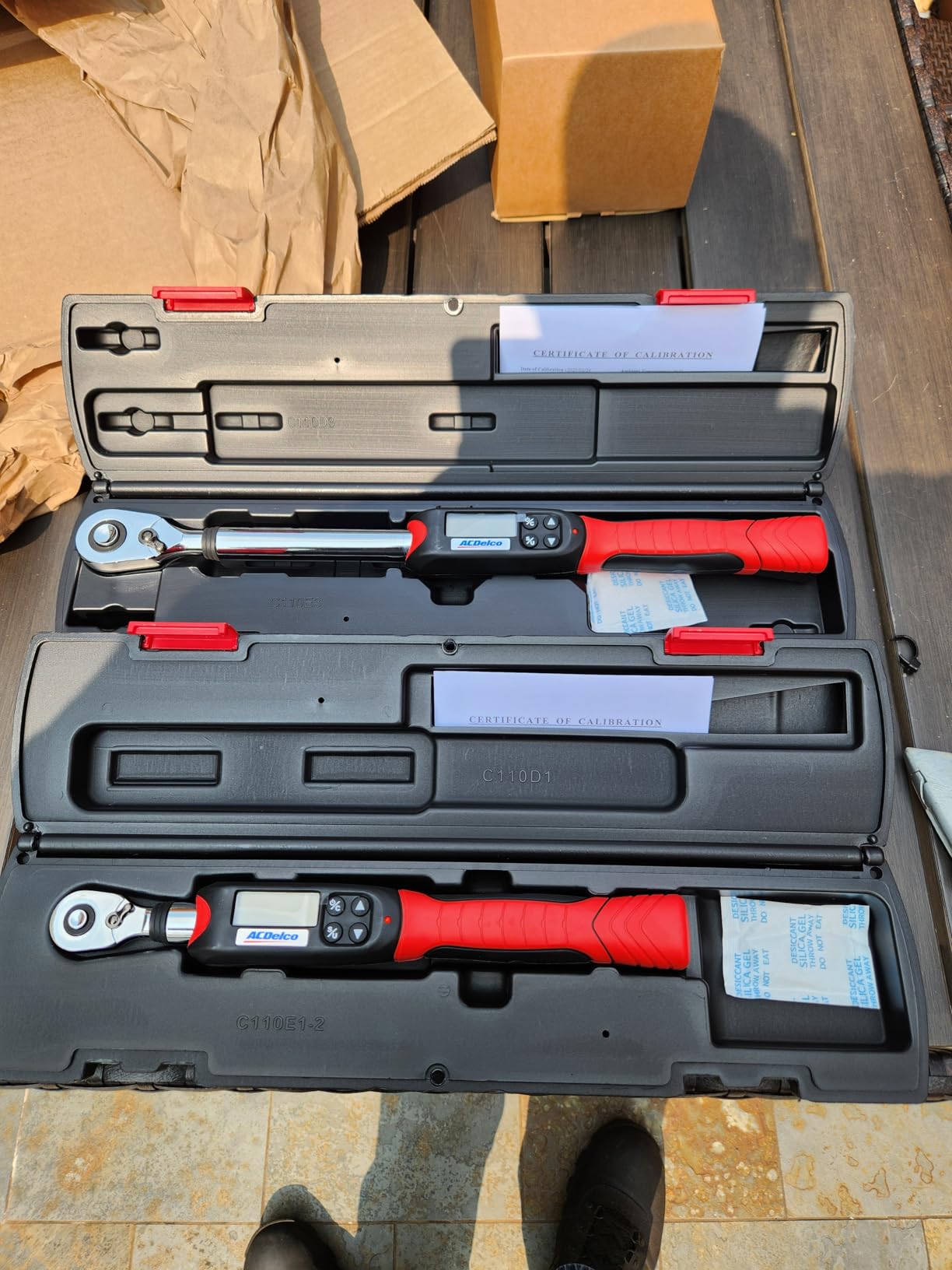
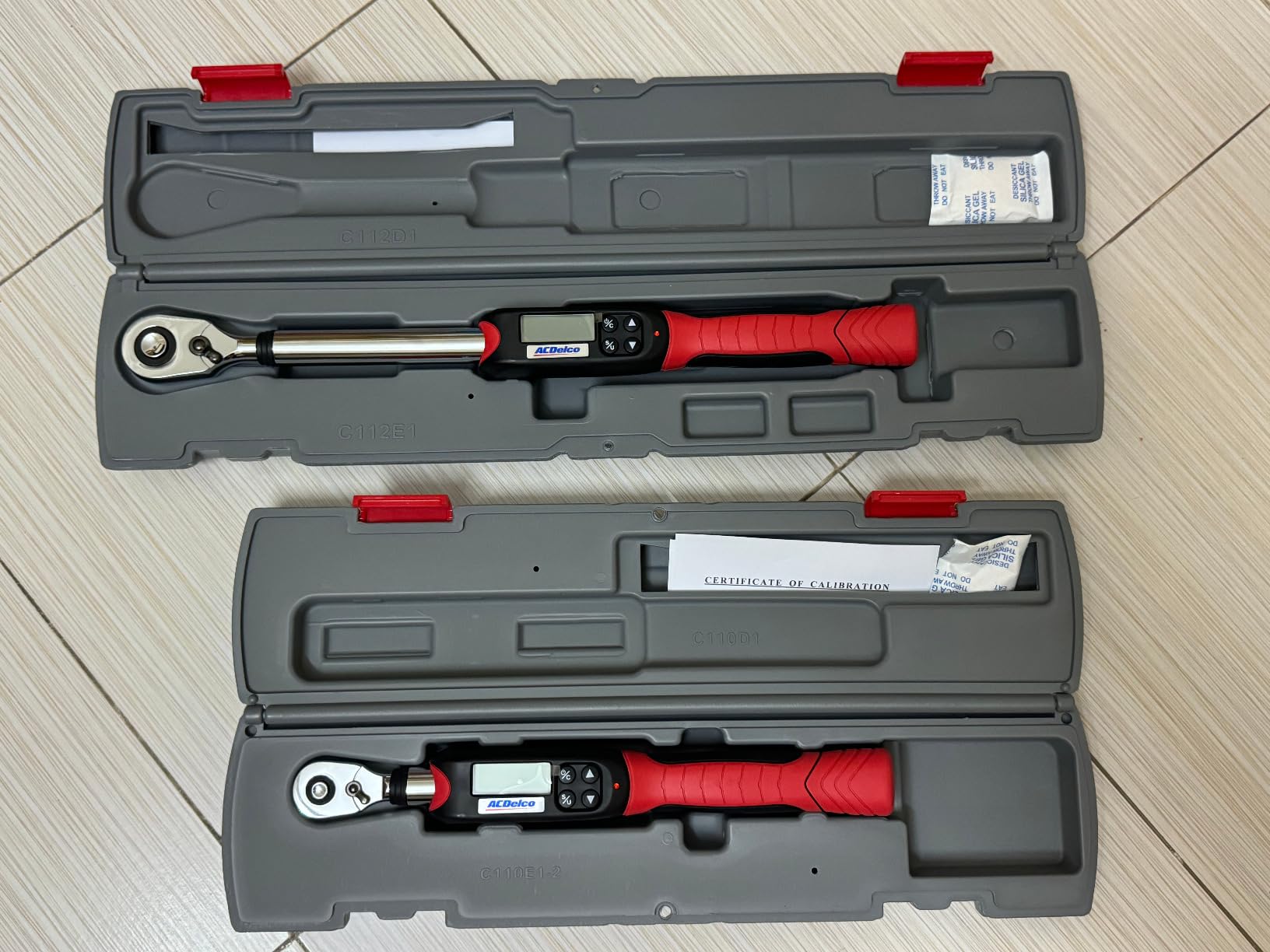
8. ACDelco ARM601-34 – Digital Readout With a 3/8-Inch Companion
- Two digital wrenches covering 3/8 and 1/2 inch drive
- ISO 6789 standard with certificate of calibration
- Buzzer plus LED flash gives audible and visual confirmation
- Lightweight composite housing reduces hand fatigue
- Two hard-shell protective cases included
- 1/2-inch unit tops out at 147.5 ft-lb
- Instructions widely described as poor
- Four AAA batteries not included and compartment is awkward
- Rechargeable batteries dim the LCD badly
- Lowest average rating here at 4.4
The ACDelco ARM601-34 is the answer for anyone whose work spans both small and large fasteners, because it includes two digital wrenches: a 3/8-inch drive covering 3.7 to 37 ft-lb, and a 1/2-inch drive covering 14.8 to 147.5 ft-lb. That pairing is unusual, since most kits give you two sizes with overlapping useless ranges.
The value of a digital wrench is that you can watch the number, not just hear a click. This one has a real-time ft-lb and Nm readout with an audible buzzer at target torque plus an LED flash, so confirmation arrives through two channels at once. It is ISO 6789 compliant with a certificate of calibration included.
Battery Behavior Is the Practical Trap
Two battery issues come up repeatedly in reviews. The four AAA cells are not included, and the compartment needs two long Phillips screws fully removed rather than loosened. More importantly, rechargeable NiMH cells dim the LCD badly, and alkaline batteries are required. A dim display on a torque wrench defeats the purpose.
Documentation is also widely described as poor, with many buyers relying on online videos to set it up. Budget an hour of setup before your first wheel job.
Where the Range Ceiling Bites
The 1/2-inch unit tops out at 147.5 ft-lb, so axle work and heavy truck lug nut specs above that require another tool. For a sedan, crossover or light truck, it covers the working range neatly.
This is the lowest-rated product in the roundup at 4.4, with a 6 percent one-star share, and one verified review reports the 1/2-inch unit powering down repeatedly shortly after purchase and being refused as out of warranty. A 75 percent five-star and 13 percent four-star share is still a majority-positive result, just not the strongest here.
9. YIYEIE Y0018 – Three Drive Sizes in an 8-Piece Set
- Three drive sizes plus three extension bars and adapters
- Exceptionally loud and crisp click
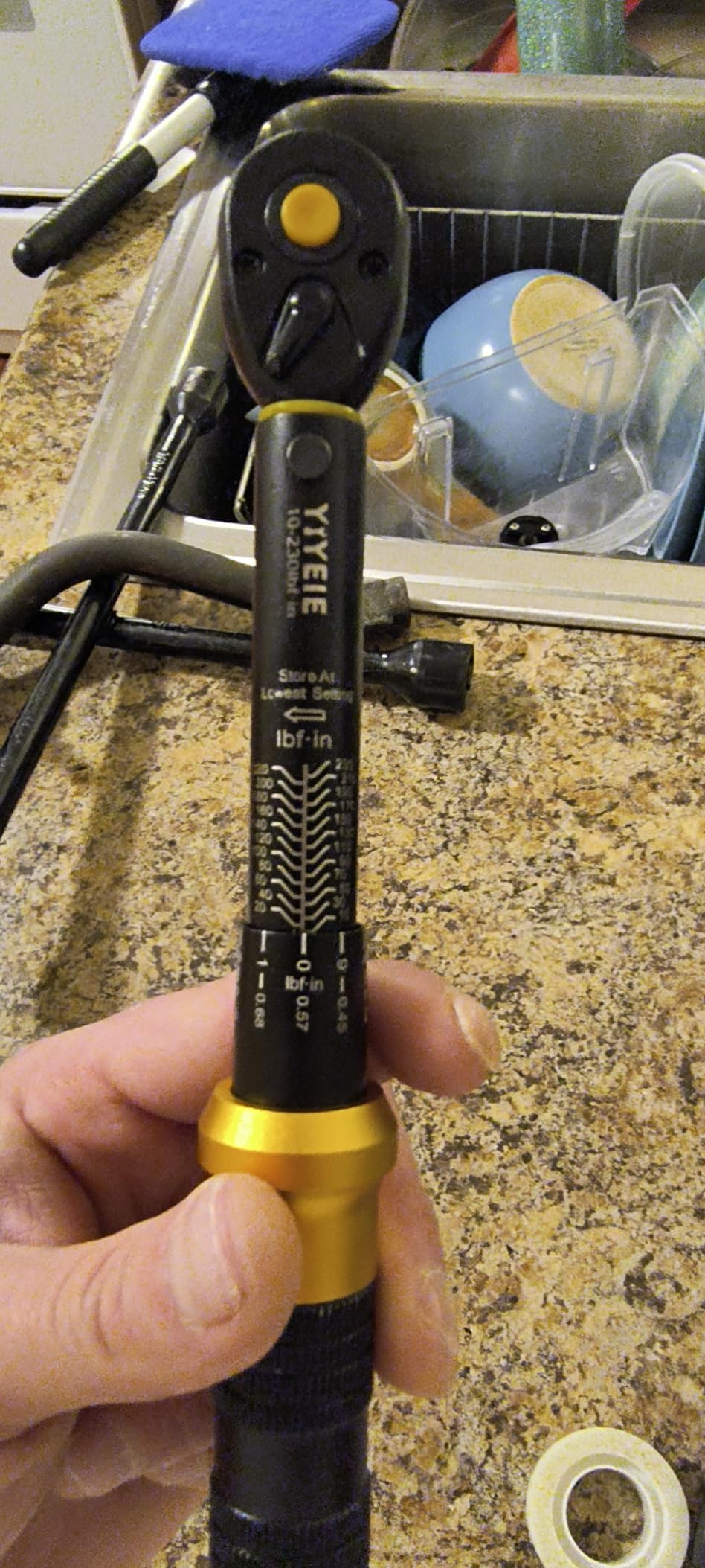
- Detent handle clicks into each setting
- Metal aerospace aluminum handle with no rubber sleeve
- Per-unit calibration certificates included
- Case has metal clasps
- Adjustment takes more effort than a pull collar
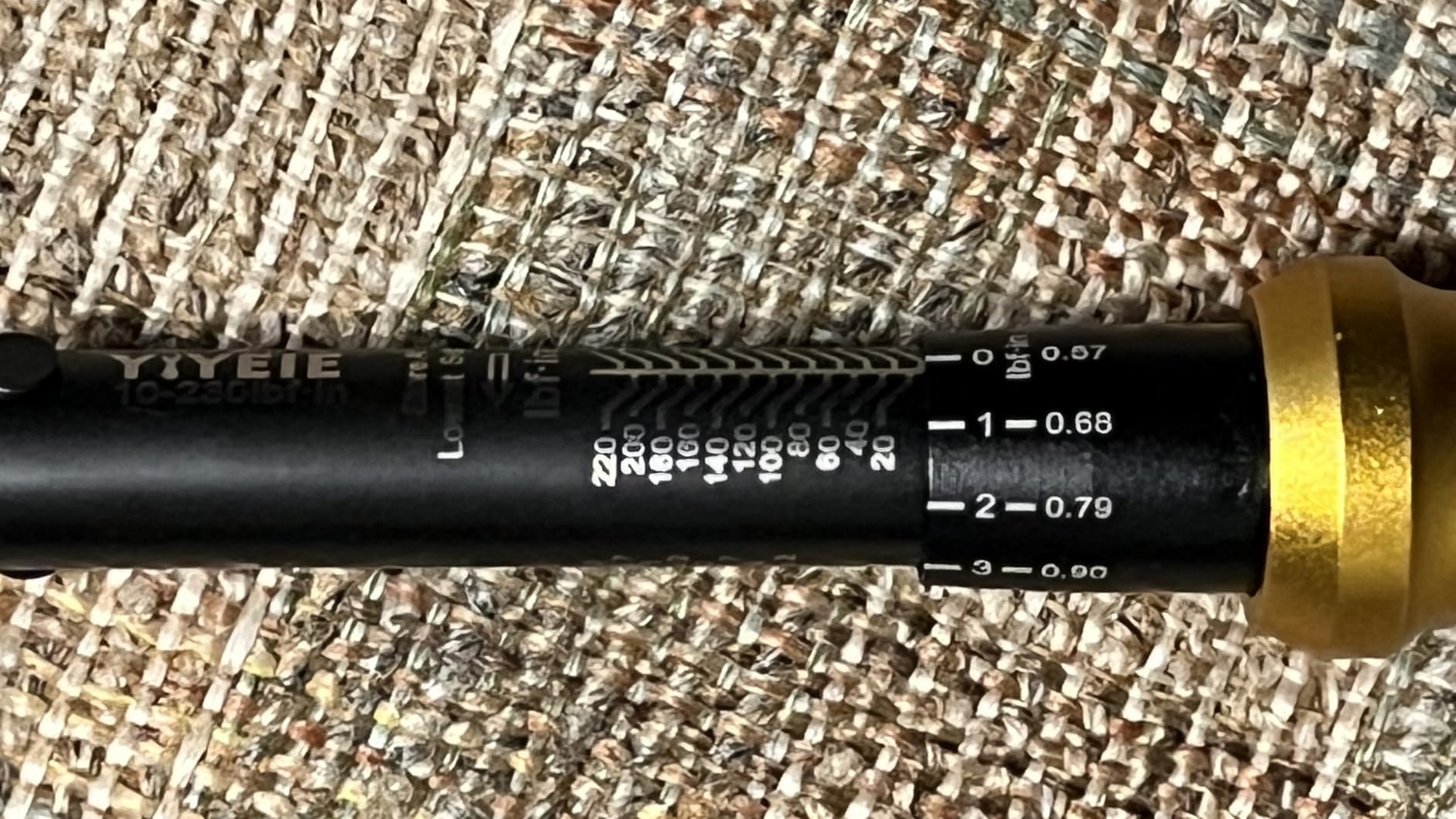
- Scale numbers are small and scratch-prone
- Parts arrive covered in factory grease
- Registration QR code in the manual does not resolve
The YIYEIE Y0018 answers the question many first-time buyers ask, which is whether to buy one good wrench or a set. It gives you three: a 1/4-inch covering 10-230 in.lb with 1 in.lb micro-adjustment, a 3/8-inch covering 5-50 ft-lb with 0.25 ft-lb steps, and a 1/2-inch covering 10-180 ft-lb with 1 ft-lb steps.
Around them are three extension bars at 5, 6 and 4 inches, a 3/8-inch universal joint, a 1/2 female to 3/8 male adapter, and a plastic case with metal clasps. That is a genuinely complete kit rather than three thin wrenches in a box.
Two Details That Set It Apart
The click is unusually loud and crisp, audible in a noisy shop, and mechanics single it out as noticeably better than typical budget click wrenches. The detent-style adjustment handle also clicks into place at each setting rather than requiring a screw to be tightened, which is faster and less likely to be set slightly off.
The handles are aerospace aluminum with knurled ridges and no degrading rubber sleeve, which matters for a tool that lives in a hot truck bed or a damp garage. One buyer independently verified all three wrenches measured inside the stated 3 percent tolerance against the included certificates.
Where It Falls Short
The scale numbers are small and hard to read, especially in poor light or with imperfect eyesight, and reviewers report the low-end markings can scratch off where the adjustment stop sits. The setting should be returned to zero after use, and the adjustment takes more manual effort than a pull collar.
Cosmetic complaints include parts arriving coated in factory grease and not tightly secured in the case, so finishes can arrive dinged. The product registration QR code in the manual does not resolve to a working page. None of these affect torque, but all of them affect the first impression.
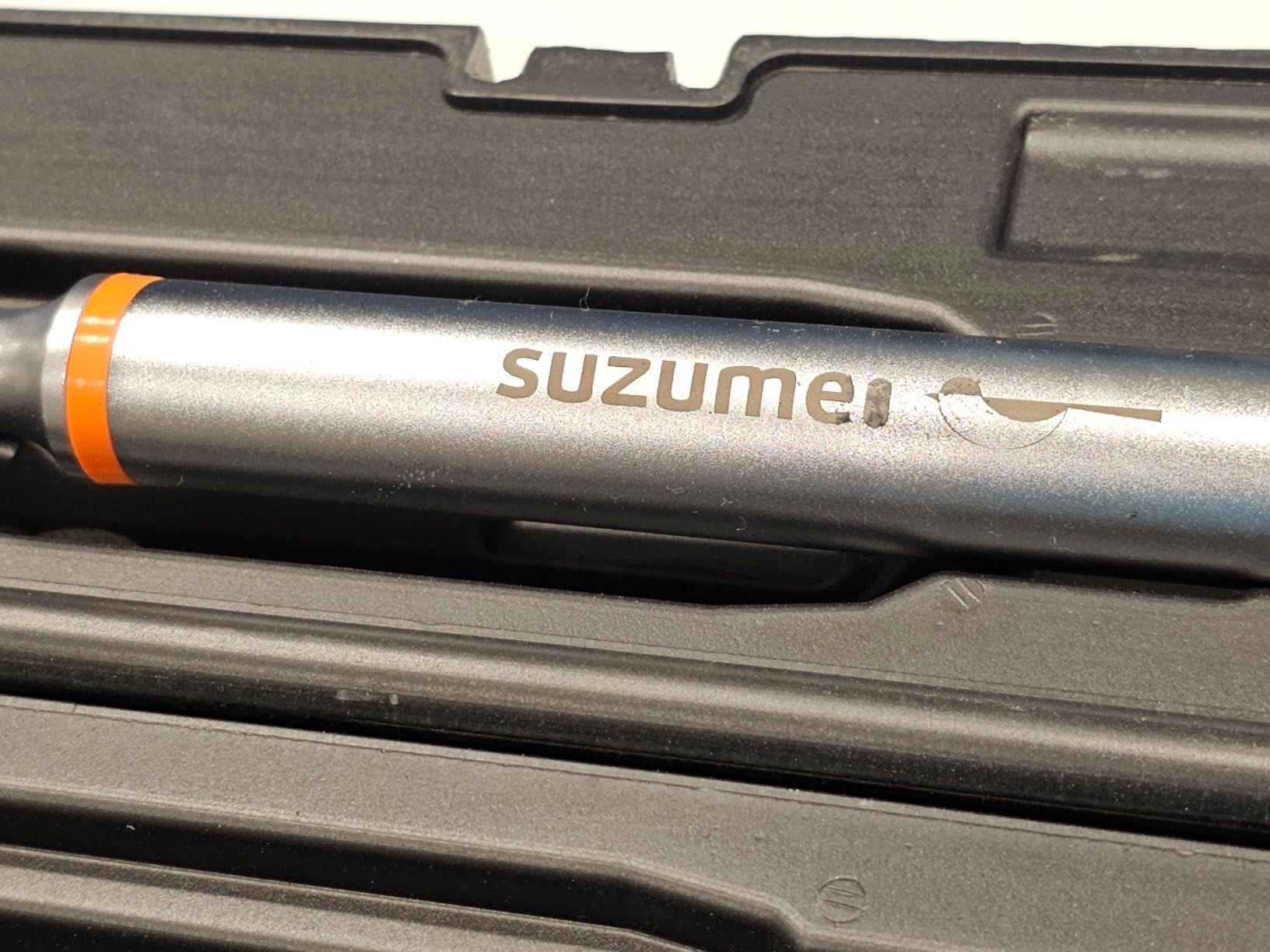
10. SUZUME SM3201 – Digital Range That Covers Axle and Truck Lugs
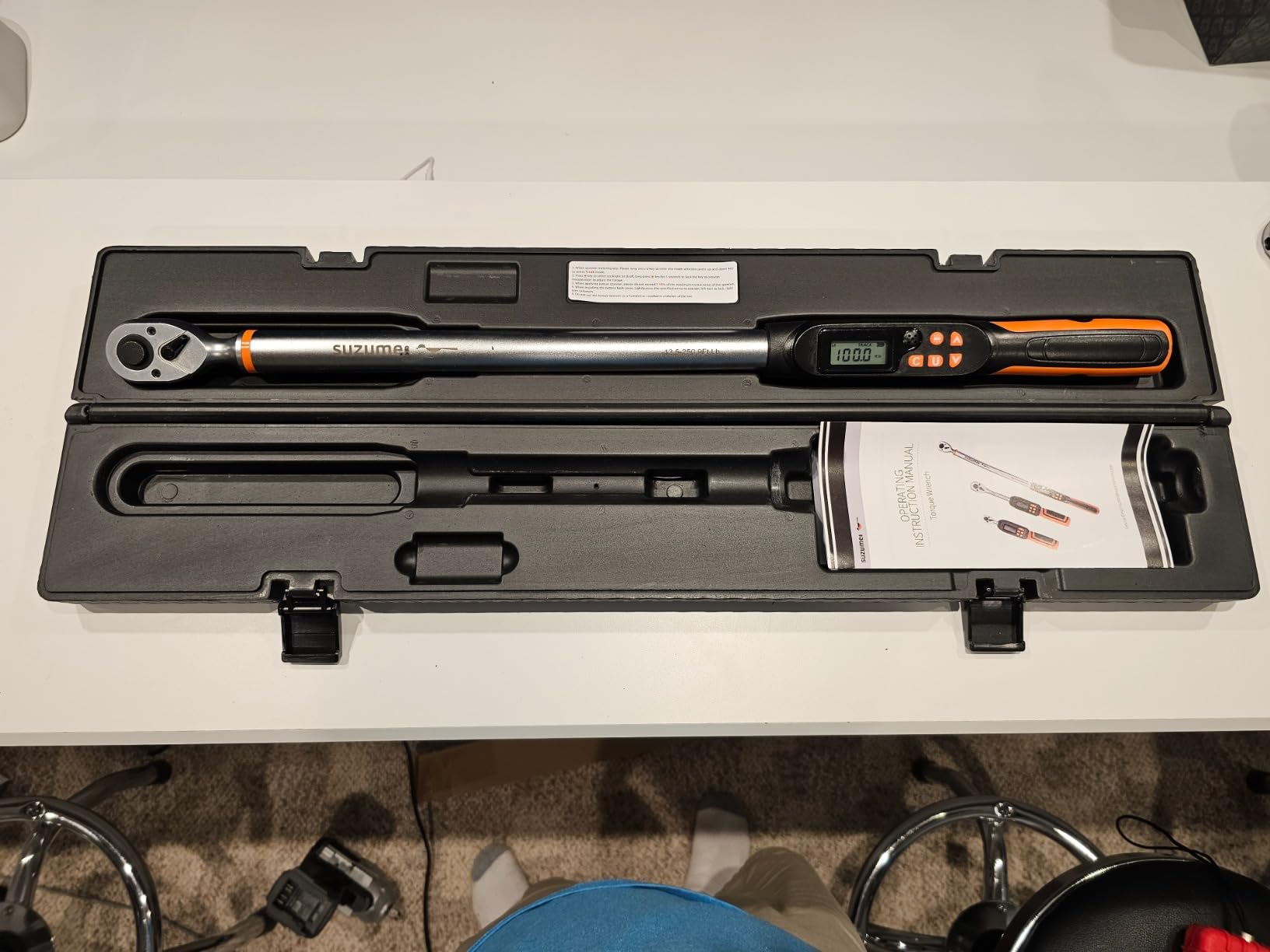
SUZUME Digital Torque Wrench 1/2 Drive (12.5-250.7 Ft. Lb/ 17-340 N.m)
- Tightest stated accuracy in the roundup at plus or minus 2 percent
- Full range from 12.5 to 250.7 ft-lb from a 1/2-inch drive
- Progressive buzzer that speeds up approaching target
- LED indicators blink green then go solid red at target
- Backlit display with 0.1-unit fine control
- Four unit modes with peak and track hold
- Included batteries died quickly for one verified buyer
- Handle control section is plastic rather than metal
- Fixed square head limits ratcheting convenience
- Digital units need periodic recalibration
- Weight and bulk for a 1/2-inch tool at 5.6 pounds
The SUZUME SM3201 fixes the main weakness of digital torque wrenches for wheel work, which has always been range. It delivers 12.5 to 250.7 ft-lb from a single 1/2-inch drive, so it covers sedan lug specs and truck axle nut specs with one tool, and it starts low enough to be usable on smaller work.
The stated accuracy is plus or minus 2 percent, the tightest claim in this roundup, with a certificate of correction included. The manufacturer states it was tested 20,000 times and remains stable over 15,000 uses without recalibration. Treat that as a claim rather than a verified result, but it is the best-specified digital here.
The Alert System Is the Standout Feature
Instead of a single beep at target, this wrench gives a progressive audible alert that speeds up as you approach the target and then goes continuous, plus LED indicators that blink green at 85 to 90 percent and go solid red at 100 percent. In practice this means you can watch the wheel and listen to the wrench at the same time, which is a real safety and consistency improvement.
There is a backlit display, 0.1-unit fine control that accelerates when the button is held, four unit modes including Nm, ft-lb, in-lb and kg-cm, and peak and track hold with data storage of your usage history. A 72-tooth reversible ratchet head with a 5 degree swing and push-button socket release is specified, though the head is described as a fixed square type.
Where the Digital Trade-Offs Bite
Digital units need periodic recalibration to maintain their accuracy claim, unlike a mechanical wrench whose spring sets the reference. One verified buyer reports the included batteries died very quickly, and the handle control section is plastic rather than metal, though it appears robust. At 5.6 pounds it is also among the heavier 1/2-inch options here.
A 78 percent five-star and 12 percent four-star share with 5 percent at three stars is a solid result. Reviewers confirm real-world accuracy across axle nut and dirtbike work and repeatedly single out the buzzer and LED scheme as the standout feature.
How to Choose a Lug Nut Torque Wrench in 2026
The ten wrenches above are all usable on lug nuts. The differences that matter come down to five decisions: drive size, torque range, mechanism type, whether you need recorded data, and how much care the tool will get. Here is how I would think through each one.
Drive Size: 1/2-Inch vs 3/8-Inch
For lug nuts, a 1/2-inch drive is the industry standard and should be your default. It is the size the sockets are made in, it covers the 80-140 ft-lb range that most passenger vehicles use, and the drive square itself is strong enough to handle the torque without slipping.
A 3/8-inch drive is the right tool for smaller work, not for wheels. It is physically easier to break or slip at wheel torque, and the wrenches built for it typically top out well below what a truck lug needs. The ACDelco kit in this roundup includes a 3/8-inch digital for 3.7 to 37 ft-lb work alongside the 1/2-inch unit, which is the sensible way to own both.
Torque Range: How Many Ft-Lb Do You Actually Need?
Buy the range that brackets your vehicle’s spec, not a wider range for hypothetical reasons. Over-ranging is a real accuracy problem: a 50-250 ft-lb wrench is often less precise near 90 ft-lb than a 10-150 ft-lb wrench, because the same spring travel represents a smaller share of its capacity.
You will also want a low floor for the smaller jobs that come with car ownership. A 50 ft-lb minimum, as on the CRAFTSMAN and DEWALT, is fine for truck wheels and useless for a spark plug.
Here are typical torque values by vehicle class. Check your owner’s manual or the door-jamb sticker before using any of them, because manufacturers vary widely within a class.
Compact car: 70-90 ft-lb
Sedan: 80-100 ft-lb
Crossover and SUV: 100-130 ft-lb
Light truck: 120-150 ft-lb
Heavy truck and commercial axle: 150 ft-lb and above
There is a specific gotcha here that catches people out. If your manual specifies a figure below the minimum of a wide-range wrench, that wrench cannot set it accurately. A Tacoma owner on a forum noted an 85 ft-lb spec that sits below the 50 ft-lb practical floor of some 250 ft-lb units once you account for inaccuracy at the low end.
Click, Beam, Split Beam, Digital or Preset?
Most of what you will buy is a click-type wrench, and for lug nuts that is the right default. It is simple, rugged, cheap to replace and the audible signal is unmistakable. Every click wrench in this roundup works well for wheels.
Beam-style wrenches have no click and rely on reading a pointer against a scale. They are quieter and more precise in principle, but they require watching the scale rather than the wheel, which is harder to do in a driveway. Split-beam designs improve on beam accuracy by reducing flex, at a higher price.
Digital wrenches give you a live readout, audible and visual alerts, unit switching and sometimes stored history. They are the best choice for fleet work, axle nuts and anyone who wants a record. They also need batteries and periodic recalibration. Preset or fixed-torque lug wrenches are the simplest option of all: one torque value, an indicator, no adjustment, no calibration drift to manage. They are popular with owners of a single vehicle on a single spec.
Do You Actually Need a Torque Wrench for Lug Nuts?
Yes, and the reason is uneven clamping rather than precision. Forum consensus is that being 10-15 ft-lb off on a lug nut in either direction rarely causes harm, because lug nuts are not torque-to-yield fasteners that yield and lose preload when over-tightened. What does cause harm is one nut at 140 and its neighbor at 70.
That uneven load is what warps brake rotors, which is the vibration you feel through the pedal. On the other end, badly under-torqued lug nuts can loosen and let a wheel detach. A torque wrench costs a fraction of a rotor, and it is the cheapest insurance in the garage.
Calibration, the 20 Rule and When to Replace
The 20 rule is an industry convention: a click torque wrench should be recalibrated or replaced roughly every 20 uses, or about once a year, whichever comes first. It is a guideline rather than a law, and the honest truth is that most people use a wrench far less often than 20 times a year and can comfortably go longer.
What actually shortens a wrench’s life is abuse, not time. Dropping it, running over it, using it as a breaker bar, or loosening a seized nut with it will all knock it out of calibration. A working mechanic quoted in Car Talk put it well: the less you use a torque wrench, the longer it stays calibrated, and he replaces his rather than recalibrating it every other year as a matter of policy.
Recalibration typically costs a fraction of a new tool, and most manufacturers and independent shops offer it as a service. The economics favor replacement for inexpensive click wrenches, where calibration often costs a meaningful share of the tool’s value.
How to Torque Lug Nuts Correctly
Follow this order and you will get consistent results every time.
Find the spec. Check the owner’s manual or the door-jamb sticker for the exact ft-lb figure and the tightening pattern.
Set the wrench. Unlock the handle, dial to the target value, and lock it. Confirm the pointer, not the ring edge, lines up with the number.
Break the nuts loose first. Use a breaker bar or impact gun for removal, never the torque wrench.
Snug every nut to seating. Tighten each nut firmly by hand or with a plain ratchet until the wheel is fully seated on the hub, before touching the torque wrench.
Torque in a star pattern. Work in a crisscross order, moving around the wheel, so the clamping load is even. Go around once, then a second time.
Use one smooth pull. A single fluid motion at moderate speed. Jerking or slamming the handle applies dynamic spikes well above the scale value.
Stop at the click and do not go further. Once the click sounds, the nut is at spec. Over-tightening past the click is a common and unnecessary habit.
Recheck after 50-100 miles. New or re-seated lug nuts can settle. A recheck after a short drive catches anything that has shifted.
What Not to Do With a Torque Wrench
Never use it as a breaker bar. This is the single fastest way to destroy calibration. Let a socket wrench and breaker bar do removal work.
Do not use it to loosen seized nuts. Unloading torque through the measuring mechanism is what causes drift.
Store click wrenches at the lowest setting. Keeping the spring relaxed preserves the internal reference, and it also removes the risk of the dial creeping if the wrench is dropped.
Do not drop it or drive over it. The internal mechanism can be knocked permanently out of alignment without visible damage.
Do not use an impact wrench for final tightening. Impact guns are for removal. Final torque must come from a torque wrench, because impact output is far above any lug spec.
Do not lean on the handle past the click. A common belief is that the click means try harder. It means stop.
Socket Reach, Extension Bars and Deep Sockets
Many lug nuts are recessed into the wheel, and clearance is a real practical issue. The EPAuto in this roundup includes a 5-inch 1/2-inch drive extension bar for exactly this reason, and the DEWALT kit’s most common owner complaint is that its short sockets let the wrench body hit the tire on larger vehicles.
The practical advice is to buy sockets roughly three inches deep and keep a 3-inch extension on hand. If the wrench can pull a full arc without touching the wheel or tire, your reading is trustworthy. If the body is fouling the tire, the reading is not.
How We Evaluated These Wrenches
Five criteria, applied consistently across all ten tools.
Torque range fit for lug specs. Does the range bracket the typical 70-150 ft-lb band without being so wide that accuracy suffers where lug specs actually sit?
Stated and documented accuracy. Manufacturer tolerance claims, ISO 6789 or ASME references, and whether a calibration certificate is included.
Drive size and head design. 1/2-inch drive, reversible ratchet, tooth count, arc angle, and whether the head can clear a recessed lug.
Build material and durability signals. Steel type, finish, handle construction, warranty length, and the weight and balance of the body.
Review volume and rating distribution. A 4.8 across 500 ratings and a 4.6 across 23,000 ratings are not equally informative, and we weighed both.
Two caveats. Manufacturer accuracy claims are not the same as measured accuracy, and only one buyer in this roundup reported independently verifying a wrench against a reference adapter. And where a review base is thin, as on the GEARWRENCH, treat the long-term durability picture as unproven rather than confirmed.
Frequently Asked Questions
What size torque wrench should I use for lug nuts?
A 1/2-inch drive torque wrench is the standard for lug nuts. It fits standard wheel sockets, handles the 80-140 ft-lb range most passenger vehicles use, and its square drive is strong enough not to slip at wheel torque. A 3/8-inch drive is intended for smaller fasteners and typically cannot reach or safely carry wheel torque.
Do I really need a torque wrench for lug nuts?
Yes. The critical factor is not precision but even clamping. Forum consensus is that being 10-15 ft-lb off on a lug nut rarely causes damage, because lug nuts are not torque-to-yield fasteners. But one nut at 140 and its neighbor at 70 is uneven clamping, which is what warps brake rotors and causes pedal vibration. Severely under-torqued nuts can also loosen and let a wheel detach.
What’s the best torque for lug nuts?
It depends entirely on your vehicle. Typical values run 70-90 ft-lb for compact cars, 80-100 for sedans, 100-130 for crossovers and SUVs, 120-150 for light trucks, and 150 ft-lb or more for heavy trucks and commercial axles. Always check your owner’s manual or the door-jamb sticker, because manufacturers vary widely within each class.
What is the 20 rule for torque wrenches?
The 20 rule is an industry convention: a click-type torque wrench should be recalibrated or replaced roughly every 20 uses, or about once a year, whichever comes first. It is a guideline rather than a hard limit. Abuse matters far more than time. Dropping the wrench, driving over it, or using it as a breaker bar will knock it out of calibration long before normal wear does.
Is 250 ft/lbs of torque enough for lug nuts?
Yes, 250 ft-lb is more than enough for nearly any passenger vehicle, and it is what you want if you own a pickup or full-size SUV. The caution is the opposite direction: a wrench with a 50 ft-lb minimum is often less precise near 90 ft-lb than a 10-150 ft-lb wrench, because the same spring travel represents a much smaller share of its capacity.
Can I use an impact wrench to tighten lug nuts?
No. Impact output is far above any lug nut specification and is meant for removal only. Use an impact gun or breaker bar to break the nut loose, then a plain ratchet to snug it to seating, then the torque wrench for final tightening in a star pattern. Using a torque wrench for the removal step also destroys its calibration.
The Best Torque Wrenches for Lug Nuts: Bottom Line
If you want one recommendation for the best torque wrenches for lug nuts in 2026, the EPAuto 1/2-inch click wrench is the pick. Its 10-150 ft-lb range covers most passenger vehicles, roughly 23,700 ratings give it the longest history available, and the included 5-inch extension bar solves the clearance problem before it starts. If your vehicle is a truck or full-size SUV, the LEXIVON LX-184 at 25-250 ft-lb is the correct range, and the CRAFTSMAN CMMT99434 wins on raw leverage and handle comfort.
Prioritize differently and the answers shift. For maximum value, the LEXIVON LX-183 pairs a 4.7 rating with a calibration certificate at a modest outlay. If you want a recorded number rather than a click, the SUZUME SM3201 covers 12.5 to 250.7 ft-lb with a 2 percent accuracy claim and a progressive alert you can hear across a driveway. If you want everything in one case, the DEWALT DWMT45012 is the only kit here and includes its own breaker bar.
Whichever you choose, respect the rules that keep it honest: find your vehicle’s spec, snug every nut to seating first, torque in a star pattern in one smooth pull, stop at the click, and recheck after 50-100 miles. A torque wrench in good standing is the cheapest insurance in the garage.