12 Best Steam Juicers for Home Preserving (October 2026) Ultimate Guide
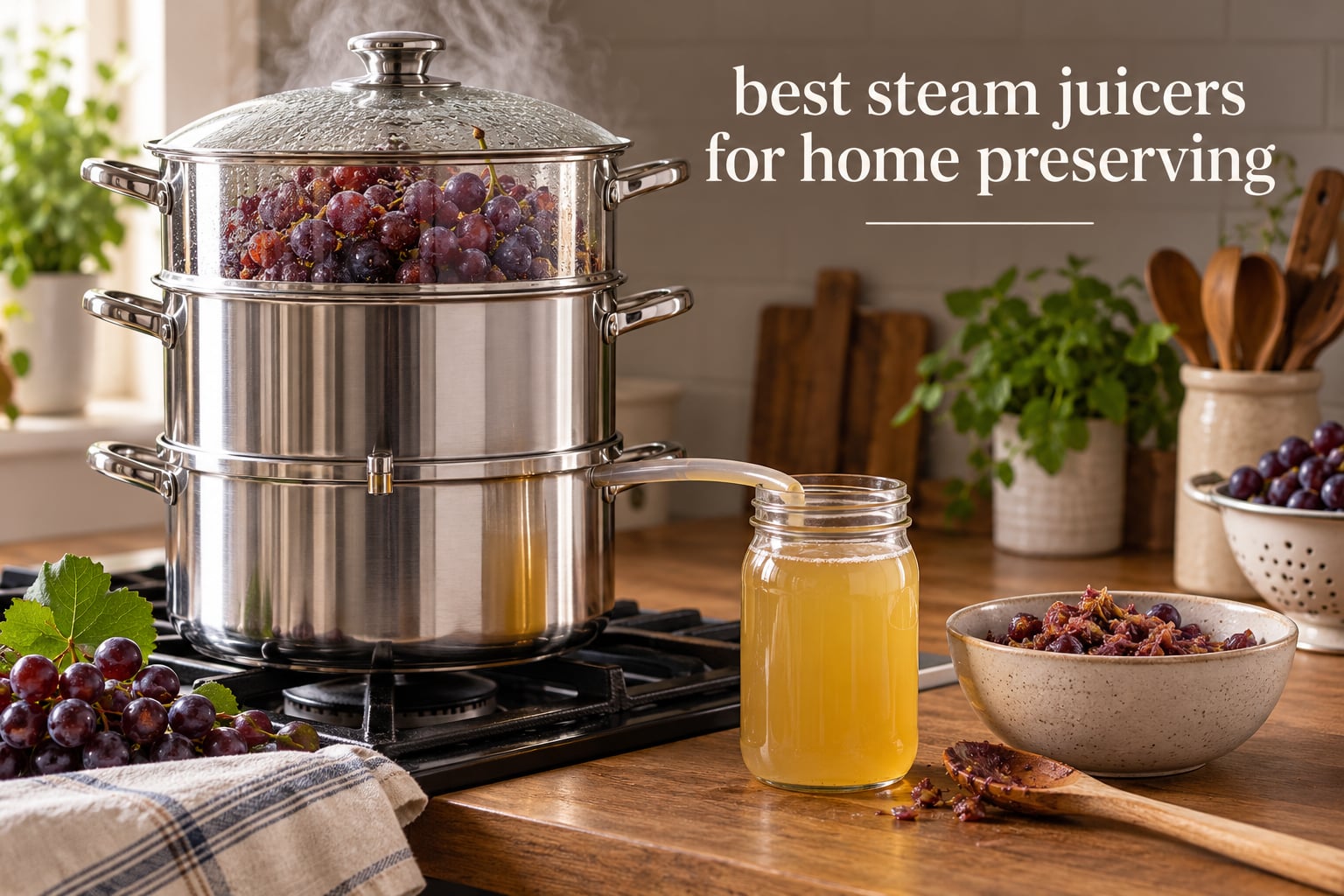
The problem with a good fruit year is that it arrives all at once. One week your tree is bare, and the next you are up a ladder with buckets, watching perfectly ripe peaches go soft on the grass while the thought of a hand press crosses your mind. That is the moment most home preservers meet a steam juicer: a three-tier stovetop pot that turns a glut of grapes, apples, berries, or tomatoes into clear juice pouring straight into canning jars.
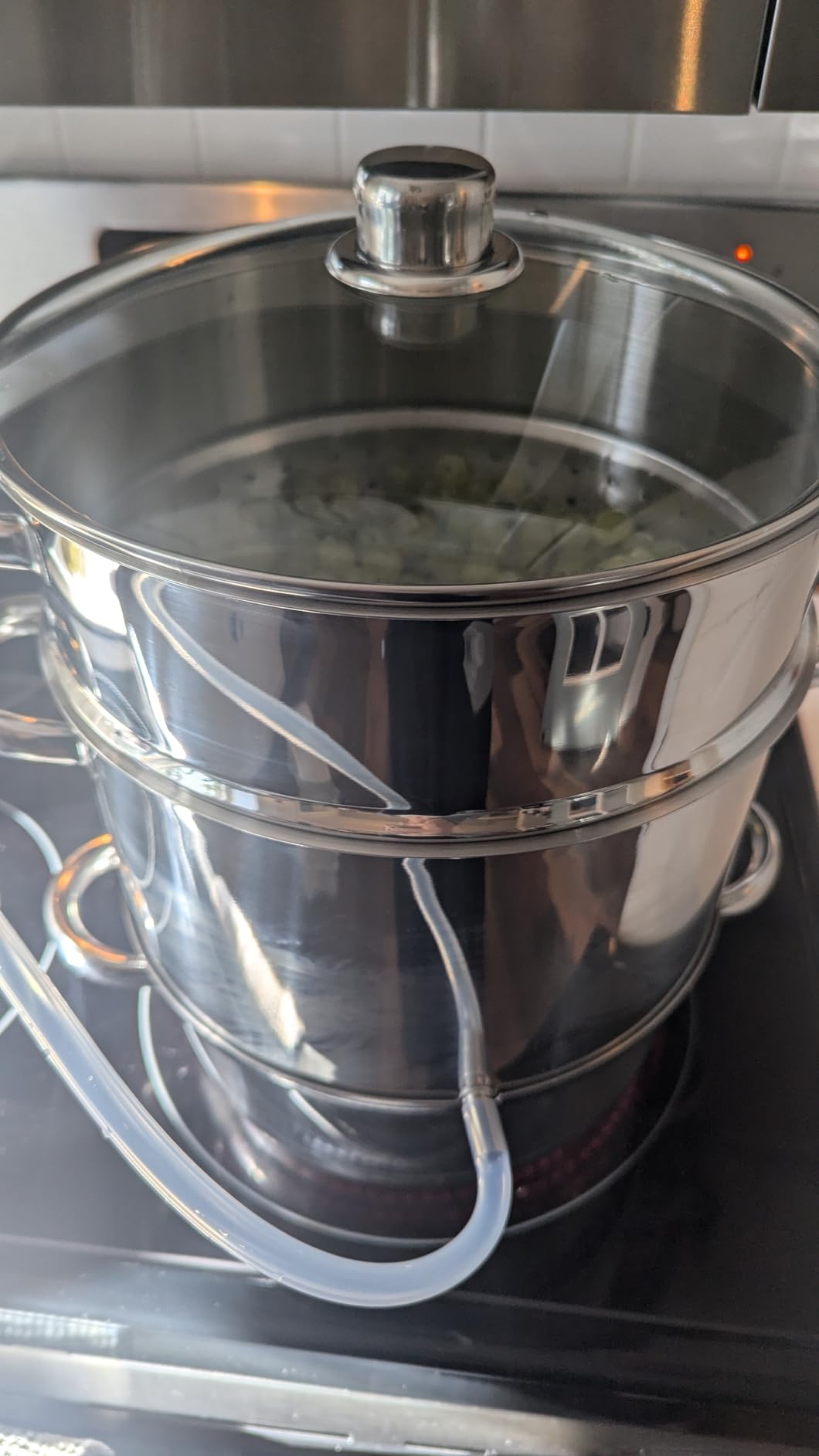
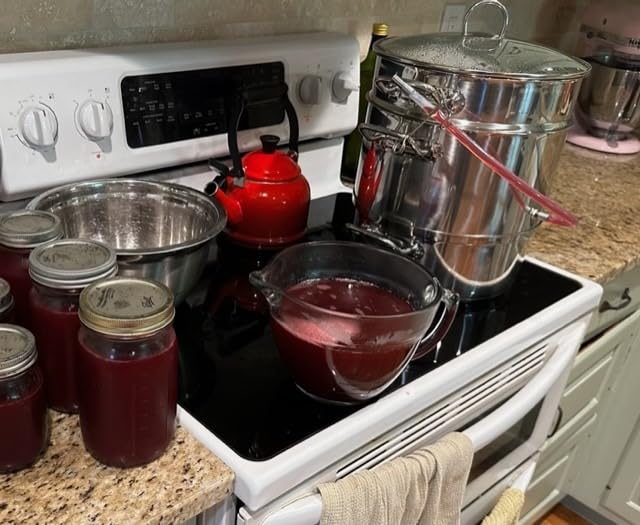
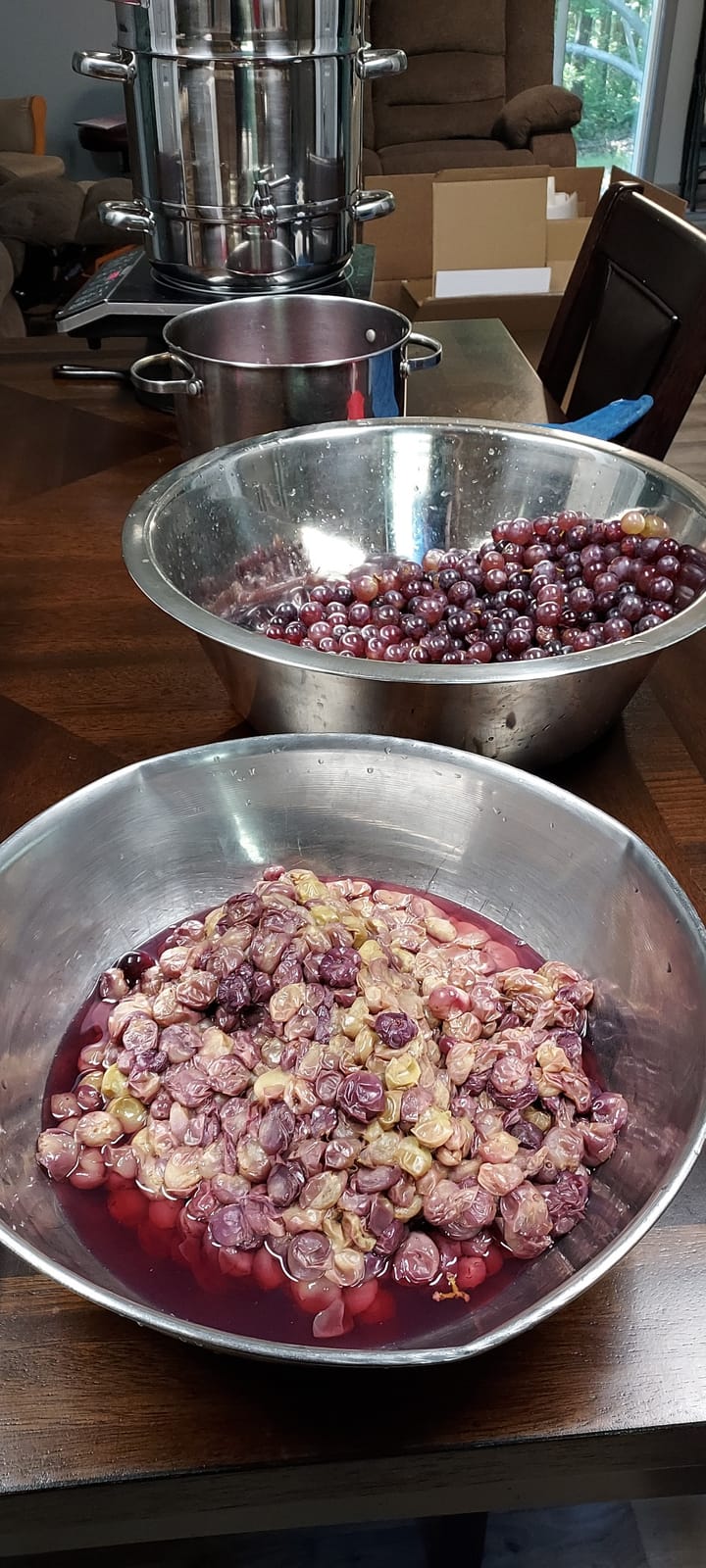
A steam juicer is a three-tier stovetop system. Water boils in the bottom pot, steam rises through a perforated basket of washed fruit and bursts the fruit’s cell walls, and the released juice drains into a center collector that exits through a hose or spigot into jars. Nothing is chewed, nothing is heated to a temperature that scorches, and the juice comes out hot enough to pour. That combination is why the best steam juicers for home preserving still dominate orchard and garden forums, and why buyers keep arguing about whether the expensive stainless model is actually worth it.
We settled that argument in the pages that follow by matching hardware to harvest rather than to brand. A 4.8-star 11-quart set with 2240 ratings tells you more than any spec sheet, and so does the size of the center reservoir when you are draining forty pounds of Concord grapes. If you want the short answer before the details, the Cook N Home 11-quart is the one most people should buy, and the Finnish Mehu-Liisa is the one worth waiting for if you juice acid-heavy fruit every single year.
One note on method: we did not run in-house juice trials, and we are not going to pretend otherwise. Every recommendation here is built from published manufacturer specifications, aggregated customer ratings and review volumes, and the recurring failure patterns that show up in owner feedback. That is the same standard used in our masticating juicer rankings and our cold press juicer guide, and it keeps the claims on this page traceable.
Our Top 3 Steam Juicer Picks for Home Preserving in 2026

Cook N Home 11-Quart Steam Juicer
- 11 quart stainless capacity
- Aluminum-clad induction base
- Converts to a plain steamer
Mehu-Liisa 11 Liter Steam Juicer
- 18/10 professional gauge steel
- 10-year steel warranty
- Recipe book included

The Cook N Home wins on the combination of review volume and specification. Nothing else in this category combines 2240 ratings with a 4.8 average, and its aluminum-clad base is magnetic, so it works on induction as well as gas and electric. The Mehu-Liisa takes the premium slot for a different reason: 18/10 professional gauge steel and a 10-year warranty on the steel parts make it the model you stop thinking about after the first season of tomatoes and rhubarb. The Giantex is the honest budget answer, and at a 4.8 average across 750 ratings it does not behave like a budget unit.
Comparing All 12 Best Steam Juicers Side by Side in 2026
| Product | Specifications | Action |
|---|---|---|
| Cook N Home 11-Quart Steam Juice Extractor |
|
Check Latest Price |
| Giantex 11 Quart Juice Steamer |
|
Check Latest Price |
 VINEYARD Deluxe 8-Quart Steam Juicer VINEYARD Deluxe 8-Quart Steam Juicer |
|
Check Latest Price |
| Mehu-Liisa 11 Liter Stainless Steam Juicer |
|
Check Latest Price |
 VIVOHOME 11 Qt Stainless Steam Juicer VIVOHOME 11 Qt Stainless Steam Juicer |
|
Check Latest Price |
 Norpro 619 Stainless Steamer and Juicer Norpro 619 Stainless Steamer and Juicer |
|
Check Latest Price |
 Euro Cuisine EC9500 Stove Top Steam Juicer Euro Cuisine EC9500 Stove Top Steam Juicer |
|
Check Latest Price |
 Cooks Standard 11 Quart Steam Juicer Pot Cooks Standard 11 Quart Steam Juicer Pot |
|
Check Latest Price |
 Lehman’s Mehu-Maija 11 Quart Steam Juicer Lehman’s Mehu-Maija 11 Quart Steam Juicer |
|
Check Latest Price |
 FOHERE 11 Qt Steam Juicer Extractor FOHERE 11 Qt Steam Juicer Extractor |
|
Check Latest Price |
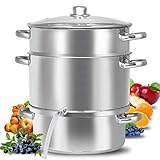 WATERJOY 11 Qt Steamer Juicer WATERJOY 11 Qt Steamer Juicer |
|
Check Latest Price |
 New England Stories 11 Qt 304 Steam Kit New England Stories 11 Qt 304 Steam Kit |
|
Check Latest Price |
1. Cook N Home 11-Quart Steam Juice Extractor: The All-Rounder With the Deepest Review Base
Cook N Home Stainless Steel Steam Juice Extractor, 11-Qt Steam Juicer Pot
- Deepest review base in the category at 2240 ratings
- Aluminum-clad base works on every stovetop type
- Converts to a stockpot or steamer by removing the center tier
- Generous 11 quart batch size
- Center tier and drain tube must come out to use it as a plain steamer
- Drain tube runs hot during a session
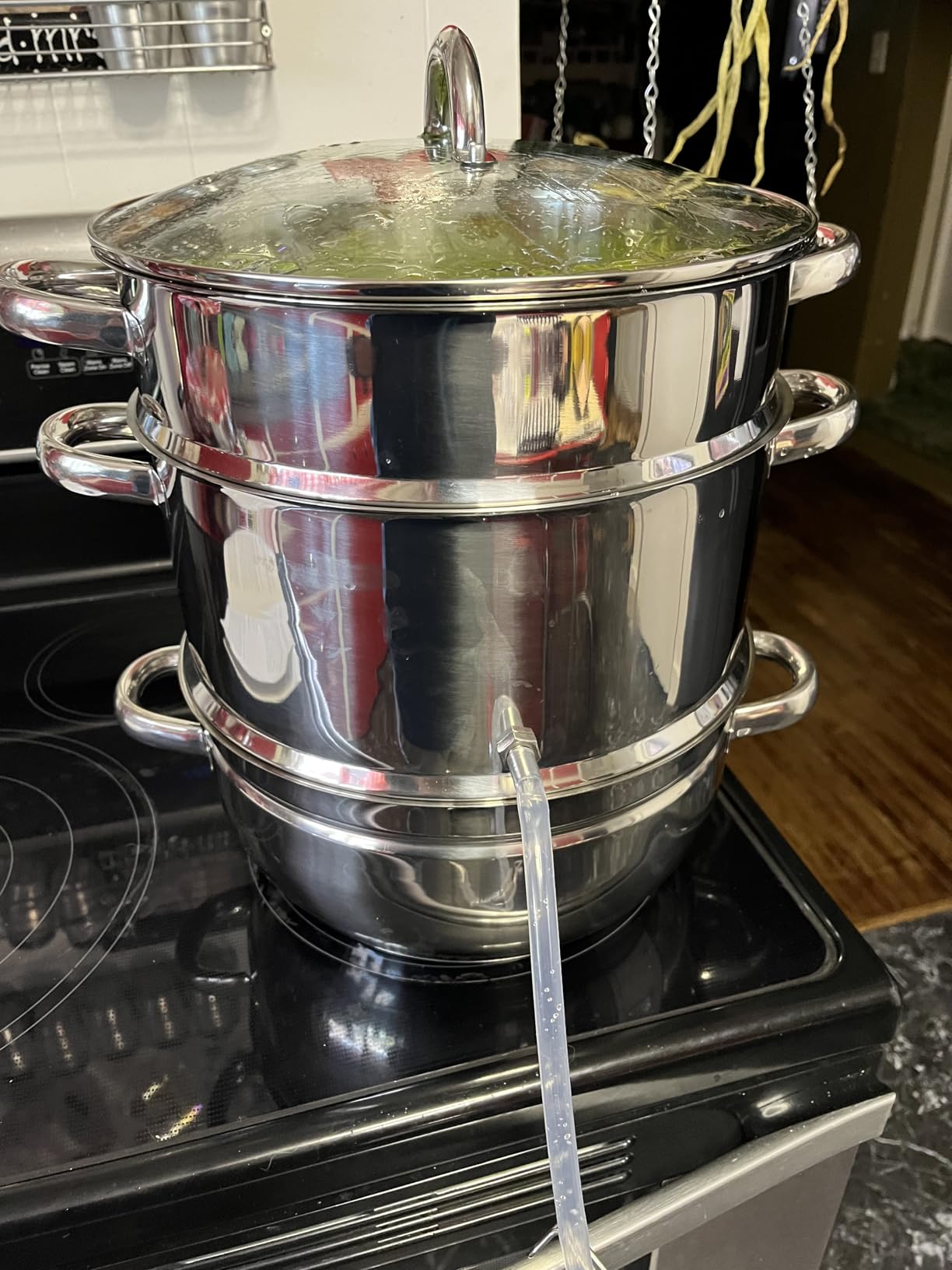
This is the steam juicer we would put in front of someone who is buying their first one and processing more than a hobbyist’s worth of fruit. The set arrives as a complete stack: water pan, juice pan, strainer pan, lid, hose, and clamp, at 8.5 pounds and 12.5 inches square. Nothing needs to be bought separately before the first session.
What the review volume signals is consistency. Across 2240 ratings the average sits at 4.8, and the recurring theme in owner feedback is the same one we cared about most: even heating with no hot spots, which is the difference between an extraction that finishes in a reasonable simmer and one that stalls and scorches on the burner ring.
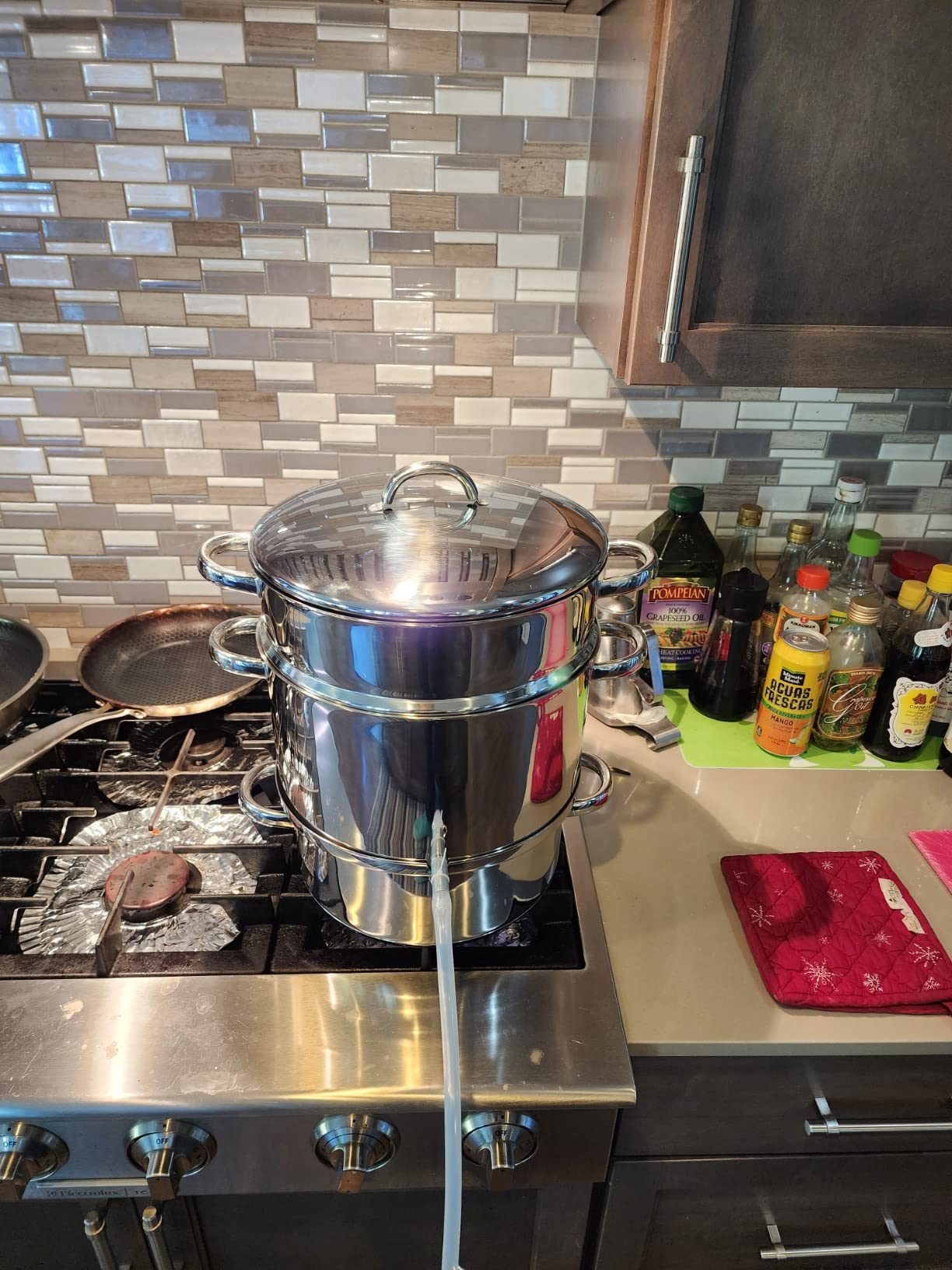
Heat Distribution and Induction Readiness
The base is stainless steel layered over an aluminum disc, and that sandwich is what makes the burner part of this product’s value. Aluminum moves heat laterally, so instead of a bare hot ring under the middle of the pot you get a flat field of heat across the base. That matters more for steam juicing than it does for ordinary cooking, because a stalled batch is a scorched batch.
It also means the pot is induction compatible, along with gas, electric, glass, ceramic, and halogen. If your kitchen has a flat-top induction range and the stack does not have a magnetic base, you simply cannot use it, so this detail quietly eliminates a third of the category.
Batch Size and Multi-Purpose Use
At 11 quarts with three usable tiers, this handles the volume that a hand press cannot. Orchard owners repeatedly note that the fruit goes in unpeeled, unstemmed, and largely unchopped, which removes most of the prep time. Remove the center tier and tube and the same pots become a stockpot and a steamer, so the appliance earns its counter space outside the harvest season.
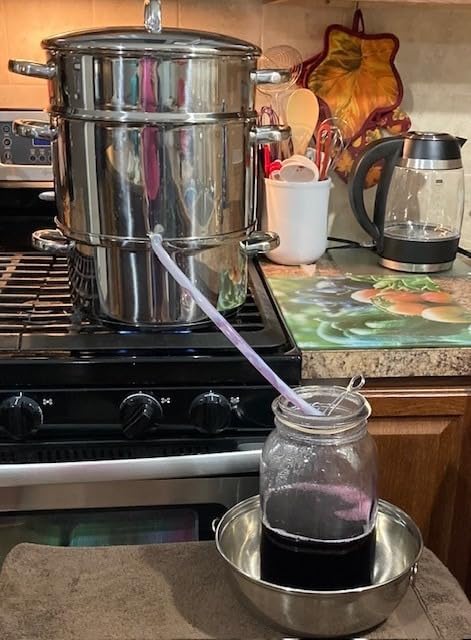
Who Should Skip This Model
Skip it if cabinet height is your binding constraint or if you refuse to have any aluminum in contact with acidic juice. At 14.5 inches assembled it is not a compact stack, and the drain tube runs hot enough that you want oven mitts on both hands when you break the seal mid-session.
2. Giantex 11-Quart Juice Steamer: The Most Versatile That Outperforms Its Class
- Welded loop handles on all three pots
- Tempered glass lid lets you watch extraction
- Flat aluminum-clad base works on induction
- Each pot doubles as a stockpot steamer or colander
- 4.8 average across 750 ratings
- Cores and stalks must be removed before steaming
- Hand wash only per the care instructions
The Giantex exists to answer a question that half the search results ignore: what happens if you do not spend premium money. At 10.4 liters, three welded-handle pots, and a 4.8 average across 750 ratings, this is the floor of the category rather than a compromise, and for most first-year canners it is the correct buy.
Owners single out two things repeatedly. The tempered glass lid has a steel-protected edge, so you can look down at the fruit and judge extraction without losing the steam cycle, which cuts down on wasted sessions. And the welded loop handles do not flex or loosen, which is not a glamorous feature until you are trying to lift a full 11-quart basket off a burner with damp hands.
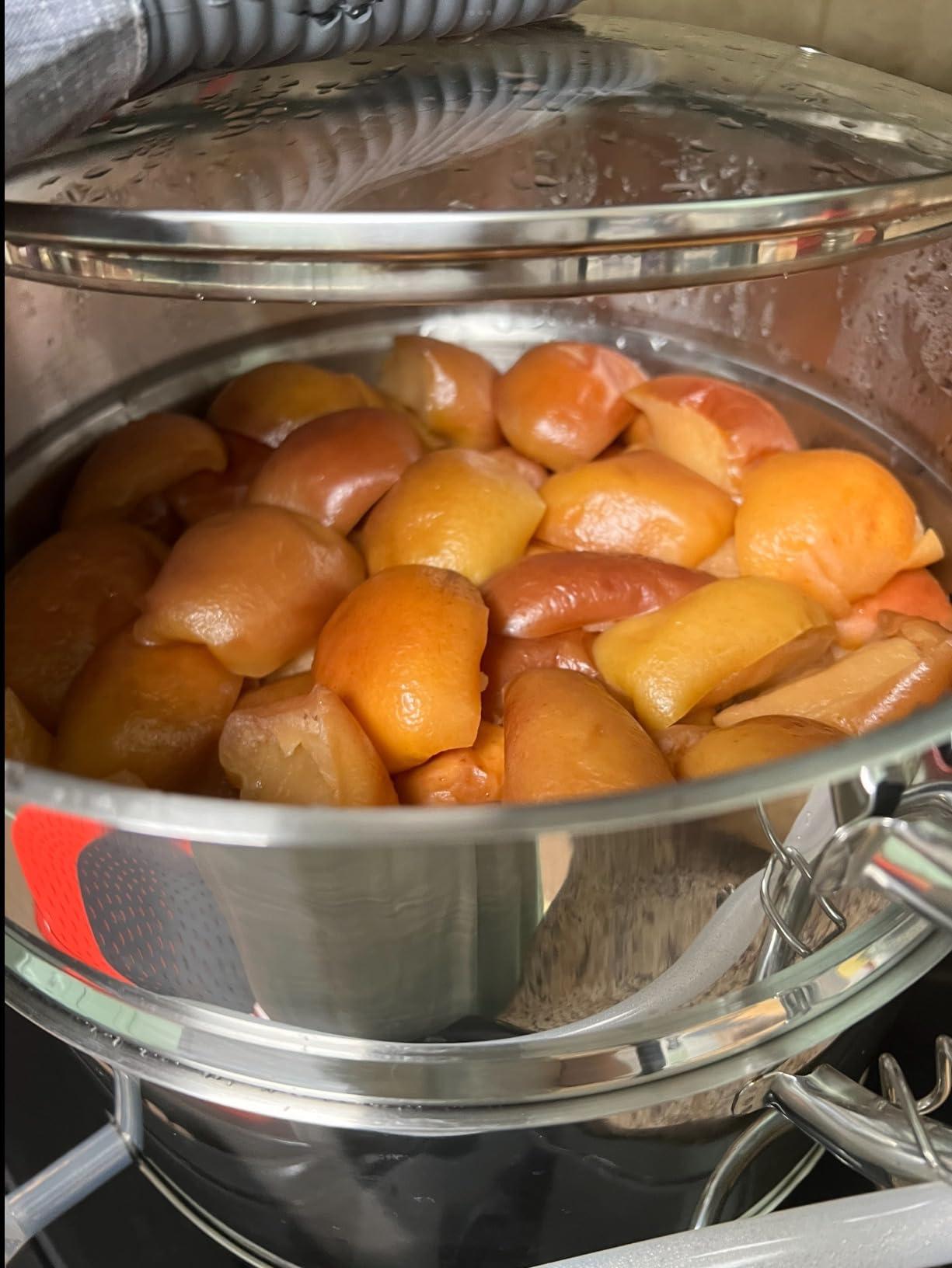
Welded Handles and the Glass Lid
Welded rather than riveted handles matter because riveted handles work loose over years of thermal cycling, and a loose handle on a pot full of near-boiling juice is a real hazard. The glass lid is a genuine workflow improvement: you can see the fruit without lifting the lid, so the batch keeps its heat and the extraction keeps its pace.
Prep Requirements and Care
Two honest limits. Fruit has to be cored and destemmed first, which adds real time when you are processing a hundred pounds of something. And the care instructions call for hand washing, so cleanup at the end of a six-hour preserving day is a sink job rather than a dishwasher job.
Everything else here is stainless steel with a flat aluminum-clad bottom, rated for any cooktop including induction, and each of the three pots separates for use as a stockpot, steamer, or colander. That versatility is why this set stays on the counter year round instead of gathering dust until September.

Who Should Skip This Model
Skip it if you run a heavy tomato or citrus preserving schedule and want zero aluminum anywhere in the food path, or if you will not hand wash three pots after a long day. It is also the wrong tool for a very small kitchen, since the three-piece footprint is the same as the larger 11-quart sets.
3. VINEYARD Deluxe 8-Quart Steam Juicer and Roaster: Best Value for Mixed Kitchen Use
- Three matched capacities give flexible batch sizes
- Clad base handles induction and smooth-top ranges
- Silicone-coated cool-touch handles
- Roasts and steams as well as extracts juice
- Also works as a roaster and steamer
- Footprint is larger than the smaller models
- Smallest rated customer sample here with a few 1-star reports
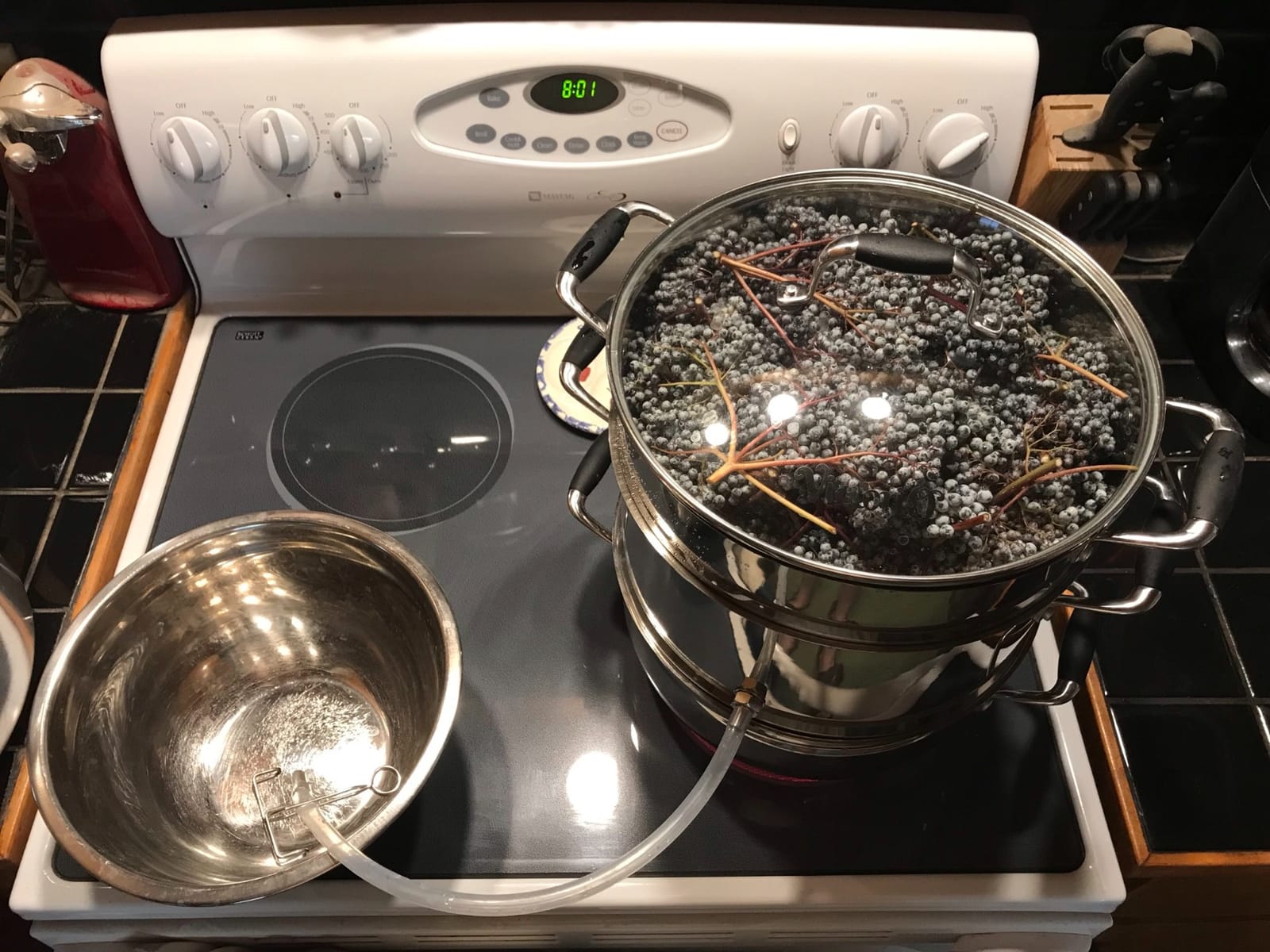
The VINEYARD set is the one we would recommend to a household that wants a steam juicer but also wants cookware. It is built around three different capacities rather than one: an 8-quart colander, a 4-quart juice kettle, and an 8-quart stock pot. That lets you run a small batch of tart cherries without committing the full stack, then a full batch of grapes when the season demands it.
At 11.3 pounds and 13.5 inches tall, it is a serious piece of equipment. Owner feedback rates the build quality and the three-size flexibility as the two things that hold up over time.
Three Capacities Instead of One
Most 11-quart systems are one size, which means a small batch still boils a full reservoir. The two smaller tiers here are the practical advantage. If your harvest is 15 pounds rather than 60, you are not evaporating a pot of water to get a cup of juice, and the shorter session reduces scorching risk in the center collector.
Handles, Lid, and the Oven Question
The silicone-coated handles are the kind of detail that shows up in complaints about cheaper sets, where bare steel loops become impossible to grip mid-session. The bottom pot is oven safe to 400 degrees, so the same piece roasts poultry or a rack of ribs while the top tiers steam vegetables. The tempered glass lid means the stack is not purely a seasonal appliance.
Across 661 ratings the average sits at 4.7, and the recurring note is that the three matched sizes are what buyers are actually using the set for once the fruit is in.
Who Should Skip This Model
Skip it if you are tight on cabinet clearance, since the review base is the thinnest of the sets with a 4.7-or-better average and includes a few 1-star reports around venting and drip seals. It is also not the tank you want to fill on a 400-pound apple weekend.
4. Mehu-Liisa 11 Liter Stainless Steel: The Premium Pick for Acid Fruit and Long Service
- Professional 18/10 stainless gauge throughout
- Ten year warranty on all steel parts
- Recipe book included with the set
- Designed in Finland
- Steams a meal and extracts juice in one session
- Heavy and tall when all three parts are stacked
- Highest cost in the roundup
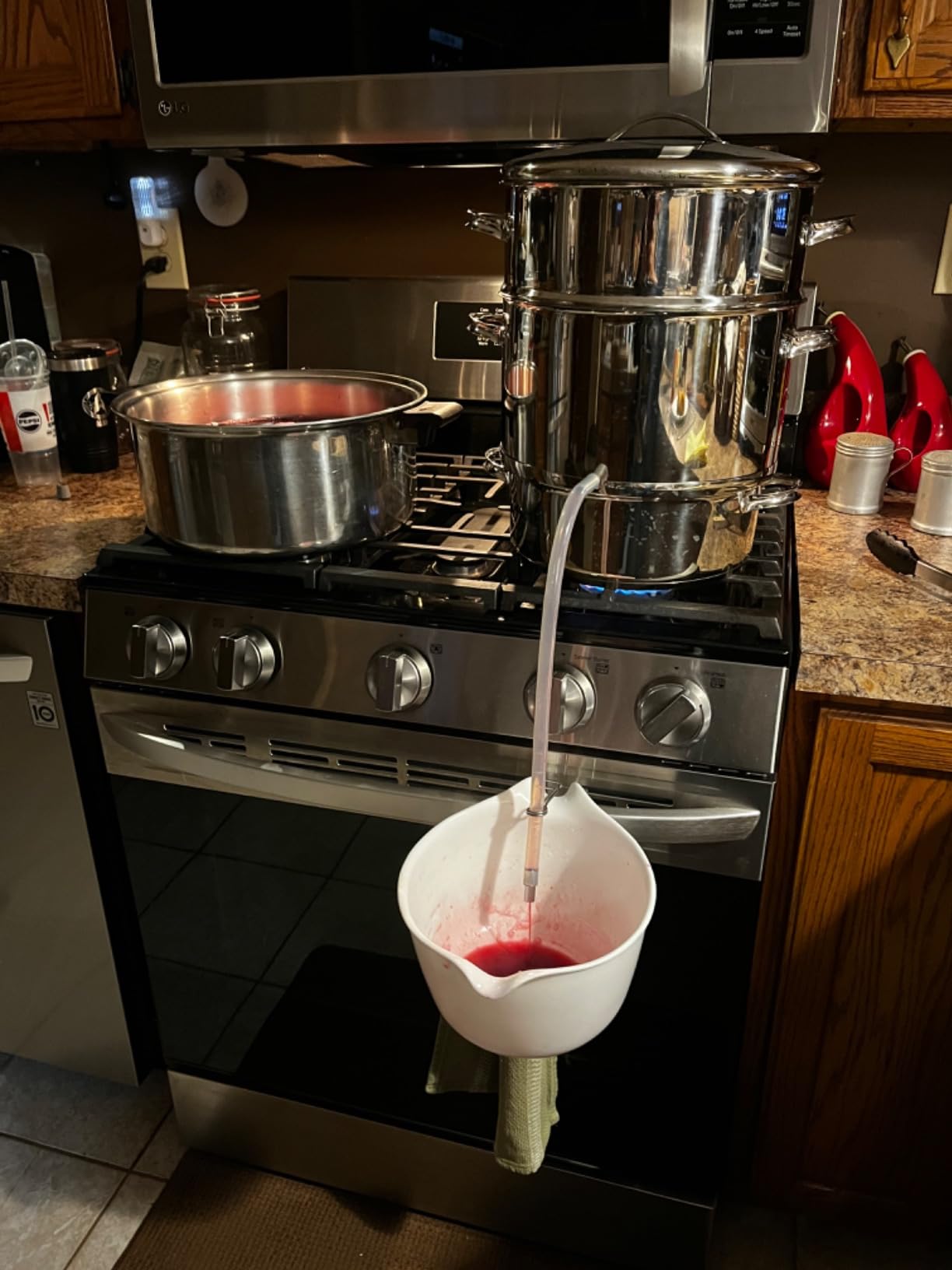
The Mehu-Liisa is the oldest design in this roundup and still the one owners describe as an heirloom. It has been on the market since 2008, it is built from 18/10 professional gauge stainless steel, and every steel part carries a 10-year manufacturer warranty. Nothing in the set is aluminum, which is the single fact that decides it for tomatoes, rhubarb, and citrus.
The package includes a 10.5-quart steamer insert, a 4.23-quart water pot, a silicone tube, a stainless clamp, a lid, and a recipe book. That last item is small and more useful than it sounds, because the timing curves for a full extraction are not intuitive on your first season.
Why Full Stainless Matters for Acid Fruit
Many units in this category use an aluminum disc sandwiched inside a stainless base, which is an excellent heat-distribution design and a poor long-term choice for high-acid juice. Tomatoes, rhubarb, and citrus are aggressive enough to dull and pit exposed aluminum over repeated sessions. The Mehu-Liisa has no aluminum in the food path, so it is the model we would put in the hands of someone who puts up a hundred quarts of tomato juice a year and wants the pot in thirty years.
This is a nuance rather than a safety alarm. An aluminum-clad base is not dangerous in ordinary use, and the heat benefits are real. But if your harvest is acid-dominant, paying more for pure stainless is buying a longer service life for the one pot that touches your food.
The Warranty and the Steel Gauge
Ten years on all steel parts is the strongest warranty in the category we reviewed, and it is the concrete answer to the question of whether a premium steam juicer is worth the money. Over a decade of seasonal use, the amortized cost per quart is lower than any entry-level set, provided you actually keep the premium pot for the full decade.
The trade-off is physical. Owners most often mention weight and the tall three-piece footprint, and that is real: this is not a stack you want to move to an upper cabinet every evening.

Who Should Skip This Model
Skip it if you are processing under roughly 25 pounds of fruit a season. At that volume a budget set covers the need and the money is better spent on jars and a proper thermometer. It is also the wrong choice for a small kitchen with low cabinet clearance.
5. VIVOHOME 11-Quart Stainless Steam Juicer: Best for Dishwasher Cleanup
VIVOHOME Stainless Steel Steam Juicer for Canning Fruit and Grape Juice
- Every component separates and goes in the dishwasher
- 11 quart top and middle tiers with a 6.5 quart bottom pot
- Three-layer composite base heats fast and evenly
- Induction gas electric and ceramic compatible
- Steamer tier rated to 500 degrees
- Must be watched during use to avoid dry heating
- Manufacturer warns against prolonged dry heat
Cleanup is the least enjoyable part of steam juicing, and the VIVOHOME is the set that reduces it the most. Every part disassembles and the manufacturer rates the whole stack dishwasher safe, which is the only practical way to clean a juice collector after a full day of tomato processing. At 7.6 pounds it is also one of the lighter stacks in the group.
The build is food-grade stainless with a 4mm tempered glass lid, and the three-layer composite base layers an aluminum disc between steel skins to speed up the approach to a boil. The same construction appears on the 9.3-quart and 5-quart versions, so the same cooking habits carry over if your harvest shrinks.
Capacity Distribution Across the Tiers
The 11-quart figure covers the top colander and middle juice tier, while the bottom water pot holds 6.5 quarts. That distribution is more useful than the headline number, because the water pot does not need to equal the fruit capacity and a smaller reservoir means less energy to bring to a boil and less babysitting once you are up.
The Dry-Heating Warning, Taken Seriously
The manual specifies a maximum temperature tolerance of 500 degrees and explicitly warns that prolonged dry heating damages the base. That is not a defect, it is a safety instruction, and it maps to a real habit: leaving a pot on a burner after the water has boiled away. The 529 ratings average 4.6, and the recurring caution in owner feedback matches the maker’s own guidance, so treat the pot as attended equipment rather than a set-it-and-forget-it appliance.
Who Should Skip This Model
Skip it if you plan to run overnight sessions or get distracted during a long extraction, since the dry-heat risk is the one failure mode that can ruin the pot permanently. It is also not the best choice for very acidic fruit, as the composite base includes an aluminum disc.
6. Norpro 619 Stainless Steamer and Juicer: Best for Multi-Use Cooking
- Encapsulated base heats evenly on induction cooktops
- Works as roaster steamer cooker and covered server
- Oven safe to 400 F for roasting
- Recipe and instruction booklet included
- Heaviest and tallest set at 10 pounds and 18.5 inches
- Sold without a canning kit in this configuration
The Norpro 619 is the one we would recommend to someone who wants a cooking system first and a juicer second. It is rated oven safe to 400 degrees, it works as a roaster, stovetop cooker, steamer, and covered server, and the steam-juicing function is one role among several rather than the only reason it exists.
Inside the stack you get an 11.75-quart steamer insert, a 7.25-quart water pot, a 4-quart juice container, and a rubber tube with clamp. The encapsulated base is the part that makes the induction claim credible, and the recipe booklet included in the box covers both juicing and the roasting modes.
Oven-Safe Multi-Use Design
Few other sets in this roundup are rated for the oven. That single specification turns a seasonal tool into a year-round one, because the same pot handles a holiday roast and then handles forty pounds of plums in September. For a household that already owns a modest cookware collection, that versatility is worth more than another quart of juice capacity.
Size, Weight, and the Canning Kit Question
At 10 pounds and 18.5 inches assembled, this is the largest and heaviest set we reviewed. Measure your cabinet clearance and your burner diameter before ordering, because a full 11.75-quart insert is genuinely awkward to lift. Note also that this configuration is the steamer and juicer without the canning kit, so plan on filling jars from the hose rather than with a canning accessory bundle.
Owner feedback averages 4.7 across 367 ratings, with reservations concentrated almost entirely on size and weight rather than on juice quality or build.
Who Should Skip This Model
Skip it if your priority is a small footprint or if you want a unit designed specifically for canning workflow, since the canning kit is a separate purchase here. Buyers who prefer a lighter stack generally steer toward the VIVOHOME or Giantex instead.
7. Euro Cuisine EC9500 Stove Top Steam Juicer: Best for a Compact Footprint
- Built-in spigot drains juice without repositioning the pot
- Compact 12 by 13 inch footprint stores easily
- Works on induction electric and gas cooktops
- Glass lid lets you monitor extraction
- Also steams vegetables seafood and meats
- Lowest average rating in the roundup at 4.5 with a 6 percent one-star share
- The spigot still runs hot during draining
The Euro Cuisine is the only set here that drains through a built-in spigot rather than a hose and clamp, and that single design choice changes the whole session. With a hose you hold a container under a moving hot tube and manage the clamp. With a spigot you open a valve and fill jars while the pot stays where it is.
The stack is 5-quart water reservoir, 8-quart juice container, 8-quart steamer basket, and a glass lid, in a square 12 by 13 inch footprint at 12 inches tall. That is the most compact layout in the roundup, and it is the reason to keep it.
The Spigot Advantage and Its Limitation
Removing the hose eliminates the most common spill in steam juicing and the awkwardness of refilling a clamp when the container is full. The catch is that the spigot runs hot during draining, so you still need both hands and a towel, even though the geometry is easier.
Capacity, Footprint, and Rating Reality
Eight quarts across the top two tiers is a moderate batch, suitable for a household garden or a small orchard rather than a farm-scale weekend. It is also the lowest average rating in this roundup at 4.5, with a 6 percent one-star share, and owners who rate it critically tend to point at venting and flow refinement rather than at build quality.
The pot also steams vegetables, seafood, and meats, so it earns counter space outside the fruit season.

Who Should Skip This Model
Skip it if you are processing 50 pounds or more in a single day, since 8 quarts will mean many more boil-and-drain cycles. It is also the wrong choice if you want the deepest steam juice, because an open drain gives the juice a shorter path out of the collector.
8. Cooks Standard 11-Quart Steam Juicer Pot: Best for Mason Jar Canning Workflows
- Designed specifically for steam canning and Mason jar workflows
- Six piece set includes two hoses plus a clamp
- Owners report very thorough extraction
- No need to stem grapes or pit cherries before loading
- Encapsulated base works on every stovetop type
- Extraction is slow and rewards patience
- Drain hose is short and runs hot when the container is full
The Cooks Standard is the most canning-specific set in the roundup, and the design tells you that in the accessory list: two hoses and a stainless clamp rather than one. A second hose lets you run a continuous drain while the first is being moved, which matters on a long grape weekend when you do not want to stop the batch to swap jars.
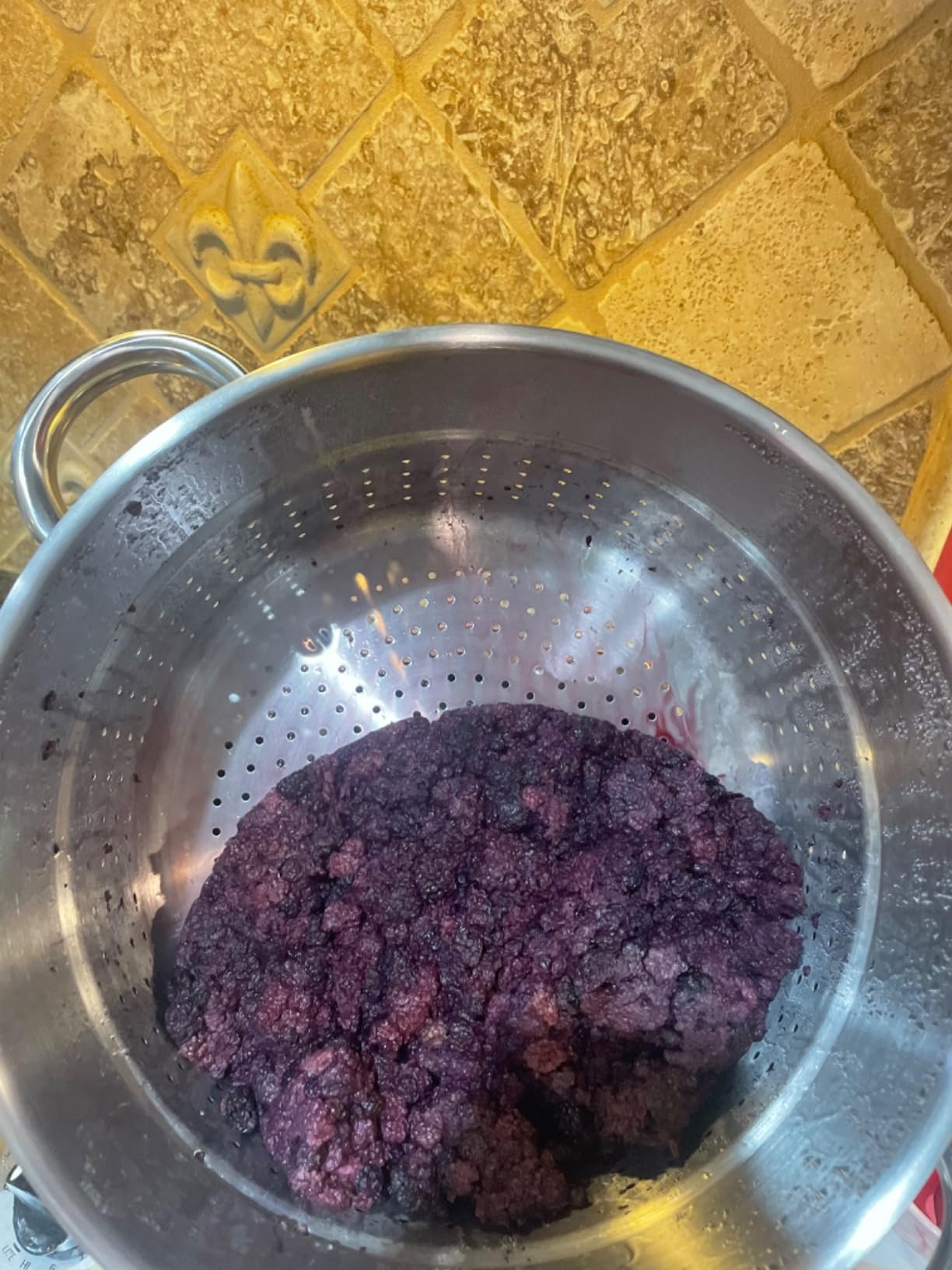
Owners also report the most thorough extraction in the group. Pressing the spent pulp afterwards yields almost no additional juice, which is the practical measure of whether a steam juicer is doing its job, and they note that grapes and cherries can be loaded without stemming or pitting.
Built Around the Jar-Filling Step
The encapsulated aluminum base works on induction, gas, electric, glass, ceramic, and halogen, which is the same heat-distribution sandwich used by the other 11-quart sets here. At 9 pounds and 16.3 inches tall it is on the larger side, but the proportions suit a person standing at the counter with a row of jars.
The Honest Trade-Off Is Speed
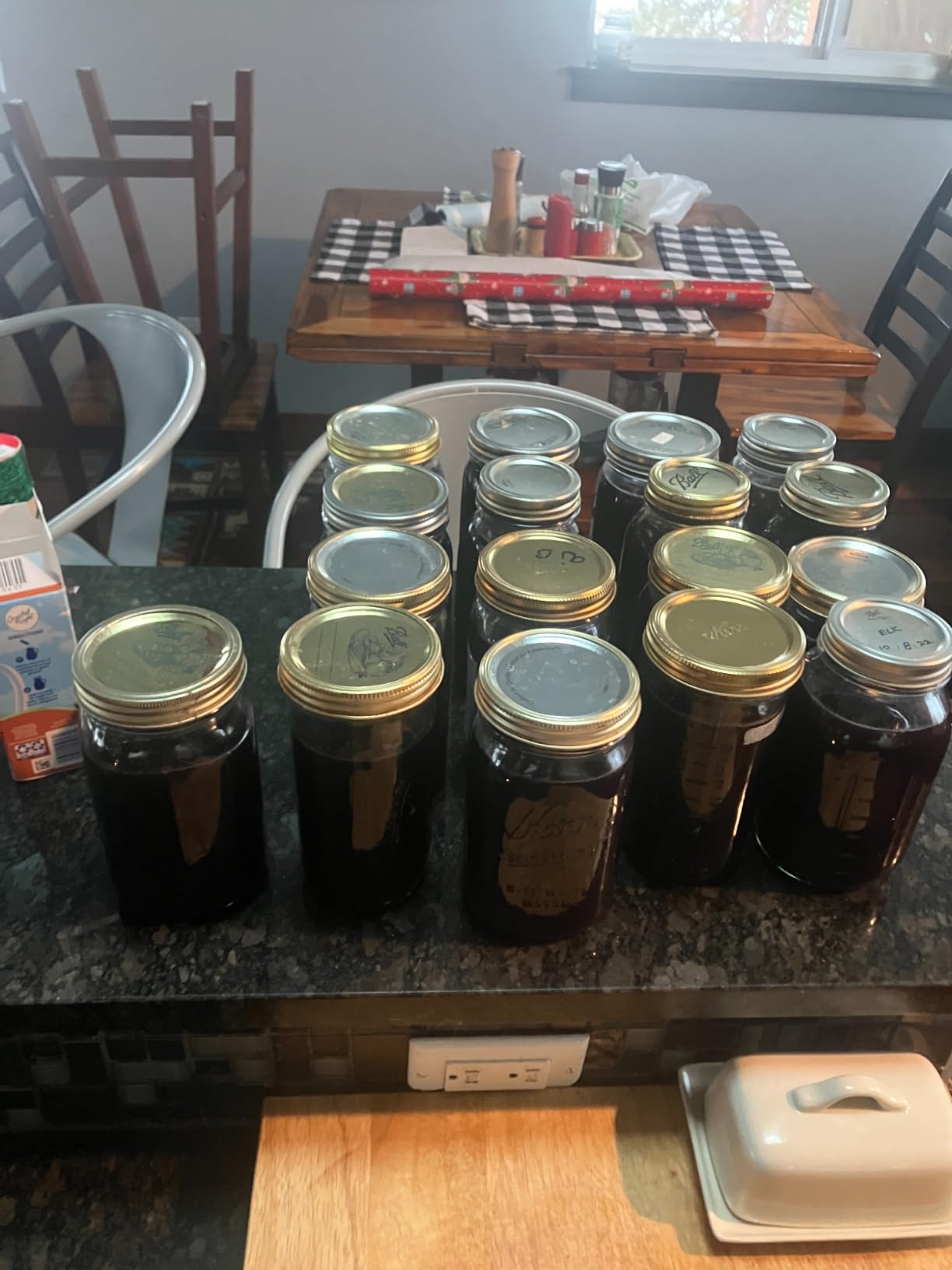
The two recurring drawbacks in the 254 ratings are both about patience and handling. Extraction is slow, meaning a full simmer rather than a quick pass, and the short drain hose runs hot enough that repositioning the clamp when the container is full is awkward. Neither is a defect, and both are manageable once you have the rhythm, but a first-timer should know them going in.
Who Should Skip This Model
Skip it if you want a fast turn-around on weeknight batches, or if you want pure stainless because the base uses encapsulated aluminum. It is also not the model to buy if you need the top tier to hold more than 11 quarts.
9. Lehman’s Mehu-Maija 11-Quart Steam Juicer: Best for Long Drain Reach
Lehman’s Mehu-Maija Steam Juicer, 11 Quart Stainless Steel with Lid, Hose, Clamp, Loop Handles, Multipot Cookware for Making Juices, Jelly, Sauces
- Accepts fruit loaded on the stem
- 17 inch drain hose reaches into tall jars and narrow spaces
- Full 11 quart 18/8 stainless capacity
- Works on any stove type including induction
- Multi pot design also handles jelly and sauces
- Smallest review count of the 11 quart stainless sets at 123
- Hand wash only per the care instructions
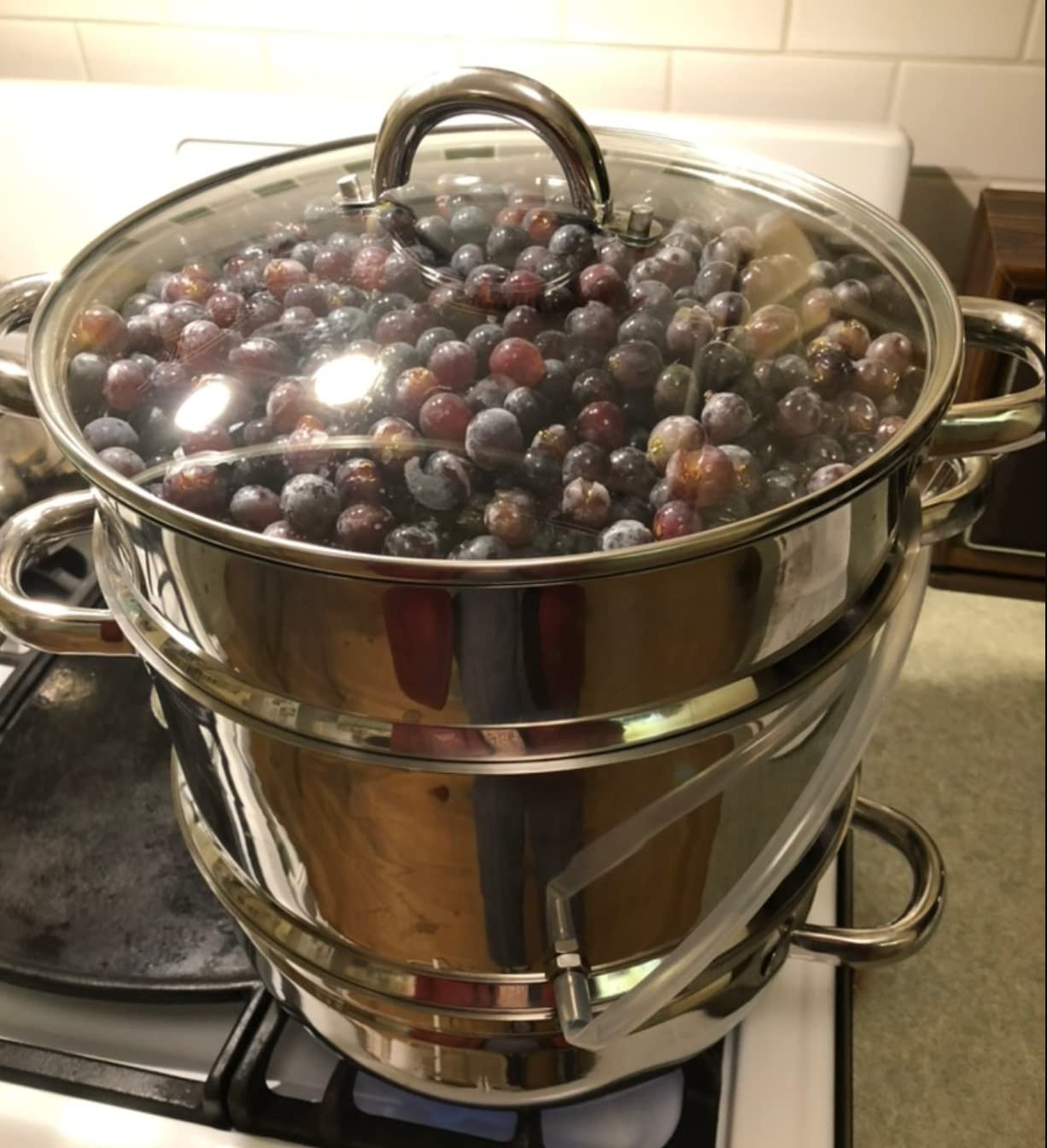
The Mehu-Maija solves a specific problem: getting juice from the collector into a jar without moving the pot. Its drain hose measures 17 inches long against the short tubes most competitors include, which means you can route it over a counter edge into a tall jar on a lower shelf, or into jars arranged on a rack in a place the pot itself will not fit.
It is 18/8 stainless across the stack, 11 quarts total, 14 inches tall and 11.6 inches in diameter at 8.3 pounds, and it works on any stove including induction. The loading design accepts fruit on the stem, so whole bunches of grapes go in without destemming.
Why Hose Length Changes Your Setup
Short drain tubes force the pot to sit directly over your jars, which dictates where in your kitchen the whole operation happens. A 17-inch hose decouples those two decisions, and for anyone with a tall stockpot-style canning setup or a deep counter, that is worth more than a feature like a glass lid.
Rating Confidence and Care
With 123 ratings, this is the thinnest review base among the 11-quart stainless sets, so the 4.6 average carries less statistical weight than the Cook N Home’s 4.8 across 2240. Owners like the on-the-stem loading and the hose, and a few flag that the pot needs careful monitoring and hand washing.
It is also a genuine multi-pot design, handling jelly and sauces in the same session, so it does not sit idle between harvests.
Who Should Skip This Model
Skip it if you want a dishwasher-cleanup set, or if you want a stockpot of owner reports behind your decision. Buyers who prioritize verifiable long-term consistency should look at the Mehu-Liisa, which carries a 10-year steel warranty.
10. FOHERE 11-Quart Steam Juicer Extractor: Best for Stackable Storage
- 304 food grade stainless steel throughout
- Stackable three-layer design saves space when not in use
- Dishwasher safe with smooth high temperature surfaces
- Layered base avoids hot spots and scorching
- Curved lid handle allows opening with gloves on
- Highest one-star share here at 5 percent with a 3 percent two-star share
- Drain tube and clip are simpler than two-hose setups
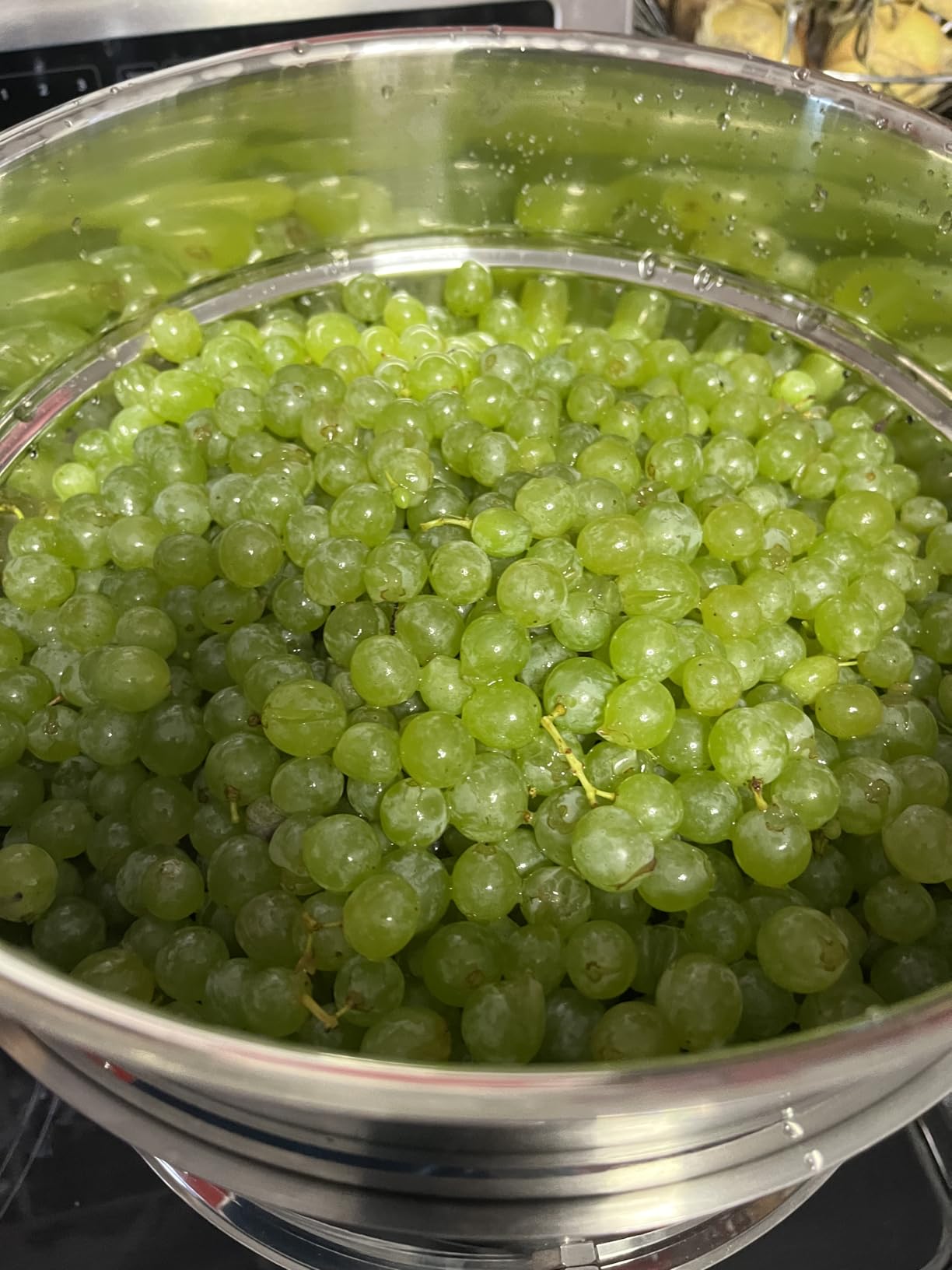
The FOHERE’s distinguishing feature is what happens after the season. The three layers detach and stack, so the set occupies roughly the footprint of one pot on a cabinet shelf rather than a full 15-inch tower. For a category where most units are used eight weeks a year and then stare at you from a corner, that is a legitimate reason to choose one model over another.
Construction is 304 food-grade stainless with a tempered glass lid, and the layered base dissipates heat quickly and evenly without hot spots. The curved lid handle is shaped so you can open the lid with an oven mitt on, which is a small thing that matters in a hot kitchen.
Storage Footprint and Cleanup
Dishwasher-safe parts with smooth high-temperature surfaces mean the post-session cleanup is short, and the detachable three-layer design means you are not hand-wiping a permanently assembled tower. Both points matter more than they sound when you are processing fruit on two consecutive days.
Where the Ratings Divide
The 4.5 average across 138 ratings is held down by the weakest rating distribution in the roundup, with a 5 percent one-star share and a 3 percent two-star share. The negative reviews cluster around juice clarity and drainage rather than the steel itself, and the single rubber tube and clip are less versatile than the two-hose arrangements on the canning-focused sets.
Who Should Skip This Model
Skip it if you need maximum extraction clarity or a long drain, and think carefully if you are putting up a very large harvest on a limited schedule, since the lowest rating share here clusters exactly around those two tasks. It is also not a pure-stainless option in the way the Mehu-Liisa is.
11. WATERJOY 11-Quart Steamer Juicer: Best for Juice and Sauce in One Session
WATERJOY 11 Qt Steamer Jucicer, Stainless Steel canner cookware For Food Vegetables Fruit
- No straining through cloth or sieve is needed
- Glass lid shows extraction without releasing steam
- Easy to use and easy to clean
- Handles large volumes of orchard fruit
- Bottom pot usable separately for soup
- Center reservoir is shallow and can overflow into the boiling pot
- Requires constant supervision while draining
- Some owners question the SS201 steel grade
- Lowest review count in this group at 110
The WATERJOY’s selling point is workflow. Juice drips from the top colander into a center kettle and exits through a hose and clamp, with no cloth and no sieve anywhere in the process, and the glass lid lets you watch it happen. The bottom pot detaches and works as a soup pot, so a single session can produce juice and a hot sauce from the same burner area.
It is a straightforward 12-inch-square stack at 14 inches tall, 5.69 kilograms, induction compatible. At 4.5 across 110 ratings it sits mid-pack, and the reasons are specific and worth knowing.
The Shallow Reservoir Is the Whole Story
The most-cited complaint in owner feedback is that the center juice reservoir is shallow. It can overflow into the boiling water pot below, which risks scorching, and it holds well under half its stated capacity before it needs attention. The practical consequence is that you cannot walk away during a long extraction, and you will be stopping mid-batch to drain more often than with a deeper collector.
The secondary concern is the steel grade. The specification lists SS201 rather than 304, and some owners question it. SS201 is adequate for steam juicing and is used in plenty of cookware, but if you are buying for a decade of acidic fruit, the purer grades are a better bet.
Who Should Skip This Model
Skip it if you are processing large volumes unattended or if the idea of watching a drip line for ninety minutes sounds unworkable. It is also the wrong pick for anyone who wants the deepest owner-report confidence, since 110 ratings is the thinnest sample in the roundup.
12. New England Stories 11-Quart 304 Stainless Steam Kit: Best for Easy Lifting
Juice Steamer Extractor, 11 Qt 304 Stainless Steel, Canning Steamer Kit for Fruit/Vegetable Juice, Jelly
- Lightest assembled stack in the roundup at 7.6 pounds
- Complete set includes water pan juice pan strainer pan lid hose and clamp
- 304 stainless with rust resistance and mirror satin finish
- Loop handles for handling a full stack
- Simple to assemble use and clean
- Smallest review count here at 68 so the rating picture is thin
- 9 percent of reviews are one-star the highest share in the group
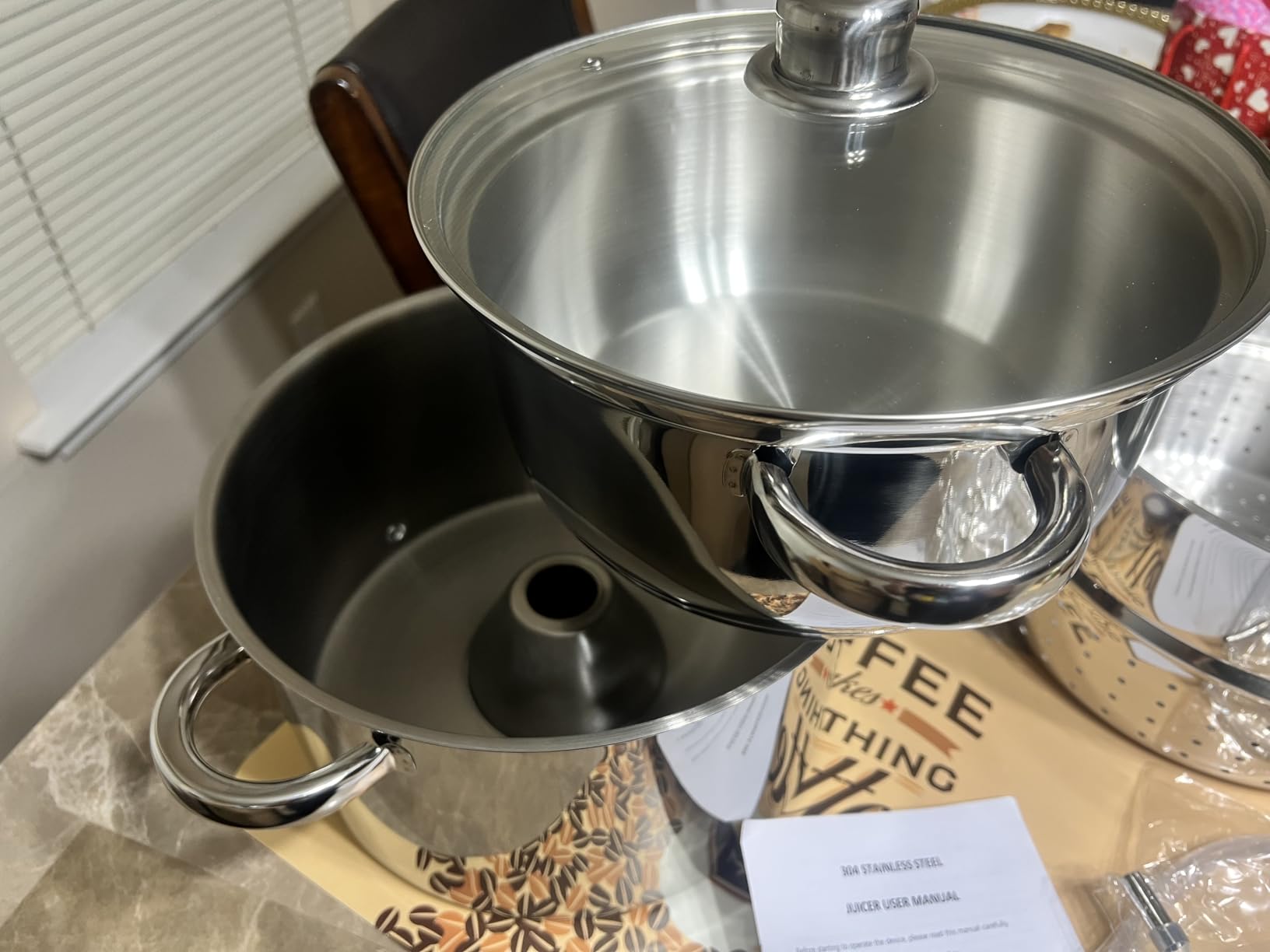
At 7.6 pounds, this is the lightest assembled set in the roundup by a wide margin, and for anyone with a back who objects to lifting a 10-pound stack off a burner it may be the most practical option here. The included loop handles are welded in a way that holds up with a full basket rather than flexing under load.
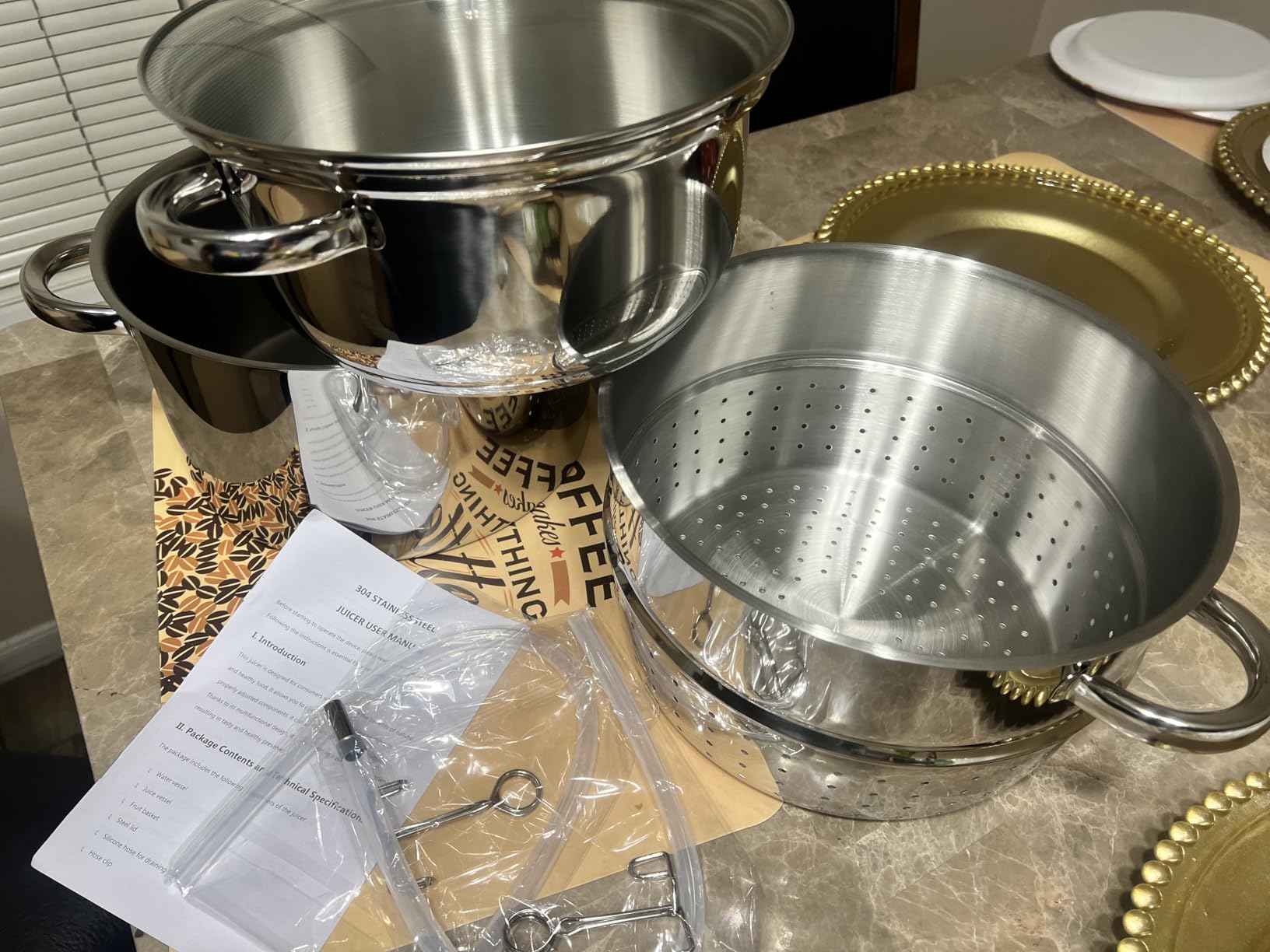
The kit is 11 quarts of 304 stainless steel with a mirror satin finish, and the box contains all six pieces: water pan, juice pan, strainer pan, lid, hose, and clamp. Reviewers consistently mention the steel grade, the complete accessory set, and simple cleanup as the reasons they keep it.
Weight as a Feature
Every other set here weighs between 8.3 and 11.3 pounds. That difference is not cosmetic: a full basket of wet fruit is the heaviest thing you will lift all autumn, and a lighter pot is one you are more willing to move, empty, and store. If your stove is a high shelf, an inset cooktop, or anything you approach at an angle, weight is a safety consideration rather than a preference.
Reading a Thin Rating Base Honestly
At 68 ratings and 4.6, the average is respectable but the sample is small, and a 9 percent one-star share is the highest in the group. We are including it because the hardware specification is strong and the price tier is among the lowest of the 304-stainless sets, not because the ratings are conclusive. If a deep, well-reviewed record matters to you, choose a set with four times the ratings.
Who Should Skip This Model
Skip it if you are processing a very large harvest and want the generous reservoir that thicker-walled sets provide, or if you cannot accept a rating base this small. Buyers prioritizing a warranty should note that none is stated for this model.
Steam Juicer vs Steam Canner: Can One Unit Do Both?
Yes, but they are different jobs, and confusing the two is the most common mistake in this category. A steam juicer extracts juice from raw fruit and delivers it hot. A steam canner processes jars that are already filled, holding them at a controlled temperature for a set time to make low-acid food shelf stable.
Some products blur the line. The Cooks Standard is the clearest example in this roundup, with a design centered on Mason jar canning workflows, two hoses for continuous draining, and a 6-piece set that includes everything needed to fill and process jars in one setup. The Norpro 619 also straddles the line by adding oven capability and 400-degree processing alongside juicing.
What no steam juicer replaces is a pressure canner for low-acid vegetables. If your preserving plan includes green beans, corn, or plain tomatoes, you need a pressure canner regardless of how good your juice pot is. Steam juice covers the fruit, syrup, jelly, and cordial side of the pantry, and it does so well because fruit’s acidity does much of the work for you.
Steam Juicer vs Masticating vs Centrifugal Juicers
A steam juicer is a preserving tool, not a morning-juice tool, and comparing it to a cold press juicer is comparing two different jobs. Cold press handles greens and hard roots that a steam pot never will, and produces juice you drink the same day. A steam juicer handles volume, produces clearer juice, and delivers it hot enough to fill jars.
A masticating juicer sits between the two. It crushes rather than chews, keeps more solids in the pulp, and is the better choice if you want a vegetable juice routine, which is covered in our guide to juicers for vegetables and in our masticating juicers for celery juice. Our cold press picks for fresh juice lovers cover the daily-drinking end of the market.
The short version: buy the steam juicer if your problem is a harvest. Buy a masticating or cold press machine if your problem is a weekday.
Which Fruits and Vegetables to Steam Juice
Steam juicing works best on soft, juicy, high-water-content fruit with a meaningful pectin or acid profile. Concord and other table grapes are the classic case, as are apples, pears, peaches, plums, tart cherries, elderberries, blackberries, raspberries, and wild blueberries. Tomatoes and rhubarb work, and cucumber is a traditional pick, though all three push you toward stainless steel.
Skip root vegetables, which will not steam down into a palatable liquid in any reasonable time. Skip leafy greens, for the same reason, and skip fruit that is already over-ripe and mushy, since it will collapse into sediment rather than yield. Citrus peels and pits go in only if your specific recipe calls for bitterness, which most do not.
Timing runs roughly 60 to 90 minutes for a full load of soft fruit such as grapes or berries, and closer to two hours for firm apples and pears. Measure your yield as you go for the first session, because the difference between a 4-quart and a 6-quart yield on the same fruit is what tells you whether you need an 11-quart stack or an 8-quart one.
Do not discard the spent pulp. It still holds pectin, which is exactly what jelly needs, and it is the fastest route to fruit butter or a pectin-free jam. Pressing it a second time in a cloth bag will often recover another half quart per batch.
How to Use a Steam Juicer, Step by Step
Start by washing and destemming the fruit, then fill the bottom water pot roughly a third to halfway. You want enough steam to sustain a steady simmer for the full extraction, and too little water is the leading cause of a stalled batch.
Load the perforated basket loosely. Fruit packed tightly touches itself more than the steam, and the cells nearest the fruit never rupture, which is how you end up pressing pulp that still has juice in it. While the water heats, sterilize your jars and prepare your lids.
Once the pot reaches a boil, reduce to a steady simmer and start your clock. Check the water level at the halfway point and again before draining, because a dry pot damages the base. Do not lift the lid repeatedly, since every opening vents steam and slows extraction.
Drain the juice through the hose or spigot into your jars in a single pass, taking care since both the tube and the juice are at near-boiling temperature. Then return the juice to a pot for recipe adjustments like adding sugar or lemon juice, and get the filled jars into a water bath or pressure canner promptly if you are aiming for shelf stability.
For cleanup, let the unit cool before dismantling, wash the juice path parts immediately, and store the stack nested or stacked depending on the design. Dried-on juice in a center tube is the hardest thing to remove and the main reason owners report the pot is hard to clean.
Do You Still Need to Can the Juice?
Yes. Hot juice leaving a steam juicer is pasteurized, which is why it tastes fresher than canned juice and stores better in the refrigerator. It is not, by itself, shelf stable, and pouring it straight into a jar and screwing on a lid is one of the most common food-safety errors in home preserving.
Refrigerator storage keeps pasteurized juice for weeks with headspace and a tight lid. For pantry shelves, follow the tested process time from a university extension service or the National Center for Home Food Preservation for the fruit and the jar size you are using, and process the filled jars in a water bath or pressure canner as the recipe directs. A single processor, a canner, and a cool pantry is the full answer to “can I can juice directly from the steam juicer”: no, the juicer presses, the canner preserves.
One more safety note that has nothing to do with botulism. The drain hose and the center tube run at near-boiling temperatures, so use dry oven mitts rather than a damp cloth, and set the pot on a stable burner sized to its base. A full top basket is genuinely top-heavy, and a pot that tips is a serious burn hazard.
Steam Juicer Buying Guide
Start With Pounds of Fruit, Not Brand Names
The buying question nobody asks is how many pounds of fruit you will process in a season. Below roughly 25 pounds, an 8-quart stack is enough and a hand press or a small electric juicer may serve you fine. Between 25 and 80 pounds, an 11-quart set is the sweet spot and most of this roundup fits. Above that, you want the largest collector, the fastest recovery between batches, and a drain arrangement that lets you swap jars without stopping.
That framing is also how to settle the budget-versus-premium argument that dominates forum threads. A premium stainless pot is worth it when you will use it for a decade of acid-heavy fruit, and worth much less when it will hold tomatoes one year and then sit in a cabinet.
Steel Grade and the Aluminum Question
Most sets use stainless steel layered over an aluminum disc, and that is a good design because aluminum distributes heat laterally and prevents hot spots. It is a poor long-term choice for highly acidic juice, which can dull and pit exposed aluminum. If your list is mostly tomatoes, rhubarb, citrus, or gooseberries, pay for 18/10 or 304 stainless in the food path and accept the higher cost. If your list is grapes, berries, and apples, an aluminum-clad base is a perfectly reasonable way to get even heat.
Base Construction and Stovetop Fit
Check for a magnetic base before anything else if you cook on induction. A non-magnetic base on an induction cooktop simply will not heat, and this eliminates several otherwise good sets. Then confirm the burner diameter against the pot base, because a 12-inch pot on a small burner heats in rings and stalls the batch.
Encapsulated and clad bases are worth a premium on gas ranges with wide burner grates, where a bare stainless disc creates a torus of heat in the middle of the pot and leaves the edges cold.
Drain Arrangement, Hose Length, and the Spigot
Decide how your kitchen is laid out before you choose. A spigot drains fastest and stays put but runs hot. A hose gives you freedom to place jars anywhere within reach, and hose length is the spec people overlook: a long hose decouples the pot from the jar location, while a short one dictates the whole setup. If you plan continuous draining across a long session, two hoses beat one.
Footprint, Weight, and Where It Lives
Measure two things before ordering: your cabinet height and your available counter width. Assembled stacks run from about 12 inches to 18.5 inches tall, and weight ranges from roughly 7 to 11.3 pounds. A tall model that you resent seeing every day becomes a model you stop using, and a stack that cannot be lifted safely is a hazard rather than an inconvenience.
Warranty, Cleanup, and the Long View
Warranty length is the most honest proxy for expected service life, and where the coverage is stated it varies widely, from a 10-year term on the Mehu-Liisa’s steel parts down to a short return window on some of the budget imports. Dishwasher-safe components save real time on multi-day sessions. And before upgrading, ask whether your current unit’s failure is heat distribution, capacity, or drainage, because those are three different problems with three different fixes.
Frequently Asked Questions
What is the best steam juicer for canning?
For most home canners the Cook N Home 11-quart is the best all-around steam juicer for canning, with a 4.8 average across 2240 ratings, an aluminum-clad induction-compatible base, and a set that converts to a stockpot. If your fruit is heavily acidic, such as tomatoes, rhubarb, or citrus, the Mehu-Liisa is worth more because it is all 18/10 stainless with a 10-year warranty.
Are steam juicers worth it?
Yes, above roughly 20 to 25 pounds of fruit per season. Below that volume a hand press or a small electric juicer costs less and takes less time. A steam juicer earns its place because it extracts clear juice in large batches, needs no straining through cloth, and delivers juice hot enough to pour straight into jars, which a cold press machine cannot do.
What are the disadvantages of steam juicing?
The main drawbacks are speed, attention, and heat damage to nutrients. A full batch takes 60 to 90 minutes of steady simmering, and you cannot walk away. The pot occupies significant cabinet space, the water level needs checking mid-session, root vegetables and leafy greens do not work at all, and the heat reduces some heat-sensitive vitamin C compared with cold pressing. The juice is pasteurized, never raw.
Can a steam juicer be used as a steam canner?
Partly. A steam juicer extracts juice from raw fruit, while a steam canner processes already-filled jars at a controlled temperature to make them shelf stable. Some units, such as the Cooks Standard 11-quart, are designed around canning workflow and come with two hoses and a clamp for jar filling. But for low-acid vegetables you still need a pressure canner, because no steam juicer replaces that step.
Do you still need to can the juice after steam juicing?
Yes, if you want pantry storage rather than refrigerator storage. The juice leaving a steam juicer is hot and pasteurized, but it is not shelf stable on its own. Fill your jars and process them for the tested time for that fruit and jar size using a university extension service or the National Center for Home Food Preservation, either in a water bath or a pressure canner. Sealing a hot jar and storing it on a shelf is not safe.
Final Verdict: Which Steam Juicer Should You Buy in 2026?
If you want one appliance that handles a real harvest and you are not sure where to start, the Cook N Home 11-quart is the pick. Its 4.8 average across 2240 ratings is the deepest owner record in the category, the aluminum-clad base reaches a boil fast and works on induction, and the whole stack doubles as cookware.
If your harvest is acid-heavy, buy the Mehu-Liisa. All 18/10 stainless, a 10-year steel warranty, and no aluminum touching your tomatoes or rhubarb is what a decade of preserving actually costs. If money is the constraint, the Giantex gives you the same 4.8 average at a fraction of the outlay, with a glass lid and welded handles.
If you need a compact square footprint, take the Euro Cuisine with its built-in spigot. If you need the fastest cleanup, the VIVOHOME is fully dishwasher safe. If you want canning workflow built in from the start, the Cooks Standard with its two hoses is the canning-focused choice. If lifting a full stack is a problem for your back, the New England Stories is the lightest set here.
Whichever you choose, the best steam juicers for home preserving all share three habits: check the water level mid-batch, keep the drain hose and center tube clean, and process your filled jars properly if they are going to a pantry shelf. Use the “Check Latest Price” button on any of the cards above to see current pricing and owner reviews, and start measuring your harvest before you measure your cabinet.