8 Best Pressure Canners for Beginners (October 2026) Tested
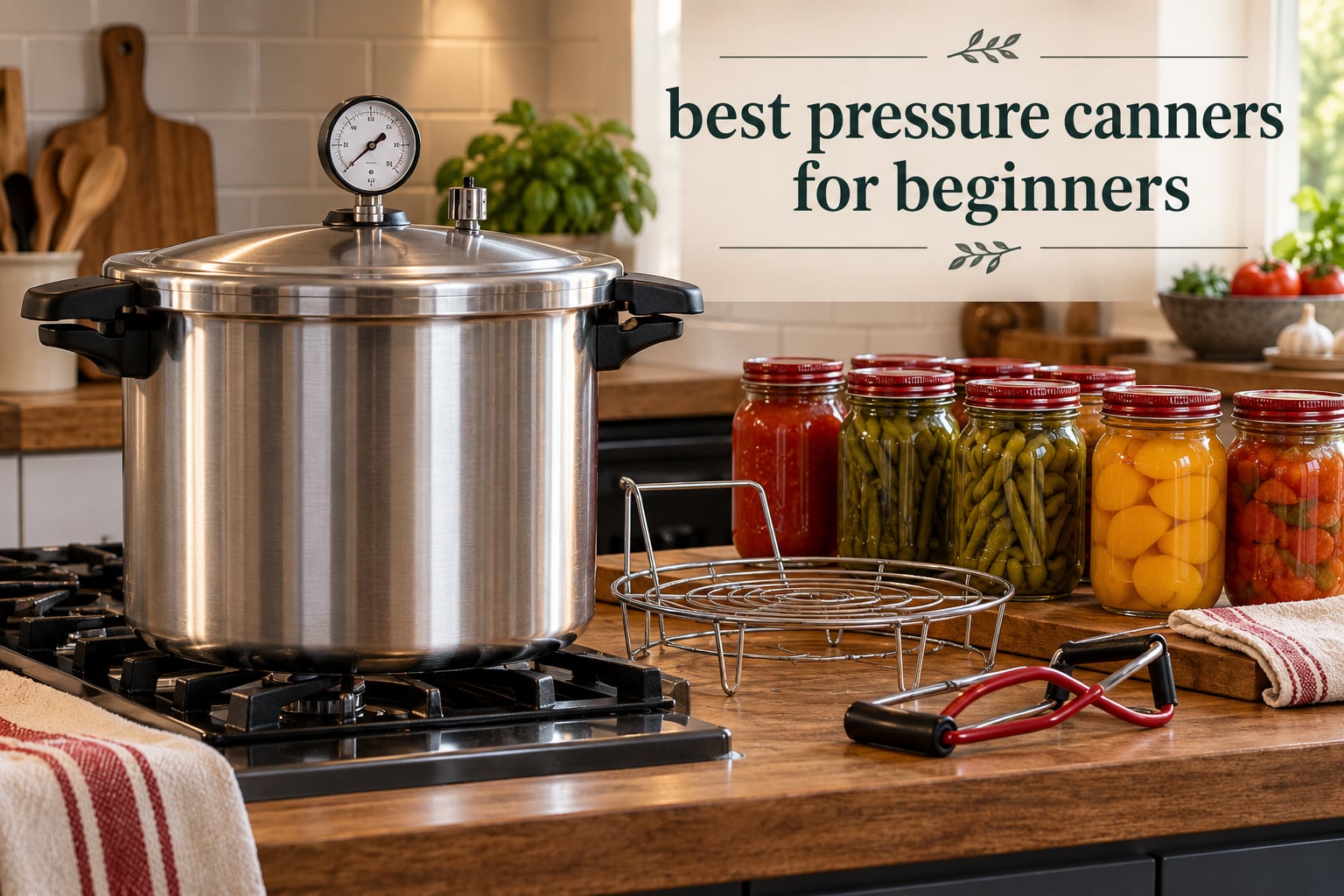
If you have never canned a single jar, choosing a pressure canner feels like the least approachable purchase in the kitchen. Every listing says USDA-recommended, every photo shows a heavy pot, and the one thing you actually need is a straight answer about which model will not frustrate you in year one.
We spent weeks going through the specs, review counts and failure patterns on the eight pressure canners below, and we talked our way through the sizing argument that every beginner forum stumbles over. This is the guide we wanted before our first batch: what a pressure canner actually does, which safety features matter, and which pot to buy if you want to keep the hobby going past your first five jars.
We also covered the hardware side of the hobby in our roundup of pressure cookers and canners for home canning, and if you want to separate pressure cooking from canning entirely, our electric pressure cooker picks are a separate list for a separate job.
One warning before we start. If all you want to preserve is tomatoes, jam, pickles or salsa, a water bath canner does that job safely and a pressure canner solves a problem you do not have. A pressure canner exists for low-acid foods, the ones that carry a real botulism risk if they are processed at boiling-water temperature: green beans, corn, beets, carrots, potatoes, meat, poultry, fish and soups. Everything below assumes that is the food you want to put in jars.
Our Top 3 Pressure Canners for First-Time Canners in 2026

Presto 01781 23-Quart
- Dial gauge with 7 quart jar capacity
- USDA-recommended canning method
- Doubles as a boiling water canner

All American 915 15.5-Quart
- Metal-to-metal seal with no gasket
- Weighted gauge needing no calibration
- 7 quart or 10 pint jars
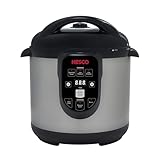
NESCO NPC-9 9.5-Quart
- Countertop electric
- no stovetop needed
- Digital programs with safety lock lid
The Presto 01781 wins the top slot because it is the least ambiguous canner on the market. It has a real dial gauge, a 12-year limited warranty, room for 7 quart jars, and more than 20k reviews behind it, which is the largest sample of long-term owners we found in this group.
The All American 915 takes the premium slot for a different reason. Its metal-to-metal seal means there is no rubber gasket to buy, size or replace, which removes the single most common source of beginner anxiety.
The NESCO NPC-9 is the pick when you have no usable stovetop, a small kitchen, or simply do not want to heat the room every time you can a batch. It is also the least expensive way into electric canning here, which is why it takes the value slot.
Comparing All 8 Best Pressure Canners for Beginners (October 2026)
| Product | Specifications | Action |
|---|---|---|
| Presto 01781 23-Quart |
|
Check Latest Price |
 Presto 02152 17-Quart Digital Presto 02152 17-Quart Digital |
|
Check Latest Price |
 T-fal 22-Quart T-fal 22-Quart |
|
Check Latest Price |
| NESCO NPC-9 9.5-Quart |
|
Check Latest Price |
| All American 915 15.5-Quart |
|
Check Latest Price |
 Granite Ware 20-Quart Granite Ware 20-Quart |
|
Check Latest Price |
 Presto 01784 23-Quart Induction Presto 01784 23-Quart Induction |
|
Check Latest Price |
 All American 910 10.5-Quart All American 910 10.5-Quart |
|
Check Latest Price |
Two things stand out immediately. First, every pot on this list is a real canner rather than a pressure cooker with a canning label, which matters because processing times on the USDA timetable are only valid for a specific volume and construction.
Second, the split between dial-gauge and weighted-gauge designs is the biggest technical divide in the group, and we explain it in the buying guide below.
1. Presto 01781 23-Quart – the Best Overall Stovetop Canner for Beginners
- Dial gauge shows real processing pressure
- 20113 reviews of long-term ownership
- Holds 7 quart or 20 pint jars
- Doubles as a boiling water canner
- Canning rack and recipe book included
- 12 pounds empty and wide across the burner
- Manual monitoring on every batch
- Aluminum body reacts with highly acidic foods
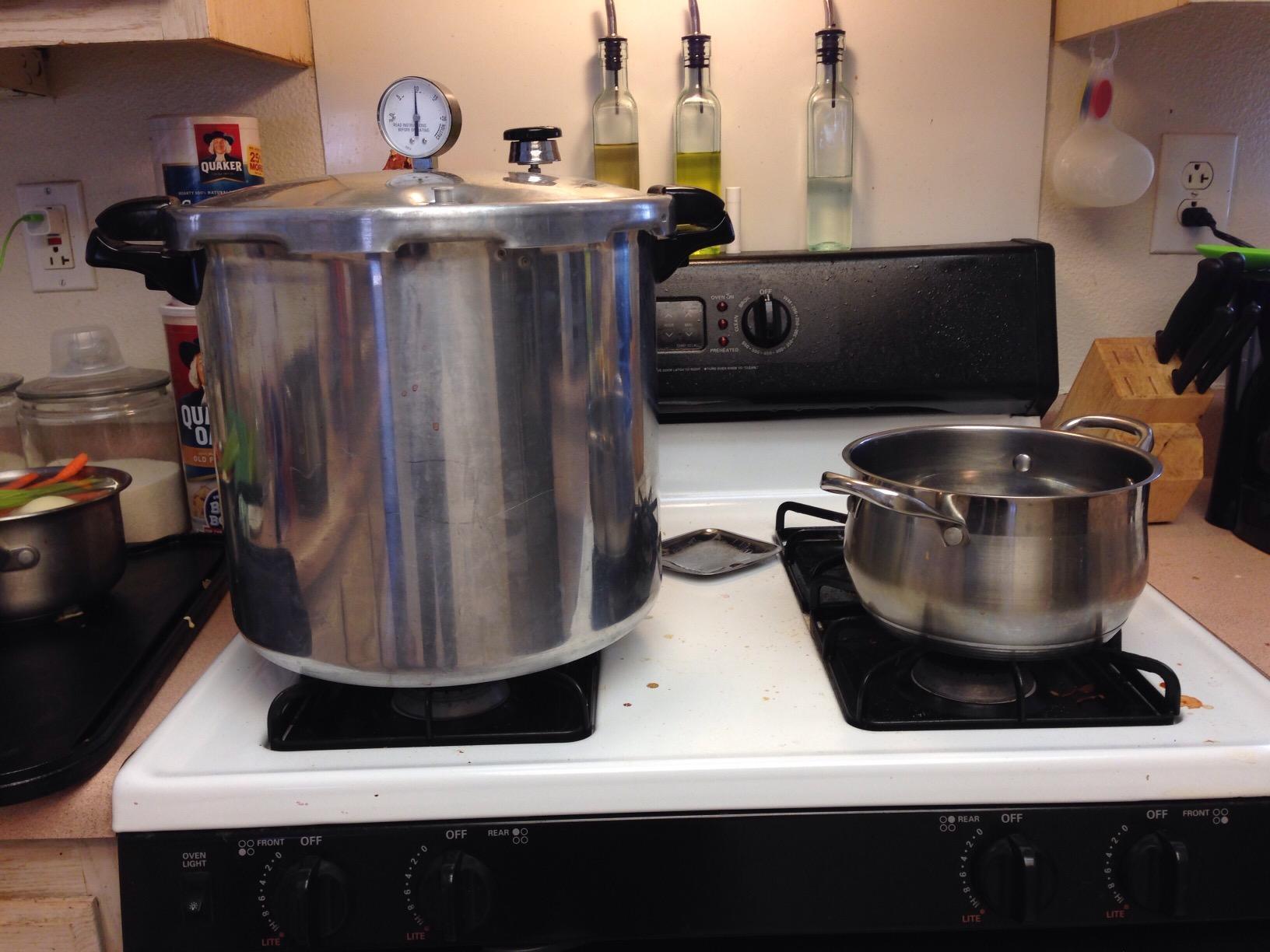
My first impression of the Presto 01781 was that it looks like a piece of equipment rather than a piece of cookware. The 12-pound empty weight and the 17.5-inch width are real, and on a domestic range they occupy most of a burner. Nobody hands you this pot and calls it compact.
What the size buys you is a batch that feels like an accomplishment. The spec sheet lists capacity for 7 quart jars, 20 pints or 26 half-pints, and that 7-quart figure is the reason it tops our list rather than a smaller unit.
It is also the model the canning community names most often when someone asks what a first canner should be. Multiple r/Canning threads point first-timers at a Presto in the 16 to 23 quart range, and the reasoning is always the same: enough volume that the USDA-tested processing times are valid, small enough to lift with two hands.
7 Quart Jars in One Batch Is the Feature That Matters Most
The single most useful thing about this canner is its usable internal volume. Seven quart jars is a full weekend of beans in a single load, and it means you are not splitting a harvest across three days because the pot will not hold it.
The trade-off is heat-up time. A 23-quart pot of water and jars takes noticeably longer to come to a full boil than a smaller cooker does, and on an electric coil range that wait can stretch out. Plan your batches around it rather than rushing the vent stage.
The Dial Gauge Is the Part You Should Learn to Read First
The deluxe pressure dial gauge on the 01781 registers the full range of processing pressures rather than a single target, which is exactly what you need if you live above 1,000 feet. Higher altitude means water boils at a lower temperature, so you have to push the gauge higher to reach the same sterilization conditions in the jar.
Beginners often find the dial intimidating on day one. The number that matters for most low-acid vegetable canning is 15 psi at high altitude, and the gauge is there to confirm you reached it and held it for the full processing time.
The cost of a dial gauge is calibration. Presto recommends that the dial be checked periodically, and a canner used occasionally is often checked more frequently than one in weekly service.
Who This Canner Is Right For (and Who Should Skip It)
Buy the 01781 if you have a gas or smooth-top range, want to can a meaningful batch of vegetables or meat, and plan to keep the hobby for years. The 12-year limited warranty and the huge review base make it the lowest-risk first canner.
Skip it if your cooktop is induction, because aluminum will not respond to an induction field. Look at the induction-specific model further down instead, or go electric.
Also skip it if you want a small unit for one or two people and a jar or two at a time. Everything is scaled up here for a household that puts food away in bulk.
2. Presto 02152 17-Quart Digital – the Best Pressure Canner When You Want the Machine to Do the Work
- Temperature sensor holds the exact setting automatically
- No altitude adjustment needed at any elevation
- LED display walks you through each step
- Does both pressure and boiling water canning
- 24.3 pounds and countertop-dominant
- Electric only with no stovetop option
- Heavier and costlier than a manual aluminum canner
The Presto 02152 is the answer to the question beginners ask most often, which is whether they can avoid the part where they read a steam gauge in a loud kitchen and guess. This canner takes the judgment out of the batch. You select the canning method and processing time on the control knob, and a built-in sensor maintains the temperature the whole way through.
It is also the only model in this group that removes altitude from the equation entirely. Instead of adjusting a dial for your elevation, the unit manages the pressure internally, which is a genuine safety improvement if you live in a mountain town.
Our reservation is the 24.3-pound weight and the fact that this is a countertop electric unit. If your kitchen already has a good range, the money is arguably better spent on a stovetop canner you can also use as a pot.
Why the Sensor and the Altitude Feature Matter Most
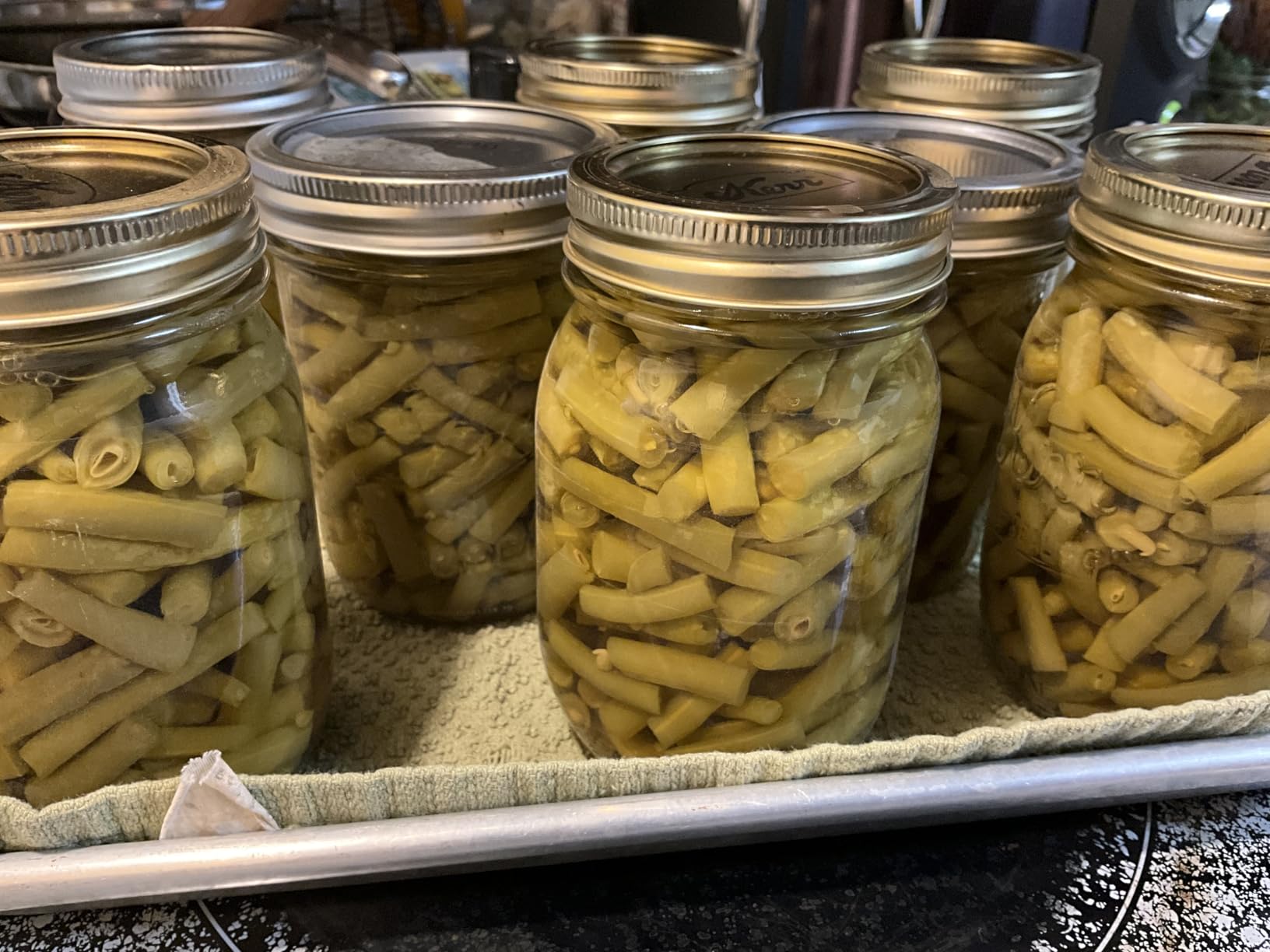
Manual pressure canning fails in predictable ways, and almost all of them come down to pressure drifting above or below target while nobody is watching. A temperature sensor with automatic regulation removes that whole failure mode, because the canner corrects itself rather than relying on you to notice a drifting gauge.
The no-altitude-adjustment claim is worth understanding. On a weighted-gauge stovetop canner you physically swap in a different regulator weight at higher elevations. Here there is nothing to swap, which is the single clearest reason to choose an electric unit if you live above 1,000 feet.
Stainless Steel, Programmable, and 24 Pounds Heavier
Stainless steel is a genuine upgrade over aluminum for durability and for not reacting with acidic foods, and the 17-quart body still holds quart jars, which is the size most home canners actually want.
The downside is that stainless conducts heat differently and runs heavier than aluminum, and at 24.3 pounds this is a substantial object to move across a counter. Plan a permanent spot for it rather than pulling it out of a cabinet each time.
Who This Canner Is Right For (and Who Should Skip It)
Buy the 02152 if you are nervous about manual gauge reading, if you live at altitude, or if you want canning to be a button press rather than a monitored procedure. It is genuinely the most beginner-proof canner on this list.
Skip it if you already own a reliable gas or electric range and enjoy the hands-on process. Experienced canners often prefer a manual dial because they can see the pressure directly.
Also skip it if your goal is the largest possible batch. Seventeen quarts is a mid-size unit, and it will not hold what a 23-quart stovetop canner holds.
3. T-fal 22-Quart – the Budget Pick Pressure Canner With Two Racks in the Box
- Two canning racks included for two-layer processing
- Step-by-step canning guide in the box
- Three pressure settings at 5
- 10 and 15 psi
- Works on gas and electric coil cooktops
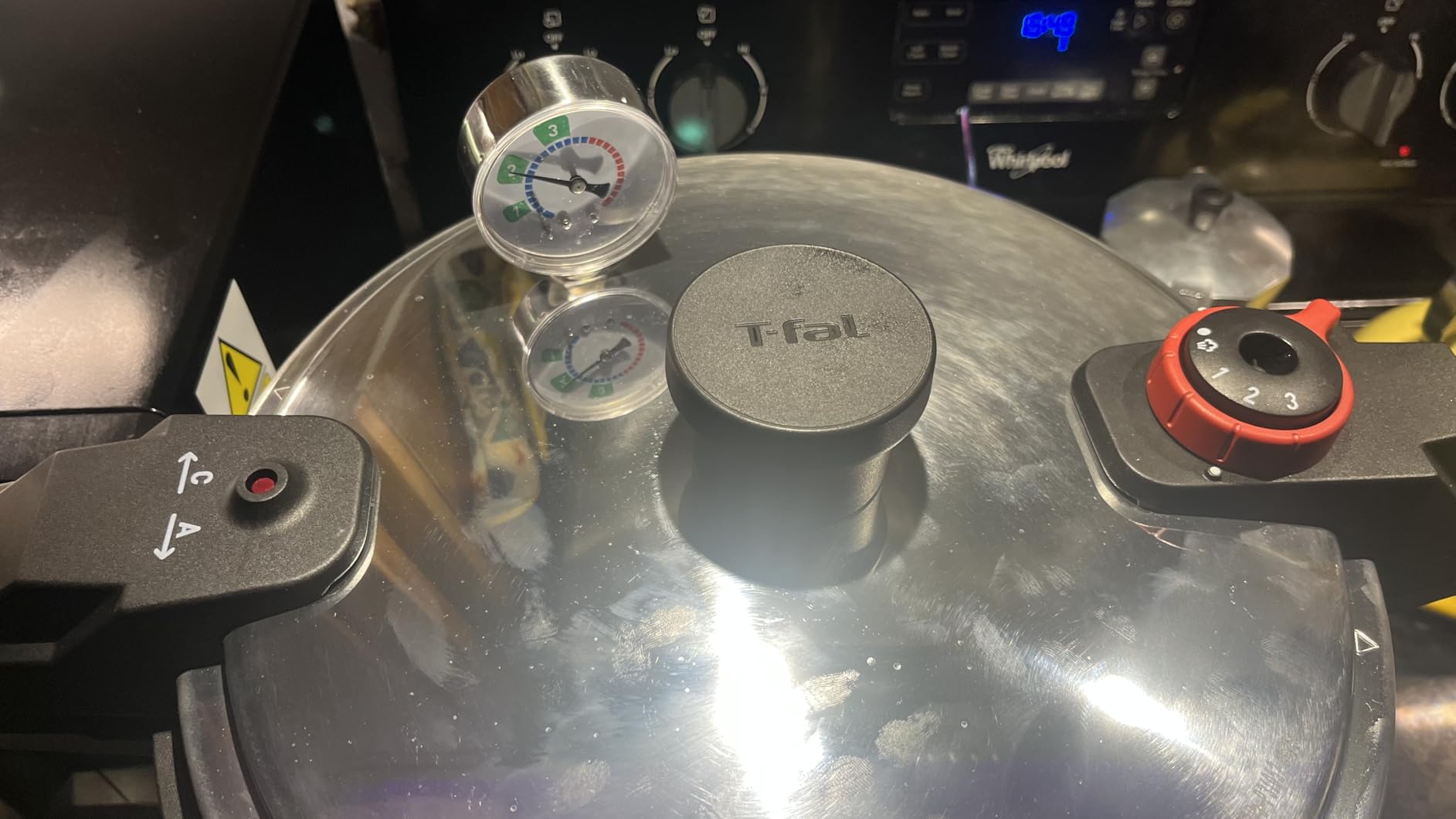
- Gauge uses a 1-2-3 scale rather than psi numbers
- One-year warranty is the shortest here
- Some reports of steam leaking at the handle
The T-fal 22-Quart is the pick for a beginner who wants capacity and accessories without paying for the premium end of the market. You get 22 quarts of aluminum body, two canning racks and a printed canning guide in the box, which is a better starting kit than a bare pot and separate accessory purchases.
The dual rack arrangement is the quiet advantage. With two racks you can process a second layer of jars, which effectively doubles throughput on a day when you have a lot of green beans to get off the garden.
The rating of 4.4 across 6778 reviews sits below our top pick, and the reason is mostly the gauge. It does not read in psi. It uses a 1-2-3 scale that you map to 5, 10 and 15 psi, and that indirection is a real stumbling block for someone learning to read pressure for the first time.
Three Pressure Settings Without Dial-Gauge Calibration
This canner regulates pressure with a weighted regulator rather than a dial needle, and it ships with the full 5, 10 and 15 psi range. Because the weight is a physical object rather than a calibrated instrument, there is no annual service visit to schedule, which is a genuine advantage over a dial gauge.
You should still know how to read it. The 1-2-3 scale means the regulator is set to one of three positions, and for most low-acid vegetable canning you want the 15 psi setting, which is the highest of the three.
Two Racks and a Guide Save You Two Separate Purchases
Every canner on this list needs a canning rack so jars sit above the water rather than in it, and plenty of cheaper models treat the rack as an extra. This one includes two, which is the practical difference between processing one layer and two.
The included guide matters more than it sounds. The USDA processing timetable is not intuitive, and having a printed walkthrough next to you during your first three batches removes a lot of guesswork about come-up time and cool-down.
One-year warranty coverage is the weakest in the group, so treat this as a canner you maintain carefully rather than one you expect to hand down.
Who This Canner Is Right For (and Who Should Skip It)
Buy the T-fal if you want the most complete box for the money, if you have a gas or electric coil range, and if you would rather avoid dial-gauge calibration entirely. The two-rack setup genuinely helps during a harvest weekend.
Skip it if you are visually oriented and want a pressure number you can see at a glance, because the 1-2-3 scale hides it. And skip it on a smooth-top electric range unless the manufacturer confirms compatibility, because some owners report the pot not seating properly on those surfaces.
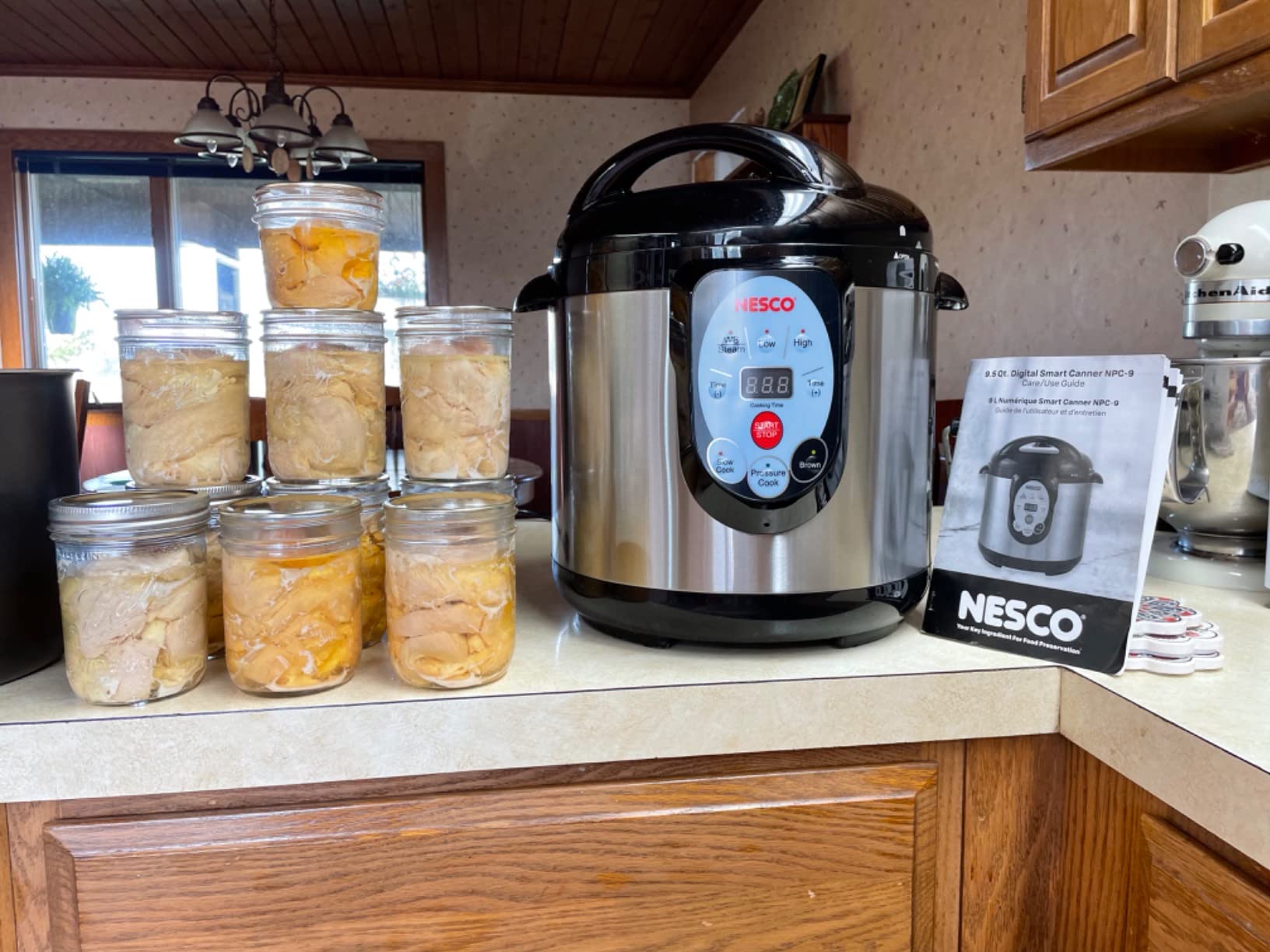
4. NESCO NPC-9 9.5-Quart – the Best Countertop Electric for Small Kitchens
- No stovetop required at all
- Does not heat up the room during a batch
- Safety lock lid will not open under pressure
- Includes a high-altitude limiting valve
- Only 4 quart or 5 pint jars per batch
- Wordy instructions with a real learning curve
- Only 1-year warranty
The NESCO NPC-9 answers a practical problem that most canner roundups ignore: what if you do not have a stovetop you are willing to dedicate to canning? This unit plugs into an outlet, sits on the counter and performs real pressure canning with automatic regulation.
It is genuinely one of the easiest ways to start, and reviewers repeatedly highlight that it does not heat the kitchen the way a stovetop canner does. In a small apartment in summer, that is not a minor benefit.
It is also multi-function, working as a pressure canner, pressure cooker, slow cooker, steamer and boiling water canner. For a household that wants one appliance rather than three, that consolidation is the pitch.
A True Pressure Canner With No Stovetop Required
What separates this from a multi-cooker is that it was built as a canner first, with a safety lock lid that physically prevents opening under pressure, an automatic float valve and a pressure regulation system. Those features are what you are paying the countertop premium for.
The included parts list tells you how seriously it is taken: an aluminum inner pot, a canning rack, a steam rack, a removable condensation catcher, and separate limiting valves for standard and high-altitude use.
Owners new to electric canners most often complain about the instructions, which are wordy. Budget an evening with them before your first batch rather than reading them mid-process.
Small Batch Reality: 4 Quart Jars or 5 Pints
Capacity is the real constraint. This is a 9.5-quart unit, and reviews put a realistic batch at 4 quart jars or 5 pints. That is enough for a week of meals for a small household, but it is not garden-scale preserving.
That makes it a good fit for one or two people. It is also why the popular question about size for a two-person household comes up here, and the honest answer is that this format suits small households well provided you can accept reloading it more often.
The condensation catcher keeps moisture out of the control area, and the removable nonstick inner pot makes cleanup far less of a chore than with a bare aluminum canner.
Who This Canner Is Right For (and Who Should Skip It)
Buy the NPC-9 if you have no dedicated stovetop, if you live somewhere hot, if you want to avoid learning weighted-gauge regulation, or if you are preserving food for one or two people rather than a large household.
Skip it if you have a good range and want maximum batch size, because the stovetop canners in this list will process two to three times as much per load. Skip it too if you need to can large cuts of meat, where a bigger pot is genuinely necessary.
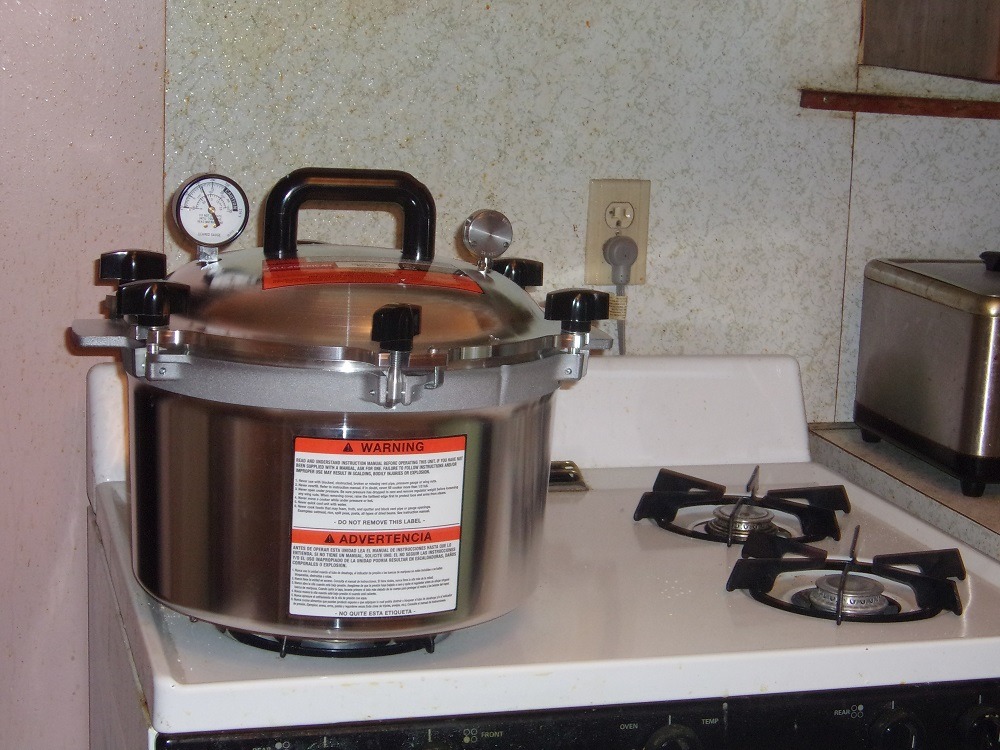
5. All American 915 15.5-Quart – the Best Gasketless Canner You Can Buy New
- No gasket to buy
- size or ever replace
- Highest rating in this group at 4.9
- Weighted gauge needs no periodic calibration
- 7 quart or 10 pint jars per load
- 18 pounds empty and demanding on a range
- Seal needs olive oil on the rim each time
- Not recommended for glass cooktops
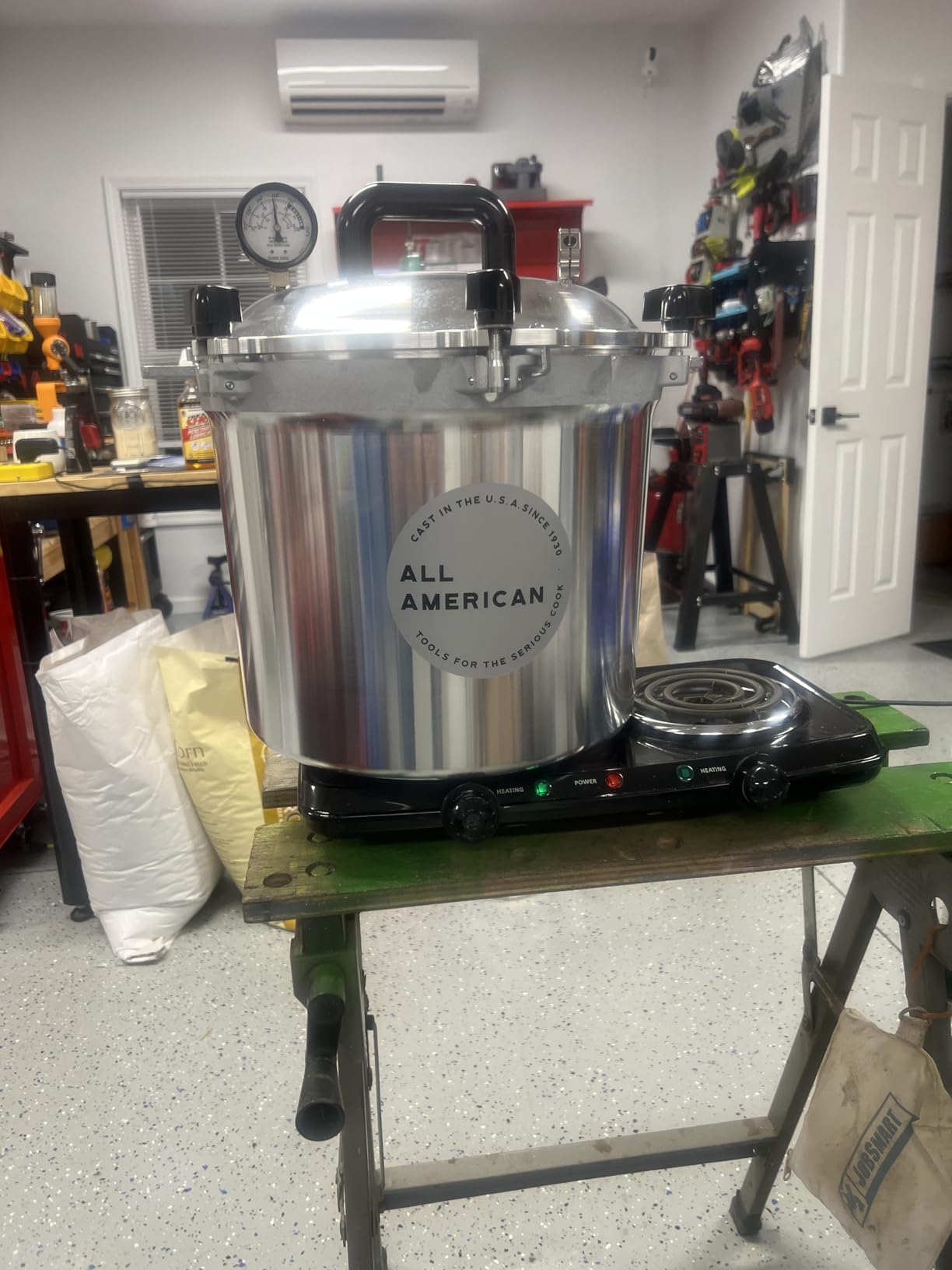
The All American 915 exists to solve the problem that shows up most often in beginner threads, which is gasket anxiety. There is no rubber ring to stretch, harden, measure or replace. The lid seals metal to metal through a clamping system, so there is no consumable part in the pressure path at all.
That is the entire reason this canner costs more than an aluminum Presto of similar size. You are buying a seal that never needs replacing, and a body made by a family-owned foundry in Wisconsin that is still manufacturing parts decades later.
It ranks #1 in the Pressure Canners category, and at 4.9 across 9772 reviews it holds the highest rating in this group. Long-term owners consistently describe it as a lifetime purchase, which is a different category of claim than the budget picks.
The Metal-to-Metal Seal Removes Gasket Anxiety Entirely
On a gasket canner, a new rubber ring costs little but the anxiety is disproportionate. People worry they have the wrong size, that the old one is still good, and that a failed seal is a safety event. None of that exists here.
There is a technique cost instead. You apply a small amount of olive oil to the sealing rim, seat the lid and tighten the clamps in a star pattern so pressure seats evenly. Beginners who skip the oil or tighten in sequence get a weak seal, so this is worth practicing once with water before a real batch.
Weighted Gauge With a Dial for Reading Only
The 915 regulates pressure with a precision machined regulator weight, so there is no calibration schedule to maintain. There is a steam gauge you can read for your own reassurance, but the unit self-regulates at the set pressure.
Capacity is the useful figure: approximately 7 quart jars or 10 pints. That is a substantial batch without being the enormous 23-quart size, and the double-thickness rim edges are designed for decades of clamping cycles.
Two cautions from owner feedback. The lid can vacuum-seal to the pot after cooling, so have a flat knife ready to break the seal. And many owners advise against glass cooktops, because the pot can scratch the surface.
Who This Canner Is Right For (and Who Should Skip It)
Buy the 915 if gasket replacement is the thing that would stop you from starting, if you want a canner you can hand down, or if you have a gas or electric coil range and room to handle 18 pounds of pot.
Skip it if you are on a glass or ceramic cooktop, if you need a low-profile pot for a small burner, or if budget is the deciding factor. There is no wrong choice here, only a different total cost of ownership over fifteen years.
6. Granite Ware 20-Quart – the Best Budget Multi-Cooker Pressure Canner
- Lightest empty weight in this group at 10.5 pounds
- Hard anodized surface will not rust or stain
- Works as a canner
- cooker and steamer
- No dial calibration required
- Only 801 reviews
- the thinnest evidence base here
- 20 quarts is smaller than the 22 and 23 quart models
- Nonstick coating wears over years of use
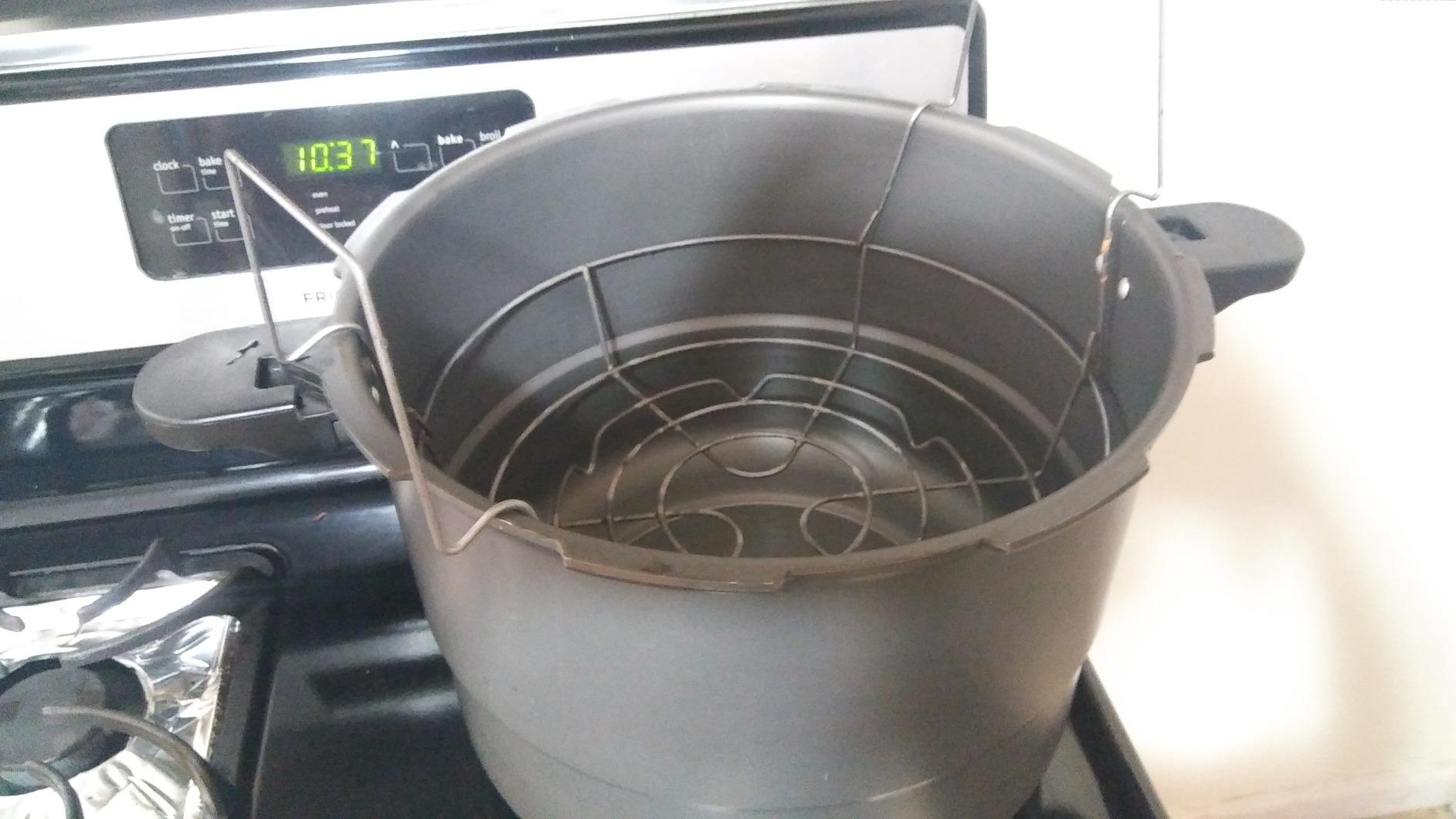
The Granite Ware 20-Quart is the one to consider if weight is your real constraint. At 10.5 pounds empty it is the lightest pot in this group by a noticeable margin, and for anyone with a glass cooktop or an arm that objects to lifting 18 pounds of hot aluminum, that is a practical rather than a cosmetic advantage.
It is also genuinely multi-purpose, working as a pressure canner, a pressure cooker and a steamer. Hard anodized aluminum will not rust or stain, which matters if you are canning tomatoes and beet juice alongside vegetables.
Be honest about the evidence here. 801 reviews is the smallest sample in this list, and its ranking in the category is far below the models above. It is a solid budget canner rather than the most proven one.
Hard Anodized Aluminum at the Lightest Weight in This Group
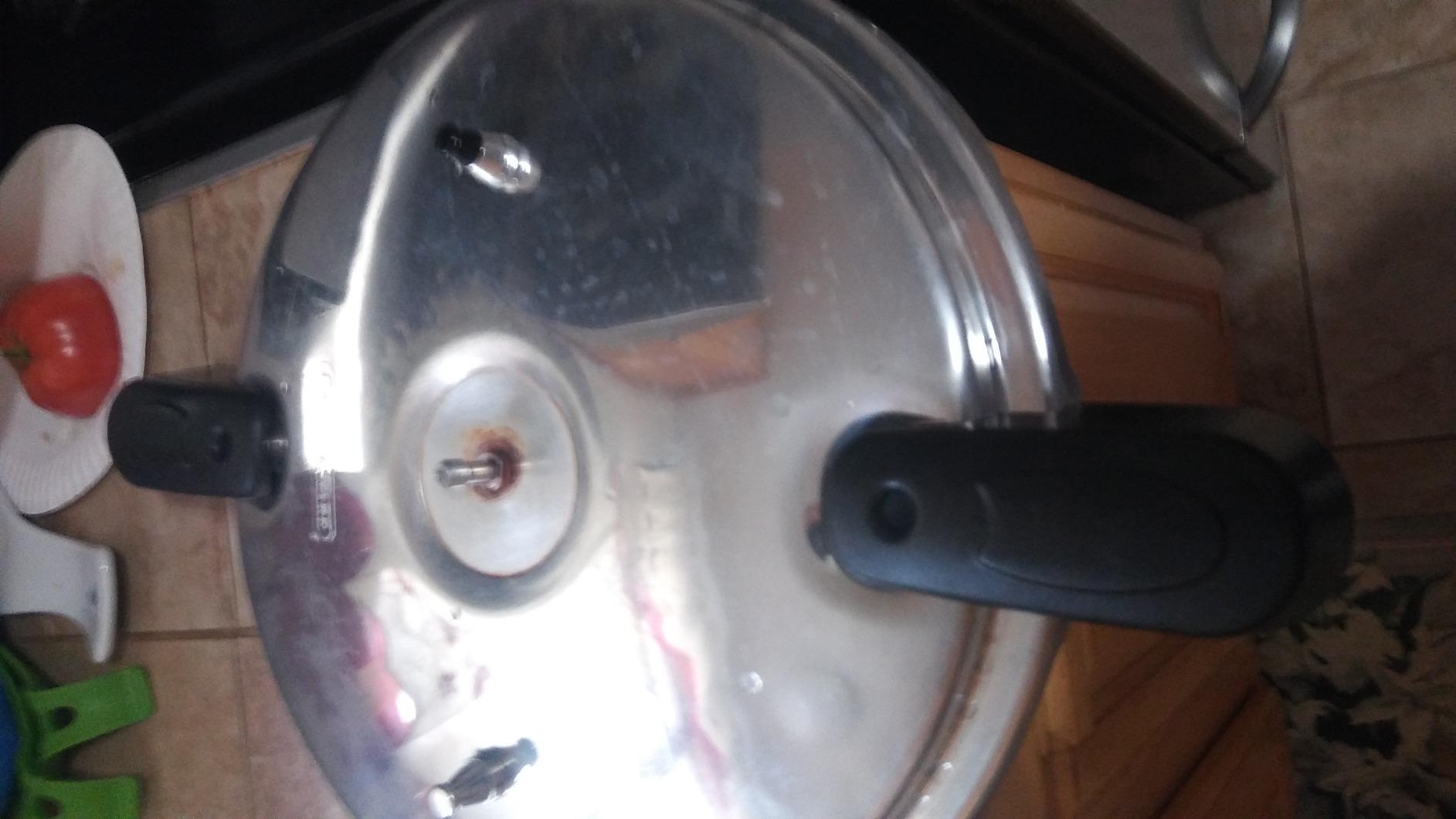
Hard anodizing is an electrochemical surface treatment that grows a thicker oxide layer into the metal itself, rather than coating it on top. In practice that means the surface will not rust, will not stain from beet juice or tomato acid, and tolerates years of heating cycles.
At 10.5 pounds empty, you can move it with one hand to rinse or soak. That matters more than it sounds, because a canning session involves filling, processing, cooling and then carrying a heavy pot of hot water to the sink.
The 3-Piece Regulator Replaces Annual Gauge Calibration
Pressure is set with an adjustable three-piece regulator calibrated at 5, 10 and 15 psi. Because the setting is a physical weight, there is no dial to send for calibration, and the same parts approach means the regulator is replaceable decades from now if the manufacturer is still making them.
Twenty quarts is a mid-size batch. It will not handle what a 23-quart canner handles, so if you have a genuine garden surplus rather than a weekly kitchen harvest, step up a size.
The one recurring complaint is the nonstick finish wearing down over long service. If you buy this, expect to eventually treat it as bare anodized aluminum and avoid scraping it.
Who This Canner Is Right For (and Who Should Skip It)
Buy the Granite Ware if you want the lightest canner here, if you need one pot that also works as a steamer and pressure cooker, and if you accept a thinner review history in exchange for a lower entry point.
Skip it if you want maximum batch size, if you need the deepest possible parts support, or if buying a second-hand vintage canner and fitting a new gasket makes more sense for your budget. Plenty of experienced canners on the forums started exactly that way.
7. Presto 01784 23-Quart Induction – the Best Pressure Canner for Induction Cooktops
Presto 01784 23-Quart Induction Compatible Pressure Canner
- Induction compatible
- rare for a full-size canner
- Works on induction
- gas
- electric and smooth-top ranges
- Same 12-year warranty as the standard Presto
- Air vent and cover lock prevent opening under pressure
- Only the 15 pound weight is included
- Only one canning rack in the box
- Heavier and costlier than the non-induction Presto
If you own an induction cooktop, this solves a problem that quietly rules out every other stovetop canner. Induction heating relies on magnetic interaction with the cookware itself, and a plain aluminum pot simply will not heat on an induction zone. That is why most induction cookware is stainless or magnetic-base, and why most pressure canners are not.
This model wraps the pot in a stainless steel-clad base so it responds to induction while keeping the aluminum core that conducts heat evenly. It is a 23-quart canner, so you give up nothing in batch size.
It shares the 12-year limited warranty and the 7-quart-jar capacity of the standard Presto 23-quart, and it also works as a boiling water canner. Owners with mixed kitchens report being able to use one pot for every burner they own.
The Stainless Clad Base Is the Whole Point
You cannot make an aluminum canner work on induction with an aftermarket trivet. The base has to be magnetic, which is why this model is a different product rather than a slightly upgraded version of the standard Presto.
Even heat is the secondary benefit worth knowing about. Induction delivers energy directly into the pot, and the clad base spreads that energy through the aluminum body so jars on the bottom of the rack experience the same conditions as jars near the top.
Owner reviews also mention the air vent and cover lock system, which only allows pressure to build when the lid is properly closed, and an arrow alignment system for sealing the lid consistently. Both matter more on a canner you cannot visually inspect the way you can on a gas flame.
What Comes in the Box and What You Have to Add
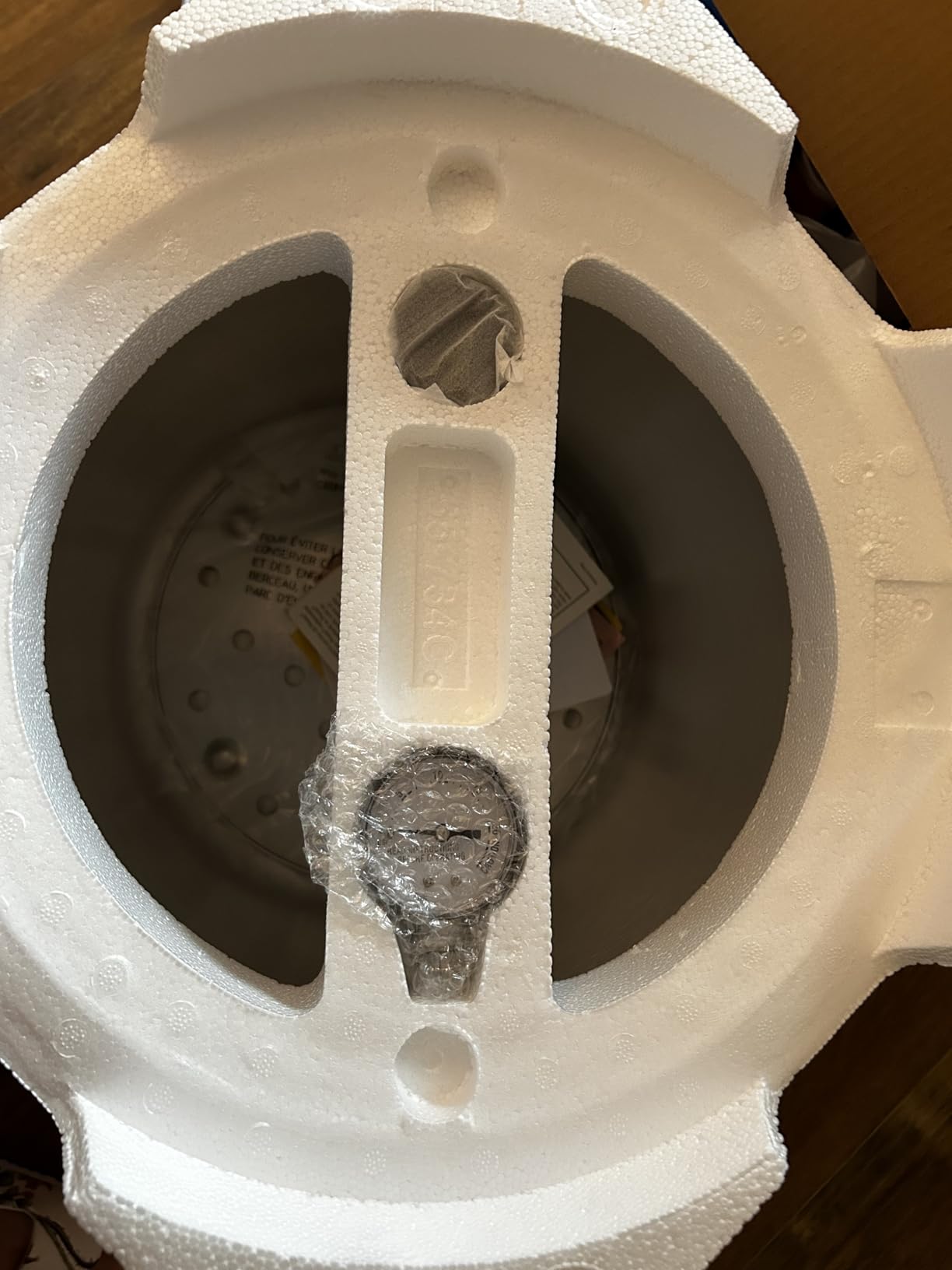
Here is the practical catch. This model includes only the 15 pound canning weight, and only a single canning rack. If you want the full 5, 10 and 15 psi range for altitude work or lower-pressure processing, you need to source the smaller weights separately.
A second rack is the other addition, and it is the one most beginners skip and then regret during a large harvest, because it is what enables a second layer of jars.
Plan on buying both accessories before your first batch rather than discovering the gap halfway through a Saturday of canning.
Who This Canner Is Right For (and Who Should Skip It)
Buy the 01784 if you have an induction cooktop, or if you move between an induction kitchen and a gas one. It is the rare canner that genuinely works everywhere.
Skip it if you have a plain gas or coil range and want the least expensive route into the category, because the standard Presto 23-quart does the same job for less. Also skip it if buying two extra accessories to complete it feels like friction on day one.
8. All American 910 10.5-Quart – the Best Compact Metal-Seal Canner
- Same gasketless seal as the larger All American
- 4 quart or 7 pint jars suits small households
- No gasket or calibration maintenance ever
- #1 in the Pressure Canners category
- 4 quart jars is a genuine ceiling
- 14.8 pounds still needs two hands
- Not recommended for glass cooktops
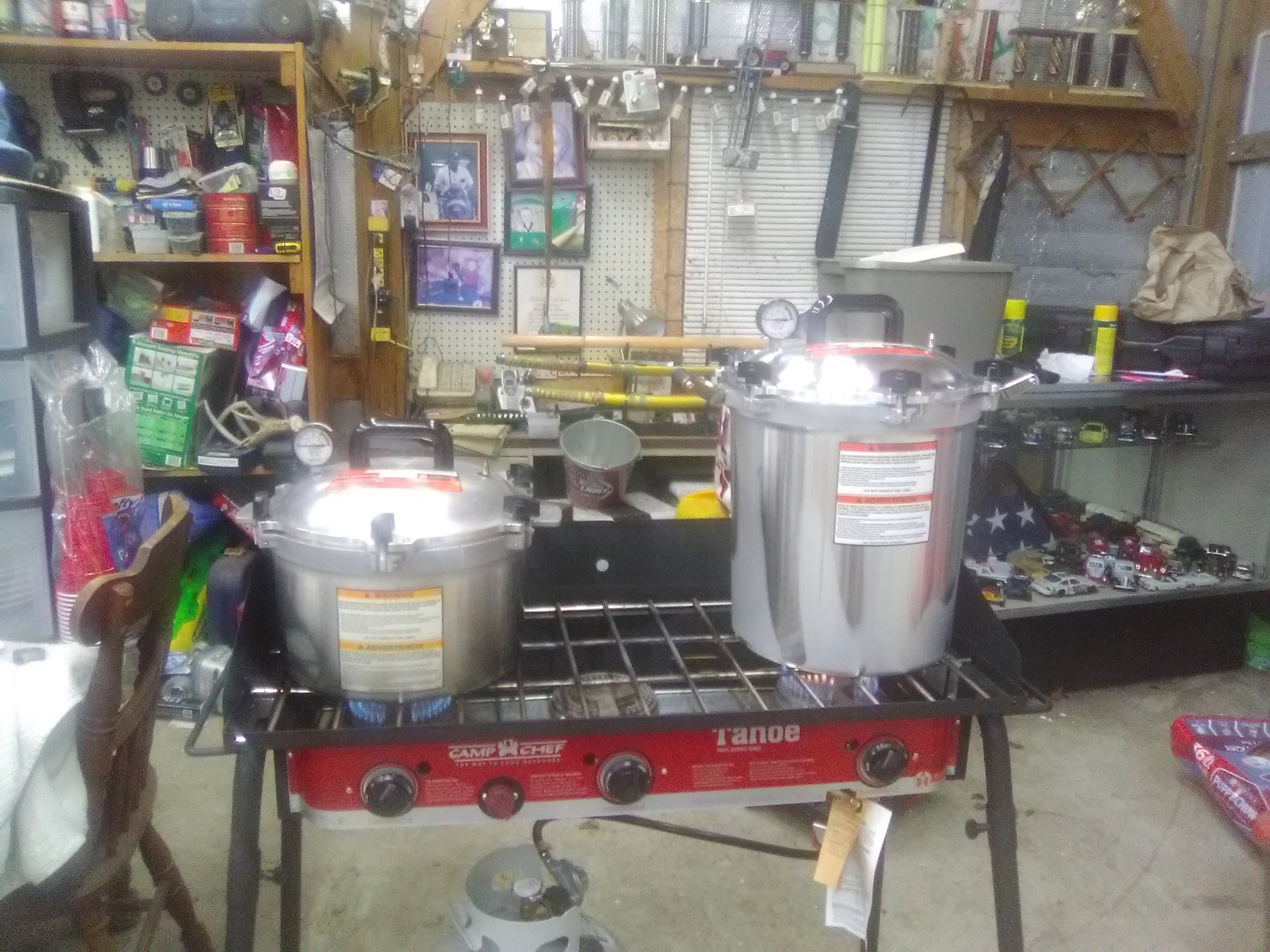
The All American 910 is the same gasketless design as the 915 in a smaller footprint, and it exists for a specific reason: some kitchens do not have room for a 15.5-quart pot but a stovetop pressure cooker is still useful. At 10.25 by 10.25 inches it is far more manageable on a domestic range.
It carries the identical metal-to-metal sealing system, the same weighted regulator and the same US parts support. At 4.9 across 9758 reviews it is tied for the highest rating in this group.
It also ranks #1 in its category, which tells you something about how the market views metal-seal canners overall. If gasket anxiety is your blocker, this and the 915 are the two answers.
The Same Gasketless Seal in a Smaller Footprint
The value of a smaller metal-seal canner is that you keep the two advantages that made the big one appealing: no consumable gasket, and no calibration schedule. What you give up is batch size, not safety engineering.
It also serves as a pressure cooker for a sizable group, which owners mention as a secondary use. A canner that gets used weekly for cooking will develop the muscle memory that makes canning safer more quickly than one that sits in a cabinet for eight months a year.
4 Quart Jars Is a Real Ceiling, Not a Quirk
Capacity is approximately 4 quart jars or 7 pints. That is a meaningful small-household batch, but it is roughly half what a 23-quart unit holds, so plan on more cycles to put away the same harvest.
At 14.8 pounds empty it is not truly light, and the same two cautions apply as with the larger model: the sealing rim needs olive oil, and the lid can vacuum-seal after cooling.
It is also not recommended for glass cooktops, so if that is what you own, this one is out regardless of size.
Who This Canner Is Right For (and Who Should Skip It)
Buy the 910 if you want a gasketless canner without giving up most of your burner space, if you are preserving for one or two people, or if you want a second pot for a second flavor of canning.
Skip it if you need garden-scale throughput, because twice as many cycles is twice as much boiling, venting and cooling. In that case the 915 or a 23-quart Presto is the right purchase and the 910 is the one you add later.
Before Your First Batch: The Safety Sequence in the Order It Has to Happen
Almost every story about a canning accident follows the same pattern: a step was skipped, usually venting or cooling, usually under time pressure at the end of a long day. The sequence below is the part worth memorizing before you own a canner, not after.
Use the current USDA National Center for Home Food Preservation timetable for your specific food, jar size and altitude. Processing times are not guidelines to adjust, and the canner volume you own is part of the equation the timetable assumes.
Fill, Load, and Keep Jars Off Each Other
Leave the headspace the timetable specifies, wipe the rim clean with a damp cloth and screw the band on until it is fingertip tight. If the rim has any food on it, the seal will fail and you will lose the batch.
Put a canning rack in the bottom of the pot, add a few inches of water so the jars never sit in water, and load the jars with space between them. Jars should not touch each other or the pot wall, because heat transfer has to reach every jar evenly for the processing time to be valid.
Vent for a Full 10 Minutes Before Timing Starts
Bring the canner to a full boil with the weight off and the vent open, then let steam escape for a full 10 minutes at altitude-adjusted length if you are above 1,000 feet. This clears air from the vessel so that the pressure that builds afterwards is steam pressure, which is what the processing time assumes.
Start your processing clock only after the weight is on and you have confirmed full pressure. Counting the come-up time as processing time is the most common serious beginner error.
Weight the Vent and Start the Clock
Fit the correct canning weight for your gauge type and elevation. A weighted-gauge canner runs at the pressure the weight dictates; a dial-gauge canner needs you to hold the needle at the target pressure, which is higher at altitude.
Then run the full processing time from your USDA timetable for that food, at that pressure, at that jar size, without shortening it because the jars look done.
Cool Down Completely Before You Touch the Lid
Turn off the heat and let the canner cool naturally, undisturbed, until it is safe to handle. Some canners hiss as they cool, and you should never force a lid that is still pressurized or hot.
After processing, remove the jars and leave them undisturbed for 12 to 24 hours before checking any seal. Do not retest a jar with no seal, and do not adjust bands afterward while the food is still hot.
How to Choose a Pressure Canner: 7 Decisions That Matter
Once you have narrowed it to a shortlist, these are the decisions that actually determine whether you will still be canning in three years. Most first-time buyers focus on capacity and ignore the ones with the safety consequences.
Decision 1: Match the Pot to Your Stovetop
Aluminum will not heat on induction, full stop. A stainless clad base or a magnetic sandwich base is required, and only a handful of full-size canners have one. Gas, electric coil and smooth-top electric all have different rules about heavy flat-bottomed pots.
Check the cooktop manufacturer’s weight guidance before committing to a heavy canner. A pot that flexes or damages a glass surface is a real complaint among owners of large stainless models.
Decision 2: Size by Household and by Harvest
The honest sizing rule, since it comes up in nearly every beginner thread: roughly 8 quarts for one to two people, 16 to 17 quarts for a household of three or four, and 22 to 23 quarts for genuine garden-scale preserving.
There is a live disagreement about very small units. Some canners and communities argue that processing times have not been established for small pressure cookers, while others point out that USDA-tested processes exist down to a 4-quart jar. Our view is that if your first instinct is an 8-quart cooker-canner, buy a purpose-built canner in the 16-quart range and skip the argument.
Decision 3: Dial Gauge or Weighted Gauge
A weighted gauge is a machined weight that sets the pressure mechanically. It cannot drift, needs no calibration, and works at altitude only if you change the weight.
A dial gauge lets you choose a pressure inside a range, which is what makes altitude adjustment and lower-pressure processing possible. The tradeoff is that a dial needs periodic calibration, and most manufacturers recommend checking it if the canner sits unused for long stretches.
For a beginner, the honest summary is that a weighted canner is easier to maintain and a dial canner is more flexible. Neither is meaningfully safer if used correctly.
Decision 4: Gasket or No Gasket
Gasket-sealed canners need a correctly sized rubber ring, replaced when it hardens, cracks or loses elasticity. Metal-to-metal designs like both All American models have no consumable seal at all, which is the whole reason they cost more.
If you do buy a gasket canner, measure the lid opening and match it against the brand’s parts chart rather than guessing. Owners report that gaskets and jiggle weights are frequently interchangeable across older Presto and Mirro models, which matters if you ever buy secondhand.
Decision 5: Do You Actually Need One Yet?
Start with the water bath method if you want to can tomatoes, fruit, jams, jellies, pickles or salsa. A large stockpot, a rack and a thermometer will do it, and you will learn jar handling, headspace and sealing without any pressure involved.
A pressure canner becomes necessary the moment you want green beans, corn, beets, carrots, potatoes, meat, poultry, fish or soup. If that is not your goal yet, there is no rush, and buying one early tends to produce a pot that sits in a cupboard.
Decision 6: Accessories You Will Need on Day One
Whatever canner you buy, you need a canning rack so jars sit above the water, a jar lifter with a gripping arm, a wide-mouth funnel for filling headspace accurately, fresh two-piece lids, and a timer you can hear from across the kitchen.
Add a jar tester or at minimum a small spoon for checking seals, and a food mill if you are canning tomatoes. Scales matter more than most beginners expect, because processing times are keyed to a specific net weight of food per jar.
Check what your specific model already includes. The T-fal comes with two racks and a guide, while the induction Presto comes with only a single rack and one weight.
Decision 7: Parts and Warranty Ten Years From Now
Warranty length is the most underrated signal in this category. Two Presto models here carry 12-year limited warranties, while several others carry one year. Owners consistently treat warranty length as a proxy for whether a manufacturer will still make your replacement parts in a decade.
This is also where secondhand canners genuinely make sense. Owners on gardening and canning forums describe buying 1950s to 1970s Presto and Mirro canners that still work, needing only a new gasket. Know the model number before you buy, confirm the dial gauge still reads zero, and expect to replace the seal on day one.
Frequently Asked Questions
Is there a pressure canner that doesn’t require a gasket?
Yes. The All American 915 15.5-quart and the All American 910 10.5-quart both use a metal-to-metal sealing system instead of a rubber gasket, so there is no seal to buy, size or replace. That gasketless design is the main reason they cost more than comparable aluminum canners. A second gasket-free option is using a pressure canner as a water bath canner for high-acid foods, which never reaches pressure at all.
What size pressure canner is best for two people?
For one or two people, look at a unit in the 8 to 10 quart range that holds roughly 4 quart jars or 7 pints per batch, such as the All American 910 or the countertop electric NESCO NPC-9. If you expect to preserve garden surplus rather than a weekly meal’s worth of food, step up to at least 16 quarts, because a small canner means many more heating and cooling cycles.
Can jars touch when pressure canning?
No. Jars should not touch each other or the side of the canner, and they should never sit in the water at the bottom. Use a canning rack to keep jars elevated and spaced so heat reaches every jar evenly. Jars packed tightly may process unevenly, and the USDA processing time is only valid when heat transfer is uniform across the load.
What is the easiest canning system for beginners?
The easiest true starting point is the boiling water bath method, which needs only a large stockpot, a rack and a thermometer, and it covers high-acid foods like tomatoes, fruits, jams, jellies, pickles and salsa. A pressure canner is required only for low-acid foods such as green beans, corn, beets, meat and soups. Learn the water bath first and the low-acid process second.
Can I use a pressure cooker or Instant Pot for pressure canning?
No. A standard stovetop pressure cooker is not a pressure canner, and an electric multi-cooker is not a USDA-qualified pressure canner. The difference is construction and volume: processing times in the USDA timetable are validated for a specific canner size and pot volume, and cookers lack the canning weight, the sealing system and the capacity to process a full load safely. Use a unit sold and labelled as a pressure canner.
The Verdict: Which Pressure Canner Should a Beginner Buy in 2026?
If you want the single safest default, the Presto 01781 23-quart is our pick. It has a real dial gauge, a 7-quart jar batch, a 12-year warranty and more than 20k reviews, which is the most proven combination in this group.
If you would rather the machine make the decisions, choose the Presto 02152 17-quart digital. Automatic temperature control and no altitude adjustments remove the two places beginners most often go wrong.
If you have no stovetop or a small kitchen, the NESCO NPC-9 9.5-quart is the answer. If gasket maintenance would worry you, take the All American 915 for capacity or the 910 for a smaller footprint. If your cooktop is induction, the Presto 01784 is the one that will actually heat.
And if you are still unsure, remember the permission-giving answer that came up again and again in the forums we read: you do not need the most expensive canner to start safely. Pick a real pressure canner, follow the USDA timetable, respect the ten-minute vent, and the rest is practice.