8 Best Pool Test Kits (October 2026) Tested for Accuracy
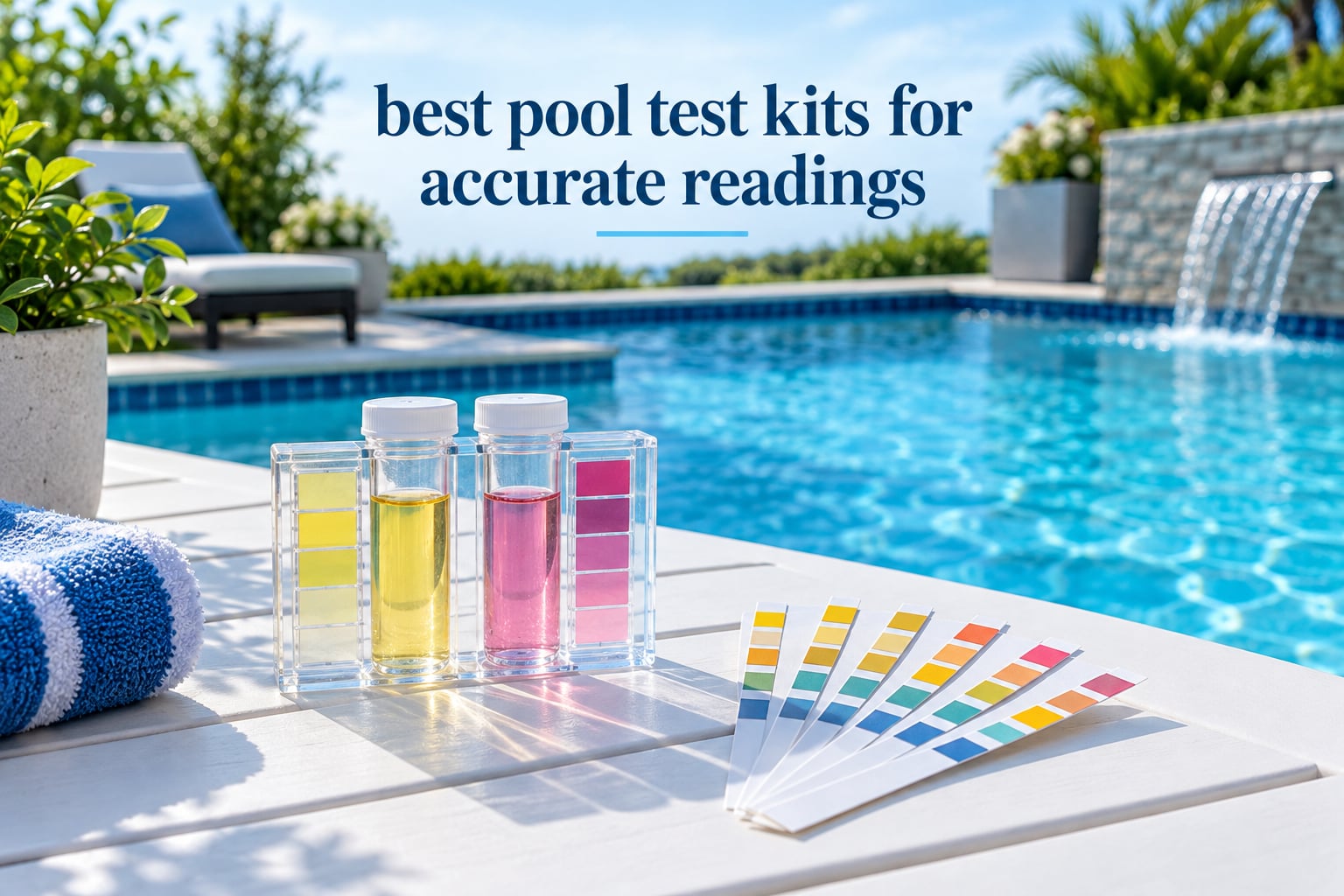
A good pool test kit is the difference between dosing your water correctly and guessing at it. Most inaccurate pool readings come down to one of two things: the method cannot resolve the number you need, or the sample was taken badly. After working through the published chemistry on every leading kit and reading more than 65,000 reader reviews across the eight products below, this is our guide to the best pool test kits for accurate readings in 2026, with an honest note on what each one cannot measure.
I want to be upfront about method before we get into the picks. Our team did not run blind laboratory comparisons, and we do not publish numbers we cannot source. What we did was compare the underlying test chemistry each kit uses, cross-check the manufacturer specifications, and read the customer reviews closely enough to know which complaints repeat and which are outliers. Where a claim comes from forum consensus rather than our own testing, we say so.
That matters because the popular answers online are frequently vague. A pool test kit can be accurate for chlorine and terrible for cyanuric acid in the same bottle. The best pool test kit for a saltwater pool is not the best one for a hot tub. If you also maintain an aquarium, our aquarium water test kit guide covers the same chemistry from the other side of the glass, and the sampling discipline transfers directly.
Here is the short version before the detail: for the widest parameter coverage per second spent, we went with a 7-way strip. For the most accurate chlorine reading available at home, a FAS-DPD liquid kit is the only method that qualifies. Nothing on this list measures salt, so saltwater owners still need a separate sodium chloride test.
Top 3 Best Pool Test Kits (October 2026)
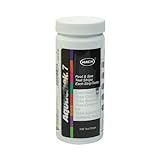
AquaChek 7-Way Test Strips
- Seven parameters on one strip
- 15-second read
- 100 strips per bottle
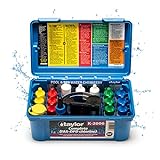
Taylor K-2006 FAS-DPD Kit
- FAS-DPD free and combined chlorine
- Calcium hardness and CYA included
- Acid and base demand tests

Taylor K-2005 9-in-1 Kit
- Nine parameters
- widest liquid kit coverage
- 13 reagents with comparator
The AquaChek 7-Way is the strip that answers the most questions fastest, and it is the only product here with a 4.6 rating built on more than 11,000 reviews. The K-2006 wins on chlorine accuracy specifically, because FAS-DPD titration is the only method in this group that separates free chlorine from combined chlorine reliably.
The K-2005 is the value route into the same brand’s professional-standard liquid workflow, and it covers more parameters than any other liquid kit here at nine.
Comparing All Best Pool Test Kits (October 2026)
| Product | Specifications | Action |
|---|---|---|
| AquaChek 7-Way Test Strips |
|
Check Latest Price |
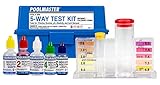 Poolmaster 5-Way Test Kit Poolmaster 5-Way Test Kit |
|
Check Latest Price |
 bestprod 7-in-1 Strips 150 Pack bestprod 7-in-1 Strips 150 Pack |
|
Check Latest Price |
 EASYTEST 7-Way Test Strips EASYTEST 7-Way Test Strips |
|
Check Latest Price |
| Taylor K-2005 9-in-1 DPD Kit |
|
Check Latest Price |
| Taylor K-2006 FAS-DPD Kit |
|
Check Latest Price |
 Taylor K-1004 6-in-1 DPD Kit Taylor K-1004 6-in-1 DPD Kit |
|
Check Latest Price |
 Varify 7-in-1 Test Strips Varify 7-in-1 Test Strips |
|
Check Latest Price |
One column group in that table deserves a warning label. None of the 7-way strips report calcium hardness, which is a specific number with a specific target range; they report total hardness, which lumps calcium and magnesium together. Only the K-2005 and K-2006 liquid kits measure calcium hardness directly. If you are chasing scale or plaster etching, that gap matters.
1. AquaChek 7-Way Pool and Spa Test Strips – the Strip That Answers the Most Questions
- Covers seven parameters in a single dip
- No drop counting so fewer technique errors
- Color pads engineered to reduce bleeding between pads
- Brand reports accuracy comparable to liquid tests
- Total hardness reported rather than calcium hardness
- Color matching depends on lighting
- Reagents have a limited usable life once the bottle is open
The AquaChek 7-Way is the strip I would hand to a new pool owner. It reads pH, total chlorine, free chlorine, bromine, alkalinity, total hardness and cyanuric acid in one dip, and it does it in about 15 seconds, which is short enough that you will actually do it twice a week rather than once a month.
The reason it earns the top slot is not the parameter count on its own. It is that removing drop counting removes a whole class of user error. A liquid kit that reads a half-drop wrong is wrong by a meaningful amount, and the number of ways to mess that up is high. A strip has one decision point: match the pad to the chart.
Parameter Coverage and What the Chart Actually Tells You
Seven pads on a single strip is more coverage than most entry liquid kits manage, and it includes free and total chlorine separately rather than a single blended number. Reviewers credit the pad paper with reducing color bleed, so a pale chlorine pad is not being contaminated by the vivid bromine pad sitting next to it.
The honest limit is resolution. A color chart gives you a range, not a figure. If your pool sits comfortably inside a target band, that is fine. If you are chasing a specific dose, you want a number and a strip will not reliably give you one.
Reading Accuracy in Real Conditions
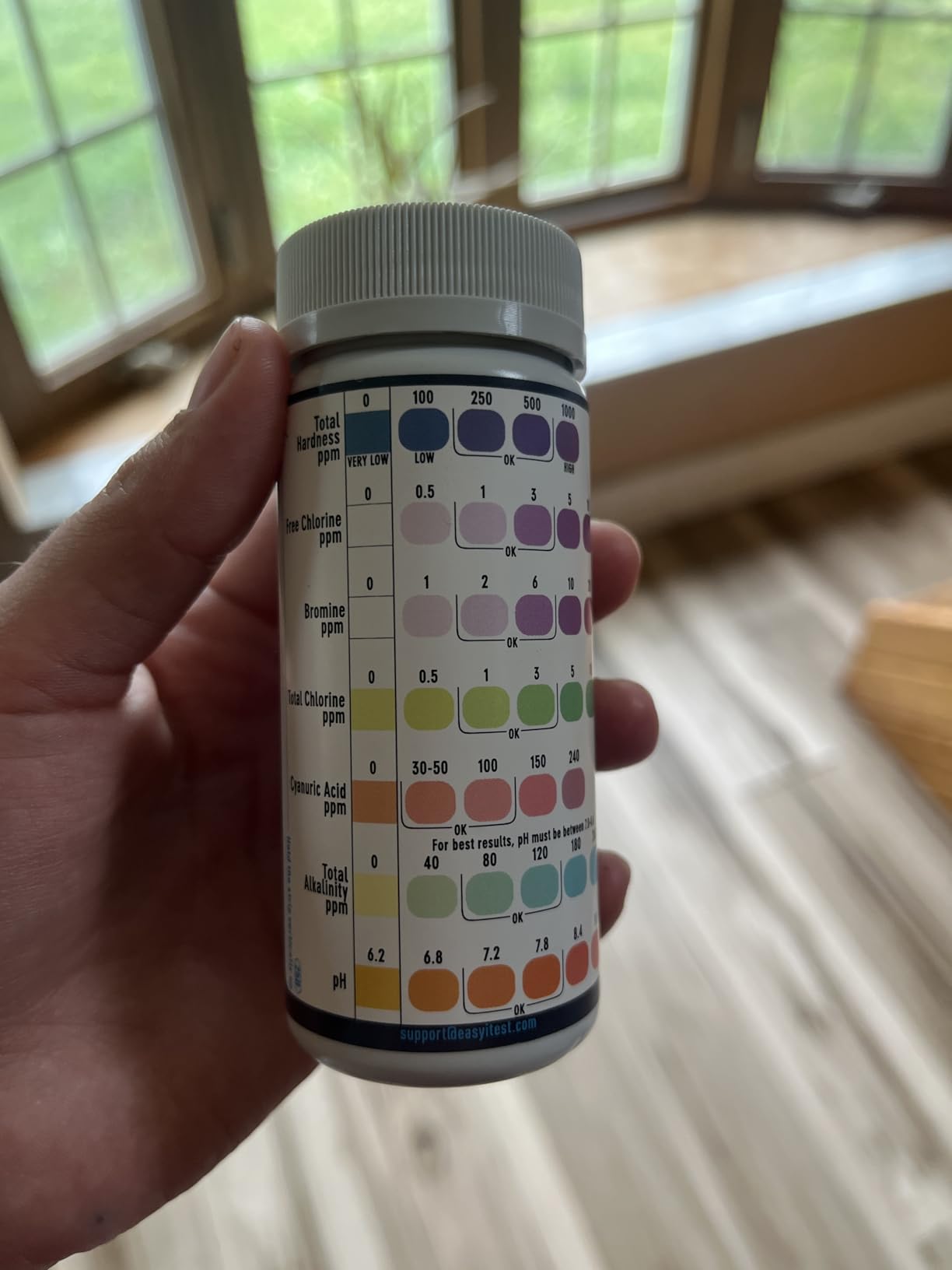
Color matching is the weak link, and it is the single most repeated complaint in this entire category. Direct sun, shade at dusk and any form of color vision deficiency all change the reading. Read strips outdoors in daylight with the chart held directly beside the pad, not at arm’s length.
The listing states the brand’s position plainly: comparable accuracy to liquid tests, with fewer opportunities for error because there is no measuring and counting of drops. That is a reasonable claim for a trend check. It is a weaker claim for diagnosing a chemistry problem.
Who This Is Right For
This is the right pick for a residential backyard or above-ground pool owner doing routine weekly checks, and for anyone who wants the broadest snapshot without learning titration. It also works as the interim tool alongside a liquid kit: dip-test between full liquid tests and run the full test when something looks off.
It is the wrong choice for shock-level chlorine readings, for anyone troubleshooting cloudy water who needs precise numbers, and for color-blind or low-vision users. If you cannot reliably match a color to a chart, no amount of practice fully solves it, and a digital readout is the accessible path.
2. Poolmaster 5-Way Pool and Spa Water Test Kit – Compact Liquid Testing With a Clear Comparator
Poolmaster 5-Way Pool & Spa Water Test Kit with Liquid Reagents
- Liquid drop reagents give more specific readings than strips
- Clear-view comparator block simplifies color matching
- Reagent bottles reorder separately instead of buying a new kit
- One-year manufacturer warranty
- OTO chlorine cannot read free chlorine above about 5 ppm
- No calcium hardness or cyanuric acid test
- No white background behind the vials for color matching
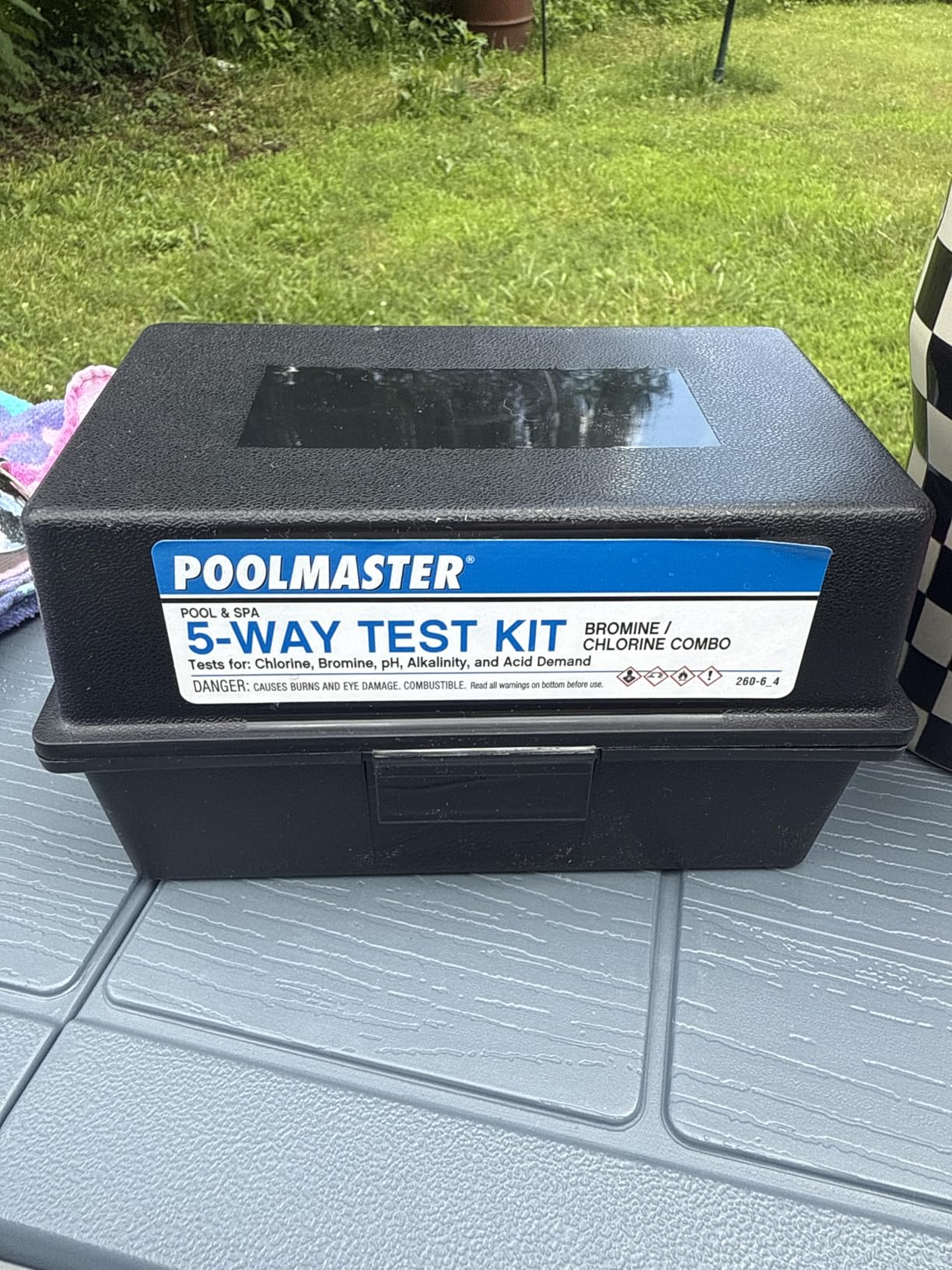
The Poolmaster 5-Way is a proper liquid titration kit, which means it produces numbers rather than color ranges. Owners cross-check it against pool store analyses and report chlorine and pH landing close, which is the main reason a 4.6 rating across 9,465 reviews is believable rather than generous.
What makes it a good compact pick is the comparator block. The block holds two vials side by side, so you are matching sample against standard instead of trying to remember a color. That single design decision removes most of the ambiguity people complain about with liquid kits.
Why the OTO Chlorine Test Is the Limiting Factor
This is the one thing you need to know before buying. The kit uses an OTO chlorine test, which cannot read free chlorine above roughly 5 ppm. That means it is fine for a maintenance check and useless for reading a shock treatment, and it is a poor fit for a heavily stabilized pool where free chlorine is expected to sit higher.
It also has no FAS-DPD test, so high free chlorine and stabilizer situations simply cannot be measured with it. If you regularly shock, or you have cyanuric acid above the low end of range, this is the wrong kit and the Taylor options further down cover you.
What Is Missing and Why It Matters
No calcium hardness test and no cyanuric acid test. Those are two of the five numbers that control scaling and sanitizer longevity, and without them you are inferring rather than measuring. Total hardness on a strip does not substitute, because calcium and magnesium behave differently in the water.
One reviewer reported total alkalinity running roughly 50 percent high against a professional lab result, and alkalinity is widely treated as the least trustworthy test in a liquid kit. Read it as a trend, and correct with the same product you would use anyway rather than making a large correction off one reading.
Storage, Refills and Setup
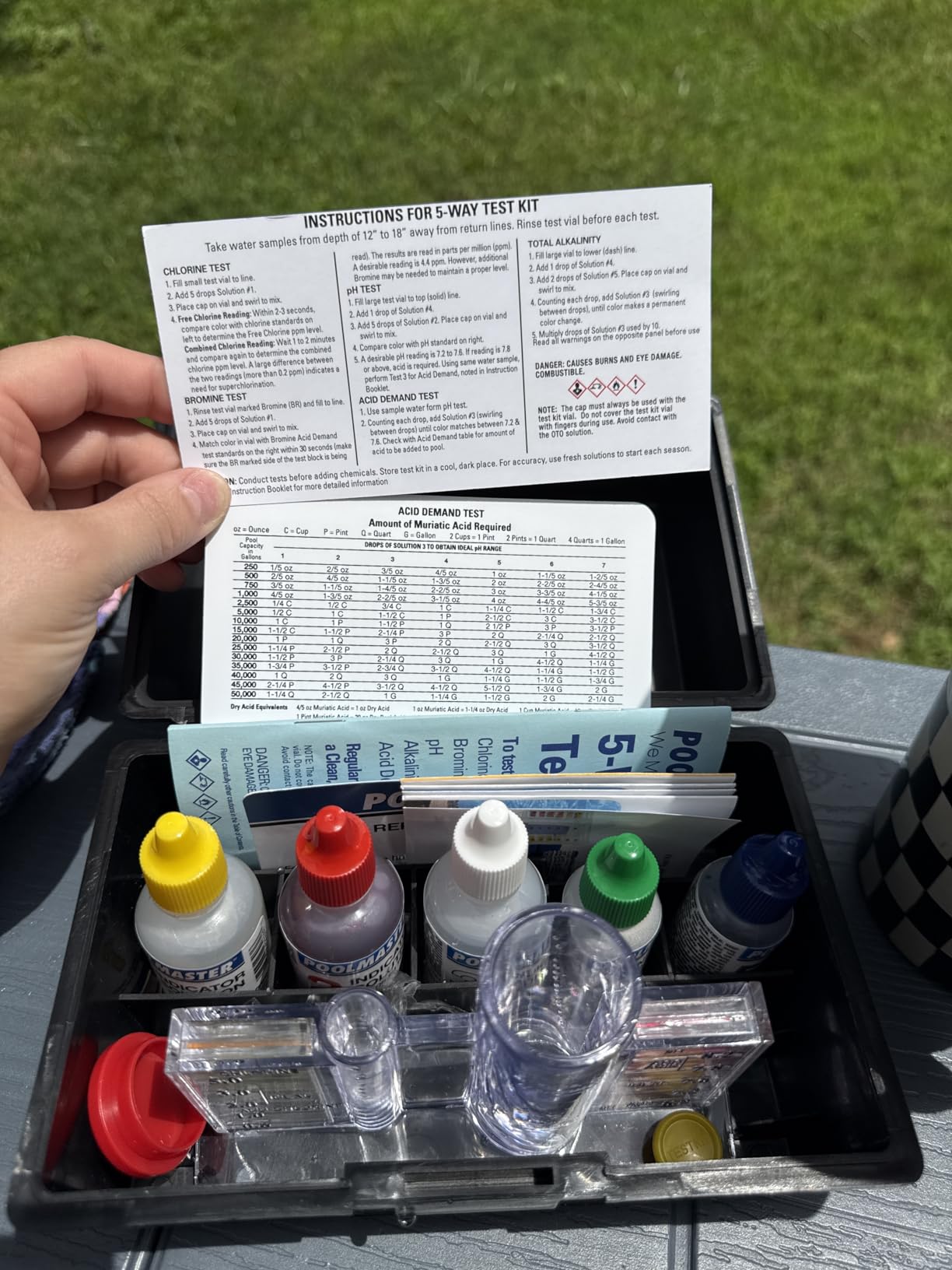
Reagent bottles can be reordered on their own, so the case and block last for years. The kit includes 1 oz bottles of Solutions 1 through 3 and half-ounce bottles of Solutions 4 and 5, and the storage case keeps everything together in a closet or on a pool cart.
There is no white background built into the kit, so keep a sheet of white paper next to it. Some target values live only in the larger booklet rather than on the quick card, so read the booklet once before your first test.
3. bestprod 7-in-1 Pool Test Strips 150 Pack – the Long Read Window for Spas and Hot Tubs
- Covers seven parameters in one strip
- 60-second window makes matching more forgiving
- 150 strips per bottle
- Works for hot tubs spas above-ground and inground pools
- Longer 60-second read than competing strips
- Color chart limits numeric precision
- Readings depend on daylight for accuracy
This is the one strip in the group where the longer development time works in your favor. Most 7-way strips ask you to match color in about 15 seconds. This one gives you 60 seconds after a two-second dip, which is a much more forgiving window when you are reading a pale chlorine pad next to a strong alkalinity pad.
At 4.6 across 4,469 reviews, it holds the same rating as the AquaChek without the same review volume, and the 150-strip bottle is the practical draw for anyone running a hot tub where testing frequency is high.
Why Spa and Hot Tub Owners Like It
Hot tubs and spas need more frequent testing than a pool because heat accelerates chemical consumption. Testing twice a week on a pool becomes daily on a small spa, and a 60-second read time is easier to sustain daily than a rushed 15-second one.
The manufacturer positions the strips as a complete picture in a few minutes, taking the place of a larger liquid kit set for routine work. That is fair for a trend check. It is not a substitute for titration when sanitizer levels are drifting.
Where the Strip Ceiling Applies
Same ceiling as the rest of the strip category: the color chart is the limit, not the chemistry. Once you need a specific number to calculate a dose, a strip gives you a band and you are back to estimating.
The listing also notes clear readings in daylight, which is worth repeating. These are daylight-reading pads. Under a pool light at night, or in a shaded screened enclosure late in the day, the match becomes guesswork.
Best Used Alongside
Pair it with a liquid kit for the parameters that matter most in a spa, which are pH and total alkalinity. Hot tub water at high temperature is aggressive, and pH drift is the fastest route to corrosion on heater parts and a rough feel on the water.
For a large residential pool, 150 strips at a twice-weekly cadence covers a long stretch, so the bottle size is not the limiting factor. Test frequency discipline is.
4. EASYTEST 7-Way Pool Test Strips – the Most Reviewed Strip Set in the Category
EASYTEST 7-Way Pool Test Strips, 150 Strips Water Test for Hot tub and Spa
- Highest review volume in the group at over 26000 reviews
- No-bleed pads stop adjacent pads contaminating each other
- 15-second read suits frequent checks
- No shaking required
- Free chlorine shades are hard to judge precisely from color
- Cyanuric acid pad does not always read correctly
- Heat and humidity in storage discolor the pads
With more than 26,800 reviews and a number one ranking in the Swimming Pool Test Strips category, this is the strip most people in the country have actually used. That volume matters: recurring complaints surface in the hundreds rather than as isolated reports, which makes the pattern more reliable to plan around.
The no-bleeding pad design is the engineering point here. Pads that bleed into one another corrupt both readings, and that is a real failure mode in cheaper strips.
The Cyanuric Acid Pad Is the Weak Link
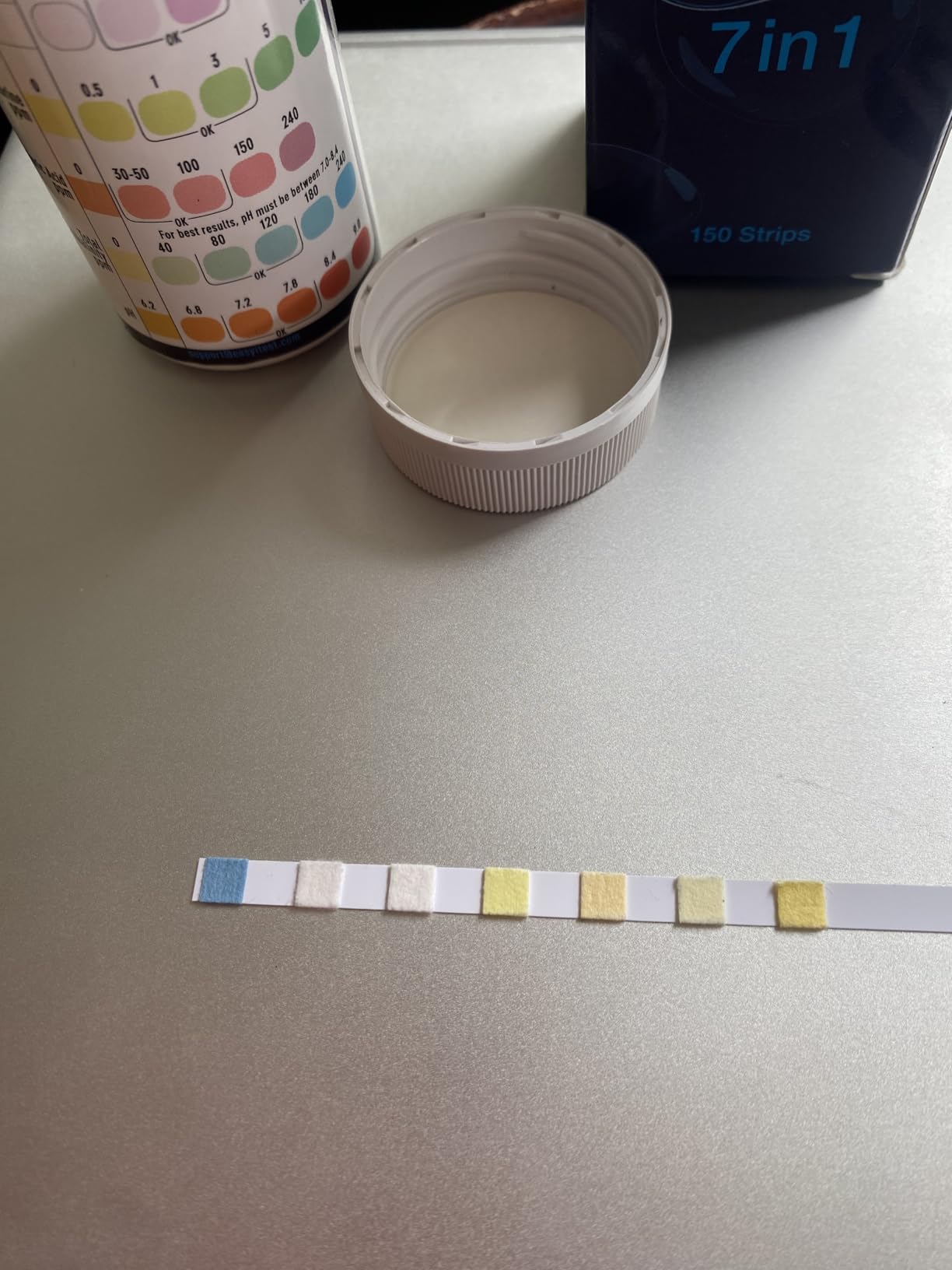
Buyers report the CYA pad not always reading correctly, and this is consistent with the wider consensus that cyanuric acid is among the least reliable tests in the category. Forum users with decades of experience routinely rank their CYA test last, ahead of even pH.
Treat a strip CYA reading as a prompt to verify, not as a number. If your pool has significant stabilizer, confirm it with a liquid CYA test before making a large dilution decision.
Shelf Life and Storage Discipline
The listed shelf life is three years from manufacture, but only about 90 days once the bottle is open. That is the most important specification on this product and it catches people constantly. A bottle that has been open all summer in a hot pool house is not giving you accurate readings in September.
Storage conditions matter as much as age. Reviewers specifically warn against leaving bottles in a hot garage, because heat and humidity discolor the pads and skew pH and alkalinity readings. Keep them indoors, cool and dry, and write the open date on the bottle.
Strengths and Weaknesses in Honest Terms
Buyers report results trending close to lab and drop-test readings for trend purposes, and the 15-second read with no shaking is easier to live with than most competing strips. Those are real advantages for a twice-a-week routine.
At the other end, some buyers report inconsistent chlorine or pH results against electronic meters and drop tests, and occasional batches reading pH incorrectly or missing chlorine entirely. If a reading looks wildly wrong, dip a second strip before you dose anything.
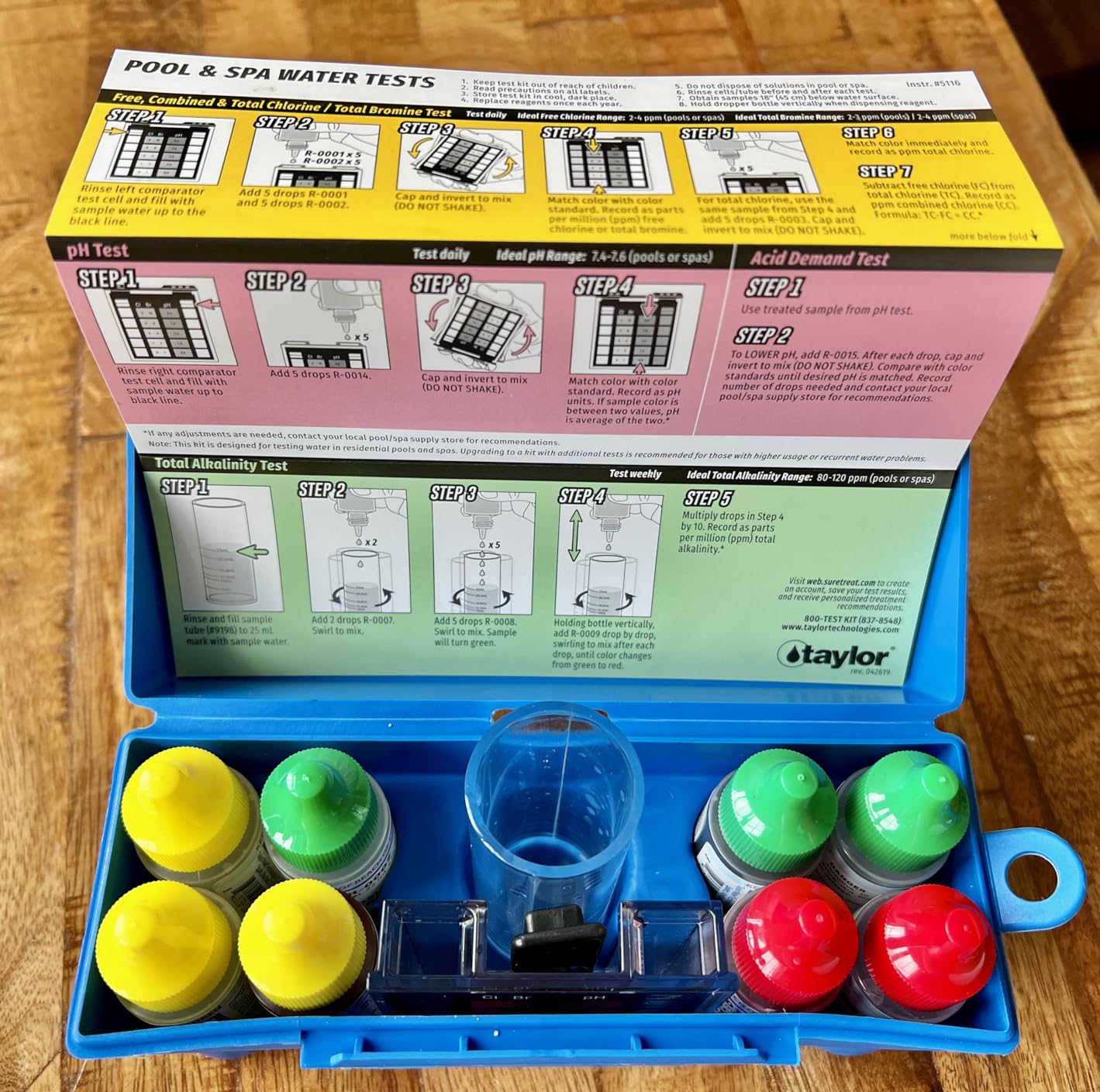
5. Taylor K-2005 9-in-1 DPD Pool Test Kit – the Most Parameters in Any Liquid Kit Here
- Widest parameter coverage of any liquid kit here
- Includes calcium hardness and cyanuric acid
- Acid and base demand tests guide dosing
- Reagents sold separately so the kit body lasts
- Liquid reagents need replacing every season
- Chlorine bottles run small for daily testers
- A full test takes noticeably longer than a strip check
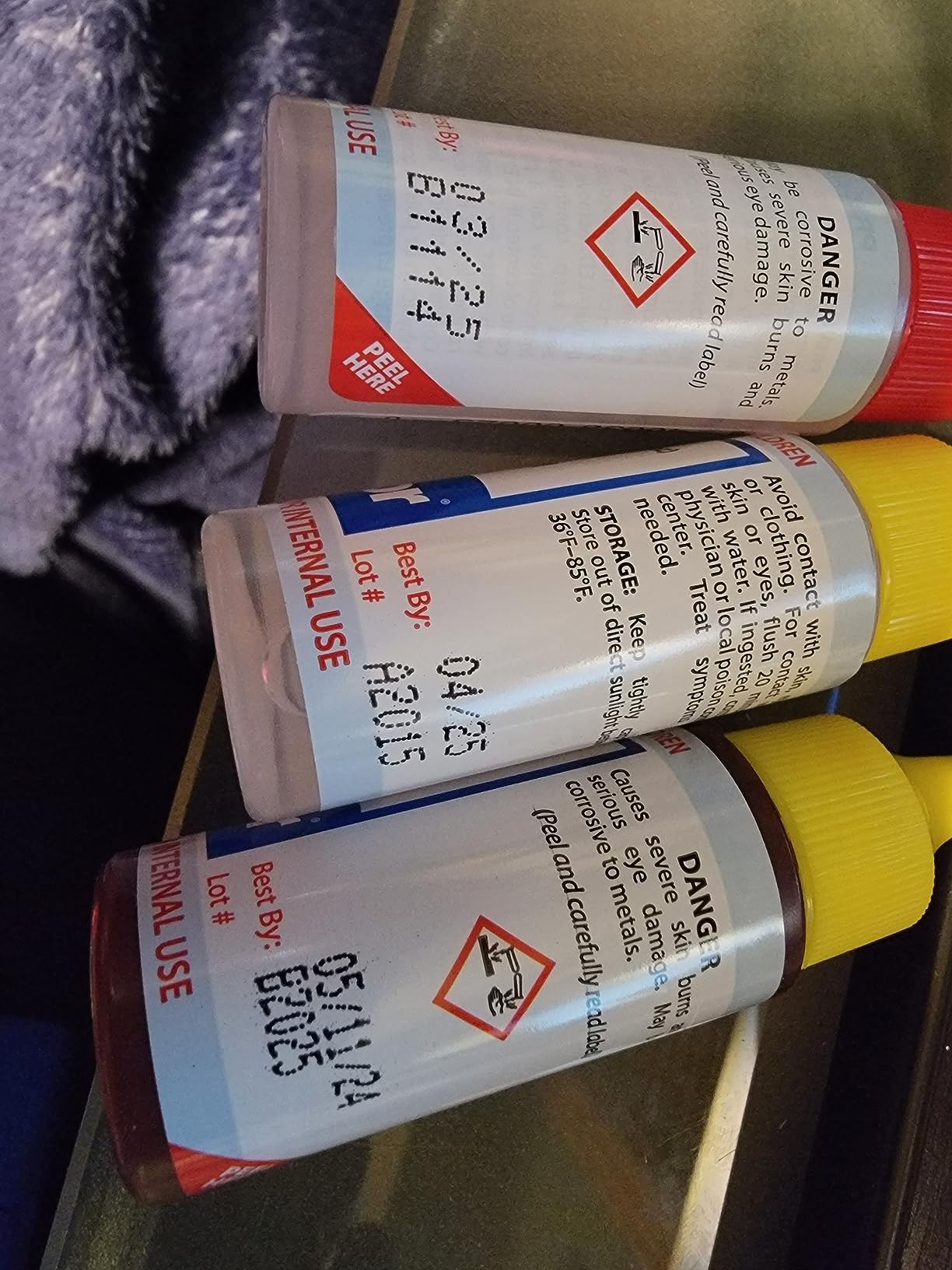
The K-2005 is the widest liquid kit in this group, testing nine parameters including calcium hardness and cyanuric acid. At 4.6 across 3,647 reviews, it is also the most reviewed professional-grade liquid kit here, which makes it the safest choice if you want one kit and want it right.
It uses DPD chemistry, not FAS-DPD, which is the single distinction that matters when comparing it to the K-2006 below. DPD gives a dependable maintenance chlorine number. It does not separate combined chlorine the way FAS-DPD does.
What Nine Parameters Actually Buys You
Calcium hardness and cyanuric acid are the two that matter most for water protection. Calcium hardness governs whether water eats plaster or deposits scale. Cyanuric acid governs how fast chlorine burns off in sunlight, and it is the number most pool owners never measure and should.
The acid demand and base demand tests are the sleeper feature. Instead of telling you total alkalinity is 90 and leaving you to work out dosing, they tell you how much acid or soda ash to add. For anyone who has ever dosed by feel, that is the difference between correcting water and chasing it.
Technique and Time Cost
Drop counting is where accuracy is won or lost. Add drops slowly, swirl rather than shake, and hold the vial against a white background with the comparator’s standard vials beside it. The kit’s pictogram instructions exist because the technique is genuinely fussy.
A full nine-parameter test takes noticeably longer than a strip check, which is the reason most owners use strips for interim checks and reserve the kit for the full run. Reagent volume follows the same logic: the starter bottles are sized for weekly testing, not daily testing on a large pool.
Refills, Longevity and Build Quality
Replacement reagents are sold separately, so the case and comparator last for years while the chemistry inside gets replaced each season. That is the difference between a kit you own and a consumable you repurchase.
It is engineered and manufactured in the USA, and the instructions are written for non-technical users, which matters if this is your first liquid kit. Compared with the K-2006, the K-2005 gives you more parameters and less chlorine resolution.
6. Taylor K-2006 FAS-DPD Pool Test Kit – the Accuracy Benchmark for Chlorine
- FAS-DPD separates free and combined chlorine including shock levels
- Only kit line recommended by the American Swimming Coaches Association
- Includes balance calculator and treatment guide
- Case and comparator last for years while reagents are refilled
- Does not test for salt so saltwater owners need a separate test
- Full test takes about ten minutes
- Starter reagent bottles are small for daily testing
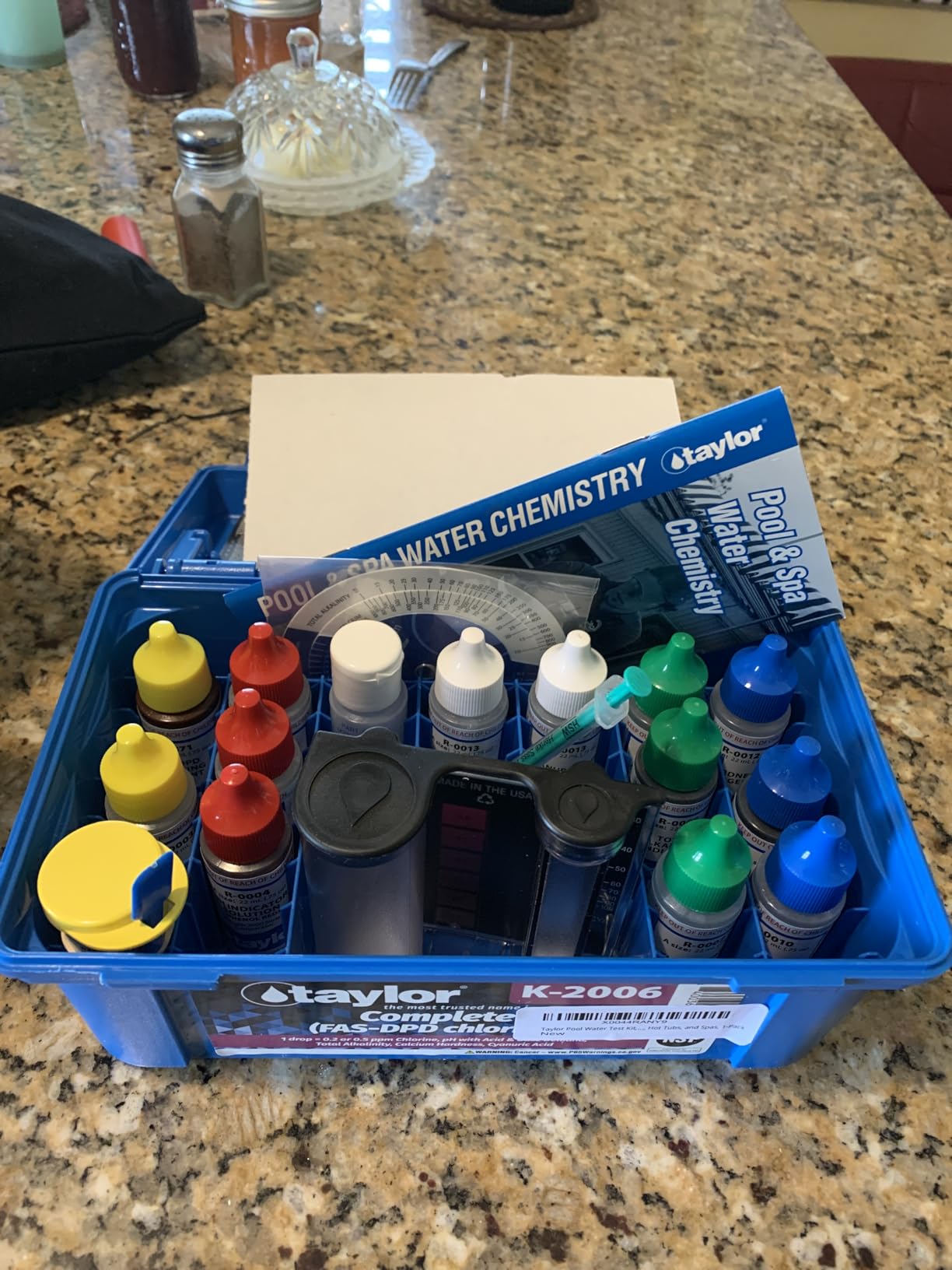
If your priority is an accurate chlorine reading, the FAS-DPD method on the K-2006 is the reason to buy it. FAS-DPD adds a second reagent that releases the combined chlorine bound into chloramines, so the kit reports free and combined chlorine as separate numbers instead of one blended total.
That distinction is not academic. It is the difference between knowing your sanitizer is actually protecting swimmers and knowing only that something is in the water. Experienced pool owners on the long-running Trouble Free Pool thread single out the DPD-FAS chlorine test as the best test in any kit, by a wide margin.
FAS-DPD Against DPD and OTO
There are three chlorine methods in common use. OTO, which the Poolmaster uses, saturates and cannot read above roughly 5 ppm. Standard DPD, which the K-2005 and K-1004 use, reads free chlorine well but treats combined chlorine as interference. FAS-DPD, which this kit uses, unlocks the combined reading.
That makes the K-2006 the right kit for shock-level readings, for heavily stabilized pools, and for any situation where chlorine demand is high enough that chloramines are forming. It is also the slowest, at roughly ten minutes for a full test.
What This Kit Does Not Measure
No salt test. This is the single most common disappointment among saltwater owners, and it is the reason the salt question comes up so often in forums. The K-2006 measures your sanitizer, not your generator’s salt cell feed.
Calcium hardness and cyanuric acid are both covered well by this kit. The cyanuric acid procedure is the trickiest one, and the single reviewer complaint worth flagging is pH and free chlorine interference reported in a treated saltwater spa compared against dealer instrumentation. Treat hot tub results from this kit with an extra margin.
Supporting Materials and Daily Use
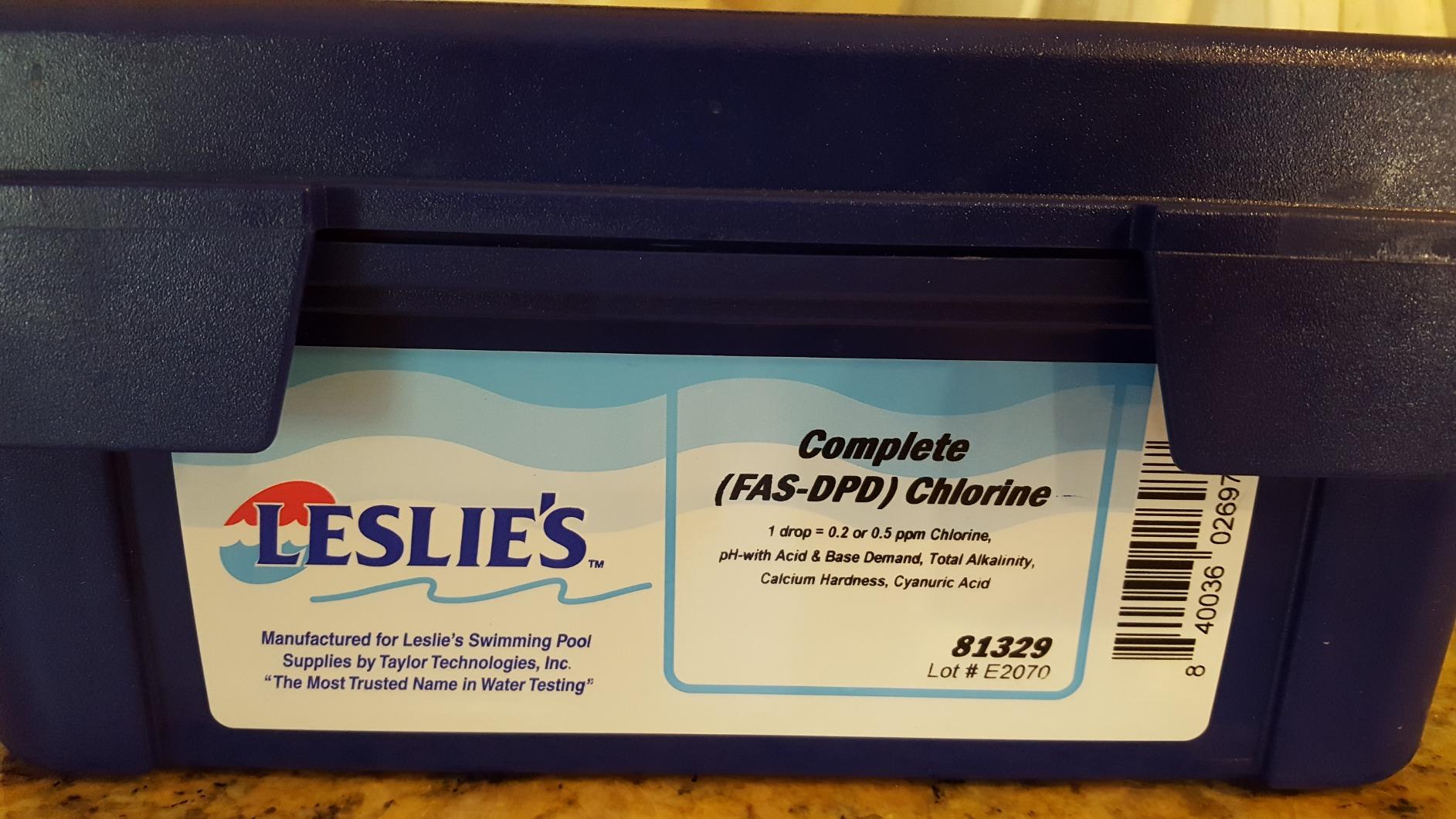
The kit ships with color-coded instructions, a treatment guide, a waterproof pool and spa chemistry guide, a water comparator and a balance calculator. Owners use the booklet as a teaching reference, which is unusual value in a product at this level.
Starter reagent bottle sizes are the practical friction point. They are generous for weekly testing and wasteful if you test daily on a large pool, so plan on larger refill bottles after the first season. The case and comparator are durable enough to keep indefinitely.
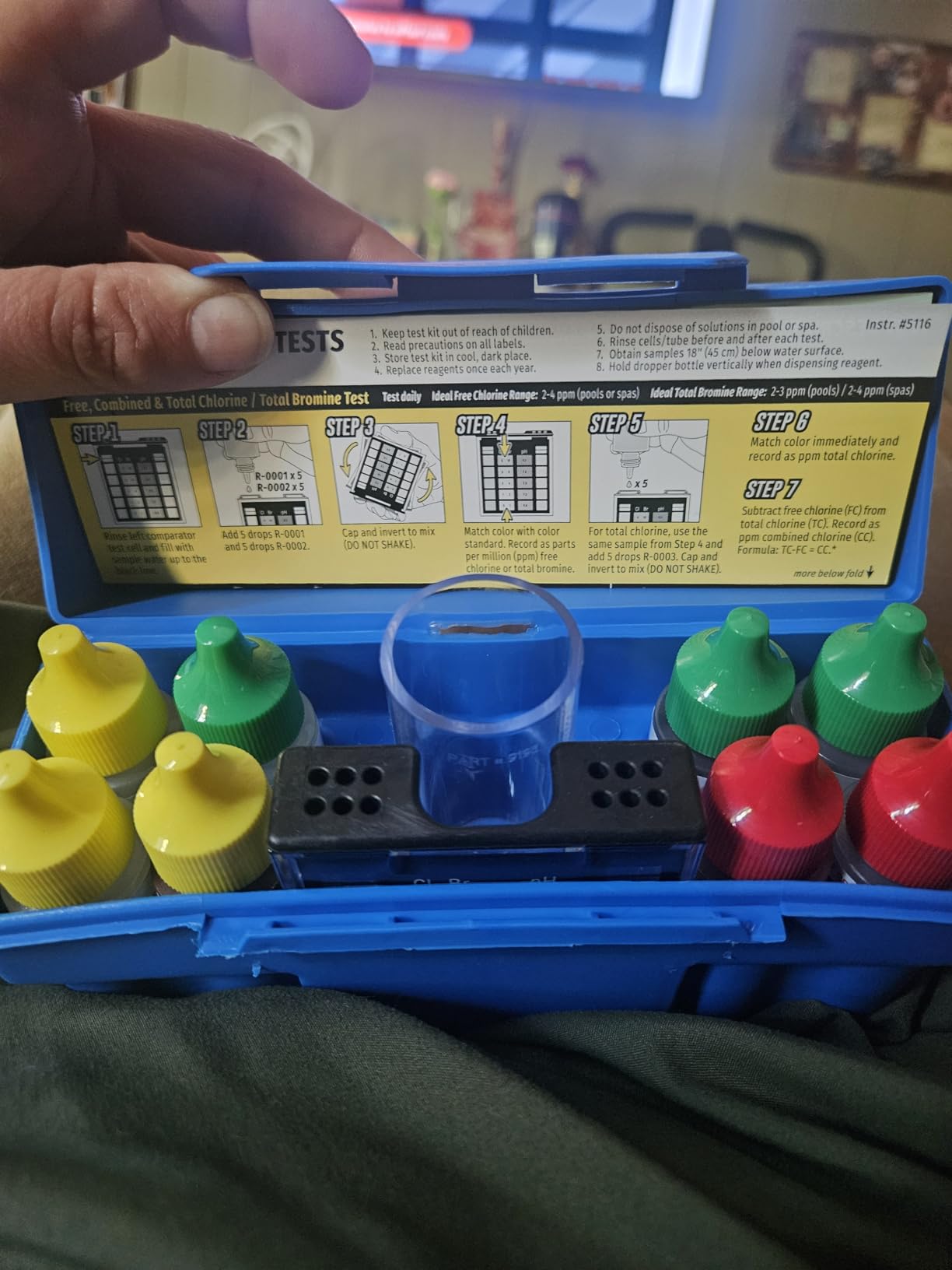
7. Taylor K-1004 6-in-1 DPD Pool Test Kit – the Taylor Starter Step
- Liquid DPD chemistry at a mid-range entry point
- Six parameters including free and total chlorine
- Comparator block and pictogram instructions keep it approachable
- Replacement reagents sold separately
- Does not include calcium hardness cyanuric acid or salt
- Acid demand only rather than the full acid and base demand
- Reagents must be replaced each season
The K-1004 is the entry point into the Taylor DPD line, and it makes sense in one specific situation: you want the comparator workflow and the refillable reagent system but you do not need nine parameters on day one.
At 4.5 across 2,394 reviews it sits slightly below the K-2005 and K-2006 on rating, which is a fair reflection of what it leaves out rather than of how well it does what it does.
Six Parameters and the Two That Are Missing
You get free and total chlorine, bromine, pH, acid demand and total alkalinity. That is a complete basic panel for keeping water in range during a normal season.
Missing are calcium hardness and cyanuric acid, and both matter. Calcium hardness protects plaster and tile. Cyanuric acid determines chlorine longevity outdoors. Without them you are balancing a pool while blind to two of the numbers that govern how long the balance holds.
Acid Demand Versus Acid and Base Demand
The K-1004 gives you acid demand, which tells you how much acid the water needs. The larger K-2005 and K-2006 kits add base demand, which tells you how much soda ash is needed when alkalinity runs high. Having one without the other means you know what is wrong but not always which direction to correct it.
That is a manageable gap for a pool owner who is only ever adding acid. It becomes a real problem on water with high calcium or high carbonate hardness, where you may need to add alkalinity instead of taking it out.
Who Should Buy This One
Buy the K-1004 if you are moving up from strips and want to learn titration without committing to a full panel. Buy the K-2005 instead if you can afford the step up, because the two extra parameters are the two you will eventually need.
Do not buy it for a saltwater pool. There is no salt test here, and no calcium hardness or CYA to keep a generator-fed system in the right range. The bottle sizes are also smaller, so daily testers refill sooner.
8. Varify 7-in-1 Pool Test Strips – Budget Pick With Sealed Freshness Packaging
- Seven parameters at the lowest strip cost in this group
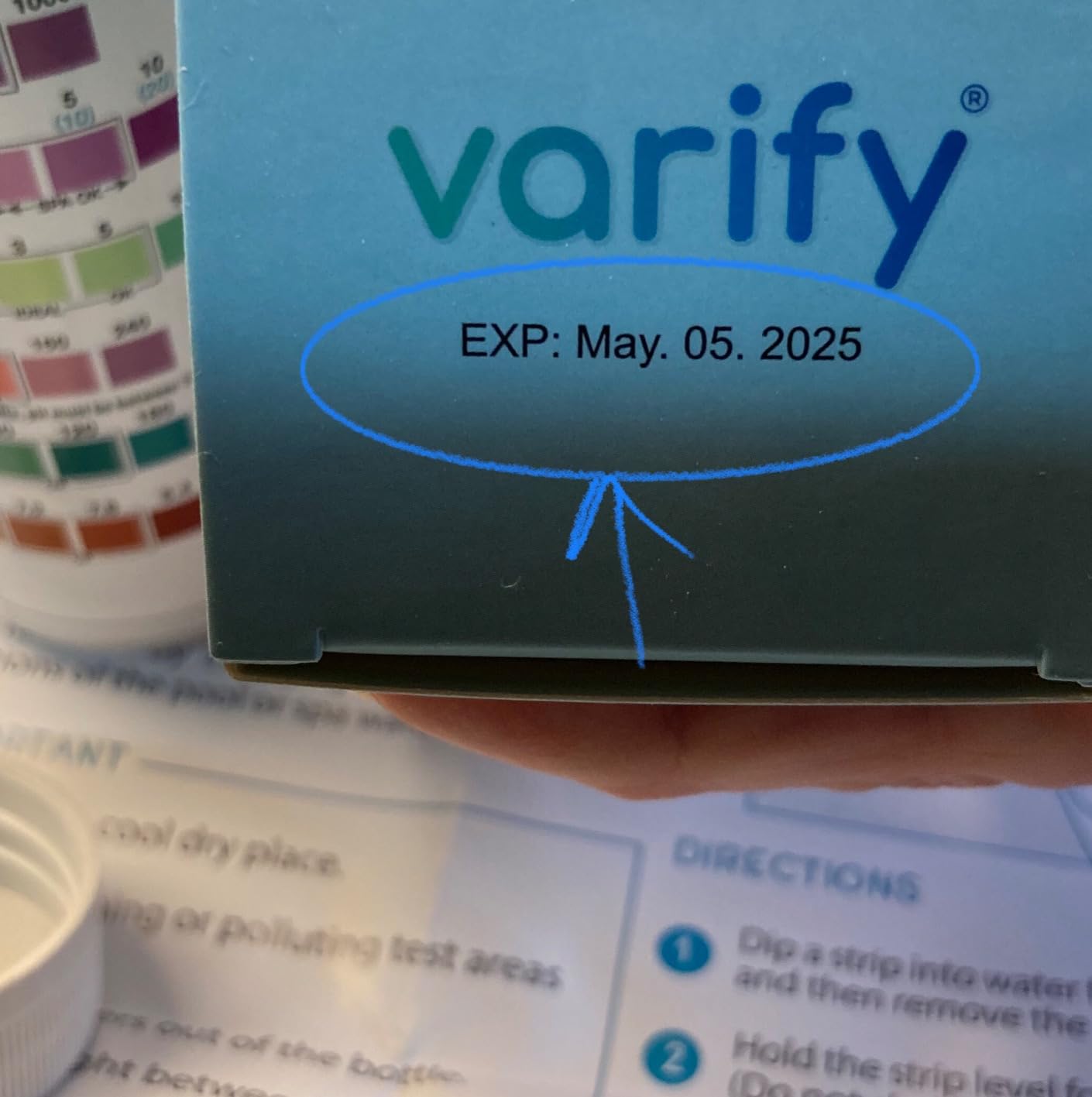
- FreshSeal splits 100 strips plus a sealed 50-strip pouch
- Waterproof non-fading color chart
- Under 30-second results
- Color chart caps numeric precision
- Reading accuracy depends on ambient light
- Unsealed portion of the bottle is exposed to moisture once open
The Varify is the one to buy if you want seven parameters and the smallest ongoing commitment, and it earns its spot mainly on packaging. The FreshSeal design splits the 150 strips into a 100-strip bottle and a separate 50-strip pouch that stays sealed until you need it, which directly addresses the moisture problem that ruins open strip bottles.
Strip freshness is the single biggest accuracy variable in this category after sampling technique, and sealed secondary packaging is a genuine answer to it.
What FreshSeal Changes in Practice
Once a bottle of strips is opened, every dip exposes the remaining pads to humidity, and humidity degrades the dye chemistry. The sealed 50-strip pouch means you have a second batch that has not been opened at all, which is the batch you want for the end of the season.
The waterproof, non-fading color chart is a smaller but real advantage. Charts that fade on a sunlit pool house wall are the reason people misread a pad in July that they read correctly in May.
Accuracy Limits and Scale Ceiling
Same ceiling as the rest of the strips: color matching caps numeric precision, and the reading depends on ambient light. Reviewers also note the scale cannot read chlorine above the top of its printed range, so it is not a shock-level tool.
For a high-volume user the economics are attractive. For anyone who needs to dose precisely, the ceiling is the chart, not the money.
Who This Works For
This suits a first-season pool owner, a rental or vacation property, or anyone who wants a cheap weekly trend check in the shed and a real liquid kit for the actual chemistry. It also works for hot tubs and spas, where the short read time suits frequent checks.
Keep the sealed pouch for the accuracy-sensitive months. If you buy one box, buy two and open them at different points in the season.
The Accuracy Hierarchy: Strips vs Liquid Kits vs Digital vs Lab
For most home pools, a FAS-DPD liquid titration is the most accurate method, a calibrated photometer is a close second, strips are a screening tool, and lab analysis is the only method accurate enough for commercial record keeping. The gap between tiers is smaller than most owners assume. What changes most between tiers is not the chemistry, it is how many chances you have to misread the result.
Strips put all reagents onto dye pads. Nothing to measure, nothing to count, one decision: match the color. That design is why strips beat liquid kits for beginner error rates even though the chemistry is less refined.
Liquid titration gives numeric resolution. You add drops until the color change reaches an endpoint, so the reading is a count rather than an impression. The failure mode moves from perception to technique, which is why a comparator block matters so much.
Digital photometers automate that same color reaction and convert it to a number. They typically quote accuracy around 0.5 ppm, which is more than sufficient for a residential pool, and they use fewer reagents. The catch is that precision gets mistaken for accuracy, and a photometer can be consistently precise while being systematically off on a sample it was never calibrated for.
Lab analysis is the reference tier. Professionals recommend a spin lab when they need to settle an argument about a water sample, and it is the standard for health-code documentation.
One important caveat about the whole category, and it comes from pool professionals: the volume of testing that sells chemicals is not the same thing as accuracy. A store test that generates a chemical sale is not automatically the most accurate test available. That is the single best reason to own your own kit.
How to Actually Test Pool Water Accurately
Sampling technique moves readings more than any kit does. A perfect kit tested on a bad sample gives you a confident wrong number, and the money you spent on the kit is wasted.
Take the Sample at Elbow Depth With a Clean Container
Fill the sample container from elbow depth, roughly 12 to 18 inches below the surface. That is the depth pool stores and most service professionals sample. Your hand and forearm displace and warm surface water, so a sample taken from your hand reads differently from one taken at depth.
Never Sample Standing Water or Near a Return
Do not fill the container from a spot with a waterfall feature, a fountain return, a skimmer or a main drain. Chloramine pockets and recently added chemical both create local readings that do not represent the pool. Walk two or three steps and sample from still water.
Test in Shade, Not in Direct Sun
Sunlight and even bright shade change how a color pad and a color chart look. For strips, read the chart outdoors in natural daylight, which is what the leading strip manufacturers specify. For liquid tests, hold the vial against a white background away from glare, with the comparator standard vials beside it.
Respect the Timing Exactly
Strips in this group have read windows of 15 seconds, 30 seconds and 60 seconds. Read too early and reagents have not fully developed. Read too late and the pads continue to shift. Set a timer rather than eyeballing it.
For titration, add drops one at a time and swirl gently rather than shaking, because shaking introduces air bubbles that obscure the color endpoint and cause you to over-count. A drop that falls short means you dilute before you add, and a drop that sits on the vial wall means you never counted it.
Test Before You Add, and Test Consistently
Sample at roughly the same time of day, on the same side of the pool, under the same conditions. Chemistry drifts across a day, and comparing a mid-morning reading to an evening reading produces a difference that looks like a problem but is just timing.
If your pool store result disagrees with your home result, run both tests on the same sample within an hour of each other. That single step turns an argument into data. The most common cause of disagreement is not either test being wrong; it is the two samples being taken from different water.
Choosing a Pool Test Kit for Your Pool Type
Residential Backyard and Above-Ground Pools
A 7-way strip plus a complete liquid kit is the combination that works best. Use the strip twice a week for trend, and the liquid kit once a week plus at opening and closing. The AquaChek 7-Way handles the trend role well, and the Taylor K-2005 or K-2006 handles the numbers.
Seasonal cadence matters more than people expect. Test daily during opening week, twice a week through the season, and once a week while the pool is closed but uncovered.
Saltwater Pools With a Chlorine Generator
No kit on this list measures salt. That is not a flaw in any of them; it is that salt is measured by a separate argentometric drop test or a salt meter, and every one of these products would need a second purchase regardless.
What saltwater owners should prioritize is the chemistry that feeds the cell. pH, calcium hardness, total alkalinity and cyanuric acid all affect cell longevity, and a kit that covers calcium hardness and CYA earns its place in a salt system even though it never touches the salt number itself.
Spa and Hot Tub Owners
High water temperature accelerates chemical consumption, so testing frequency matters more than precision. A 60-second strip with a forgiving read window suits a daily routine, and a liquid kit is worth keeping for pH and total alkalinity, which move fastest in hot water.
Be aware that very high heat can push test interference. One reviewer of the K-2006 reported pH and free chlorine interference in a treated saltwater spa compared against dealer instrumentation, so cross-check hot tub readings when the water is at maximum temperature.
Color-Blind and Low-Vision Owners
This is the honest gap in the whole category, and none of the eight products here solves it. Every strip and every comparator-based liquid kit on this list requires matching a color to a chart, which is exactly the task that color vision deficiency makes unreliable.
The workaround is to stop relying on the chart. A digital photometer with a numeric readout removes the color-matching step entirely, and an electronic pH meter covers the single most important parameter. Neither is on this list because the research surfaced them as poorly rated rather than well rated, which is worth knowing before you spend. Practically, the best available path today is the Taylor liquid kits with a comparator block, where the standard vial and the sample vial sit side by side so you compare two colors in the same lighting instead of recalling a color from memory.
If you maintain an aquarium alongside a pool, our soil test kit guide covers the same logic applied to substrate chemistry, where sample preparation is the same accuracy bottleneck.
Reagent Refills, Storage and Shelf Life
Storage is where good kits quietly stop being accurate. A bottle of liquid reagent left in a hot pool house will give you a confident, plausible and wrong answer, and nothing on the kit will tell you that.
Store reagents cool, dry and dark, away from direct sunlight and out of a vehicle. A garage in a warm climate is the worst possible location. Strips suffer the same fate: heat and humidity discolor the pads and skew pH and alkalinity readings.
Replace liquid reagents each season. Reviewers consistently treat annual reagent replacement as a requirement rather than an upgrade, and the Taylor kits are designed around it because replacement reagents are sold separately while the case and comparator stay in service for years.
Model confusion is a real trap in the Taylor line. The K-1004, K-2005 and K-2006 kits look similar, use overlapping reagent numbers for different tests, and are not interchangeable. A refill bottle bought for one kit will not necessarily deliver a correct result in another. Match the bottle to the exact model number on your kit, and if you own more than one Taylor kit, keep them labeled and physically separate.
The one product here that solves the freshness problem by design is the Varify 7-in-1, whose FreshSeal packaging keeps half the strips sealed until you need them. For everything else, the practical habit is to write the open date on the bottle with a marker. Strips lose accuracy within about 90 days of opening, and you cannot see it happening.
One more recurring question from readers: whether one kit result can drive dosing directly. It can, but only if you understand what the number means. A pH reading tells you the water is out of range; it does not tell you how much muriatic acid to add. That calculation depends on pool volume, alkalinity and the current reading together, which is why the balance calculator included with the K-2006 is more useful than it looks.
Frequently Asked Questions
What is the most accurate pool test kit?
For most home pools, a FAS-DPD liquid titration kit is the most accurate, because it separates free chlorine from combined chlorine and gives numeric results rather than color ranges. A calibrated digital photometer is a close second. Strips are excellent for trend screening but cannot resolve a specific number, and lab analysis remains the reference standard for commercial record keeping.
What is the difference between the Taylor K-2005 and K-2006 water testing kits?
The K-2005 tests nine parameters using standard DPD chlorine chemistry and includes both acid demand and base demand. The K-2006 uses FAS-DPD chlorine chemistry, which reports free and combined chlorine separately and reads correctly at shock-level chlorine. Both include calcium hardness and cyanuric acid, and neither includes a salt test. Choose the K-2006 if you need chlorine accuracy or shock readings, and the K-2005 for wider parameter coverage.
Are pool test strips accurate enough for weekly monitoring?
Yes, for trend monitoring they are accurate enough, and for most home pools that is the right use. Strips cover seven parameters in under a minute and remove the drop-counting errors that liquid kits introduce. They are not accurate enough for dosing decisions or for troubleshooting, because the color chart returns a range rather than a specific number. Read them in natural daylight and keep them stored cool and dry.
Do saltwater pools need a separate salt test?
Yes. None of the pool test kits in our roundup measure sodium chloride, including both Taylor liquid kits, so a separate salt test or salt meter is required for a pool with a chlorine generator. What the pool test kit does cover is the chemistry that protects the salt cell, namely pH, calcium hardness, total alkalinity and cyanuric acid.
How often should I test my pool after heavy rain?
Test within 24 hours of a heavy rain event, and again 48 hours later. Heavy rain dilutes total alkalinity and calcium hardness, can shift pH, and adds contaminants such as dirt, oil and microorganisms that raise chlorine demand. If the reading after rain shows a drop in alkalinity, correct it before adding acid, because low alkalinity is what causes pH rebound and cloudy water.
Final Verdict: Which Pool Test Kit Should You Buy
If you want one product that answers the most questions fastest, the AquaChek 7-Way Pool and Spa Test Strips is our pick, with seven parameters and a 15-second read backed by a 4.6 rating across more than 11,000 reviews. Pair it with a liquid kit and you have covered both trend and precision.
If chlorine accuracy is what is driving your search, the Taylor K-2006 is the only kit here using FAS-DPD, and it is the only one that separates free chlorine from combined chlorine. If you need the widest panel and the most-reviewed professional liquid kit, the Taylor K-2005 covers nine parameters including calcium hardness and cyanuric acid.
If you are moving up from strips for the first time, the Taylor K-1004 teaches the same comparator workflow at a lower commitment, though you will outgrow it. For hot tub owners who test daily, the bestprod 7-in-1 60-second window is more forgiving. For pure volume, the EASYTEST 7-Way is the most reviewed product in the category. For the Poolmaster 5-Way, understand the OTO limit before you buy. For the Varify 7-in-1, the sealed pouch solves the freshness problem the other strips cannot.
Whichever you choose, the two habits that matter more than the kit are sampling at elbow depth away from returns, and reading strips in natural daylight. If you also want a reference point for adjacent testing questions, our mold test kit guide covers indoor air sampling with the same method-first approach.