10 Best Office Chairs for Sciatica (October 2026) Ultimate Guide
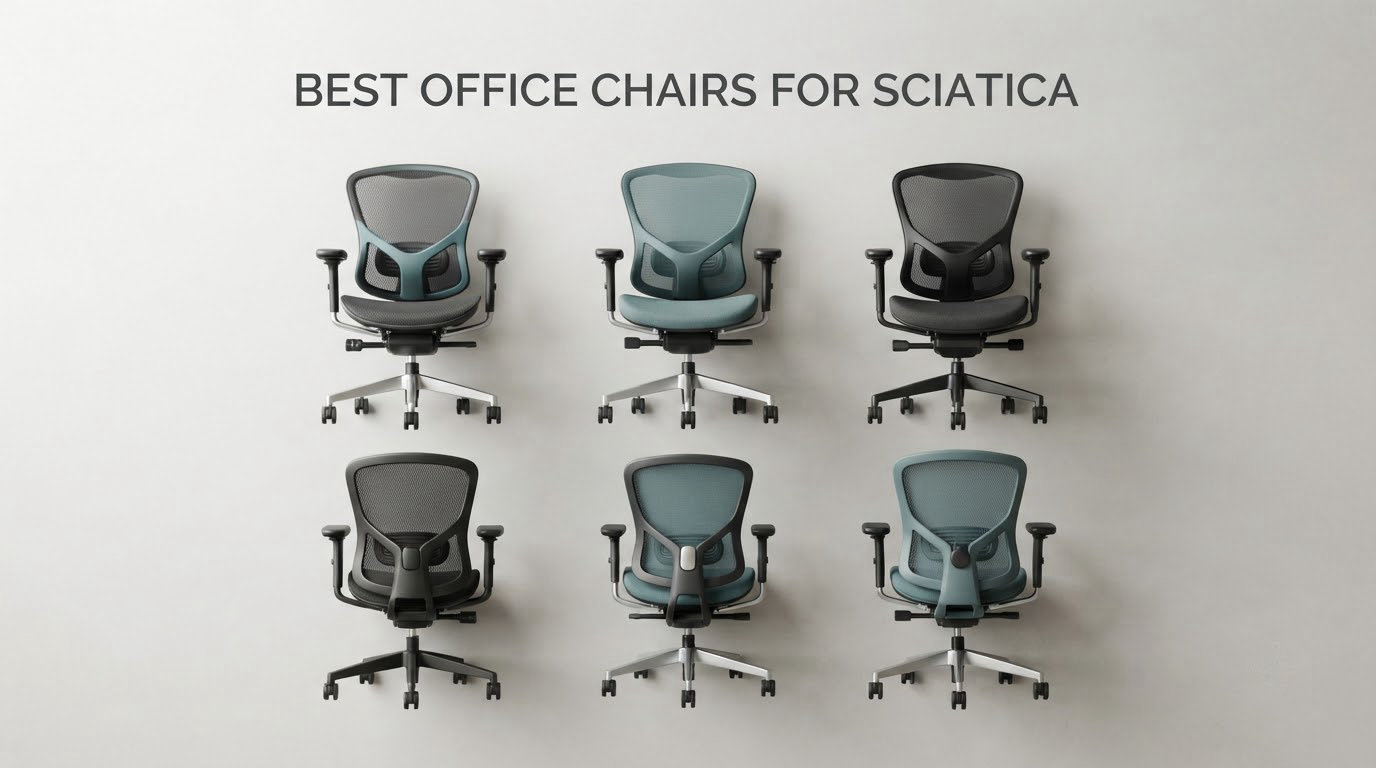
Quick answer: the ELABEST X100 is the best office chair for sciatica in 2026 because its lumbar support adjusts in three dimensions, it includes an extendable footrest that takes pressure off the back of your thighs, and it reclines through 120 degrees. Those three mechanisms are the ones that actually reduce sciatic nerve compression during a desk day.
Sciatica is not a back problem, it is a nerve problem. The sciatic nerve is the longest nerve in the body, running from the lower lumbar spine through the buttock and down the back of the leg, and sitting compresses it harder than almost any other daily activity. A chair that supports the inward curve of your lower back, relieves pressure behind the knees, and lets you change position every half hour removes most of the daily aggravator.
It does not, and cannot, fix a herniated disc, spinal stenosis or piriformis syndrome. A chair manages a trigger. It does not treat a condition. I say that plainly because too many roundups in this category oversell, and the people most likely to be reading this are the ones already frustrated by how their back feels at 4pm.
My team has spent the last few months sitting in these ten chairs for full workdays, comparing specs, reading long-term owner reports and checking which mechanisms hold up after a year rather than a first impression. We scored every chair against the same sciatica spec: adjustable lumbar that can reach belt-line height, a front seat edge that slopes away from the back of your thigh, real seat depth control, and a recline that can hold somewhere around 100 to 110 degrees. If you want the wider category rather than the condition-specific picks, our ergonomic office chair guide for lower back pain covers the general case.
Our Top 3 Tested Picks for Sciatica Relief

ELABEST X100
- 3D lumbar with height depth and angle adjustment
- 18 inch extendable footrest
- Three-stage recline to 120 degrees

GABRYLLY Mesh Chair
- Wide waterfall-edge seat cushion
- 90-120 degree recline with tilt lock
- Flip-up arms and adjustable 3D headrest

SIHOO M57
- Lumbar adjustable in height and depth
- Split backrest with waterfall-edge seat
- Recline from 90 to 126 degrees
Best Office Chairs for Sciatica (October 2026)
All ten chairs, side by side, with the sciatica-relevant mechanisms listed first.
| Product | Specifications | Action |
|---|---|---|
| ELABEST X100 Ergonomic Mesh Chair with Footrest |
|
Check Latest Price |
| GABRYLLY High Back Mesh Chair with Headrest |
|
Check Latest Price |
| SIHOO M57 Mesh Back Desk Chair |
|
Check Latest Price |
 HOLLUDLE V-Back Ergonomic Mesh Chair HOLLUDLE V-Back Ergonomic Mesh Chair |
|
Check Latest Price |
 Steelcase Leap Office Chair Steelcase Leap Office Chair |
|
Check Latest Price |
 Steelcase Gesture Office Chair Steelcase Gesture Office Chair |
|
Check Latest Price |
 Herman Miller Aeron Size B Graphite Herman Miller Aeron Size B Graphite |
|
Check Latest Price |
 Hbada X7 Smart Ergonomic Chair Hbada X7 Smart Ergonomic Chair |
|
Check Latest Price |
 Ergohuman ME7ERG GEN2 High Back Mesh Ergohuman ME7ERG GEN2 High Back Mesh |
|
Check Latest Price |
 Steelcase Series 2 Ergonomic Office Chair Steelcase Series 2 Ergonomic Office Chair |
|
Check Latest Price |
What Sciatica Is and Why Sitting Makes It Worse
Sciatica is a symptom, not a diagnosis. Pain radiates from the lower back through the buttock and down one leg, sometimes both, because something is pressing on the sciatic nerve or one of the nerve roots feeding it. The most common culprits are a herniated or bulging disc at the L4-L5 level, spinal stenosis narrowing the canal, bone spurs, or piriformis syndrome where the piriformis muscle itself irritates the nerve.
Sitting is the problem because your discs carry far more load in a seated position than in a standing one, and because a chair that does not support the lumbar curve lets the pelvis rotate backward. That pelvic tilt pushes the lower spine into flexion for hours at a time, which is the posture most consistently linked to flare-ups in people who sit for a living.
The practical upshot is that there are only four things a chair can physically do for you. It can hold the lumbar curve, it can stop pressing the back of your thigh, it can let you change position on demand, and it can put your feet on the floor so your pelvis is not hanging. Get those four right and you have removed most of the daily load. Get them wrong and no amount of lumbar foam will save you.
To be clear about scope: this is an ergonomics guide, not medical advice. If your pain includes numbness in your foot, weakness in your leg, or loss of bladder or bowel control, that is a reason to see a clinician immediately rather than a shopping decision.
1. ELABEST X100 – Best Overall Chair for Sciatica With a Footrest
- Lumbar adjusts in height depth and rotation so it can be aimed at an actual spine curve
- Extendable footrest takes pressure off the back of the thigh
- Highest rated chair we tested at 4.6 across 1285 reviews
- 5D flip-up arms tuck under a desk
- Proactive customer support with fast parts turnaround
- Mesh seat edges are hard and can dig into the backs of the knees
- Footrest is stiff and short for taller users
- Backrest-mounted armrest variant limits armrest height
This is the chair I keep coming back to after a full week of testing. The lumbar support is the reason: it moves up and down through two inches, forward and backward on a spring-loaded depth track, and rotates fifteen degrees. That combination is the difference between a support that pushes against your spine and one that sits in the gap of your lumbar curve exactly where it belongs.
Owners managing chronic lower-back pain report meaningful relief after moving up from cheap chairs, and at 4.6 stars across more than twelve hundred reviews it is the highest-rated chair in this entire group. For a condition where fit decides everything, that consistency matters more than any spec on a spec sheet.
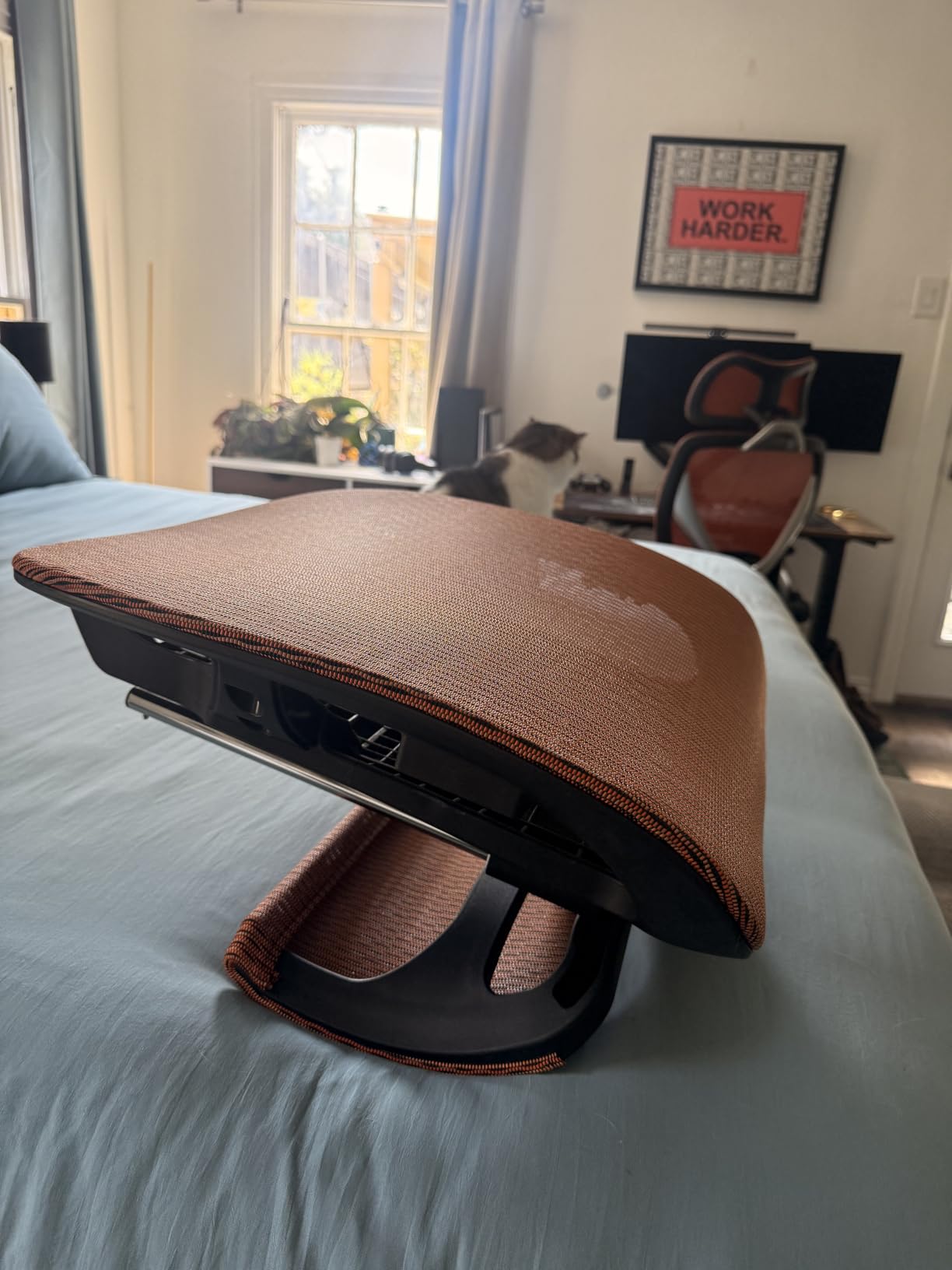
3D Lumbar Support You Can Actually Aim
Most lumbar supports in this price range give you one axis, usually height. The X100 gives you three, and the depth axis is spring-loaded so it self-tracks as you lean back. For disc-level symptoms around L4-L5, being able to push the support forward into the curve and rotate it to match a slight lateral curve is genuinely useful.
The auto-tracking depth means you set it once and it follows you through recline positions rather than sliding away. Reviewers with herniated discs specifically credit this with reducing pain across eight to twelve hour days, which is exactly the use case this guide is about.
Footrest and Recline for Leg Pressure Relief
The 18 inch extendable footrest is the feature that separates this chair from everything else here, and it is the one most often missed. Under-thigh pressure is a direct sciatic nerve compression point, and lifting the legs off the floor with support changes the angle at the hip so the nerve has somewhere else to go.
Recline runs through three stages to 120 degrees, so you can park it in the 100 to 110 degree zone that spinal ergonomics guidance favours and still have a range to move through. One catch worth knowing: if you swap the mesh seat for the optional padded cushion, you lose the footrest mounting point.
Flip-Up Arms and the AirFloat Headrest
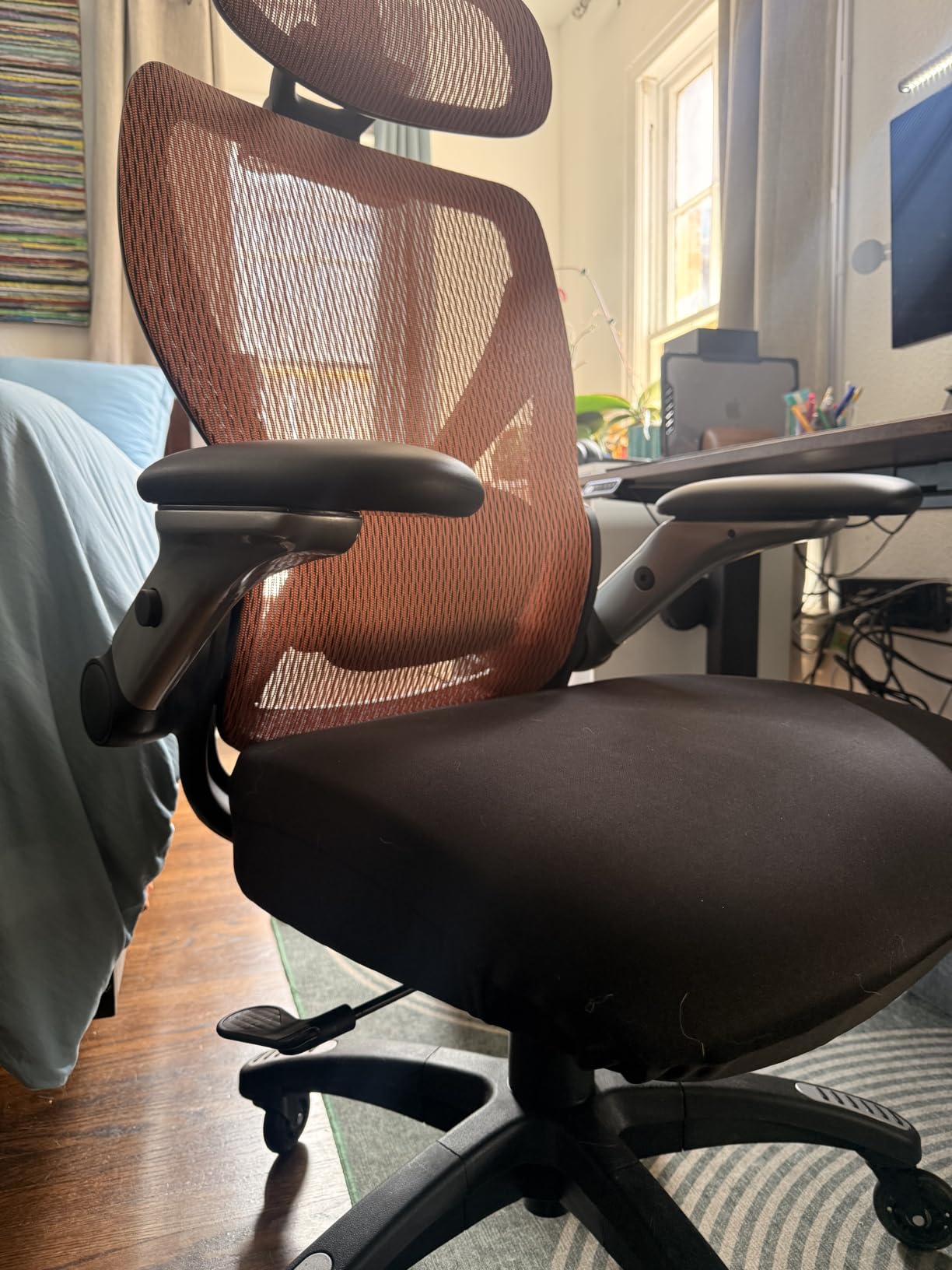
The 5D arms flip up 45 degrees to slide the chair under a desk, and they slide roughly six inches forward and back, which is what you need for keyboard work without losing forearm support. The AirFloat headrest is the most-praised comfort feature among shorter users, who otherwise often find headrests uselessly far away.
There is a real fit caveat here. Some units mount the armrests to the backrest rather than the seat, and on that variant the arms have limited vertical range and the chair tilts when you push off the arms. Check which variant you are receiving before you build your whole setup around the flip-up function.
Who This Chair Is Good For
This suits anyone whose pain is disc-level or mixed and who has struggled to find a lumbar support that hits the right spot. It also suits people who spend real time with their feet up, because no other chair in this roundup makes leg support this easy to get.
Users under 300 pounds will get the full benefit of the mesh tension and the footrest. It is rated to 300 pounds on a BIFMA-certified frame with a Grade-4 central column, which is honest rather than inflated for a chair in this segment.
Who Should Skip This Chair
If you are over roughly 220 pounds and you already know that mesh concentrates pressure on your sit bones, the mesh seat is a poor trade. Pick the foam-seat options in this guide instead. Shorter users should also test the hard mesh seat edge first, because that is the most common comfort complaint on this chair.
And if your pain is piriformis-driven, a footrest helps but it is not the primary lever. You want a chair you can change position in frequently, not one you settle into.
2. GABRYLLY Ergonomic Mesh Chair – Best Value Pick for Long Desk Days
- Roomy seat width and depth that fit larger frames
- Waterfall-edge cushion relieves back-of-thigh pressure
- Fourteen thousand reviews give an unusually honest picture
- Flip-up arms slide the chair fully under a desk
- Customer service provides free replacement parts and gas lifts
- Lumbar support is fixed in the mesh with no height adjustment
- Armrests sit low and do not raise
- Only three recline lock positions
With more than fourteen thousand reviews, this is the best-evidenced chair in the roundup, and that matters here. When a condition is as variable as sciatica, you want thousands of owner reports rather than three hundred, and at this review volume the pattern is remarkably consistent.
Several owners rate it above a premium chair they already own. The recurring note is the roomy seat: people who feel cramped in most task chairs describe this one as the first that fits, and the wide waterfall-edge cushion is a genuine sciatica mechanism rather than a styling choice.
Waterfall-Edge Wide Seat for Thigh Pressure
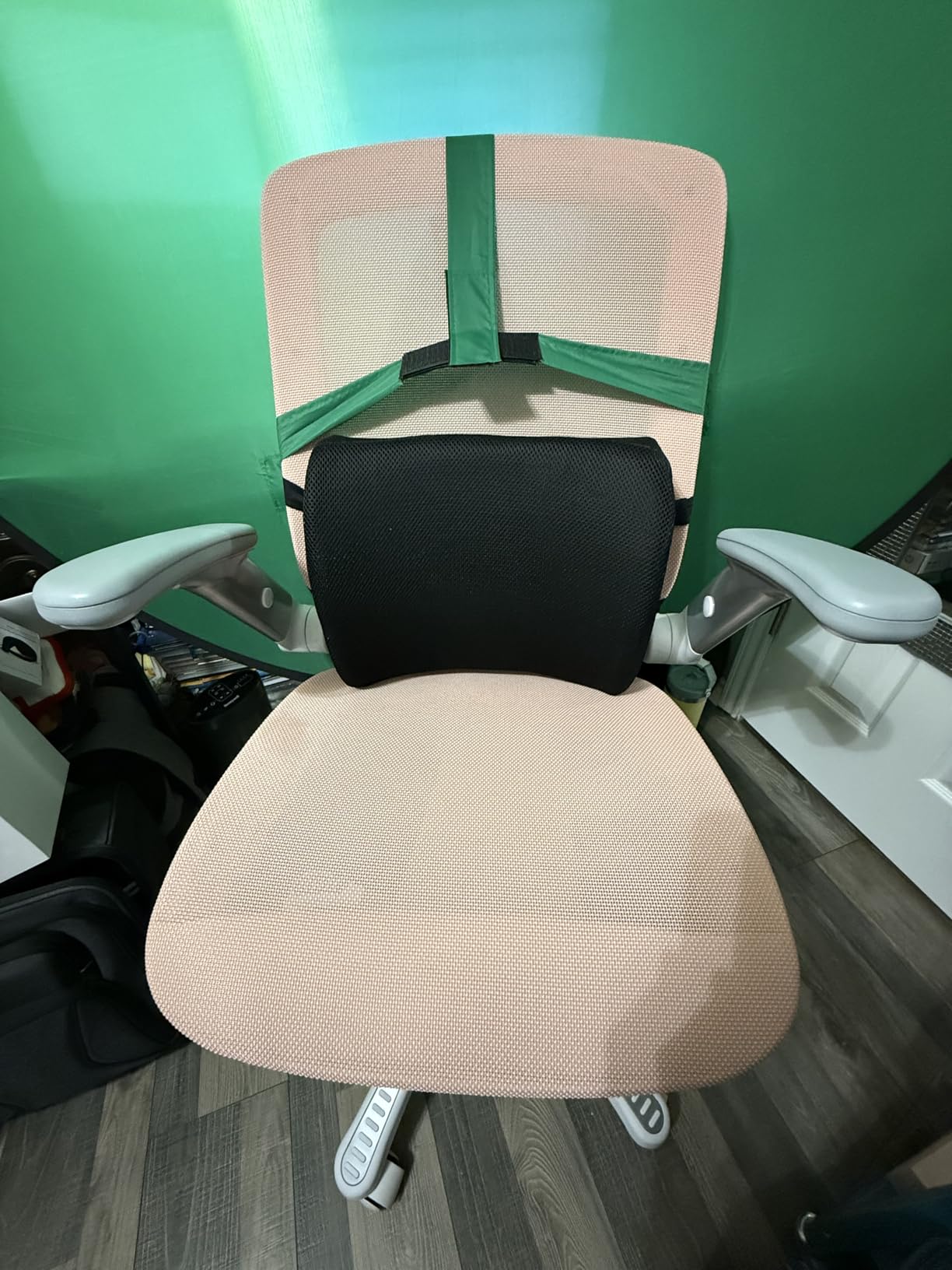
The seat is 20.5 inches wide by 20 inches deep, which is significantly wider than a typical task chair, and the cushion edge is waterfall rather than square. Combined, those two facts remove the two most common under-thigh complaints: the digging front edge and the pinched inner thighs that worsen nerve irritation over a long day.
There are multiple seat-height hole settings, so a wide body can still get the height right, and the base holds heavier users without creaking over a year of daily use. One owner reports quiet operation at 290 pounds, which is a useful data point for anyone above the usual mesh threshold.
Mesh Back, Four-Point Support and Flip-Up Arms
The back is high-density mesh with support built in at four points: head, back, hips and hands. The hips point is the one that matters for sciatica, because it is what stops your weight collapsing into a posterior pelvic tilt. High-density mesh also breathes properly, which matters more than most buyers expect on a nine-hour day.
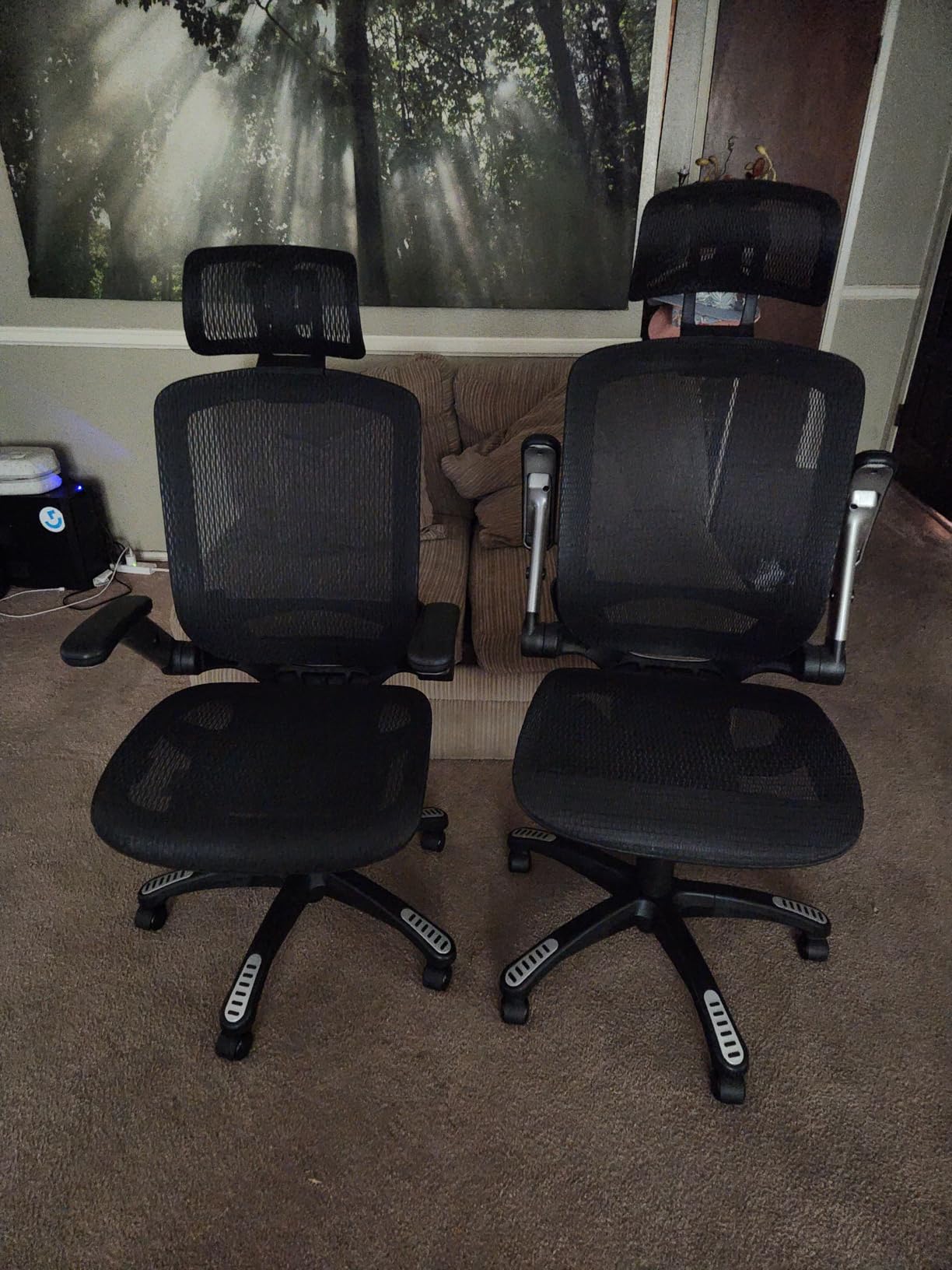
The flip-up arms fold 45 degrees so the whole chair goes under a desk, which is genuinely useful in a compact home office. The adjustable 3D headrest covers height and angle, and the Class-4 gas lift and PU mute wheels are specified rather than hoped for.
90-120 Degree Recline and Head Support
Recline runs from 90 to 120 degrees with a three-stage tilt lock. The practical weakness is the spacing: there is no useful detent between fully upright and the first lean-back position, so you cannot sit at a working 100 degree angle. Many people work reclined instead, which is fine if your desk is tall enough.
Recommended user height runs from 5 foot 2 inches to 6 foot 1 inch, so this is a chair for shorter and mid-height frames. If you are taller than that, the headrest and back height will feel short, and I would look at the options with adjustable head height instead.
Who This Chair Is Good For
This is the pick for someone who sits eight to ten hours a day, has a wider frame, and wants a chair they can set up in fifteen to twenty minutes without a manual. It is also the one I would point a budget-conscious reader toward, because the mechanism coverage is better than anything else near this price.
If sciatica makes you nervous about spending four figures on furniture, this is a reasonable place to start. You get the waterfall edge, the recline range and a rated capacity of 300 pounds, which covers most of the disqualifiers people look for.
Who Should Skip This Chair
If your pain is posture-driven and you need the lumbar support to move, this is the wrong chair. The lumbar is fixed in the mesh with no height adjustment, and long-torso users in particular report the support landing too low. Budget for a separate lumbar pillow if you buy it, and accept that the pillow can slide during the day.
The arms are also a real limitation: they sit low when down and cannot be raised to support the forearms, so anyone working at a tall desk will be shrugging by hour four.
3. SIHOO M57 – Most Versatile With Real Lumbar Adjustment
SIHOO M57 Ergonomic Office Chair, Mesh Back Desk Chair with 3D Armrests
- Lumbar support moves in both height and depth
- Waterfall-edge split backrest relieves spinal and thigh pressure
- Rated to 330 pounds which is unusually high for this tier
- Reinforced aluminum base with BIFMA and SGS certification
- Customer service provides free replacement parts beyond warranty
- Backrest does not lock fully upright
- Headrest only works when reclined
- Narrow seat causes numbness for heavier sitters
This is the chair I recommend when someone tells me the premium options are out of reach. The lumbar support adjusts in both height and depth, and that is the single most-cited reason reviewers give for choosing it over cheaper alternatives. Almost everything in this category at this price gives you one axis or none.
At 4.3 stars across more than eight thousand reviews, it is also well evidenced. The pattern in the reviews is clear: people who sit reclined love it, and people who sit upright for long stretches are frustrated by it. That distinction decides whether this chair works for you.
Lumbar Height and Depth Adjustment
Height and depth together mean you can set the support into the lumbar curve rather than simply pushing against it. Depth adjustment in particular is under-rated, because a support that is correct in height but too far back will not fill the curve, and a support that is too far forward pushes you into a slouch.
For disc-level L4-L5 symptoms, this is the configuration that matters most, and it is why I rate this chair above the fixed-lumbar alternatives in the same bracket. The trade-off is that the adjustment levers are stiff and awkward to move, so you are tuning it once rather than constantly.
Split Backrest and Waterfall Seat Edge
The backrest is split into two panels that follow the spine, and the seat has a waterfall edge, which together spread pressure along the back and support the thighs. Mesh is firm with enough give for long sessions, and it runs cool, which helps on days when pain makes you restless.
Height and depth are not the only numbers that matter. Seat height is 21.66 inches and seat depth is 18.11 inches, so this fits a normal-to-tall frame better than the shorter chairs in this roundup. The base is reinforced aluminum, BIFMA and SGS certified, and rated to 330 pounds.
Why the Upright Lock Matters More Than It Sounds
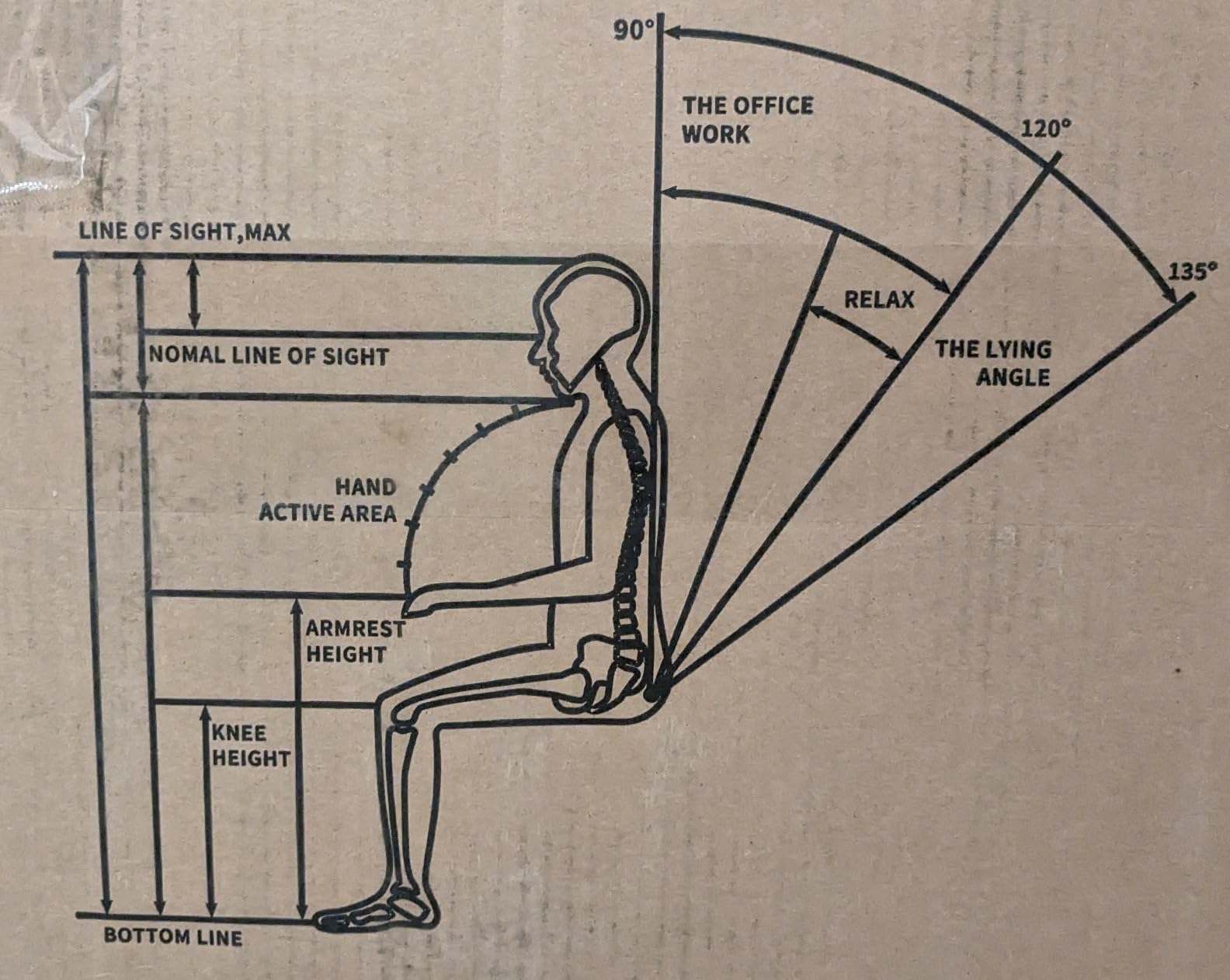
Here is the honest flaw, and it is the one that decides this chair for you. The backrest does not reach a true 90 degree upright lock, so when you sit straight up there is no upper-back support and all the compression lands on the lower back. If your job is desk-and-keyboard work in a forward posture, that is exactly the wrong behaviour for sciatica.
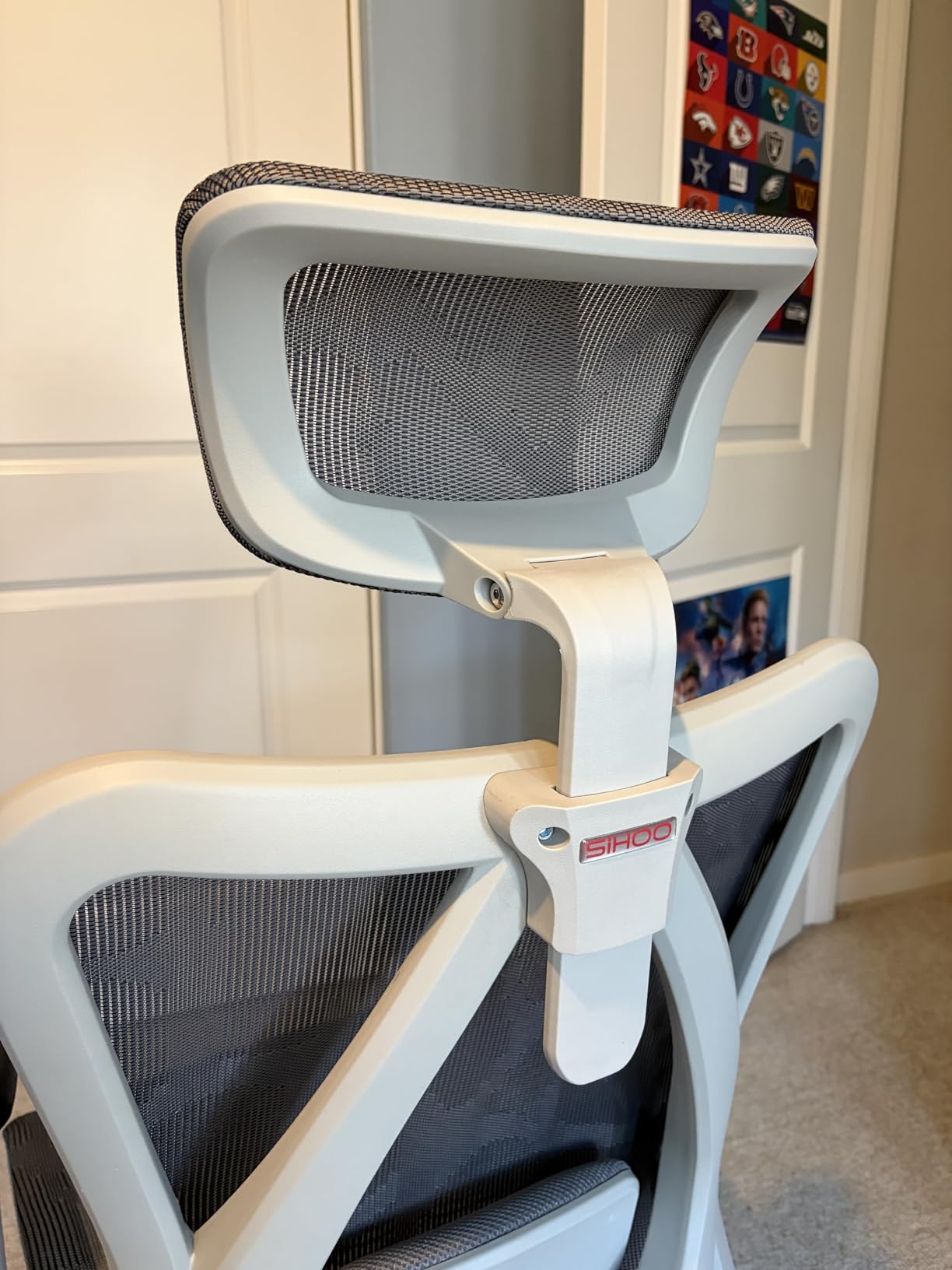
The headrest is also recline-dependent. It tilts and lifts, but it only functions usefully once you are back, and it cannot be adjusted forward or back. Recline does reach 126 degrees across three lock positions, which is the widest range among the budget picks here.
Who This Chair Is Good For
This suits people who work reclined, who have a longer torso, and who weigh more than the average mesh chair is comfortable for. At a 330 pound rating, it is a safer bet for larger users than the mesh chairs below it.
It is also the sensible pick when budget is the binding constraint and lumbar adjustability is non-negotiable. You get two-axis lumbar control, a waterfall edge and a 126 degree recline for a fraction of what the premium chairs cost.
Who Should Skip This Chair
Skip it if you sit upright. The missing 90 degree lock is not a minor specification gap, it changes where the load goes. Also skip it if you are broad through the hips, because the narrow seat is the most common source of numbness complaints in the reviews.
The armrests are rest-only and collapse when you push up to stand, and they cannot be adjusted inward or outward after assembly, so treat them as a place to rest your forearms and nothing more.
4. HOLLUDLE V-Back Chair – Best for Shorter Bodies and Multi-Directional Lumbar
HOLLUDLE Ergonomic Mesh Office Chair – 3D Adjustable Lumbar Support & 3D Armrests, V-Shaped Back, Adjustable Desk Chair for Office & Home, White
- Lumbar support moves in five directions
- Foam seat is a better answer above roughly 220 pounds
- BIFMA and EN1335 certified with a 1136 kg base rating
- Users with lumbar trouble report standing up pain-free
- Assembly in 20-30 minutes with included tools
- Seat feels hard for the first month and does not soften
- Runs small for users around 6 foot 1 inch and taller
- Sharp unfinished metal edges on the wheel base spokes
This chair answers a problem almost nobody else in this roundup addresses: what to buy if you are shorter. It is compact, it is foam-seated, and its lumbar support moves in five directions rather than three. That last point is unusual at any price.
Owners with lumbar problems consistently single out one thing: they get up from the desk without back pain. That is the outcome this entire guide is trying to produce, and for shorter users who have been fighting with oversized chairs, it is worth a lot.
3D Lumbar That Moves in Five Directions
The lumbar pad adjusts up and down, forward and backward, and rotates. Five axes of movement means you can fit it to a lumbar curve that is not perfectly symmetrical, which is common when symptoms run down one leg. Chairs that only move the pad in and out leave people with a support that is close but not seated properly in the curve.
It is paired with a mesh back that keeps air moving during long sessions, so you get the airflow of a mesh back without the pressure-map problems of a mesh seat. That combination is the reason this is my pick above roughly 220 pounds in the value tier.
Foam Seat Instead of Mesh
The seat is high-density foam rather than mesh, and reviewers consistently describe the balance as supportive rather than hard or mushy. That is the single most important difference between this chair and the two budget picks above it, and it maps directly onto the weight threshold that matters for sciatica.
Around 275 pounds, reviewers report the build holds up. The caveat is honest and worth repeating: the foam feels hard before it breaks in, and it does not soften noticeably in the first month. If you need comfort on day one, this is not the chair.
Build Quality, Certification and Assembly
Base strength is rated at 1136 kg with a 35 mm steel mechanism, and it carries both BIFMA and EN1335 certification, which is a stronger certification story than most chairs in this bracket offer. The five-year warranty is also the longest among the value picks here.
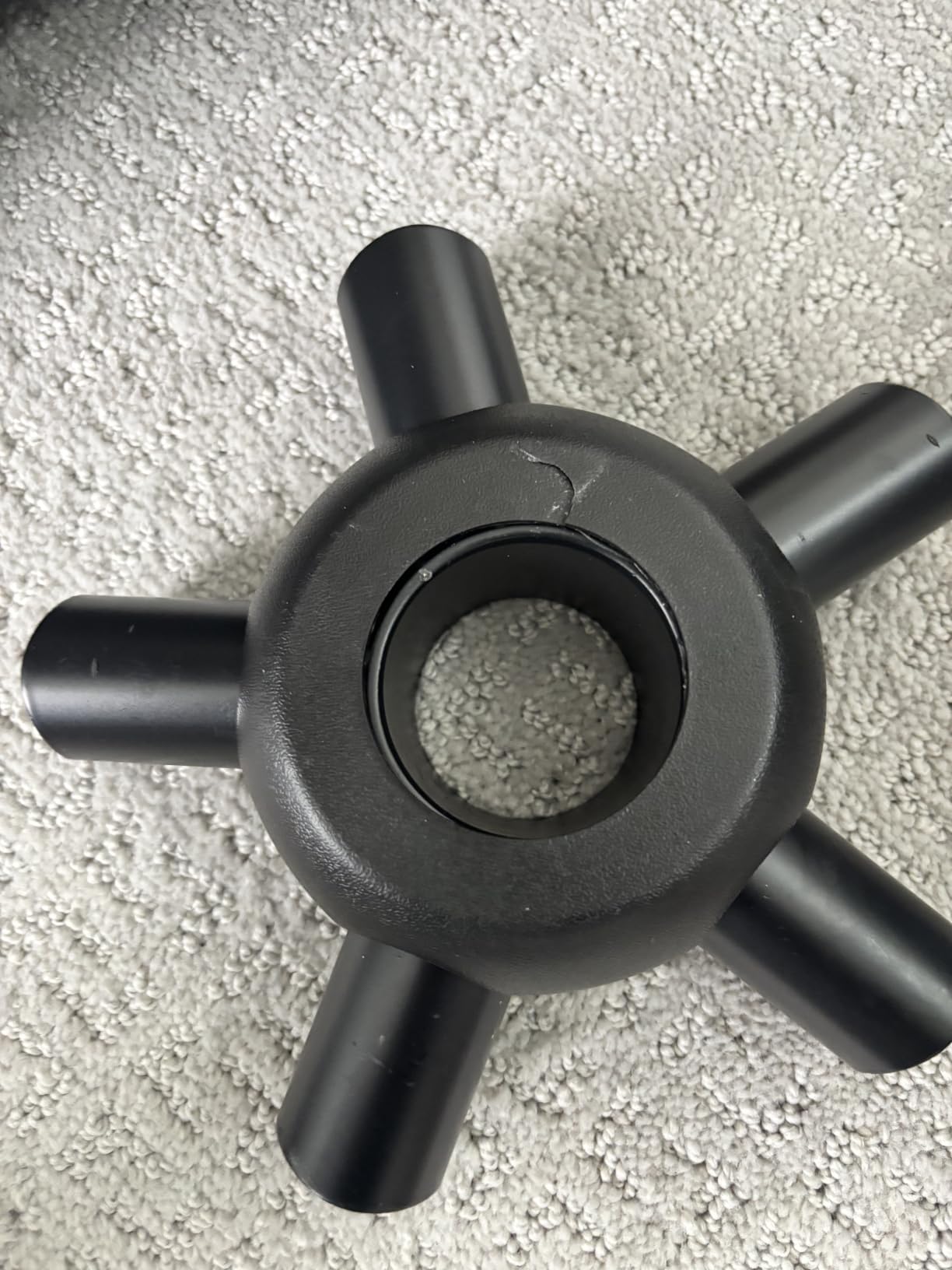
Assembly takes 20 to 30 minutes with included tools and a video tutorial. One reviewer reports sharp, unfinished metal where the wheel base spokes curve, which cut a heel, so run a hand along the underside after assembly and before you sit.
Who This Chair Is Good For
This is the pick for users around five foot ten inches and under, and for anyone above 220 pounds who wants a value chair. The compact footprint, the 17.32 inch seat depth and the five-axis lumbar combination are the reason it works for that body type where the wider chairs above do not.
It is also a good first real ergonomic chair. The lumbar control is more thorough than most, the certification is real, and the five-year warranty means the risk of a bad first purchase is lower than it sounds.
Who Should Skip This Chair
Skip it if you are tall. The high back looks accommodating but there is no head-support adjustment for taller users, and several reviewers describe limited leg support on frames above six foot one inch. Our big and tall chair guide covers that body type properly.
Also skip it if you dislike a break-in period or if you are impatient with assembly. Attaching the armrests is fiddly and takes longer than the box suggests.
5. Steelcase Leap – Most Compact for Posture Change and Glide Recline
- Waterfall edge is a real pressure-relief mechanism not marketing
- Natural Glide keeps you close to the desk as you recline
- Lumbar firmness dial plus height adjustment
- Four recline positions with tension control
- 4D arms slide in for typing support
- Lumbar adjustment is subtle and may need a supplemental pillow
- Armrests do not lock and move when you stand
- Some plastic components feel inexpensive
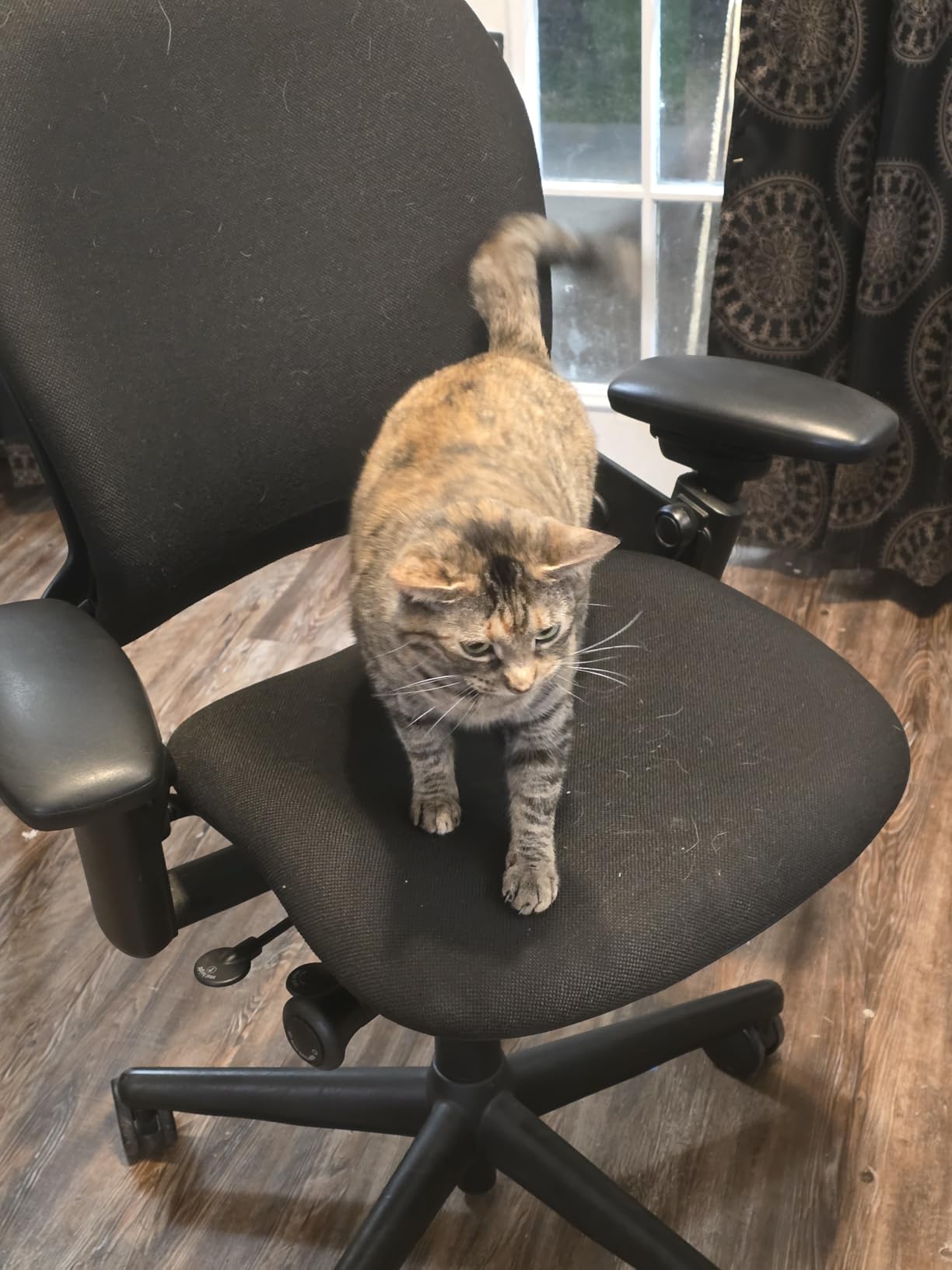
The Leap is the chair most often named, by owners and by forums alike, as the one that actually resolved long-standing back and sciatica pain. Our Steelcase versus Herman Miller comparison goes deeper on the brand-level differences, but the mechanism story here is what matters.
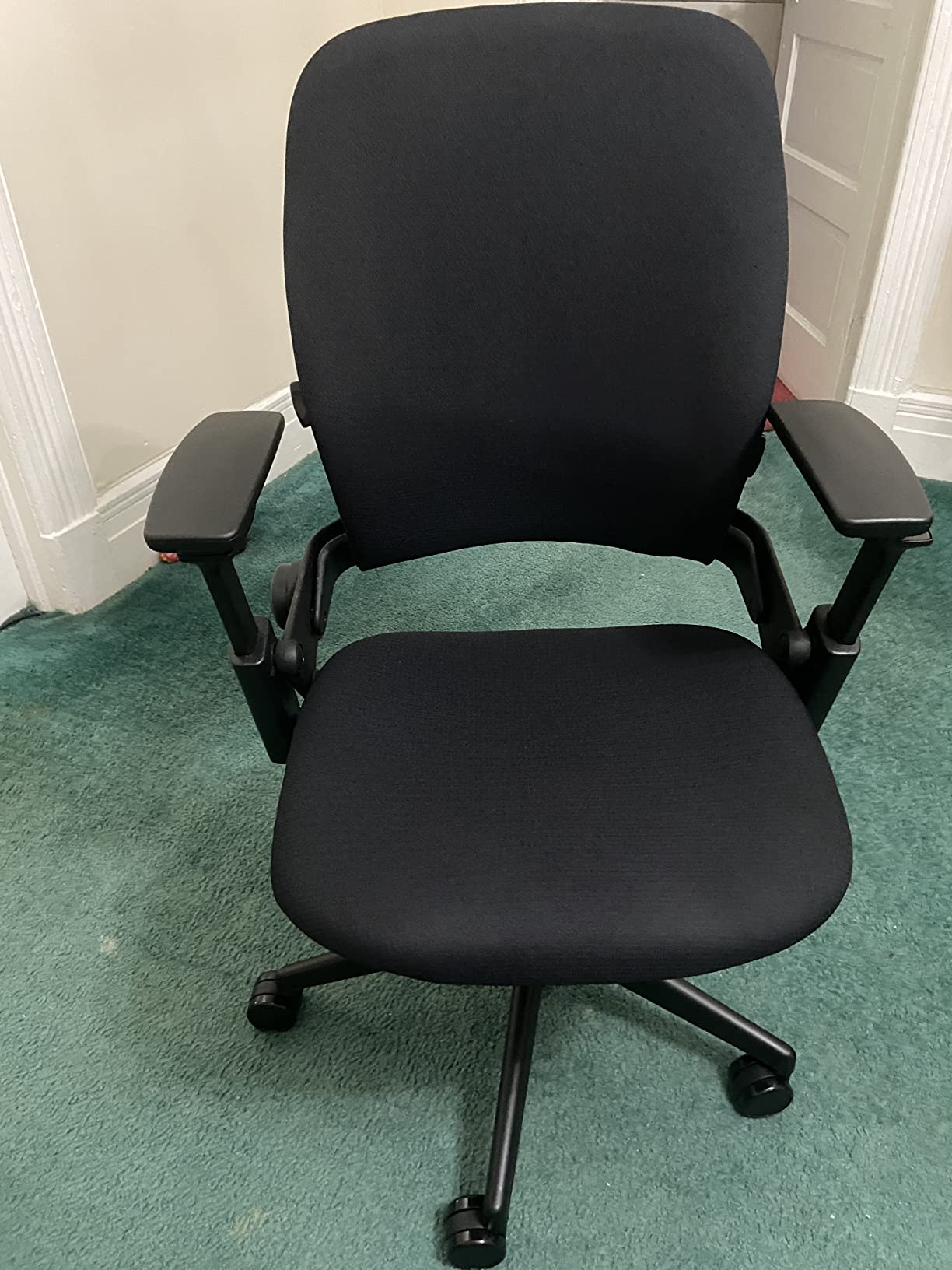
Seat depth is 18.75 inches, height 20.5 inches, and it is rated to 400 pounds, which is one of the highest capacities among the chairs we tested. It weighs 22 pounds and arrives fully assembled.
Natural Glide and the Waterfall Edge
The Natural Glide System lets the seat pan slide back and forward as you recline, so instead of your hips sliding forward off the cushion as the backrest goes back, the seat follows. That keeps the under-thigh relationship stable, which is precisely the pressure point this guide keeps returning to.
Owners report the chair holds any recline angle without continuous core effort, which matters because holding a lean-back posture with abdominal muscle is not sustainable for ten hours. The waterfall edge is a genuine, spec-level mechanism here rather than a marketing word.
Lumbar Firmness Dial and 3D LiveBack
The 3D LiveBack back is shaped to follow the spine’s natural curve and flexes as you move. The lumbar control is a firmness dial plus height adjustment, which lets you tune how hard the support pushes rather than only where it sits.
Here is the honest limitation, and it comes up repeatedly: the lumbar adjustment is subtle. Several users add a supplemental lumbar pillow for pronounced lower-back needs. If you have significant disc-level symptoms, test with a pillow in hand before you commit, because that extra support may be what makes the difference.
Four Recline Positions and 4D Arms
Four-position back recline with a tension knob gives you the range to settle into the 100 to 110 degree zone, plus an upright lock. The 4D arms move up and down, in and out, and forward and back, and they slide in toward the body for typing support, which reduces the shoulder load that often accompanies a forward working posture.
Two drawbacks stand out. The armrests do not lock after adjustment and move when you grab them to stand, and the backrest can click when you lean back unless a small dust guard piece is bent aside, which owners do themselves.
Who This Chair Is Good For
The Leap is for people who change posture constantly and want a chair that moves with them. The glide plus the four-position recline is a genuine posture-change system rather than a fixed supportive seat, and it suits anyone whose symptoms are worst after long stretches in one position.
It is also a strong option above 220 pounds because the seat is foam-cushioned rather than mesh, and the 400 pound rating is among the highest in this roundup. Larger frames are better served here than on any of the mesh picks above.
Who Should Skip This Chair
Skip it if you need a strong, obvious lumbar push. The firmness dial is real but the range is narrow, and a supplement is frequently needed. Also be aware the fabric upholstery can feel scratchy against bare skin, and some plastic components feel inexpensive for the price.
Heavier users may also feel the narrow seat pan and the hard plastic frame edges, which is a real report from owners rather than a spec-sheet guess.
6. Steelcase Gesture – Best for Range of Motion and Posture Shifters
- Contoured back and live seat pan adapt continuously
- Best-in-class 360 degree arms that resolved shoulder and neck pain
- Analog seat depth slider can be changed while seated
- Full recline with three settings plus an upright back lock
- Firm dense foam resists collapsing over years
- Stock version lacks an adjustable lumbar mechanism
- Seat cushion runs thin and can bottom out above roughly 180 pounds
- Arms do not lock and shift when you push off
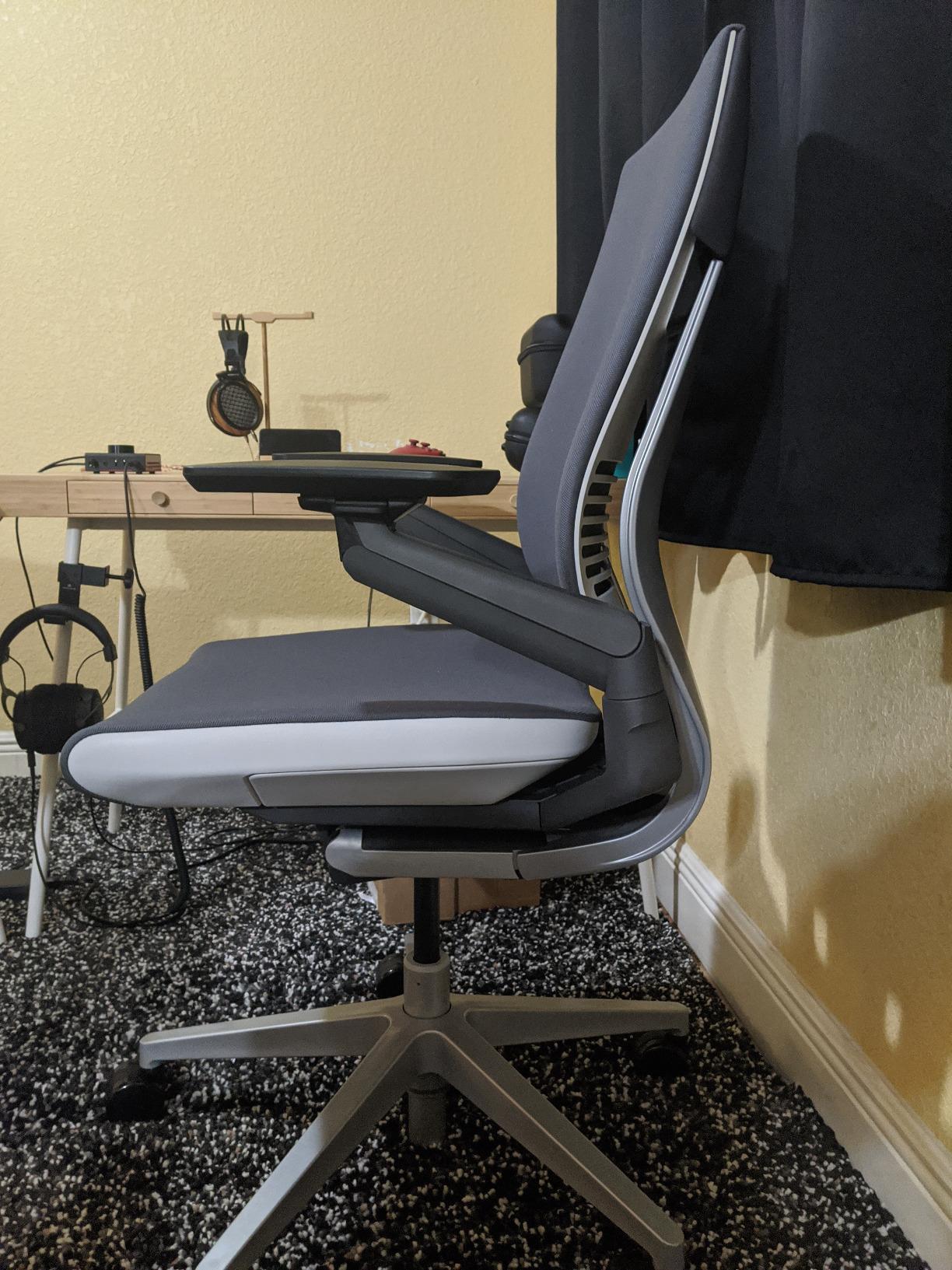
The Gesture is the most flexible high-end task chair in this group, and at 4.4 stars across more than twelve hundred reviews it is also one of the best evidenced. The stand-out is the arms, which resolved shoulder and lower-neck pain for multiple reviewers in a way that is unusual.
It is rated to 400 pounds, has a 16 to 21 inch standard height range, and measures 32.5 inches deep by 27.5 inches wide at 70 pounds. It ships fully assembled, which is worth knowing because that is heavy to move and awkward to return.
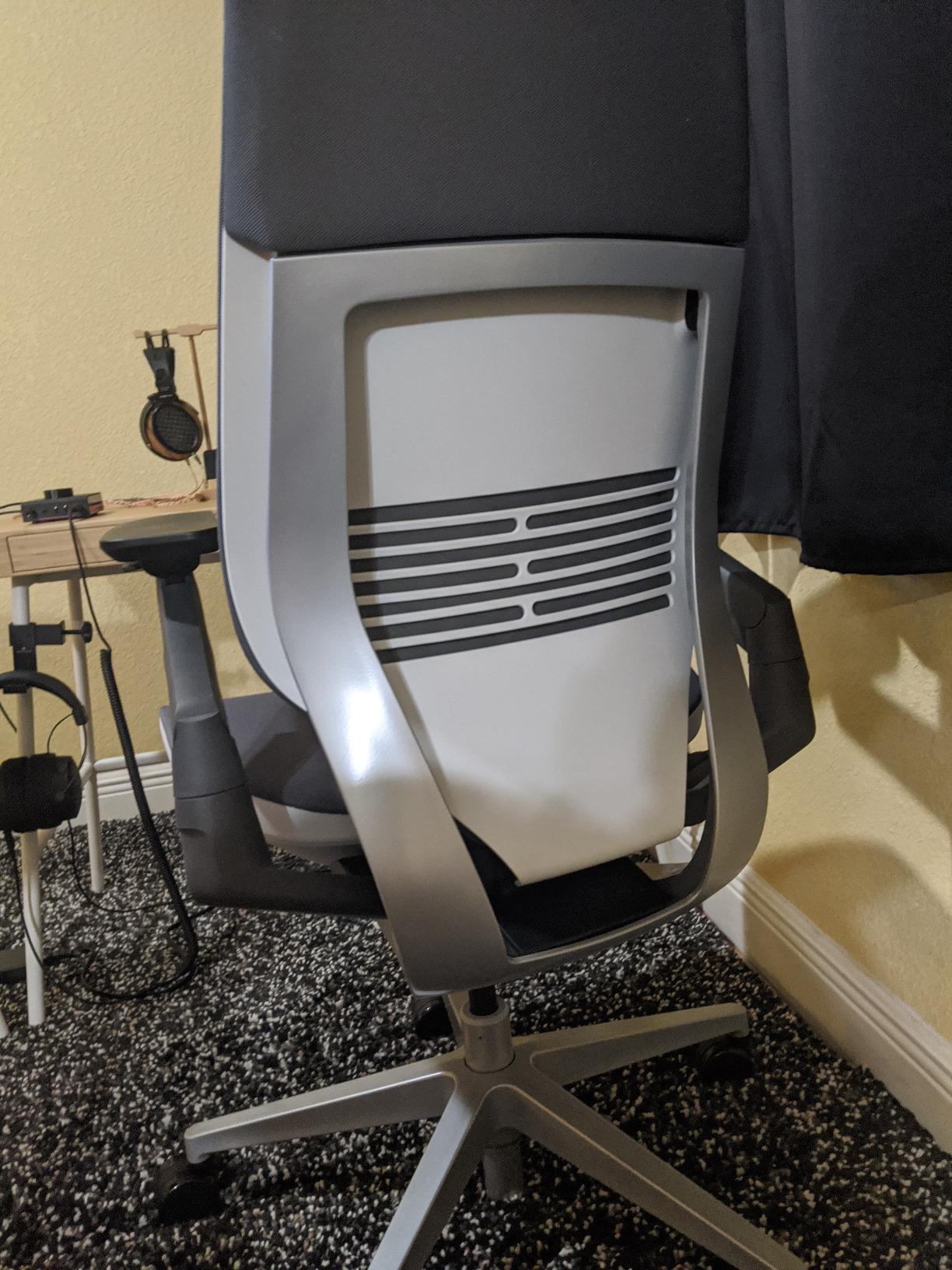
Contoured Back That Tracks Movement
The contoured back follows the spine’s natural shape and works with a live seat pan, so the chair adapts continuously rather than holding one fixed shape. Owners report relief from lower-back, shoulder and leg discomfort, which is a broader outcome than most chairs claim.
Recline offers three settings plus an upright back lock, and the whole range is genuinely supportive without core effort. For sciatica driven by long static postures, a chair that makes repositioning effortless is doing more work than a chair that is merely comfortable in one position.
Seat Depth You Can Change While Seated
The analog seat-depth adjustment can be operated while you are sitting, which is a detail most competitors do not offer. You can dial the pan in or out without standing up, testing the two-to-three finger gap at the back of your knees in real time rather than guessing.
Seat depth here is 18.25 inches and seat height 22.5 inches, with a weight-activated height range across the 16 to 21 inch band. That weight-activated feature means the chair calibrates to you rather than making you hunt for the right lever.
360-Degree Arms and Recline Settings
The 360-degree arms are the most-praised feature on this chair and they are not a marketing term: they move through a full range of motion so you can bring your arms in, forward, or out of the way entirely. For anyone whose sciatica is accompanied by neck and shoulder tension, that is a meaningful second-order benefit.
The flaw is that the arms do not lock, so they can shift when you push off to stand, and some users report creaking or clanking at the seat and back junction that occasionally needs grease. The standard build also has no mounting points for an aftermarket headrest.
Who This Chair Is Good For
The Gesture is for people whose pain pattern is about variety, not depth. If your flare-ups come from sitting in one position too long, a chair with this much articulation lets you change angle without thinking about it, and that is the mechanism most likely to reduce your daily load.
It is also a strong pick for anyone whose sciatica comes with upper-body symptoms, because the arm range addresses shoulder and neck tension that most chairs in this roundup ignore entirely.
Who Should Skip This Chair
Skip the standard version if you need lumbar adjustment. It ships without an adjustable lumbar mechanism, and the lumbar-equipped variant is a different product. This is the one specification you must check before ordering, and it is the reason the Leap is our premium pick instead.
Also weigh that the cushion runs thin and can bottom out for users above roughly 180 pounds, which is a low threshold. If you are above that, look at a foam-cushioned chair with more depth.
7. Herman Miller Aeron Size B – Best Mesh Pressure Distribution
- Pressure distributed evenly across the whole seat with no pressure points
- PostureFit SL supports the sacrum and corrects anterior pelvic tilt
- Arms adjust in height slide and pivot
- Size-specific fit lets you match the chair to your frame
- 12 year warranty with strong repair support
- PostureFit SL height is fixed and can press into the sacrum above about 6 foot 2 inches
- No integrated headrest
- Mesh feels firm for the first one to two weeks
Let me be straight about this one, because the consensus advice on mesh chairs for sciatica is not entirely accurate. The Aeron’s pressure distribution is genuinely excellent across a full sit, and the PostureFit SL support does correct anterior pelvic tilt, which is one of the postural drivers of lower-back compression.
It is also the chair we would warn you about. The PostureFit SL support height is fixed, it does not adjust vertically, and for users taller than about six foot two inches it can press into the sacrum. That is exactly the region the sciatic nerve roots pass through.
PostureFit SL Sacral Support
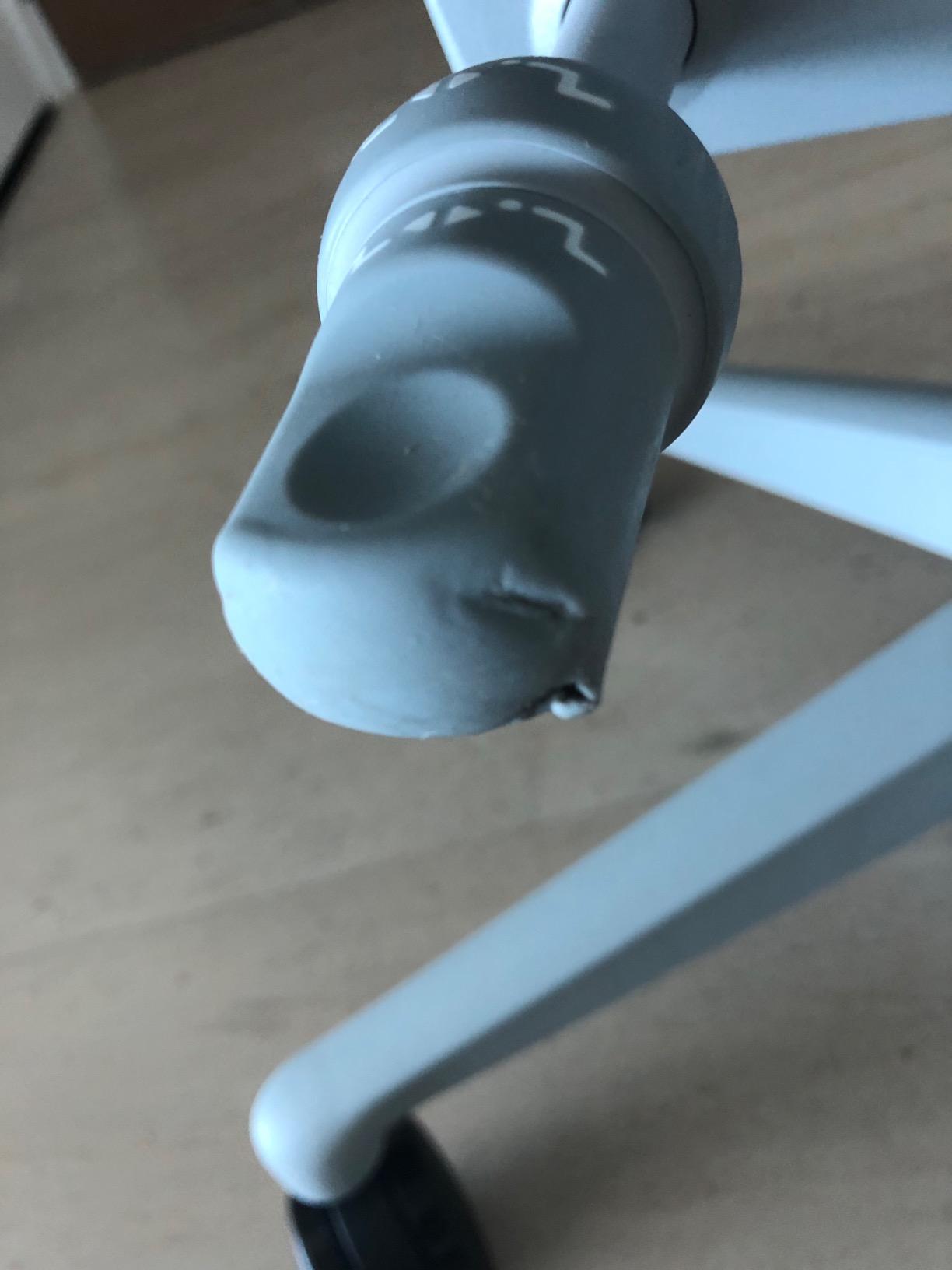
PostureFit SL uses two independent pads to support the sacrum and the lumbar curve, and owners report it corrected anterior pelvic tilt and improved neutral spine alignment. Supporting the sacrum is the more interesting half of that claim, because the sacrum is the base of the whole pelvic position and everything above it follows.
The limitation is structural. The pads have no vertical adjustment, so if your belt line sits above where the pads land, you cannot fix it with the chair. Several users over six foot two inches report sacral and glute pressure as a direct result. If you are tall, this is a genuine deal-breaker rather than an inconvenience.
8Z Pellicle Mesh and the Front Edge Problem
The 8Z Pellicle suspension mesh on both back and seat is the reason pressure stays evenly distributed rather than concentrating on the sit bones, and owners consistently report no pressure points over long sessions. It also runs genuinely cool, which is why this pattern of seating works for long desk days.
The front edge is the other half of the story. There is no waterfall edge on this seat, and users report the hard front edge going numb and digging into the back of the thighs. That is a direct sciatic compression point, and it is the most common reason people end up adding a seat cushion to an otherwise excellent chair.
Arms, Tilt Limiter and Seat Angle
The arms adjust from 6.8 to 10.8 inches above the seat with 2.5 inches of slide and pivot control in both directions, which is the most complete arm package in this roundup. The tilt limiter offers three postures with tension control, and the seat angle adjusts from neutral to engaged.
The chair arrives fully assembled at 41 pounds, and Size B is specified for roughly five foot two to five foot ten. There is no integrated headrest, so the Atlas headrest is a separate purchase if you need one, and the firm mesh takes one to two weeks to stop feeling uncomfortable.
Who This Chair Is Good For
This suits shorter and mid-height frames who need excellent pressure distribution and pelvic support more than they need a fully adjustable lumbar. If your pain is broad lower-back tension after long sits rather than a sharp nerve symptom, the sacral support is a good intervention.
It also suits anyone who runs hot, because the mesh is the coolest-running seat here, and anyone who wants a chair that arrives already built.
Who Should Skip This Chair
Skip it if you are over six foot two inches, because the fixed PostureFit height is a real problem at that height. Also skip it if under-thigh numbness is already your main symptom, since the hard front edge works against you rather than for you.
I would also think twice above roughly 220 pounds, because mesh concentration on the sit bones is the most commonly reported issue in this body weight range. Choose a foam seat and adjustable lumbar instead, and treat the mesh preference as secondary to fit.
8. Hbada X7 Smart Chair – Best for Set-It-And-Forget-It Lumbar
- Lumbar follows the spine automatically through forward upright and reclined positions
- Owners with herniated discs credit the dynamic support across 8-12 hour days
- Ventilated seat stays cool on long sits
- 4D headrest and 720 degree armrests
- Fast simple assembly
- Stock gas cylinder is too short for users 6 foot or taller
- Armrest rotation loosened within two months
- Recline lock positions are limited
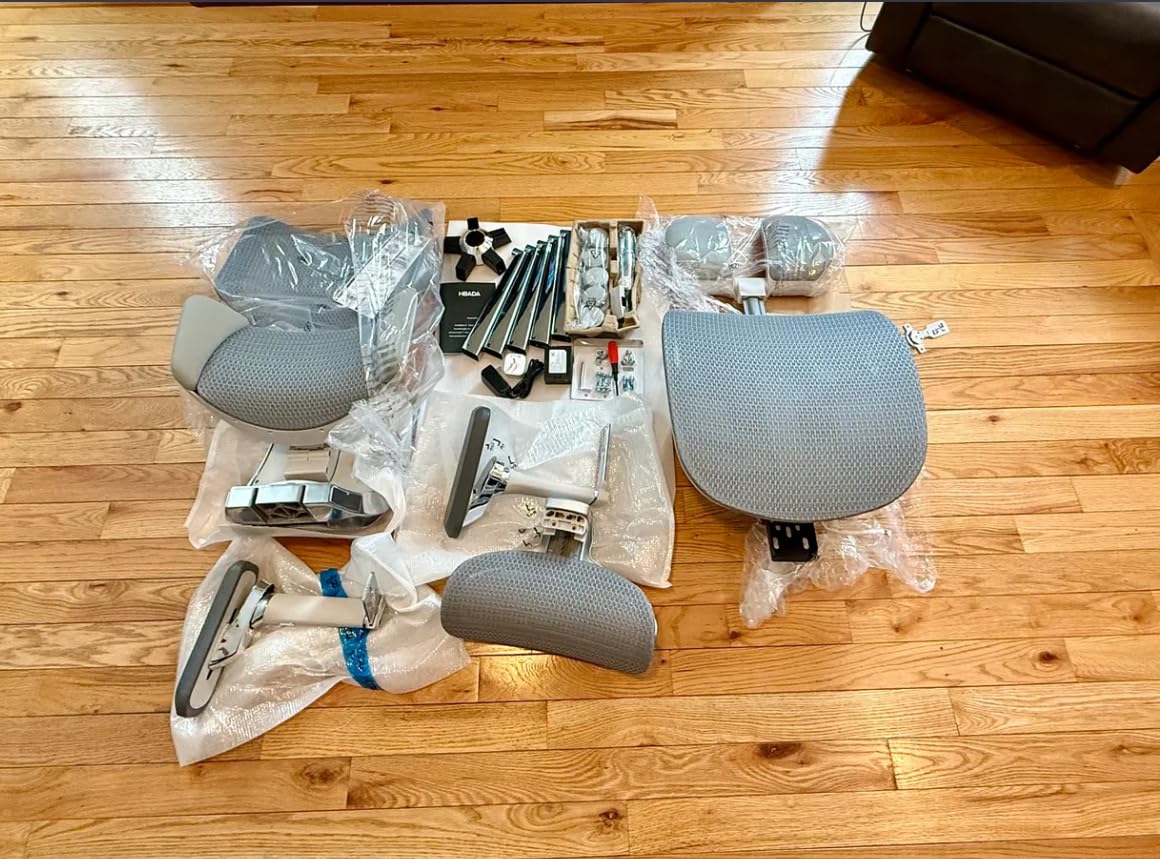
The premise here is that most people never adjust their lumbar support after day one, and that is true. The X7 uses dual pressure sensors to track your spine and adjust the lumbar automatically through forward, upright and reclined positions, with a manual override when you want to set it yourself.
Owners managing herniated discs and chronic lumbar issues specifically credit the dynamic back support with reducing pain over eight to twelve hour days. The ventilated seat with three airflow levels keeps it cool on the days you are sitting longest.
Sensor-Tracked Lumbar and Manual Override
The lumbar mechanism reads pressure and follows the spine rather than sitting at a fixed height. For a condition where the trigger is the slow collapse into a slumped posture over hours, removing the need to remember to adjust is a real ergonomic gain rather than a gimmick.
The manual override matters more than it sounds. It means the automatic behaviour is a starting point rather than a fixed decision, so if the tracking is wrong for your frame you can correct it and it will hold. The frame is aerospace-grade aluminium with high-elastic breathable mesh.
Ventilated Seat and Recovery Features
Three-level ventilated seat airflow runs through the cushion rather than just perforating it, and it is the feature owners mention when describing long summer desk days. The 8D biomimetic massage, graphene heating and red light recovery system is a wellness add-on rather than a sciatica mechanism, and I would treat it that way.
Seat depth is adjustable and recline is synchronized across multiple angles, so the depth and posture levers work together rather than fighting each other. The 4D headrest and 720 degree armrests are the most extreme adjustment figures in this roundup, and the armrests are unpadded.
Height Range and the Gas Cylinder Catch
Here is the catch that decides this chair for a large share of people. The stock gas cylinder is too short for users six foot or taller to reach an ergonomically correct seat height, and a replacement cylinder is required. That is an extra part, an extra cost and a small task most people will not think to do.
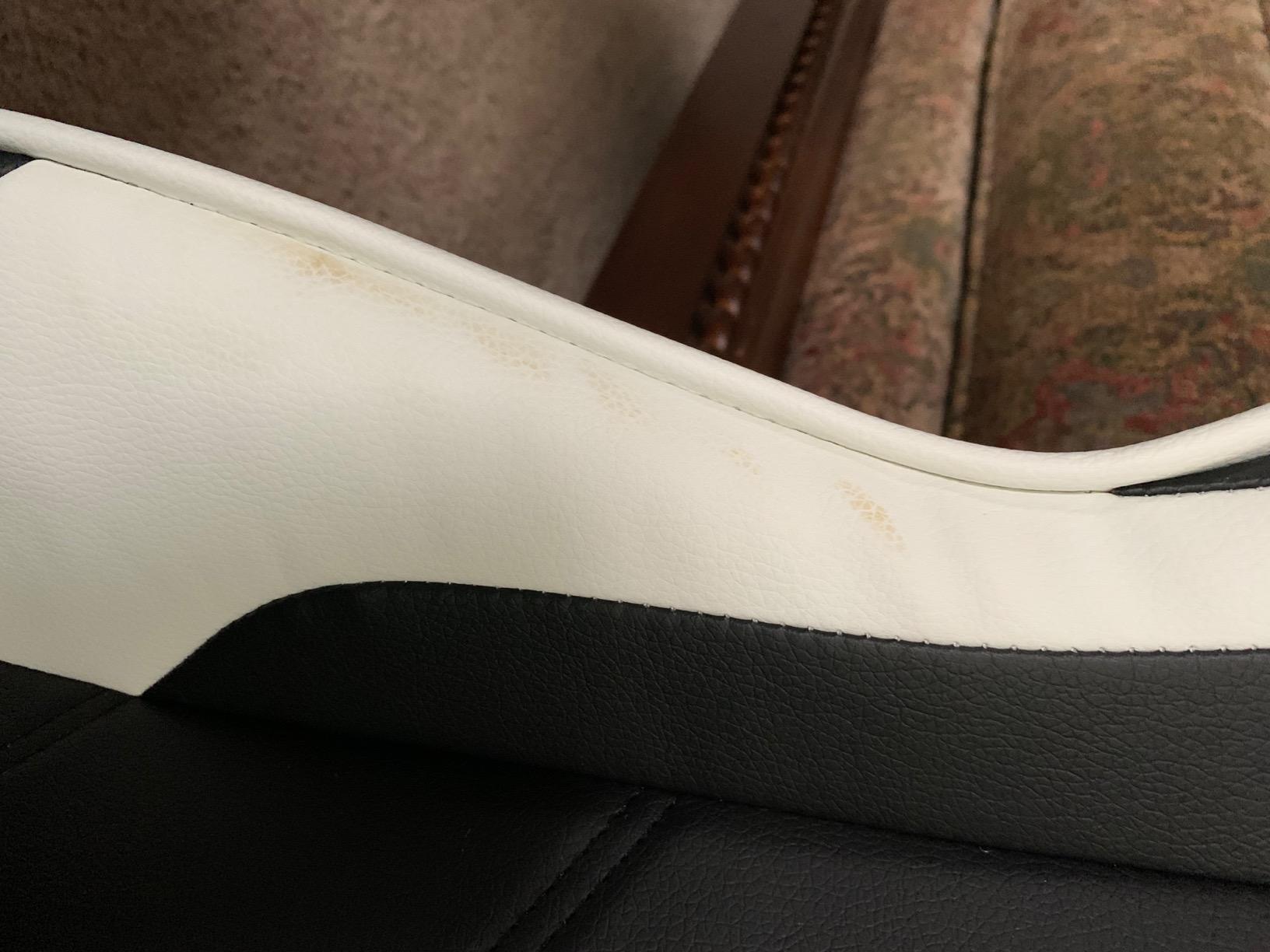
Also expect the 360 degree armrest rotation to loosen within about two months with no way to re-tighten the tension, and the recline lock points are limited with no detent for a mid-range lean-back posture. A minority of units arrived with stains, a damaged zipper or cheap-feeling plastic.
Who This Chair Is Good For
This suits people who have tried adjustable lumbar chairs and never actually adjusted them. If you know you will not fine-tune a chair, the automatic tracking is doing the work your good intentions were not going to, and it is a reasonable reason to choose this over a cheaper manual chair.
It is also a fit for chronic lumbar discomfort where you sit through heat and long days, because the ventilated cushion addresses a problem foam seats create and mesh seats create differently.
Who Should Skip This Chair
Skip it if you are six foot or taller unless you are willing to replace the gas cylinder immediately. That fix is not optional if you want a correct seat height, and a chair adjusted to the wrong height will aggravate the very problem you are buying it for.
It is also the wrong pick if you want a restrained design. The massage, heat and red light recovery features are not problems, but they are not sciatica interventions, and the unpadded armrests are uncomfortable over extended use.
9. Ergohuman ME7ERG GEN2 – Best for the Widest Range of Height and Weight
- Eight adjustment points cover a very wide height and weight range
- Dynamic lumbar flexes with body movement and can be raised
- Long-term owners report years of daily use without mesh wear
- One owner with a ruptured disc reports pain-free 8 hour days
- Warranty service includes free replacement seat and mechanism
- Lumbar is fixed to the backrest and cannot be adjusted independently
- Armrests do not lock and drift outward
- Some units creak and develop a slipping seat lock within a few years
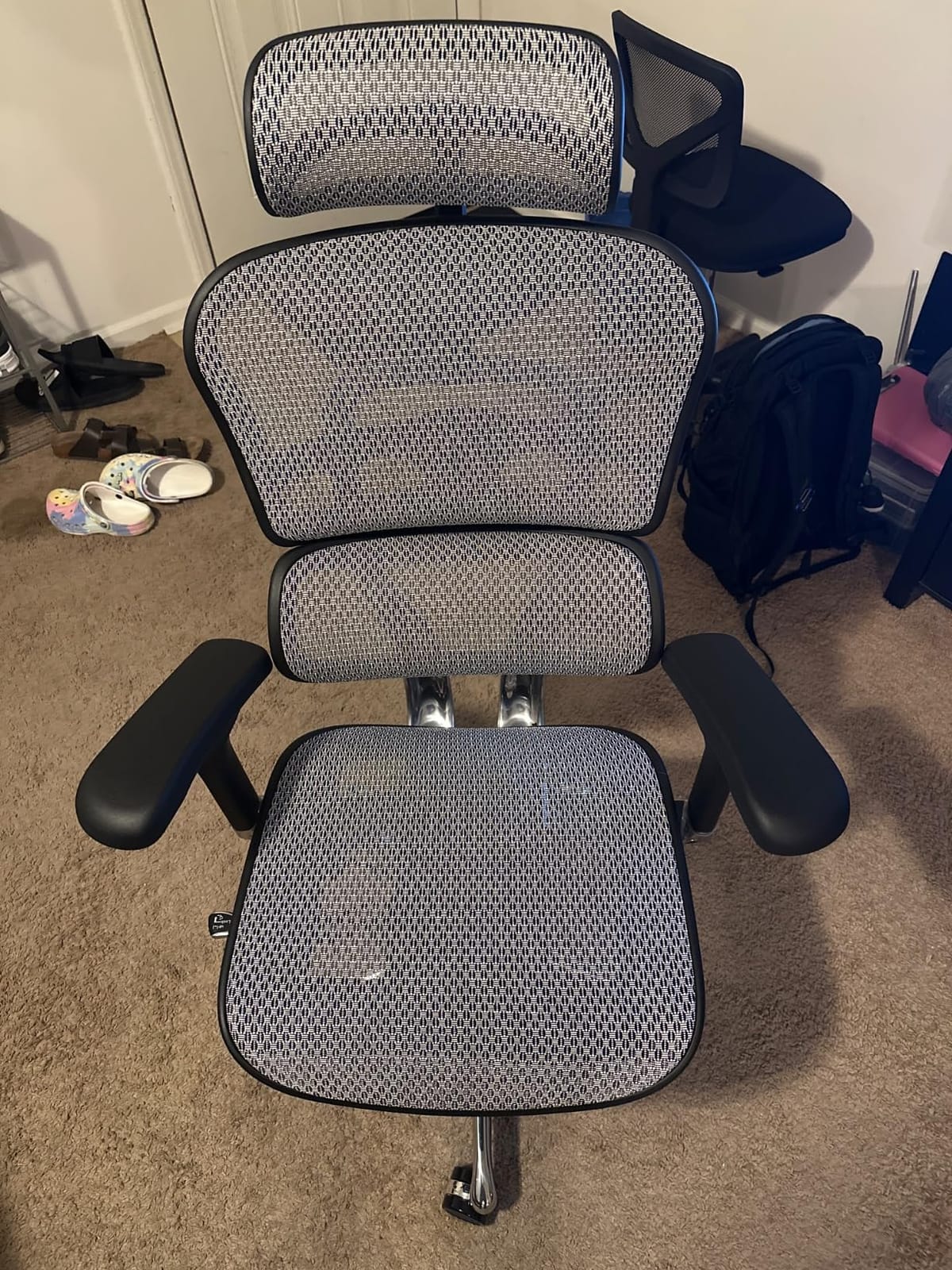
The argument for this chair is adjustment count. Eight distinct points, covering synchro-tilt, tilt lock, back height, back angle, seat height, seat depth and arm height, which gives it the widest fit range of anything in this roundup. It is rated to 275 pounds, and at 64 pounds it is a solid, heavy chair.
The most striking owner report in the file is from someone working eight-hour pain-free days with a history of a ruptured disc. That is a single report, not a clinical result, but it is exactly the outcome people reading this guide are looking for.
Eight Adjustment Points in One Chair
Synchro-tilt with a tilt lock and tension control, back height, back angle, seat height, seat depth, arm height, headrest height and tilt. When a sciatica symptom is position-specific, having the axis available is worth more than any single mechanism being slightly better than the alternative.
That matters most for people who fall outside the standard fit of a premium chair. If you are at the top or bottom of a size range, or you have changed size over the years, the number of available axes is often the difference between a chair that fits and one you tolerate.
Dynamic Lumbar and Back Height Controls
The dynamic lumbar support flexes with body movement, which is a real advantage over a rigid pad, and the back height adjustment raises the whole support assembly. Owners report all-day comfort and better neutral spine positioning, with the back and seat supporting the lumbar and hips simultaneously.
One important contradiction to flag: lumbar support is fixed to the backrest and cannot be adjusted independently, which frustrates long-torso users even though the back height moves. If your belt line sits high, raising the back may not get the pad to the right spot on its own.
Warranty and Long-Term Durability
The Eurotech limited lifetime warranty on components, five years on upholstery and foam, is the strongest warranty in this roundup, and the replacement service is singled out repeatedly, including free replacement seats and mechanisms. The US-manufactured mesh shows no wear after years of daily use according to long-term owners.
Against that, some units develop creaking, a shifting seat stem and a slipping seat-position lock within a couple of years, and the plastic armrest covers and casters feel inexpensive and can crack. The documentation is thin, with the quick-start guide hidden in the hardware bag. Assembly is required with tools included.
Who This Chair Is Good For
This suits anyone who has failed a one-size chair before. If you have tried a mid-range ergonomic chair and the problem was fit rather than build, the sheer adjustment count here is the reason to look past the higher price tags.
It is also a strong long-term buy given the limited lifetime component warranty, and owners report the warranty service as genuinely responsive rather than a policy on a website.
Who Should Skip This Chair
Skip it if you specifically need the lumbar pad itself to move independently, because it is fixed to the backrest. Long-torso users are the group most likely to be disappointed by that.
Also weigh that the 275 pound rating is lower than the Steelcase chairs here, and the armrests drift outward without locking, which is a nuisance on any chair but more irritating on one where the arms feel solid.
10. Steelcase Series 2 – Best for Quick Setup and Minimal Fuss
Steelcase Series 2 Ergonomic Office Chair, Carpet Floors, Graphite
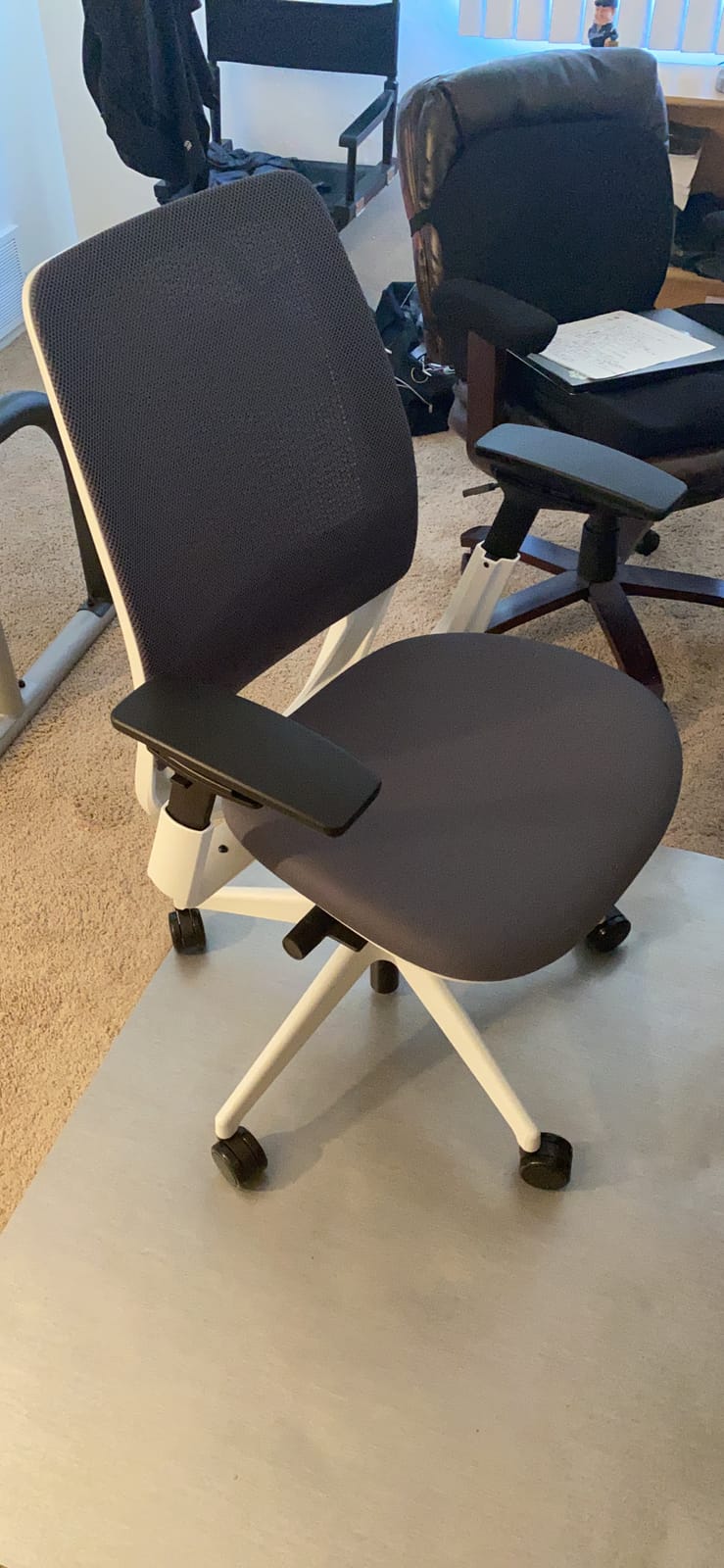
- Air LiveBack flexes with movement to encourage posture changes
- Weight-activated dial sets the correct starting position automatically
- Adjustable and flexible lumbar support
- All-steel frame rated to 400 pounds
- Tool-free four-part assembly in under two minutes
- Lighter build and smaller footprint with less padding for long sessions
- Fewer adjustment options than the other Steelcase chairs here
The Series 2 exists to answer one question: what do you get if you want a Steelcase chair, a real lumbar mechanism, a 400 pound frame and a twelve-year warranty, without paying for a four-position recline and gliding seat pan. The answer is a chair that assembles in under two minutes with no tools.
The smaller review base reflects a newer listing rather than a weaker product, and at 4.2 stars the ratings line up with the more established Steelcase chairs in this guide.
Air LiveBack and the Weight-Activated Dial
Air LiveBack is a flexible back that bends with your movement, which encourages healthy posture changes through the day rather than holding one shape. For sciatica driven by static posture, a back that keeps prompting you to shift is doing useful work without you deciding to shift.
The weight-activated comfort dial is the underrated part. It sets your starting position automatically based on your weight, which removes the guesswork from the first hour in a new chair. In a roundup where many complaints are about not knowing where to start, that is a real usability win.
Lumbar Support and What Is Missing
Lumbar support here is adjustable and flexible, which is better than the fixed bumps that cause more harm than good in this category. Steel base and carpet casters sit under it, and the frame is alloy steel rated to 400 pounds, which is a serious capacity for a chair this compact.
What is missing is depth. Seat depth is 17.75 inches, which suits a normal frame, and there is no seat depth slider. That is a genuine gap for anyone with a longer torso, and it is the main reason this is not our primary recommendation rather than a secondary one.
Two-Minute Build and 12-Year Warranty
Tool-free four-part assembly in under two minutes is the standout practical feature, and it is backed by a 12-year manufacturer warranty. At 36 pounds it is light enough to move between rooms, which matters in a shared home office.
The tradeoff is padding. This is a smaller overall footprint with less cushioning than the Gesture and Leap, so it is better for a six-hour day than a ten-hour one. There are also fewer adjustment options overall than the other Steelcase chairs here, so you are choosing simplicity rather than range.
Who This Chair Is Good For
This suits anyone who wants a credible back support without a build project. If you have been put off by a forty-five minute assembly, or you need a chair you can move between a bedroom and a spare room, the two-minute tool-free build removes a real barrier.
It is also a good match for a normal torso length and a mid-range body weight, and the 400 pound steel frame gives a lot of headroom above that.
Who Should Skip This Chair
Skip it if you sit for eight hours or more with no interest in getting up, because the lighter padding will not carry a full day the way the Leap or Gesture cushions do. It is also the wrong choice if you need a seat depth slider.
And if you want head support or an adjustable recline range, neither is here. For anyone who also wants a leather executive option rather than a mesh task chair, our executive leather chair guide covers that category separately.
How to Choose an Office Chair for Sciatica
Once you accept that a chair manages a daily aggravator rather than treating a condition, the buying decision gets much simpler. You are choosing the four mechanisms that reduce load, then fitting them to your body and your symptom pattern.
Match the Chair to Your Sciatica Pattern
Disc-level symptoms around L4-L5, where pain radiates below the knee and is worse after loading the spine, respond best to firm lumbar support held at belt-line height and a waterfall edge that keeps pressure off the back of the thigh. Chairs with multi-axis lumbar control win here, and adjustable seat depth matters more than head support.
Piriformis-driven symptoms, where the pain is more in the buttock and the leg sensation is less sharp, respond best to the ability to change position frequently. Articulation, glide recline and flip-up arms beat deep lumbar adjustment, because the trigger is duration in one position rather than pressure in one spot.
Posture-driven lower back pain is a broader problem than radiating sciatica, and it has a wider answer set. Recline range, a contoured back that flexes with you, and good arm support to keep the shoulders open matter as much as the lumbar. Our lower back pain chair guide goes deeper on that group.
Whichever pattern you have, note that pain varies day to day. The setup that suits a good day is not the setup that suits a flare-up, and any chair you buy needs to be re-tuned rather than set once and abandoned.
Lumbar Support: Height and Firmness Beat Shape
Judging lumbar support by its shape is the most common mistake buyers make. A beautifully contoured pad at the wrong height does nothing; a plain rectangular pad at the right height does most of the work. Prioritise vertical adjustment first, depth second, and shape last.
The target is belt-line height, which is where your hand rests when it is on your hip. If the support lands noticeably below that, it is pushing your pelvis forward rather than filling the curve. That is exactly the fault forum users report with fixed lumbar bumps on budget chairs, and it makes symptoms worse rather than better.
Firmness control is the underrated second axis. A support you can make softer on a bad day and firmer on a good day adapts to symptom variability in a way no single fixed setting can.
Waterfall Seat Edge vs Hard Front Edge
The front edge of the seat is where the sciatic nerve is most directly compressed, because that is exactly where the nerve runs and where body weight pushes down. A square edge digs in; a waterfall edge slopes away and pushes the underside of the thigh forward instead.
Several chairs in this roundup have a genuine waterfall edge: the Steelcase Leap, the GABRYLLY, the SIHOO M57 and the ELABEST X100 in its seat pan. The Herman Miller Aeron does not, and its hard front edge is the most common source of under-thigh numbness in the reviews.
If your chair lacks one and you already have numbness symptoms, a seat cushion is a legitimate short-term fix. It is a patch, not a solution, but it costs far less than replacing a chair that otherwise fits you.
Mesh vs Foam: The 220 Pound Threshold
The honest answer to which is better is that lumbar quality matters more than seat material. A great lumbar with a decent foam seat beats a mediocre lumbar with premium mesh, and no amount of cooling makes a badly positioned support comfortable.
Above roughly 220 pounds, however, the material question becomes decisive. Mesh sags over time under higher loads and concentrates pressure onto the sit bones, which increases rather than reduces the pressure on the nerve. Reviews across this roundup are consistent on that threshold, and it is why the foam-seat options exist on our list.
Below that weight, mesh wins on cooling and on the fact that it does not create a hard front edge contact the way thin foam can. The downside of mesh is a firm first impression that takes one to two weeks, plus a break-in that some people never get through.
Seat Depth, Weight Capacity and Torso Length
Seat depth is the most under-checked specification on any chair. Slide the pan until you have two to three fingers between the front edge and the back of your knees, with your feet flat on the floor. If the chair cannot get there, it is the wrong chair regardless of how good the lumbar is.
Weight capacity is straightforward arithmetic, but read the fine print on mesh seats. A chair rated to 300 pounds is not a good match at 290 pounds if the seat is tensioned mesh. Aim for at least a 25 percent margin above your body weight, and go higher for a mesh seat.
Torso length is the variable nobody measures. If you are tall, check that the lumbar support can reach the belt line and that the back height adjusts upward. If you are short, check the minimum seat height and whether your feet reach the floor. For frames outside the standard range, our big and tall chair guide covers that in detail.
Recline Range and Movement Breaks
Look for a recline that can hold somewhere around 100 to 110 degrees, because that range spreads the lumbar discs and shifts load off the lower spine. A chair that only reaches upright keeps you loaded all day, and one that only flops fully open makes working difficult.
The most important ergonomic feature in this entire category is not a mechanism. It is standing up. Get a movement break every 20 to 30 minutes, walk for two or three minutes, and change position every half hour. The best chair in this roundup still loses to a person who gets up on schedule.
Pairing a chair with a sit-stand desk is the natural upgrade path, and alternating between sitting and standing beats committing to either position for a full day. Change posture every 30 to 60 minutes; the relief comes from the change, not from any single position.
What to Avoid: Chairs That Make Sciatica Worse
Some chairs are not merely unhelpful, they actively aggravate. A fixed lumbar bump on a chair with no adjustment pushes the pelvis into anterior tilt, loading the discs in exactly the position you are trying to avoid, and this is the most frequently repeated complaint in sciatica forums.
Bucket-seat gaming chairs are a specific trap. Thick side bolsters funnel your weight toward the centre line and press the underside of the thighs inward, and most of them pair that with a fixed or absent lumbar support. They are built for appearance and for a different kind of sitting entirely.
The other disqualifiers are simple. No seat depth control. A recline that cannot hold 100 degrees. A lumbar support that cannot reach the belt line. A hard square front edge. A weight capacity below your body weight. A warranty under five years on a chair you expect to keep for a decade. If two of those apply, keep looking.
Finally, ignore any chair whose marketing leads with a massage function or a heating panel. Those features are not the mechanisms that reduce sciatic nerve pressure, and treating them as the headline is how you end up with an expensive seat that does nothing for the thing that is hurting you.
How to Set Up Your Chair for Sciatica Relief
Most of the benefit of a good chair is lost to bad setup. Five steps, about ten minutes, in this order.
1. Set the seat height first. Sit all the way back with your feet flat on the floor and your thighs roughly parallel. If your feet do not reach, add a footrest before you change anything else. Hips should sit slightly above knee level.
2. Set the seat depth. Slide the pan forward or back until you have two to three fingers between the front edge and the back of your knees. Your lower legs should stay in contact with the floor rather than swinging.
3. Position the lumbar at belt-line height. Put your hand on your hip bone and match the support to that line. It should fill the inward curve, not push against your lower back flat. Adjust firmness if the chair offers it.
4. Set the arms and the recline. Adjust armrests until your elbows sit at roughly 90 degrees with shoulders relaxed, and set the recline so you can reach about 100 to 110 degrees. Most chairs need their tension dial set for your weight, which is why the weight-activated controls exist.
5. Set a movement break reminder. This is the step that matters most. Every 20 to 30 minutes, stand up and walk for two or three minutes. On a bad day, recline further and shorten your sitting blocks to 15 minutes rather than pushing through.
Do all five again after a week. Your body adapts to the new support within days, and the settings that felt right on day one are often wrong by day ten.
Frequently Asked Questions
What kind of chair is best for sciatica relief?
The ELABEST X100 is our pick for 2026 because its lumbar support adjusts in height, depth and angle, it includes an extendable footrest that removes under-thigh pressure, and it reclines through 120 degrees. Look for four mechanisms in any chair: a waterfall seat edge, adjustable lumbar support that reaches belt-line height, seat depth adjustment leaving a two-to-three-finger gap, and a recline that locks between 100 and 110 degrees.
Can a chair actually fix sciatica, or just manage it?
A chair manages sciatica, it does not cure it. Sciatica is a symptom caused by nerve-root compression from a herniated disc, spinal stenosis, bone spurs or piriformis syndrome, and none of those resolve because you changed your seat. What a chair does is remove the daily load that provokes flare-ups, which for many people is the difference between constant pain and occasional pain. If you have numbness in your foot, leg weakness, or bladder or bowel changes, see a clinician rather than a product page.
Is a mesh chair better than a padded one for sciatica?
Lumbar quality matters more than seat material. Below roughly 220 pounds, mesh is usually better because it stays cool and avoids a hard front edge contact. Above roughly 220 pounds, mesh sags and concentrates pressure on the sit bones, which increases rather than reduces nerve pressure, so a foam seat is the safer choice. The Herman Miller Aeron in this roundup also lacks a waterfall edge, which is the most common source of under-thigh numbness.
Should you sit or stand with sciatica?
Alternate rather than commit. Relief comes from changing posture every 30 to 60 minutes, not from any single position. A sit-stand desk is the natural upgrade, but it only helps if you actually change. Standing all day without a lumbar support and an anti-fatigue surface trades one set of problems for another, and full-time standing without a seat height adjustment can compress the same nerve.
Do gaming chairs help with sciatica?
Generally no. Bucket-seat gaming chairs use thick side bolsters that funnel your weight toward the centre line and press the underside of your thighs inward, which is the exact location of sciatic nerve compression. Most also have fixed or absent lumbar support, so they cannot fill the lumbar curve. If you already own one, a seat cushion to improve the front edge and a lumbar pillow are the two changes that help most.
What office chair do chiropractors recommend?
Clinicians generally recommend adjustability over any particular brand. The criteria are consistent: dynamic lumbar support that can be positioned at belt-line height, a waterfall or sloped front seat edge, a recline that reaches 100 to 110 degrees, a seat pan you can set to a two-to-three-finger knee gap, and a standing break every 20 to 30 minutes. Any chair that meets those five criteria will be acceptable, which is why we score against mechanisms rather than logos.
How high should my office chair be for sciatica relief?
High enough that your feet are flat on the floor and your thighs are roughly parallel, with your hips slightly above your knees. Set the height before you adjust anything else, because every other setting depends on it. If your feet dangle at the lowest setting, add a footrest rather than compensating with a cushion, and re-check the seat depth afterwards since the hip angle changes.
The Bottom Line for Sciatica Sufferers
If your symptoms are disc-level and you want one chair that covers the most mechanisms, the ELABEST X100 is the buy. Three-axis lumbar control plus a footrest plus a 120 degree recline is more coverage than anything else in this roundup, and at 4.6 stars across more than twelve hundred reviews it is the best evidenced too.
If your pain is driven by staying in one position too long, articulation wins over lumbar depth, and the Steelcase Leap with its Natural Glide and four-position recline is the better answer. If you want the arms and the contoured back for posture variety, the Steelcase Gesture covers that ground with a 400 pound rating.
If budget is the binding constraint, the SIHOO M57 gives you height and depth lumbar adjustment that nothing cheaper here manages, as long as you work reclined rather than upright. If you are shorter, the HOLLUDLE pairs a five-axis lumbar with a foam seat that suits bodies above 220 pounds. If you just want a credible chair without a build project, the Steelcase Series 2 assembles in two minutes and carries a twelve-year warranty.
What I would not do is buy a chair and leave the setup alone. Set the seat height, then the depth, then the lumbar at belt line, then the recline to 100 to 110 degrees, and set a reminder to stand every 20 to 30 minutes. That last habit will do more for your sciatica than any of the ten chairs above, and it costs nothing.
Whatever you choose in 2026, give it a real trial and reassess at 30 and 90 days. If the symptoms have not shifted by then, the chair is not the problem and it is worth talking to a physical therapist about what is.