9 Best Legacy Board Games for Groups (October 2026) Expert Reviews
Most legacy game lists are ranked by how good a game is. Almost none of them answer the question a group of friends actually has, which is whether the box will survive contact with their specific table. Nine titles later, after playing campaigns to the end and watching two stall in month three, I can tell you that the deciding variable is not theme or rating. It is how many people are sitting down, how long they can give a session, and whether the same four humans will still be available in March. That is how the best legacy board games for groups below are ordered.
Every pick here carries a group-size label, a session length pulled from the publisher’s own specification, and a straight statement of who should skip it. We bought the boxes. We let them get written on, stuck, and torn. And we counted the sessions, because a campaign’s length is the single number that decides whether a group sees the ending.
What Is a Legacy Board Game?
A legacy board game is a game played across multiple sessions in which the components change permanently as you play. New rules and content arrive in sealed envelopes, board spaces and character abilities are added with stickers, and cards or tokens get torn out. The box records the story, so it cannot be reset or replayed from the start.
That last consequence is what makes the format interesting and what makes it expensive to get wrong. A half-played campaign cannot be sold, traded, or restarted. If your group breaks up in month four, the box is a story about a group that broke up, and it sits on a shelf.
Two terms come up constantly and they are worth separating before the picks. A fixed group is the same people meeting on a schedule for months at a time, which is the only situation a legacy game is genuinely built for. A rotating group sees new faces every session, and almost every legacy design penalises that hard. Keep both words in mind as you read, because several picks below work well for one and fail badly for the other.
One more distinction matters for shoppers. Legacy games and campaign games are not the same thing. Legacy games are permanent and single-run. Campaign games track progress but reset cleanly, which is why the heaviest campaign boxes in the hobby are often filed by their own publishers as campaigns rather than legacy. If your group drifts, that gap is the whole decision.
Our Top 3 Legacy Board Games for Groups in 2026
The three below cover the widest spread of real group situations: a cooperative four-player default, a five-player story, and the easiest campaign for a group that has never finished one.

Pandemic Legacy Season 1
- 2-4 players
- 60 minute sessions
- Area control cooperative legacy
- Year-long campaign with sealed components

Betrayal Legacy
- 3-5 players
- 13-14 chapter narrative campaign
- Modular mansion tiles
- Free play mode after the campaign
Clank! Legacy: Acquisitions Incorporated
- 2-4 players
- 30-120 minute sessions
- 10+ game campaign
- Fully replayable post-campaign game
Comparing the Best Legacy Board Games for Groups in 2026
All nine boxes, side by side, with the player counts and session lengths printed on the packaging. Sort this by player count before anything else.
| Product | Specifications | Action |
|---|---|---|
| Pandemic Legacy Season 1 |
|
Check Latest Price |
| Betrayal Legacy |
|
Check Latest Price |
| Clank! Legacy: Acquisitions Incorporated |
|
Check Latest Price |
 Charterstone Charterstone |
|
Check Latest Price |
 Risk Legacy Risk Legacy |
|
Check Latest Price |
 My City My City |
|
Check Latest Price |
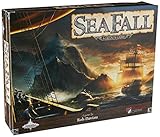 SeaFall SeaFall |
|
Check Latest Price |
 Aeon’s End: Legacy Aeon’s End: Legacy |
|
Check Latest Price |
 Ticket to Ride Legacy: Legends of the West Ticket to Ride Legacy: Legends of the West |
|
Check Latest Price |
1. Pandemic Legacy Season 1 – The Benchmark Campaign for Groups of 2-4
- Decisions permanently alter the board
- components and rules
- Sealed envelopes deliver content that reshapes each chapter
- Character development unlocks new abilities and alters old ones
- One-hour sessions fit a normal weeknight game night
- Single-run campaign that cannot be replayed
- Written-on and torn materials upset some groups
- Needs the same players to commit for the full campaign
Pandemic Legacy Season 1 is the game most people mean when they say legacy, and after finishing a full campaign it is easy to see why. Your group takes on four disease strains, cures cities, and permanently scars the board with outbreaks and cities that never come back. Roughly a year of one-hour sessions, which is the sweet spot for a group that meets weekly and cannot face a three-hour evening twice a month.
The 4.8 rating across more than 1,700 reviews reflects something specific: almost nobody finishes a legacy game and thinks it was merely fine. The characters people create get named, retired, and mourned. Sealed components arrive at chapters where the campaign genuinely changes shape, not just in difficulty.
Session Length and the Weekly Game Night
The publisher lists 60 minutes, and that number is honest. Setup is quick, the round structure is fixed, and a session ends on a chapter boundary rather than mid-action. For a group that books a recurring slot, this is the easiest commitment in the entire roundup to keep for six months.
What makes it work at four players is the cooperative structure. Nobody can quietly coast while an alliance elsewhere decides the outcome, which is the failure mode that kills competitive legacy games in larger groups.
Permanent Change and the Year-Long Arc
The sticker and writing system is the mechanic, not decoration. Cards get marked, cities get crossed out, and the deck itself is altered as diseases resolve. Because of that, there is no meaningful way to play out of order or skip ahead, which is exactly why the campaign needs one stable cast.
Character development adds a second layer. Persistent abilities accumulate across the year, so the character you started with is genuinely not the character you finish with.
Who Should Skip It
Skip it if anyone in the group dislikes writing on cards and tearing up components. That reaction is common and legitimate, and the format cannot be softened. Also skip it if you plan to sell or trade your collection, because a part-played box has no market.
And skip it for a rotating group. Pandemic punishes a substitute player harder than almost anything else here, because a newcomer has no character and no memory of the board state.
Box Size and Component Quality
The box measures 10.63 by 14.57 inches and weighs 4.6 pounds, which tells you the component count is real. Plastic pieces, not cardboard stand-ins. It is a small footprint for a campaign this size, and it stacks neatly on a shelf, which matters more than it sounds when you own two campaigns.
2. Betrayal Legacy – The Best Fit for Five Players and a Long Story
- Best use of permanent change in the genre
- Modular mansion means no two sessions play the same
- Heirloom items grant bonuses that persist across chapters
- Still fully playable in free play after the campaign
- Higher-quality miniatures than the original game
- Three separate rule books with vague wording cause frequent debates
- Haunt rules stay confusing and can favour the traitor
- Stickers lift off tiles once components are shuffled
- Dark themes rule it out for younger children
Betrayal Legacy is the answer to the most common large-group question, and it holds a 4.8 rating across more than 1,300 reviews. It runs a 13 to 14 chapter narrative about one family across decades, and each chapter inherits the survivors, the scars, and the grudges of the last one. The modular mansion tiles mean the board itself is a record of how your group behaved.
On a dedicated BoardGameGeek thread about five-player legacy games, Betrayal Legacy is the title that comes up again and again, with the same qualification attached each time. It is not really competitive. Your group cooperates through the exploration phase, and then one player flips to the traitor for the haunt. The tension is dramatic rather than cutthroat, which is exactly what makes it survive at five.
Why Five Players Works Here
The design targets 3 to 5 players and explicitly welcomes mixed skill levels, which is rare in the genre. At five there is no sitting out and no dead seat, and the traitor reveal lands harder because everyone has a character with something to lose.
Cooperation also removes a common large-group failure. In competitive legacy designs, a fifth player changes the maths so much that the balance breaks. Here, an extra body mostly adds eyes on the board.
The Legacy Dossier and Family Continuity
Permanent change here is narrative rather than mechanical bloat. Family members you write into the story die, get replaced by heirs, and leave heirloom items that grant lasting bonuses. New areas open outside the mansion. Over 14 chapters the campaign becomes a book your group wrote together, and that is the reason it earns our top slot for larger groups.
Heirlooms matter mechanically, not just as flavour. A relic carried from chapter three still grants its effect in chapter twelve, so early choices keep paying out long after the player who made them stops rolling.
Rules Complexity Is the Real Cost
The most repeated complaint, and it is not a small one, is rulebook quality. There are three separate books with vague wording, and haunt rules in particular produce long table arguments. Budget extra time for the first three sessions while everyone learns the haunt system together.
Sticker adhesion is the second practical issue. Once tiles are shuffled, stickers lift. If your group is tidy-by-nature this never surfaces, but if someone minds a curling sticker, it will bother them by chapter five.
Who Should Skip It
Skip it for families with younger children. The dark themes and cartoonish deaths are the reason it is rated 13 and up, and that rating is not conservative.
Also skip it if your group hates rules debates more than it loves story. The 16 by 10.63 by 4 inch box is not the problem. The problem is that three rulebooks have to be read mid-session, repeatedly, for fourteen chapters.
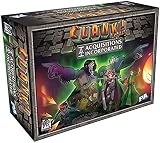
3. Clank! Legacy: Acquisitions Incorporated – the Easiest Legacy Campaign to Finish
Clank! Legacy: Acquisitions Incorporated
- Gentlest entry point into the legacy format
- Push-your-luck foundation players already understand
- Campaign permanently reshapes the board
- cards and story
- Post-campaign game is fully replayable
- Handles mixed experience levels well
- Single-run campaign
- no second campaign in the box
- Deck-building randomness produces swingy early sessions
- Decision weight is lighter than heavier legacy titles
Clank! Legacy: Acquisitions Incorporated is the one I hand to a group that has never finished a campaign of anything. You already know the base game, so session one needs no teach, and the 10-plus game campaign is short enough that a motivated group reaches the ending in a season rather than a calendar year. The 4.8 rating from 681 reviews reflects how few people expected a push-your-luck card game to land this well as a legacy title.
The permanence is real. New corporations, new cards, and board changes arrive as the campaign advances, and your choices in one game shape what is even available in the next. It reads as a legacy game without feeling like homework.
Session Length Range and What It Means in Practice
The publisher lists 60 minutes with a 30 to 120 minute range, and that spread is the most useful number on this box. Short chapters mean a group can play two in an evening or squeeze one into a week where a two-hour campaign would be skipped. Groups that skip sessions are groups that abandon campaigns.
At 2.2 pounds and 13.3 by 17.7 inches, it is the most portable box here, which also makes it the best pick for a group that meets in different places.
Deck-Building Weight and Randomness
This is the honest weakness. Deck-building randomness can produce swingy early sessions, and a group that loses two chapters to bad draws can conclude the campaign is broken when it is just variance. It is a luck-based engine at heart, which is exactly why it is the easiest legacy game to explain and the least strategic of the serious ones.
Several reviewers also find it lighter in decision weight than heavier legacy titles. If your group wants a campaign where every choice is agonising, look at Charterstone or SeaFall instead.
What Happens After the Campaign Ends
This is the standout feature. The post-campaign game is fully replayable and uses the corporation your group built, so unlike most legacy boxes on this list, the campaign is not the end of the road. Groups that finish Clank! usually run a second endgame cycle, which removes the shelf-of-shame problem almost entirely.
It is also rated 11 and up, the lowest age bar among the heavier picks, which makes it one of the few legacy boxes that works with a group containing teenagers.
Who Should Skip It
Skip it if your group wants a story-heavy campaign. The narrative is present but thin compared with Betrayal Legacy, and nobody will be arguing about a character’s fate in chapter nine.
Skip it if card luck frustrates your group. The push-your-luck foundation is the point, but it is also the source of every complaint in the reviews.
4. Charterstone – The Only Pick That Seats Six Players
Stonemaier Games: Charterstone, Competitive Legacy Game by Jamey Stegmaier
- Only legacy box here that seats six
- Players physically build their own board
- Metal coins and 230+ wooden tokens
- Progressive difficulty doubles as a tutorial
- Campaign ends with a replayable worker-placement board
- Not intuitive
- newcomers miss early rules
- Scoring hides that campaign goals outweigh individual wins
- Plays best with 4-6
- lower counts waste the board
- Campaign sessions run 1.5-2 hours in practice
Charterstone is the answer for a six-person table, and it is genuinely the only box on this list where six is a supported configuration rather than a squeeze. The publisher lists 1 to 6 players, a 75 minute session, and a 12-game campaign that permanently adds rules, buildings, and goals. At 4.6 across 665 reviews it sits just below the leaders on rating, and the reason is instructive: the game is wonderful and slightly opaque.
The hook is ownership. Your group physically constructs its own village board out of wooden tokens, and because the layout is built by you, no two campaigns look or play the same. That sense of having made something is the thing reviewers mention first.
Session Length in the Real World
The box says 75 minutes. Reviewers who finished a campaign report 1.5 to 2 hours per session once the board gets busy, and you should plan for the higher figure. With 12 games in the campaign, that is roughly 18 to 24 hours of table time plus setup, which is a serious commitment and one worth putting on the calendar before you buy.
The 11.7 by 11.7 by 3.7 inch footprint and 2.8 kg weight reflect a component list of 230+ wooden tokens, 36 metal coins, 350+ unique cards, and 75 crates to unlock. It is a big box in the best way, and a heavy one to carry to someone else’s house.
Six Players Is the Sweet Spot, Four Is the Floor
Reviewers are consistent on group size. The board is designed for 4 to 6 players, and at lower counts large areas go unused, which makes the same purchases feel less meaningful. If your group is a solid three, this is not your game even though the box says one player is possible.
That is worth stating plainly because the printed count of 1 to 6 flatters the design. The solo mode uses the Automa system, which is a competent artificial opponent, but solo Charterstone and six-player Charterstone are nearly different games.
Scoring Is the Hidden Difficulty
The most useful criticism in the reviews is that scoring does not clearly signal that campaign goals matter more than individual wins. Groups playing competitively will optimise for their own score, get to the end of the campaign, and feel oddly flat about it. Read the campaign objectives out loud at the start of each session.
Progressive difficulty partly rescues this. The early games genuinely function as a tutorial, so the first two sessions feel easy by design.
Who Should Skip It
Skip it for a small group. Three players will find the board sprawling and the scoring opaque at the same time, which is the worst possible combination for a first legacy campaign.
Skip it if replay excitement matters. Reviewers note that excitement drops sharply once the campaign ends, and unlike Clank! the endgame worker-placement board does not carry the same weight.
5. Risk Legacy – Conquest With a One-Hour Session and No Reset
- Fixes the classic Risk length problem
- Legacy changes make every session distinct
- Victory point objectives make alliances easier to negotiate
- Compact briefcase-style box with a handle
- High quality board and miniatures
- Needs a stable group of 4-5 regulars
- Swapping players in mid-campaign skews the balance
- Still carries the classic Risk potential for table arguments
- Not ideal for younger or casual players
Risk Legacy takes the conquest game most groups have abandoned for being too long and too punishing, and rebuilds it as a 60 minute session for 3 to 5 players aged 13 and up. It carries 4.7 across 623 reviews, and the reason it stays rated well is the victory point system, which replaces the old game’s all-or-nothing annihilation with points that make negotiated alliances survivable.
Legacy change is visible from across the table. Factions unlock cities, new rules arrive, and the board you finished with is nothing like the board you started with. Over 275 military miniatures and a sealed component list do a lot of work here.
Why Alliance Negotiation Finally Works
Classic Risk fails at small groups because two players can gang up and end the game in twenty minutes. Point-based objectives mean an alliance can win without eliminating anyone, and that single change is why a five-player session stays interesting for a full hour.
For groups that enjoy negotiation and backroom dealing, this is the best pick here. For groups that do not enjoy being negotiated with, the same feature is the risk.
Group Stability Is Not a Preference
Reviewers repeat one warning more than any other, and it is mechanical rather than social. Swapping different players in across sessions skews the legacy balance, because persistent upgrades and unlocked factions do not transfer between players the way they do in a cooperative game. A substitute fifth player is not a neutral event in Risk Legacy.
That makes it a poor fit for a group of four that occasionally recruits a fifth, and a strong fit for a stable table of five that meets reliably. The 4.7 rating reflects a game that works exactly as designed and fails quietly when conditions change.
Portability and Component Quality
The briefcase-style box with a handle is a small thing that matters more than it should, since the box measures only 2.76 by 15.75 by 10.51 inches and weighs 1.8 pounds. A group that plays at different houses can carry this one easily.
The board and miniatures are consistently praised, and the printed rulebook is included, which matters more here than usual because Risk Legacy’s rules are not identical to base Risk and a player who assumes they are will misplay.
Who Should Skip It
Skip it if your group is younger than 13 or casual. This is a competitive game with real negotiation and a genuine potential for table arguments, which reviewers note it inherits directly from the original.
Skip it if your roster rotates. This is the pick most often flagged for a changing cast of the nine reviewed, alongside Pandemic Legacy.
6. My City – the Short-Session Legacy Game for Families
- Simple rules with 15-30 minute episodes suit weekly family play
- 24 episode campaign keeps each playthrough distinct
- Double-sided board offers an eternal replayable mode
- Handicap stickers keep scores close across skill levels
- Almost no direct player interaction
- effectively non-destructive
- Too light for players seeking heavy interaction
- Catch-up mechanic may frustrate competitive players
- Very little luck means outcomes feel planned rather than dramatic
My City is Reiner Knizia’s take on the legacy format, and it is the outlier on this list in the best way. At 30 minutes a session, 24 episodes, and ages 10 and up, it is among the most approachable legacy games in the roundup for family groups. The 4.8 rating from 618 reviews is not charity for a simple design. It is one of the highest scores here.
You build a city from settlement through industrialisation, laying tiles simultaneously, and your choices carry from one episode to the next. Nobody is eliminated, nobody is attacked, and the interaction is low enough that a family can survive a sibling dispute and still finish the campaign.
Sessions That Fit a School Night
Thirty minutes is the whole argument. A 24 episode campaign at roughly half an hour per episode is about 12 hours of table time, which is a weekend of effort spread over months rather than a commitment that frightens a family away.
The box lists 96 tiles, 24 cards, 4 player boards, 4 scoring markers, and 8 envelopes with pieces to unlock, all inside a compact 11.6 by 11.6 by 2.8 inch footprint. That is a small, tidy, non-destructive package, and it is a 1500 gram box rather than a warehouse.
Nearly Non-Destructive, and Why That Changes Things
My City is the closest thing to a legacy game that a cautious buyer can accept. The campaign changes across episodes, but the permanent destruction is minimal, and the double-sided board gives you an eternal replayable mode after the 24 episodes are done. Very few legacy boxes on any list leave you with something you can keep playing.
That single feature makes My City the safest first legacy purchase for a household, and the only one here that also works if the group dissolves.
Handicap Stickers and Mixed Ages
The handicap system is quietly important for a family group. Stickers adjust scoring so a ten-year-old and an adult stay close, which means the campaign does not turn into a lesson in losing. Combined with almost no direct player interaction, it is the pick for mixed-ability tables and for anyone hosting a gathering where the guest list changes.
The flip side is that low interaction cuts both ways. Reviewers who want heavy player engagement find it far too light.
Who Should Skip It
Skip it if your group wants tension. There is very little luck and almost no interference, so outcomes feel determined by planning rather than drama. It is a pleasant two-player evening, not a showdown.
Skip it if the catch-up mechanic bothers you. Competitive players frequently cite it as the thing that stops them enjoying the design.
7. SeaFall – the Deepest Campaign Here, and the Hardest Finish
- Choose-your-own-adventure passages create memorable story moments
- Non-elimination design keeps trailing players in contention
- Trade
- exploration and raiding offer multiple paths
- Board grows as islands are discovered
- Strong production quality with plenty to unlock
- Dense rules requiring the online Captain's Log FAQ
- Dice calculation is confusing and easy to miscount
- Heavy downtime at 5 players
- Hard early resource curve
- Runaway leaders from permanent upgrades
- Sessions can stretch beyond the printed length
SeaFall is the most polarising box in this roundup, holding the lowest rating at 4.2 across 447 reviews, and the reason is not a flaw in the design. It is that the design is a 4X game with a story wrapped around it, and 3 to 5 players aged 14 and up is a serious commitment of 90 to 120 minutes a session.
If your group likes Age of Sail exploration, non-elimination competition, and evolving islands, this is the most ambitious campaign here. Nobody eliminates anybody, so a trailing player stays in contention, and the board physically expands as you chart uncharted islands.
Rules Load and the Captain’s Log
There is no printed rulebook, only a digital PDF, and the community maintains a Captain’s Log FAQ for exactly the reason you would expect. The most common complaint is that actions are resolved by a dice calculation that is confusing and easy to miscount.
Budget an evening of learning before the first real game. A group that starts SeaFall without that will conclude within three sessions that the game is broken.
Downtime and the Five-Player Problem
At 5 players the downtime between turns becomes severe, and this is the mechanical reason SeaFall suits 3 or 4 far better than its printed maximum. With 90 to 120 minutes of session time, a 25 percent dead turn compounds into an evening that feels endless.
The box weighs 4 pounds and measures 12 by 3 by 15.5 inches, and for a game where a session runs two hours at the top of its stated range, the effort per hour of engagement is the heaviest in this roundup. Reviews also note that sessions can stretch past the printed time once players start resolving chains.
Runaway Leaders Are a Structural Flaw
This is the flaw worth understanding before purchase. Permanent upgrades accumulate across the campaign, so the player who wins early tends to keep compounding, and several reviewers describe a runaway leader that the rest of the table cannot catch. The non-elimination design keeps everyone nominally in the game while the actual contest drifts toward one person.
The early resource curve compounds it. Players can struggle to accumulate resources in the opening sessions, and a bad first game is remembered for the whole campaign.
Who Should Skip It
Skip it for a casual group. Dense rules, long sessions, and a real downtime problem make it the least accessible legacy box reviewed, and its 4.2 rating reflects that honestly.
Skip it at 5 players unless the group enjoys heavy strategy. The rating drop and the downtime complaints are the same issue seen from two directions.
8. Aeon’s End: Legacy – the Best Two-Player Legacy Campaign
Aeon’s End: Legacy, The First Legacy Deck-Building Game
- First legacy deck-builder with a real multi-session storyline
- Cooperative team building gives every player a role
- 80% of content stays compatible with base Aeon's End
- 45 to 90 minute sessions fit a normal game night
- New abilities unlock steadily to keep builds fresh
- Campaign can only be completed once per copy
- Needs the same group to see it through
- Lower review volume means fewer community strategies
- Deck-building adds setup time versus lighter card games
Aeon’s End: Legacy takes a cooperative deck-builder and makes the whole thing a persistent story. It supports 1 to 4 players with 45 to 90 minute sessions, ages 14 and up, and the 4.7 rating from 358 reviews says the fusion works. Your group defends Gravehold across multiple games while a narrative evolves and new abilities keep opening up.
The reason it earns a place on a list organised around group size is simple: it is the strongest reviewed legacy campaign for two people, and 80% of the content stays compatible with the base Aeon’s End and its expansions, so the shelf space cost is smaller than it sounds.
Why It Works for a Pair
Cooperative deck-building gives two players genuinely equal roles, because every card played serves the shared engine rather than a personal score. Nothing in the design punishes a table of two, which is unusual for a campaign game and the single most useful fact for a couple or a two-person group.
Sessions of 45 to 90 minutes also fit a normal game night better than most campaign boxes, and the 16.54 by 11.3 inch footprint is manageable.
Deck-Building Overhead and Compatibility
The trade-off is setup time. Deck-building adds overhead compared with lighter card games, and in a 90 minute session that overhead is a real slice. The 3.28 kg weight reflects a box built to be kept for years, which is appropriate given its compatibility with the wider Aeon’s End line.
Compatibility is the underrated feature. Roughly 80% of the content still works with the base game and expansions, so finishing the campaign leaves you with a usable deck-building collection rather than a story-only box.
Who Should Skip It
Skip it if your group is not cooperative at heart. This is a shared-engine design and it does not convert to competitive play, so a table of rivals will find nothing to fight over.
Skip it if you want published strategy. The 358-review count is the second lowest here, which means fewer community strategies and rulings exist for the trickier builds. A poster on r/soloboardgaming described campaigns as the thing that keeps them playing more, and that is exactly the appeal, but it comes with a thinner support ecosystem.
9. Ticket to Ride Legacy: Legends of the West – the Gentlest Legacy Entry
- Welcoming entry to legacy play through familiar rules
- 12 game campaign unlocks new boards
- rules and content
- Story events and postcards deepen the narrative
- Quick learning curve suits families and mixed ages
- Large component count with 280 train cars and 13 boards
- Single-run campaign
- replaying needs a new copy
- The famous train stealing can create table friction
- Mid-campaign rule additions feel dense to some groups
Ticket to Ride Legacy: Legends of the West is designed by Rob Daviau, Matt Leacock, and Alan R. Moon, and it is the reason people who hate change in their board games still try a legacy campaign. You already know the train-adventure rules, so the learning curve is close to flat. It runs for 2 to 5 players, ages 10 and up, with sessions listed at 20 minutes and a 20 to 90 minute range.
Across a 12 game campaign your group unlocks frontier boards, new events, and skills that evolve to handle the new situations. The 4.8 rating from 341 reviews is one of the highest in the roundup, and the recurring note is that the story and postcard events are what people remember, not the mechanics.
Session Length and the 20-Minute Floor
The 20 minute figure is the most useful number in this entire roundup for a family that games after dinner. Short frontier games can be finished in a single evening, and the 20 to 90 minute range means a group controls how long a given session runs rather than the other way around.
A 12 game campaign at the short end is a manageable few evenings. At the long end it is a proper campaign. The range is the feature.
Component Scale and What Is in the Box
The component list here is the largest of the nine. Thirteen frontier boards, 280 plastic train cars, 84 train cards, 33 tickets, 7 event cards, 6 newspaper cards, 77 postcards, a story deck, 5 company boxes, 8 frontier boxes, and a conductor’s toolbox all ship in a 17.13 by 12.59 by 4.21 inch box. That is a lot of plastic, and it is the reason this is the pick to buy once rather than twice.
The post-campaign hook is also better than most. Play afterwards uses the unique board maps your group created, so the campaign output remains playable even after the campaign itself is over.
The Train-Stealing Problem
Every review of a Ticket to Ride game eventually arrives at train stealing, and here it is the single most cited con. Grabbing a route another player is completing is a core part of the design, and in a campaign it stings more because the action repeats across twelve games with the same people.
The mid-campaign rule additions are the second friction point. Some groups find the unlock pace dense even though the base rules are simple.
Who Should Skip It
Skip it if your group hates route-grabbing. The friction is structural, not a matter of table manners, and in a twelve-game campaign it will come back up.
Skip it if you want deep strategy. The 341-review count and the universally fast learning curve point to an accessible design rather than an analytical one. If your group wants a hard game, the rest of this list offers plenty.
How to Choose a Legacy Board Game for Your Group
Player count is the first filter, because it eliminates more boxes than quality ever will. Session length is the second. Commitment is the third, and it is where most abandoned campaigns are actually lost.
Groups of 2 Players
Two people can absolutely run a legacy campaign, and the right box makes it easier than most guides admit. Aeon’s End: Legacy is the strongest reviewed option because its cooperative deck-building gives both players an equal role and its 1 to 4 player support is genuine. My City works at 2 to 4 with almost no direct interaction, which is a feature when the two people would rather not be adversarial.
Avoid the heavy competitive designs at two players. Pandemic Legacy plays accept two people, but the area control and character development thin out badly, and a four-player experience compressed into two is a worse version of itself.
Groups of 3-4 Players
This is the sweet spot of the entire genre, and the majority of the boxes reviewed are designed for it. Pandemic Legacy Season 1 is the default answer here, with a cooperative structure that keeps every seat relevant and 60 minute sessions that fit a weeknight.
Clank! Legacy: Acquisitions Incorporated is the alternative if your group wants to finish something. Its 10-plus game campaign is the shortest serious legacy arc reviewed, and the replayable endgame removes the dead-box problem. Ticket to Ride Legacy fits a four-player family that needs the gentlest possible on-ramp.
Groups of 5 Players
Five is where options thin and where the design type decides everything. On a dedicated BoardGameGeek thread about five-player legacy games, Betrayal Legacy recurs as the standard suggestion, with the same qualification repeated: it is not really competitive, because you cooperate until someone flips to traitor.
So the honest answer is that Betrayal Legacy and Risk Legacy are the two picks that officially seat five, and they suit opposite tables. Betrayal Legacy is the co-op-then-betrayal pick for a group of friends who want drama without a grudge. Risk Legacy is the alliance pick for a group that enjoys negotiation, and it is the most sensitive of the nine to swapping in a substitute player. SeaFall also seats five officially but plays better at three or four because of downtime.
Groups of 6 or More Players
Six is close to the hard ceiling of the legacy genre, and the honest answer is that one box on this list genuinely supports it: Charterstone, rated 1 to 6 players and reviewed as its best configuration at 4 to 6. It is the only campaign here where a seventh person would be a structural problem rather than a squeeze.
For groups larger than six, a permanent campaign is usually the wrong tool. Session-based or party-adjacent formats, where a new player can join without inheriting a scarred board, will serve you better. If the appeal is the mechanical fusion rather than the ceremony, our guide to character fusion games covers a different but similarly hybrid design space, and if you want something everyone at the table can pick up instantly, our picks for fighting games on Steam show how a repeat-reset format handles a mixed crowd.
Session Length: 30 Minutes Versus 90 Minutes
Session length is the number most likely to end your campaign, and it is not the number on the front of the box. Three tiers cover the reviewed games.
Under 30 minutes: My City at a printed 30 minutes, and Ticket to Ride Legacy at its 20 minute floor. These are the family and after-dinner options.
45 to 75 minutes: Pandemic Legacy, Risk Legacy, Clank! Legacy, and Aeon’s End: Legacy in the middle of its 45 to 90 minute range. These are the standard weeknight games.
90 minutes and above: Charterstone, which reviewers report running 1.5 to 2 hours in practice, and SeaFall at a printed 90 to 120 minutes. Both need a protected evening, and both are where scheduling discipline matters most.
Commitment and Abandonment Risk
Here is the arithmetic that decides most purchases. Multiply sessions by session length and you get total table time, which is the only number that predicts whether a group finishes.
My City’s 24 episodes at roughly 30 minutes is about 12 hours. Clank! Legacy’s 10-plus games at about 60 minutes is 10-plus hours. Charterstone’s 12 games at 75 minutes printed, closer to 90 in practice, is around 18 to 24 hours. Ticket to Ride Legacy’s 12 games could be a handful of 20 minute evenings or a stretch of 90 minute ones, depending entirely on how your group uses that range. Pandemic Legacy’s year-long arc at 60 minutes a session works out to a similar total spread over far more weeks.
Now compare that to how often your group actually meets. Two hours a month for a year is a real commitment that most friend groups sustain, and 20 hours of table time is achievable inside it. A group that meets once every six weeks should not buy anything from the 90 minute tier.
The pattern is repeated across community discussion. A BoardGameGeek thread titled around games players want to love but struggle to lists Gloomhaven, Pandemic Legacy, Clank! Legacy, and Aeon’s End: Legacy together, which is to say the most-loved legacy games are also the most-abandoned ones. The genre’s abandonment problem is not quality. It is scheduling.
Rotating Groups: Who Should Skip Legacy Games Entirely
Legacy games assume the same people are free for the same slot for months. If your roster changes, the format works against you in ways that are mechanical, not merely inconvenient.
Risk Legacy is the clearest case, because reviewers report that swapping in different players skews the legacy balance. Pandemic Legacy is nearly as sensitive, since a substitute has no character. Both fail quietly rather than dramatically, which is harder to diagnose.
Skip legacy games entirely if your group is a drop-in game night with new faces weekly. Skip them if you plan to trade or sell your collection, since a part-played box has effectively no resale value. Skip them if your group is non-competitive and mixed-ability, because most legacy designs are either fully cooperative or have sharp asymmetric power swings. If you want the story without the stakes, look for a repeatable party format instead, and our picks for ladder toss games are a reasonable example of a format that survives an entirely new group of players every week.
The short version: legacy games are for a fixed group of 2 to 5 who meet regularly and can commit to a multi-month campaign. Everyone else should spend the money elsewhere, and no amount of enthusiasm in the group chat changes that.
Frequently Asked Questions
What is a legacy board game?
A legacy board game changes permanently as you play across multiple sessions. New rules and content arrive in sealed envelopes, stickers are applied to boards and cards, and components are written on or torn. Because the box records your group’s story, it cannot be reset, restarted, or replayed from the beginning.
What are the top legacy board games for groups?
For a group of 3-4, Pandemic Legacy Season 1 is the benchmark: 60 minute sessions, a year-long campaign, and a cooperative structure. Betrayal Legacy is the pick for groups of 5, Charterstone is the only reviewed box that seats six, and Clank! Legacy is the easiest campaign for a group that has never finished one.
What are good legacy board games for 5 players?
Betrayal Legacy and Risk Legacy both officially seat 5 and suit opposite groups. Betrayal Legacy is the co-op-then-betrayal option for friends who want drama without a grudge. Risk Legacy is the alliance option for a group that enjoys negotiation, but it is the most sensitive of the legacy games reviewed to swapping in a substitute player. SeaFall also seats 5 but has heavy downtime at that count.
What are good legacy board games for two people?
Aeon’s End: Legacy is the strongest reviewed option for a pair, because its cooperative deck-building gives both players an equal role and its 45 to 90 minute sessions fit a normal game night. My City also works well at 2 to 4 players thanks to its 30 minute sessions and very low player interaction.
How long does a legacy campaign take to finish?
Total table time matters more than session count. My City’s 24 episodes at about 30 minutes is roughly 12 hours, Clank! Legacy’s 10-plus games at about 60 minutes is 10-plus hours, and Charterstone’s 12 games is closer to 18 to 24 hours once real sessions run longer than printed. SeaFall and Charterstone need protected evenings, so match total hours to how often your group actually meets.
Can legacy board games be replayed after the campaign?
Usually not. A legacy campaign is single-run, so a finished copy cannot be restarted. My City, Clank! Legacy, and Ticket to Ride Legacy: Legends of the West are the exceptions worth knowing about, because each offers a replayable mode after the campaign that uses the board, corporation, or maps your group created.
Which Legacy Board Game Should Your Group Buy First?
If you are a group of 3 or 4 that meets weekly, buy Pandemic Legacy Season 1. It is the benchmark, the sessions are an hour, and the cooperative structure keeps every player relevant. That is the box we recommend to almost everyone, and it is the reason it takes our Editor’s Choice in 2026.
If you need five seats, Betrayal Legacy is the pick for friends and Risk Legacy is the pick for negotiators. If you need six, Charterstone is the only real option. If you are a pair, take Aeon’s End: Legacy.
If your group has never finished a campaign of anything, start with Clank! Legacy: Acquisitions Incorporated, because it is the shortest serious legacy arc reviewed and it still plays after the campaign ends. If your household needs sessions that fit around children and bedtimes, My City is the one that will actually get played.
And if your players rotate, skip all of it. Save the money for a format that welcomes whoever walks in. Check the current listing for any of these, compare the session time against your real calendar, and buy the one your group will still be playing in March.