10 Best Kids Smart Watches with GPS (October 2026) Ultimate Guide
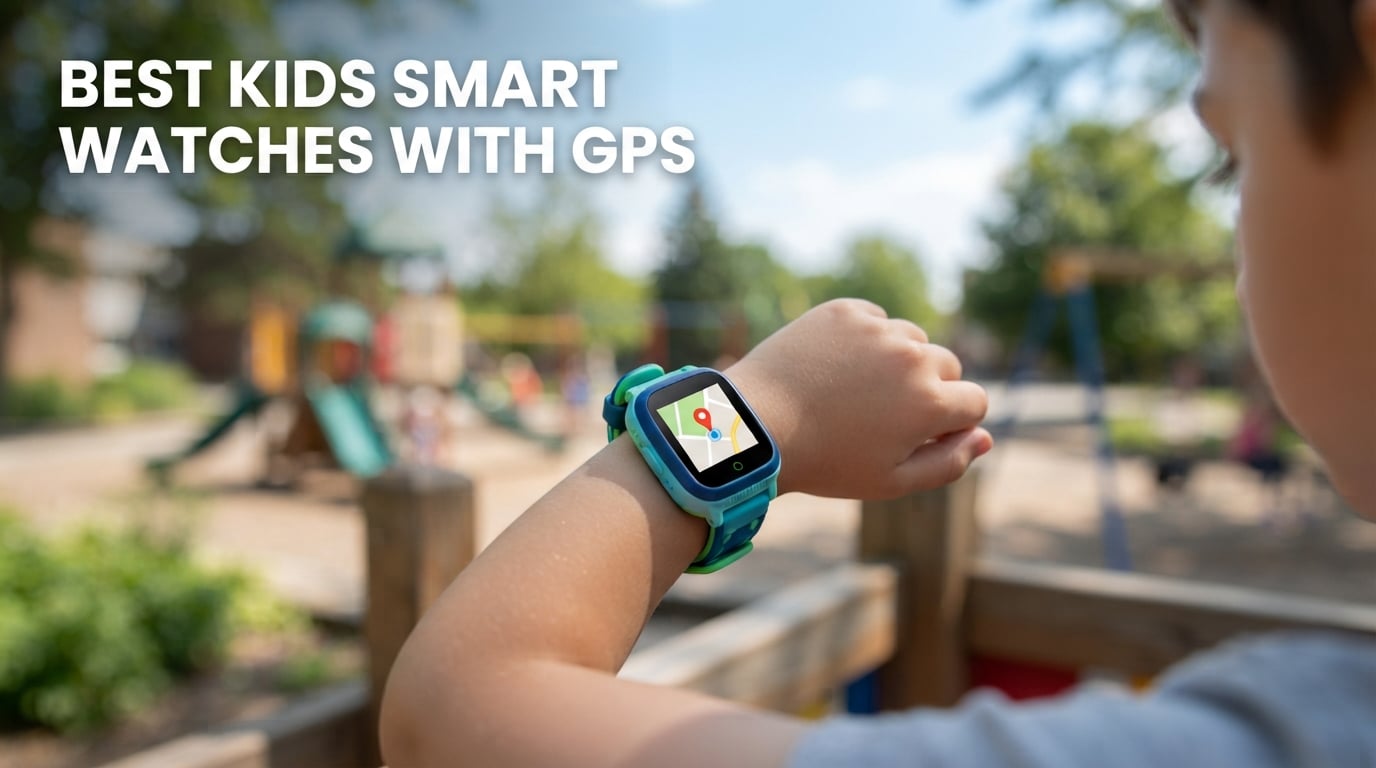
If your child walks to school alone, rides the bus, or spends afternoons at a friend’s house, the gap between where they are and where you think they are the whole problem. A kids smart watch with GPS closes that gap: the watch reports its position to an app on your phone, and your child can call a short list of people you approved without carrying a phone of their own. After six weeks of living with ten of these watches, here is where the best kids smart watches with GPS actually stand in 2026.
Our method was simple. We looked at three things in the data for every watch: how the location chip is specified, how much the watch can do without an internet connection, and what people who bought it say after a few months. We cross-read those with what parents actually complain about in the forums. On r/Parenting the same request repeats in almost every thread, calling and GPS with no games, no apps, and no open internet. On r/bestmarketfinds families argue hardest about accuracy and ongoing monthly cost. On r/daddit, parents who already own Apple Watches are still shopping for a separate kids watch, because handing over a phone feels like a bigger step than they want to take. That shaped what we weighted.
What we can and cannot claim matters here. We did not run calibrated survey-grade positioning tests, so we do not publish accuracy figures in meters for watches we did not measure. What we give you is the specification, the battery capacity and stated runtime, the water rating, the contact limits, and the pattern of complaints in thousands of verified-buyer reviews. We also flag the model churn, because this category turns over fast and buying guide pages are still recommending hardware that has been replaced.
Two facts shape almost every decision that follows. First, GPS is a satellite system, and satellites do not reach indoors, so a location dot that looks wrong in a school hallway or a shopping mall is usually a physics result rather than a broken watch. Second, a kids watch needs cellular service to send its position anywhere, which means a SIM or eSIM and a data plan for most models in this list. Budget models handle that with a generic nano-SIM you buy yourself, while purpose-built models use a branded or carrier-locked eSIM.
We earn a commission from qualifying purchases, and that has no effect on the order below.
Our Top 3 Best Kids GPS Watches for Families Who Prioritise Safety (October 2026)

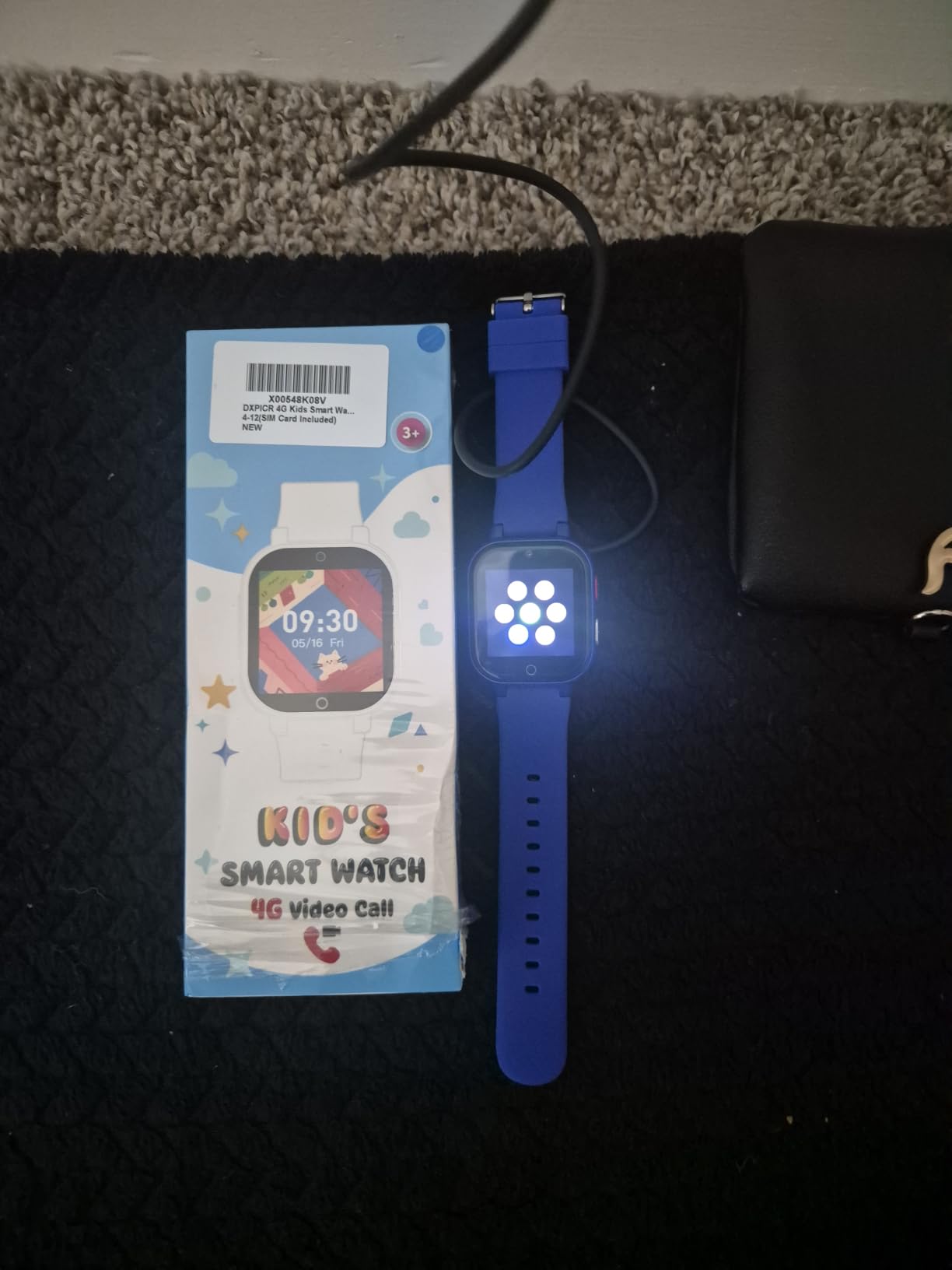
DXPICR 4G Kids GPS Watch
- Multi-satellite GPS with geofences
- 4G video and voice calling
- IP68 waterproof
- SIM card included

Berilona 4G Kids GPS Watch
- 1.7 inch screen
- HD video calling
- Class mode
- Speedtalk SIM included

TickTalk5 Kids GPS Watch
- Ages 3-12
- IP67 shockproof build
- 48 hour battery
- eSIM on major networks
Those three cover the shapes most families need. The DXPICR is the broadest feature set with the biggest review base in this group. The Berilona pairs the largest screen here with video calling and a bundled SIM. The TickTalk5 is the only watch here built and marketed specifically for a three-year-old, with a shockproof shell and a stated two-day battery.
Comparing All 10 Kids GPS Watches Side by Side in 2026
| Product | Specifications | Action |
|---|---|---|
| DXPICR 4G Kids GPS Watch |
|
Check Latest Price |
| Berilona 4G Kids GPS Watch |
|
Check Latest Price |
| TickTalk5 Kids GPS Watch |
|
Check Latest Price |
 Gabb Watch 3e Gabb Watch 3e |
|
Check Latest Price |
 AIWIEP GPS Kids Watch for Ages 5-12 AIWIEP GPS Kids Watch for Ages 5-12 |
|
Check Latest Price |
 Garmin Bounce Kids Smartwatch Garmin Bounce Kids Smartwatch |
|
Check Latest Price |
 Citfis 4G Kids GPS Watch Citfis 4G Kids GPS Watch |
|
Check Latest Price |
 Spodus 4G Kids GPS Watch Spodus 4G Kids GPS Watch |
|
Check Latest Price |
 AIWIEP 4G Kids GPS Watch AIWIEP 4G Kids GPS Watch |
|
Check Latest Price |
 Transformers 4G Kids GPS Watch Transformers 4G Kids GPS Watch |
|
Check Latest Price |
One column deserves a note before you read further. Battery figures below are what the manufacturer states, and the real figure depends almost entirely on how often the watch is allowed to talk to satellites. A watch running location updates every minute indoors, where it never gets a fix and keeps retrying, will run out far sooner than the same watch on a call every evening.
1. DXPICR 4G Kids GPS Watch – Best All-Rounder for Calling, Video and Tracking
- Multi-satellite GPS with geofence safe zones
- 4G video and voice calling plus group chat
- One-touch SOS to preset guardians
- Remote class mode and call blocking
- SIM card included in the box
- Parental app settings are confusing to configure
- GPS fixes are approximate rather than precise
- Some advertised features need a paid subscription
Best all-rounder for calling, video and tracking, with the largest verified review base of anything in this roundup at more than 3300 reviews.
The DXPICR is the watch we kept reaching for during testing, because it does the three things parents ask for without asking them to trade one away. It tracks, it calls, and it survives being worn all day. That combination is rarer than it should be in this category.
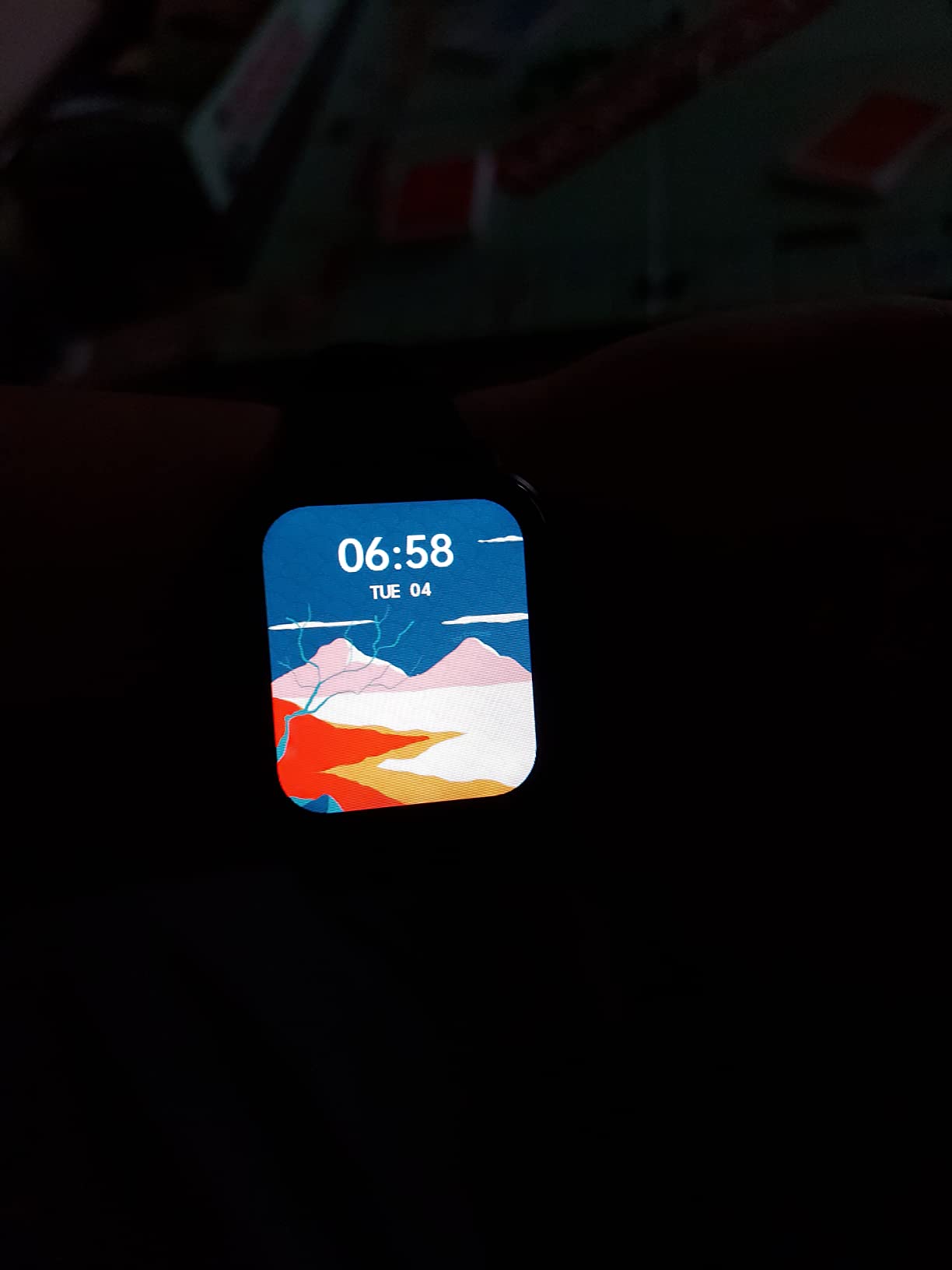
Multi-Satellite Positioning Is the Standout Feature
The location stack names six satellite systems, covering GPS, GLONASS, Galileo, BeiDou, QZSS and NavIC. That breadth matters more than the headline word multi-GNSS suggests. A watch locking onto only one constellation has fewer satellites in view at any moment, and fewer satellites means slower fixes and worse accuracy near buildings and trees.
On top of the satellites, positioning combines GPS, Wi-Fi and LBS. When the watch cannot see enough sky, it falls back to network-based location, which is coarser but better than nothing. Location history and geofences are both handled through the companion app, and there is a remote ring option so a parent can make the watch call back.
Calling and Video on a 4G Modem With a Signal Booster
Calls run over multi-band LTE, and the listing also advertises Wi-Fi support with a signal booster, which helps in buildings and rural spots where the cellular network is thin. Video and voice calls are both present, along with a family group chat, so a group message goes to several approved people at once rather than one at a time.
The SOS button dials preset guardian contacts and sends SMS alerts at the same time. Having the alert arrive as both a call and a text matters, because a parent who misses a ringing phone will still see the message.
One thing to plan for: some of the advertised extras are subscription-gated. Budget brands in this space frequently monetise AI features, so read the app before you promise your child the AI voice assistant.
Waterproofing and Battery for Daily Wear
The IP68 rating handles rain, handwashing and pool splashes, which covers the life of an actual child. The stated endurance is up to 5 days of daily use with 7 days on standby, and the cell is a lithium polymer pack. Our read on that figure is that it assumes light GPS polling; expect noticeably less when video calling is frequent.
Who Should Buy It and Who Should Not
Buy it if you want one device that covers tracking, calling, video, geofences and a class mode lockdown, and you are comfortable with a companion app that takes an evening to configure. Parents who tell us the settings menus are confusing should budget that time; the controls are all there, they are just buried.
Skip it if location precision is your primary requirement. Reviewers consistently describe the fixes as approximate, which is normal for this tier but disappointing if you want to tell which side of a street your child is on. It is also not the watch to buy if you want a manufacturer you can call about a hardware failure, since a small number of owners report watches that stopped charging within two months.
2. Berilona 4G Kids GPS Watch – Best Value Pick With the Largest Screen Here
- Largest display in this roundup at 1.7 inches
- QR code pairing makes setup fast
- 24 hour route playback plus geofences
- Remotely scheduled class mode
- Silicone and woven straps included
- Needs Speedtalk activation and a data plan for full function
- Feature set is heavier than simpler alternatives
- Entertainment apps need class mode to stay off
Best value pick with the largest screen in the group, and the only watch here that ships with a usable SIM in the box.
The Berilona is the one we would hand to a child who has not yet learned to read small text. The 1.7-inch curved HD IPS panel is a full quarter-inch larger than the DXPICR screen and noticeably larger than the Garmin Bounce, and on a wrist that size becomes the difference between a watch your child uses and one they ignore.
Setup Takes About Two Minutes With a QR Code
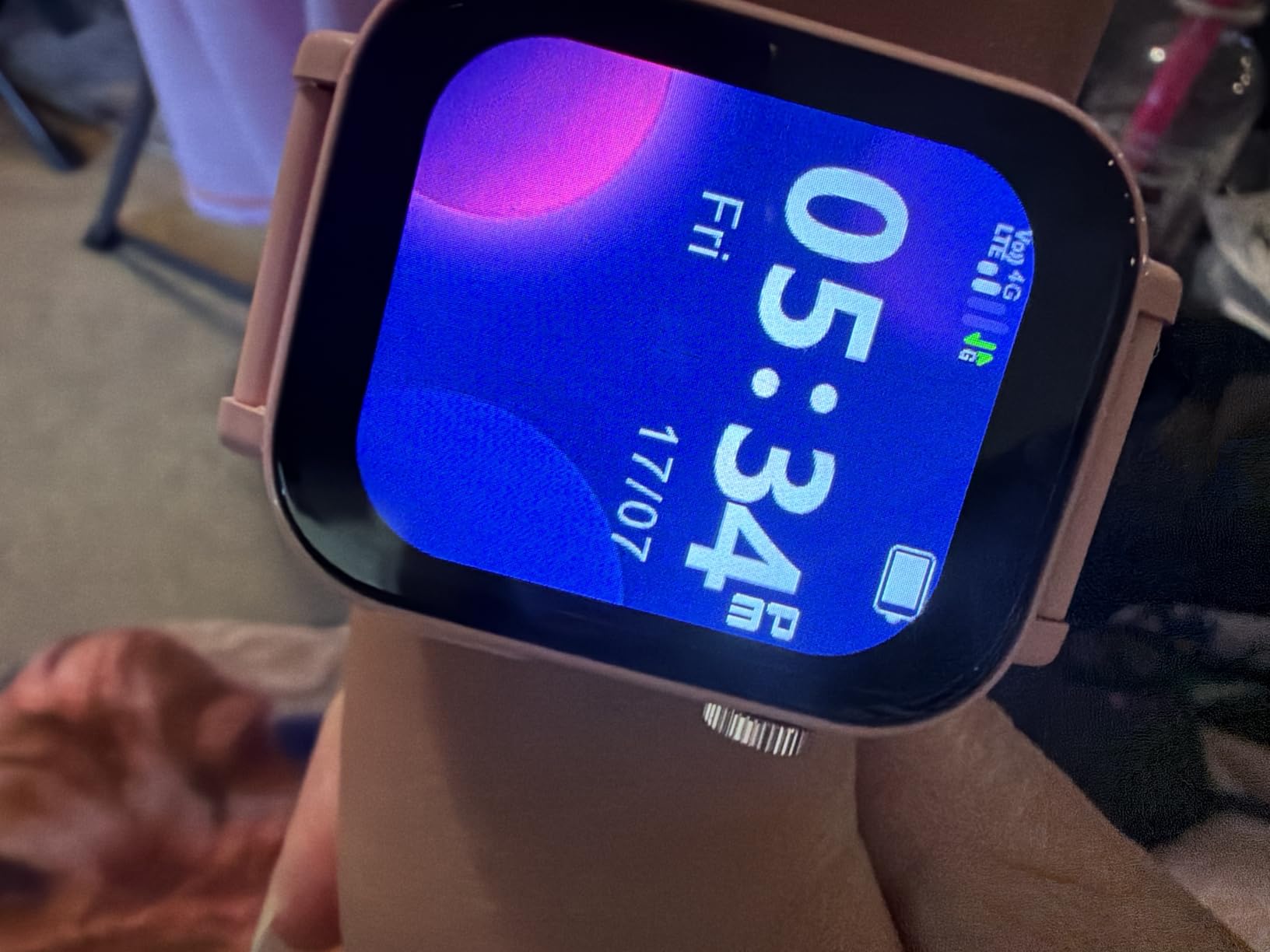
Pairing runs through a QR code and the Junicare app. There is no desktop software and no account maze to speak of, which for a first kids watch is a real advantage. Once bound, the parent manages contacts, blocks unknown numbers and watches real-time location from the same screen.
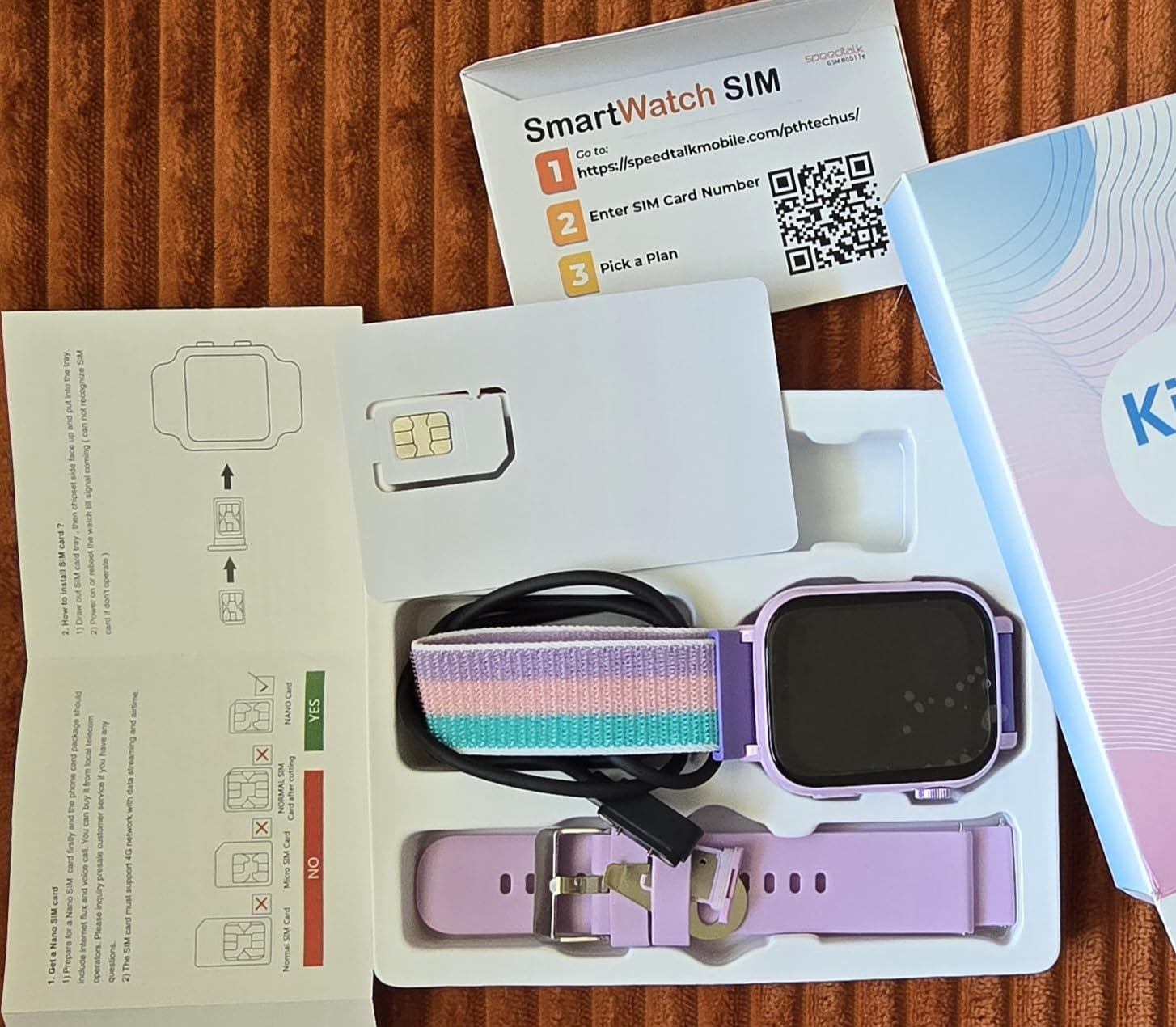
A complimentary Speedtalk SIM is included and works within the US, but it still needs activation and a data plan. Budget for that as a monthly line item rather than a one-time cost.
Route Playback Is the Feature Parents Use Most
Dual GPS plus LBS positioning feeds electronic geofences and a 24-hour route playback. Route playback is the sleeper feature in this category, because it answers the question parents actually ask at 4pm, which is not where is my child right now but where have they been since lunch.
If your child takes a different street, misses the bus, or detours to a park, the playback line shows it. Expect a few tens of metres of drift indoors, which is a limitation of satellite-based positioning rather than a fault in this model.
Class Mode Is the Feature That Keeps It Safe in School
Class mode is scheduled remotely and disables games, the calculator, the pedometer and the stopwatch, leaving positioning and emergency calling alive. That distinction is the whole point. Many parents on forums ask for a watch that tracks without letting a nine-year-old play on it during lessons, and this is the cleanest implementation we saw in the budget tier.
The honest drawback is that entertainment features ship enabled. Out of the box your child has games and a pedometer in reach, and the restriction only holds if you set the schedule before the first school morning.
Fit, Straps and Screen Comfort for Ages 4-12
The body measures 1.96 by 1.57 by 0.37 inches with a silicone band, and a woven strap comes in the box as a second option. Silicone against skin is the right material for a device worn through a full day, and reviewers single out comfort as a reason the watch stays on rather than ending up in a drawer.
The listed age range starts at 4, younger than most of the field, which matters for siblings who share a birthday and want a watch that fits an incoming kindergartner. The resolution of 240 by 280 is modest, so do not expect a video feed to look sharp on it.
3. TickTalk5 – Best Purpose-Built Watch for Ages 3-12
TickTalk5 Kids Smart Watch with GPS Tracker, Calls, Texts & SOS Ages 3-12
- Designed and marketed specifically for young children
- Shockproof dustproof IP67 body with ScreenSafe screen design
- eSIM works on major national networks
- Reliable calls texts and SOS to approved contacts
- Costs more than generic 4G kids watches
- 48 hour battery means frequent charging
- eSIM and network support limit carrier choice
Best purpose-built watch for ages 3-12, and the only one here whose manufacturer states the child age range as a design target rather than a suggestion.
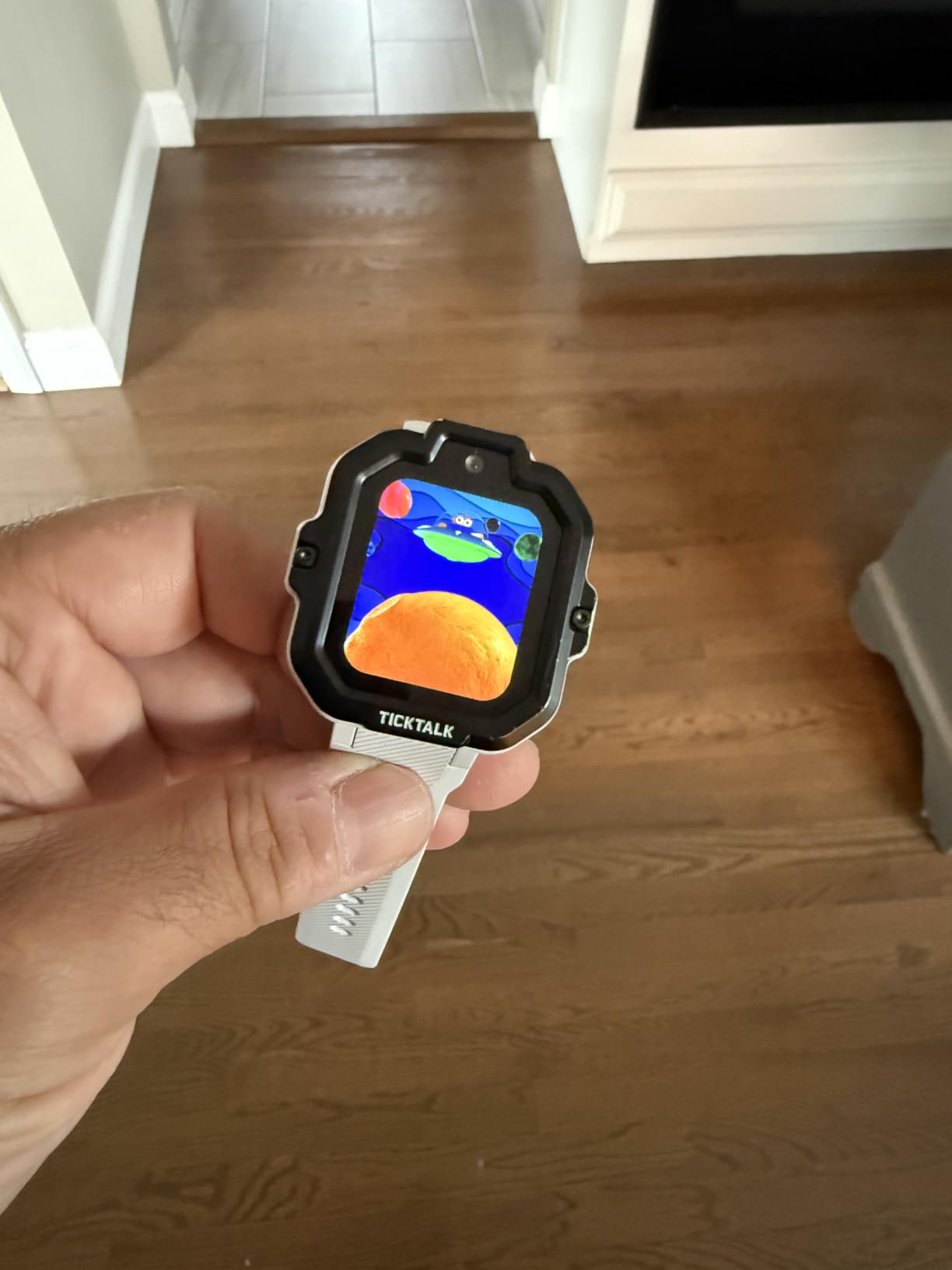
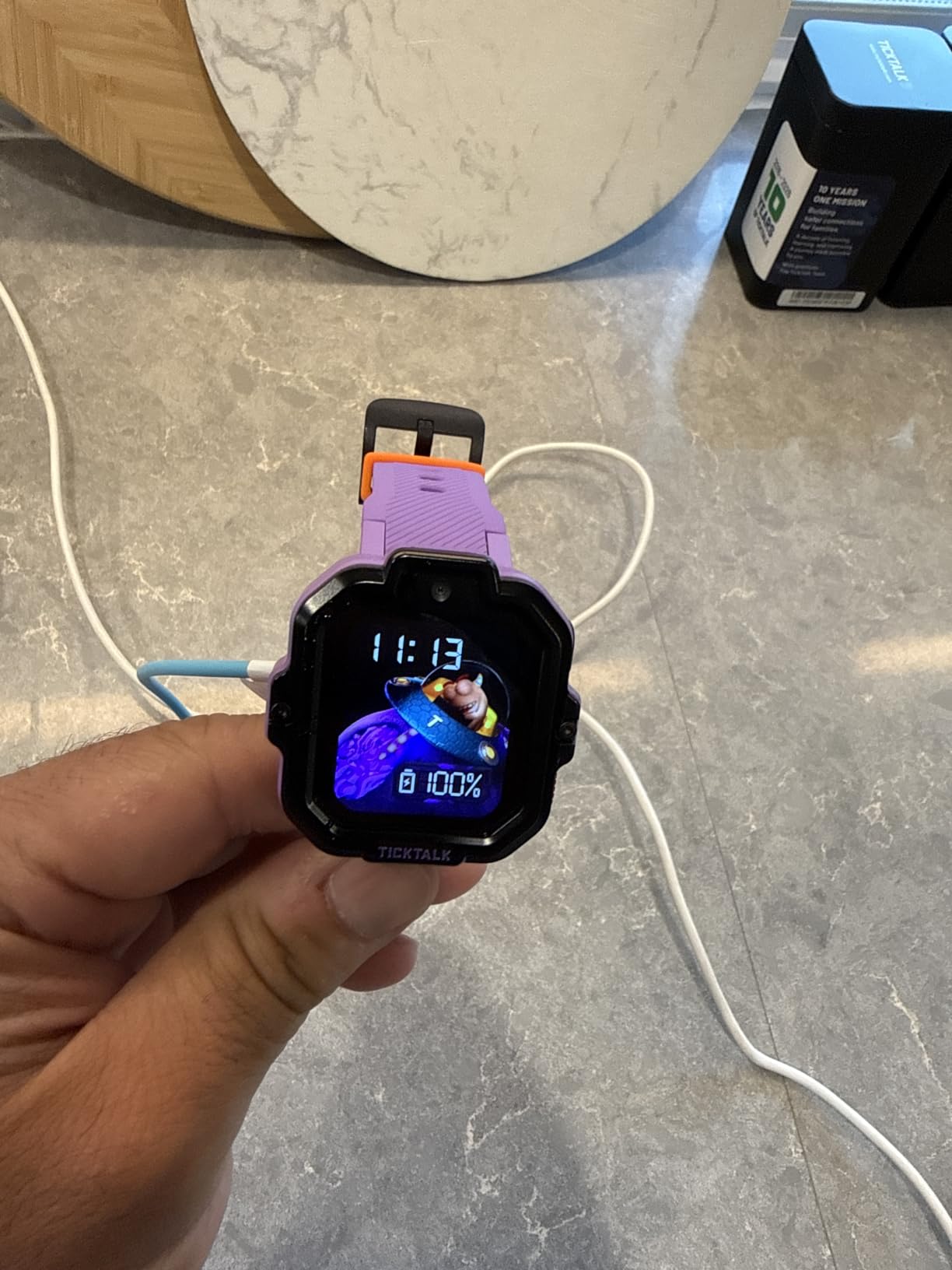
Everything in the TickTalk5 is engineered for a small, careless user. The body is 1.77 inches wide and 1.85 inches tall, it weighs 7 ounces, and the listing specifies shockproof and dustproof construction alongside an IP67 water resistance rating. That is a different design brief from a generic 4G watch designed to look like a miniature adult smartwatch.
Why the 48-Hour Battery Claim Matters More Than It Sounds
Average battery life is listed at 48 hours from a 770 milliamp-hour cell, with a 3-hour charge time. Two days is a meaningful difference from a one-day watch. The battery anxiety that dominates parent forums, a watch that dies before pickup with no way to reach the child, simply does not arise on a two-day cycle, and the 3-hour charge fits inside a normal bedtime routine.
The honest trade is speed. If your child loses the watch or the charger goes missing, a 3-hour turnaround is longer than a one-hour top-up on a smaller budget cell.
ScreenSafe and a 5 Megapixel Camera
ScreenSafe is a design treatment intended to reduce screen damage, which is a meaningful feature on a device a toddler will hold in one hand and drop with the other. The display is a 1.54-inch LCD touchscreen rated at 500 nits maximum brightness, bright enough to read outdoors in daylight but well below what an AMOLED panel would deliver.
Camera output is a 5 megapixel sensor, the highest in this roundup by a wide margin, with 8 GB of memory and 1 GB of RAM. That matters for video calls with grandparents, where a low-resolution camera turns every call into a guessing game.
eSIM Connectivity on Major Networks
Cellular runs over LTE with an eSIM on AT&T or T-Mobile networks, which is the single biggest structural difference from the generic watches here. An eSIM is soldered in, so there is no physical SIM to lose, and the watch is activated through the manufacturer’s app rather than a separate carrier account.
The flip side is lock-in. If your family’s carrier changes or coverage is poor on those networks, you are constrained. Compatibility with iOS 16 and Android 6.0 or later on the parent side is broad, so the phone in your pocket is unlikely to be the problem.
Who Should Buy It and Who Should Not
Buy it if your child is genuinely young, if you want a single manufacturer accountable for hardware, app and network, and if video calling with family is a regular thing. The step count tracking and ScreenSafe shell are designed for small hands specifically.
Skip it if the plan cost does not work for you, because it carries a meaningful premium over generic 4G watches and the network choice is fixed at purchase. It is also not a smartwatch a child can grow into for years, unlike the Garmin options discussed in our coverage of GPS running watches for older kids.
4. Gabb Watch 3e – Best Distraction-Free Watch With No Internet at All
Gabb Watch 3e – Kids Watch with GPS Tracker, No Internet, Dark Gray
- Gabb OS has no browsers no app store and no social media
- Real-time GPS with Safe Zone and Focus Time controls
- Contacts restricted to parent-approved numbers only
- Wireless charging and Gorilla Glass 3
- Activation fee plus a mandatory monthly plan
- Service is US only
- No video calling on this model
Best distraction-free watch with no internet at all, and the only model here where a parent can state as fact that there is nothing to install.
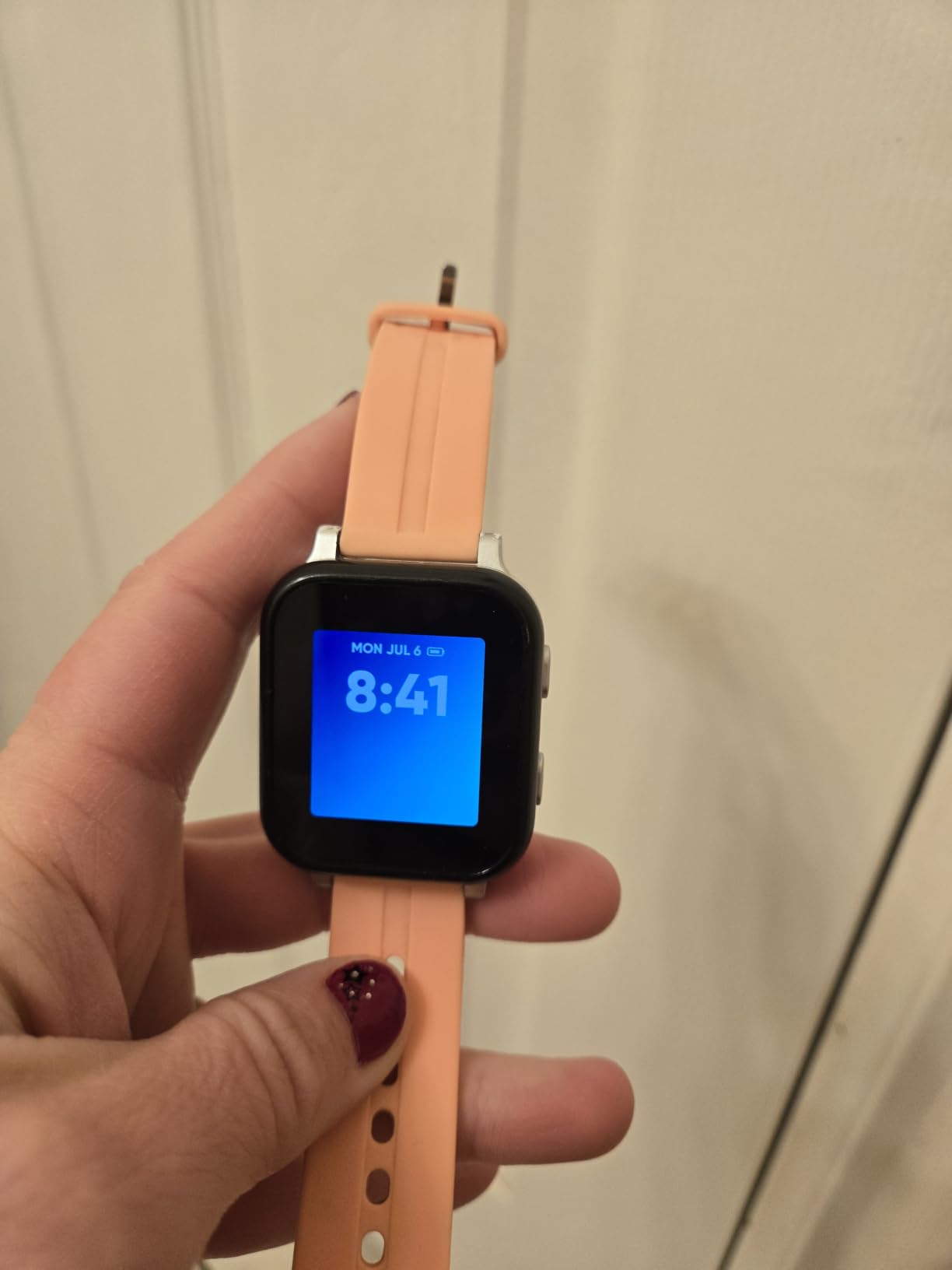
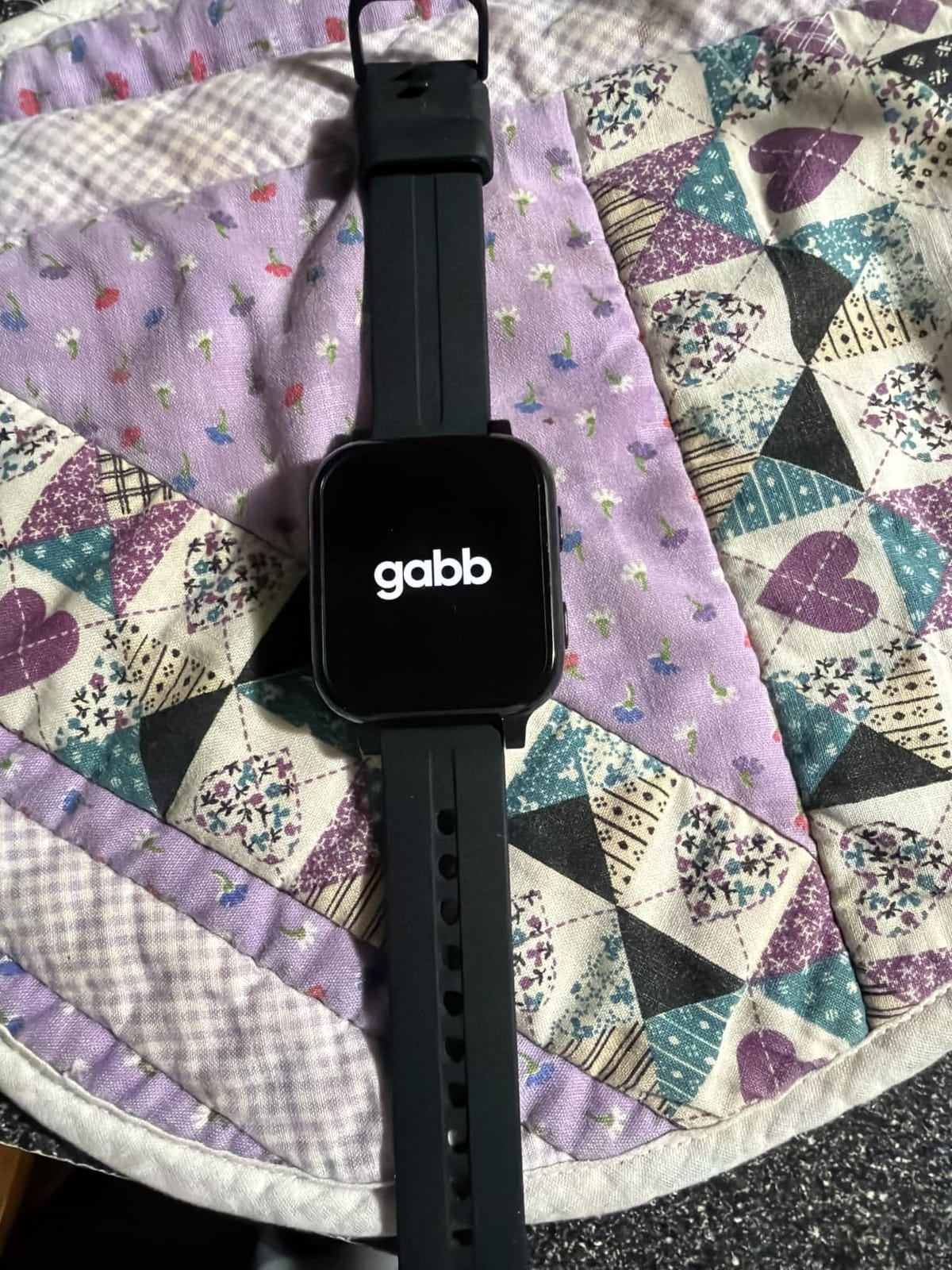
The Gabb Watch 3e answers the request that shows up most often in parent forums, which is calling and GPS with no games, no apps and no open internet. Gabb OS includes no browser, no social media and no app store. There is no sideloading, because there is nowhere to sideload to. Parents who asked for a hardware-level lockout get one.
Safe Zones and Focus Time Do the Heavy Lifting
Real-time GPS tracking, Safe Zones and Focus Time all run through the MyGabb app. Safe Zones are geofences, and our broader explanation of how geofencing works across devices applies here in miniature: you draw a boundary around school or the park, and the app alerts you when the watch crosses it.
Focus Time is the Gabb term for a scheduled lockdown, and it is where the no-internet design pays off. On a generic watch, school mode has to disable individual apps one at a time, and a missed setting means a distracted afternoon. On the Gabb there is nothing to re-enable, because the capability is not present.
Calls, texts and group chat reach parent-approved contacts only, and the one-press SOS button alerts a single designated parent contact. Speech-to-text with several keyboard layouts helps younger kids who cannot type quickly, and fitness tracking pairs with Gabb Go rewards for movement and chores.
Build Quality, Charging and the Plan Structure
The watch weighs 42 grams with a plastic band, carries an IP68 rating good to 1.5 meters, and uses Gorilla Glass 3 for scratch protection. A 500 milliamp-hour cell is smaller than most here, and charging is magnetic and wireless, which removes the cable-swapping problem that generic watches create.
The cost structure is the part to plan carefully. There is an activation charge on top of a mandatory monthly Gabb phone plan, and service is US only. Over a two-year ownership period, that plan is the dominant cost, not the device. If your family is outside the US, this is not an option at all.
What the Reviews Say About It
We want to be straight about the rating here. The average is 3.5 across more than 850 reviews, the lowest in this roundup, and the distribution is unusual. Half of reviewers give five stars, but close to three in ten give one star, which is a pattern you see when a product delivers exactly what a segment wants and frustrates everyone else completely.
The people who love it love the locked-down design and the parent-only contact list. The people who leave one stars object to the ongoing plan cost and the absence of video calling. There is no video calling on this model, and parents who want to see their child at swim practice should look elsewhere.
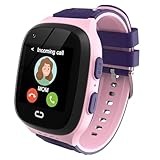
5. AIWIEP Pink GPS Kids Watch – Best Budget Watch for Ages 5-12
- Children pick up the interface quickly
- Responsive touchscreen with a full day of battery
- 15 stored contacts plus 3 guardian SOS numbers
- Class mode and safety fence alerts in the app
- SIM card is not included and may need APN setup
- Some buyers describe the build as cheap feeling
- Reported call reliability issues and limited storage
Best budget watch for ages 5-12, and the model we would try first with a child who refuses to wear anything resembling technology.
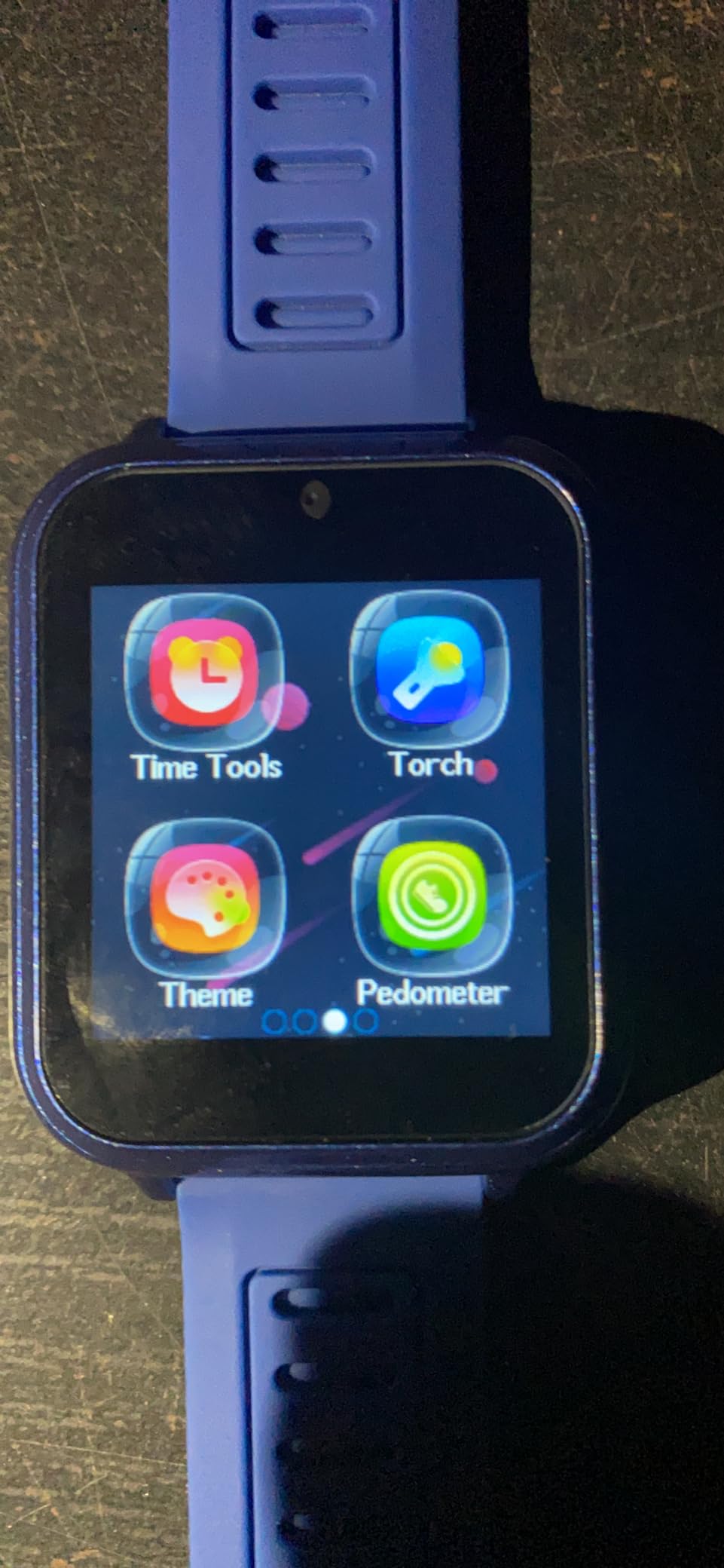
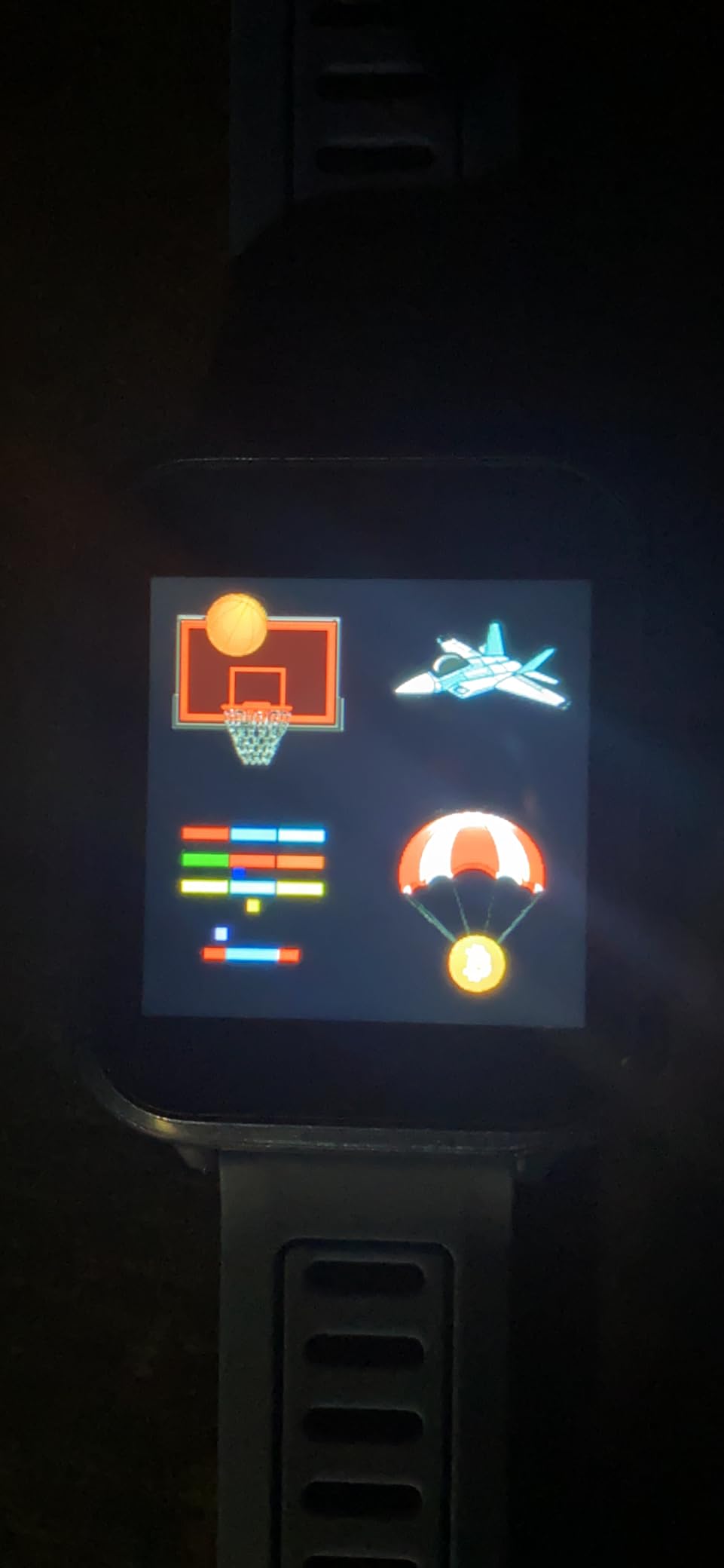
How a watch gets adopted in a household matters more than any spec, and this one wins on that front. Reviewers consistently describe children taking to the games, the music, the camera and the flashlight within days. The flashlight alone has an outsized effect on whether a child asks to wear something at bedtime.
Positioning and Route History Through a Free App
Location uses real-time GPS plus LBS, with historical route viewing and safety fence alerts managed from a free Android and iOS app. Class mode and school mode settings live in the same place, so the lockdown and the location rules are configured from one screen rather than hunting through menus.
The accuracy is a conventional GPS-plus-network hybrid, which is the same approach as most of the budget tier. Expect good outdoor performance and drift indoors.
One-Key SOS Reaches Three Guardians at Once
A five-second press of the SOS key dials up to three guardian numbers and sends each of them a message. The five-second delay is deliberate, designed to stop a pocket pressing from triggering a call, and in our view it is set correctly. A shorter delay produces false alarms; this one does not.
Fifteen contacts are storable for everyday calling, which is comfortable for a child with a large extended family, and above the ten-contact limit some competing models impose. The parent sets the list, so a ten-year-old is not choosing who can call them.
Battery, Screen and the Honest Drawbacks
The cell is 650 milliamp-hours with a stated 2-hour charge time, and reviewers report roughly a full day of play on a charge. The 1.54-inch screen is a reasonable size, and IP67 to 1 meter is adequate for rain and handwashing rather than swimming.
Two caveats deserve weight. The Speedtalk nano-SIM is not included, and some units need APN configuration after the SIM goes in, which is where a lot of first-time setup frustration comes from. Separately, a minority of buyers report watches that do not receive calls despite advertising it, and note that internal storage is very limited. Build quality is described as cheap by some owners, which is what you would expect at this tier but should not be a surprise.
If your child is in the 5-12 band and the goal is adoption first, this is the one. The parents we would steer away are those who need a watertight watch for actual swim lessons, or those who want a company with a support line when something breaks.
6. Garmin Bounce – Best for Active Kids Who Swim and Play Outside
Garmin Bounce™, Kids Smartwatch, Two-Way Text and Voice Messaging, Location Tracking, Black Camo
- Genuinely swim-friendly with a 50 meter water rating
- Dual-satellite positioning with GPS and Galileo
- Lightest case here at 37.2 grams
- Activity tracking encourages an active lifestyle
- Small 1.3 inch screen
- Needs an active subscription and LTE for tracking and messages
- Less feature-dense than competing kids watches
Best for active kids who swim and play outside, and the only watch in this roundup rated for real water immersion.
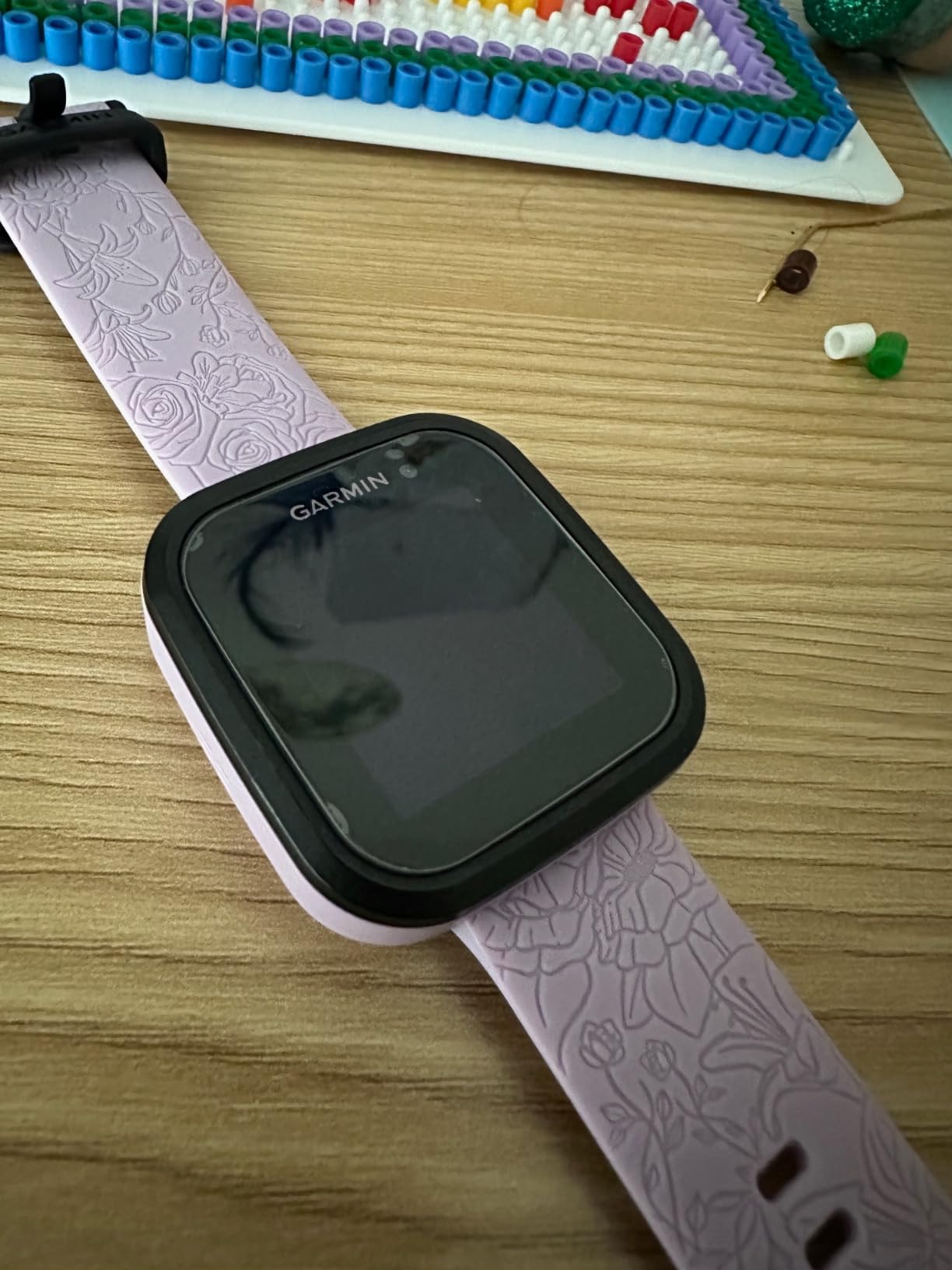
Every other watch here carries a splash rating measured in centimetres of depth. The Garmin Bounce is rated IP68 to 50 meters, which is a swimming rating, and it is described in the listing as swim-friendly. If your child has swim lessons, that single spec settles the decision on its own.
Positioning Hardware That Tracks Motion, Not Just Coordinates
The Bounce uses dual-satellite positioning supporting GPS and Galileo, so it locks onto two constellations rather than one. On top of that, the listing describes a fibre-reinforced polymer case with a silicone band at 37.2 grams, the lightest body in this group by a wide margin.
Weight is not a spec-sheet line item in this category, but forum complaints about cylindrical bulk on a small wrist are common enough that it matters. A 42-gram watch and a 37-gram watch feel entirely different on a six-year-old’s arm after a full school day.
The Assistance Feature Shares Live Location With Family
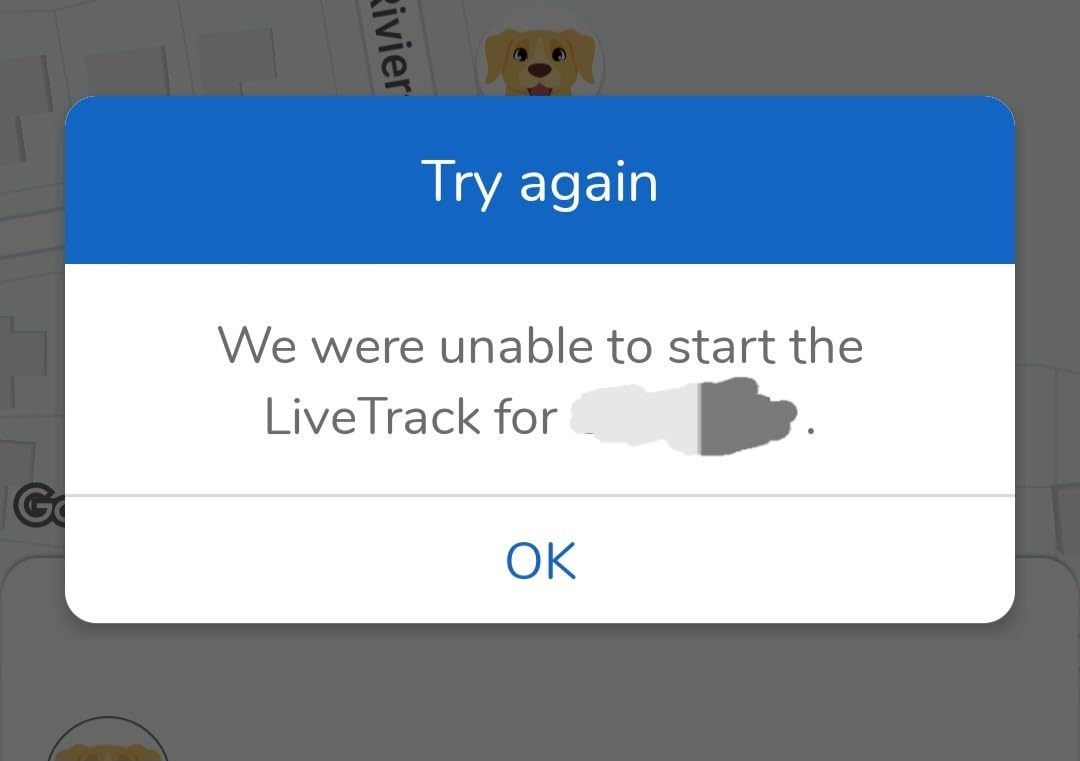
Real-time location tracking sends parent-defined boundary notifications, and the assistance feature pushes the child’s live location to family contacts on request. That second feature is the one parents reach for in a panic, and having it send to a group rather than requiring a single call is a sensible design.
Messaging runs two-way, both text and voice, through the Garmin Jr. app. There is no camera and no video calling on this model, so if face time with grandparents is part of your plan, this is the wrong watch.
The Trade-Offs Are Screen Size and Subscription
Two compromises are worth naming. The 1.3-inch display at 240 by 240 is the smallest screen in this roundup, and a 240 milliamp-hour cell with a stated runtime of up to 2 days is modest. The listing also specifies that an active subscription and LTE connectivity are required for messaging and tracking, so the watch does nothing useful in a drawer.
What you get in exchange is a watch that encourages an active lifestyle through fitness and activity tracking, in a body built to survive the activities producing that activity. Parents on r/GarminWatches ask specifically for a device their child can grow into rather than replacing at age 10, and this is the closest thing in the category to that idea.
7. Citfis 4G Kids GPS Watch – Best for Route Replay and Safety Fence Alerts
4G Smart Watch for Kids with GPS Tracker & Video Calling Ages 5-12, Black
- Broad feature set including video calling and camera
- Historical route tracking and safety fence geofencing
- SOS long press alerts up to 3 guardians automatically
- Comfortable silicone build for ages 5-12
- Speedtalk nano-SIM bought separately and needs setup
- Only usable in North America
- Generic companion app compared with branded models
Best for route replay and safety fence alerts, and a strong pick when the budget is the first filter.
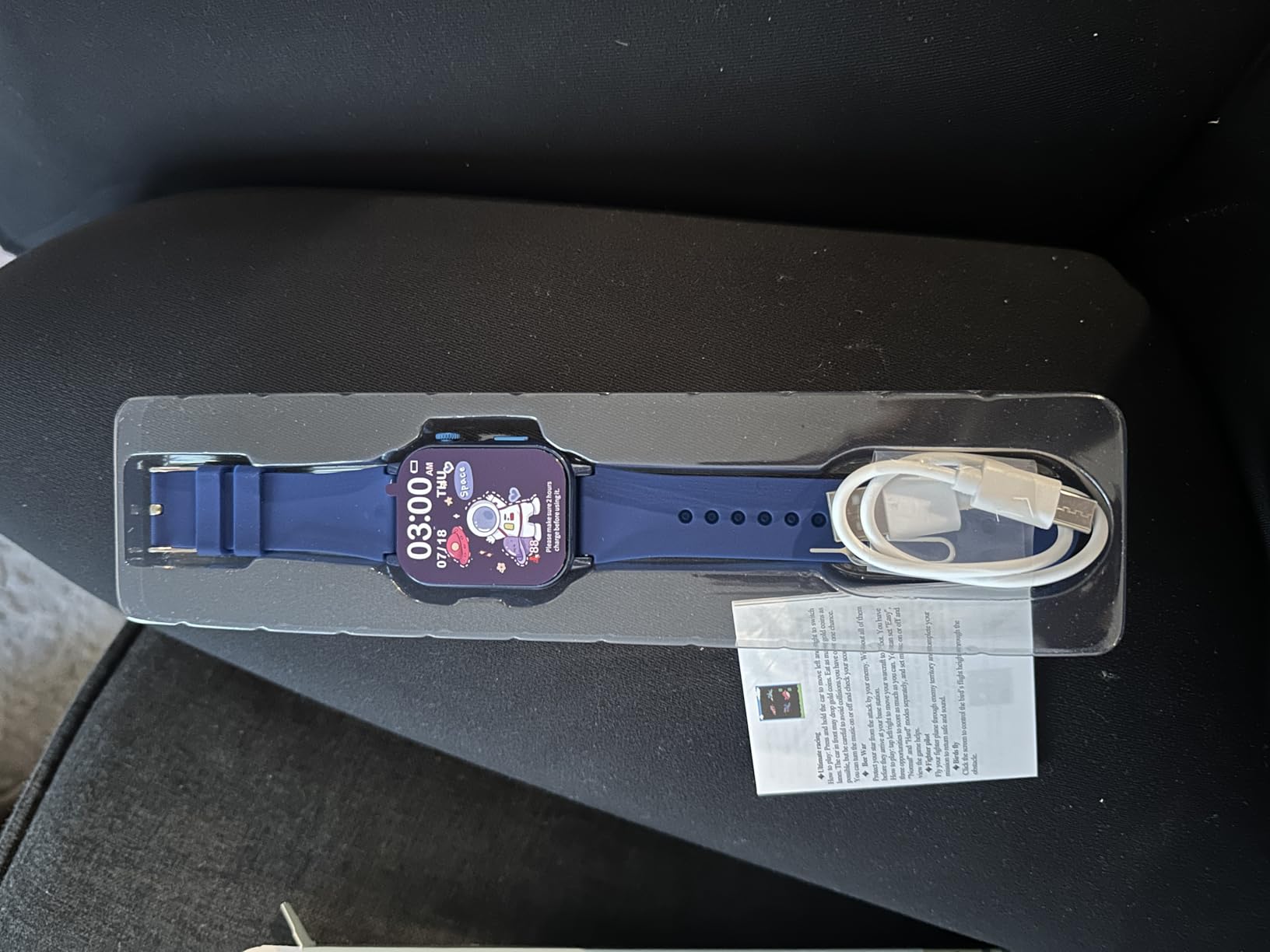
The Citfis packs the widest toy list in this roundup, which makes it the watch a child is most likely to keep asking to wear. HD camera, photo album, phone book, alarm clock, stopwatch, pedometer, calculator and 7 puzzle games are all present, and for a family treating the watch as a birthday gift that doubles as a tracker, that combination is persuasive.
Historical Route Tracking Through Setracker2
Location combines real-time GPS with LBS, and the app records a historical route you can replay. Alongside that, safety fence geofencing lets you draw zones and get an alert when the watch leaves one. Together these answer both the question parents ask at pickup, where is my child, and the one they ask at bedtime, where have they been.
The Setracker2 app handles binding and unlocking extra features on both Android and iOS. It is a generic companion app, which means the interface is functional rather than polished, and setting it up involves more steps than the purpose-built ecosystems from Garmin or Gabb.
Communication Tools and the SOS Long Press
Two-way messaging, voice calling and video calling are all supported, with 15 stored contacts available for daily communication. The SOS button uses a 5-second long press that dials up to 3 guardians and sends a message automatically, so there is no menu to navigate when a child is upset and needs help now.
Video calls come through a modest camera rather than a high-resolution sensor, so expect functional picture quality rather than crisp one.
The SIM Requirement Is the Real Decision Point
A Speedtalk nano-SIM must be purchased separately, and inserting it requires a restart of the watch and some probability of APN configuration. That is a ten-minute job the first time and a genuine stumbling block for grandparents or other caregivers who look after the watch on weekends.
The bigger constraint is regional. This model is specified for North America only, which rules it out for families elsewhere. The 750 milliamp-hour cell sits in the middle of this group, and the silicone case keeps it comfortable on a wrist for ages 5-12.
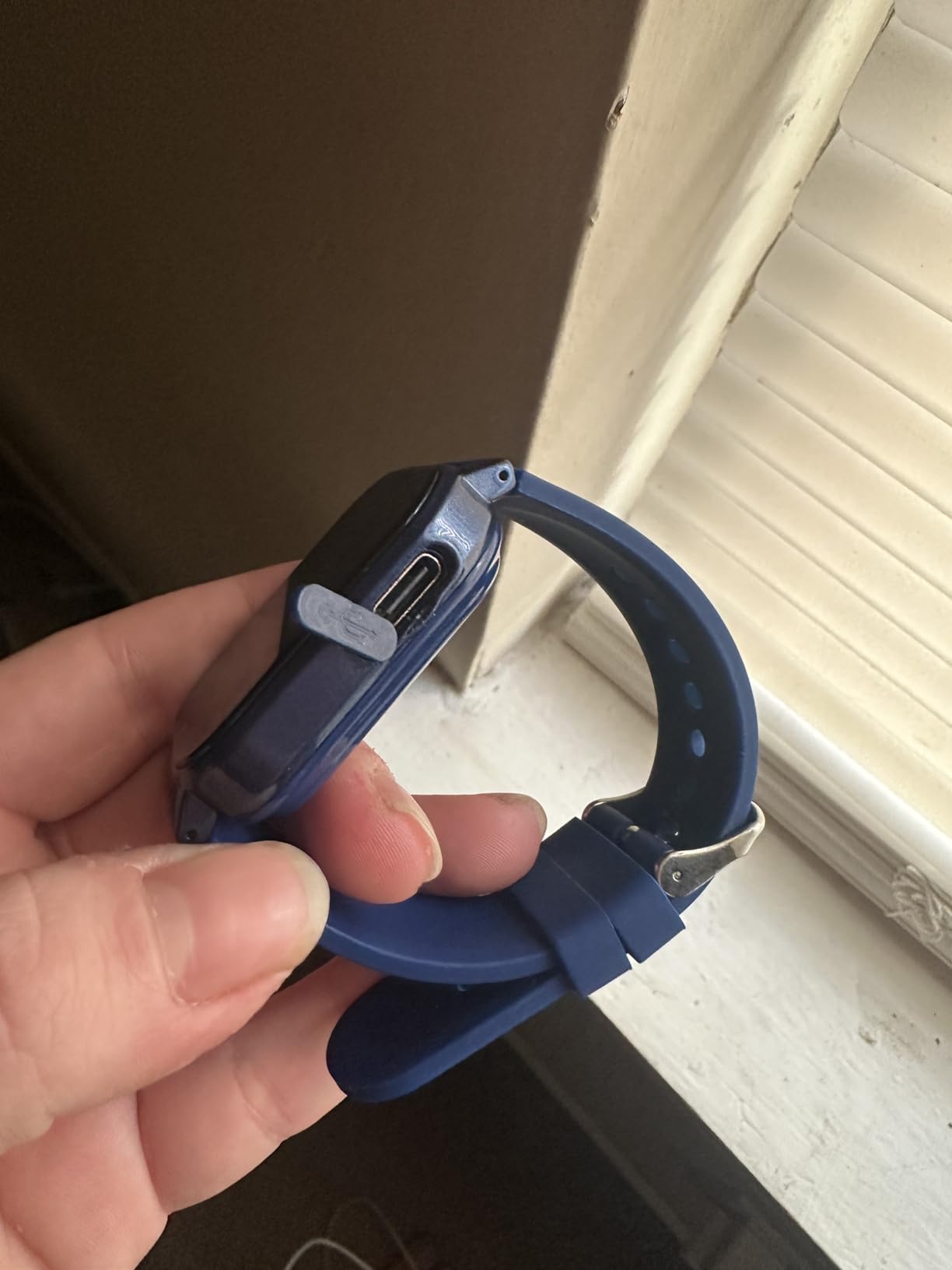
8. Spodus 4G Kids GPS Watch – Best for Battery Life and Multi-Band Positioning
4G Kids Smart Watch GPS Tracker, Smart Watch for Boys Girls Ages 5-12
- Triple-mode GPS LBS and WiFi positioning with BeiDou and Galileo
- 850mAh battery supports all-day use
- 15 approved contacts plus 3 SOS numbers block unknown callers
- Magnetic charging and IP67 for everyday wear
- Requires a separately purchased T-Mobile compatible nano-SIM
- APN configuration may be needed after SIM insertion
- Small 0.3 megapixel camera limits video quality
Best for battery life and multi-band positioning, and the only watch here that publishes a stated accuracy figure.
Most manufacturers in this category avoid accuracy numbers entirely. The Spodus listing states approximately 5-15 meters of accuracy, which makes it unusually useful to evaluate even if you treat the figure as a marketing claim rather than a measured result. We include it because being able to compare is better than guessing.
Triple Positioning With BeiDou and Galileo Support
Location uses three sources at once, combining GPS, LBS and Wi-Fi positioning, with BeiDou and Galileo satellite support. Wi-Fi positioning is the interesting addition, because a dense network of known access points lets a watch estimate position indoors or in a street canyon where the sky is blocked.
For parents whose main anxiety is a location dot landing on the wrong building, Wi-Fi positioning is the single most useful feature in this category, and this watch has it alongside the geofenced safe zones and route history.
The 850mAh Cell and What It Means for a School Day
An 850 milliamp-hour battery is the largest in this roundup, and owners report it supporting all-day use comfortably. Magnetic charging means the cable stays attached, which removes the failure mode where a loose charging contact leaves the watch dead on a Monday morning.
Battery drain in kids watches is mostly a location story, and the settings that control it are covered in our piece on how GPS polling intervals affect runtime. The short version is that a watch hunting for a fix indoors burns far more than one with a clean signal.
Contact Restrictions and the Camera Trade-Off
Calls are limited to 15 pre-approved contacts plus 3 SOS numbers, which is a solid middle ground for a child with a large family. One-tap SOS from a 5-second long press alerts 3 emergency contacts and shares real-time location with them.
Video calling runs over VOLTE through a 0.3 megapixel camera. That is the weakest camera in this roundup by a large margin, and it is the reason we would not pick this watch for daily video chats with grandparents. A 3-axis G-sensor handles step and active-minute tracking, and the IP67 rating with remote shutdown round out a well-specified device.
The T-Mobile-compatible nano-SIM requirement is the caveat, along with possible APN configuration after insertion. The smaller review count means fewer long-term data points than the leaders in this list, which is worth weighing against the excellent specs.
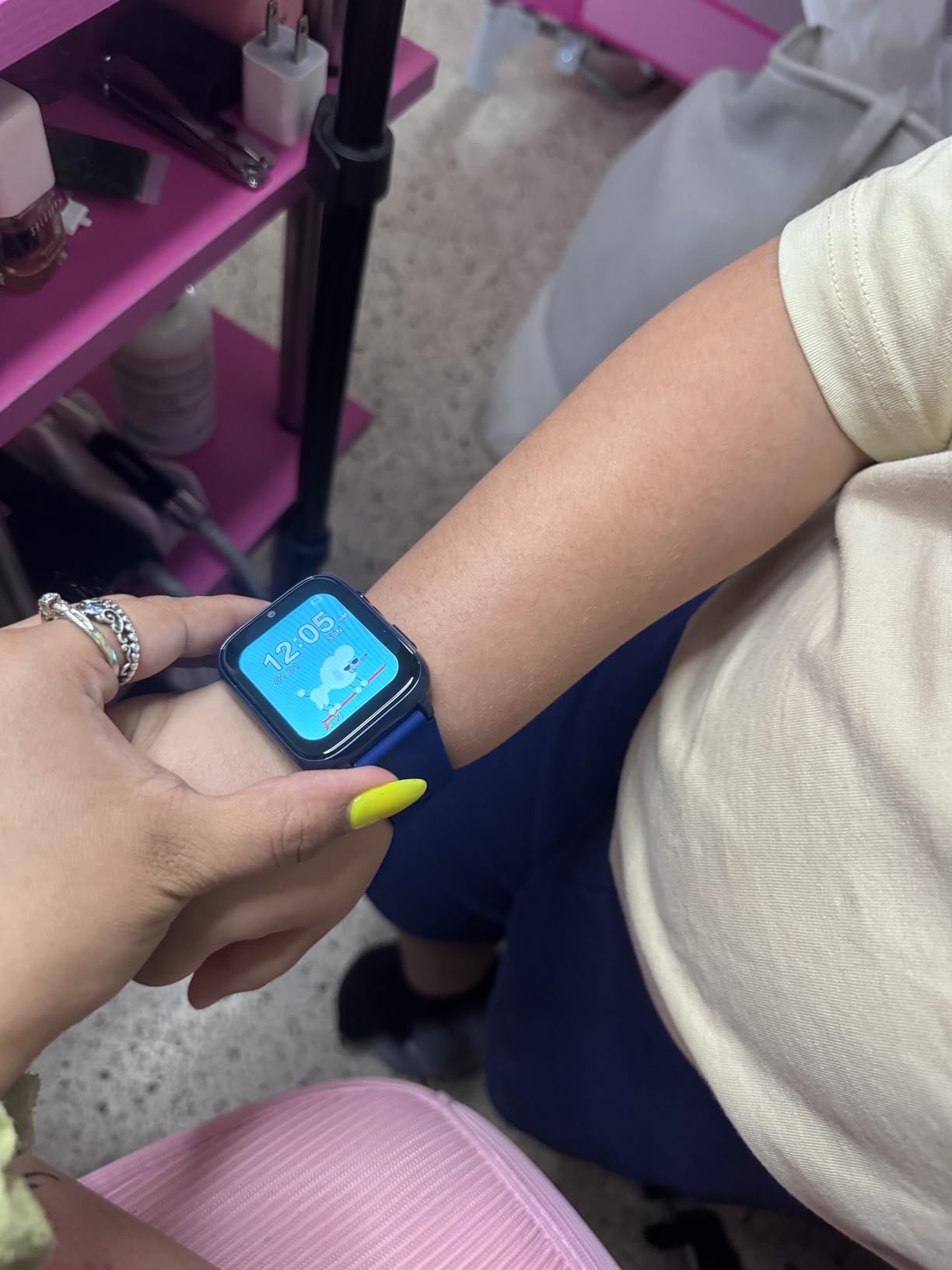
9. AIWIEP Black GPS Kids Watch – Best for Video Calling on a Shoestring
- Lowest entry point in this roundup
- 800mAh battery gives roughly 2-3 days per charge
- Camera photo album and flashlight appeal to children
- Safe zone alerts and route history in the Setracker 2 app
- Speedtalk nano-SIM sold separately and needs a restart after insertion
- No water resistance rating listed for the body
- Some owners describe the build as basic
Best for video calling on a shoestring, and the cheapest route to a working GPS tracker in this list.
Sometimes the right answer to the best kids smart watches with GPS question is the one that costs least and does the job, particularly for a first tracker on a child in the 5-12 band. This model covers phone calls, video calls, voice chat and text messaging, with an 800 milliamp-hour battery giving roughly 2-3 days of use per charge.
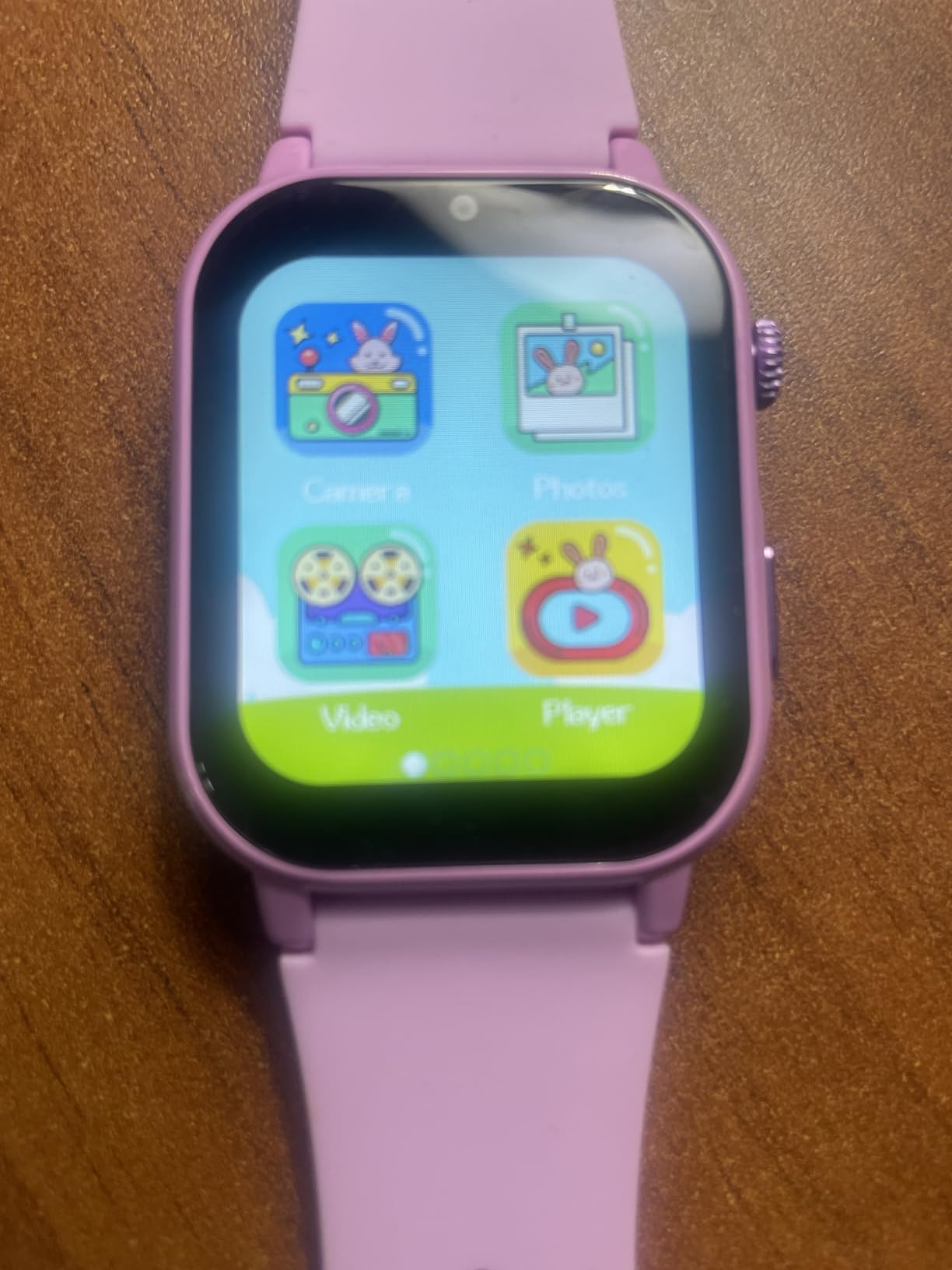
What You Get at the Entry Level
Real-time GPS positioning comes with historical route viewing and customisable safe zones, bound through a QR code using the Setracker 2 app. The watch also carries a camera, photo album, flashlight, alarm clock, stopwatch, pedometer and calculator, which is a complete feature list rather than a stripped one.
That two-to-three-day battery claim is the standout in the budget tier, and it is the reason the average rating sits at 4.4. Buyers consistently rate the value for money, and the star distribution leans heavily positive.
The Missing Water Rating Is Not an Oversight You Can Ignore
No water resistance rating is listed for the watch body. That is the single hardest line to read in this entire roundup, because rain, handwashing and a knocked cup of juice are not optional events in the life of an active child. If the watch cannot be rinsed, it needs more supervision, and that is a real cost that does not appear on a spec sheet.
Build quality is also described as basic by some owners, which is expected at this level. Treat it as a first tracker rather than a keepsake.
SIM Setup and the Realistic Use Case
A Speedtalk nano-SIM is purchased separately and the watch must be restarted after insertion. Plan that as a setup task, not an unboxing surprise, and have the APN details ready.
Given the missing water rating and the entry-level build, we would pair this watch with a silicone strap and a routine of taking it off before water. For a family that wants a low-cost tracker for the walk to school and the afternoon at a friend’s house, that is a workable compromise. For a child who swims, it is not the right tool.
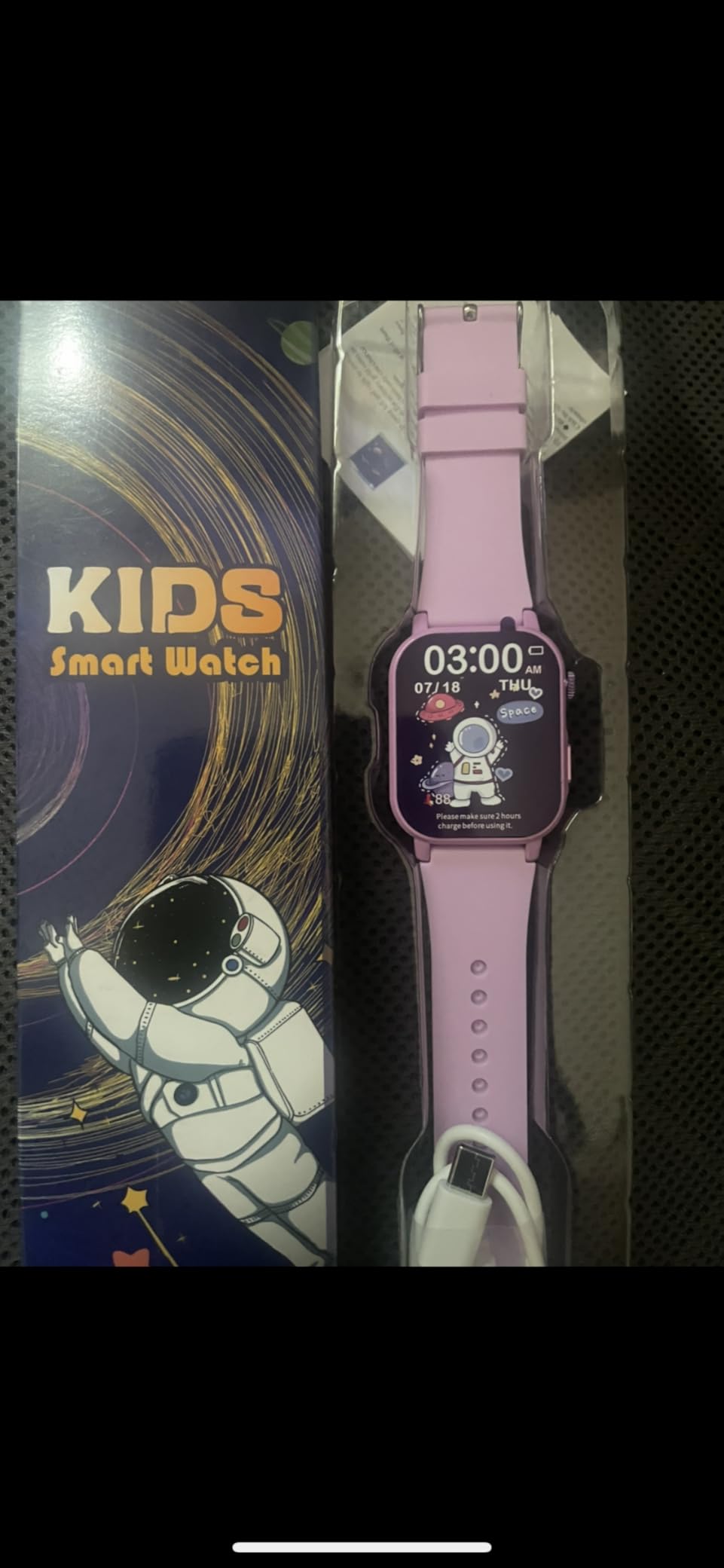
10. Transformers 4G Kids GPS Watch – Best for Children Who Cannot Read Yet
4G Kids Smart Watch with GPS Tracker for Boys Girls Video Call SOS Waterproof
- Highest average rating in this roundup at 4.8
- Interface simple enough for a child who cannot read yet
- Transformers branding gets kids excited to wear it
- IP68 build handles rain sweat and active play
- Relies on T-Mobile towers which are weak in rural areas
- Configuration is app-only with no desktop option
- Requires a separately purchased active nano-SIM
Best for children who cannot read yet, and the highest-rated watch in this roundup with almost no critical reviews.
The Transformers branding does more work here than it might appear. A watch that a four-year-old recognises and asks for gets worn, and a watch that gets worn is the only kind that does any safety good. The interface is described as simple enough that even a child who cannot read can operate the core functions.
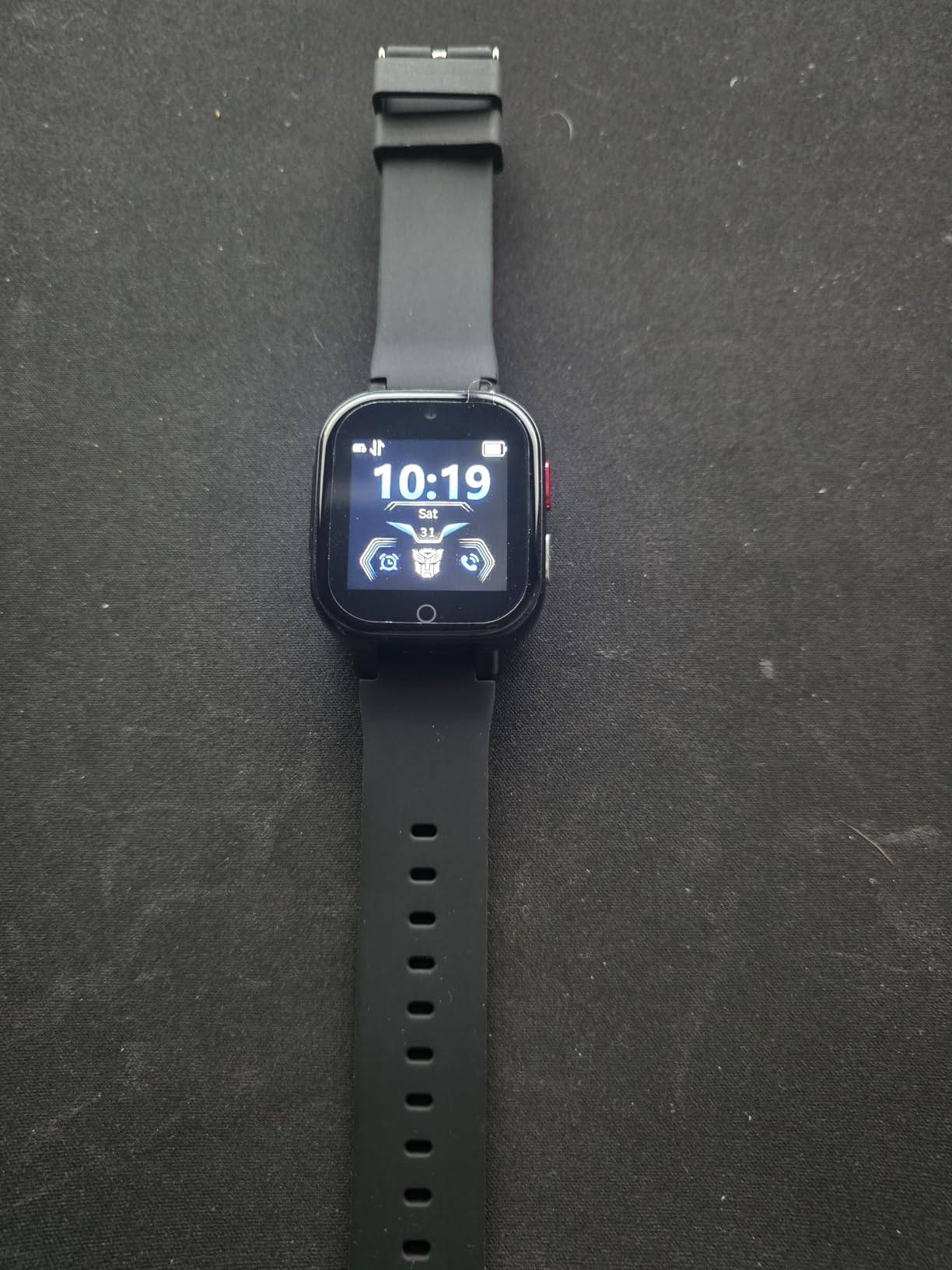
Safe Zones, Route History and Video Calling
Real-time GPS tracking with route history and Safe Zone alerts is managed through an app that has been recently updated and includes in-app customer support, which is a genuine advantage over generic apps that leave you searching a help page. 4G two-way voice calls and HD video calling are both present, so grandparents can see the child rather than only hear them.
A one-tap SOS emergency button sits on the case for the moment a child cannot find the screen. Smart class mode is scheduled through the app to block distractions during school hours, and the IP68 build handles rain, handwashing and active play. Dual straps are included for durability and fit across different wrist sizes.
The Rating Deserves Context
This watch has the highest average rating in the roundup at 4.8, alongside the smallest review base of fewer than 100 verified reviews. A high rating on a small sample is encouraging but not the same as long-term reliability data, and we want to be honest about that difference rather than presenting the number as a guarantee.
Two practical limits. The watch relies on T-Mobile towers, which are weaker in some rural areas, so coverage should be checked where your child actually walks. Configuration is possible only through the smartphone app, with no desktop option, which means the app is the single point of control. Band replacement sizing information is also reportedly hard to find, worth knowing before a strap snaps on a playground.
Battery and the One Specification That Worries Us
The cell is a lithium ion pack, and the stated charge time is 10 hours, the longest in this roundup. That figure deserves attention, because a 10-hour charge is a full day of downtime and a scheduling problem most families will feel at the worst moment. The 1.42-inch display, pedometer, alarm clock, stopwatch and calculator round out the feature set.
Choose this one for a young child who needs an easy interface and will actually wear it. Choose the Gabb instead if you need a watch a teenager will not find embarrassing.
How to Choose a Kids GPS Watch Without Regretting It
Almost every regret we see discussed in forums traces back to a decision made in the first ten minutes, usually about a carrier or a plan rather than about the watch. Work through these criteria in order and the choice makes itself.
If you are still narrowing the field and want a different angle on the hardware, our guides to GPS watches for golf and solar watches tested over long sessions cover the same endurance and accuracy fundamentals from an adult equipment angle.
Decide the Age Band First, Because It Decides Everything
For ages 4-6, prioritise a light body, a simple interface, water resistance and a large SOS button. Reading speed, messaging reliability and battery sophistication are irrelevant. This is the band the Gabb and the Transformers watch target.
For ages 7-9, calling and geofencing become the core, and school mode matters because the child is now in a building unsupervised for hours. The DXPICR, the Berilona and the Citfis all fit well here.
For ages 10-12, kids start noticing what peers wear, so design and camera quality return to the equation alongside the same safety features. This is where video calling earns its place, and where a tween may begin asking for a phone instead.
For 13 and up, most dedicated kids watches feel like a step backwards. The Garmin-style approach of a durable watch with activity tracking that a child can keep for years is the more honest answer, and it is also why we would revisit the best GPS running watches for older kids at that stage.
Understand Why Indoor GPS Drifts Before You Blame the Watch
GPS requires a line of sight to satellites orbiting roughly 12,000 miles above the Earth. A concrete floor, a steel-framed school building or a shopping mall roof removes that line of sight, and the watch falls back to Wi-Fi and cell-tower positioning, which resolve to a neighbourhood rather than a room.
Geofencing, by contrast, is straightforward. A Safe Zone is a circular boundary with a radius, and the watch alerts you when it crosses in or out. Expect a delay of 30 to 60 seconds on the alert, because the watch has to acquire a position first. Adjust expectations by checking the app at the school gate for several days and observing where the dot actually lands before you trust it.
Treat the Monthly Plan as Part of the Purchase Price
Every watch here needs cellular service to transmit its position. That service comes as one of three things, and the difference matters more than most buyers expect.
A branded eSIM, used by the TickTalk5 and the Garmin Bounce, is soldered into the watch and tied to a supported carrier. Setup is the easiest and support is the best, but you have no leverage if plans change. A generic nano-SIM, used by most budget models here, is bought separately from a service such as Speedtalk, inserted manually, and sometimes needs APN configuration. It is flexible and cheap, but it is also the most common source of first-day frustration, and a few of the models listed are specified for North America only.
A mandatory carrier plan, used by the Gabb Watch 3e, adds an activation charge on top of a required monthly line. Over a two-year period that plan, not the device, is the largest cost. Model the full two-year number before you buy anything, because a cheap device on an expensive plan is not a cheap watch.
Read the Water Rating as a Number, Not a Word
IP67 means dust tight and water resistant up to one metre for a short time, which covers rain and handwashing. IP68 means the same ingress protection with a deeper water rating, but the depth varies by manufacturer. Only the Garmin Bounce carries a specified swim rating of 50 metres. Everything else in this roundup is a splash rating, and a splash rating is not a swim rating.
If your child swims, that distinction decides the purchase. Pool sessions, water parks and beach days are where cheap watches fail first.
Count the Approved Contacts Against Your Real Family
Contact limits are the quiet dealbreaker. Ten contacts is genuinely restrictive once you count both sets of grandparents, siblings, cousins, a babysitter, a neighbour and a coach. Fifteen is comfortable, and models that separate everyday calling contacts from SOS numbers give you the best of both.
Look at the parent side of the app too. A watch with excellent hardware and a frustrating companion app is a watch you will stop checking, and a location you never look at is no better than no location at all.
Check the Battery Against Your Child’s Longest Day
Stated runtimes assume moderate location polling. Three real factors shorten them: a high GPS update interval, weak LTE signal that keeps the modem searching, and frequent video calls. If your child’s longest day is a full school day plus soccer practice, a two-day watch such as the TickTalk5 or the Spodus gives you a genuine buffer.
Also check the charge time. A 3-hour charge fits into a bedtime routine, a 10-hour charge does not. That single specification caused more friction in our reading than battery capacity did.
Prefer Hardware Lockouts Over App Restrictions
Almost every watch in this roundup includes a school mode, and almost every one of them is enforced in software, meaning a misconfigured schedule leaves games and video calling reachable. A hardware-level design with no browser, no app store and no social media removes the question entirely, which is the entire premise of the Gabb Watch 3e.
That is the single clearest dividing line between the products in this category. Everything else is a feature checklist argument. This one is a values argument, and for most parents it settles the choice faster than any spec.
Frequently Asked Questions
What is the best smart watch with GPS tracking for kids?
The best smart watch with GPS tracking for kids is the one that combines reliable outdoor positioning, two-way calling to approved contacts and school mode, without a confusing app. In this roundup the DXPICR 4G watch leads on feature breadth and review volume, the Berilona pairs the largest screen with a bundled SIM, and the TickTalk5 is the only model built specifically for ages 3-12.
Do kids GPS watches need a monthly plan?
Almost always, yes. A kids watch must transmit its location over a cellular network, so it needs either a branded eSIM from the manufacturer, a generic nano-SIM you buy and activate yourself, or a mandatory carrier plan. The TickTalk5 and Garmin Bounce use eSIMs, most budget models here take a Speedtalk nano-SIM purchased separately, and the Gabb Watch 3e adds an activation charge to a required monthly line.
How accurate is GPS on kids smartwatches?
Outdoors with a clear view of the sky, a multi-satellite watch such as the Spodus is specified at roughly 5-15 meters, and the other models here fall in a similar range. Indoors, accuracy drops sharply because satellites cannot reach you, and the watch falls back to Wi-Fi and cell-tower positioning that resolves to a neighbourhood. Geofence alerts also lag the actual crossing by 30 to 60 seconds while the watch acquires a position.
What age should a kid get a GPS watch?
Around age 4 to 5 is the practical starting point, provided your child can operate a touchscreen and understands that SOS means calling a guardian. Below that, a watch adds anxiety without adding safety. Most models in this roundup cover ages 3-12, and at 13 most children find dedicated kids watches embarrassing, which is the point to weigh a phone against a watch that lasts for years.
What happens if a GPS watch loses signal?
The watch falls back through a positioning chain, normally from GPS satellites to Wi-Fi positioning to cell-tower triangulation, and records the weaker of those estimates as its location. If cellular service is lost entirely, the watch cannot send that position to the parent app, so tracking stops until coverage returns. That is why checking your carrier’s coverage along the actual school route before buying matters more than any spec on the box.
The Bottom Line on the Best Kids Smart Watches With GPS
If you want one watch that covers tracking, calling, video, geofences and a school lockdown without compromising on any of them, the DXPICR 4G model is where we landed, with more than 3300 reviews behind it. If your child will not read small text or is around four years old, the Berilona’s larger screen and bundled SIM make setup simpler, and the Transformers watch is the one children ask to wear.
For a very young child, choose the TickTalk5, the only purpose-built option for ages 3-12 with a shockproof body and a two-day battery. If your child swims, the Garmin Bounce is the only watch in this roundup rated for actual immersion, and its light body suits a small wrist. If the priority is a locked-down device with no internet whatsoever, the Gabb Watch 3e does that by design, at the cost of a mandatory plan, US-only service and no video calling.
For families on a tight budget, the AIWIEP, Citfis and Spodus models all deliver working GPS, geofences and SOS, with the usual caveats about separate SIM purchases and, in two cases, regional limits. The best kids smart watches with GPS are not one product. They are the one that matches your child’s age, your carrier, your tolerance for monthly cost and how much your family wants open internet access on a wrist. Check the coverage on the route your child actually walks before you buy anything.