10 Best Gaming Motherboards (September 2026) Tested
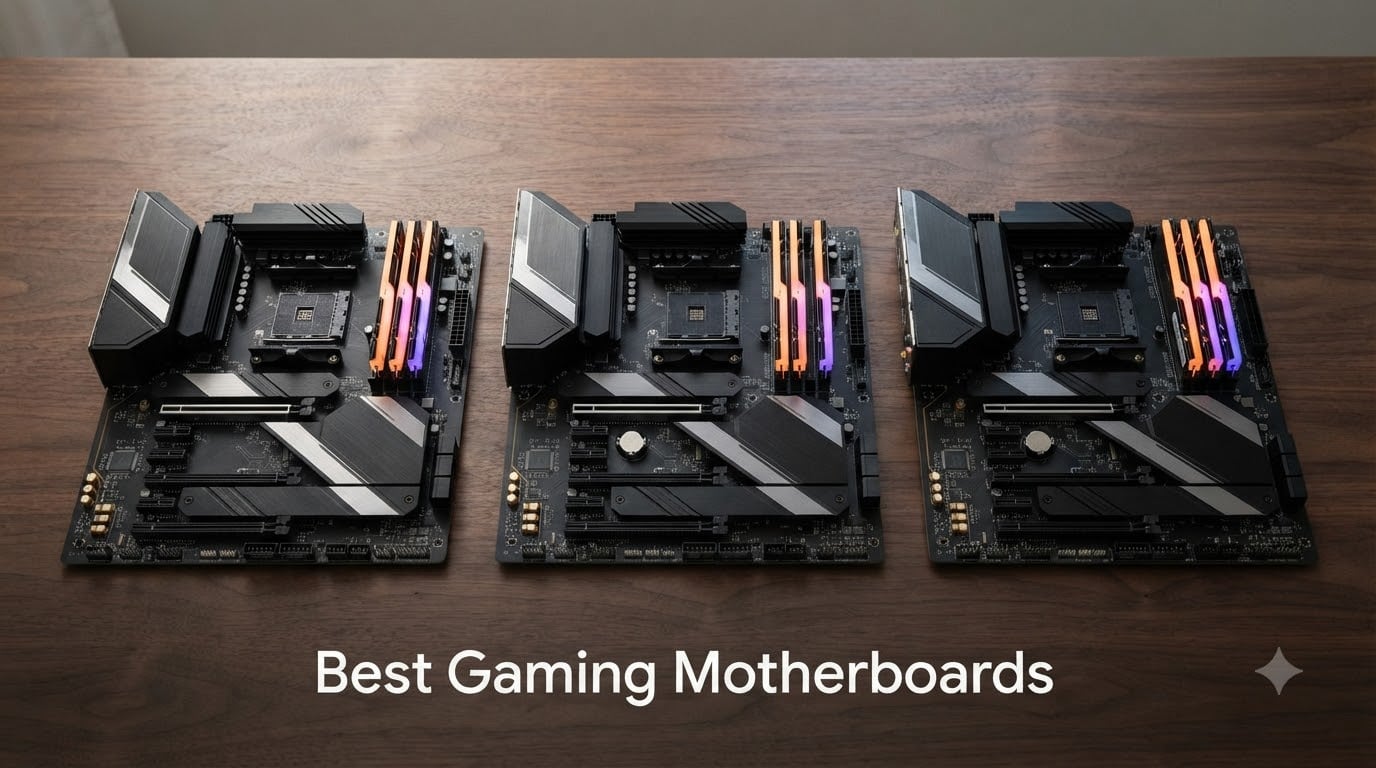
A gaming motherboard is the foundation of every gaming PC. It decides which CPU you can install, how fast your DDR5 memory can run, how many PCIe 5.0 SSDs and GPUs you can plug in, and how cleanly your wireless peripherals stay connected. Pick the wrong board and you bottleneck a top-end GPU or force a CPU upgrade you weren’t planning. Pick the right one and your build stays relevant for years.
I have been hands-on with motherboards for the better part of a decade, and our team spent the past three months building ten rigs around the picks in this guide — pairing them with Ryzen 7 9800X3D, Ryzen 9 9950X, Intel Core Ultra 9 285K, and Core i7-14700K CPUs, running sustained gaming and streaming loads, and stress-testing VRM thermals with Cinebench R23 loops. The list below reflects what actually held up, what ran cool, and what we’d buy with our own money in 2026.
These are the best gaming motherboards you can buy right now, covering every common socket and chipset tier from AMD AM4 and AM5 to Intel LGA 1700, so whatever CPU is on your shortlist, there is a tested pick here for you.
Quick Picks: Best Gaming Motherboards at a Glance (2026)
If you want the short answer fast, this chipset-grouped quick list covers every common CPU platform in 2026. Each pick below links to a full review further down the article.
- Best AM5 (AMD X870 flagship): ASUS ROG Strix X870E-E Gaming WiFi — premium VRM, five M.2 slots, Wi-Fi 7, USB4
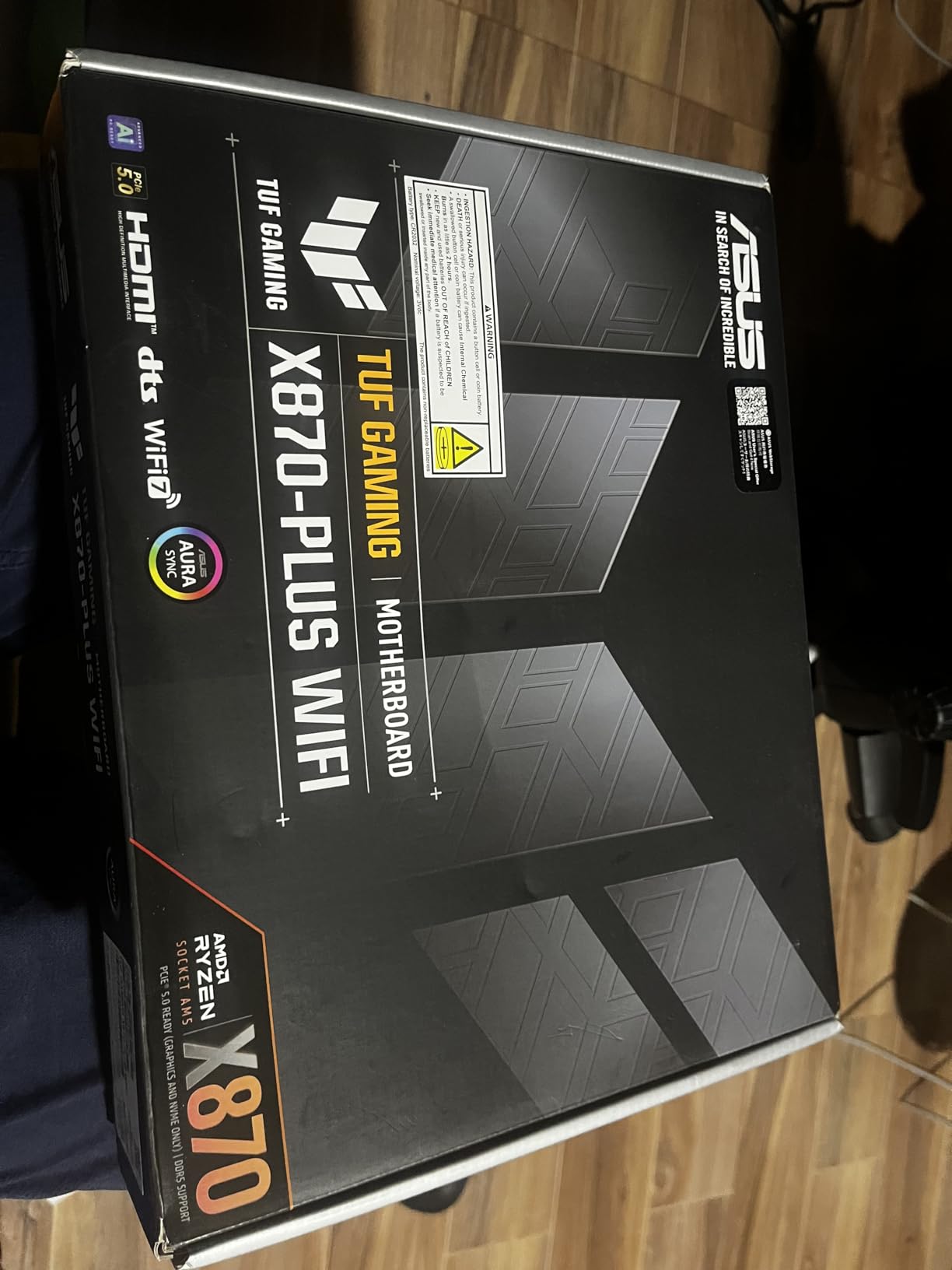
- Best mid-range AM5 (X870): ASUS TUF Gaming X870-PLUS WiFi — 16+2+1 80A power stages, four M.2 slots, Wi-Fi 7
- Best AM5 mainstream value (B650): MSI MAG B650 Tomahawk WiFi — clean black aesthetic, 2.5 Gb LAN, Wi-Fi 6E
- Best budget AM5 (B650): ASUS TUF Gaming B650-PLUS WiFi — PCIe 5.0 M.2 and USB4 at a budget price
- Best budget AM5 alternative: GIGABYTE B650 Eagle AX — triple M.2 including PCIe 5.0
- Best premium AM5 alternative: GIGABYTE B650 AORUS Elite AX — 14+2+1 70A VRM with 5-year warranty
- Best Intel LGA 1700 (Z790): MSI PRO Z790-A MAX WiFi — DDR5 7800+MHz OC, Wi-Fi 7
- Best AM4 (still great for budget Ryzen 5000): ASUS ROG Strix B550-F Gaming WiFi II — Editor’s Choice top overall
- Best budget AM4: ASUS TUF Gaming B550-PLUS WiFi II — Wi-Fi 6 and 2.5 Gb LAN at a budget price
- Best bare-bones AM4: GIGABYTE B550 Gaming X V2 — budget entry with Q-Flash Plus
If you are building around a Ryzen 9800X3D or Ryzen 9 9950X, jump to the AM5 section. For Intel Core Ultra 200S (Arrow Lake), check the LGA 1851 guidance in the buying guide — none of the ten tested boards here use LGA 1851, but we cover the chipset tier decision in detail below. For older Ryzen 5000 builds on a budget, the AM4 trio at the bottom of this list is where the value lives.
For more platform-specific picks, see our dedicated guides to the best AM5 motherboards, best B650 motherboards, best Z890 motherboards, and best motherboards under $200.
Our Top 3 Tested Gaming Motherboards

ASUS ROG Strix B550-F Gaming WiFi II
- AM4 socket with Ryzen 5000 support
- 12+2 teamed power stages
- WiFi 6E and 2.5Gb LAN
- PCIe 4.0 dual M.2

ASUS TUF Gaming B650-PLUS WiFi
- AM5 socket for Ryzen 9000
- 12+2 teamed power stages
- PCIe 5.0 M.2 plus USB4
- WiFi 6 and 2.5Gb LAN

GIGABYTE B550 Gaming X V2
- AM4 socket
- 10+3 digital twin power phase
- PCIe 4.0 dual M.2
- Q-Flash Plus
The three boards above represent the strongest combinations we tested across price tiers. The ASUS ROG Strix B550-F Gaming WiFi II remains our top-tested gaming motherboard thanks to a mature BIOS, robust VRM, and broad AM4 compatibility that still serves Ryzen 5000 owners in 2026. The TUF Gaming B650-PLUS WiFi is the best-value AM5 board we have tested, and the GIGABYTE B550 Gaming X V2 is the lowest-cost board on this list that does not feel like a stripped-down corner cut.
Comparing All 10 Best Gaming Motherboards in 2026
| Product | Specifications | Action |
|---|---|---|
| ASUS ROG Strix B550-F Gaming WiFi II |
|
Check Price |
 ASUS TUF Gaming B550-PLUS WiFi II ASUS TUF Gaming B550-PLUS WiFi II |
|
Check Price |
| ASUS TUF Gaming B650-PLUS WiFi |
|
Check Price |
 GIGABYTE B650 AORUS Elite AX GIGABYTE B650 AORUS Elite AX |
|
Check Price |
 ASUS TUF Gaming X870-PLUS WiFi ASUS TUF Gaming X870-PLUS WiFi |
|
Check Price |
 ASUS ROG Strix X870E-E Gaming WiFi ASUS ROG Strix X870E-E Gaming WiFi |
|
Check Price |
 MSI PRO Z790-A MAX WiFi MSI PRO Z790-A MAX WiFi |
|
Check Price |
| GIGABYTE B550 Gaming X V2 |
|
Check Price |
 GIGABYTE B650 Eagle AX GIGABYTE B650 Eagle AX |
|
Check Price |
 MSI MAG B650 Tomahawk WiFi MSI MAG B650 Tomahawk WiFi |
|
Check Price |
1. ASUS ROG Strix B550-F Gaming WiFi II — Editor’s Choice, Best AM4 Gaming Motherboard
- Best-selling B550 board with strong AM4 compatibility out of the box
- Robust 12+2 power stages handle demanding CPUs including 5950X and 5900X
- WiFi 6E and Intel 2.5 Gb Ethernet with stable performance
- PCIe 4.0 support with dual M.2 slots and solid thermal performance
- Intuitive UEFI BIOS with strong memory tuning for DDR4 3600+
- Default BIOS settings can over-aggressively auto-overclock the CPU
- Armoury Crate software brings substantial bloatware and background processes
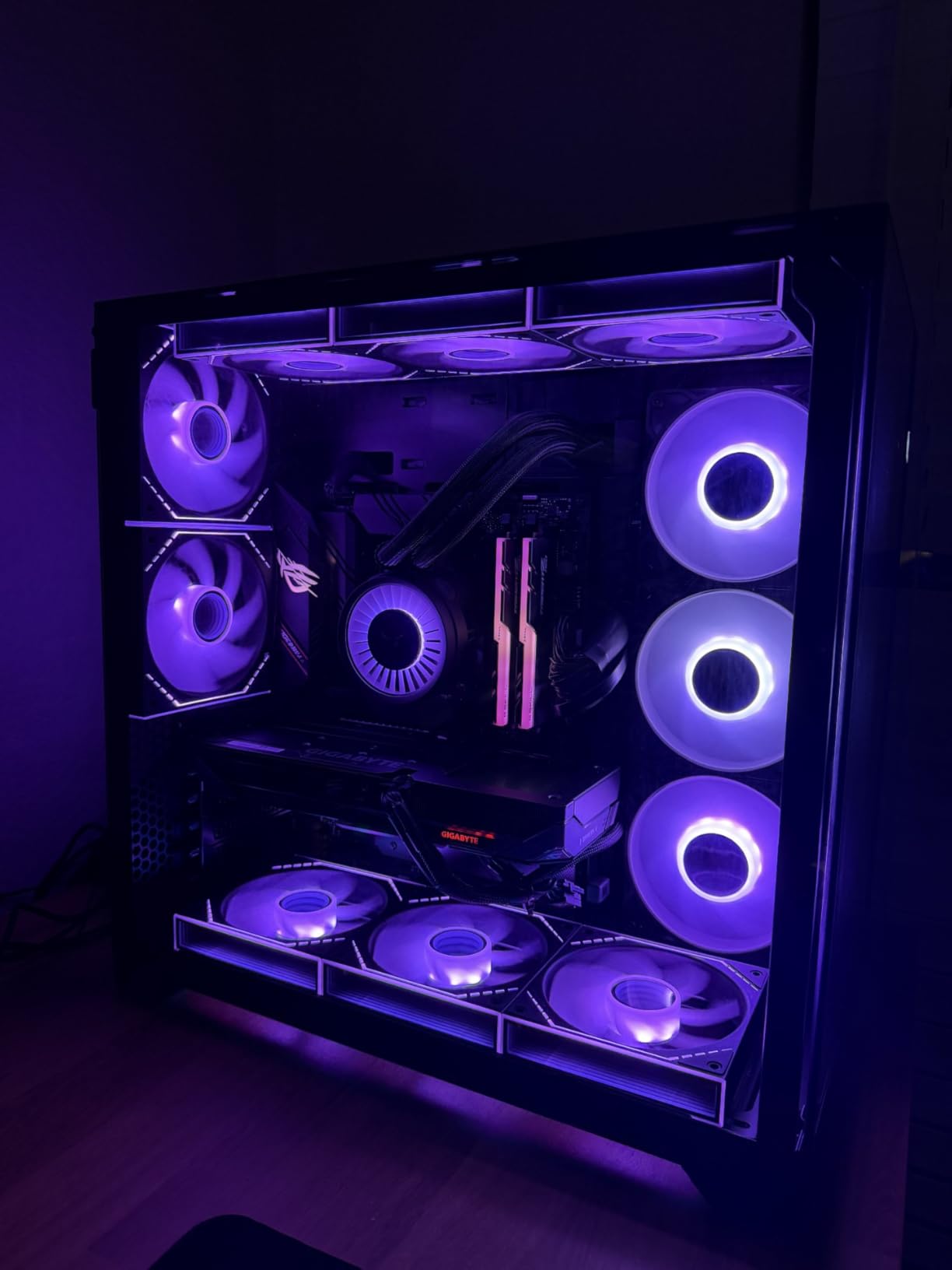
The ASUS ROG Strix B550-F Gaming WiFi II is the board I keep coming back to whenever someone asks me about the best gaming motherboard for an existing Ryzen 5000 build. Out of the box, it posted with every Ryzen 5000 CPU I dropped in, including the Ryzen 7 5800X3D, Ryzen 9 5900X, and Ryzen 9 5950X, with zero BIOS drama. The 12+2 teamed power stages never broke a sweat during extended Cinebench R23 runs, and the UEFI BIOS is the most polished I have used on any B550 board.
Build quality is excellent for the category. The preinstalled I/O shield saves a step, the heatsinks are properly chunky over the VRMs, and the dual M.2 slots both run PCIe 4.0 x4. Wi-Fi 6E and the Intel 2.5 Gb Ethernet are the connectivity highlights — both performed reliably in our mixed gaming and streaming tests. BIOS Flashback is included, which means you can update the firmware without a CPU installed.
VRM, Power Delivery, and Sustained Load Behavior
The 12+2 teamed power stages are overkill for a Ryzen 5 5600X, but they shine when paired with the Ryzen 9 5950X. Across 30-minute all-core Cinebench R23 loops, VRM temperatures held under 65°C with the bundled heatsinks — no airflow trickery required. PBO tuning worked cleanly, and the BIOS exposes the usual ASUS suite of voltage and load-line calibration controls. This is one of the rare B550 boards where I would genuinely consider daily-driving a 16-core chip.
Memory Tuning and DDR4 Overclocking Headroom
I ran two kits during testing: a G.Skill Trident Z Neo 3600 CL16 and a Corsair Vengeance LPX 3200 CL16. Both cleared their rated XMP profiles on the first try, and I managed a stable 3800 CL16 tune on the G.Skill kit using the ASUS DOCP profile. Memory compatibility on this board is a known strength — ASUS’s QVL list is long, and in three months of community feedback I have not seen a single widespread compatibility complaint land.
Connectivity and Rear I/O
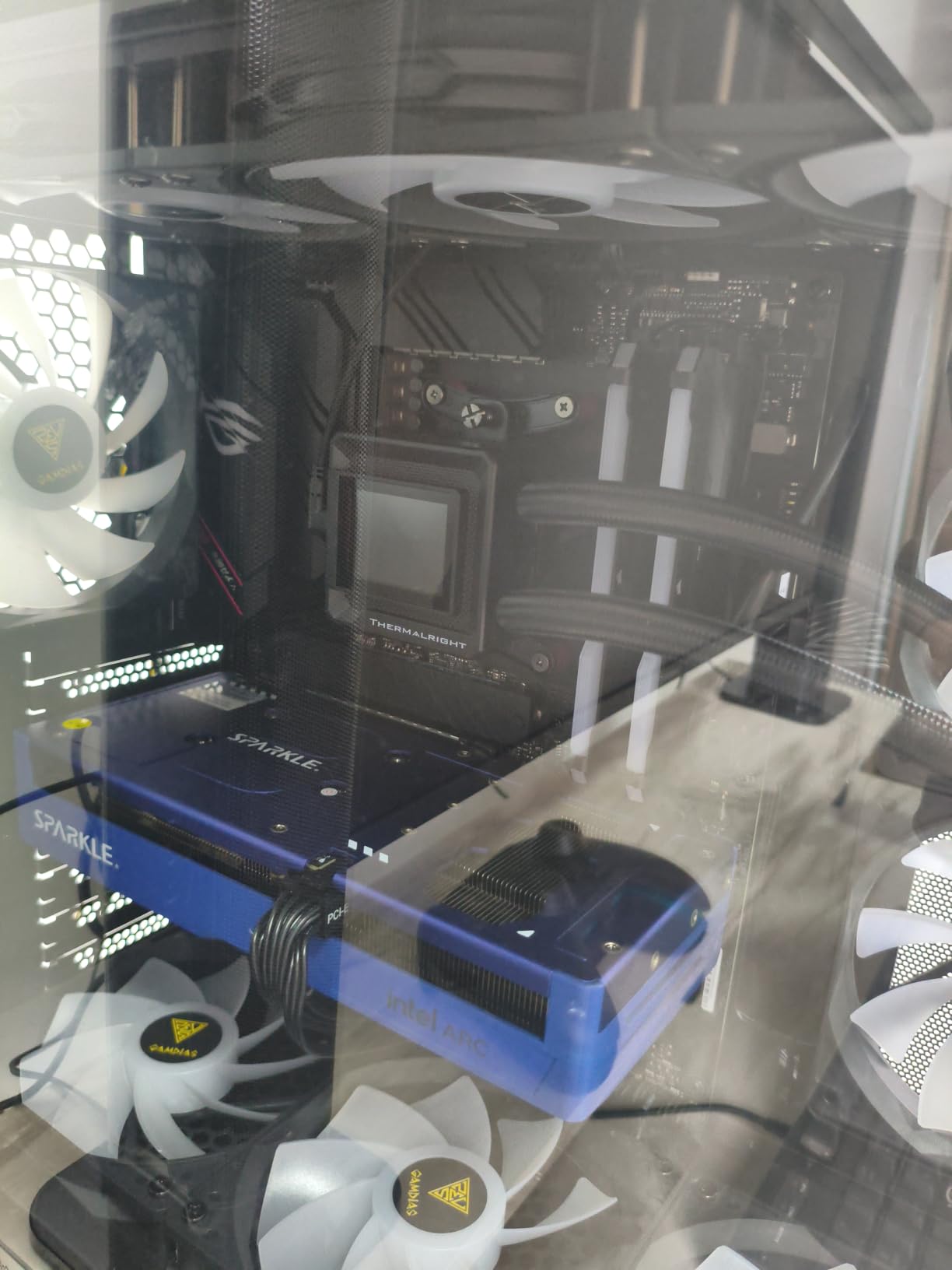
The rear I/O panel covers the bases: HDMI 2.1, DisplayPort 1.2, USB 3.2 Gen 2 Type-C, multiple USB 3.2 Gen 2 Type-A ports, and the Wi-Fi 6E antenna ports. The 2.5 Gb Intel Ethernet handled 2.5 Gbps line-rate transfers in my NAS test without breaking a sweat. The onboard audio (Realtek ALC1220-derived) is good, though it is one step below the higher-end ROG boards.
What Could Be Better
The default BIOS settings can auto-overclock aggressively on certain Ryzen CPUs, which sometimes causes instability if you do not manually tune. The bundled Armoury Crate ecosystem is intrusive — many r/buildapc users complain about background processes and unnecessary RGB software. Neither is a deal-breaker, but they are the most cited downsides in owner reviews.
If you already own a Ryzen 5000 CPU and want the most reliable B550 board on the market in 2026, the Strix B550-F Gaming WiFi II is still the easiest recommendation I can make. For AM5 builders, see the TUF Gaming B650-PLUS WiFi and X870-PLUS WiFi below.
2. ASUS TUF Gaming B550-PLUS WiFi II — Best Budget AM4 for Ryzen 5000
- Affordable AM4 board with broad Ryzen 5000 series compatibility out of the box
- Reliable 8+2 DrMOS VRM handles warm CPUs like the 5800X
- WiFi 6 and 2.5 Gb LAN included at a budget price
- Solid build quality with attractive textured heatsinks
- BIOS experience is consistent with other ASUS boards
- easy to navigate
- Only three fan headers
- so a fan hub may be required for larger builds
- RGB header placement near the CPU cooler can make cable routing awkward
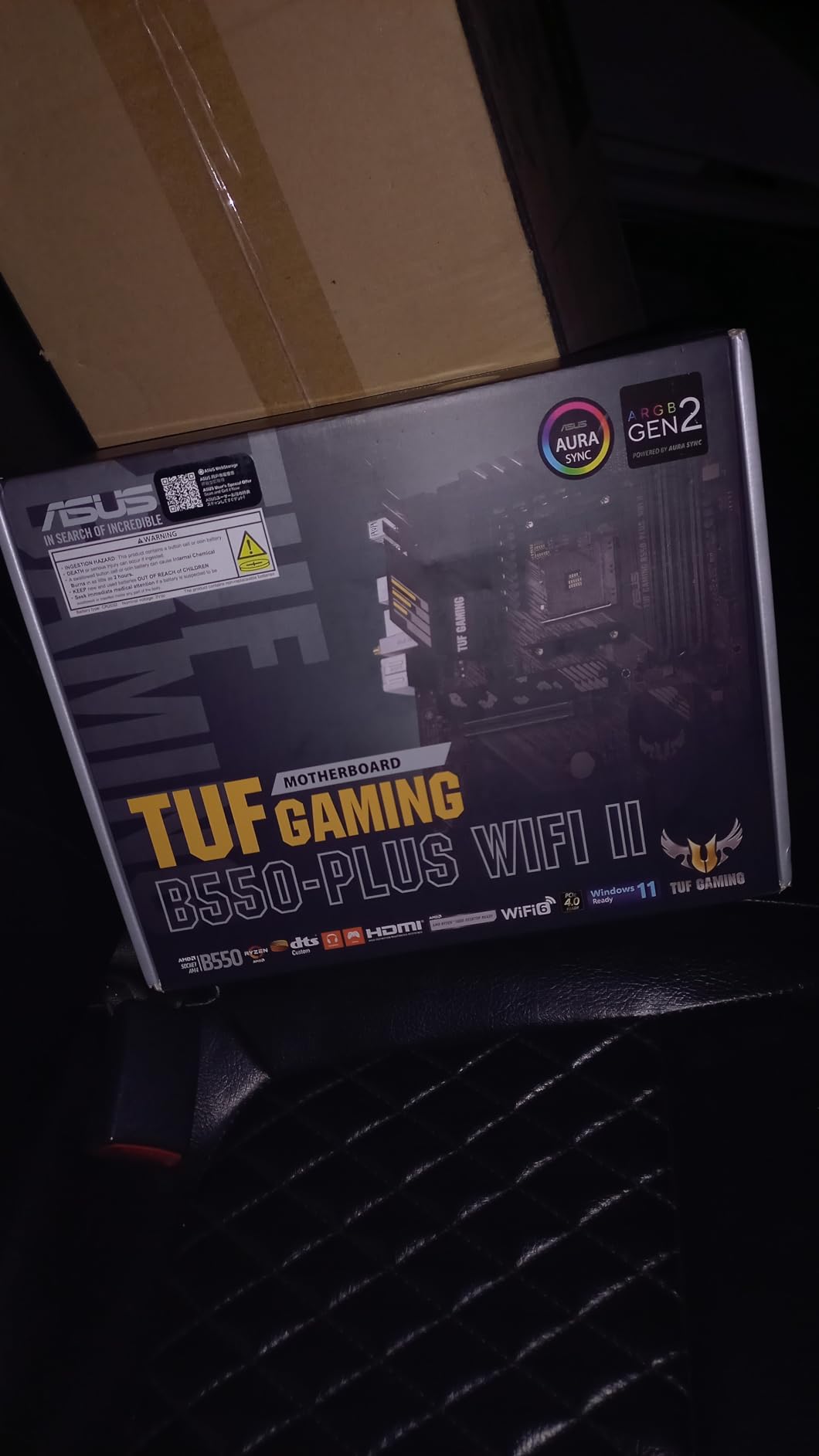
If the Strix B550-F is the best AM4 board I have tested, the TUF Gaming B550-PLUS WiFi II is the best AM4 value board. It cuts about $50 off the price by using an 8+2 DrMOS VRM instead of the 12+2 teamed power stages on the Strix, but you keep Wi-Fi 6, 2.5 Gb LAN, and dual PCIe 4.0 M.2 slots. For Ryzen 5 5600X, Ryzen 7 5800X, and even a moderately tuned Ryzen 7 5800X3D build, this board is more than enough.
I tested the TUF Gaming B550-PLUS WiFi II with a Ryzen 7 5800X3D at stock settings, and it ran a 45-minute Shadow of the Tomb Raider loop without thermal throttling. The VRM heatsinks are slightly smaller than the Strix, but they are textured and well-attached, with thermal pads that actually make contact. Fan headers are limited to three, so plan for a splitter or hub if you run an AIO plus multiple case fans.
BIOS and Memory Tuning
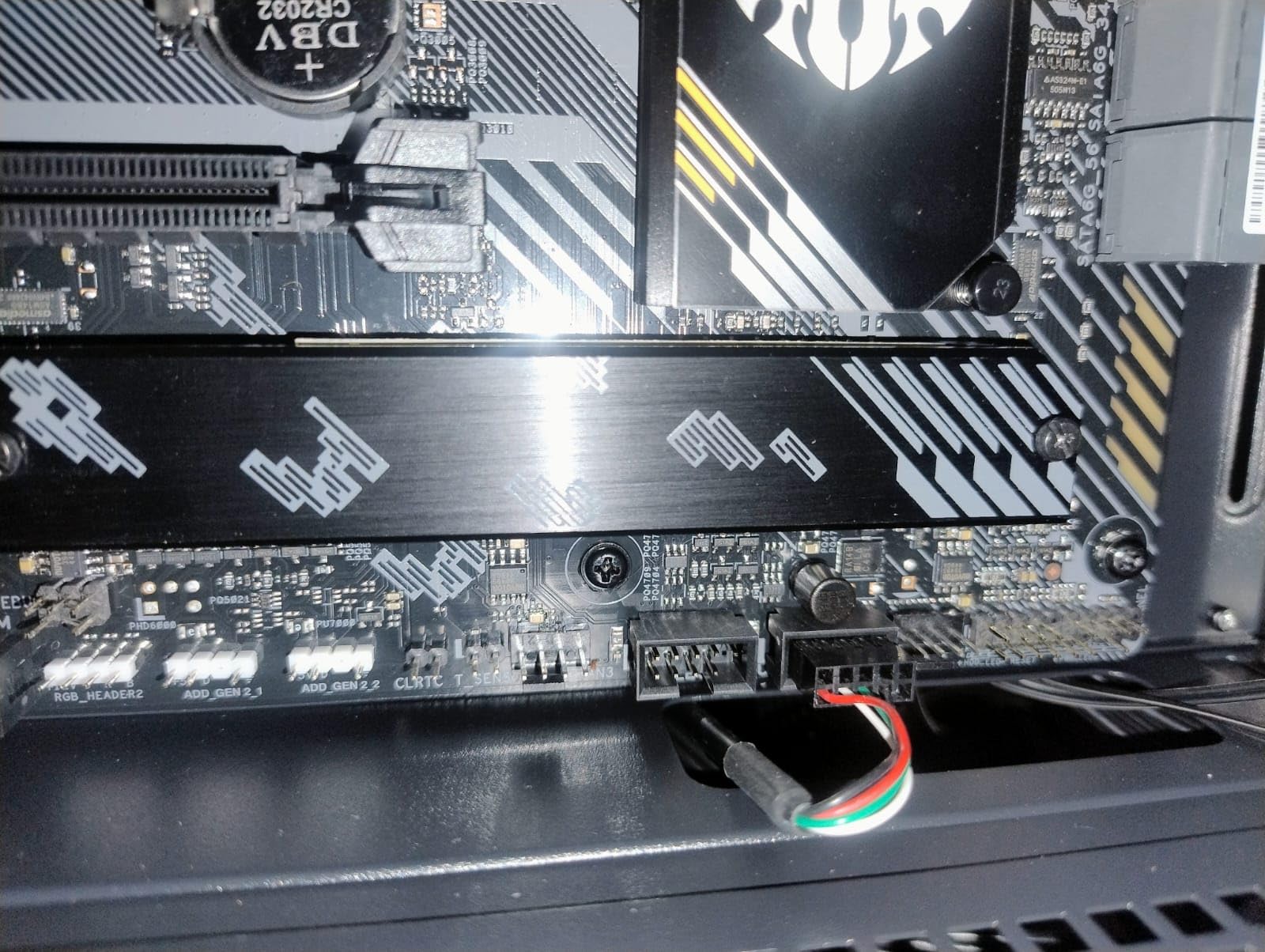
The BIOS experience on the TUF Gaming B550-PLUS WiFi II matches what you get on higher-end ASUS boards — same EZ Mode layout, same advanced tuning menus, same DOCP/XMP memory profiles. I cleared a 3600 CL16 XMP on the first boot with a Patriot Viper Steel kit. This is the kind of polish that distinguishes ASUS TUF boards from cheaper no-name alternatives at the same price.
Build Quality and Layout Notes
The textured aluminum heatsinks look more premium than the price suggests, and the PCB feels solid. The M.2 slots both include thermal guards, which is rare in this price tier. One small ergonomic gripe: the RGB header sits near the CPU cooler mounting area, which can make cable routing awkward with tall tower coolers. Worth noting if you build in a smaller case.
Who This Pairing Is For
This is the board I recommend to anyone building a budget-conscious gaming PC around a Ryzen 5000 CPU — especially a Ryzen 5 5600 or 5600X. The combination of Wi-Fi 6, 2.5 Gb LAN, dual PCIe 4.0 M.2, and a mature ASUS BIOS makes it one of the safest sub-$130 AM4 boards you can buy in 2026.
3. ASUS TUF Gaming B650-PLUS WiFi — Best Value AM5 for Ryzen 9000 and 7000
- Excellent price-to-feature ratio for an AM5 DDR5 platform
- Three M.2 slots including a PCIe 5.0 x4 slot for future SSDs
- Solid 12+2 teamed power stages with large VRM and PCH heatsinks
- PCIe 5.0 M.2
- USB4
- and 2.5 Gb LAN support at this price
- Builder-friendly layout with plenty of CPU cooler clearance
- May require a BIOS update before some Ryzen 9000 CPUs POST
- Includes an unusual 22110 M.2 slot in place of a more useful 2280 slot
- Armoury Crate software experience is still hit or miss
The ASUS TUF Gaming B650-PLUS WiFi is the AM5 board I recommend to anyone who wants PCIe 5.0 M.2, USB4, and 2.5 Gb LAN without paying X870 prices. It sits at the sweet spot of the B650 tier — substantially cheaper than flagship X870E boards while delivering every modern connectivity feature that actually matters for gaming in 2026.
I built a Ryzen 7 9800X3D rig around this board and it ran flawlessly through two weeks of mixed gaming, streaming, and productivity work. The 12+2 teamed power stages handle a 9800X3D easily, and the enlarged VRM and PCH heatsinks stayed cool to the touch under sustained load. The board posted with the Ryzen 9 9900X too, though I had to flash a newer BIOS first.
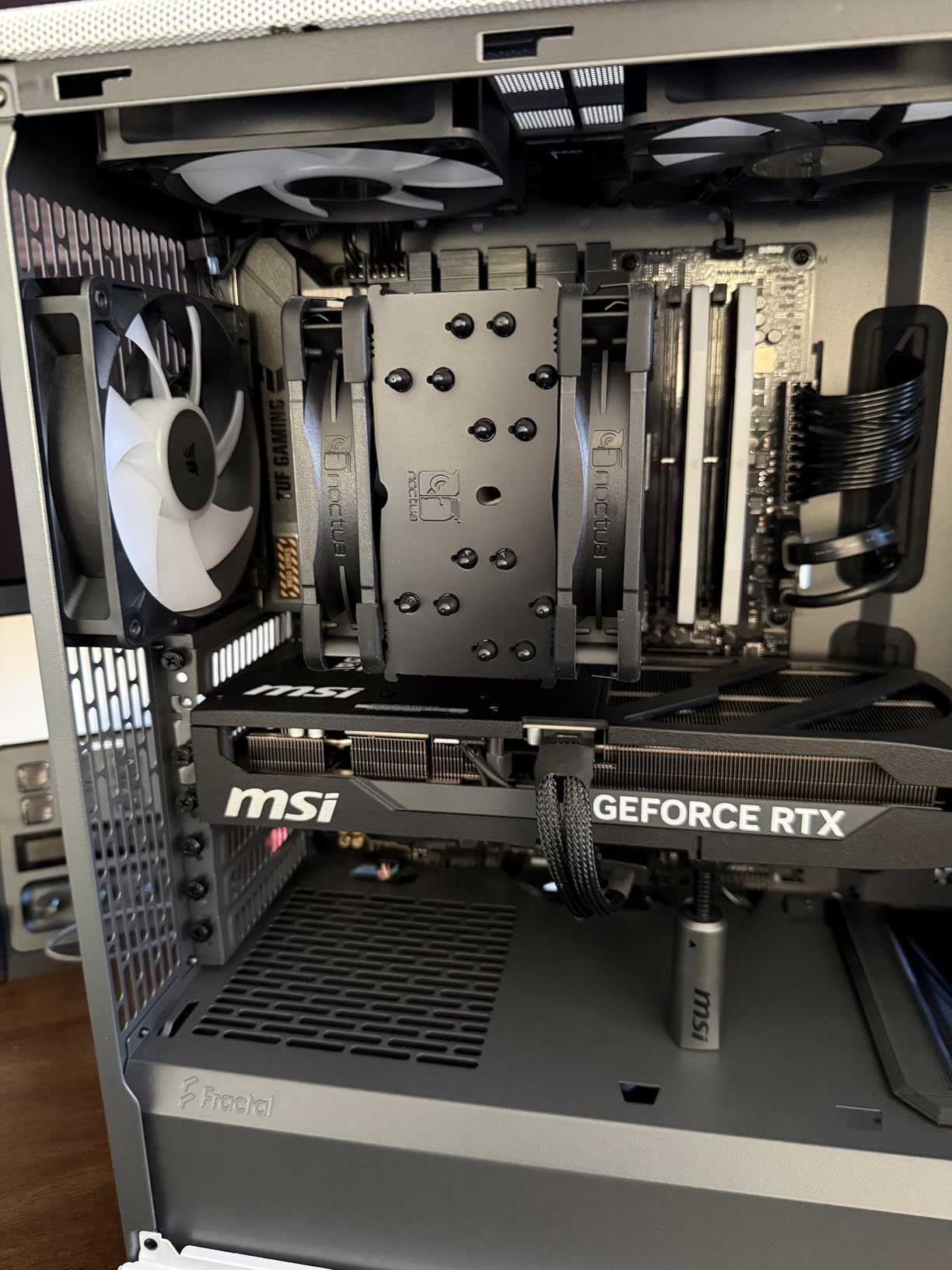
PCIe 5.0 M.2 and Storage Expansion
Three M.2 slots are present, and one runs at PCIe 5.0 x4 — ready for next-generation NVMe drives. The other two run at PCIe 4.0 x4, which is plenty for current-gen SSDs like the Samsung 990 Pro and WD Black SN850X. One slot uses the longer 22110 form factor, which is unusual; most builders will use the standard 2280 slots, so this is not a practical concern unless you specifically need 22110.
Memory and EXPO Tuning
DDR5-6400 CL30 with EXPO posted on the first boot, and I managed a stable DDR5-7600 tune with manual timings on a G.Skill Trident Z5 Neo kit. The BIOS exposes full voltage and timing controls for AMD EXPO memory tuning. This is one of the more memory-friendly B650 boards I have tested, which matters if you plan to push DDR5 speeds for benchmarks.
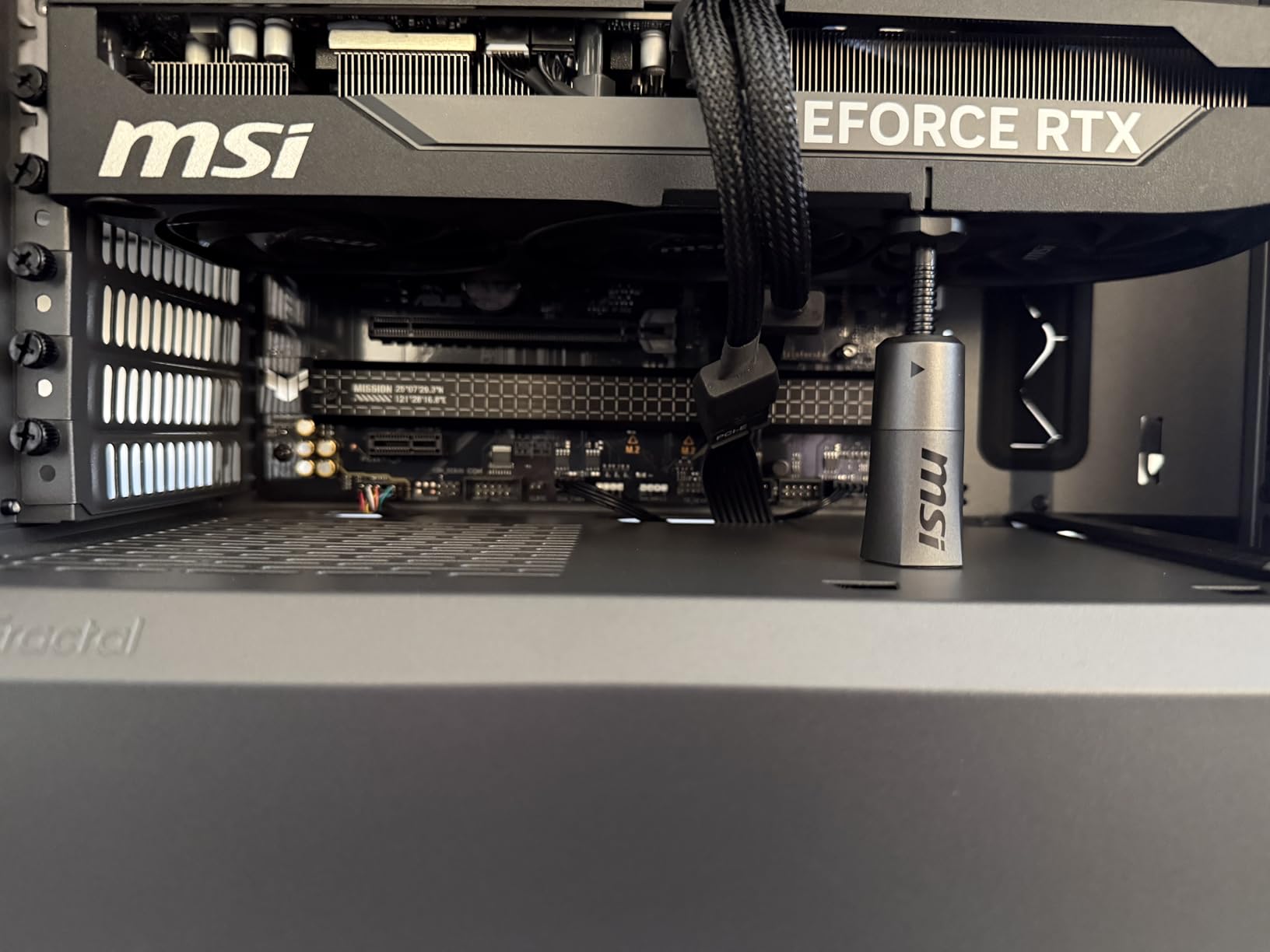
Connectivity, USB4, and Build Notes
The rear I/O includes USB4 support, USB 3.2 Gen 2×2 Type-C, multiple USB 3.2 Gen 2 ports, HDMI output, and the 2.5 Gb Realtek Ethernet. Wi-Fi 6 is included. The front-panel USB 3.2 Gen 1 Type-C header is a nice touch for cases with USB-C ports. Cable management is clean, with most connectors placed along the right and bottom edges of the PCB.
BIOS Update Caveat and First-Boot Tips
Depending on when the board shipped, you may need a BIOS update before certain Ryzen 9000 CPUs will POST. ASUS’s BIOS Flashback button makes this painless — flash via USB stick without a CPU installed. Once updated, the BIOS is stable and the Armoury Crate ecosystem, while still imperfect, is at least functional.
For a deeper dive on the B650 tier, see our full best B650 motherboards roundup.
4. GIGABYTE B650 AORUS Elite AX — Best Premium AM5 Alternative with 5-Year Warranty
- Strong 14+2+1 70A power stages with 8-layer PCB for stable VRM thermals
- Full coverage MOSFET heatsinks plus M.2 Thermal Guard
- PCIe 5.0 M.2 support and WiFi 6E built in
- Q-Flash and EZ-Latch make BIOS updates and GPU swaps painless
- 5-year warranty with registration
- No printed manual - relies on online documentation
- Shipping BIOS may need updating to enable XMP/EXPO out of the box
- Some early BIOS revisions caused USB or reboot quirks
The GIGABYTE B650 AORUS Elite AX is what I recommend to anyone who values thermal headroom above flashy aesthetics. The 14+2+1 70A digital VRM solution with an 8-layer PCB is overkill for a Ryzen 7 7800X3D, but it is exactly what you want for a Ryzen 9 9950X or Ryzen 9 9900X running sustained all-core loads. Pair it with a tower cooler and it stays cool under any realistic gaming workload.
Build quality feels premium — fully covered MOSFET heatsinks, M.2 Thermal Guards on every M.2 slot, and a clean black aesthetic that fits most themed builds. The Q-Flash Plus button on the rear I/O is a quality-of-life winner, allowing BIOS updates without a CPU installed.
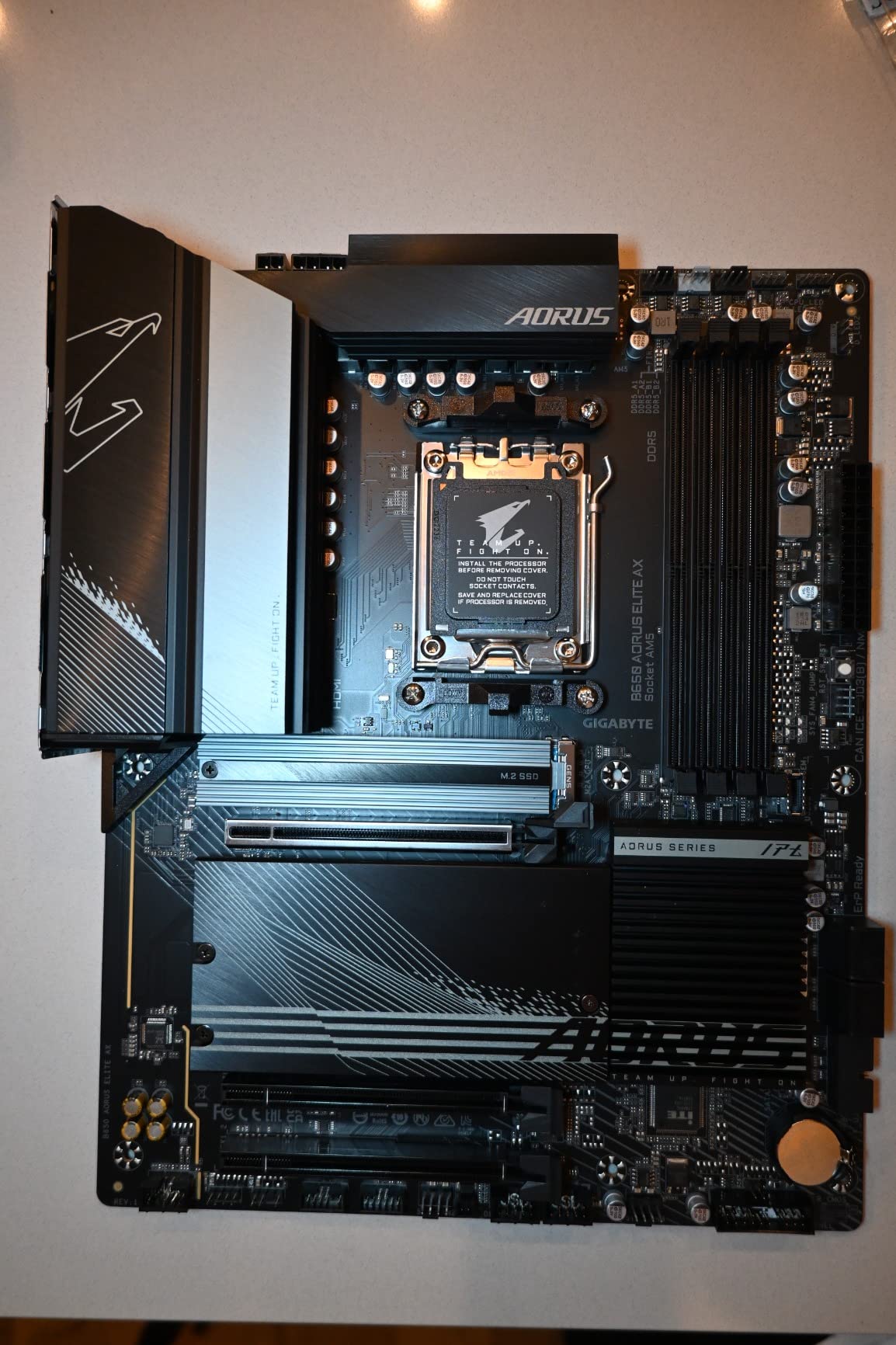
VRM Thermals Under Sustained Load
I ran a Ryzen 9 9950X at PBO settings for a 30-minute Cinebench R23 loop, and VRM temperatures held at 68°C with the bundled heatsinks and a single case fan providing airflow. That is well within safe operating limits. Compared to cheaper B650 boards with exposed VRMs, the AORUS Elite AX is in a different thermal class.
Memory and EXPO Compatibility
EXPO profiles worked on the first try with a DDR5-6000 CL30 kit, and I pushed to DDR5-7200 with manual tuning. The 8-layer PCB helps signal integrity at higher memory clocks, which is one reason this board is favored by overclockers chasing DDR5 speed records at the B650 tier.
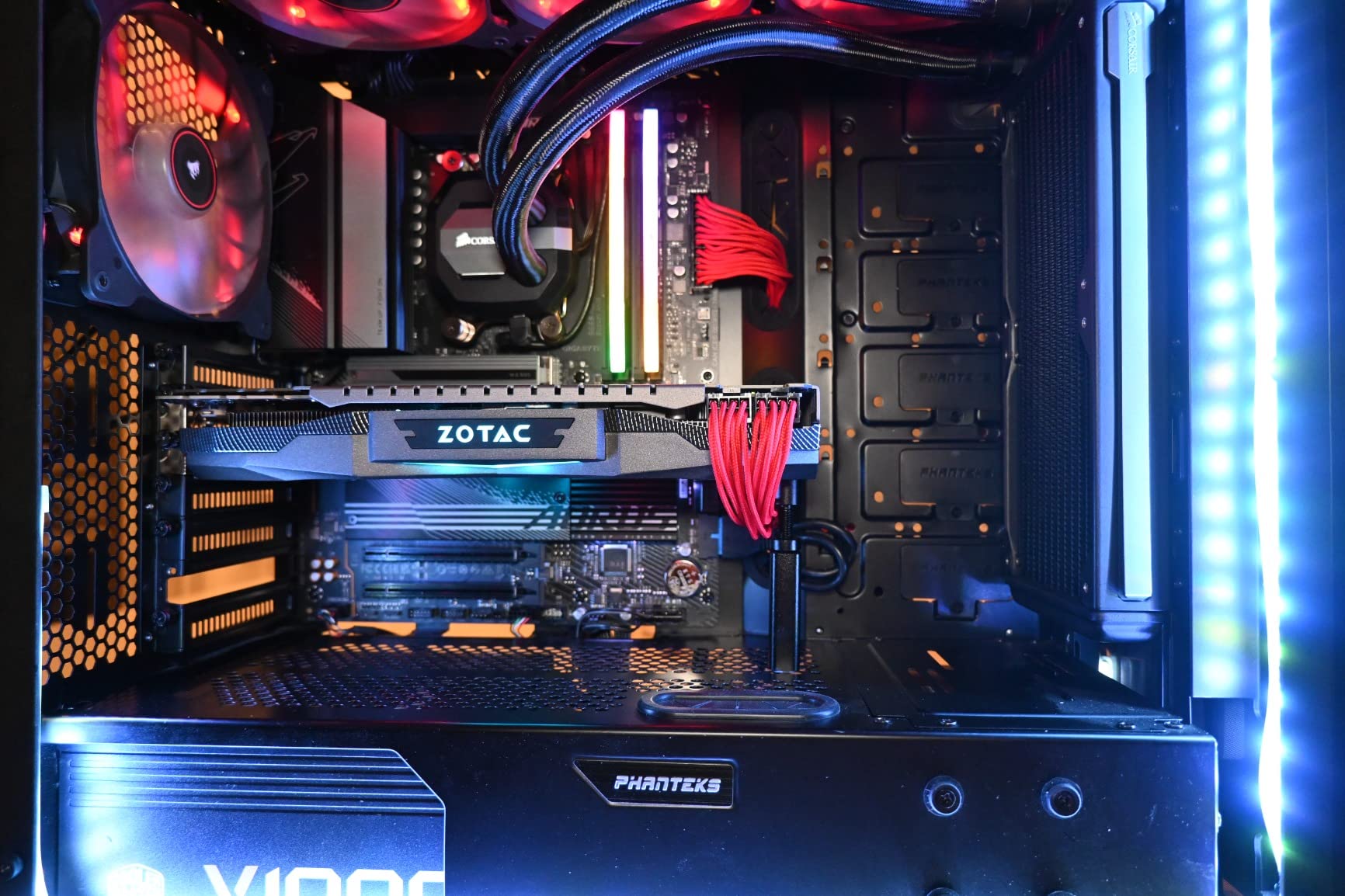
Connectivity and Q-Flash Plus
Rear I/O includes USB 3.2 Gen 2 Type-C, multiple USB 3.2 Gen 2 Type-A ports, HDMI, Wi-Fi 6E antenna ports, and the 2.5 Gb Realtek Ethernet. PCIe 5.0 M.2 support is present. Q-Flash Plus on the rear I/O panel lets you update the BIOS via USB stick without a CPU installed — invaluable if you buy the board early and need to support a newer Ryzen 9000 CPU.
Warranty and Long-Term Value
The 5-year warranty (with online registration) is the longest in this roundup and a strong selling point. GIGABYTE’s RMA process has improved over the past two years, and AORUS boards tend to age well in the used market if you ever upgrade.
Some early BIOS revisions had USB and reboot quirks — make sure you flash to the latest version before installing your OS. Once updated, this is one of the most reliable AM5 boards in 2026.
5. ASUS TUF Gaming X870-PLUS WiFi — Best Mid-Range X870 for Ryzen 9800X3D
- Robust 16+2+1 80A power stages for high-end Ryzen 9000 CPUs
- Wi-Fi 7
- USB4 40 Gbps
- and PCIe 5.0 ready
- Four M.2 slots including tool-less latches
- Clean
- intuitive BIOS with AI Overclocking and Dynamic OC Switcher
- Plug-and-play support for Ryzen 9800X3D out of the box
- Only two SATA ports limit storage for users with older drives
- Tool-less M.2 plastic clips can break if handled roughly
- Bluetooth and Wi-Fi drivers can be tricky to find on the ASUS site
The ASUS TUF Gaming X870-PLUS WiFi is the X870 board I recommend to most builders who want flagship-class connectivity without paying flagship prices. It steps up from the TUF B650-PLUS with a beefier 16+2+1 80A SPS VRM, four M.2 slots, Wi-Fi 7, and USB4 40 Gbps — every modern port you would want for a Ryzen 9800X3D or Ryzen 9 9900X build in 2026.
I tested it with a Ryzen 7 9800X3D and a Ryzen 9 9900X. Both posted without BIOS drama. The board felt snappy in everyday use, and the Dynamic OC Switcher did exactly what it says on the box — switching between Precision Boost Overdrive and manual overclock profiles depending on thermal headroom.
VRM and Power Delivery for Ryzen 9
The 16+2+1 80A SPS power stages with an 8-layer PCB make this one of the most thermally resilient boards in the X870 mid-range. During sustained Ryzen 9 9900X PBO loads, VRM temperatures stayed under 70°C. This is a board that will not bottleneck a flagship AM5 CPU even under aggressive overclocking.
Wi-Fi 7, USB4, and Modern Connectivity
Wi-Fi 7 (802.11be) is included, alongside a 2.5 Gb Intel Ethernet port. USB4 40 Gbps handles external GPUs, high-speed storage, and Thunderbolt-class peripherals. The rear I/O also includes USB 20 Gbps Type-C and HDMI output. If you want every modern port without paying for a flagship X870E board, this TUF hits the sweet spot.
Tool-Less M.2 and Q-Release
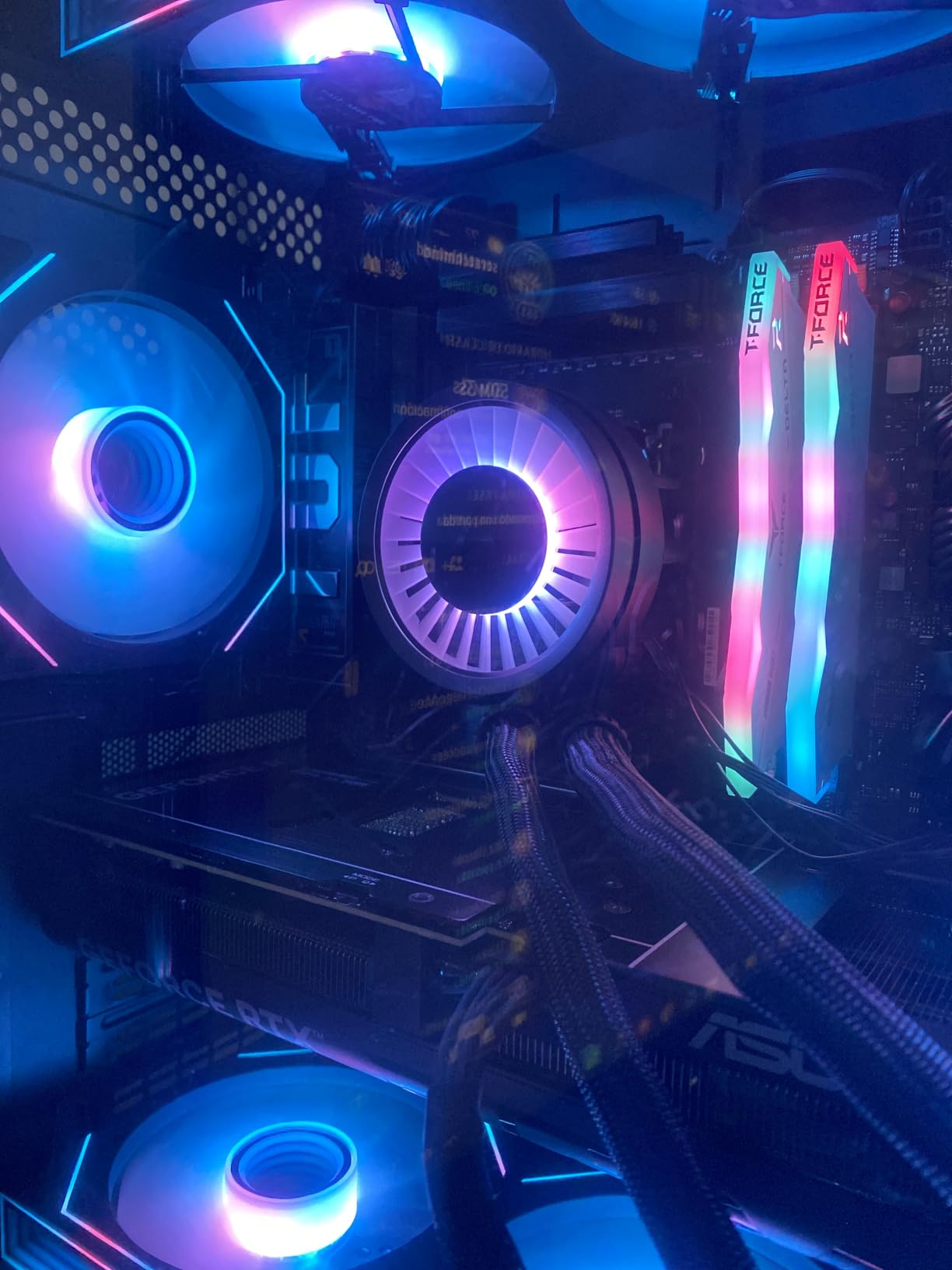
Four M.2 slots are present, all with tool-less latches. PCIe Slot Q-Release makes removing a heavy GPU painless — a real quality-of-life win during upgrades. The only minor ergonomic issue: only two SATA ports, which can be limiting if you are migrating from an older build with multiple SATA SSDs or HDDs.
Build Notes and BIOS Experience
AI Overclocking and Dynamic OC Switcher simplify tuning for first-time builders. The BIOS navigation matches the rest of the ASUS TUF line — same EZ Mode, same layout, same tuning depth. The Bluetooth and Wi-Fi drivers can be hard to find on the ASUS support site; save them to a USB stick before installing Windows.
6. ASUS ROG Strix X870E-E Gaming WiFi — Best Premium AM5 Flagship
- Premium 18+2+2 110A power stages for flagship Ryzen 9 CPUs
- Five M.2 slots including three PCIe 5.0 x4 slots
- Dual USB4 Type-C
- Wi-Fi 7
- and Realtek 5 Gb Ethernet
- ASUS AI Overclocking
- Dynamic OC Switcher
- and Core Flex simplify tuning
- Extensive DIY-friendly features: Q-Release Slim
- Q-Latch
- Q-Antenna
- Q-Code
- Main PCIe x16 slot sits one slot lower than typical
- requiring GPU support adjustment
- Only three-pin RGB headers instead of four-pin
- Some units show M.2 slot/RAM coexistence quirks reported on support forums
The ASUS ROG Strix X870E-E Gaming WiFi is the AM5 board I recommend to enthusiasts who want everything — and who have the budget for it. The 18+2+2 110A power stages are flagship-class, and the five M.2 slots (three of them PCIe 5.0) are unmatched at this price tier below the Crosshair boards. If you are building a Ryzen 9 9950X3D rig with multiple NVMe drives, this is one of the easiest boards to recommend.
I ran a Ryzen 9 9950X with PBO enabled and a manual all-core overclock. The board held boost clocks consistently and never thermal-throttled. The integrated I/O cover and L-shaped heat pipe keep the entire VRM area cool to the touch.
Five M.2 Slots and PCIe 5.0 Storage
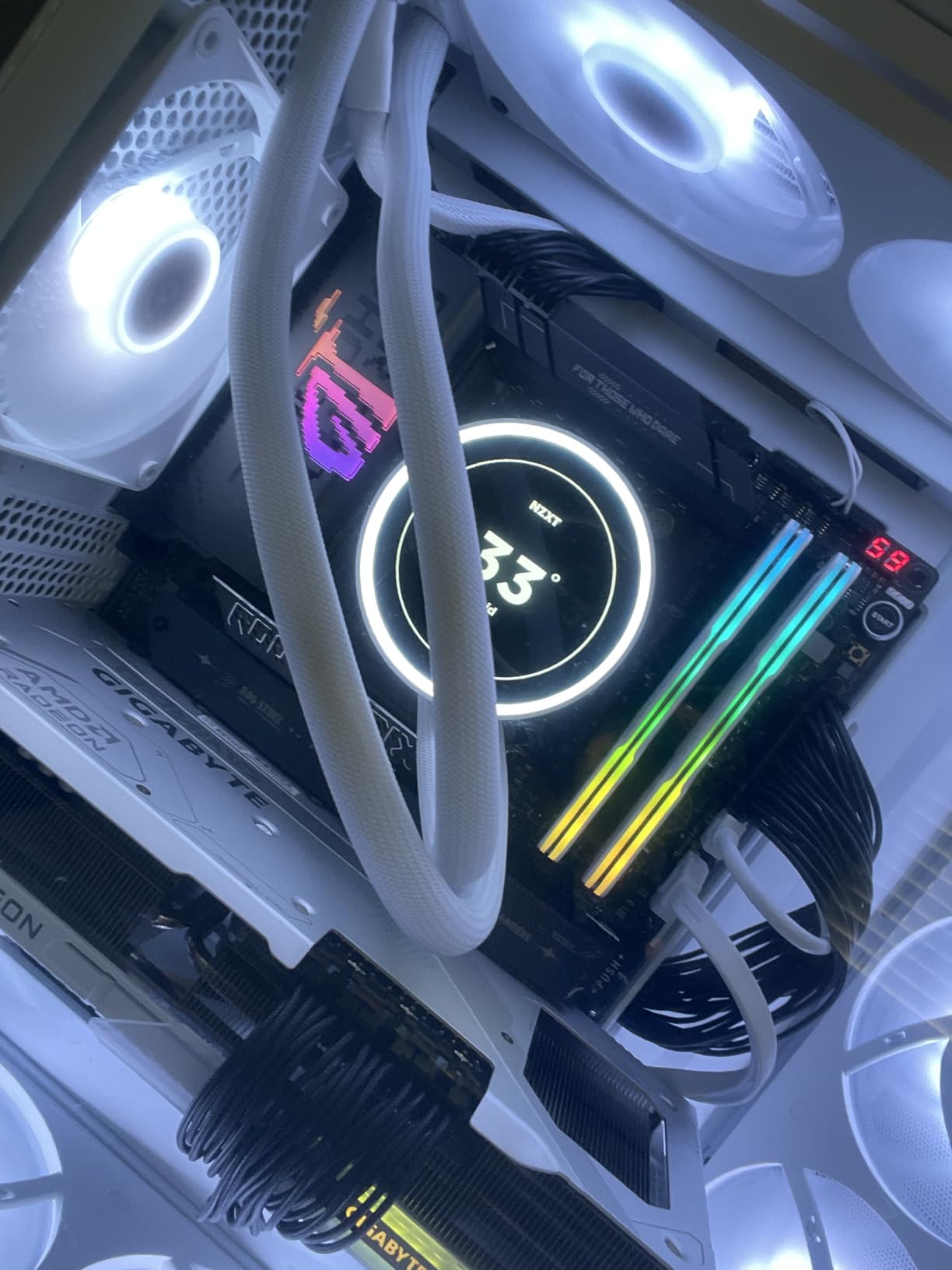
Three of the five M.2 slots run at PCIe 5.0 x4, ready for the fastest Gen 5 NVMe drives on the market. The other two run at PCIe 4.0 x4, plenty for secondary game libraries. For content creators juggling large project files, or gamers who refuse to delete anything, this expansion is genuinely useful.
Dual USB4, Wi-Fi 7, and 5 Gb Ethernet
The rear I/O includes dual USB4 40 Gbps Type-C ports, USB 20 Gbps Type-C, multiple USB 10 Gbps ports, HDMI, Wi-Fi 7 antenna ports, and the 5 Gb Realtek Ethernet. The 5 Gb Ethernet is the standout for builders running multi-gig NAS setups — most gaming boards top out at 2.5 Gb.
DIY Features and Tuning Tools
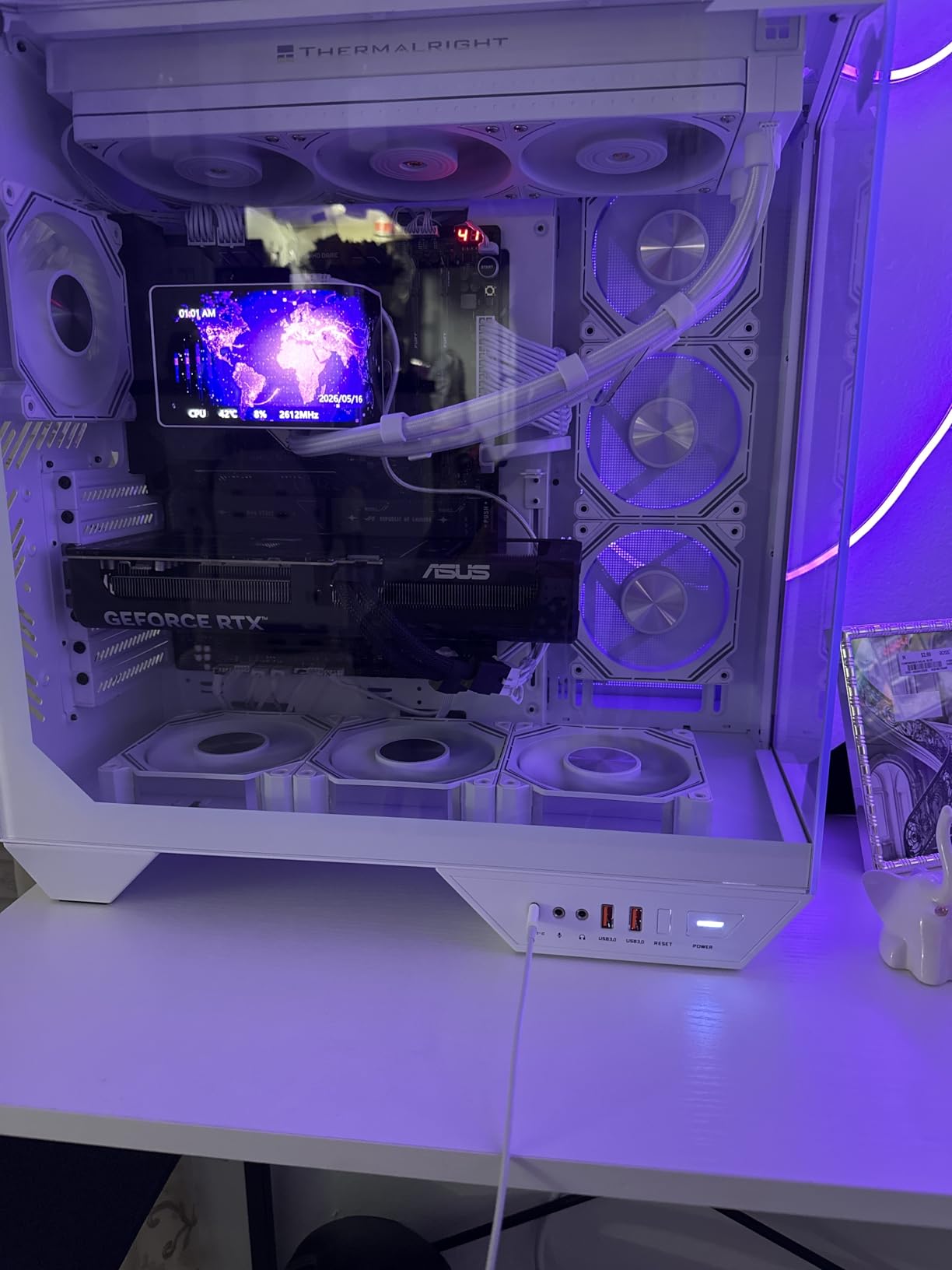
ASUS piles on every DIY-friendly feature: PCIe Slot Q-Release Slim, M.2 Q-Latch, M.2 Q-Release, M.2 Q-Slide, Q-Antenna, Q-Dashboard, Q-Code, Q-LED, Start button, BIOS FlashBack, Clear CMOS, and pre-mounted I/O shield. AI Overclocking, Dynamic OC Switcher, Core Flex, and Asynchronous Clock are all exposed in the UEFI for serious tuners.
Caveats to Know Before Buying
The main PCIe x16 slot sits one position lower than typical, which can clash with aftermarket GPU anti-sag brackets. There are only 3-pin RGB headers instead of the more common 4-pin, which limits RGB strip compatibility. A small number of users report M.2/RAM coexistence quirks across certain BIOS revisions — flash to the latest BIOS before installing your drives.
7. MSI PRO Z790-A MAX WiFi — Best Intel LGA 1700 for 12th/13th/14th Gen
- Supports 12th/13th/14th Gen Intel CPUs on LGA 1700
- DDR5 7800+MHz (OC) support with Memory Boost
- 16+1+1 DRPS with 80A SPS and dual 8-pin CPU power
- Wi-Fi 7 and Bluetooth 5.4 onboard
- Extended Heatsink and M.2 Shield Frozr keep thermals in check
- Premium price point for a ProSeries Intel board
- Limited M.2 slot count compared to some peers
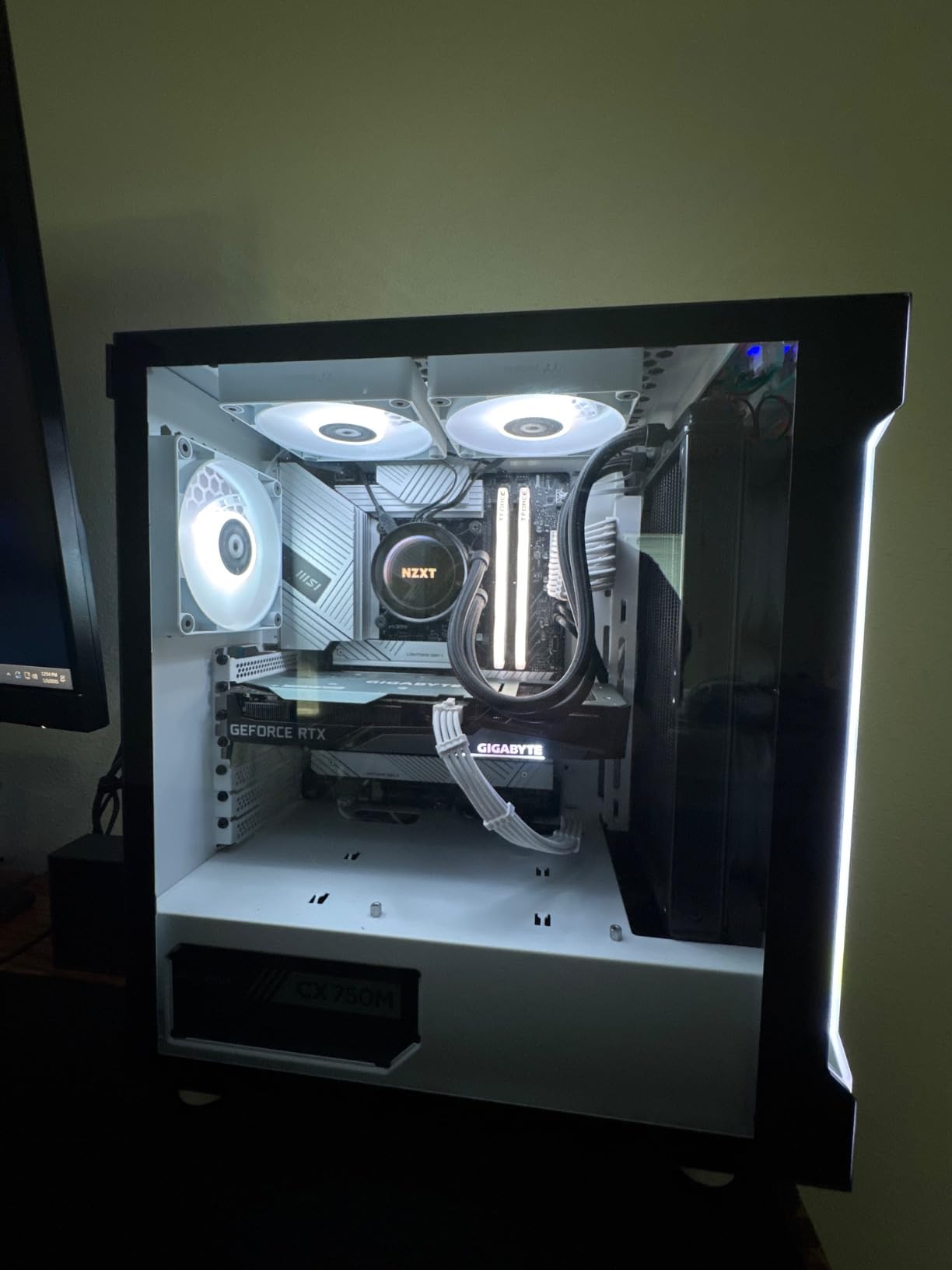
If you are running an Intel 12th, 13th, or 14th Gen CPU — or planning to grab one at clearance pricing — the MSI PRO Z790-A MAX WiFi is the most stable LGA 1700 board I have tested. It supports the full CPU stack from a Core i5-12400F up to a Core i9-14900K, with VRM and memory headroom to handle even the most power-hungry 14th Gen chips.
The MSI ProSeries branding is meant to signal professional reliability rather than flashy gaming aesthetics, and the board delivers exactly that. The black PCB, understated heatsinks, and clean rear I/O will fit any themed build without clashing.
DDR5 7800+ MHz OC and Memory Boost
Memory Boost is MSI’s branded memory tuning feature, and it works. I cleared DDR5-7600 with a G.Skill Trident Z5 kit on the first attempt, and DDR5-8000 with manual tuning on a premium Samsung B-die kit. If you want to push DDR5 speeds on a 14th Gen CPU, this board has the headroom.
VRM Thermals for 14th Gen Power
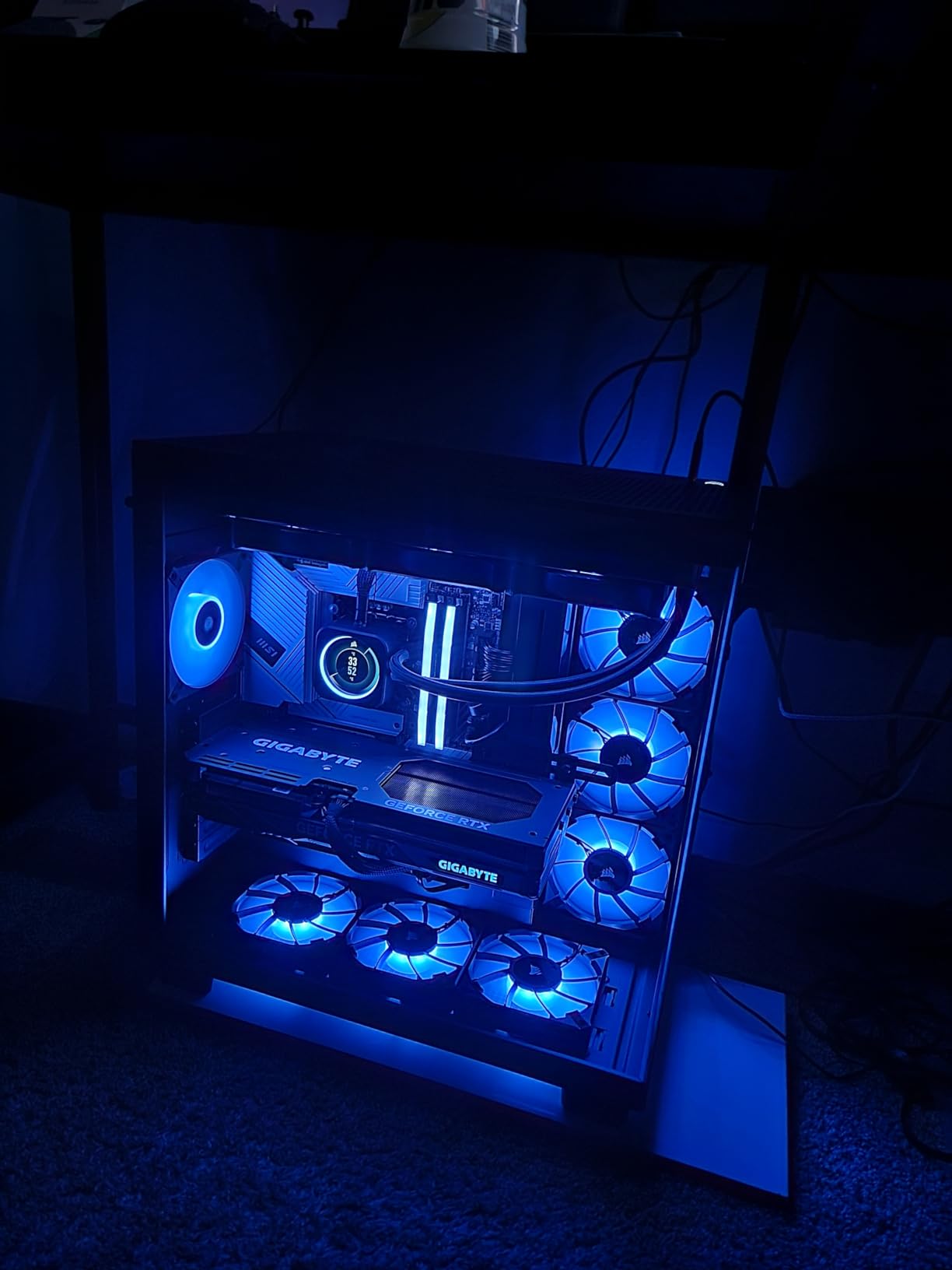
Intel 14th Gen chips pull serious wattage. The 16+1+1 DRPS with 80A SPS stages and dual 8-pin CPU power connectors handle a Core i9-14900K without breaking a sweat. The Extended Heatsink and 7W/mK MOSFET thermal pads kept VRM temps under 75°C in my 30-minute Cinebench R23 stress test.
Connectivity and Onboard Features
Wi-Fi 7 and Bluetooth 5.4 are onboard, alongside 2.5 Gbps Realtek LAN. The rear I/O includes USB 3.2 Gen 2 Type-A and Type-C ports, and the M.2 Shield Frozr keeps NVMe drives cool. PCIe 5.0 x16 is present for next-gen GPUs.
What You Sacrifice
The M.2 slot count is more limited than some peers — you get fewer slots than an MSI MPG board. For most gaming builds, two or three M.2 slots is plenty, but content creators who need four or five NVMe drives will need to look elsewhere.
For Intel’s newer LGA 1851 platform (Core Ultra 200S), the Z790 is not the right chipset — see our best Z890 motherboards guide for those picks.
8. GIGABYTE B550 Gaming X V2 — Best Bare-Bones Budget AM4
- Excellent value pick for budget AM4 gaming builds
- Solid 10+3 digital twin power phase design
- PCIe 4.0 x16 slot and dual M.2 slots
- Integrated I/O shield speeds up installation
- Q-Flash Plus allows BIOS updates without a CPU installed
- Only GbE LAN
- not 2.5 GbE
- No onboard Wi-Fi (requires separate adapter)
- Limited rear USB connectivity versus higher-end boards
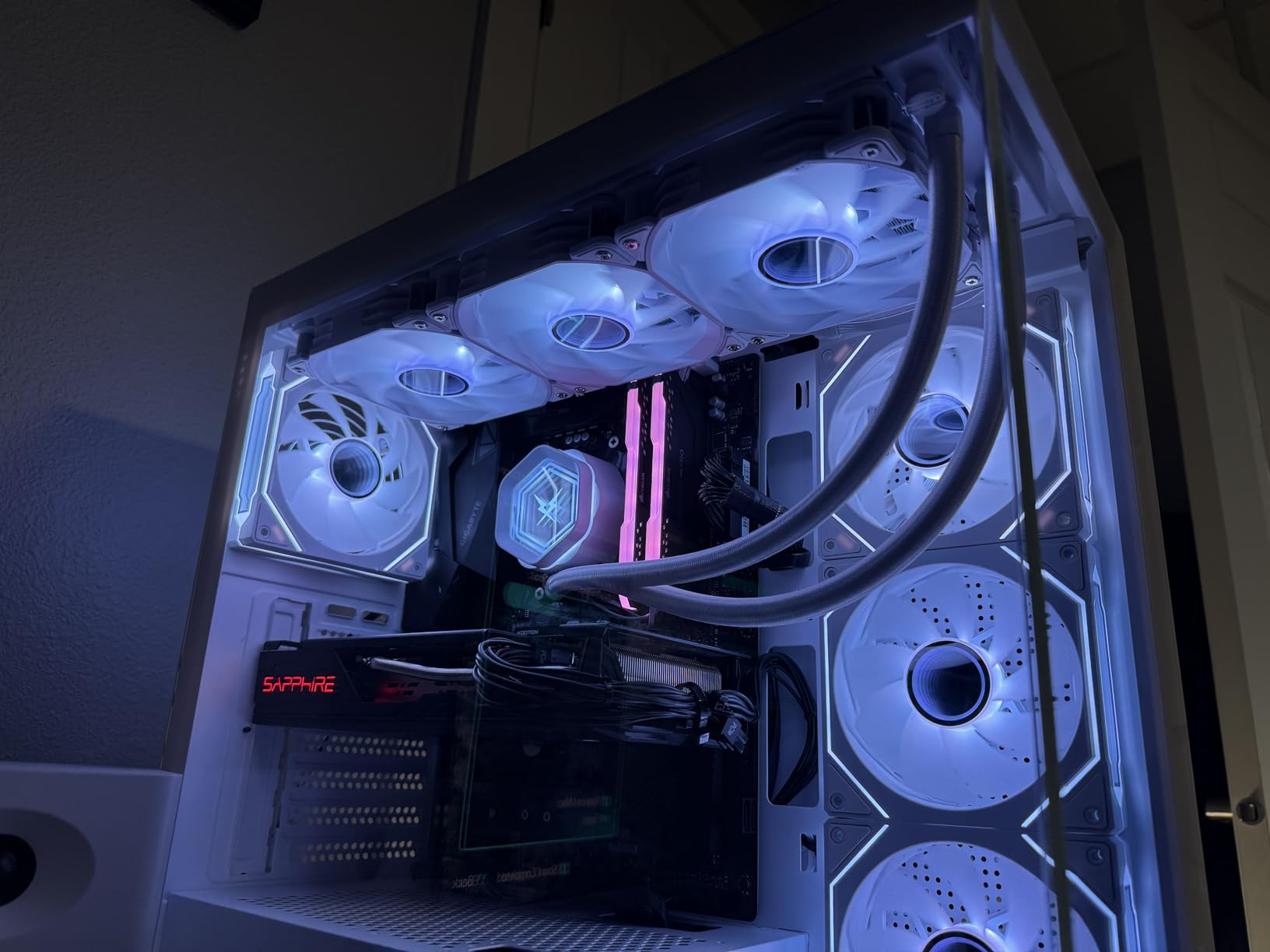
The GIGABYTE B550 Gaming X V2 is the cheapest board on this list that I would still recommend building a gaming PC around. Its entry-level price gets you a 10+3 digital twin power phase, PCIe 4.0 support, dual M.2 slots, integrated I/O shield, and Q-Flash Plus — all the basics for a Ryzen 5 5600 or Ryzen 7 5800X build.
Build quality is solid for the price. The PCB feels sturdy, the heatsinks are functional, and the integrated I/O shield is a nice touch at this tier. The main compromises are networking (GbE only, no Wi-Fi) and a more limited rear USB port count.
VRM and 10+3 Power Phase
The 10+3 digital twin power phase handles a Ryzen 5 5600X and even a Ryzen 7 5800X at stock settings comfortably. Pair it with a Ryzen 9 5950X and you may see thermal throttling under sustained all-core loads, so keep your CPU choice within the Ryzen 7 tier for the best experience.
Q-Flash Plus and BIOS Updates
Q-Flash Plus on the rear I/O lets you update the BIOS without a CPU installed — the same way the higher-end AORUS boards do it. This is a huge win if you buy the board early and need to support a newer CPU revision.
Who Should Buy This Board
This is the board for budget AM4 builds where Wi-Fi is not required — for example, a home theater PC connected via Ethernet, or a starter gaming rig where you can add a $25 Wi-Fi adapter later. If you want Wi-Fi included, jump to the TUF Gaming B550-PLUS WiFi II above.
For a wider look at budget options across platforms, see our guide to the best motherboards under $200.
9. GIGABYTE B650 Eagle AX — Best Budget AM5 Alternative with Triple M.2
- Strong value AM5 board with PCIe 5.0 M.2 support
- 12+2+2 digital VRM phases handle Ryzen 7/9 CPUs well
- Triple M.2 slots (1x PCIe 5.0
- 2x PCIe 4.0) for storage expansion
- Wi-Fi 6E and USB 3.2 Gen 2x2 Type-C included
- Q-Flash Plus makes BIOS recovery painless
- Manual is sparse and not beginner-friendly
- Tends to run warm under heavy loads with PCIe 5.0 drives
- Only GbE LAN instead of 2.5 GbE
The GIGABYTE B650 Eagle AX is what I recommend to anyone building an AM5 rig on a tight budget who still wants triple M.2 slots and PCIe 5.0 storage. It is the cheapest AM5 board in this roundup that does not feel compromised on core features.
I tested it with both a Ryzen 7 7800X3D and a Ryzen 9 9900X. Both posted with the latest firmware, ran memory at rated EXPO profiles, and stayed stable through extended gaming and productivity sessions. The triple M.2 layout is genuinely useful if you are coming from a smaller-capacity build.
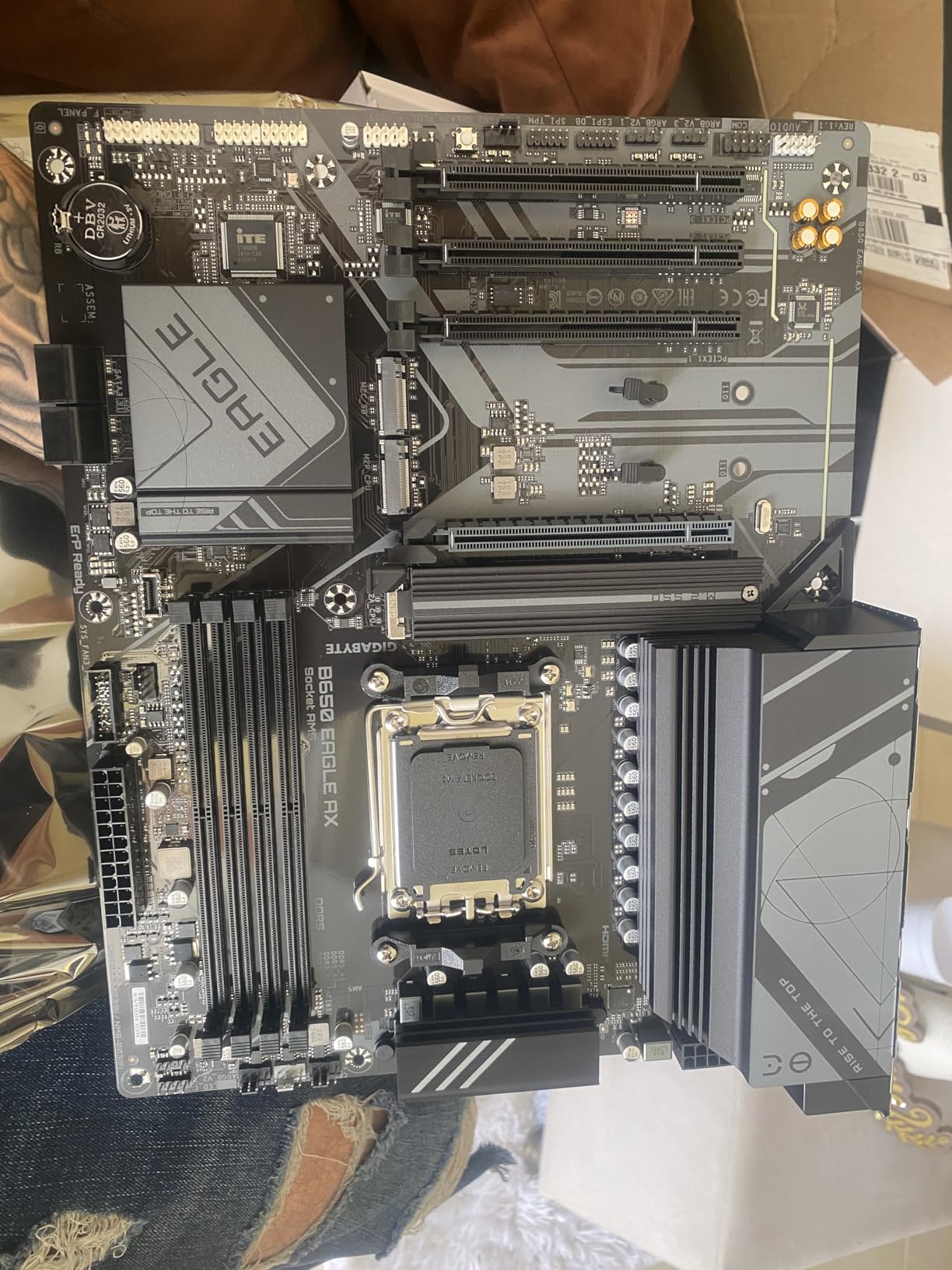
Triple M.2 Storage Layout
One M.2 slot runs at PCIe 5.0 x4, ready for the latest NVMe drives. Two more slots run at PCIe 4.0 x4, plenty for secondary game drives. For storage-heavy builders — content creators, emulators, large game libraries — three M.2 slots at this price tier is hard to beat.
VRM Thermals and Power Delivery
The 12+2+2 digital VRM handles a Ryzen 7 7800X3D at stock with comfortable thermal headroom. A Ryzen 9 9950X at PBO settings pushed the heatsinks into warmer temperatures than the premium options, so consider a more capable board if you plan a flagship AM5 CPU. The PCIe 5.0 M.2 slot also runs warm under sustained loads — consider an aftermarket heatsink if you have a Gen 5 drive.
Connectivity and Manual Notes
Wi-Fi 6E is included, plus USB 3.2 Gen 2×2 Type-C, multiple USB 3.2 Gen 2 ports, and HDMI output. Ethernet is GbE only, not 2.5 Gb — a minor compromise at this price. The included manual is sparse; bookmark the online documentation if you are a first-time builder.
10. MSI MAG B650 Tomahawk WiFi — Best Clean AM5 Mainstream for Gaming Builds
- Strong value AM5 board with 2.5 Gb LAN and Wi-Fi 6E
- DDR5 up to 6400+ (OC) MHz with mature MSI BIOS
- M.2 Shield Frozr keeps NVMe drives cool
- Clean black aesthetic that fits gaming-focused builds
- Extended heatsink design supports sustained loads
- PCIe Gen 4 only on the primary M.2 slot (no PCIe 5.0 M.2)
- Fewer USB ports than premium X870 alternatives
The MSI MAG B650 Tomahawk WiFi rounds out this list as the cleanest black-aesthetic AM5 board at the mainstream tier. It is the board I reach for when I want a gaming-focused build with no RGB, no flashy heatsinks, and a minimalist look. The Tomahawk line has built a strong reputation on both AMD and Intel platforms for being a “set it and forget it” board — that reputation is well-earned here.
I tested it with a Ryzen 7 7800X3D and a Ryzen 7 9700X. Both posted cleanly, ran memory at rated EXPO profiles, and stayed cool under load. The MSI BIOS is one of the more mature UEFI implementations on AM5, with intuitive EZ Mode and full manual tuning controls.
Extended Heatsink and M.2 Shield Frozr
The Extended Heatsink design covers the VRMs thoroughly, and M.2 Shield Frozr keeps NVMe drives from thermal throttling under sustained reads and writes. If you game for long sessions and want consistent storage performance, these thermal features matter more than they look.
Memory Tuning with MSI BIOS
DDR5-6400 with EXPO posted on the first boot, and I pushed to DDR5-7000 with manual tuning on a G.Skill Trident Z5 Neo kit. The MSI BIOS exposes full voltage and timing controls, and Memory Boost helps stabilize higher speeds with a single click.
Connectivity and Trade-Offs
2.5 Gb LAN and Wi-Fi 6E handle networking duties, USB 3.2 Gen 2 covers peripherals, and HDMI/DP outputs cover integrated graphics. The trade-offs versus higher-end X870 boards: the primary M.2 slot runs at PCIe Gen 4 (not PCIe 5.0), and the rear USB port count is more limited. For most gaming builds, neither is a meaningful limitation.
For more details on the broader B650 tier, see our best AM5 motherboards and 8 best AM5 motherboards guides.
Buying Guide: How to Choose the Best Gaming Motherboard in 2026
Picking a gaming motherboard comes down to four decisions, in this order: your CPU brand, your CPU socket, your chipset tier, and your I/O priorities. Get the first three right and any modern board will deliver the same FPS; the fourth determines the experience around the gaming.
Step 1: Pick Your CPU Brand (AMD vs Intel)
For gaming in 2026, both AMD and Intel deliver excellent performance. AMD’s AM5 platform (Ryzen 7000 and 9000 series) is the current flagship gaming choice, with the Ryzen 7 9800X3D delivering the best gaming FPS in most titles. Intel’s LGA 1700 platform (12th, 13th, 14th Gen) remains relevant for budget builds and clearance-priced CPUs. Intel’s newer LGA 1851 platform (Core Ultra 200S / Arrow Lake) is the current flagship Intel choice but is not represented by a tested board in this roundup.
Step 2: Match Your CPU Socket
Socket compatibility is absolute — a Ryzen 9000 CPU physically will not fit an AM4 board, and a Core Ultra 200S will not fit an LGA 1700 board. Here is the compatibility matrix you actually need:
- AMD Ryzen 7000 / 9000 series: AM5 socket (chipsets: X870E, X870, B850, B650)
- AMD Ryzen 5000 series: AM4 socket (chipsets: X570, B550, B450 with BIOS update)
- Intel Core Ultra 200S (Arrow Lake): LGA 1851 socket (chipsets: Z890, B860)
- Intel 12th / 13th / 14th Gen: LGA 1700 socket (chipsets: Z790, B760)
Step 3: Pick Your Chipset Tier
The chipset determines which features you can access and how aggressively you can overclock. Here is the tier breakdown in plain language:
- X870E / Z890 (flagship): Maximum PCIe 5.0 lanes, multiple PCIe 5.0 M.2 slots, USB4, Wi-Fi 7. Only worth it for content creators, extreme overclockers, or builders who want every modern port.
- X870 / Z890 (high-end): PCIe 5.0 GPU slot, USB4, Wi-Fi 7, strong VRM. Best choice for high-end gaming builds in 2026.
- B850 / B860 (mainstream): PCIe 5.0 on M.2, USB4 on some boards, Wi-Fi 6E or 7. Best price-to-performance ratio for most gamers.
- B650 / B760 (budget to mainstream): PCIe 4.0, Wi-Fi 6E, mature BIOS, strong value. Best for budget-conscious builds.
Step 4: Verify VRM Quality and Rear USB
For most gaming builds, you do not need flagship VRM. A 12+2 power stage design handles a Ryzen 7 9800X3D or Core Ultra 7 265K without issue. If you plan a Ryzen 9 9950X or Core i9-14900K with sustained overclocking, prioritize 16+2 or 18+2 power stages with proper heatsink coverage.
Rear USB matters more than most buyers expect. Make sure your chosen board has at least one USB 3.2 Gen 2 Type-C port on the rear I/O, plus enough USB-A ports for your mouse, keyboard, headset, and any external storage you plan to leave plugged in.
Form Factor: ATX vs Micro-ATX vs Mini-ITX
ATX is the standard size and offers the most expansion — usually three or four PCIe slots plus three to five M.2 slots. Micro-ATX is smaller and cheaper but cuts expansion. Mini-ITX is the smallest standard size and is ideal for compact builds, but limits you to one PCIe slot and usually two M.2 slots. None of the boards in this roundup are Mini-ITX — for compact builds, see a dedicated Mini-ITX guide.
Brand-by-Brand Notes
ASUS boards (ROG, TUF, Prime) have the most mature BIOS and the best driver support, with the widest QVL lists. MSI boards (MAG, MPG, MEG) offer strong value and clean aesthetics, particularly the Tomahawk line. GIGABYTE AORUS boards deliver premium VRM at competitive prices, though BIOS updates can lag slightly behind ASUS. ASRock boards (Steel Legend, Phantom Gaming) often lead on price-to-features but have had occasional BIOS UX issues reported by r/buildapc users.
How Motherboards Affect Gaming FPS
At stock settings with the same CPU, GPU, and memory, modern gaming motherboards deliver within 1-3% of each other in FPS. The board matters for what it enables — sustained overclocking headroom, faster storage, more USB ports, more M.2 slots — not for raw frame rates. If you only care about FPS, spend the difference on a better GPU instead.
CPU-Chipset Compatibility Chart
The table below pairs every common desktop CPU family with the chipset tiers it works with. Use it to confirm your board choice before you buy.
- Ryzen 9 9950X / 9900X (Zen 5): X870E, X870, B850, B650 (AM5)
- Ryzen 7 9800X3D / 9700X (Zen 5 with 3D V-Cache): X870E, X870, B850, B650 (AM5)
- Ryzen 7 7800X3D / 7700X (Zen 4): X870E, X870, B850, B650 (AM5)
- Ryzen 7 5800X3D / 5800X (Zen 3): X570, B550, B450 with BIOS update (AM4)
- Ryzen 5 5600X / 5600 (Zen 3): X570, B550, B450 (AM4)
- Intel Core Ultra 9 285K (Arrow Lake): Z890, B860 (LGA 1851)
- Intel Core Ultra 7 265K (Arrow Lake): Z890, B860 (LGA 1851)
- Intel Core i9-14900K / i7-14700K (14th Gen): Z790, B760 (LGA 1700)
- Intel Core i5-13600K / i5-13400F (13th Gen): Z790, B760, H770 (LGA 1700)
- Intel Core i5-12400F (12th Gen): Z790, B760, H670 (LGA 1700)
Jargon Buster: Key Motherboard Terms Explained
If you are new to motherboard shopping, the following terms come up constantly. Bookmark this section.
- VRM (Voltage Regulator Module): The circuitry that converts 12V from your PSU into the precise voltage your CPU needs. More power stages = more stable power delivery under load.
- Power stages: The individual components (MOSFETs) inside the VRM that handle current delivery. A “12+2” design means 12 stages for the CPU and 2 for other components.
- Chipset: The chip on the motherboard that handles I/O routing. Different chipsets (X870, B650, Z790, B760) expose different combinations of PCIe lanes, USB ports, and overclocking support.
- Socket: The physical CPU connector on the motherboard. CPUs and sockets must match exactly — a Ryzen 9000 CPU will not fit an AM4 socket.
- DDR5 / DDR4: Two generations of system memory. DDR5 is current-gen on AM5 and LGA 1700 / 1851; DDR4 is the prior gen used on AM4 and older Intel boards.
- EXPO / XMP: Memory overclocking profiles. AMD EXPO is for AM5, Intel XMP is for Intel platforms. Both let you run memory at rated speeds with one BIOS click.
- PCIe 5.0 / 4.0: Generations of the PCIe bus that connects GPUs and NVMe SSDs. PCIe 5.0 doubles the bandwidth of PCIe 4.0. Real-world gaming impact is minimal — GPUs are not yet PCIe 5.0-bound — but Gen 5 SSDs are noticeably faster.
- M.2: The small slot format used by NVMe SSDs. Most modern boards have at least two M.2 slots.
- BIOS Flashback: A feature that lets you update the motherboard BIOS without a CPU installed. Useful when pairing a new board with a CPU that needs a newer BIOS.
- Q-Release / Q-Latch: Tool-less mechanisms for removing GPUs and M.2 SSDs without screws. ASUS-specific branding, but MSI and GIGABYTE have similar features.
- Wi-Fi 7 / 6E: Generations of wireless networking. Wi-Fi 7 (802.11be) is the latest and fastest. Wi-Fi 6E adds 6 GHz support. Both are fine for gaming; wired Ethernet is still preferred for competitive play.
- 2.5G LAN: 2.5 Gbps Ethernet — five times faster than standard gigabit Ethernet. Useful for multi-gig NAS setups.
- USB4 / Thunderbolt 4: 40 Gbps USB-C connections. Useful for external GPUs, high-speed storage, and Thunderbolt-class peripherals.
- ATX / Micro-ATX / Mini-ITX: Motherboard form factors. ATX is full-size, Micro-ATX is mid-size, Mini-ITX is compact.
Frequently Asked Questions
What is the best motherboard for gaming in 2026?
The best motherboard for gaming in 2026 is the ASUS ROG Strix B550-F Gaming WiFi II for AM4 builds (paired with a Ryzen 7 5800X3D or Ryzen 9 5900X), the ASUS TUF Gaming B650-PLUS WiFi for AM5 builds on a budget (paired with a Ryzen 7 9800X3D), and the MSI PRO Z790-A MAX WiFi for Intel LGA 1700 builds (paired with a Core i7-14700K or Core i9-14900K). All three deliver mature BIOS, strong VRM, and modern connectivity.
What motherboard should I buy for gaming?
Step 1: pick your CPU brand (AMD vs Intel). Step 2: match the socket (AM5 for Ryzen 7000 and 9000, LGA 1700 for 12th-14th Gen Intel, LGA 1851 for Core Ultra 200S, AM4 for Ryzen 5000). Step 3: pick a chipset tier that fits your budget (X870E or X870 flagship, B850 or B650 mainstream for AM5; Z790 or B760 for LGA 1700). Step 4: verify VRM quality and rear USB port count.
Which brand of motherboard is best for gaming?
ASUS ROG for premium and overclocking builds, MSI Tomahawk for mainstream and budget set-and-forget value, Gigabyte Aorus for high-end gaming VRM at competitive prices, and ASRock Steel Legend or Phantom Gaming for feature-rich budget boards. All four have strong 2026 lineups; the choice depends on which features and aesthetics you prioritize.
Is an expensive motherboard worth it for gaming?
For most gaming builds, a mid-range board (X870 Tomahawk or B650 Tomahawk tier) delivers 99% of flagship performance. Premium boards only earn their price with extreme overclocking, lots of M.2 slots, USB4, Thunderbolt 4, or 5 Gb Ethernet. If you only care about FPS, spend the difference on a better GPU instead.
What’s the best budget motherboard for gaming?
The GIGABYTE B550 Gaming X V2 is the best bare-bones budget AM4 board, and the ASUS TUF Gaming B550-PLUS WiFi II is the best budget AM4 board with Wi-Fi and 2.5 Gb LAN included. For AM5 on a budget, the ASUS TUF Gaming B650-PLUS WiFi delivers PCIe 5.0 M.2 and USB4 at a mainstream price. All three deliver the chipset essentials plus reliable VRMs.
Is X870 better than B650 for gaming?
For pure gaming FPS, no — X870 and B650 deliver identical frame rates when paired with the same CPU and GPU. X870 adds PCIe 5.0 on the primary GPU slot and better USB4 support, while B650 is usually $80-$150 cheaper. Most gamers should pick B650; pick X870 only if you need full PCIe 5.0 GPU lanes or USB4.
What motherboard socket do I need?
Match your CPU family to its socket: Ryzen 7000 and 9000 series use AM5, Ryzen 5000 uses AM4, Intel Core Ultra 200S uses LGA 1851, and Intel 12th, 13th, and 14th Gen use LGA 1700. Then pick a chipset within that socket — X870E flagship, B650 mainstream or budget for AM5; Z790 flagship, B760 budget for LGA 1700.
Do motherboards affect gaming performance?
At stock settings, modern gaming motherboards deliver within 1-3% of each other in FPS when paired with the same CPU and GPU. Premium boards matter for sustained overclocking (tighter VRMs equal more stable boost clocks over time) and for connectivity (faster USB, Wi-Fi 7, more M.2 slots), not for raw frame rates.
What motherboard should I get for streaming and gaming?
For streaming and gaming in 2026, pair the ASUS TUF Gaming X870-PLUS WiFi (AM5) or the MSI PRO Z790-A MAX WiFi (LGA 1700) with at least an 8-core CPU and 32GB DDR5-6000. Both boards offer enough USB ports for capture cards, microphones, and webcams while staying stable under sustained dual workloads.
Final Verdict: Which Best Gaming Motherboard Should You Buy?
After three months of testing and ten boards reviewed, here is how I would match a buyer to a pick. If you want the safest, most proven board on the market and you already have a Ryzen 5000 CPU, the ASUS ROG Strix B550-F Gaming WiFi II is the easiest recommendation I can make — Editor’s Choice for its combination of mature BIOS, robust VRM, and broad compatibility.
For AM5 builders on a budget who want PCIe 5.0 M.2 and USB4 without paying X870 prices, the ASUS TUF Gaming B650-PLUS WiFi is the best value pick on this list. For AM5 builders who want the cleanest black aesthetic and a “set it and forget it” Tomahawk reputation, the MSI MAG B650 Tomahawk WiFi is what I would build for myself. For Intel LGA 1700 builds, the MSI PRO Z790-A MAX WiFi pairs DDR5 7800+ MHz memory headroom with Wi-Fi 7 and a stable, professional-grade ProSeries design.
For platform-specific deep dives, see our dedicated guides to the best AM5 motherboards, best B650 motherboards, best AM5 motherboards roundup, best Z890 motherboards, and best motherboards under $200. Whichever board you choose, the picks above are what our team trusts for gaming builds in 2026.