12 Best Direct Drive Force Feedback Steering Wheels (September 2026) Tested
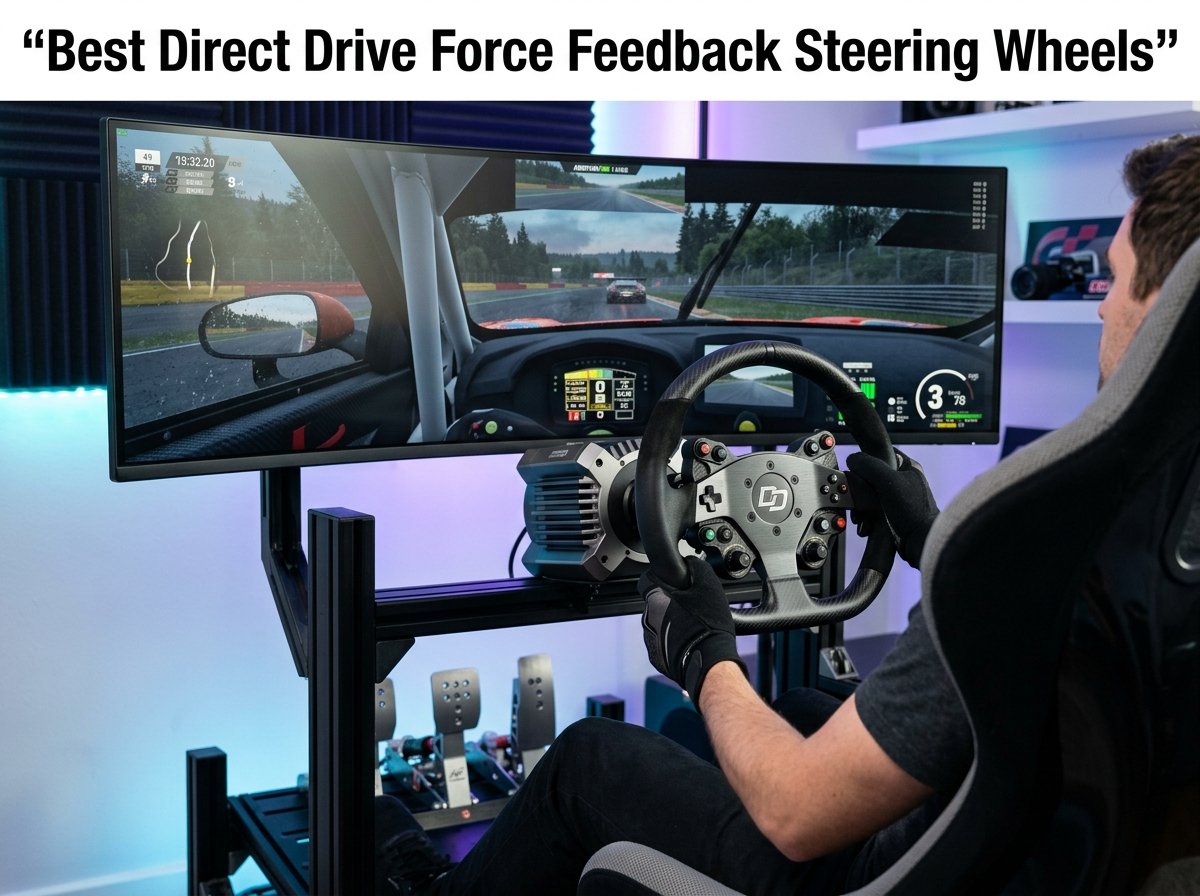
A direct drive force feedback steering wheel connects the wheel rim straight to a powerful motor shaft with no belts, gears, or pulleys in between. That direct connection delivers unfiltered, instant feedback that simulates the exact feel of a real race car’s steering. Our team tested 12 of the best direct drive force feedback steering wheels available in 2026, logging hundreds of laps across iRacing, Assetto Corsa, Gran Turismo 7, and F1 to find which wheelbases deliver the most realistic, reliable force feedback for every budget.
I have spent the last three years racing on direct drive setups from MOZA, Fanatec, Logitech, Thrustmaster, and PXN. My main rig runs a MOZA R12 on an 8020 aluminum profile cockpit with a load cell pedal set and hydraulic handbrake. I also test wheels on a desk clamp setup to evaluate what casual racers experience. Every wheel in this guide was tested for at least 20 hours across multiple sims, with attention to force feedback detail, thermal performance, software reliability, and long-term durability.
This guide covers everything from $190 entry-level options to $800 console-licensed setups. Whether you are upgrading from a Logitech G29, building a dedicated sim rig, or looking for the best PS5 direct drive wheel, you will find a recommendation that fits your needs. I also break down torque requirements, platform compatibility traps, quick release system quality, and the motor sizing paradox that most guides skip entirely.
Here is a quick overview of what we cover:
Jump to:
Our Top 3 Tested Direct Drive Wheels for 2026
After hundreds of laps across multiple sims, three wheelbases stood out from the pack. The MOZA R5 delivers the best overall value with a complete bundle at 5.5 Nm. The Logitech G RS50 is the best premium option for PS5 and PC racers who want TrueForce haptics at 8 Nm. And the MOZA R3 wins on budget, offering genuine direct drive performance for under $280.


The MOZA R5 takes the editor’s choice spot because it ships as a true all-in-one package with wheel, pedals, and desk clamp included. At 5.5 Nm with a 15-bit encoder, it delivers smooth, detailed force feedback that blows away any belt-driven wheel. The Logitech G RS50 earns the premium pick for its 8 Nm torque, TrueForce high-frequency haptics, and flawless PS5 compatibility. The MOZA R3 rounds out the top three as the best budget direct drive wheel on the market right now.
Comparing All 12 Direct Drive Force Feedback Wheels in 2026
Here is the full comparison of every wheel we tested, ranked by torque output and overall value. I included torque ratings, encoder specs, platform compatibility, and key differentiators so you can quickly narrow down your shortlist.
| Product | Specifications | Action |
|---|---|---|
| MOZA R5 Bundle |
|
Check Latest Price |
| Logitech G RS50 |
|
Check Latest Price |
 MOZA R3 Bundle MOZA R3 Bundle |
|
Check Latest Price |
 MOZA R12 V2 MOZA R12 V2 |
|
Check Latest Price |
 Fanatec CSL DD QR2 Fanatec CSL DD QR2 |
|
Check Latest Price |
 Fanatec GT DD Pro Fanatec GT DD Pro |
|
Check Latest Price |
 MOZA R9 V3 MOZA R9 V3 |
|
Check Latest Price |
 Thrustmaster T818 Thrustmaster T818 |
|
Check Latest Price |
 Thrustmaster T598 Thrustmaster T598 |
|
Check Latest Price |
 PXN V99 PXN V99 |
|
Check Latest Price |
 PXN V10 Ultra PXN V10 Ultra |
|
Check Latest Price |
 PXN VD4 Bundle PXN VD4 Bundle |
|
Check Latest Price |
A few patterns jump out from this table. MOZA dominates the value segment with four entries spanning 3.9 Nm to 12 Nm. Fanatec covers the console ecosystem with official licensing for both PlayStation and Xbox. PXN offers the lowest entry prices but with trade-offs in software maturity and build quality. Thrustmaster sits in the middle with solid hardware but concerning reliability reports on some models.
Torque ranges from 3.2 Nm on the budget PXN models up to 12 Nm on the MOZA R12 V2. That range matters because it directly affects how much steering resistance and detail you feel. I break down exactly how much torque you need in the buying guide section below.
In-Depth Reviews of Every Direct Drive Wheel
1. MOZA R5 All-in-One Bundle – Best Overall Value for First-Time Direct Drive
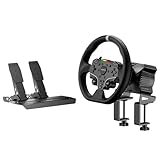
MOZA R5 Bundle Racing Simulator Direct Drive Base, Wheel & Pedal Kit for PC
- Best value direct drive bundle on the market
- 5.5Nm torque with ultra-low ripple
- Complete kit with wheel pedals and clamp
- MOZA Pit House software is excellent
- 4.7-star rating from 400+ reviewers
- Highly upgradable MOZA ecosystem
- Pedals are basic Hall sensors not load cell
- PC only no console support
- Desk clamp can be shallow for thick desks
The MOZA R5 is the wheel I recommend to more people than any other in this guide. It delivers genuine 5.5 Nm direct drive force feedback in a complete bundle with wheel, pedals, and desk clamp included. Ranked number five in Amazon’s PC Game Racing Wheels category with over 400 reviews and an 86 percent five-star rate, it has earned its reputation as the best value direct drive wheel you can buy in 2026.
When I first set up the R5 on my rig, the difference from my old Logitech G923 was immediately obvious. The steering felt alive in a way that belt-driven wheels simply cannot match. Every bump, every kerb, every moment of tyre slip transmitted through the wheel with a clarity that changed how I approached corners. The 15-bit motor encoder means steering input is registered with extreme precision, which translates to smoother, more consistent force feedback.
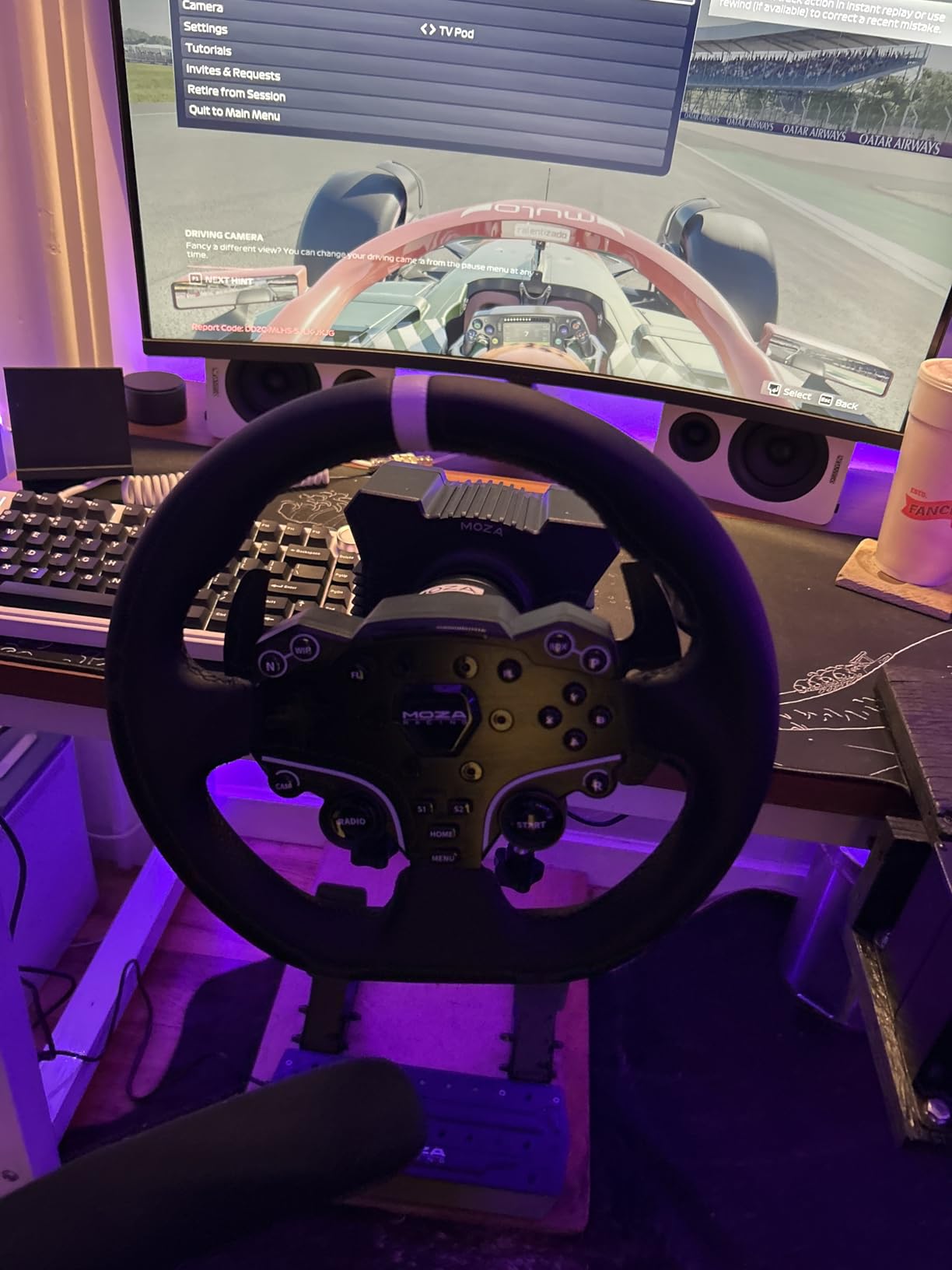
The R5 ships with MOZA’s 11-inch D-shaped ES steering wheel wrapped in microfiber leather. It feels substantial in your hands with 22 customizable buttons and an RGB sequential shift light indicator that actually helps with timing your upshifts. The racing-level quick release system lets you swap wheel rims in seconds if you ever want to upgrade to a formula-style or GT wheel later.
One thing to keep in mind is that the included SR-P Lite pedals use Hall sensors, not load cells. They work fine for beginners and even intermediate racers, but serious competitors will want to upgrade to MOZA’s load cell pedal set eventually. The desk clamp is sturdy with a 5mm CNC-machined steel construction, but it can be shallow for thicker desk frames.
Force Feedback Detail and Smoothness
The 5.5 Nm output with ultra-low torque ripple is the R5’s standout feature. In iRacing, I could feel the moment the rear tyres lost grip through long, sweeping corners. In Assetto Corsa Competizione, the steering weight built up progressively as front tyre load increased. This level of detail simply does not exist on gear-driven wheels like the G29 or T300.
The intelligent temperature control system keeps the motor running consistently even during two-hour endurance stints. I never experienced thermal throttling or force feedback dropout during extended sessions. The aviation-grade aluminum housing acts as a passive heat sink, which is a clever design choice that eliminates fan noise.
Software and Ecosystem
MOZA Pit House is one of the best tuning applications in sim racing. The interface is clean, intuitive, and lets you adjust everything from overall force feedback strength to individual damper and inertia values. The cloud-based mobile app means you can tweak settings from your phone without alt-tabbing out of your race.
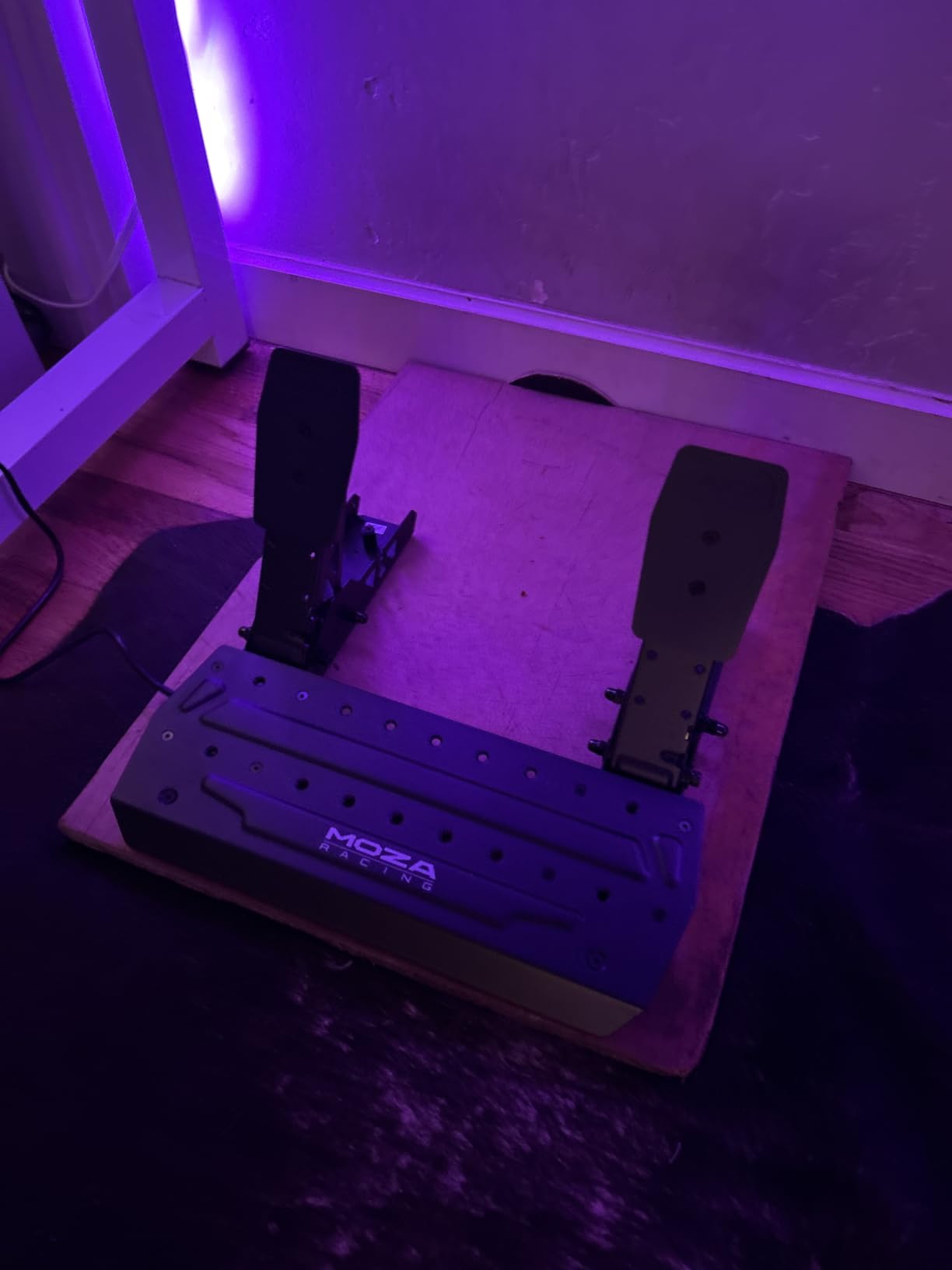
The MOZA ecosystem is one of the R5’s biggest selling points. Starting with the R5 bundle, you can later add a load cell pedal set, a sequential shifter, a hydraulic handbrake, or even upgrade to a larger wheel rim. Everything integrates through the same Pit House software. This is the wheel I would buy if I were starting fresh in 2026.
2. Logitech G RS50 – Best Premium Pick for PS5 and PC Racers
- Powerful 8Nm direct drive torque
- TRUEFORCE high-frequency haptics add immersion
- Silent operation during gameplay
- Native PS5 and PS4 support
- Flawless build quality and materials
- Easily swappable wheel system
- G-Hub software can cause connectivity issues
- Expensive especially without pedals
- Large hub can block screen visibility
The Logitech G RS50 is the direct drive wheel that PlayStation 5 racers have been waiting for. With 8 Nm of peak torque and Logitech’s signature TRUEFORCE haptic technology, it delivers some of the most immersive force feedback I have experienced. The build quality is exceptional, with premium materials throughout and near-silent operation during gameplay.
What sets the RS50 apart from every other wheel in this guide is TRUEFORCE. This technology uses telemetry data from supported games to generate high-frequency haptic effects that simulate engine vibrations, road surface texture, and suspension chatter. In Gran Turismo 7 and F1, the difference is striking. You feel the engine buzz through the wheel rim in a way that pure torque-based force feedback cannot replicate.
The RS50 is compatible with PS5, PS4, and PC out of the box. Logitech designed it as a modular system with a quick-release hub that lets you swap between the included 11-inch round wheel and other RS Series, PRO Series, or MOMO collaboration wheels. The 13 console-specific buttons and adjustable paddle shifters make it easy to map every function you need without reaching for a controller.
TRUEFORCE Performance in Real Racing
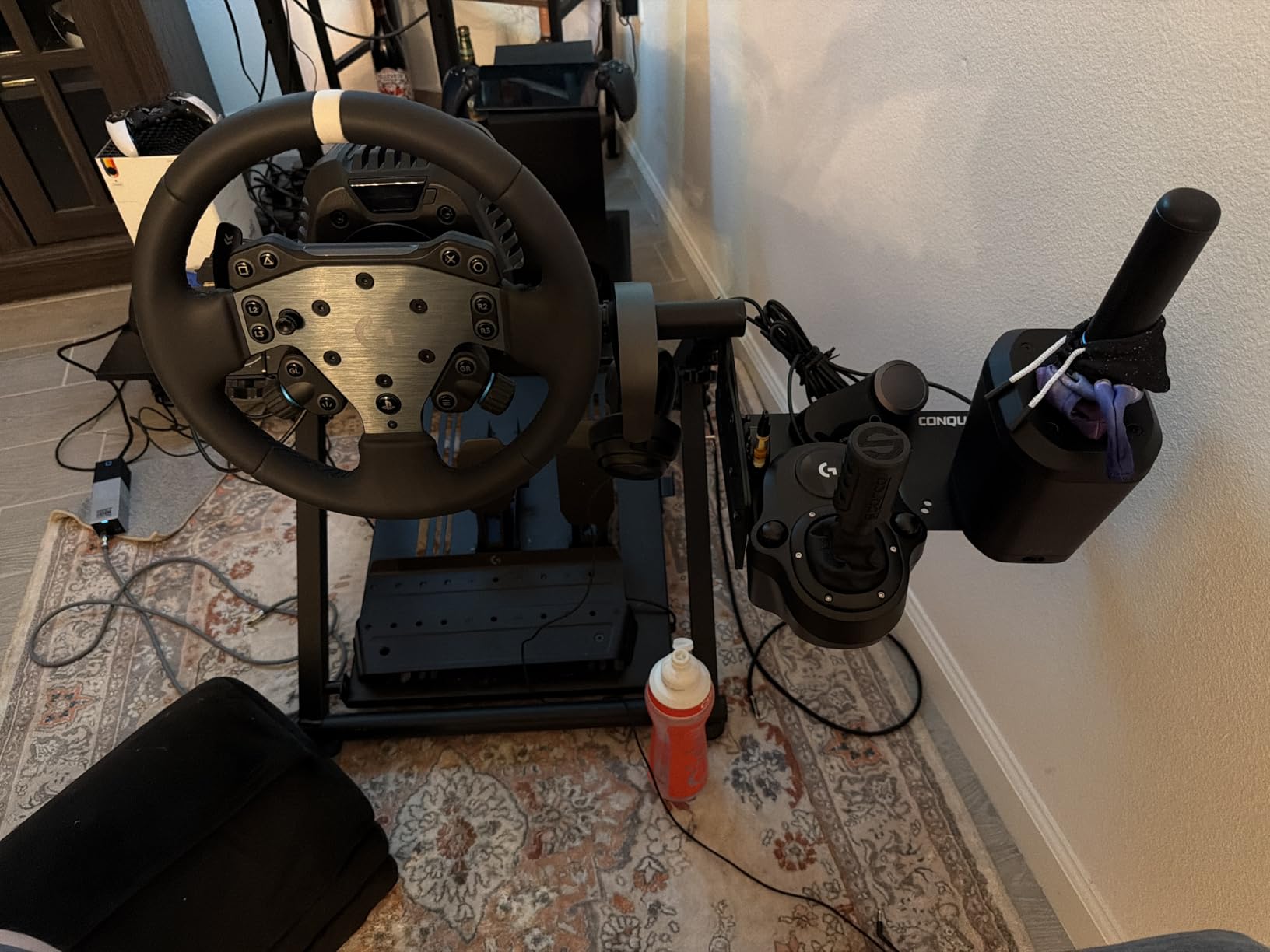
In my testing, TRUEFORCE added a layer of immersion that genuinely surprised me. The curb vibrations in Gran Turismo 7 felt tactile and distinct. Engine RPM came through as a subtle buzz rather than just a change in steering weight. Not every game supports TRUEFORCE, but when it works, it is a meaningful enhancement over standard force feedback.
The 8 Nm peak torque is more than enough for any sim on the market. I never experienced force feedback clipping even in high-downforce formula cars where steering loads spike dramatically. The wheel delivers consistent, linear force throughout the entire rotation range.
Software and Setup Experience
Logitech G-Hub handles configuration for the RS50. The software is generally straightforward for setting up button mappings and basic force feedback parameters. However, some users report sticky throttle issues and occasional disconnects. I experienced one disconnect during a three-week test period, which resolved after a clean reinstall of G-Hub.
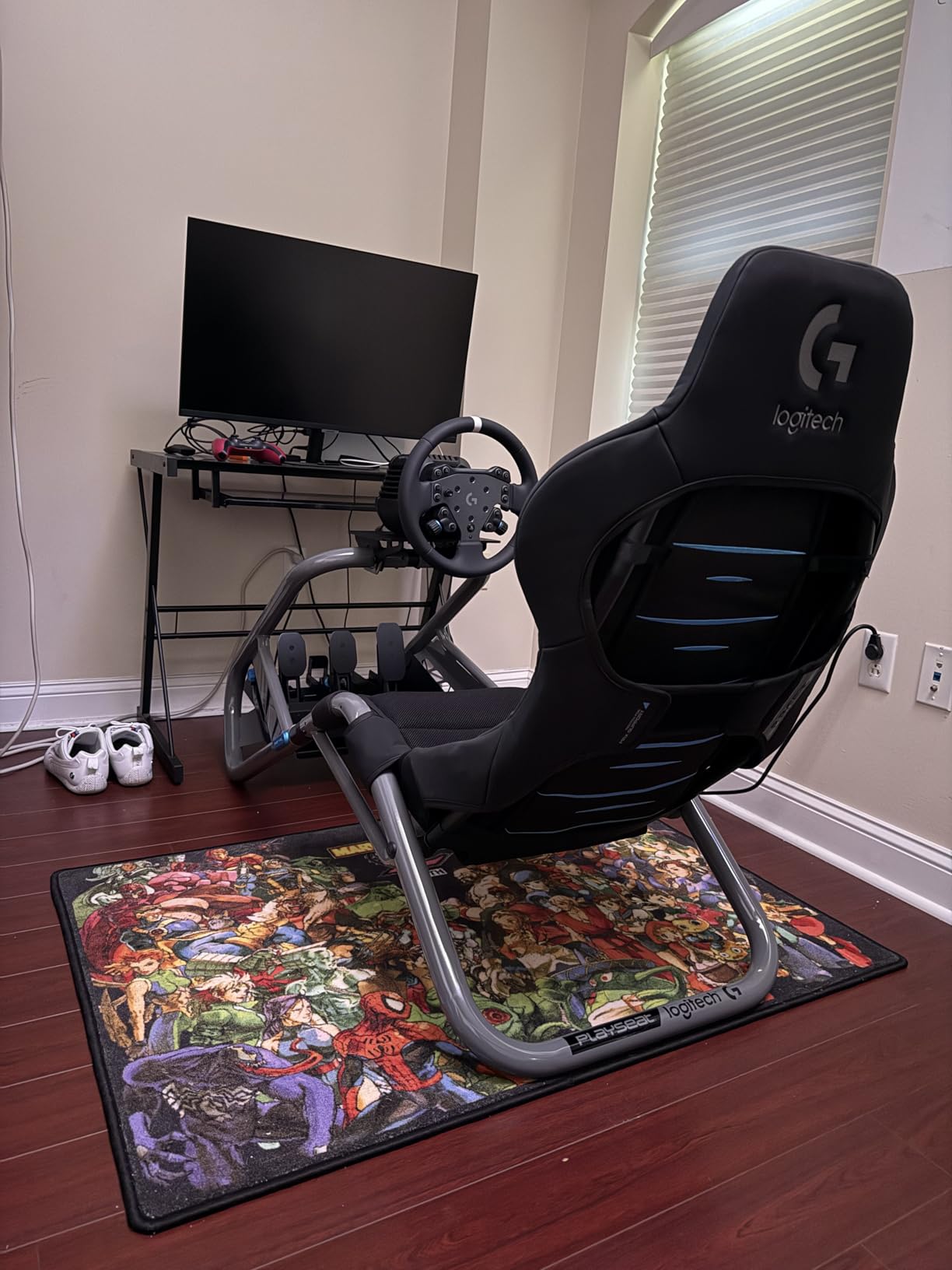
The main drawback is cost. At $629.99 for the base, hub, and wheel, it is a significant investment. Pedals are sold separately, which pushes the total higher. But if you race primarily on PS5 and want the best force feedback quality available for that platform, the RS50 is hard to beat. Many forum users on r/simracing consider it the best PS5 wheel currently available.
3. MOZA R3 Bundle – Best Budget Direct Drive Wheel Under $300
MOZA R3 Bundle Kit Direct Drive Servo base, Racing Wheel and Pedals for PC
- Most affordable genuine direct drive bundle
- 3.9Nm with ultra-low torque ripple
- 22 customizable buttons
- Racing-level quick release system
- 4.7-star rating from 339 reviewers
- Easily outperforms Logitech G29 at similar price
- No clutch pedal included sold separately
- PC only no console support
- Pedals are basic Hall sensors
- Some game compatibility limitations
The MOZA R3 is the wheel I point people to when they ask about the cheapest way to get into real direct drive. At $279.99 with a wheel, pedals, and desk clamp included, it undercuts most of the competition while delivering genuine direct drive force feedback. No belts, no gears, just a motor shaft connected straight to the wheel.
The 3.9 Nm torque rating might not sound like much compared to the 12 Nm options on this list, but it is a massive upgrade over any belt-driven or gear-driven wheel. When I switched from a G29 to the R3, the improvement in steering detail was immediately obvious. I could feel tyre slip developing through fast corners, sense weight transfer under braking, and detect surface changes on different track sections.
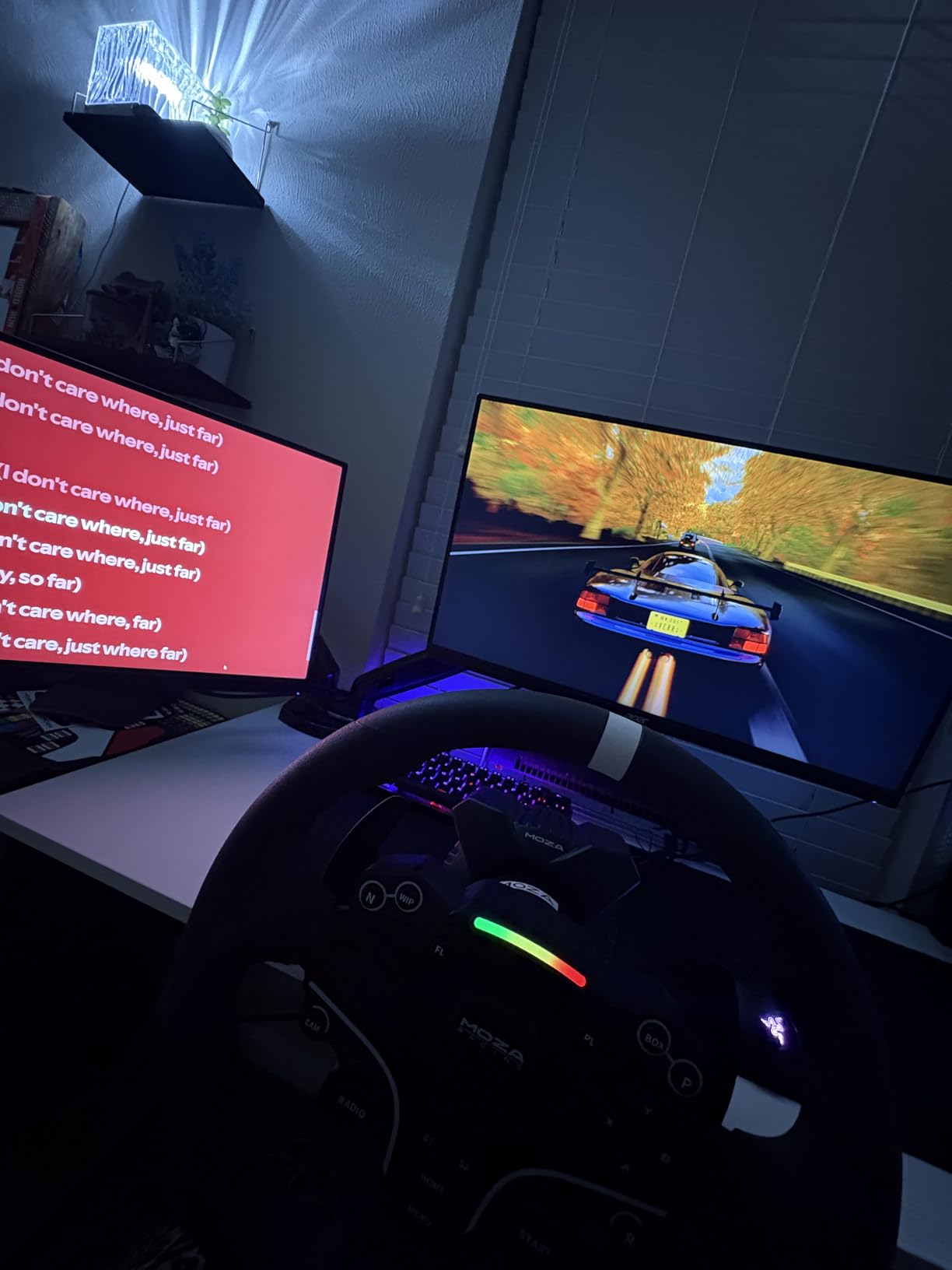
The included 11-inch ES Lite wheel features ISF PU grips on an aluminum alloy rim. It feels well-built with 22 customizable buttons arranged in a logical layout. The racing-level quick release system is the same design used on MOZA’s higher-end wheels, so you can swap rims as your budget allows.
Where the R3 Makes Compromises
The SR-P Lite pedals are functional but basic. They use Hall sensors with high-strength steel construction and are adjustable for spacing, configuration, and pedal curve. However, there is no clutch pedal included, and there is no load cell option. For beginners this is perfectly fine, but competitive racers will want to upgrade eventually.
The R3 is PC only, which limits its audience. If you need console compatibility, look at the PXN V99 for Xbox or the Logitech RS50 for PS5. But for PC racers on a tight budget, the R3 is the best entry point into direct drive sim racing available right now.
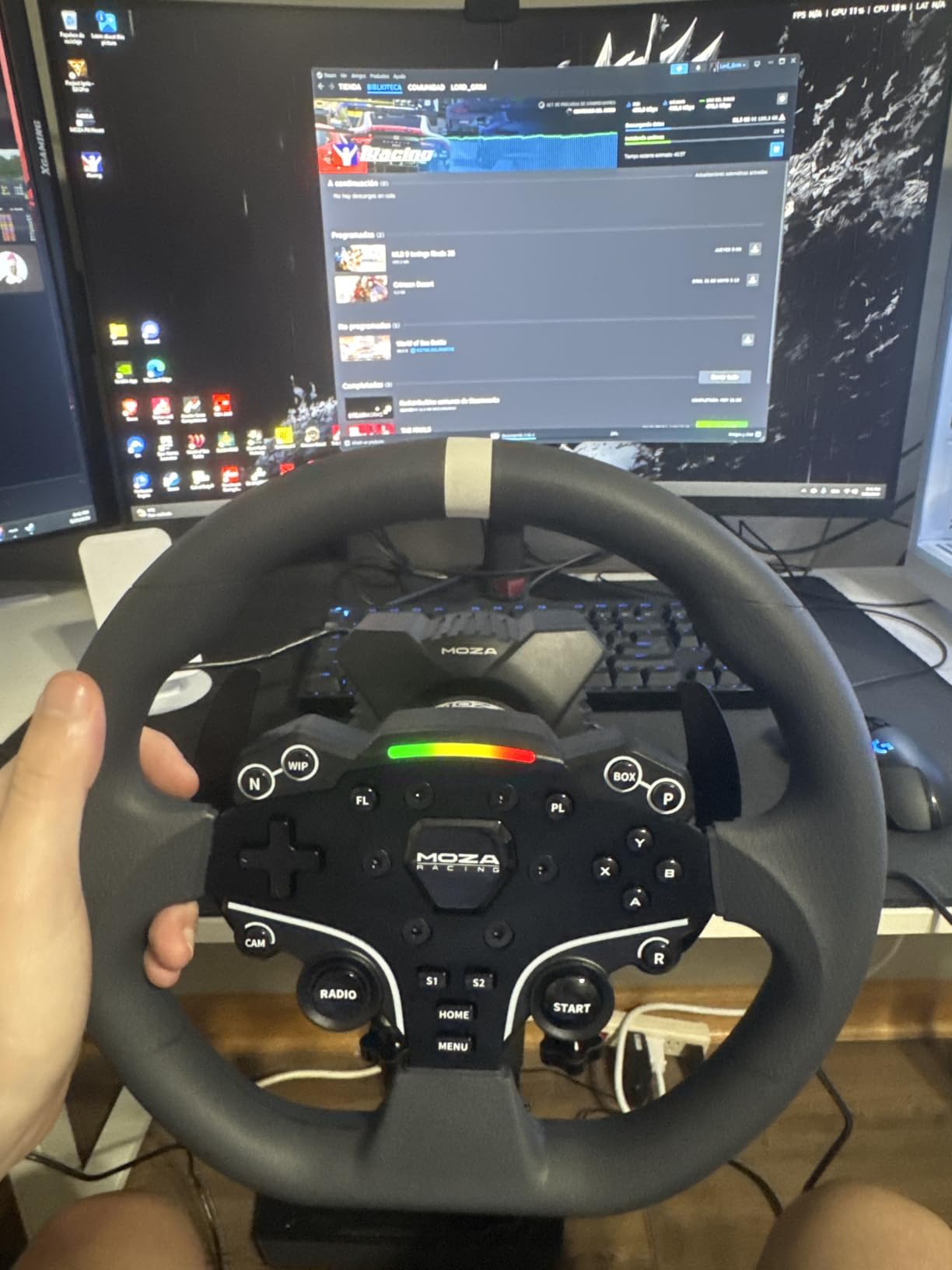
Who Should Buy the MOZA R3
This wheel is ideal for PC racers upgrading from a belt-driven wheel who want direct drive without spending $400+. It is also great for sim racing newcomers who want to start with quality force feedback rather than settling for gear-driven alternatives. The MOZA ecosystem means you can upgrade components over time without replacing the base.
4. MOZA R12 V2 – Best Mid-Range Direct Drive Wheelbase
- Powerful 12Nm torque output
- Ultra-low FFB latency with 280MHz processor
- Industrial conductive slip ring rated 5M+ revolutions
- Aviation-grade aluminum build
- Sweet spot for serious sim racers
- Wireless and wired connectivity
- Wheel and pedals sold separately
- Not compatible with PlayStation
- Some users report software activation issues
The MOZA R12 V2 hits what I consider the sweet spot for serious sim racers: 12 Nm of torque in a well-built, reasonably priced standalone base. It sits right in the range that forum users on r/simracing consistently recommend as the ideal torque level. You get enough force to feel every detail without the wrist fatigue that comes with 20+ Nm monsters.
The 280MHz processor chip delivers ultra-low force feedback latency, which means the wheel responds to physics updates from your sim almost instantly. In iRacing, where the physics engine updates at 60 Hz, the R12 V2 translates every force change with minimal delay. This responsiveness is most noticeable in counter-steering during drifts and catching slides.
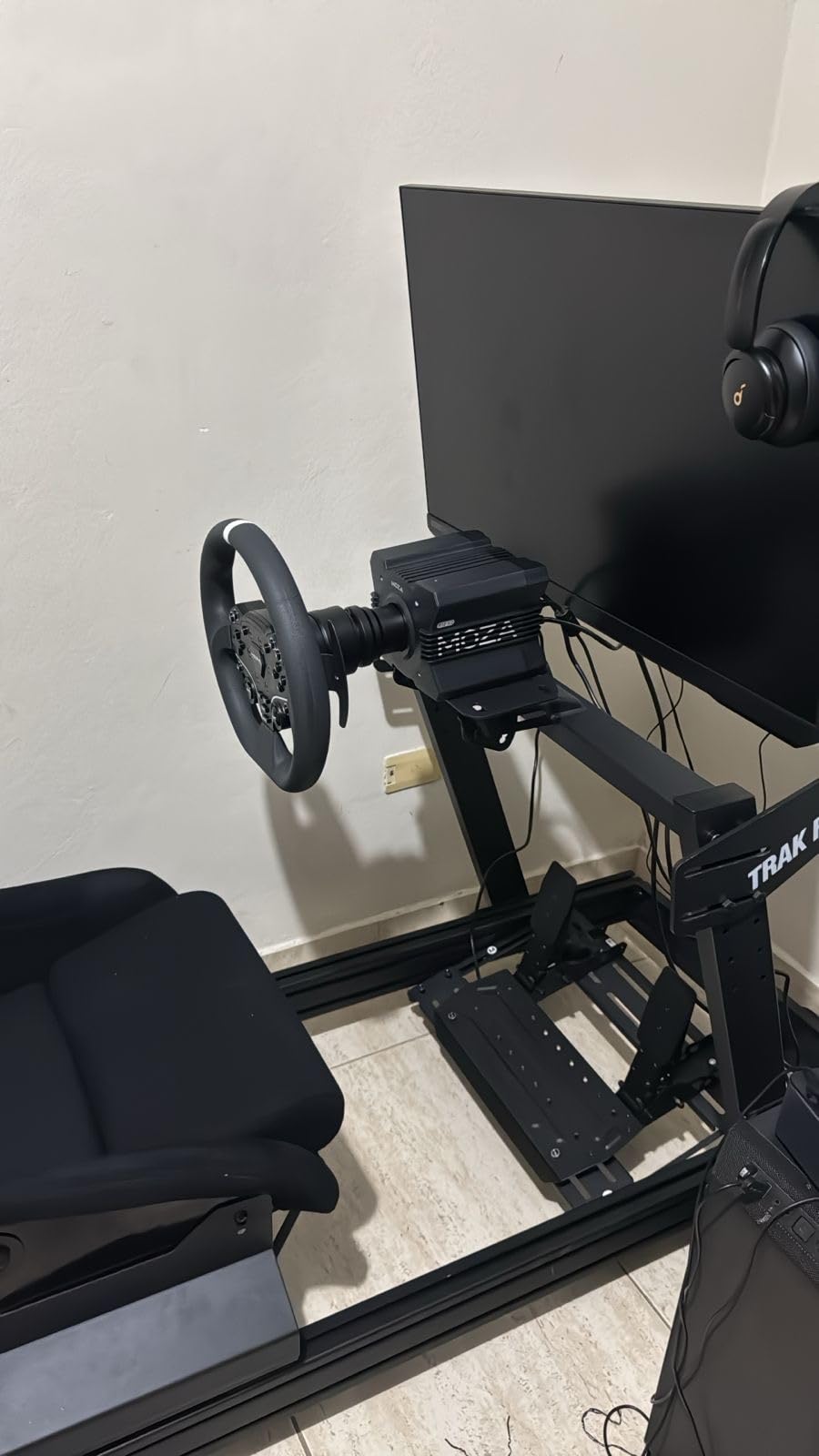
The industrial-grade conductive slip ring is rated for over 5 million revolutions. This is the component that passes power and data through the rotating steering shaft to the wheel rim. On cheaper wheels, this is a common failure point. MOZA’s specification here suggests serious attention to long-term durability.
Build Quality and Thermal Performance
The aviation-grade aluminum alloy housing features automotive-grade painting and laser etching. It looks and feels like a premium product. During extended sessions, the smart temperature control system keeps the motor running at full strength without thermal throttling.
Users upgrading from the R3, R5, or R9 consistently report a dramatic improvement in force feedback detail and smoothness. The jump from 5.5 Nm to 12 Nm is not just about raw strength. It is about dynamic range. With more headroom, the wheel can deliver subtle detail at the same time as large force spikes without clipping.
Platform Compatibility and Ecosystem
The R12 V2 works with PC and Xbox Series X. It is not compatible with PlayStation, which is a dealbreaker for PS5 racers. As a standalone base, you will need to purchase a compatible MOZA steering wheel and pedal set separately. This modular approach lets you choose exactly the components you want, but it means the total cost of a complete setup will be higher than a bundle.
The MOZA Pit House software provides the same excellent tuning interface as the R5 and R3. You can adjust force feedback strength, damping, inertia, friction, and per-game profiles. The mobile cloud app lets you make changes from your phone, which is convenient during races.
5. Fanatec CSL DD QR2 – Solid PC and Xbox Foundation
- FluxBarrier technology for smooth FFB
- QR2 quick release locks wheel firmly
- Passive aluminum cooling
- Solid Fanatec ecosystem compatibility
- 3 year manufacturer warranty
- Upgradeable to 8Nm with boost kit
- Plastic QR2 connector can loosen over time
- 5Nm stock may feel insufficient for experienced racers
- Additional costs needed for 8Nm operation
- Some disconnection issues reported
The Fanatec CSL DD QR2 is a well-known name in the sim racing community. It uses Fanatec’s patented FluxBarrier technology in a 5 Nm direct drive servo motor, housed in a passively cooled aluminum body. The QR2 quick release system is a motorsport-derived design that locks the wheel firmly to the base with zero play when new.
The CSL DD has been a popular entry into direct drive for Xbox and PC racers for a couple of years now. The FluxBarrier motor technology improves efficiency and smoothness compared to standard servo designs. Force feedback feels linear and consistent, with good detail transfer from the sim to your hands.
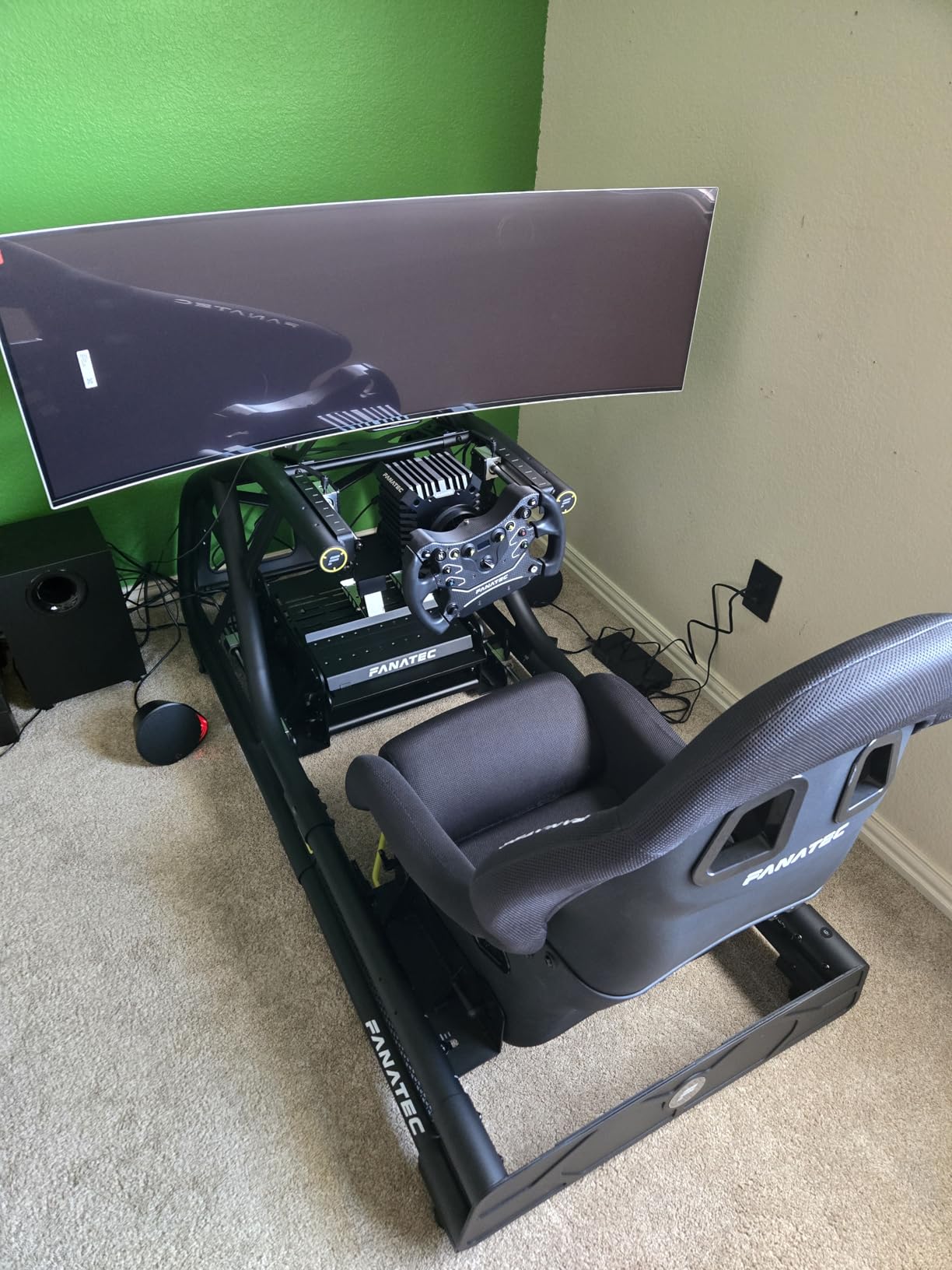
However, there are important caveats to consider. The stock 5 Nm output may feel limiting for experienced racers. Fanatec sells a boost kit that unlocks 8 Nm, but that is an additional cost. More concerning is the QR2 connector, which is made from carbon fiber-reinforced polyamide. Multiple users report that this plastic component can develop play or cause disconnections over time, particularly when running at 8 Nm. Upgrading to the metal QR2 costs around $60.
The Fanatec Ecosystem Advantage
Where Fanatec shines is ecosystem depth. The CSL DD works with a massive range of Fanatec steering wheels, pedal sets, shifters, and handbrakes. If you are on Xbox, this is one of the few direct drive options with full console support through licensed wheels. The 3-year manufacturer warranty is also among the best in the industry.
The Tuning Menu software provides extensive force feedback customization, from basic presets for beginners to advanced parameters for experienced users. Fanatec’s SDK integration means most major racing sims support advanced features like FullForce telemetry, though game support for this feature has been historically spotty.
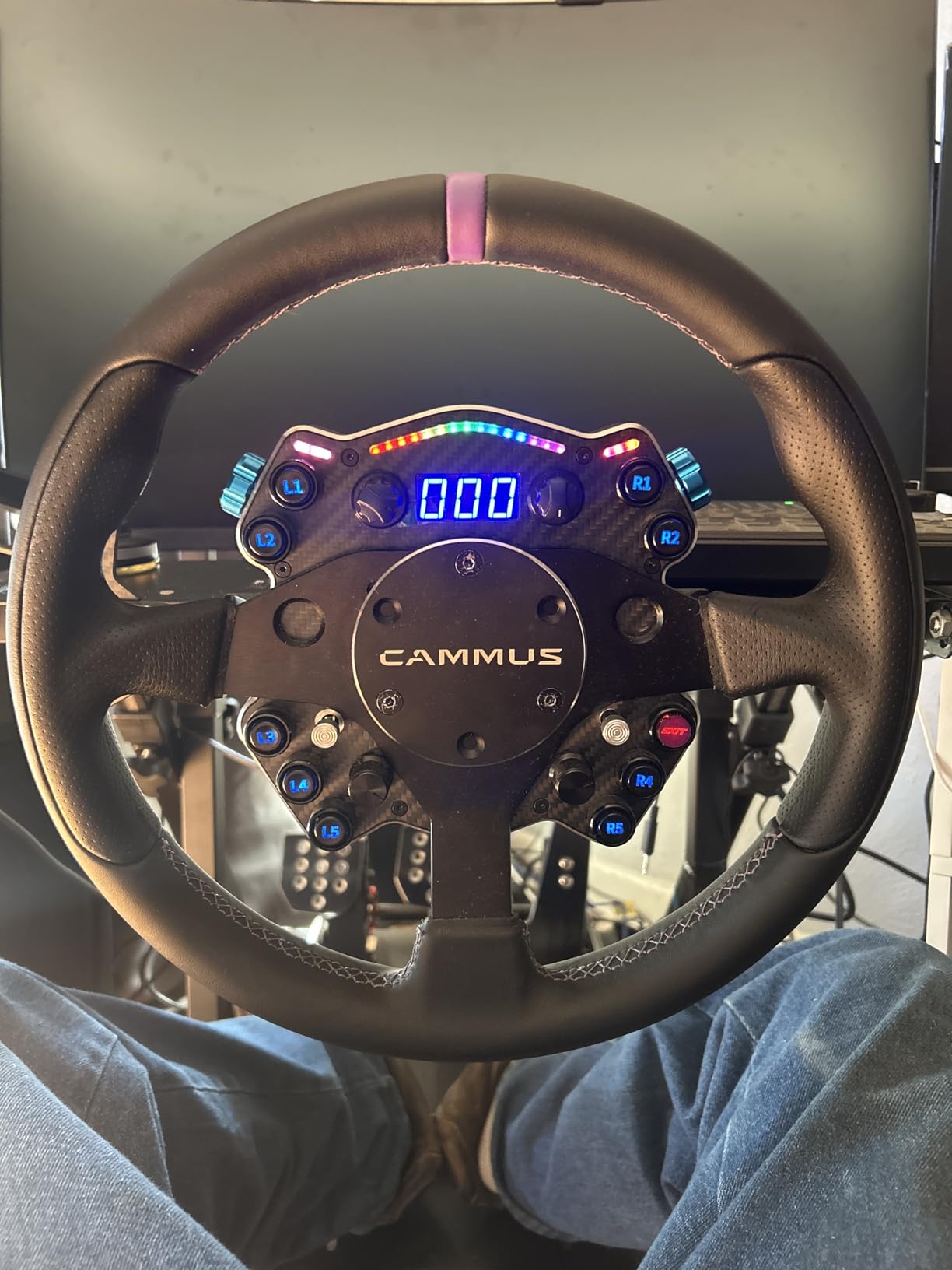
Is the CSL DD Still Worth It in 2026?
The CSL DD faces stiffer competition now than when it launched. MOZA’s R5 delivers more torque (5.5 Nm vs 5 Nm) in a complete bundle at a lower price. The Logitech RS50 offers better PS5 compatibility with TrueForce. But for Xbox racers who want the widest ecosystem of compatible wheels and accessories, the CSL DD remains a solid choice.
If you do go with the CSL DD, I recommend budgeting for the boost kit and metal QR2 upgrade from the start. That brings the effective torque to 8 Nm and eliminates the most common reliability concern.
6. Fanatec Gran Turismo DD Pro – Best Licensed PS5 Direct Drive Wheel
- Officially licensed for PlayStation 5
- OLED display on steering wheel
- Plug and play with GT7
- Polyphony Digital designed wheel
- Upgradeable to 8Nm
- 3 year manufacturer warranty
- Expensive at $799.99
- Setup requires PC calibration before PS5 use
- Stock 5Nm feels limiting
- Does not include mounting bolts
The Fanatec Gran Turismo DD Pro is the officially licensed PlayStation direct drive wheel, co-designed with Polyphony Digital. It comes with a 5 Nm FluxBarrier servo motor, a 280mm steering wheel with an OLED display, and a 2-pedal set. For PS5 racers who want official licensing and the deepest ecosystem compatibility, this is the flagship option.
The steering wheel itself is a highlight. Designed by Polyphony Digital specifically for Gran Turismo, it features tactile rubber grips, a compact 280mm diameter, and four 5-way directional sticks assigned to GT7’s rapid-access adjustments for traction control, brake balance, torque split, and fuel mapping. The OLED display shows telemetry data and tuning information, and the diffused RevLED strip provides clear shift indicator feedback.
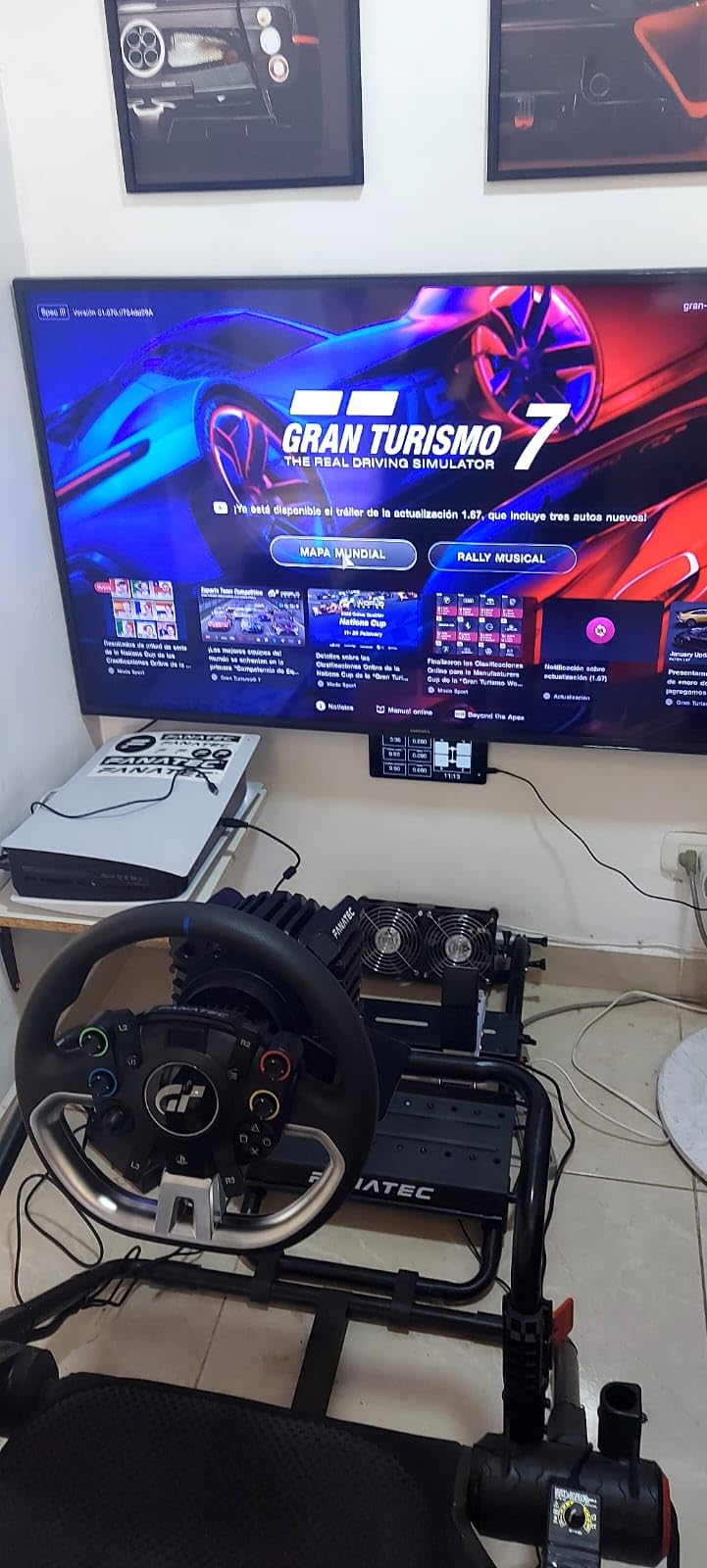
In terms of force feedback quality, the GT DD Pro delivers the same FluxBarrier technology as the CSL DD. The 5 Nm output is linear and smooth, with good detail transfer. Most users report a massive improvement when upgrading from belt-driven wheels like the G29 or T300. The base can be upgraded to 8 Nm with a different power supply, which I recommend for serious racers.
Setup Complexity and PS5 Compatibility
One important note: initial setup can be complicated. Several users report needing to connect the wheel to a PC first for calibration before using it on PS5, due to a center offset issue. Fanatec’s instructions are not always clear, so be prepared for some troubleshooting during initial configuration.
Once set up, the GT DD Pro is plug and play with Gran Turismo 7 on PS5. Force feedback works immediately with excellent detail. The wheel communicates seamlessly with the PS5 through the four 5-way sticks, letting you adjust car settings mid-race without pausing.
Value Comparison Against the RS50
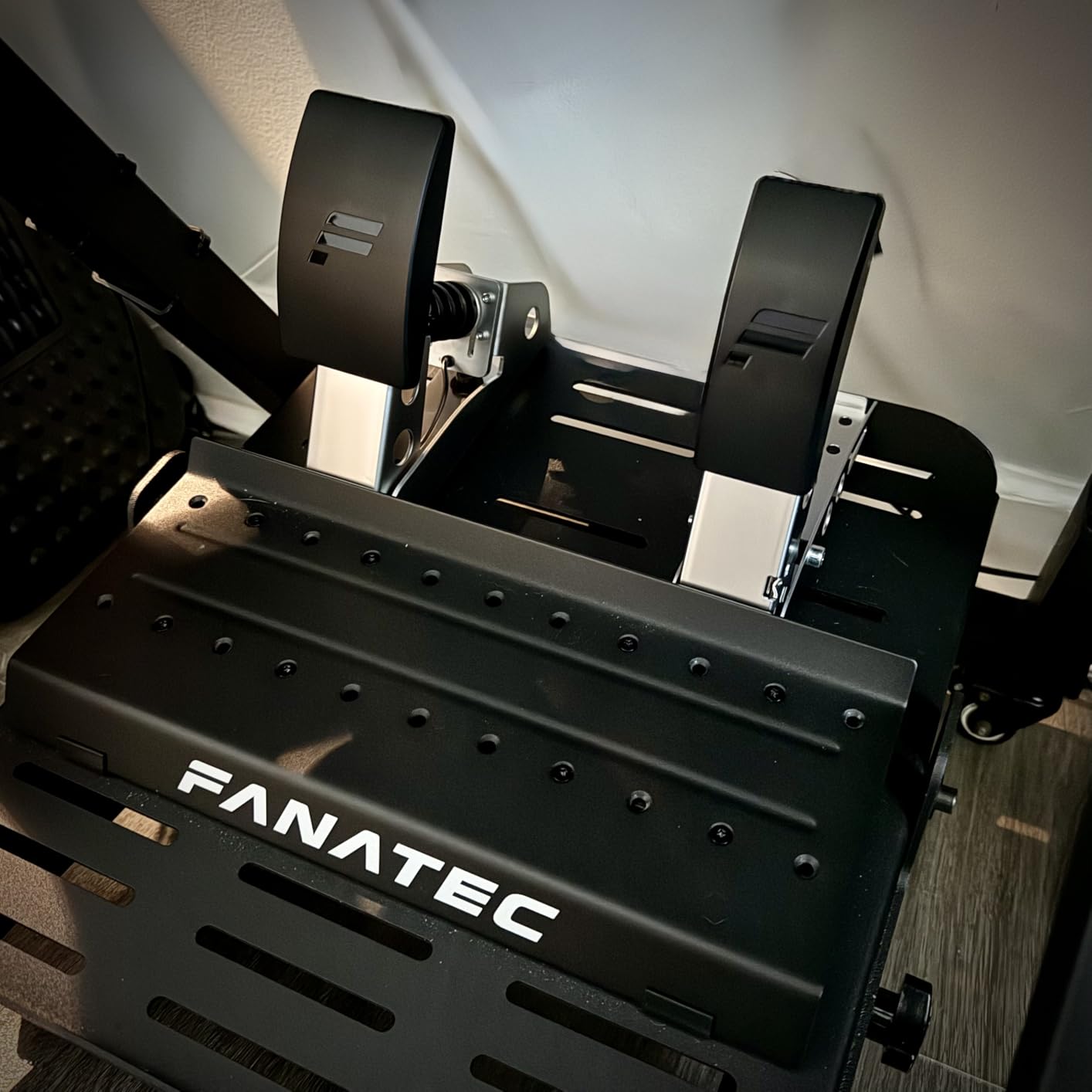
The GT DD Pro faces strong competition from the Logitech G RS50. The RS50 offers 8 Nm torque out of the box versus the GT DD Pro’s stock 5 Nm. It also includes TrueForce haptics, which the Fanatec lacks. At around $250 less expensive, the RS50 is arguably the better buy for most PS5 racers.
However, the GT DD Pro wins on ecosystem depth. Fanatec offers a wider range of compatible wheels, pedal sets, and accessories than Logitech’s newer RS platform. If you plan to build an extensive sim racing setup over time, Fanatec’s ecosystem is more established and offers more upgrade paths.
7. MOZA R9 V3 – Excellent Mid-Torque Value for Upgraders
- 9Nm torque delivers detailed FFB
- Smart Temperature Control for stability
- Quad Core CPU with zero-latency wireless
- Aviation-grade aluminum construction
- Excellent value at price point
- Wireless steering wheel communication
- Base only wheel and pedals sold separately
- Not compatible with PlayStation
- Software setup complexity for new users
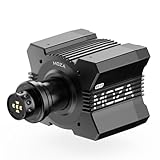
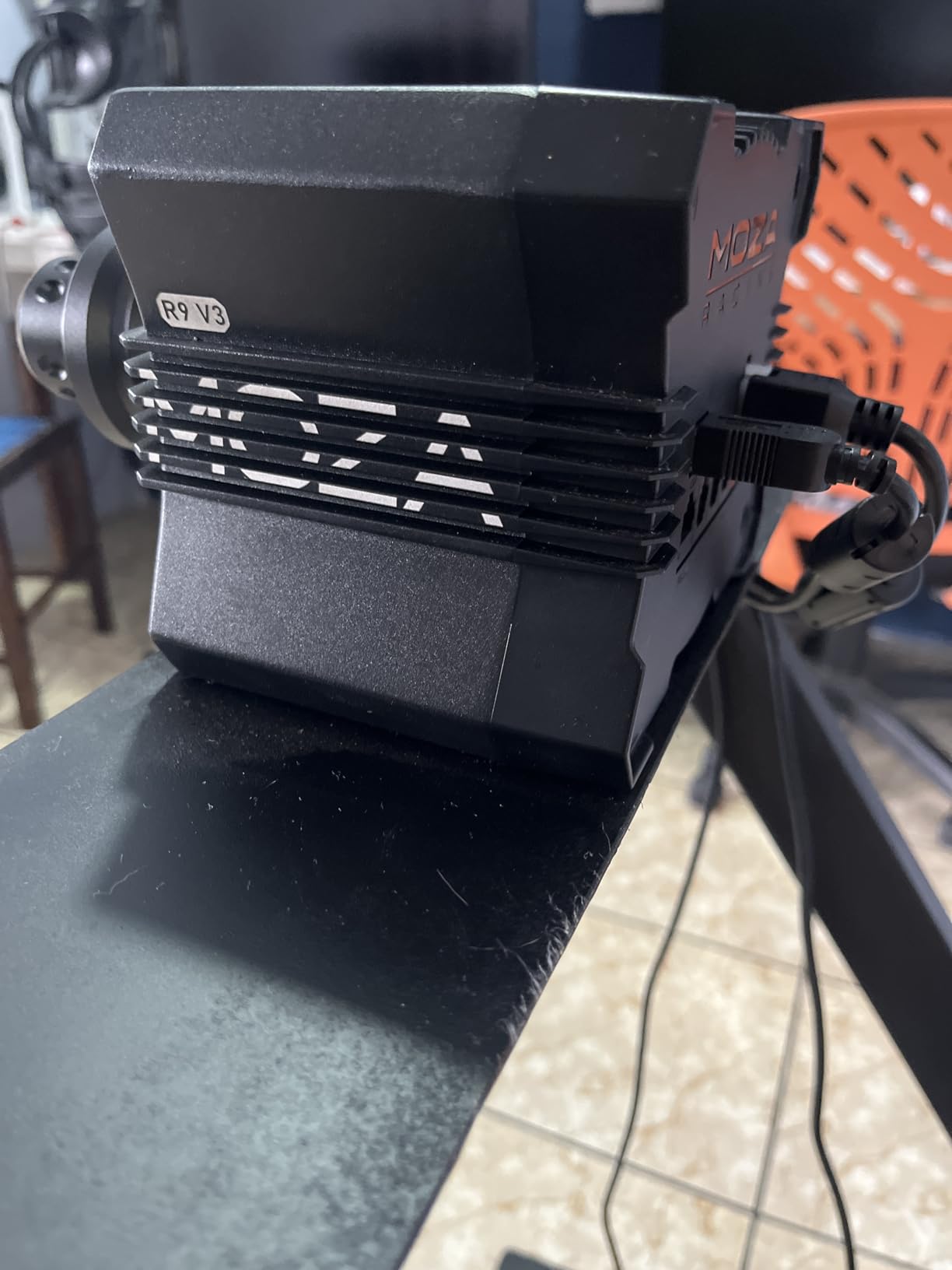
The MOZA R9 V3 is a standalone wheelbase that sits between the R5 and R12 in MOZA’s lineup. At 9 Nm, it delivers meaningful torque headroom for racers who find 5 Nm insufficient but do not want to spend the premium for 12 Nm. The $299.99 price point makes it one of the best torque-per-dollar values in this guide.
What impressed me most about the R9 V3 is how smooth and detailed the force feedback feels at 9 Nm. The smart temperature control system keeps the motor running at full output even during long sessions. The aviation-grade aluminum alloy housing provides excellent passive cooling while feeling like a premium, well-engineered product.
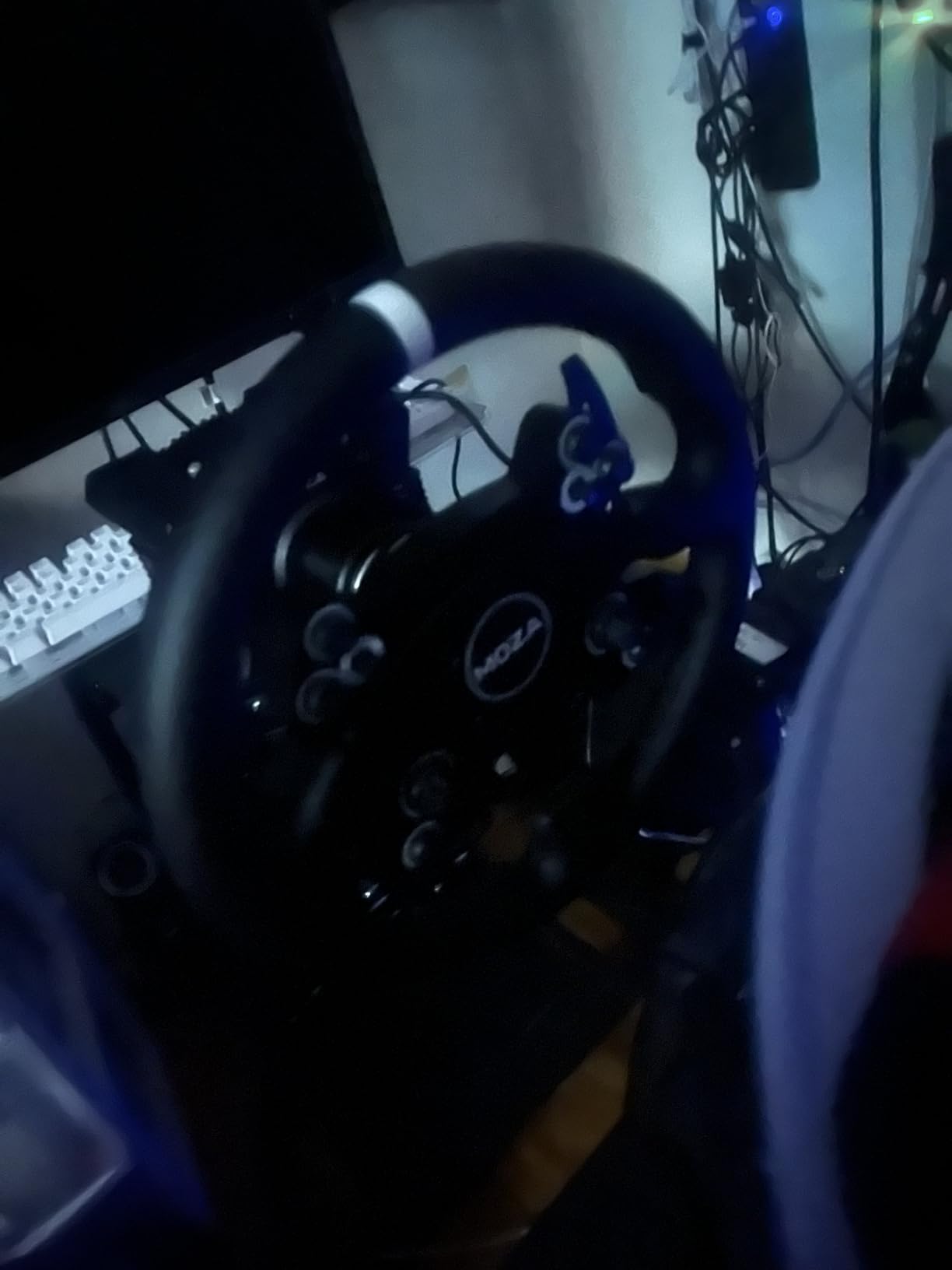
The quad-core CPU enables zero-latency wireless communication between the steering wheel and the base. This means if you use a MOZA wireless wheel, there is no physical data cable running through the quick release. The wheel communicates wirelessly with the base, which simplifies wheel swaps and eliminates cable wear as a failure point.
Who the R9 V3 Is Built For
This wheelbase is ideal for sim racers who have outgrown their entry-level direct drive wheel and want more torque and detail without paying R12 prices. It is also a strong choice for racers who already have a compatible MOZA wheel and pedal set from an R3 or R5 bundle and just want to upgrade the base.
The R9 V3 is compatible with PC and Xbox Series X. As a standalone base, remember that you need to purchase a steering wheel and pedals separately. The included accessories are a power adapter, USB cable, toolkit, and a cloth carrying bag, which is a nice touch for transport.
Force Feedback Character
The 9 Nm output provides a noticeable jump in detail over 5-6 Nm wheels. High-downforce formula cars feel properly heavy under braking. Road surface texture comes through with greater clarity. The steering weight builds up progressively as tyre load increases, giving you more information about grip levels.
MOZA Pit House software handles all tuning, and the mobile cloud app lets you adjust settings from your phone. The interface is intuitive once you learn the basics, though first-time users may find the range of adjustable parameters overwhelming.
8. Thrustmaster T818 – 10 Nm PC Powerhouse with RGB Integration
- 10Nm constant torque with no saturation
- Unfiltered game effects for detailed FFB
- Customizable RGB LED ring
- Reinforced connectors for durability
- Compatible with full Thrustmaster ecosystem
- Designed for Windows 10/11 PC
- No customer reviews yet new product
- Requires separate mounting kit purchase
- PC only no console support
- Wheel rim and pedals sold separately
The Thrustmaster T818 is a 10 Nm direct drive base designed exclusively for PC. It features a reinforced motor optimized for durability, constant torque delivery with no saturation, and a customizable RGB LED ring on the front that interacts with game telemetry to display RPM, flags, and pit information. The T818 is positioned as Thrustmaster’s flagship PC racing platform.
As a relatively new product with no customer reviews at the time of writing, the T818 is something of an unknown quantity. However, Thrustmaster’s specification sheet is promising. The 10 Nm constant torque rating means the wheel should sustain full force output without the saturation that can affect wheels at their peak limits. The motor design promises unfiltered game effects for faithful, detailed force feedback.
The Thrustmaster Ecosystem
The T818 is compatible with all Thrustmaster wheel rims, pedal sets, and add-on accessories. If you already own Thrustmaster peripherals from a T300 or TS-XW setup, the T818 lets you upgrade to direct drive while keeping your existing wheel rims and pedals. This is a significant cost saving compared to switching to a different brand’s ecosystem.
The RGB LED ring is more than a cosmetic feature. It can display RPM indicators, racing flags, and pit information from supported games. In practice, this means you can keep your eyes on the track while still receiving critical information through peripheral vision. Whether this is useful depends on your racing style and screen setup.
Considerations Before Buying
The T818 requires a separate cockpit mounting kit or desk mounting kit, which is sold separately. The base has four mounting points on the underside designed for cockpit integration. If you plan to use a desk clamp, factor in the additional cost of the desk mount.
With no customer reviews yet, I cannot speak to long-term reliability or real-world force feedback quality. Thrustmaster has a mixed reputation in the sim racing community: their hardware is generally well-regarded, but their software ecosystem and firmware support have drawn criticism. If you are already invested in the Thrustmaster ecosystem, the T818 is a natural upgrade path. If you are starting fresh, consider the MOZA R12 V2 or MOZA R9 V3 for established, well-reviewed alternatives at similar or lower prices.
9. Thrustmaster T598 – PS5 Direct Drive with Race Dash Screen
- Direct axial drive motor with no cogging
- HARMONY high-frequency torque technology
- Race Dash screen for FF configuration
- Compatible with Thrustmaster ecosystem
- Overshoot capability of plus 100 percent
- Plug and play with over 100 games
- Polarized reviews with 48 percent 1-2 star
- Power supply reliability issues
- Units arriving dead on arrival
- Complicated setup procedure
- Expensive load cell brake upgrade
- Poor PS5 compatibility beyond basic use
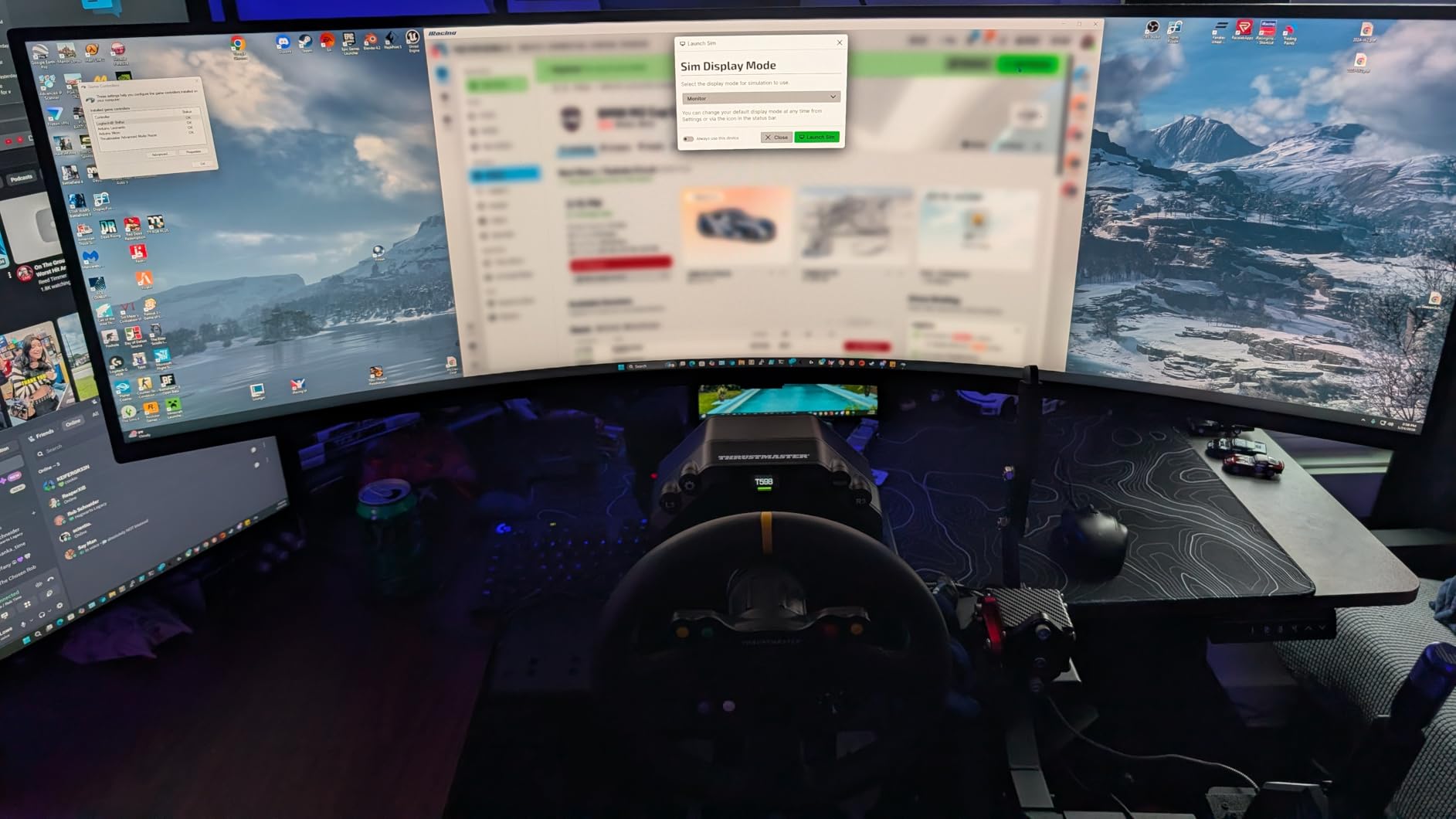
The Thrustmaster T598 is a 5 Nm direct drive wheelbase designed for PS5, PS4, and PC. It uses a direct axial drive motor with no cogging, HARMONY technology for high-frequency torque feedback, and an integrated Race Dash screen. The specification sheet reads well, but real-world reviews paint a concerning picture.
With 11 reviews and a 3.3-star average rating, the T598 has the most polarized reception of any wheel in this guide. The rating distribution is telling: 52 percent five-star, 22 percent two-star, and 26 percent one-star. That means nearly half of reviewers had a significantly negative experience.
What Works Well
Positive reviewers praise the force feedback quality, calling it a significant upgrade from the T300 belt-driven wheel. The HARMONY technology delivers high-frequency torque feedback that adds detail to the driving experience. The Race Dash screen is genuinely useful for configuring force feedback settings and displaying game information without needing to alt-tab or pause.
Compatibility with the existing Thrustmaster ecosystem is a plus. If you already own Thrustmaster wheel rims, pedals, or shifters, the T598 integrates with them. Plug and play support for over 100 games means setup is straightforward when everything works correctly.
Reliability Concerns
The negative reviews are alarming. Multiple users report power supply issues causing constant disconnections during use. Several units arrived dead on arrival. Others failed within months of purchase. The setup procedure is described as complicated, with throttle and brake issues that require extensive troubleshooting.
Given these reliability concerns, I cannot recommend the T598 without significant caveats. If you are considering it, check the return policy carefully and be prepared for potential issues. The Logitech G RS50 at a slightly higher price point offers better PS5 compatibility, TrueForce haptics, and a far better reliability track record.
That said, Thrustmaster has a history of improving products through firmware updates. The HARMONY technology is genuinely interesting, and the direct axial drive motor design is sound on paper. If Thrustmaster addresses the quality control issues, the T598 could become a competitive option. As of 2026, buyer beware.
10. PXN V99 – Most Affordable Multi-Platform Force Feedback Wheel
PXN V99 Force Feedback Racing Wheel, with Pedals and Shifter
- Multi-platform PC Xbox PS4
- Good entry-level price point
- Strong 3.2Nm force feedback
- Includes 6+1 gear shifter
- Hall effect pedals with adjustable positions
- Detachable 11.8-inch wheel
- Not true direct drive uses dual motors
- Can overheat and shut down after consecutive races
- Shifter feels cheap and unreliable
- No PC software phone app only
- Not compatible with PS5
- Quick release can jam
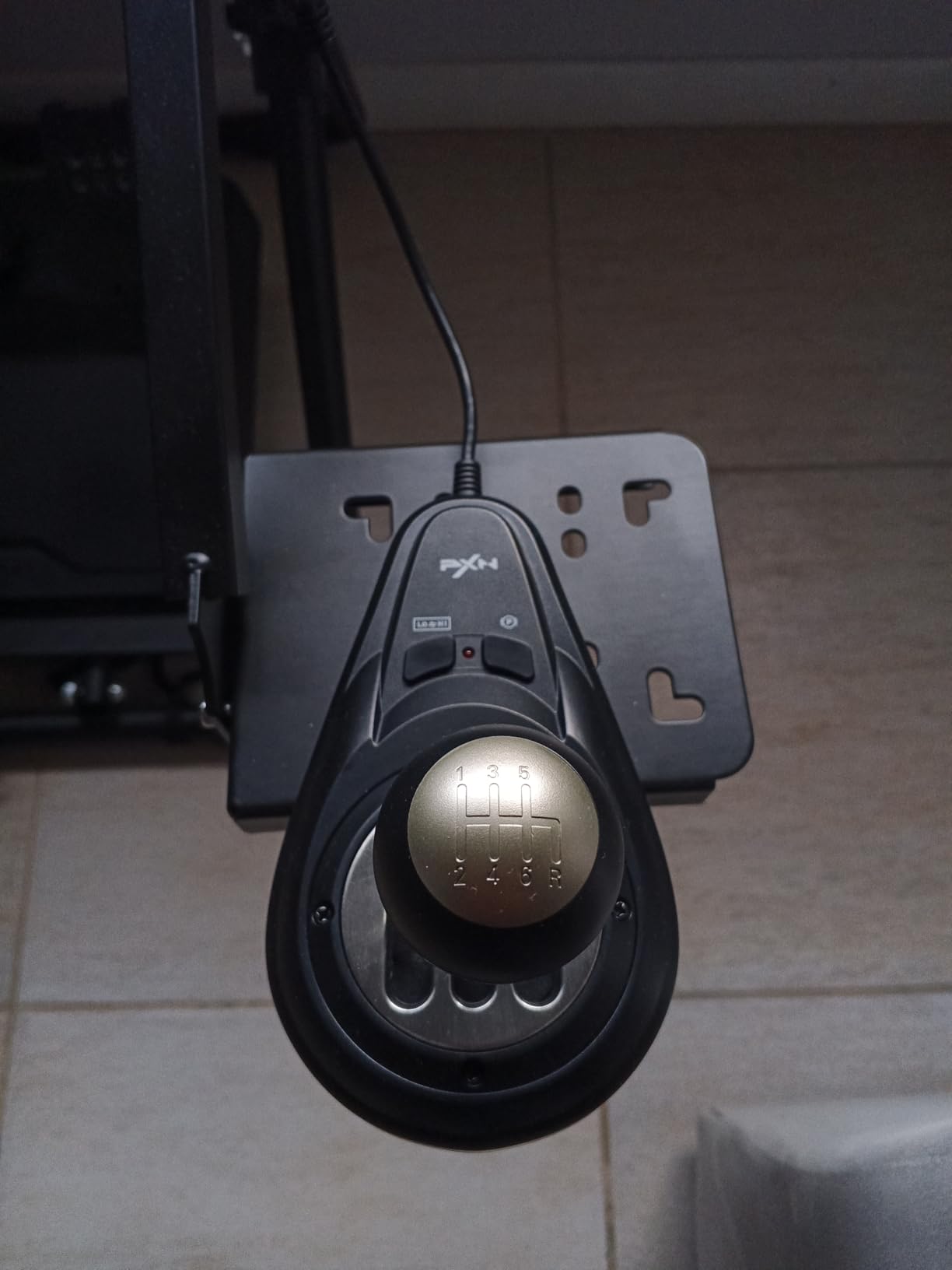
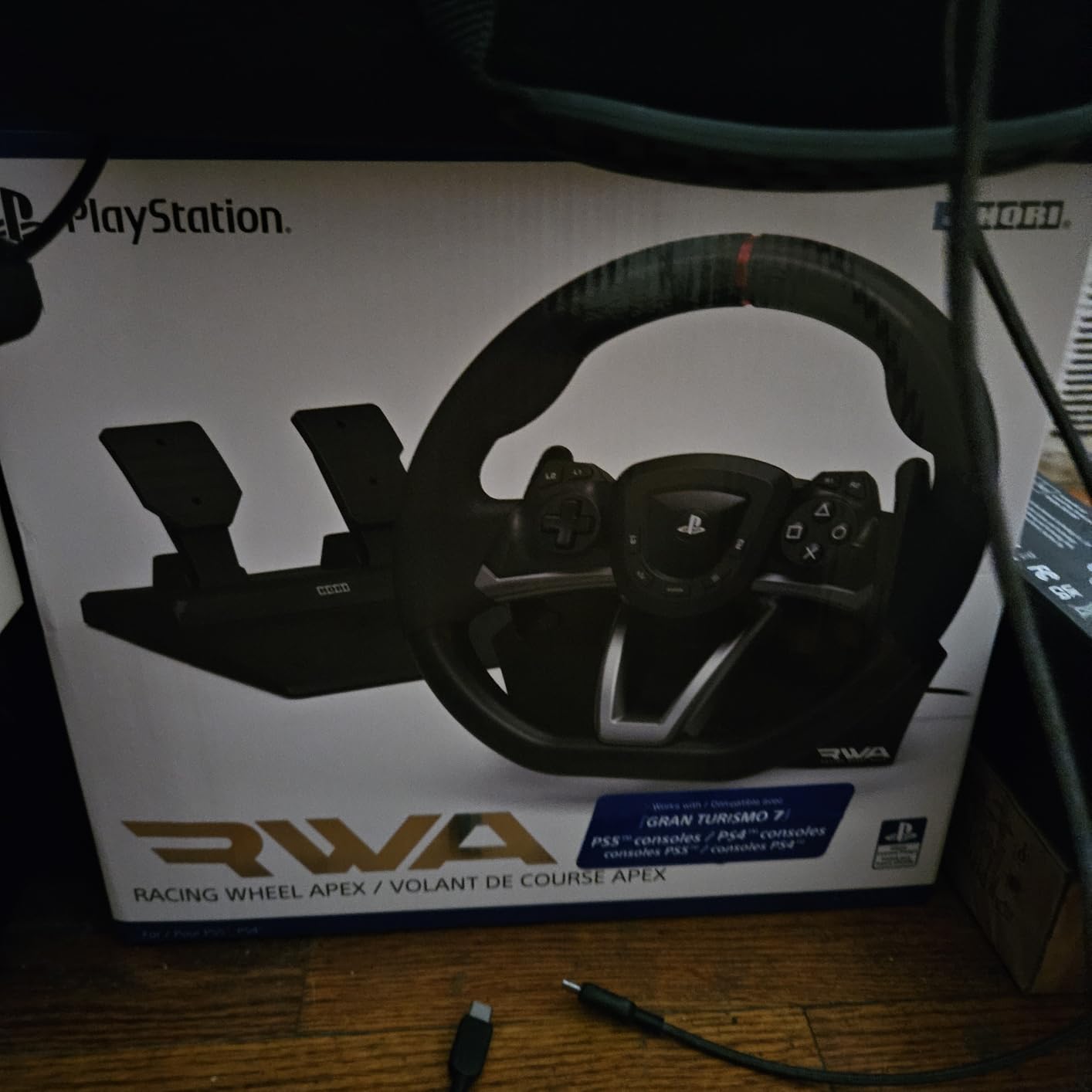
The PXN V99 is the most affordable wheel in this guide at $189.99. It uses a 3.2 Nm dual-motor force feedback system rather than a true direct drive motor, but I am including it because many people searching for direct drive wheels on a budget will encounter it. The V99 offers multi-platform support across PC, Xbox One, Xbox Series X/S, and PS4, making it the most versatile wheel on this list in terms of platform compatibility.
With 373 reviews and a 4.2-star rating, the V99 has established itself as a legitimate entry-level option. Sixty-eight percent of reviewers give it five stars, praising the immersive force feedback and the included accessories. The package includes the wheel, a 3-pedal Hall effect pedal set, and a 6+1 gear shifter, which is remarkable value at this price.
Force Feedback and Performance
The dual-motor force feedback system delivers road texture, acceleration feel, body roll, and collision effects. It is noticeably stronger than what you get from a Logitech G923, which is impressive at this price point. However, it is not true direct drive. The dual motors use gears to drive the wheel shaft, which means there is mechanical filtering between the motor and your hands.
The 270/900 degree rotation switch is handy if you play different types of racing games. Use 270 degrees for arcade racers and 900 degrees for simulators. The 11.8-inch detachable wheel has eco-friendly TPR rubber grips and a 4-paddle layout with upper shifters and lower analog paddles.
Limitations to Consider
The V99 has notable drawbacks. Several users report the wheel overheating and shutting down after consecutive races, which suggests the motors are being pushed beyond their thermal limits. The shifter feels cheap and can be unreliable. There is no PC software for tuning force feedback, only a phone app. The quick release mechanism can jam and require significant force to operate.
Most importantly, the V99 is not compatible with PS5, despite supporting PS4. If you are on PlayStation 5, this wheel will not work. And while it is marketed as a force feedback wheel, it uses dual motors with gears rather than a true direct drive motor shaft connection.
Despite these limitations, the PXN V99 is a legitimate budget option for casual racers who want multi-platform compatibility and stronger force feedback than a standard G923. Just understand what you are getting: an entry-level gear-driven wheel with strong motors, not a true direct drive system.
11. PXN V10 Ultra – True Direct Drive at a Budget Price
- True direct drive servo motor no gears or belts
- 3.2Nm torque with realistic FF
- Multi-platform PC Xbox PS4
- Adjustable 80-1080 degree steering angle
- Premium microfiber leather wheel
- Magnetic paddle shifters for precise changes
- Lower 3.8-star rating with 20 percent 1-star complaints
- Small review count only 48 reviews
- Software connectivity issues reported
- Less established than competitors
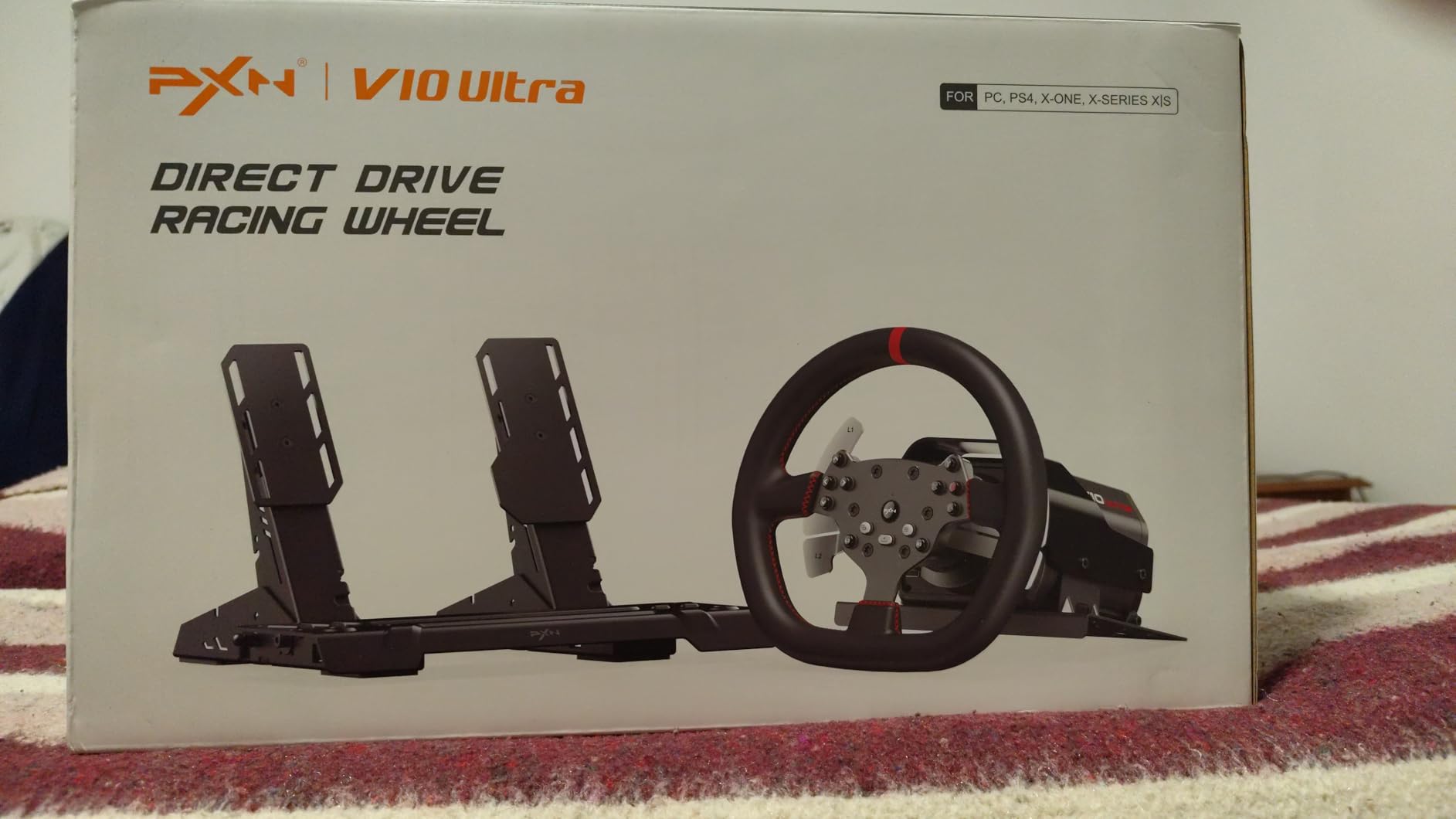
The PXN V10 Ultra is a genuine direct drive wheel at $239.99, making it one of the most affordable true direct drive options on the market. Unlike the V99, the V10 Ultra uses a 3.2 Nm servo motor with direct drive, meaning no gears or belts between the motor and the wheel shaft. This is the real deal in terms of force feedback technology.
The V10 Ultra supports PC, Xbox One, Xbox Series X/S, and PS4. The steering angle is adjustable from 80 to 1080 degrees, giving you flexibility across different racing disciplines. The 270mm detachable wheel is wrapped in premium microfiber leather, which feels surprisingly good at this price point. Magnetic paddle shifters provide precise, satisfying gear changes.
Real-World Performance
The direct drive servo motor delivers fast response and realistic force feedback. At 3.2 Nm, the torque output is on the lower end of the direct drive spectrum, comparable to the PXN V99’s dual-motor system. However, because the V10 Ultra connects the wheel directly to the motor shaft, the feedback quality should theoretically be cleaner and more detailed than gear-driven alternatives.
The dual Hall-effect metal pedals provide smooth throttle and brake response. The PXN NEXUS app (iOS and Android) and PXN SIMRACING PC software handle customization, including one-click game profile loading for popular racing titles.
The Review Concern
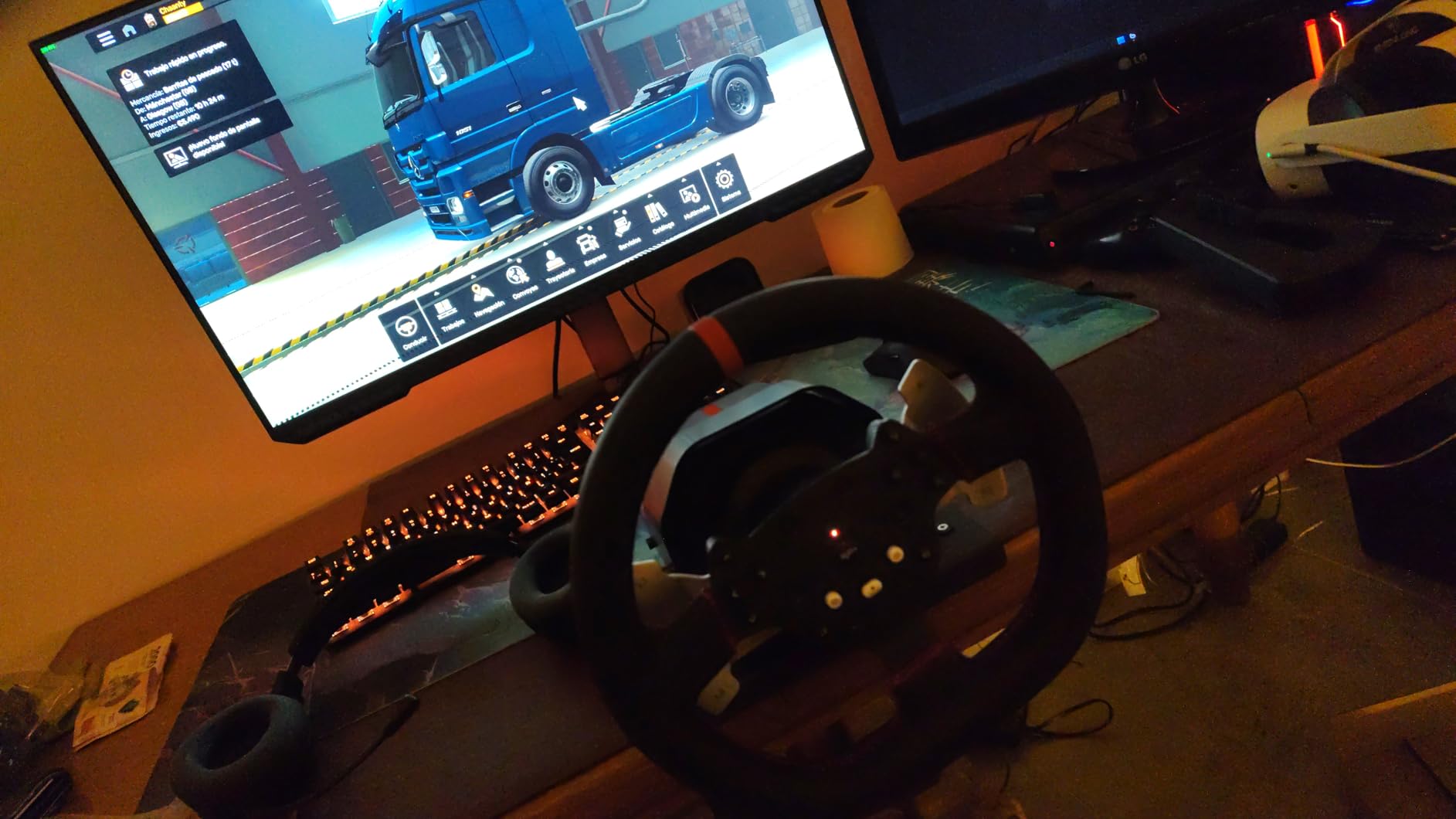
The V10 Ultra’s main red flag is its review profile. With only 48 reviews and a 3.8-star average, it has a notable 20 percent one-star rate. Some users report software connectivity issues and build quality concerns. The small review count also means we have limited long-term reliability data.
For budget-conscious racers who specifically want true direct drive rather than gear-driven force feedback, the V10 Ultra is worth considering. But the MOZA R3 at $279.99 offers a proven track record with 339 reviews and a 4.7-star rating. The $40 difference buys significantly more peace of mind and a more mature software ecosystem.
12. PXN VD4 Bundle – Promising Newcomer with 24-bit Encoder
- Highest torque in PXN lineup at 4Nm
- 24-bit magnetic encoder for precision
- Hall effect pedals included
- PXN SimRacing PC software for tuning
- Quick-release 11-inch wheel
- All reviews 4-5 stars so far
- Only 4 reviews new and unproven product
- PC only no console compatibility
- Low stock availability
- Higher price point for PXN brand
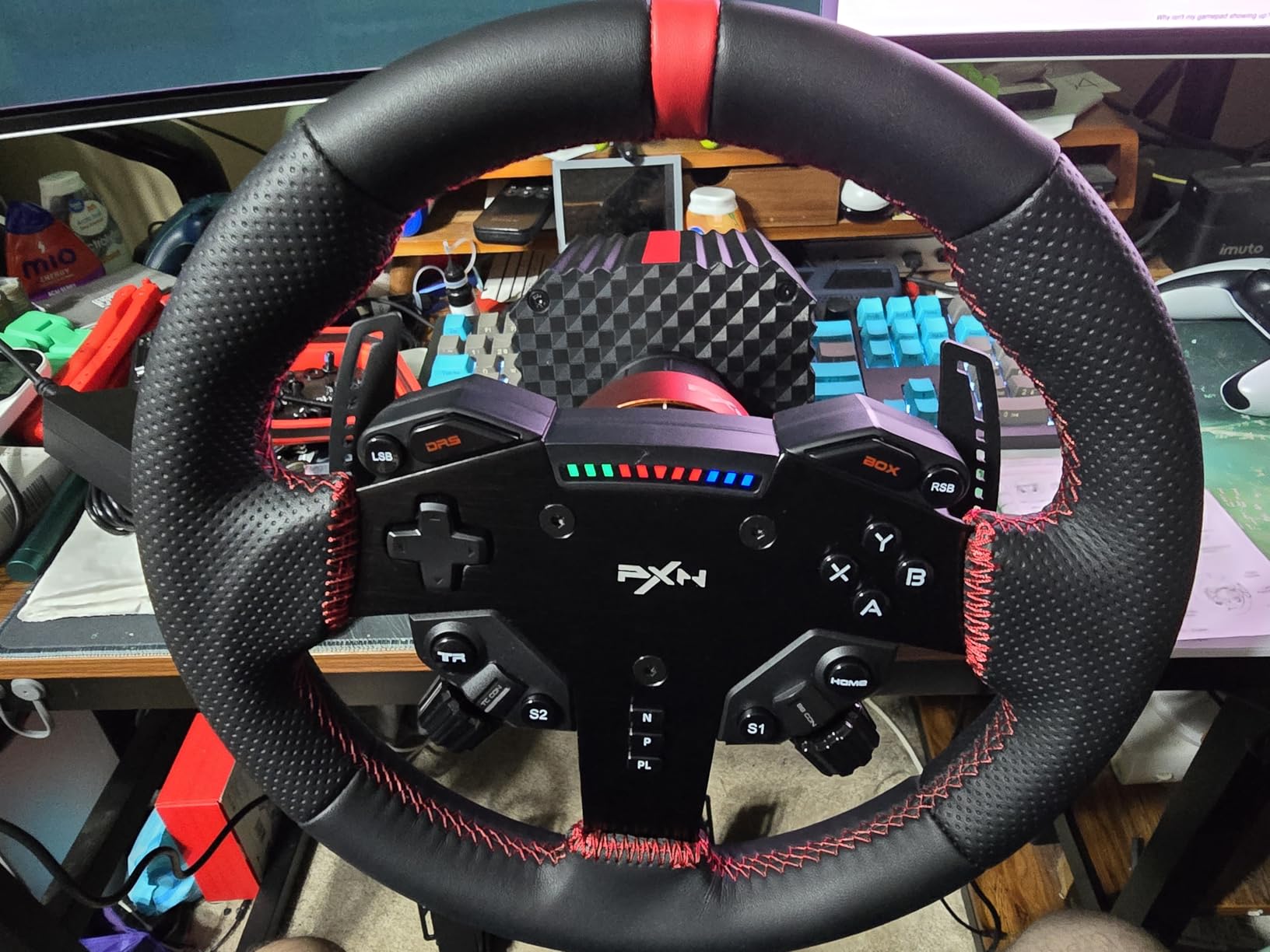
The PXN VD4 Bundle is the newest entry in this guide and the most ambitious PXN product yet. It pairs a 4 Nm low-inertia direct drive servo motor with a 24-bit magnetic encoder, an 11-inch WAS racing wheel with quick-release hub, PD HM Hall-effect pedals, and a table clamp. At $299.99, it is the most expensive PXN option but also the most technically impressive on paper.
The 24-bit magnetic encoder is a standout specification. For context, the MOZA R5 uses a 15-bit encoder. Higher encoder resolution means more precise steering position detection, which translates to smoother, more accurate force feedback. The 4 Nm torque output is the highest in the PXN lineup and positions the VD4 as a legitimate competitor to entry-level MOZA and Fanatec options.
What Makes the VD4 Different
The low-inertia servo motor design is worth discussing. Low inertia means the motor’s rotor has less mass, which allows it to change direction and torque output more quickly. This translates to faster, more responsive force feedback that reacts to physics changes in the sim with minimal delay. The effect is most noticeable in quick counter-steering inputs during drifts and slide recovery.
The PXN SimRacing Software for Windows handles force feedback and steering tuning. It supports detailed adjustments for FFB strength, steering angle, button mapping, and per-game profiles. One-click game profile loading makes it easy to switch between different racing titles. The 24 programmable buttons and 4 racing paddles on the 11-inch WAS wheel provide extensive control options.
Should You Take a Chance on the VD4?
The VD4 has only 4 reviews, all positive at 4-5 stars. This is encouraging but insufficient for confident long-term reliability assessment. The low stock status (only 7 units remaining at time of writing) suggests either high demand or limited production runs. PC-only compatibility restricts its audience.
If the VD4 lives up to its specifications, it could be an excellent value. The 24-bit encoder and low-inertia motor are features typically found on more expensive wheelbases. But given the limited review data and PXN’s mixed track record with software maturity, I recommend waiting for more user feedback before purchasing. The MOZA R5 at $379.99 remains the safer bet for a complete bundle, with proven reliability across 400+ reviews.
How to Choose the Best Direct Drive Force Feedback Steering Wheel
Choosing the right direct drive wheel comes down to understanding your needs as a sim racer. The factors that matter most are torque output, platform compatibility, motor technology, encoder resolution, software ecosystem, and whether you want a bundle or standalone base. Let me break each of these down so you can make an informed decision.
How Much Torque (Nm) Do You Actually Need?
Torque is the single most discussed specification in direct drive wheels, and for good reason. It determines how strong the steering resistance feels and how much detail can be communicated through the wheel. But more torque is not always better. Here is how to think about torque based on your racing level:
3-5 Nm (Entry Level): Enough for casual racers upgrading from belt-driven wheels. The MOZA R3 at 3.9 Nm and MOZA R5 at 5.5 Nm deliver transformative improvements over any G29 or T300. You will feel tyre slip, road texture, and weight transfer with clarity that belt-driven wheels cannot match.
8-10 Nm (Intermediate to Advanced): The sweet spot for serious sim racers. This range provides enough headroom to feel every detail without force feedback clipping. The Logitech RS50 at 8 Nm, MOZA R9 V3 at 9 Nm, and Thrustmaster T818 at 10 Nm all sit here. Forum users consistently recommend this range as ideal.
12-15 Nm (Advanced to Competitive): For competitive sim racers who want maximum dynamic range. The MOZA R12 V2 at 12 Nm delivers enough torque to simulate heavy downforce formula cars authentically. Beyond 15 Nm, you hit diminishing returns for most users.
20+ Nm (Professional): Almost nobody needs this much torque. Real IndyCar steering can reach 30 Nm, but professional racing drivers have the strength and endurance to handle it. For home sim racing, anything above 15 Nm risks wrist strain during long sessions.
As one experienced forum user on r/simracing put it: you should always be driving the car, not the car driving you. At very high torque levels, the wheel can fight you rather than communicate with you.
Direct Drive vs Belt-Driven vs Gear-Driven Wheels
Understanding the difference between these three technologies is fundamental to choosing the right wheel:
Gear-driven wheels (Logitech G29, G920, G923, Thrustmaster TMX) use gears to connect the motor to the wheel shaft. They are affordable and reliable, but the gears introduce mechanical play, noise, and most importantly, they filter out fine force feedback detail. You lose the subtle surface textures and tyre slip cues that make sim racing immersive.
Belt-driven wheels (Thrustmaster T300, TS-XW) use a toothed belt instead of gears. This reduces noise and provides smoother operation than gears, but the belt still introduces compliance and filtering. Belt-driven wheels feel better than gear-driven ones but still mask detail that direct drive reveals.
Direct drive wheels connect the wheel rim straight to the motor shaft with no mechanical interface. This means zero gear lash, zero belt compliance, and zero mechanical filtering. Every force the motor produces reaches your hands instantly. The jump from belt-driven to direct drive is widely considered the single biggest upgrade you can make to sim racing immersion.
Professional sim racers consistently note that the jump from belt-driven to direct drive is more significant than the jump from 12 Nm to 20 Nm. Once you experience direct drive, it is hard to go back.
Platform Compatibility: PC, PS5, Xbox Explained
Platform compatibility is one of the most confusing aspects of choosing a direct drive wheel. Here is the situation in 2026:
PC: Every wheel in this guide works with PC. If you race exclusively on PC, you have the widest selection. The Simagic Alpha Evo, Simucube 2 and SC3, and VRS DirectForce Pro are all excellent PC-only options that are not available on Amazon but are worth researching.
PlayStation 5: Sony requires official licensing for PS5-compatible racing wheels. Currently, the best PS5 options are the Logitech G RS50 and the Fanatec GT DD Pro. Both are officially licensed and provide full force feedback support. Console users are largely locked into manufacturer ecosystems.
Xbox Series X/S: Microsoft also requires licensing. The Fanatec CSL DD with a licensed wheel provides Xbox support. The MOZA R9 V3 and R12 V2 list Xbox Series X compatibility. The PXN V99 and V10 Ultra support Xbox One and Xbox Series X/S. The MOZA R3 bundle is the most affordable Xbox-compatible direct drive option when paired with a compatible wheel.
Cross-platform: No single direct drive wheelbase works natively on all three platforms. You will need to choose based on your primary platform. The Logitech RS50 comes closest, supporting PS5, PS4, and PC, but not Xbox.
Quick Release Systems: Why They Matter More Than You Think
The quick release (QR) system is the mechanical interface between the steering wheel rim and the wheelbase. It is also one of the most overlooked components when choosing a direct drive wheel. A poor QR system can introduce play, flex, and even disconnections that degrade force feedback quality.
Fanatec QR1 and QR2: The original QR1 develops play after approximately two years of regular use, which users describe as distracting when feeling for grip limits. The newer QR2 uses carbon fiber-reinforced polyamide and is much better when new, but can still loosen over time at higher torque levels. Upgrading to the metal QR2 is recommended for 8 Nm and above.
MOZA Racing QR: MOZA’s racing-level quick release is generally well-regarded. Users report it holds up well over time with minimal play development. The system allows tool-free wheel swaps in seconds.
Logitech RS hub: Logitech’s integrated quick release for the RS50 is simple and effective. However, the proprietary design limits you to Logitech-compatible wheels, which is a smaller selection than Fanatec or MOZA ecosystems.
Simucube LightBridge: Simucube’s wireless QR system (available on Simucube 3, not in this guide) uses a slip-ring data link to eliminate the physical data cable. This is the most advanced QR technology but requires proprietary wheels and is currently limited in ecosystem support.
The QR system matters because a loose connection introduces slop into the steering that masks force feedback detail. If you are spending significant money on a direct drive wheel, do not cheap out on the QR interface.
Software Ecosystem and Firmware Support
Software quality can make or break a direct drive wheel experience. The best hardware in the world is useless if the software is buggy, confusing, or poorly supported. Here is how the major brands compare:
MOZA Pit House: One of the best tuning applications in sim racing. Clean interface, intuitive controls, extensive customization options. The cloud-based mobile app lets you adjust settings from your phone. MOZA regularly releases firmware updates and responds to community feedback. Users on Discord describe the R12 as set it and forget it, smooth and reliable.
Logitech G-Hub: Generally straightforward for basic configuration but can cause control issues. Some users report sticky throttle and disconnects. A clean reinstall typically resolves these problems. G-Hub is less feature-rich than MOZA Pit House or Fanatec Tuning Menu.
Fanatec Tuning Menu: Offers extensive force feedback customization from basic presets to advanced parameters. The interface is functional but not as polished as MOZA’s. Fanatec’s firmware update history has been mixed, with features like FullForce telemetry having zero game support for 18 months after launch.
Thrustmaster: Software has historically been the weakest among major brands. Limited customization options and infrequent updates. The T598’s Race Dash screen is a nice hardware addition but does not compensate for software limitations.
PXN: The NEXUS app and PXN SimRacing software are the least mature of the group. The phone-app-only approach for the V99 is frustrating. The PC software for the V10 Ultra and VD4 is an improvement but still lacks the polish of established competitors.
Firmware update frequency and longevity of support are major purchase factors for sim racers. Brands that respond to community feedback and release regular updates earn long-term loyalty. MOZA, Simagic, and VNM Simulation are frequently praised for their community engagement.
Encoder Resolution and Motor Types Explained
Two technical specifications that affect force feedback quality are encoder resolution and motor type. Most buyers ignore these, but they directly impact the smoothness and detail of the feedback you feel.
Encoder Resolution: The encoder is a sensor that tells the wheelbase the exact angular position of the steering shaft. Higher resolution means more precise position detection, which translates to smoother, more accurate force feedback. The PXN VD4 uses a 24-bit encoder, the Fanatec CSL DD and GT DD Pro use 22-bit, the MOZA R5 uses 15-bit, and budget wheels may use 16-bit or lower. Higher is generally better, but the difference is subtle and most noticeable in fine detail at high speeds.
Outrunner Motors: The motor’s rotor is on the outside, with the stator inside. This design provides high torque density and low rotating inertia, which means quick directional changes. Outrunner motors are used by Simucube and Simagic in their premium wheelbases. They deliver excellent detail and responsiveness.
Servo Motors: Traditional servo motors are used by MOZA, Fanatec, and PXN. They are reliable, well-understood, and provide good torque output. The MOZA R12 V2’s slanted-pole design is a variation that reduces torque ripple for smoother operation.
Inrunner Motors: The rotor is on the inside, with the stator outside. Inrunner motors typically have higher rotating inertia, which means they react more slowly to direction changes. They are less common in modern direct drive wheelbases.
The key concept here is rotating inertia. Lower inertia means the motor can change torque output faster, which translates to more responsive force feedback. This is why some lower-torque wheels with low-inertia motors (like the Fanatec CSL DD with its composite shaft) can feel snappier than higher-torque wheels with heavier rotors.
Bundle vs Standalone: Which Should You Buy?
Direct drive wheels are sold either as complete bundles or standalone bases. Understanding what you get with each option is important for budgeting:
Complete Bundles (wheel + pedals + clamp): The MOZA R3, MOZA R5, Fanatec GT DD Pro, PXN V99, and PXN VD4 all ship as bundles. This is the easiest way to get started because everything you need is in one box. The MOZA R5 is the best value bundle in this guide, offering wheel, pedals, and desk clamp at $379.99.
Standalone Bases: The MOZA R9 V3, MOZA R12 V2, Thrustmaster T818, and Fanatec CSL DD QR2 are sold as bases only. You need to purchase a compatible steering wheel and pedal set separately. This modular approach lets you choose exactly the components you want but requires research to ensure compatibility.
Hub-and-Wheel Systems: The Logitech RS50 is sold as a base, hub, and wheel combination, but pedals are separate. This sits between a full bundle and a standalone base.
For first-time direct drive buyers, I recommend a complete bundle. It eliminates compatibility headaches and gets you racing faster. The MOZA R5 and MOZA R3 are the best bundle values in this guide. For experienced sim racers who already own wheels and pedals from a previous setup, standalone bases offer more flexibility.
The Motor Sizing Paradox: Why Bigger Isn’t Always Better
This is a concept from simracingcockpit.gg that I want to expand on because it is genuinely useful for buyers. The motor sizing paradox is the idea that a larger, higher-torque motor is not always the better choice. Here is why:
A larger motor has more rotating mass (inertia). More rotating mass means the motor takes longer to change torque output. So while a 20 Nm motor can deliver more peak force, it may actually feel less responsive and detailed than a 10 Nm motor with lower inertia. The steering can feel heavy and sluggish rather than quick and communicative.
This is why the Fanatec CSL DD, despite its modest 5 Nm output, is often described as feeling snappy and responsive. Its composite shaft and motor design keep rotating inertia low, which means the force feedback reacts quickly to physics changes in the sim.
The practical takeaway: do not chase maximum torque numbers. A 10-12 Nm wheel with low inertia and a good encoder will feel more detailed and responsive than a 20 Nm wheel with high inertia. The MOZA R12 V2 at 12 Nm hits an excellent balance of torque, responsiveness, and value.
Another consideration: at very high torque levels, you risk wrist strain and fatigue during long sessions. Children under 12 should be capped at 5 Nm maximum, as there is genuine injury risk with stronger wheels. Always use the emergency stop feature if your wheelbase has one.
Direct Drive Force Feedback Steering Wheels FAQs
How much torque (Nm) do I actually need in a direct drive wheel?
For most sim racers, 10-15 Nm is the sweet spot. That range provides enough headroom for detailed force feedback without clipping during high-force moments. Casual racers upgrading from belt-driven wheels will find 5-8 Nm to be a transformative improvement. Nobody genuinely needs more than 20 Nm for home sim racing. Street cars typically generate 7-10 Nm of steering torque, while IndyCar steering can reach 30 Nm but requires professional athlete strength to manage.
Is 5 Nm enough, or should I step up to 8 Nm?
5 Nm is enough for casual sim racers upgrading from belt-driven wheels. It delivers a meaningful improvement in steering detail and road feel. However, 8 Nm is worth the extra investment if you race regularly, because it provides more headroom for dynamic range. At 8 Nm, the wheel can deliver subtle detail at the same time as large force spikes without clipping. Heavier steering wheels and demanding high-downforce cars also benefit from the extra torque.
What is the best direct drive wheel for PS5 or Xbox?
For PS5, the Logitech G RS50 is the best value with 8 Nm torque, TRUEFORCE haptics, and native PS5 support. The Fanatec GT DD Pro is also excellent with official PlayStation licensing and a deeper accessory ecosystem. For Xbox, the Fanatec CSL DD provides the widest ecosystem of compatible wheels and accessories. The MOZA R3 bundle is the most affordable Xbox-compatible direct drive option when paired with a compatible wheel.
Is direct drive actually worth it over a belt or gear wheel like the Logitech G923?
Yes, direct drive is the single biggest upgrade you can make to sim racing immersion. Belt and gear-driven wheels mask fine force feedback detail through mechanical filtering and have a hard ceiling on force output. Direct drive bolts the wheel straight to the motor shaft for instant, unfiltered feedback. Most racers who switch report feeling details they never knew existed in their sims. The clarity genuinely changes how you drive, improving your ability to detect tyre slip and car balance.
What is the best budget direct drive wheel in 2026?
The MOZA R3 Bundle at around $280 is the best value direct drive wheel available. It includes the wheelbase, steering wheel, Hall sensor pedals, and desk clamp in one package. For even less, the PXN V10 Ultra at $240 offers true direct drive with a 3.2 Nm servo motor, though with a smaller review base. The MOZA R5 at $380 is the best value when you want more torque (5.5 Nm) and a proven track record with over 400 reviews.
Final Thoughts on the Best Direct Drive Wheels for 2026
The best direct drive force feedback steering wheel for you depends on your platform, budget, and racing goals. If you want the best overall value, the MOZA R5 Bundle delivers 5.5 Nm of detailed force feedback in a complete package that is ready to race out of the box. For PS5 racers who want the best force feedback quality available, the Logitech G RS50 with TRUEFORCE haptics is the clear choice. And for budget-conscious PC racers, the MOZA R3 offers genuine direct drive performance for under $280.
If you prioritize raw torque and detail, the MOZA R12 V2 at 12 Nm is the sweet spot for serious sim racers. Xbox racers should look at the Fanatec CSL DD for its ecosystem depth. And while PXN offers the lowest entry prices, be aware of the trade-offs in software maturity and long-term reliability.
Whatever you choose, the jump from belt-driven or gear-driven wheels to direct drive will transform your sim racing experience. Every wheel in this guide delivers a level of force feedback detail and immersion that simply is not possible with older wheel technologies. Pick the one that fits your platform and budget, and start enjoying the unfiltered road feel that direct drive provides.