10 Best Pinball Machines for Home Use (October 2026) Ultimate Guide
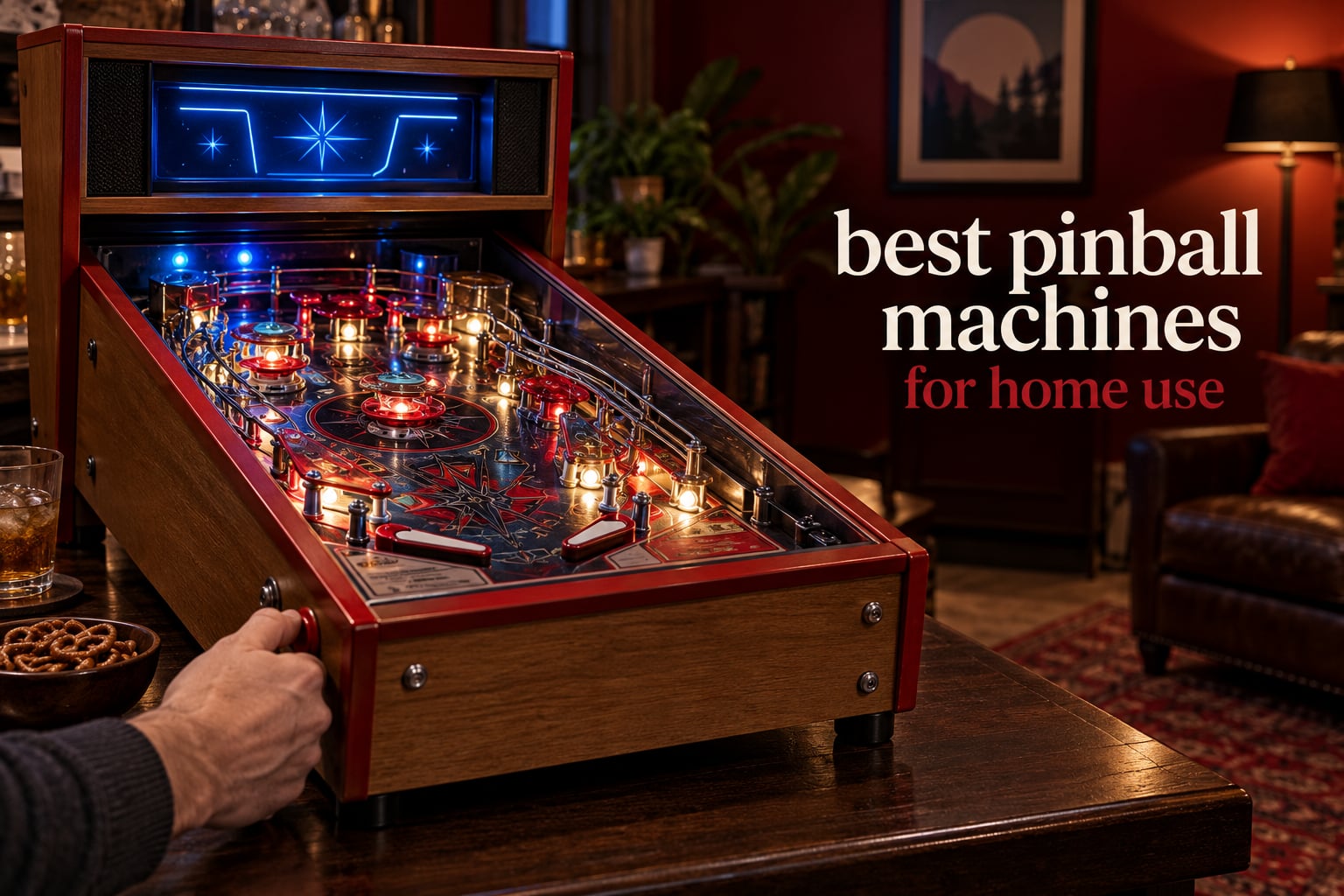
The best pinball machines for home use are the compact tables you can set on a bar top, a desk, or a dedicated game room corner, not the full-size arcade cabinets that need their own room. After comparing build materials, real dimensions, power needs, and reported reliability across 10 machines, the BRIO 34017 takes the top spot for most homes, with the Smartivity DIY Pinball Machine as the pick for anyone who enjoys the build as much as the game, and the Schylling Space Race as the slimmest option.
I want to be straight with you about one thing before the rankings start. Every machine in this roundup is a compact home pinball machine, meaning a tabletop or shelf unit measured in inches and pounds rather than a full-size cabinet measured in feet and hundreds of pounds. A full-size Stern, Jersey Jack, or Williams machine remains the hobby’s holy grail, and pinball hobbyists on Pinside and Reddit repeat the same advice endlessly: do not buy a machine you have never played, because no review substitutes for standing at the cabinet yourself.
That said, a compact machine is a completely legitimate first step for a home game room. One of the most repeated pieces of advice in the hobby forums is to buy something cheap and used first so you learn the maintenance side, including playfield cleaning and bulb changes, before you own something expensive.
How our team picked: we sorted all 10 machines on four practical levers rather than hype. Those were build material, since metal and wood outlast plastic, footprint and weight, because a machine has to live somewhere, playability measured by whether the flippers, launcher, and scoring actually respond, and reliability signal, taken from the volume and consistency of owner feedback. Ratings and review counts are copied straight from the product listings, and where the feedback is thin we say so instead of pretending it is a track record.
One warning before you buy anything: the review base varies enormously across this category. The best-reviewed machine here has more than 3.2k ratings, while the newest model has fewer than 50. Treat a low review count as a reason to slow down, not as proof of quality. If you want the software-only option for a small apartment, our guide to virtual pinball machines for home game rooms covers the trade-offs honestly.
Our Top 3 Best Pinball Machines for Home Rooms in 2026
Three machines stand above the rest for home use, each for a different reason. The BRIO is a complete table with nothing to plug in, the Smartivity turns assembly into half the fun, and the Schylling Space Race is the easiest machine to make room for.

BRIO 34017 Classic Pinball
- FSC certified wood and plastic build
- Hand-operated flippers
- 20.5 x 13.5 inch tabletop footprint
- Lifetime warranty against defects

Smartivity DIY Pinball
- 176 piece wooden kit
- Rubber-band powered spring launcher
- Working flippers and scoring targets
- Free replacement parts for life

Schylling Space Race
- Metal body and metal balls
- Hand-powered lever
- 11.25 x 5.25 inch footprint
- No batteries required
Comparing All 10 Home Pinball Machines in 2026
The full lineup, side by side. Every machine below runs without a coin mech and fits inside a normal room in some configuration. Read the table first, then jump to the section for the machine that fits your space.
| Product | Specifications | Action |
|---|---|---|
| BRIO 34017 Classic Vintage Pinball |
|
Check Latest Price |
| Smartivity DIY Pinball Machine |
|
Check Latest Price |
| Schylling Space Race Pinball |
|
Check Latest Price |
 Schylling Home Run Pinball Schylling Home Run Pinball |
|
Check Latest Price |
 Fat Brain Toys Arcade Pinball Fat Brain Toys Arcade Pinball |
|
Check Latest Price |
 Tasty Labs Pinball Machine Maker Tasty Labs Pinball Machine Maker |
|
Check Latest Price |
 New Era 3-Ball Arcade Pinball New Era 3-Ball Arcade Pinball |
|
Check Latest Price |
 Merchant Ambassador Retro Pinball Merchant Ambassador Retro Pinball |
|
Check Latest Price |
 Menkind PAC-MAN Arcade Pinball Menkind PAC-MAN Arcade Pinball |
|
Check Latest Price |
 Trisquirrel Dinosaur Tabletop Pinball Trisquirrel Dinosaur Tabletop Pinball |
|
Check Latest Price |
1. BRIO 34017 Classic Pinball – The Best Overall Compact Machine for a Home Room
- FSC certified wood and plastic construction
- Mechanical brain-teaser gameplay
- Compact enough to move between rooms
- Lifetime warranty against manufacturer defects
- Works for kids teens and adults
- Single-player only
- Manual mechanical scoring instead of electronic
- Tabletop toy rather than a full-size cabinet
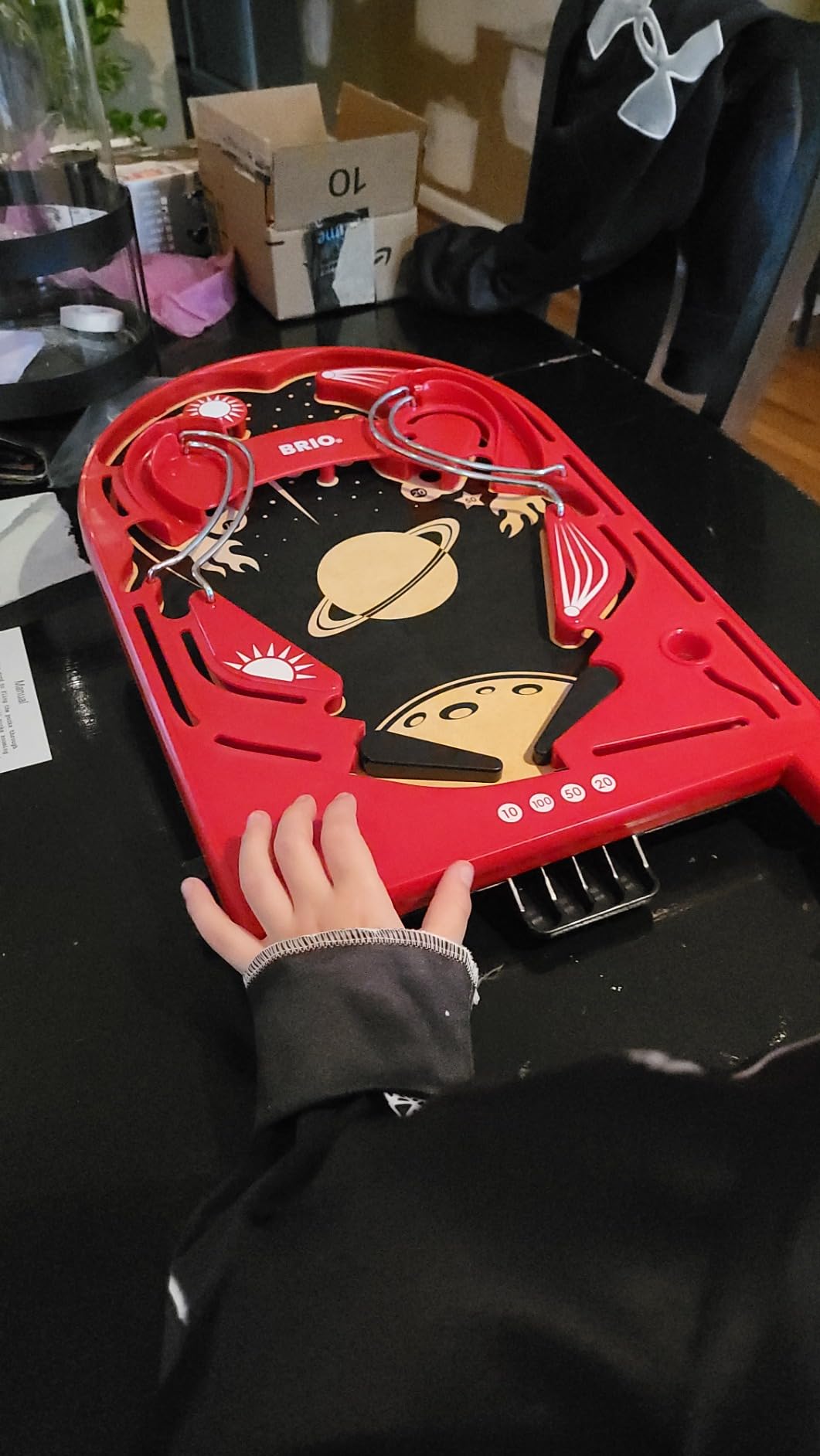
The BRIO 34017 is the machine I put in front of people who ask which home pinball machine to buy first, and it wins for a simple reason: it feels complete. The mechanism is genuinely mechanical, the wood body has real weight in the hand, and the thing looks like a vintage arcade table rather than a plastic gadget. At 4.6 stars across more than 1.8k ratings, it also carries the highest average rating in this roundup.
Owning it is not complicated. There are no batteries, no charging, and no electronics to fail, which means a ten-year-old can play it without supervision and it still works during a power cut. That single design decision removes almost every support headache that affects electronic compact machines.
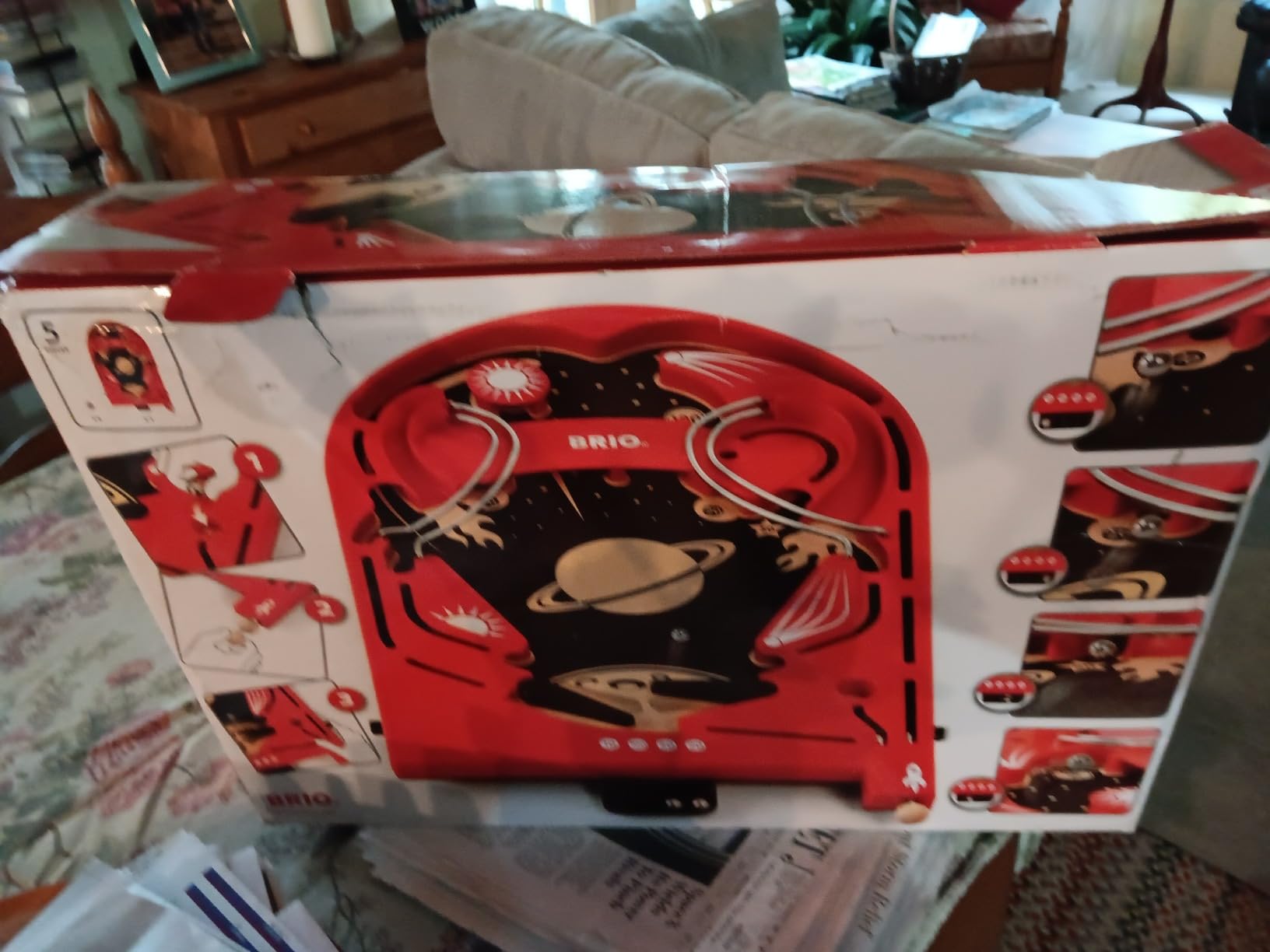
The flipper response is direct and the four included metal balls have enough weight to feel like pinballs rather than marbles. Play is more puzzle than physics simulation, since scoring comes from routing the ball through target zones rather than from timing shots, so it rewards planning over reflex. That makes it unusually good with kids and older players, and less of a twitch test for people chasing high scores.
Size, weight, and where it actually fits
The BRIO measures 20.5 x 13.5 x 4.75 inches and weighs 1510 g, so it occupies roughly the footprint of a large cutting board. It sits flat on a coffee table, a bar top, or a deep shelf, and it does not need wall clearance or a dedicated room.
That footprint is what separates it from a full-size cabinet, which hobbyists describe as a several-hundred-pound piece of furniture needing a clear path from the front door and any stairway. None of that applies here, which is why this is the recommendation for a home game room in a condo or a smaller house.
Build quality and the warranty that matters
The body is FSC certified wood with plastic components, and the manufacturer lists a lifetime warranty against defects. Owners regularly mention the vintage arcade styling working as decor in its own right, which matters more than it sounds when the machine lives in a living room rather than a basement.
The product details also list more than 1,000 annual safety tests, which is the kind of detail that matters if the table lives in a playroom with toddlers around it. It is listed in red as a one-size unit for kids, teens, and adults.
Who it suits and who should look elsewhere
This suits a household that wants one table everyone can share turn by turn, a family with mixed ages, and anyone who prefers something durable over something feature-packed. It also suits buyers who dislike opening batteries before anyone can play.
Skip it if you want electronic scoring, light and sound, or a head-to-head cabinet. Because scoring is manual and the format is single-player, two people play it as a turn-taking contest on one machine rather than simultaneously. If you want that, look at the electronic models further down.
2. Smartivity DIY Pinball Machine – A Build-Then-Play Wooden Pinball Kit
Smartivity DIY Pinball Machine I Global Award Winning Game Ages 8-99 Years
- Build produces a real working pinball machine
- Exceptionally clear photo and text instructions
- Rubber-band mechanism feels sturdier than expected
- Teaches momentum and mechanical advantage
- Free replacement parts for life
- Hundreds of small parts to lose during assembly
- No storage case for the finished build
- Rubber bands can deteriorate with age
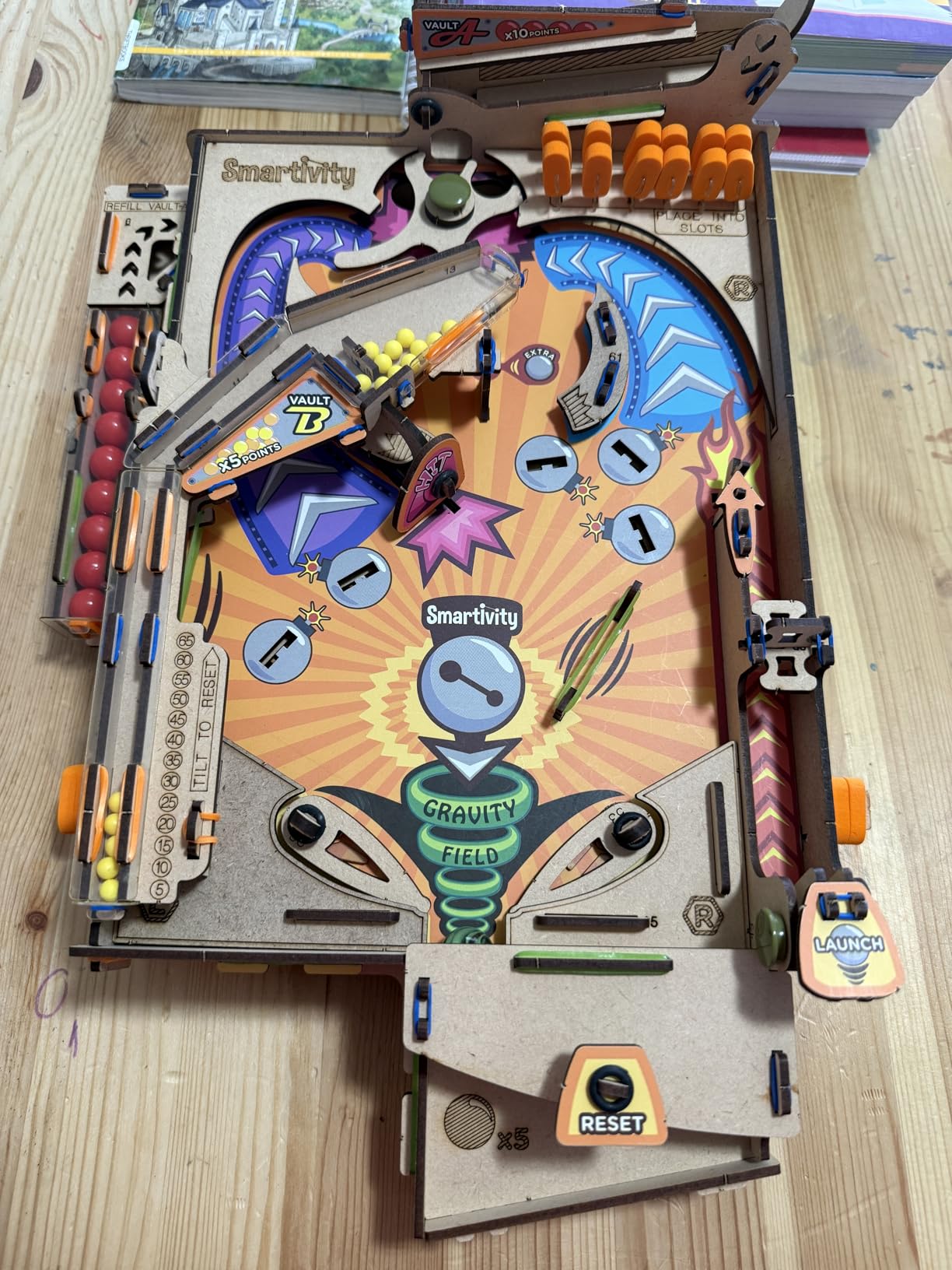
The Smartivity DIY Pinball Machine is the entry in this roundup where the assembly is half the product. You get 176 wooden pieces from sustainably sourced engineered wood, and the end result is a working machine with a spring launcher, flippers, scoring targets, and a marble vault, not a decorative model. It carries the largest review base here at more than 3.2k ratings and a 4.5 average.
Reviewers describe the instructions as exemplary, working for visual and audio learners alike, and that is the single most common thing owners praise. The padded foam flipper handles also come up often as a comfort detail, and the rubber-band mechanism is reported as sturdier than expected.
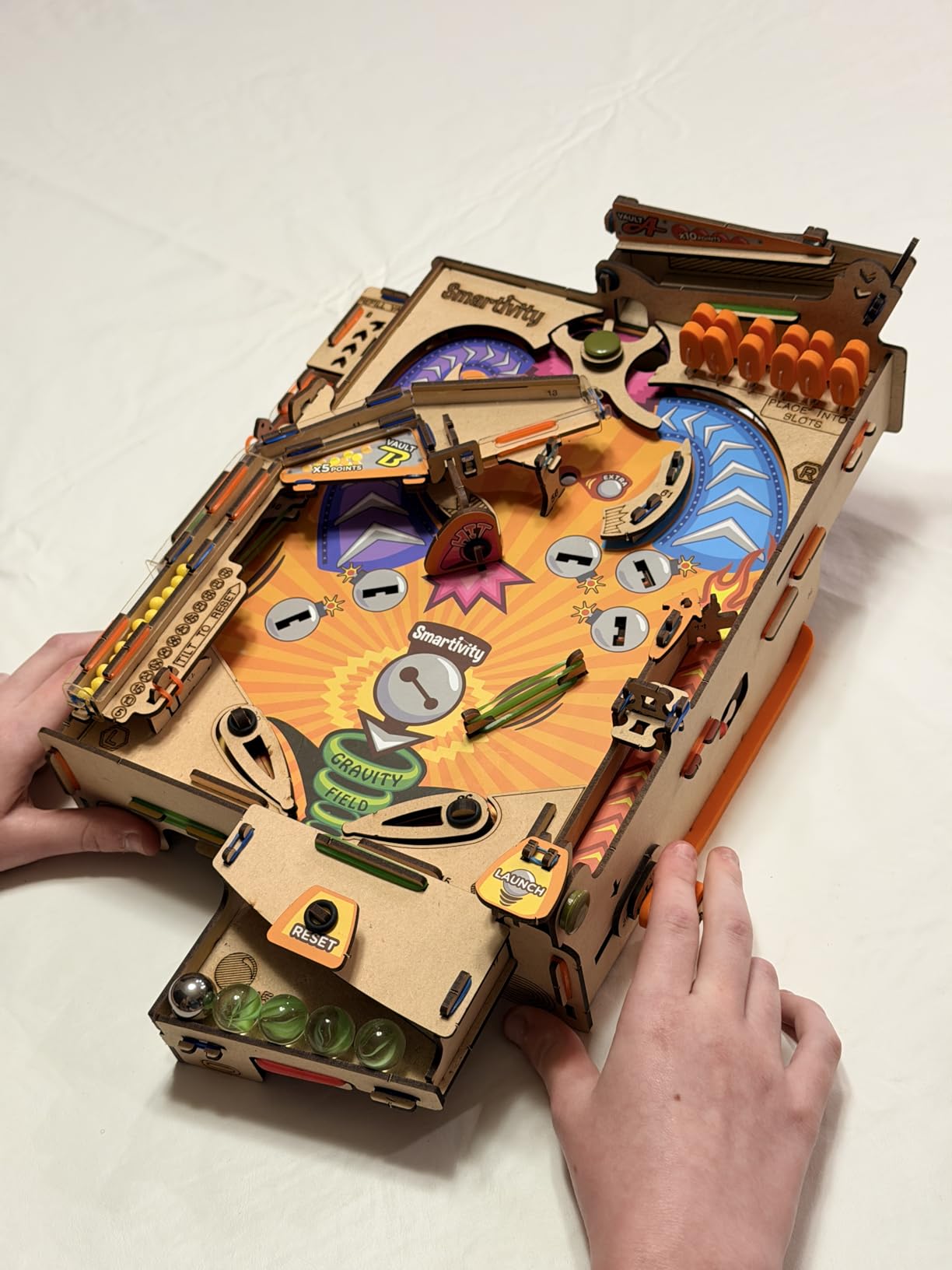
The mechanism runs on rubber bands and springs rather than electronics, which means there is no power supply to fail and no scoreboard to glitch. It also means the pinball feel comes from stored mechanical energy, so the launcher response is a matter of how much tension you put into the band.
The build as an engineering lesson
The listed educational targets cover concentration, construction skills, dexterity, engineering skills, and logical thinking, and the mechanism physically demonstrates momentum, energy transfer, and mechanical advantage. For a parent buying for an older child, that framing is the real product: the machine is a working model of the physics it teaches.
It is rated for ages 8 and up, with the manufacturer suggesting 8 to 14, though the listing also positions it for adults and the wider 8 to 99 range. Owners commonly report adults and older children getting equal enjoyment out of it, so the age label understates the adult appeal.
Footprint, weight, and the storage problem
Once assembled, the machine measures 11 x 14.5 x 5.3 inches and weighs 529.5 g, so it is smaller and much lighter than the BRIO. On a shelf or a desk it takes up less room than a coffee table book.
The catch is storage. Reviewers note that the assembled structure can be crushed and that no case is included, so if you plan to keep it rather than display it permanently, plan on a spot where nothing heavy will be stacked on top. Staging containers for the parts during the build are the other common-sense precaution, because hundreds of small wooden pieces are easy to misplace.
Who it suits and who should look elsewhere
Suited to a patient adult working alongside a child, a birthday gift that produces something lasting rather than consumable, and anyone who wants a pinball machine that costs less attention than a full-size cabinet. Free replacement parts for life removes the risk of a dead build, and the company also includes a spare parts surplus.
Skip it if you want to open a box and play within five minutes, or if your household loses small objects constantly. A long multi-session build is not realistic for younger children working unsupervised, and rubber bands can deteriorate over years, which matters if you expect the machine to still run a decade from now.
3. Schylling Space Race Pinball – A Metal Machine That Fits a Narrow Shelf
- Sturdy metal construction
- Travel-friendly slim footprint
- No batteries needed
- Retro space design with nostalgic appeal
- Single-player handheld format
- No electronic scoring lights or sound
- Listed with no warranty
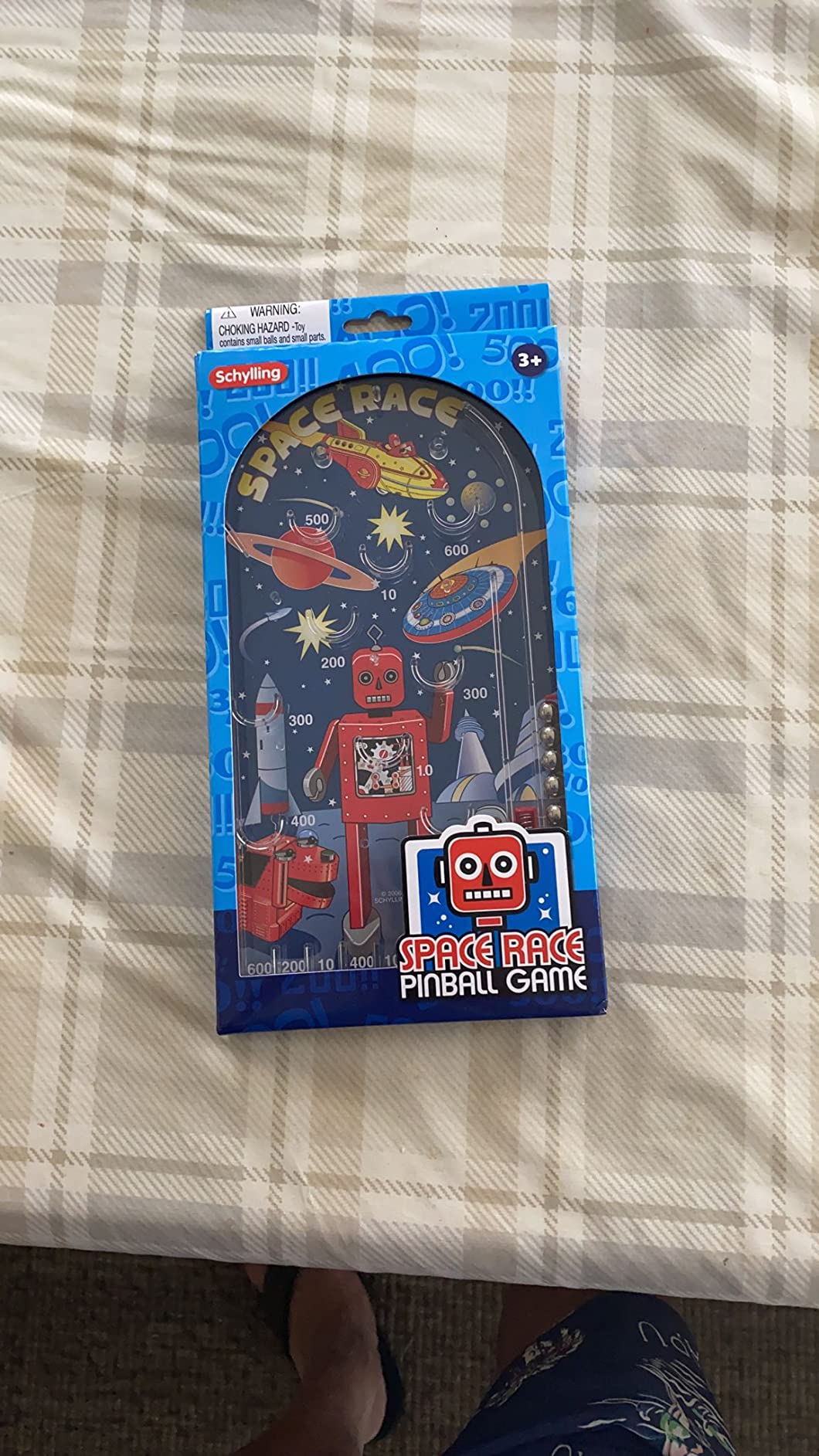
When space is the deciding factor, the Schylling Space Race is the machine to look at first. It stands 10 inches tall on an 11.25 x 5.25 inch footprint, which means it lives on a narrow shelf, a windowsill, or a side table without asking anyone to move furniture. Its 4.5-star average across 367 ratings matches the second-highest average in the roundup.
The body is metal with metal balls rather than plastic, and durability is what owners reach for when they explain the rating. Metal survives travel and repeated handling, and this unit is genuinely portable, which is why it works well for trips and on-the-go play.
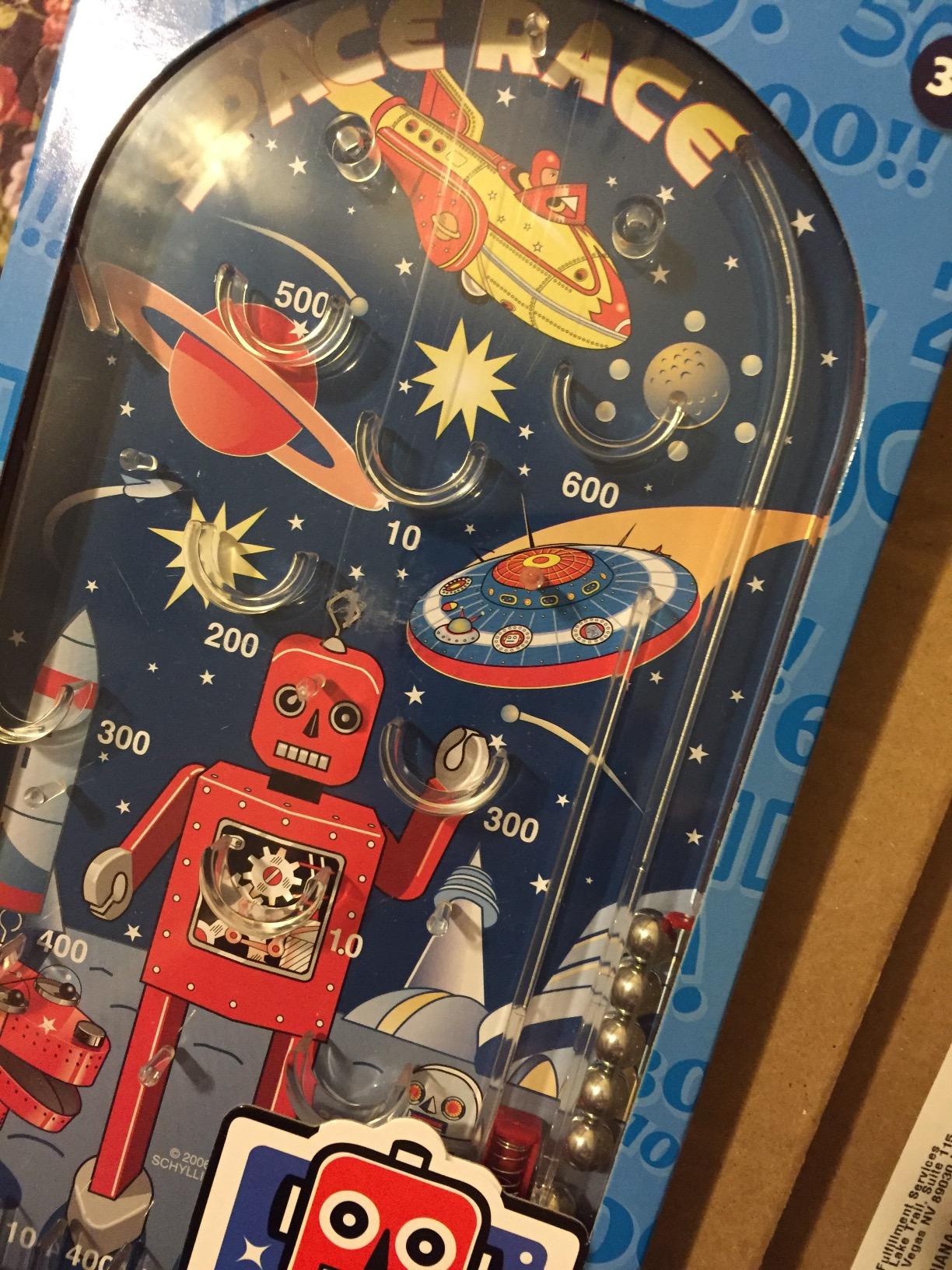
The lever mechanism replaces a plunger, so you load the ball and pull. Scoring is immediate and readable, and owners describe it as an easy game to learn that takes practice to master, which is a good difficulty curve for a first pinball purchase.
Hand-powered play with zero maintenance
No batteries, no motor, no electronics. That removes the two complaint themes that dominate electronic models, motor noise and dead bumpers, and it means the machine works anywhere immediately after unpacking. The only consumable is patience.
It is rated for ages 3 and up by the manufacturer, which makes it a reasonable companion machine for a home with young children. Just be clear about expectations: this is a dexterity toy with a small scoring field, not a simulator.
Where it fits in a home game room
At roughly 0.75 inch thick, the Space Race can sit against a wall or on a high shelf where a full-size cabinet would not fit. The flat design also makes it a good travel companion, and owners who take it on trips report that the metal build is what makes that possible without damage.
Its limits are equally clear. The scoring area is small, there is no light or sound, and it is a single-player format, so two people take turns rather than compete side by side. For a home game room, that makes it a second machine rather than the centrepiece.
Who it suits and who should look elsewhere
Suited to renters, apartment dwellers, and anyone with a home game room that measures in shelving rather than floor space. It also works as a screen-free activity for a travel bag or a waiting room, and it suits adults who want pinball nostalgia without a commitment.
Skip it if you are looking for lights, sound, electronic scoring, or head-to-head competition. It is also listed with no warranty, so the durability case rests on the metal build alone. If electronics matter to you, the Fat Brain Toys arcade table gives you a much larger playfield for a similar footprint.
4. Schylling Home Run Pinball – A Baseball Diamond Layout in a Handheld Metal Body
- Baseball ballpark diamond theme
- Lightweight at 5.6 ounces for true handheld play
- Manual winding plunger with metal balls
- Clear half-moon scoring traps
- Single-player handheld design
- No electronic scoring lights or sound
- Listed with no warranty
The Schylling Home Run is a baseball-themed handheld that shares the Space Race footprint but changes the entire feel of play. Instead of a space race, you have a ballpark diamond with half-moon traps that score when the metal ball lands in them, and the winding plunger gives each launch a deliberate wind-up.
It holds a 4.3 average across 289 ratings, and the lower tier of feedback reflects expectation rather than failure. Owners who bought it as a themed novelty for a sports fan are satisfied; buyers who expected a full arcade experience are not.
Manual winding and the wind-up feel
The manual winding plunger is the distinguishing feature here. Winding takes an extra beat before every shot, which slows the pace down compared with a spring launcher. For a baseball theme that feels appropriate, since it puts a little preparation between you and the pitch.
Scoring depends on landing balls in the half-moon traps rather than on flipper timing, so the skill is aim and control rather than reaction speed. The metal body and metal balls hold up well to that kind of repeated handling.
5.6 ounces and a 0.75 inch profile
At 5.6 ounces, this is the lightest machine in the roundup by a wide margin, which makes genuine handheld play realistic rather than aspirational. The 11.25 x 5.25 x 0.75 inch body matches the Space Race format, so storage is a non-issue in any room.
That weight figure also tells you how it feels in the hand. A machine this light will not slide or tip when you nudge it, but it also lacks the planted, cabinet-like stability that the larger units have. Placement on a table edge needs a little care.
Who it suits and who should look elsewhere
Suited to a sports-themed home game room, a gift for a baseball parent, or anyone who wants a pinball toy they can carry in one hand. It pairs naturally with a fan who already owns a full-size table and wants a second machine for the couch.
Skip it for a family looking for shared competitive play or electronic features, since this is a single-player handheld with no lighting or sound. The manufacturer lists it for ages 3 through 15 and includes no warranty, so it is a budget gift rather than a centrepiece. Pair it with a larger electronic table if you want both.
5. Fat Brain Toys Electronic Arcade Pinball – A Metal Arcade Table That Fits a Desk
Fat Brain Toys Electronic Arcade Pinball – Tabletop Pinball Machine for Kids 6+
- Metal construction with a solid feel
- Spring launcher sends the ball into a racking playfield
- Balls rack up points as they bounce
- Compact tabletop size fits a desk or shelf
- 3 AA batteries not included
- Single-player tabletop format
- Ages skew young at 6 to 12
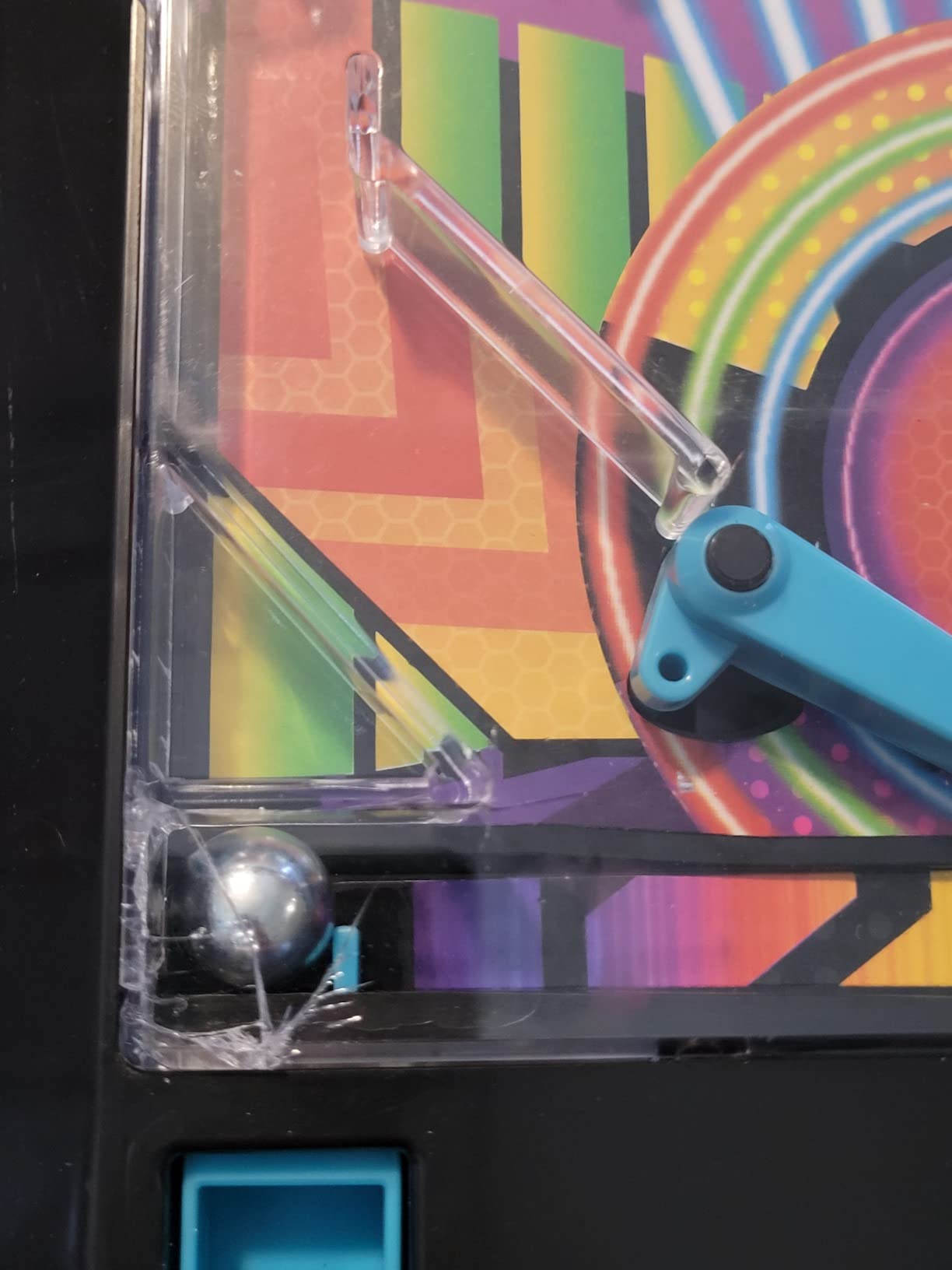
The Fat Brain Toys arcade table is a metal-bodied option that still gives you the pull-and-release launcher feel of a real machine. At 16 x 10.8 x 5.5 inches, it is small enough for a desk, and the 4.4-star average across 217 ratings reflects a build that owners consistently describe as solid and well made.
What sells it is the racking playfield. The ball bounces and racks up points on its way through, which mirrors real pinball behaviour closely enough that reviewers keep pointing at it as the authentic part of the experience.
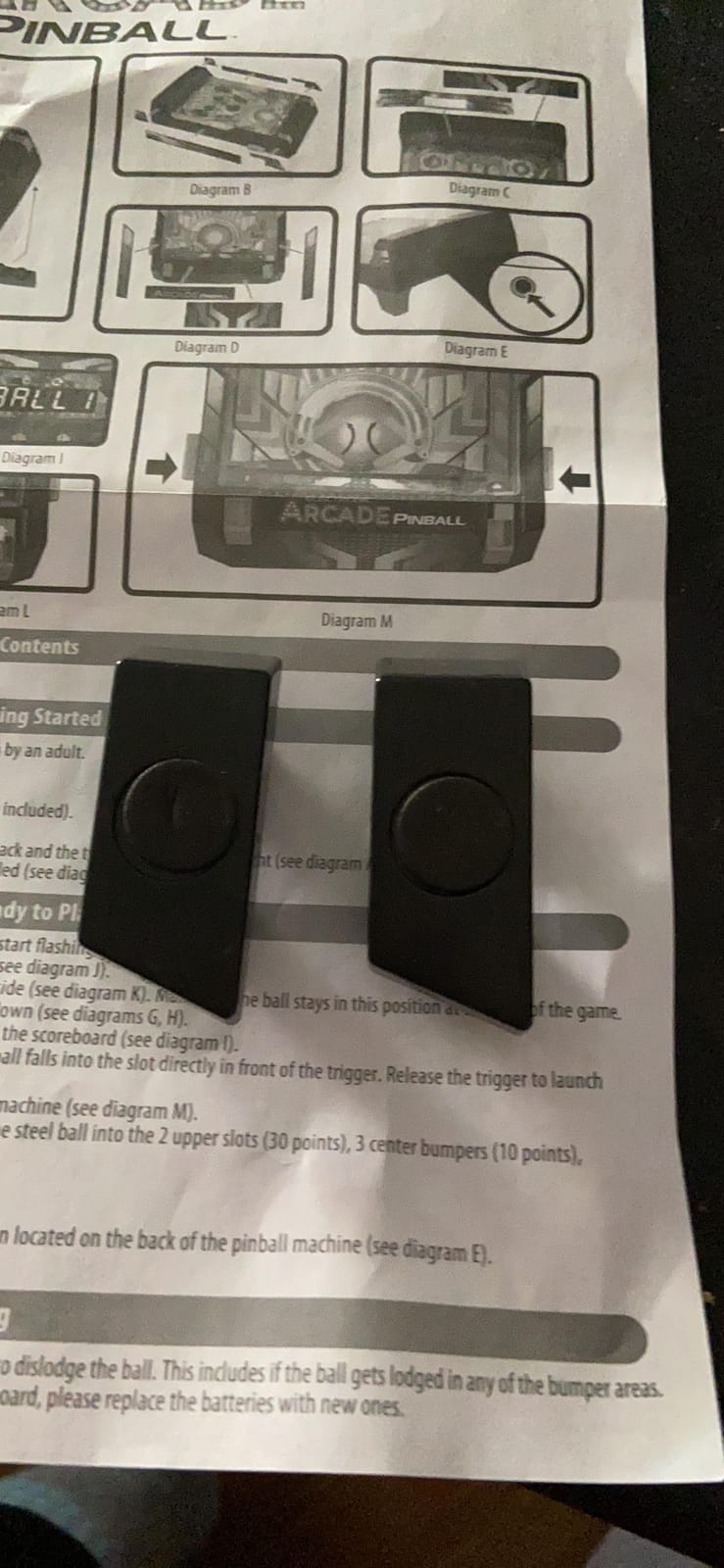
Spring launcher and racking playfield
You pull the launcher, release, and the ball enters a racking field where the scoring happens through bounce and deflection. There are no flippers, so the skill sits in the launch angle and the timing of the pull rather than in shot-making with a button.
That trade is worth understanding before you buy. It captures the visual and mechanical feel of arcade pinball without the flipper control that most adults picture. For a child, the racking loop is genuinely engaging and trains hand-eye coordination, concentration, reflexes, and spatial reasoning.
Batteries, sound level, and age range
The unit runs on 3 AA batteries, which are not included in the box. That is a minor annoyance rather than a real cost, but it is worth knowing before the first game night, and it also means the table is unusable during a power cut.
The manufacturer lists it for ages 6 to 12, and that shows up in the feedback. Older teens and adults may find the challenge level basic, so if the primary player is an adult, this is a display piece and a conversation starter rather than a long-term game.
Where it fits in a home room
The listed item dimensions are 17.15 x 3.75 x 13.25 inches, with a play footprint of 16 x 10.8 x 5.5 inches. That sits nicely on a desk, a bar top, or a shelf, and it is small enough to move between rooms when guests are coming over.
The playfield gives you more playable surface than the slimmer handheld units earlier in this guide, which is why it draws adults in for a quick game. The single-player design keeps it a turn-based contest, so for head-to-head play, the electronic options later in this guide are a better fit.
Who it suits and who should look elsewhere
Suited to a family with children aged six to twelve, a home game room desk where space is tight, and anyone who values a metal body more than electronics. Reviewers rate the build quality and the authenticity of the launcher feel as the two strongest points.
Skip it if the main players are adults chasing score, or if you want a machine that works without batteries. The age skew toward young children is the clearest limitation, and the 217-rating sample is mid-sized rather than deep.
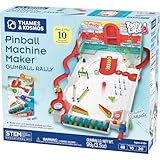
6. Tasty Labs Pinball Machine Maker Gumball Rally – A Reconfigurable STEM Pinball Build
Thames & Kosmos Pinball Machine Maker STEM Experiment Kit Toy of the Year Finalist, Gumball Rally l Explore Physics, Force, Motion, Gravity, Simple Machines
- Reconfigurable playfield that changes every round
- Genuine physics teaching through force motion and gravity
- Reusable rather than a one-time experiment
- No batteries needed and no cords
- Gumballs are eaten during play and need restocking
- Cardboard and plastic parts less durable than wood
- Configuration leans single-player
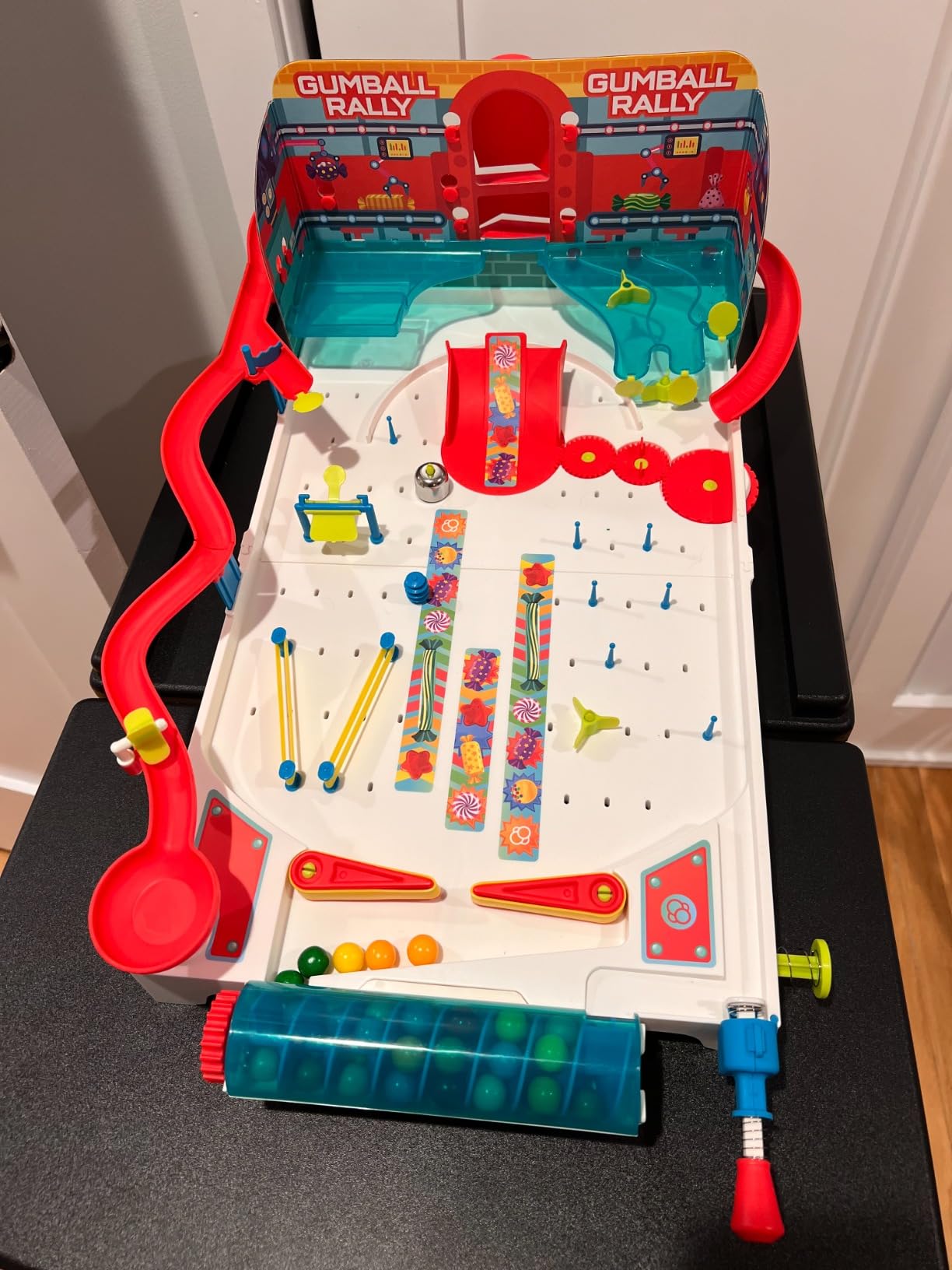
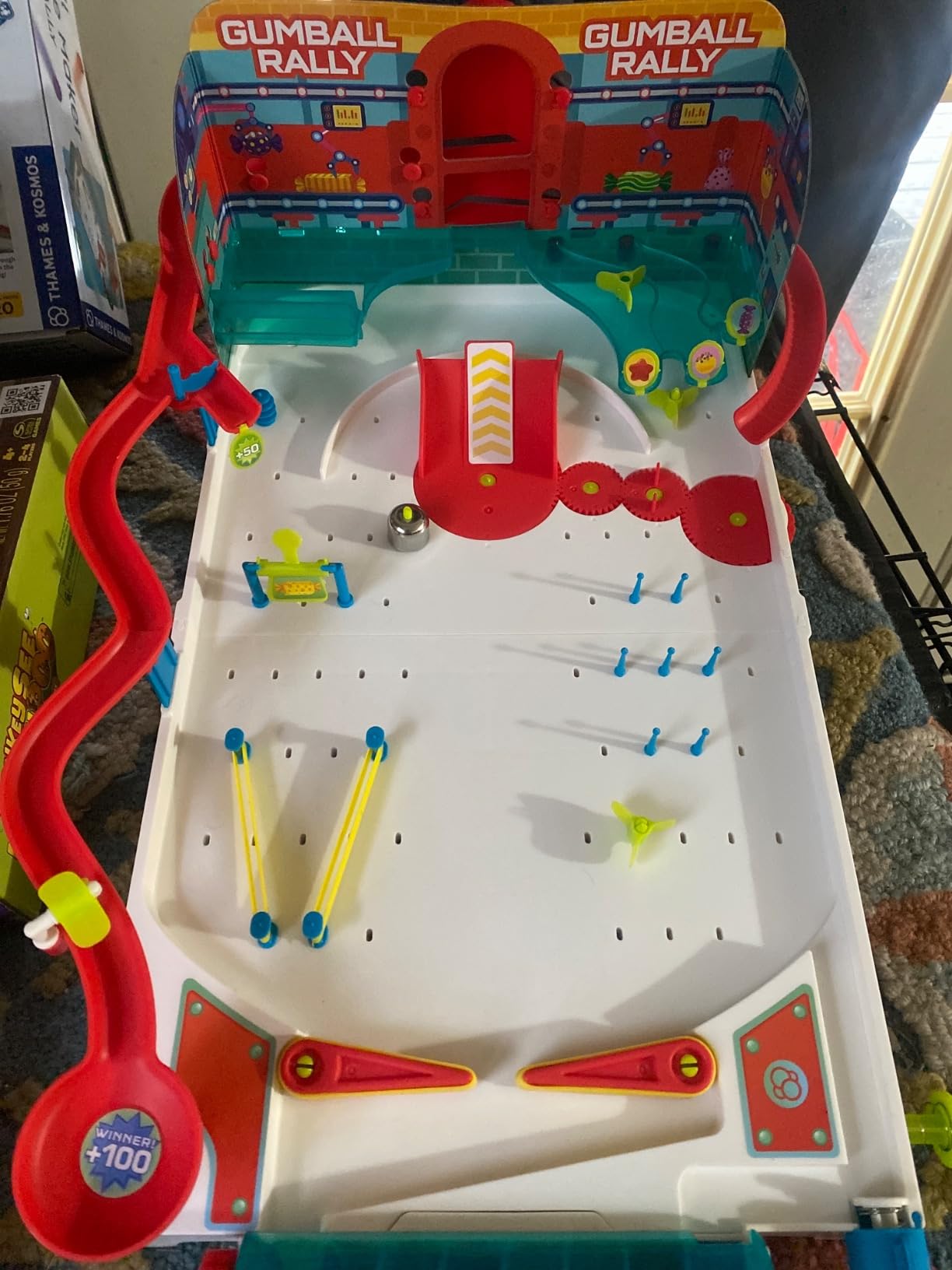
The Tasty Labs Pinball Machine Maker lets you make the playfield itself a variable. You build a working pinball structure out of plastic and cardboard pieces, and then you can move the bumpers, slingshots, bells, and ramps around to redesign the game. Reviewers say that reconfiguration is the reason children stay with it far longer than a fixed layout would allow.
It comes from Thames and Kosmos under the Tasty Labs sub-brand, carries a 4.3 average across 409 ratings, and has been recognised with an Innovative Toy of the Year award in the Netherlands and a Toy of the Year finalist honour.
A playfield you redesign between rounds
The building system includes bumpers, slingshots, bells, and ramps that can be repositioned. Each reconfiguration changes the shot angles and the scoring pressure, so the same kit produces a different game every time. For a home game room, that variety answers part of the boredom question that hobby forums raise constantly about owning a single fixed machine.
The mechanism also serves the learning goal. The kit teaches force, motion, gravity, simple machines, and collisions, and trial-and-error rearrangement is the experiment. Parents reviewing it tend to value the physics as much as the game itself.
Gumballs as pinballs, and what that means
Approximately 45 standard machine-size gumballs are included and they serve as the pinballs, which adds a sensory, edible element that ordinary metal balls cannot, and it is the feature reviewers most often single out.
It also has an obvious practical consequence. The gumballs get eaten, so the kit needs restocking, and that is the single most common reservation in the feedback. If the machine lives in a home with young children, budget for a refill and keep the restocked gumballs in a sealed container away from the build.
Materials, weight, and honest durability
At 2.2 pounds and 13 x 3.8 x 11.5 inches assembled, it is light and flat enough for a shelf or a table without taking space. There are no batteries, which is a genuine advantage in a household that does not want another charging routine.
The honest weakness is material. Cardboard and plastic will not survive the punishment a wood or metal machine takes, so expect to replace structural pieces over years rather than decades. The listed educational targets are reasoning, hand-eye coordination, motor skills, and STEM thinking, and the recommended age is 6 and up.
Who it suits and who should look elsewhere
Suited to a classroom, a home game room for a child who burns through fixed toys, and any buyer who wants a game that changes instead of repeating. It is also a good fit for a family that wants a project to build together rather than a machine to unbox.
Skip it if you want a durable keepsake, if consumable parts bother you, or if two adults want head-to-head competition. The configuration is single-player focused, and the build materials cap its lifespan well short of the wooden and metal machines in this roundup.
7. New Era 3-Ball Arcade Pinball – LED Scoring, Lights and Full Arcade Sound
- Launch 1 2 or 3 balls for fast arcade play
- 8 sound effects and 6 blinking LED lights
- Works on a tabletop or the floor
- Carton doubles as storage when not in use
- Batteries required and not included
- Listed age range conflicts with kids and adults positioning
- Plastic build with no premium materials
The New Era arcade pinball is built for volume, and that is exactly why it earns a place. It launches one, two, or three balls at once, with 8 sound effects, 6 blinking LED lights, and an LED score display, which is a lot of arcade feedback from a 4-pound plastic table.
It carries a 4.4 average across 325 ratings, with about 69 percent five-star feedback. Owners consistently single out the three-ball launch as the feature that makes it feel like a real arcade machine rather than a toy.
Three-ball launch and arcade feedback
Most compact machines send one ball at a time. Launching three changes the pace completely, because the table fills up and the scoring becomes a juggling act rather than a single-shot test. That is the difference between a slow dexterity toy and something that feels urgent.
The sound and lighting do real work in creating the atmosphere. For a game room lit from a dim corner, the LED score display and the blinking lights are what turn a plastic table into an arcade object, and the 21 x 10 x 4 inch footprint works on a tabletop or set directly on the floor.
Age labelling and battery caveats
The manufacturer lists a recommended age of 36 months to 3 years, which directly conflicts with the broader kids and adults positioning in the product name. That inconsistency is a real concern for gift buyers, and it is worth deciding who is actually playing before you buy.
Batteries are required and not included, so pick up a pack before the first game. The listing also describes the cognitive and motor skill focus as improving reflexes, coordination, focus, and quick decision-making, which fits older children better than toddlers despite the label.
Who it suits and who should look elsewhere
Suited to older children and teens who want volume, noise, and lights, and to a game room where the visual impact matters as much as the gameplay. The carton doubles as storage, which owners appreciate when the machine is not permanently set up.
Skip it if build quality is a priority, because the plastic body is the first thing a buyer notices and the last thing to wear well. It is also a single-player format, so head-to-head play means taking turns on one table. For a quieter room, the mechanical machines earlier in this guide are the better answer.
8. Merchant Ambassador Retro Arcade Pinball – Motor-Driven Bumpers and Slingshots in a Light Cabinet
Merchant Ambassador Retro Arcade Electronic: Pinball – Tabletop Game, Vibrating Bumpers, LED Lights, Sound Effects, 1 Player, Ages 6+
- Bumpers and slingshots are noticeably perky
- Electronic score counter with arcade sounds
- Plays well for adults in a den as well as children
- Detachable feet make setup and storage easy
- Noisy motor whirr and perky tunes during play
- Ball can stick and needs a tilt
- Fragile plastic top on a cardboard build
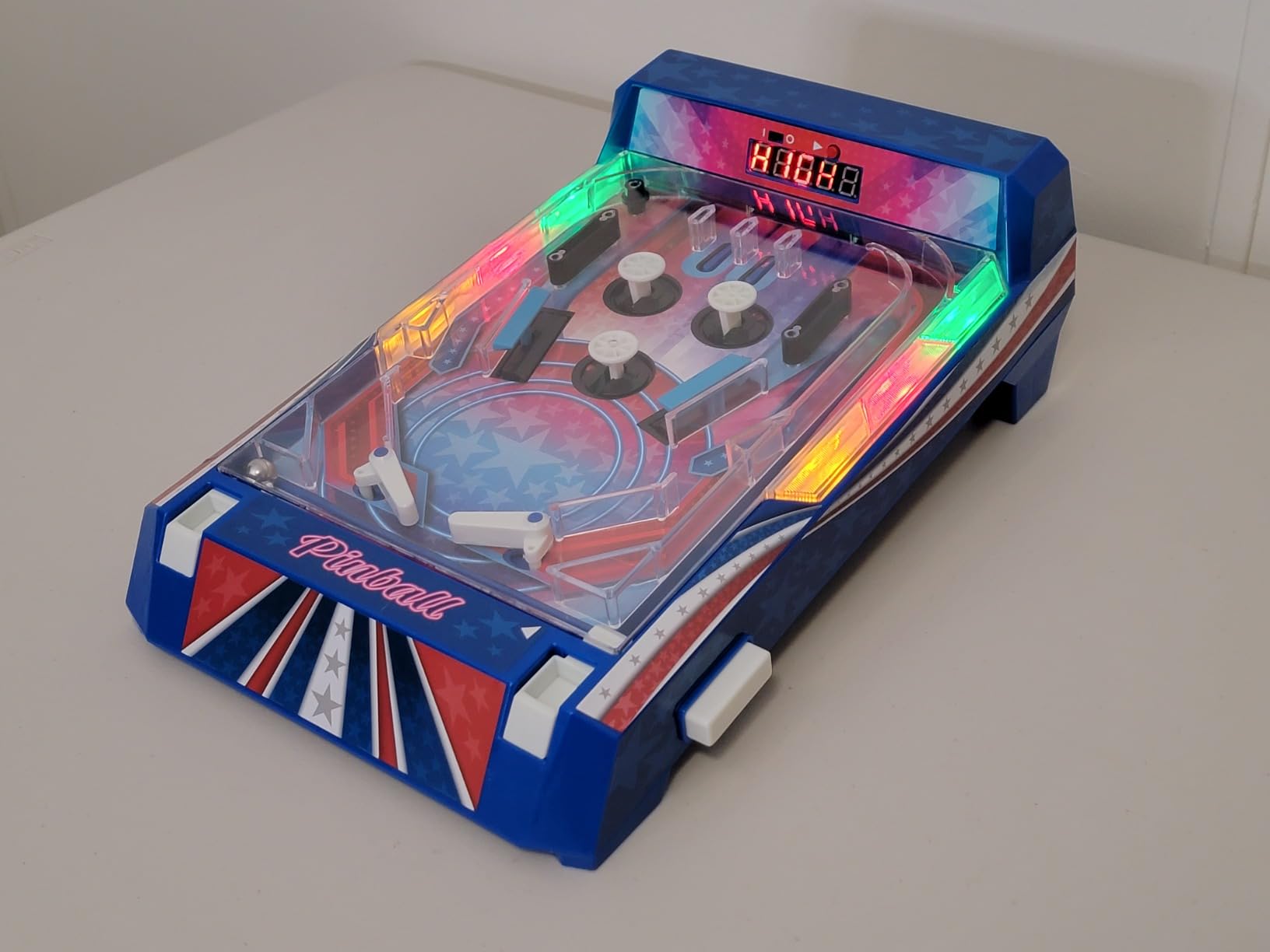
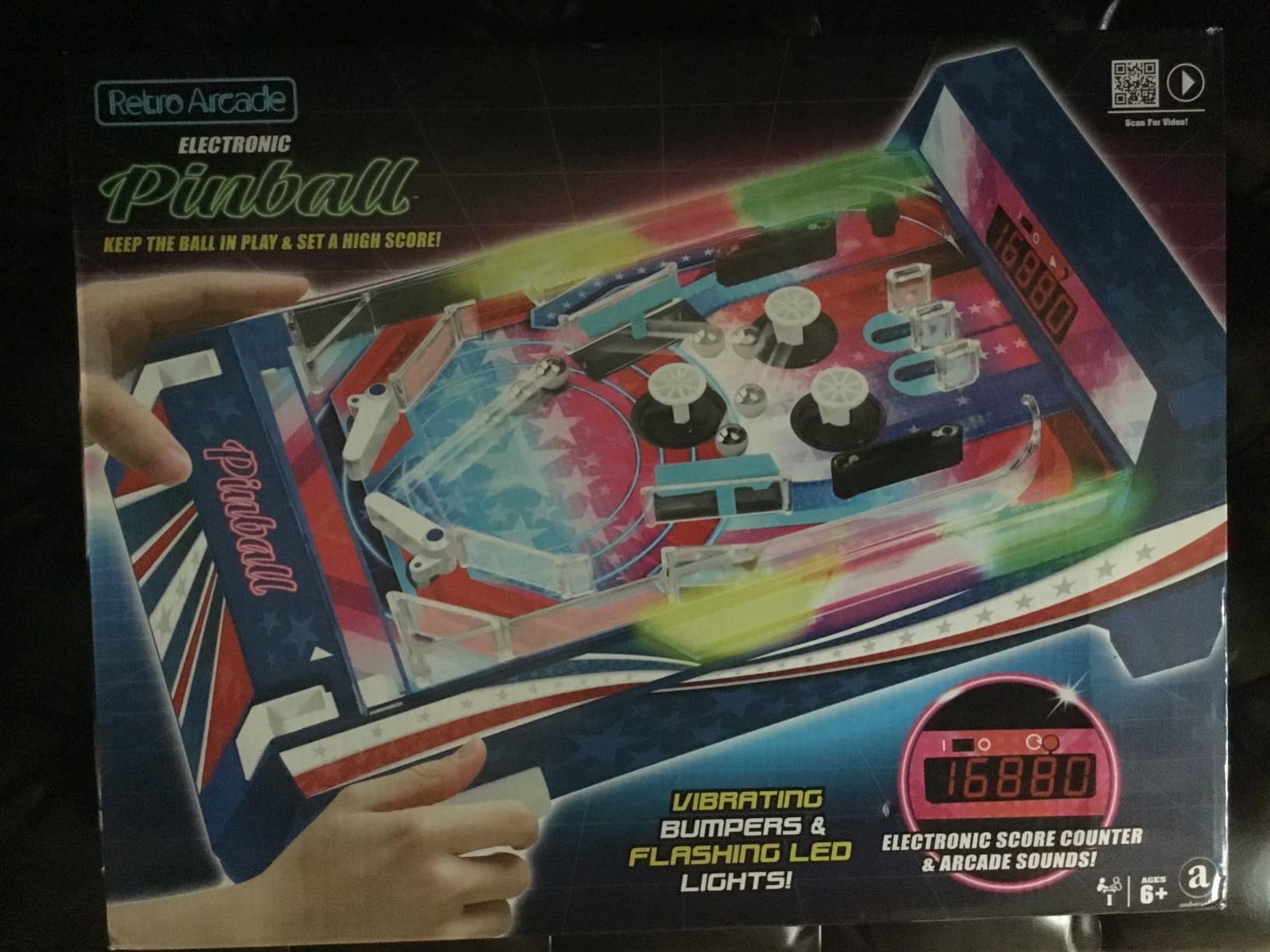
The Merchant Ambassador retro pinball is a vibrating, motor-driven table rather than a purely mechanical one, and that choice defines the experience. The pop bumpers and plastic slingshots actively kick, the top gates score, and an electronic LED score counter tracks the game while arcade sound effects play.
It carries a 4.2 average across 201 ratings with roughly 68 percent five-star feedback. Buyers who like it tend to call it excellent value that captures real pinball feel, and plenty of owners play it in a home bar or den as an adult rather than a child toy.
Motor bumpers and slingshots that do the work
The bumpers vibrate and the slingshots snap, so the ball is actively propelled around the playfield rather than rolling through it. No other unit here has both working slingshots and powered bumpers, and that combination is why reviewers single out the bumpers as perky rather than passive.
Scoring runs through gates at the top of the playfield with an on switch and a reset button, and the electronic counter replaces the manual scoring of the BRIO and Schylling machines. If your definition of pinball includes things lighting up and reacting, this is the one to shortlist.
Noise, stuck balls, and build fragility
The active components come with a cost: a noticeable motor whirr and perky tunes throughout play. In a quiet apartment at night that becomes the dominant impression, and it is the most repeated reservation in the feedback.
Two other complaints are worth weighing. Some owners report the ball sticking and needing a slight tilt to dislodge it, and a smaller number report the metal ball adhering magnetically to the pole pieces, which makes that unit unplayable until it is cleaned. On build quality, the cabinet uses cardboard with a plastic top that can crack.
Setup, footprint, and detachable feet
The unit measures 17.13 x 3.74 x 13.39 inches and weighs 1.66 kg, with 4 detachable table feet and a self-applied sticker sheet for the retro cabinet graphics. The feet make it easy to move and store, and the sticker sheet gives the cabinet its finished retro look once applied.
It needs 3 AA batteries, which are not included, so plan on that before the first game. The single-player specification limits it to turn-taking, even though the product description mentions head-to-head challenges among friends. For a game room, it is an adult-leaning novelty with a strong atmosphere and a fair amount of noise.
Who it suits and who should look elsewhere
Suited to an adult den, a home bar, or a family that wants visible arcade energy in a small cabinet. It is the machine to pick if the lights, sound, and moving parts matter more to you than build longevity.
Skip it in a shared-wall apartment at night, or if a fragile plastic top on a cardboard body sounds like a waste. The stuck-ball and magnet reports, while not universal, are specific enough to be worth factoring in. For quieter play, the BRIO or the Schylling machines remove the problem entirely.
9. Menkind PAC-MAN Arcade Pinball – A Licensed Collectible Table With Authentic Audio
PAC-MAN: Arcade Pinball – Electronic Tabletop Game, Vibrating Bumpers & LED Scoreboard, Licensed Collectible Toy, Family & Kids Classic Play, Ages 6+
- Officially licensed PAC-MAN graphics and audio
- Force-feedback style vibrating bumpers
- Compact tabletop size stores easily
- Works for two players on family game nights
- No volume control and loud fan motor noise
- A few machines reported dead bumpers on arrival
- Thin review base at 61 ratings
The Menkind PAC-MAN arcade pinball is the one to buy on appearance. It carries officially licensed PAC-MAN graphics, characters, built-in music, and authentic sound effects, and collectors and families both mention the artwork as the headline feature rather than an afterthought.
It carries a 4.1 average from 61 ratings, one of the thinnest sample sizes here, so treat what follows as preliminary. The cabinet is polycarbonate rather than cardboard, which is a step up in material from most of the electronic tables in this roundup.
Licensed audio, artwork, and force-feedback bumpers
The vibrating bumpers respond to every hit with flashing lights, and the LED scoreboard scores electronically. The sound package is the authentic PAC-MAN set rather than generic arcade effects, which is the reason collectors pick this over a generic cabinet with the same mechanics.
Dimensions are 16.14 x 11.02 x 5.51 inches with a listed weight of 1345 g, so it is a compact tabletop unit that stores easily in a small play space. The 1+ player rating supports turn-taking on family game nights.
Volume control is the missing feature
There is no volume control, and that single omission produces the most repeated complaint in the feedback. The siren and music play at full output, and a loud fan motor adds to the level, which makes this a poor choice for a quiet room or late-night play.
A handful of machines also arrive with non-functioning bumpers or scoring, and there are reports of foul-ball calls that behave incorrectly after a period of use. With only 61 ratings, the long-term reliability picture is genuinely thin, so factor in the possibility of an electronics failure.
Who it suits and who should look elsewhere
Suited to a collector, a PAC-MAN household, or a game room where the cabinet is as much decor as a game. The licensed artwork is the reason to choose it over a generic cabinet, and it makes a strong gift for a fan.
Skip it for a shared apartment, for anyone sensitive to sound, or for a buyer who wants a proven reliability record. There is no way to soften the volume, and 61 ratings is not a track record. A generic electronic table with a volume control is the safer choice for regular play.
10. Trisquirrel Dinosaur Tabletop Pinball – Dual Flippers and a Plunger in a 16.5 Inch Cabinet
Trisquirrel Dinosaur Electronic Tabletop Pinball Game for Kids & Adults
- Substantial 16.5 inch playfield for the size
- Dual flipper buttons plus a plunger for arcade controls
- 5 flashing lights and an LED digital scoreboard
- Supports 1-2 players for head-to-head play
- 3 AA batteries required
- Only 46 ratings so far
- Plastic build with less of a premium feel
The Trisquirrel dinosaur pinball is the newest release among these ten, with 4.1 stars from 46 ratings. It is also the only unit in this group that gives you real dual flipper buttons plus a plunger launcher, which is the closest any of these machines gets to a real pinball control layout.
Buyers like the sizeable playfield, the arcade controls, and the lights and sound. With a sample that small, the feedback is more about the concept than about a proven reliability record, and that distinction matters for a purchase.
Dual flippers and a plunger in a 16.5 inch cabinet
Dual flipper buttons and a plunger launcher develop genuine hand-eye coordination, and the 16.5 x 9.9 x 7 inch playfield gives room for skillful shots rather than a token scoring area. It weighs 1.8 pounds, so it stays portable between a desk and a living room.
Five flashing lights, dynamic sound effects, and a bright LED digital scoreboard provide feedback on every hit and combo. The dinosaur theme is the hook for younger players, though the control layout is genuinely appealing to adults too.
Two-player support and the thin review base
It is rated for 1-2 players, so it is built for genuine head-to-head competition rather than turn-taking. Most of the other machines here queue players up, while this one lets two people compete on the same playfield.
The limitations are structural rather than design flaws. It needs 3 AA batteries, the cabinet is plastic, and it lacks the metal ball and heavier components that give premium machines their planted feel. At 46 ratings, reviewers note the limited track record itself as the reservation rather than pointing to a specific recurring fault.
Who it suits and who should look elsewhere
Suited to a two-player household, a parent looking for a proper flippers-and-plunger layout without moving into full-size cabinet territory, and anyone who wants to try a recent release at low risk. Battery power with no cords means it moves between rooms easily.
Skip it if you want a machine with a long service life or if build weight matters to you. The plastic body and the absence of a metal ball reduce the premium feel, and with 46 ratings it is the most speculative purchase in the roundup. A metal-bodied unit with thousands of ratings is the lower-risk path.
How to Choose a Home Pinball Machine That Fits Your Room
Every mistake in this category starts with a size or noise assumption rather than a gameplay preference. These are the decisions that actually determine whether you are still playing the machine a year from now.
Measure the footprint before the delivery date
Start with the numbers, and take them from the listing rather than the photo. The machines here range from the Schylling units at 11.25 x 5.25 x 0.75 inches to the New Era at 21 x 10 x 4 inches, and the Fat Brain Toys table at 16 x 10.8 x 5.5 inches sits in between. Weight runs from 5.6 ounces on the Schylling Home Run to 4 pounds on the New Era.
Then measure the path, not just the destination. For a compact machine that means the shelf depth plus clearance for your hands. For a full-size cabinet, hobbyists describe moving something weighing a few hundred pounds through doorways and up stairs, and one of the most repeated community warnings is to check that route before the machine arrives rather than after.
If you want a larger game room around the machine rather than a single table, our picks for commercial treadmills for home use and golf launch monitors for home use cover the two other space-hungry purchases people pair with a game room. Plan the layout together, because a pinball table needs floor space around it for a player to stand and move.
Decide how much noise your household can absorb
Noise is the constraint nobody asks about and everybody notices. The motor-driven Merchant Ambassador has a persistent whirr plus tunes, the Menkind PAC-MAN table has no volume control at all plus a fan motor, and the electronic lights-and-sound units add to that.
The mechanical machines, which means the BRIO, both Schylling tables, and the Smartivity build, are quiet by comparison because nothing is powered. In a shared-wall apartment or a condo, that difference decides the purchase. If your neighbours share a wall, a mechanical table is the safer choice in 2026, and it also keeps working during a power cut.
Match skill level to the household, not to your taste
Full-size pinball is mostly skill, and a small percentage of players produce most of the scores over a long session. That gap is exactly why the community asks whether a cheap drain is a deal-breaker, and it applies at compact scale too.
For a mixed-skill household, a mechanical or non-timing game such as the BRIO or the Schylling Home Run rewards planning and aim rather than split-second reaction. For a household of one serious player, the flipper-equipped machines like the Fat Brain Toys, New Era, and Trisquirrel tables reward timing practice. The mistake is buying the punishing option for a mixed group, because that tends to be the machine that ends up unused.
Check what you own after the first three months
Maintenance is lighter than hobby forums make it sound for these units, but it is not zero. Battery compartments need periodic checks, plastic tops can crack, and the Smartivity rubber bands degrade over time, which is the main reason it lists free replacement parts for life.
Ask yourself two questions before buying a second machine. Will the first one still be played after six months, and would you rather have a second machine or the money toward a full-size cabinet later? Owners in the hobby describe the upgrade path as a natural step after about a year, so a compact table now does not close the door on a real cabinet later.
Understand what you are giving up by not buying full-size
Be honest about the trade. A full-size Stern, Jersey Jack, or Williams cabinet runs a software code rather than mechanical relays, plays with real flippers and a lockdown bar, and is the machine the AI Overview and dealer sites keep recommending as best overall. None of that is available at the compact scale.
What you gain is a machine that fits in a normal room, weighs something a single person can lift, works without a coin mech or a dedicated circuit, and can be played by a child on a living room floor. If you are in a condo, a rental, or a house with a shared wall, that trade is usually the right one. If you have a basement with a clear path and a real interest in the hobby, start planning for a full-size cabinet instead.
One last honest note. Nearly every machine on this list scores well enough that owner satisfaction is not the problem; losing interest is. Expect to play a single machine hard for a few months before deciding whether it has staying power, which is why the games with variable layouts tend to hold attention longer than a fixed single-mode toy.
Frequently Asked Questions
What is the best pinball machine for home use?
The BRIO 34017 is the best pinball machine for home use in this roundup, because it pairs a durable FSC certified wood body with hand-operated flippers and needs no batteries at all. If you want electronic feedback, the Fat Brain Toys arcade table adds a spring launcher and a larger playfield.
Who makes the highest quality pinball machines?
For full-size home cabinets, the manufacturers consistently rated highest by the hobby are Stern Pinball, Jersey Jack, Chicago Gaming, and Williams. Among compact home machines, build quality is easier to judge yourself: wood and metal bodies from BRIO and Schylling outlast the plastic cabinets in this category.
How much does a decent pinball machine cost?
It depends on which category you mean, and the two are not comparable. Full-size Stern and Jersey Jack cabinets cost several times what a compact home table does, and used Williams System 11 machines are a well known inexpensive entry path that hobbyists recommend for learning the maintenance side first. Compact machines like the ones reviewed here occupy a far lower band.
How much space does a home pinball machine need?
For the compact machines in this guide, allow the listed footprint plus clearance for your hands, so a desk or a deep shelf is enough for every model here. A full-size cabinet needs a dedicated floor area, clearance above the backbox so you can move it, and a clear route through the doorways and any stairs on the way to the room.
Is owning a pinball machine worth it?
It is worth it when the machine matches your space and your household. The case for is that a mechanical table costs nothing to run, works during a power cut, and gives a genuine dexterity challenge that ages well. The case against is that many buyers own one fixed machine and lose interest, which is the most repeated worry on pinball forums. Choosing a reconfigurable or varied design reduces that risk.
Is pinball more about skill or luck?
Skill dominates over a long session. A small group of players produces most of the scores, because shot timing, ball control, and mode selection are learnable. Luck decides individual games, and the gap between skill levels is why buyers are advised to avoid machines with punishing outlanes in a mixed-skill household.
Which Home Pinball Machine Should You Buy in 2026
Start with the space you have and the household you share, not the theme you like. If you want one table that everyone can play and nothing to plug in, the BRIO 34017 is the pick: wood construction, mechanical flippers, the highest rating in this roundup, and a footprint that fits an ordinary coffee table.
If you enjoy a project and want the build to be part of the gift, choose the Smartivity DIY Pinball Machine. It becomes a working machine with flippers and scoring, and free replacement parts mean a lost part during assembly is not the end of the project. In a room with very little floor space, the Schylling Space Race gives you a metal machine in a profile thin enough for a shelf.
For a family with children aged six to twelve, the Fat Brain Toys arcade table or the Tasty Labs Pinball Machine Maker fit well, and the latter is the better answer if you worry about boredom because its playfield can be redesigned. When lights, sound, and simultaneous competition matter, the New Era 3-Ball table and the Trisquirrel dinosaur table are the ones, with the New Era delivering more atmosphere and the Trisquirrel adding dual flippers for two players.
Whatever you choose, play it before you buy it if you possibly can. That single rule comes up more often than any other on pinball forums, and it is the cheapest advice in this guide. Add a mat underneath, keep it away from shared walls if it is a noisy electronic model, and give it six months before you decide whether a second machine is the next step.
Ready to go deeper? Our guide to virtual pinball machines for home game rooms covers the software route for anyone whose space or noise situation rules out a physical table entirely.