Best Plasma TV (September 2026): Complete Guide for Vintage Displays
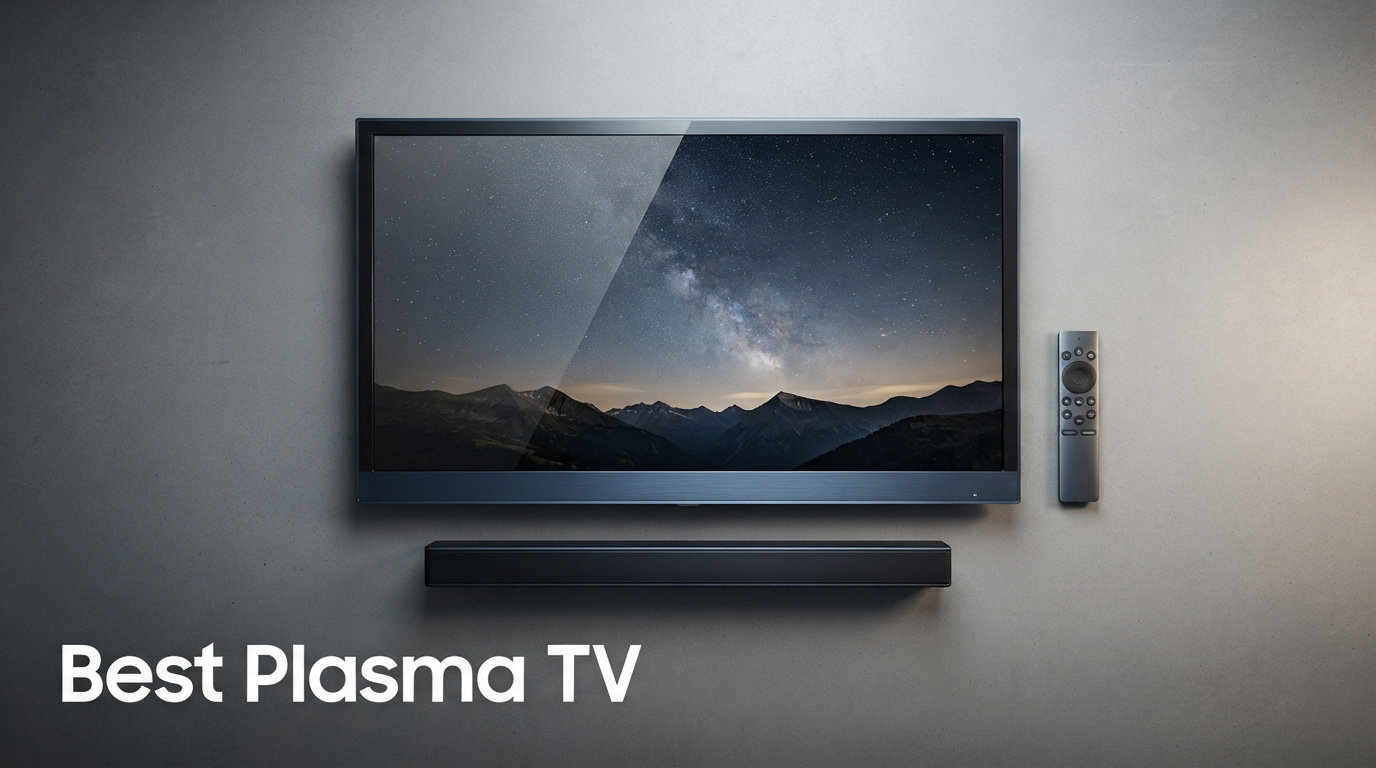
If you are hunting for the best plasma TV in 2026, you are chasing a piece of discontinued history. No company has manufactured a new plasma television since Samsung shut down its panel line at the end of 2014. Everything worth owning today is pre-owned, and the community of collectors, home theater fans, and retro gamers who love these displays has only grown more devoted.
I have spent years following plasma enthusiasts on AVSForum and Reddit, tracking which models hold up and which ones develop problems. The picture quality that made plasma legendary, those inky deep blacks and the buttery motion handling, still earns respect even next to modern OLED. For a lot of viewers, nothing else feels quite the same.
This guide walks through the top plasma TVs ever produced, what to inspect before you hand over cash for a used unit, where to actually find one, and whether plasma still makes sense compared to today’s OLED screens. Whether you want a reference-grade Panasonic ZT60 or you just want to understand the hype, this is the resource I wish I had when I started.
Understanding Plasma TV Technology
Plasma displays work differently from the LCD and LED screens that replaced them. Each pixel is a tiny cell filled with noble gases like xenon and neon. When electricity hits the cell, the gas turns to plasma and emits ultraviolet light, which then excites red, green, and blue phosphors to create visible color.
Because every pixel generates its own light, plasma TVs are self-illuminating. There is no backlight and no need for local dimming zones. A pixel can simply switch off to produce true black, which is why plasma earned its reputation for contrast that LCD could never match.
The 600Hz subfield drive you see on spec sheets refers to how many times per second each pixel refreshes. This is not the same as a 600Hz frame rate, but it does explain the smooth motion handling that makes plasma feel so natural with film and sports. Combined with wide viewing angles and rich color reproduction, the technology produced some of the best-looking images of its era.
Top 5 Best Plasma TVs of All Time
These five models represent the peak of plasma engineering. Every one is a flagship that forum consensus treats as reference-grade. They are ranked based on picture quality, community feedback, and how realistically you can still find a working unit.
1. Panasonic TC-P60ZT60 (and ZT65 in Europe)
The ZT60 is widely considered the best plasma TV Panasonic ever built, and many enthusiasts call it the best plasma ever made, period. Released in 2013 as the company’s farewell flagship, it was the last word in plasma refinement before production ended.
Panasonic engineered a new panel formulation for the ZT series that improved black levels and reduced reflections compared to the already-excellent VT60. HDTVTest called the European TX-P60ZT65B the finest plasma the company ever produced. The 60-inch panel delivers reference-grade contrast, natural color, and motion that still holds its own against modern displays.
Finding a ZT60 with low hours is difficult. Most owners know what they have, so expect to pay a premium. If you can locate a well-cared-for unit, this is the plasma to own.
2. Samsung PN60F8500
The F8500 earns its spot by solving the single biggest complaint about plasma: brightness. Samsung engineered this 2013 flagship to output light levels that approached LED-lit LCDs, making it the brightest plasma ever produced.
That brightness matters because plasma traditionally struggled in well-lit rooms. The F8500 was the first plasma you could comfortably watch in daylight without feeling like the image washed out. It retained the deep blacks and smooth motion plasma was known for, while gaining real-world usability.
Forum users consistently rank the F8500 alongside the ZT60, with some preferring it for mixed-use viewing. It is also slightly easier to find than the ZT60 since Samsung sold it in higher volume.
3. Pioneer Kuro KRP-500A and Elite PRO-151FD
Pioneer exited the plasma business in 2009, but the Kuro line set a black-level standard that no other plasma brand fully matched until Panasonic’s final years. The KRP-500A and the larger PRO-151FD remain legendary among videophiles.
The word Kuro literally means black in Japanese, and the name was earned. These displays produced blacks so deep that AVSForum members measured contrast ratios competitors could not approach. Even today, original Kuro owners frequently refuse to upgrade.
The trade-off is age. A Kuro from 2008 has been running for well over a decade, so finding one without significant hours or burn-in is a real challenge. If you locate a low-hour unit from a careful owner, it is still a reference display.
4. Panasonic TC-P60ST60
The ST60 sits one tier below the ZT and VT series, but community consensus treats it as the sweet spot of Panasonic’s final lineup. It delivered 90 percent of the flagship performance at a significantly lower price point.
Reviewers praised the ST60 for deep blacks, accurate color out of the box, and motion handling that embarrassed similarly priced LCDs. For buyers who want Panasonic plasma quality without hunting for the rare ZT60, the ST60 is the practical choice.
It was also one of Panasonic’s best-selling plasmas, which means there are more of them still in circulation. That availability makes the ST60 one of the easier high-end plasmas to track down used.
5. Panasonic TX-P50VT65 (VT60 Series)
The VT60 was the step below the ZT, and for many viewers the difference was negligible. It used the same core panel philosophy with slightly less aggressive filtering on the glass.
The VT60 earned THX certification and included ISF calibration modes that let professional calibrators dial in the picture to reference standards. Owners report that a properly calibrated VT60 produces an image nearly indistinguishable from the ZT60 in a controlled-light room.
If the ZT60 eludes you, the VT60 is the next best thing and typically appears on the used market more frequently. It is a genuine reference display at a slightly more attainable price.
Panasonic vs Samsung vs Pioneer: Which Brand Made the Best Plasma TV
Three brands defined the plasma era, and each one has a claim to the crown depending on what you value most.
Pioneer established the benchmark with Kuro. The brand essentially wrote the playbook for deep blacks and set a standard the rest of the industry chased until the very end. Pioneer plasmas are the collector’s choice.
Panasonic carried the torch after Pioneer left and refined it to its absolute peak with the ZT60. Panasonic offered the widest range of quality tiers, from the affordable ST series to the reference ZT, and produced the last great plasmas ever sold.
Samsung pushed plasma toward practicality with the F8500’s daylight brightness. Samsung displays also tend to have more smart features and modern connectivity, which matters if you want a plasma that integrates easily with current gear.
For pure picture quality in a dark room, Pioneer and late-era Panasonic win. For a plasma you can actually use in a bright living room, Samsung takes it.
Best Plasma TVs by Size Category
Plasma panels were never small. The technology made sense at 42 inches and above, where the benefits of self-illuminating pixels and deep blacks had room to shine.
For a 42 to 46-inch plasma, the Panasonic ST60 in its smaller sizes and the Pioneer KRP-500A are the top picks. These are ideal for bedrooms or smaller media rooms.
In the 50 to 55-inch range, the Panasonic VT60 and Samsung F8500 both deliver flagship performance. This was the most common plasma size, so you have the best chance of finding a quality unit here.
For 60 inches and above, the Panasonic ZT60 and the Samsung PN64F8500 are the standouts. Large plasmas are heavier and harder to ship, so local pickup is almost mandatory.
Best Plasma TVs for Gaming and Retro Consoles
The retro gaming community loves plasma for two reasons: motion handling and input lag. Plasmas refresh every pixel independently, which means motion blur is essentially nonexistent compared to LCD displays of the same era.
For retro consoles, plasma offers a middle ground. It handles 480i and 480p signals from older systems better than most modern 4K displays, which struggle to upscale without adding lag. The Panasonic ST60 and Samsung F8500 are both frequently recommended on gaming forums for their low input lag in Game Mode.
The main caution is burn-in from static HUDs. If you play the same game with a fixed interface for hundreds of hours, take breaks and use pixel-orbiting features if the display offers them. The F8500 handles this better than most thanks to its brighter panel and built-in screen-care functions.
For modern gaming, plasma lacks HDMI 2.1, VRR, and 4K at 120Hz. If you are primarily playing current-generation consoles, an OLED will serve you better. Plasma is the choice if your heart lives in the PS2, GameCube, and original Xbox era.
Buying Guide: What to Check When Shopping for a Used Plasma TV
Buying a used plasma is not like buying a used LCD. These displays have been running for over a decade in many cases, and condition varies wildly. Here is exactly what to verify before you commit.
Check the Panel Hours
Plasma panels have a half-life, typically rated at around 100,000 hours by manufacturers. In practice, brightness gradually decreases over time, and most enthusiasts consider anything under 20,000 hours to be in excellent condition.
You access the service menu to read total hours. On Panasonic displays, this usually involves a specific remote code sequence. Ask the seller to either provide a photo of the hours counter or let you check it in person before purchase.
Inspect for Burn-In and Image Retention
Display a full white screen and look for faint ghost images, particularly in the corners or along a horizontal band where a news ticker or channel logo sat. Minor image retention often fades after a few minutes of varied content, but permanent burn-in does not.
Solid color test patterns in red, blue, and green will also reveal burn-in that white screens miss. Bring a USB drive with test images if the seller will let you plug it in.
Test All Inputs and Smart Features
Older plasmas often have HDMI ports that have failed or become intermittent. Test every input with a real source. If the unit has smart features, check whether they still function, since many early smart TV platforms have lost their app support entirely.
Evaluate the Physical Condition
Plasma glass is heavy and can crack if the TV was ever dropped or shipped improperly. Look for stress marks around the bezel and listen for loose internal components when the display is gently moved. A buzzing sound is normal for plasma, but clicking or popping during operation can indicate failing components.
Plan for Safe Transport
Never lay a plasma flat in a vehicle. The glass panel can crack under its own weight when transported horizontally. Always transport plasma TVs upright and secured, ideally with the original box or a padded moving blanket. This is the single most common way good plasmas get destroyed.
Where to Find Quality Used Plasma TVs in 2026
The used plasma market is small but active. Knowing where to look is half the battle.
eBay remains the largest marketplace, but shipping a plasma is risky and expensive. Filter for local pickup listings to avoid the heartbreak of a cracked panel arriving at your door.
Facebook Marketplace and Craigslist are where the best deals tend to hide. Many sellers are simply upgrading and do not know what they have. Search specifically for model numbers like ZT60, F8500, and ST60 rather than just “plasma TV.”
Specialty forums like AVSForum and the r/PlasmaTV subreddit occasionally have members selling well-maintained units. Buying from an enthusiast is more expensive but dramatically safer, since these owners typically know the hours, calibration history, and condition of their display.
Plasma vs OLED: Should You Even Bother
OLED is the natural successor to plasma, and it uses the same self-illuminating pixel principle. Modern OLEDs match or exceed plasma in black levels, color accuracy, and contrast, while adding 4K resolution, HDR, and HDMI 2.1.
So why bother with plasma at all? For some viewers, the specific motion characteristics of plasma still feel more natural, particularly with 24fps film content. Plasma also handles standard-definition signals from older sources better than most 4K upscaling engines.
For most people in 2026, a current OLED is the better overall choice. Plasma makes sense if you are a collector, a retro gamer, or a videophile who specifically values the look of the technology and is willing to accept the trade-offs of a decade-old display.
FAQs
Which plasma TV is the best?
The Panasonic TC-P60ZT60 is widely regarded as the best plasma TV ever made, followed closely by the Samsung PN60F8500 and the Pioneer Kuro Elite series. These three represent the peak of plasma engineering and are the models most recommended by enthusiast communities.
Are plasma TVs still worth buying?
Plasma TVs are still worth buying if you value deep blacks, natural motion handling, and wide viewing angles, or if you want a display for retro gaming. They are not worth it if you need 4K resolution, HDR, or modern smart features. For most buyers in 2026, a current OLED is the more practical choice.
What was the best plasma TV ever made?
The Panasonic ZT60 (sold as TX-P60ZT65B in Europe) is considered the best plasma TV ever made by most reviewers and enthusiasts. It was the final flagship before Panasonic ended plasma production in 2014 and delivered reference-grade picture quality that still holds up today.
Does anyone make plasma TVs anymore?
No. No company manufactures plasma TVs anymore. Samsung was the last major brand to end plasma production, shutting down its panel lines at the end of 2014. Every plasma TV available today is a used or refurbished pre-owned model.
How long do plasma TVs last?
Plasma TVs were typically rated for around 100,000 hours of use before the panel reaches half brightness. In practical terms, a plasma with under 20,000 hours is in excellent condition. Many well-maintained units from 2008 to 2014 are still performing well over a decade later.
Is burn-in still a problem on plasma TVs?
Burn-in can still occur on plasma displays, especially from static images like news tickers or game HUDs displayed for long periods. Temporary image retention is normal and fades quickly, but permanent burn-in does not reverse. Look for models with pixel orbiting features and vary your content to minimize risk.
Final Thoughts on the Best Plasma TV
The best plasma TV is no longer something you can buy new, and that is part of what makes hunting for one so rewarding. A well-cared-for Panasonic ZT60, Samsung F8500, or Pioneer Kuro still produces an image that commands respect.
If you decide to chase one, follow the buying checklist carefully. Check the hours, inspect for burn-in, test every input, and transport it upright. The community of plasma enthusiasts is generous with knowledge, so tap into AVSForum and r/PlasmaTV for model-specific advice. The right plasma, found in the right condition, is a display you will treasure for years.